Choosing Cladding for an Auckland Home: A Local Guide

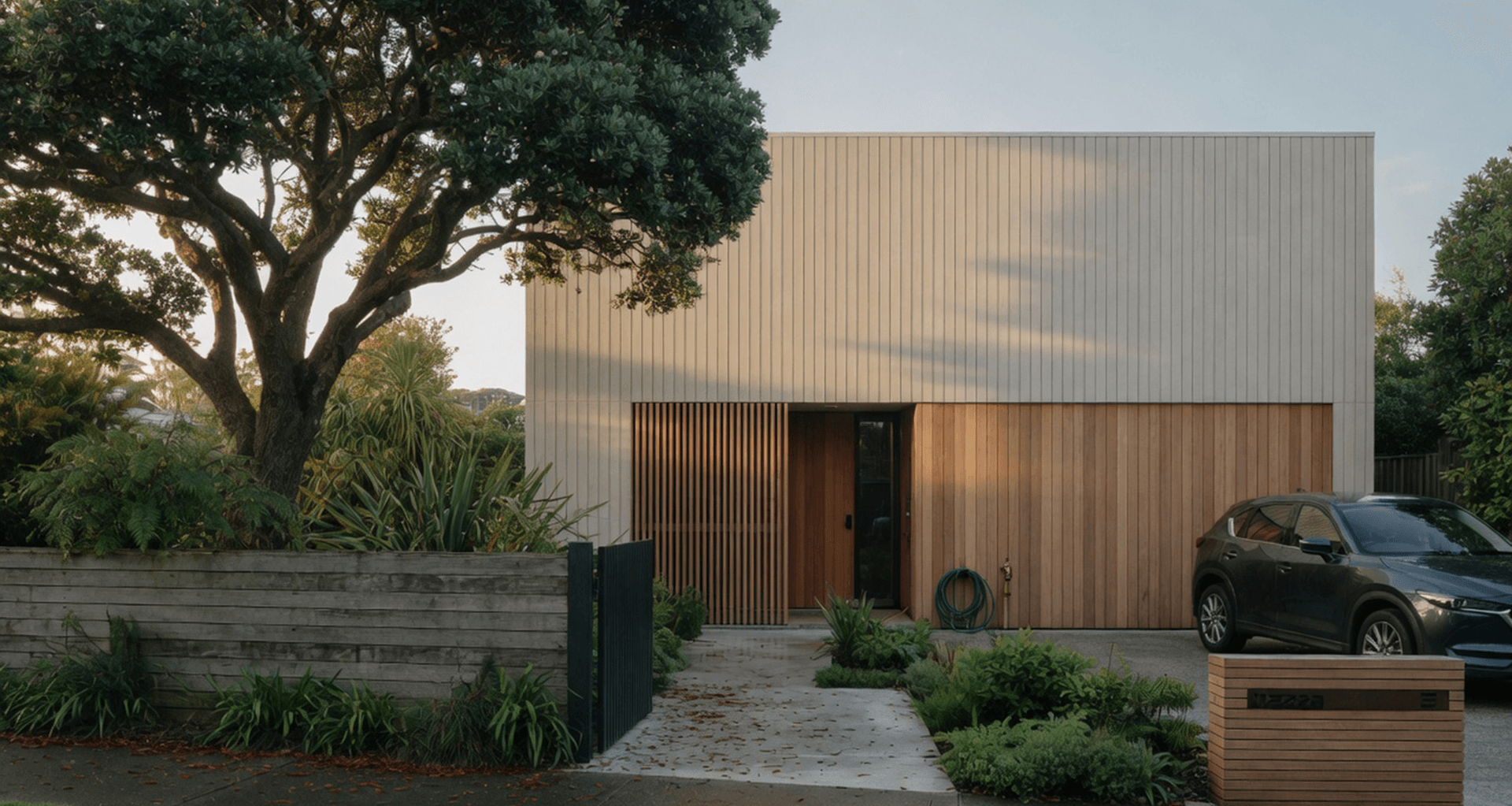
Choosing Exterior Cladding for an Auckland Home: Coast, Character and the Plaster Legacy
Picking cladding for an Auckland home is not the same decision as picking cladding anywhere else in the country. The same weatherboard that behaves impeccably on a sheltered inland section can weather very differently three streets back from the water in Milford, and the plaster look you love may not be a choice you are even allowed to make on a special-character street in Ponsonby. Cladding is the jacket your house wears through every southerly, every salt-laden nor-easter and every long Auckland summer, so the right choice is the one that suits your specific site, your home's era and how much upkeep you actually want to sign up for.
This guide is the Auckland-local companion to our full run-down of cladding options and costs for New Zealand homes. That piece covers the materials and the numbers nationally. Here we do the thing those national guides skip: we sort the decision by the three realities that actually shape it in Auckland, so you can walk into a design conversation knowing which options are genuinely on the table for your home.
Why cladding choice in Auckland is a local decision, not a national one
Most cladding guides read like a product catalogue. They list weatherboard, fibre cement, plaster, brick and metal, give you a tidy pros-and-cons box for each, and leave you to work out which one belongs on your house. That is a fine place to start, but it ignores three things that quietly decide the answer for a huge number of Auckland homes.
First, the coast. Auckland is a city wrapped around two harbours with a long, exposed eastern and northern coastline. Salt spray, wind-driven rain and UV do not treat every cladding the same way, and a material's real-world lifespan by the sea can be very different from the brochure figure. Second, character. Large parts of the central isthmus and older suburbs sit under residential character or heritage protections, and those rules can dictate not just colour but the cladding material and profile itself. Third, the plaster legacy. Auckland has a large stock of monolithic-clad homes built roughly between 1994 and 2004, and for those owners cladding is rarely a cosmetic question.
Get those three lenses clear and the material choice tends to make itself. The goal is matching the cladding to the site and the house, not chasing whatever is trending.
The coastal factor: salt, wind and what actually lasts by the sea
If your home is in Devonport, Takapuna, Milford, St Heliers, Mission Bay or out along the eastern bays to Glendowie, you are in a marine environment, and that changes the conversation. Salt is relentless on fixings, coatings and anything that holds moisture against a wall. BRANZ classifies exposure zones from sheltered inland right through to severe marine, and the closer you sit to breaking surf, the more your choice of cladding, fixings and coating matters (see BRANZ for the technical detail on exposure zones).
That pushes coastal homeowners toward cladding and detailing that shrug off salt and dry quickly. Pre-finished fibre cement, quality painted timber weatherboard maintained on a proper cycle, and cavity-based systems that let the wall breathe all perform well when they are specified and installed for the zone. Cheaper fixings and thin coatings are a false economy near the water; they are the first things to fail.
"On a coastal job I'm thinking about the whole wall, not just the board. The fixings, the coating system, the cavity behind it, the way water gets off the wall and away from the house. Get those right for the zone and a cladding will go the distance. Skimp on any one of them near the sea and you'll see it within a few winters." — Alison Yu, designer, Superior Renovations
We saw the coastal reality on a full-home renovation in Mellons Bay, an eastern-bays home with sea views where the exterior scope ran to a full repaint, a re-roof and double glazing throughout. Coastal homes ask more of every exterior element, which is exactly why the cladding decision there is worth slowing down for. If your home sits in a marine zone, the honest question isn't just what looks good. It's what will still look good after ten Auckland winters facing the water.
Character streets: when the look is not entirely your choice
Here is the part a lot of Auckland homeowners discover late. If your home is in a residential character overlay or a scheduled historic area, the council may have a say in your cladding material, profile and even colour. Suburbs such as Ponsonby, Grey Lynn, Mt Eden, Parnell and Devonport carry large character-protected pockets, and swapping a villa's timber weatherboard for a modern sheet cladding can be exactly the kind of change that triggers a resource consent, or is declined outright.
The rule of thumb: the older and more protected your street, the less freedom you have to change the cladding material, and the more the existing profile matters. That is not a reason to despair. Timber weatherboard on a well-kept villa is a genuinely excellent cladding when it is maintained, and matching a heritage profile is very doable. It just means the design and consent conversation has to happen before you fall in love with a material you cannot use.
If you are unsure whether your property is affected, our colleagues at Sonder Architecture explain what a heritage overlay means for your street and how it shapes what you can change. Whether a specific cladding change on your home needs consent is a question for a Licensed Building Practitioner or Auckland Council, not something to assume from a blog, and we always confirm it early on a character-home project.
The monolithic-plaster legacy: the elephant on many Auckland sections
Auckland has a very particular cladding story that most of the country does not share to the same degree. Through roughly 1994 to 2004, a large number of homes went up with monolithic plaster cladding, often direct-fixed without a drainage cavity behind it. When those details were not right, water got in and could not get out, and the result was the weathertightness problem the country came to know as leaky homes.
For owners of a monolithic-clad home, cladding is a risk question first and an aesthetic one second. Not every plaster house is a leaky house, and plenty were built well or have been remediated. But if you own one, the smart move is to understand its construction before you spend a dollar on the interior. We go deeper into the specifics in our look at monolithic plaster cladding in New Zealand, including what modern cavity-based plaster systems do differently from the direct-fixed detailing of that era.
When the framing has taken damage, the fix is usually a full or partial reclad, and that is a project with a very different scope from a cosmetic refresh. It is also work where compliance is not optional. Weathertightness assessment, the moisture and framing condition, and whether the job needs building consent are matters for a Licensed Building Practitioner and Auckland Council. Guidance from MBIE's Building Performance on weathertightness is the authoritative reference, and we bring the right professionals in rather than guessing. If a reclad is on the cards, the way our recladding team scopes an Auckland re-clad starts with exactly that: finding out what is behind the cladding before committing to a plan.
Matching cladding to your home: a material-by-material look
With the coast, character and plaster lenses in mind, here is how the common Auckland cladding choices tend to play out. None of these is universally "best" — the point is fit.
Fibre cement (weatherboard-look and sheet)
Fibre cement in weatherboard-look profiles has become one of the most popular choices for Auckland renovations and recladding, and for good reason. It is stable, handles our coastal exposure well when installed on a cavity, and takes paint reliably. It suits contemporary homes and can approximate a traditional weatherboard line on character-adjacent streets, though a protected heritage home may still require genuine timber.
Cedar and timber weatherboard
Timber weatherboard is the classic Auckland cladding, and on villas and bungalows it is often the right and sometimes the only compliant answer. Cedar in particular is prized for its look. The trade-off is upkeep: timber wants a maintenance cycle, and by the coast that cycle is shorter. Choose it because you love it and will look after it, not because you expect it to be fuss-free.
Monolithic and modern cavity-based plaster
The smooth, jointless plaster look still appeals to a lot of owners of contemporary Auckland homes. Modern plaster systems built over a drainage cavity are a different animal from the direct-fixed detailing of the leaky-homes era, but this is squarely a specify-and-install-it-right material. On a plaster home, the detailing behind the finish matters more than the finish itself.
Brick veneer and metal
Brick veneer is low-maintenance and durable and reads as solid and traditional, though it changes the look and the structural detailing significantly if you are switching from a lightweight cladding. Longrun metal, meanwhile, has moved from purely functional to a genuine design choice on modern Auckland homes and performs well when detailed properly. Both are worth a look depending on the architecture you are working with.
Whichever material you land on, factor in the coating and maintenance from day one. Painted cladding, whether timber or fibre cement, performs and lasts far better on a proper repaint cycle, and near the coast that is not optional. When the time comes, a professional exterior repaint from our painting arm protects the investment rather than just refreshing the colour.
"The mistake I see is people choosing cladding on the picture alone. We start the other way round, with the site, the home's era, what the council allows, and how the family wants to live with it. Once those are on the table, the material almost chooses itself, and the house ends up looking like it was always meant to wear it." — Dorothy Li, Design Manager, Superior Renovations
What it costs, and how to budget a reclad in Auckland
Cladding cost is the question everyone wants answered first, and it is the one that most resists a single number. The final figure on a reclad depends on the framing condition hidden behind the existing cladding, which no one can see for certain until the cladding comes off. That is why an honest reclad budget is built as a range with a contingency, not a fixed headline price.
Rather than quote figures that could drift out of date, we keep the live numbers in one place. For the current picture on what recladding a house in New Zealand typically costs, and to sketch a ballpark for your own home, our recladding cost calculator is the fastest way to get a realistic range before you talk to anyone. Treat those numbers as the planning figure and expect the design conversation to refine them once your home's specifics are known.
One practical tip: if you are already recladding, it is often the efficient moment to add insulation upgrades, address any joinery or window changes, and sort exterior work in one coordinated project rather than as separate disruptions. Doing it once, properly, tends to beat doing it in pieces.
Getting it consented and weathertight: leave this part to the professionals
Cladding sits right at the intersection of design, durability and building compliance, which is the part where confident guessing gets expensive. Whether your project needs building consent, how weathertightness is assessed, and which details satisfy the Building Code are questions for a Licensed Building Practitioner and Auckland Council, and the answers are specific to your home. We handle consents in-house on our projects precisely so this does not land on the homeowner.
For character homes, the design and consent side often needs an architectural designer as well, which is where Sonder Architecture comes in on the group's more complex jobs. And for the property owners weighing whether a tired but sound home is worth reworking at all, it can be worth stepping back to look at the bigger renovation picture before committing to cladding alone. You are welcome to visit the Superior Renovations Design Studio at 16B Link Drive, Wairau Valley to see materials in person and talk it through with the design team.
Frequently asked questions
What is the best cladding for a coastal Auckland home?
There is no single best, but pre-finished fibre cement on a cavity, well-maintained painted timber weatherboard, and cavity-based systems all perform well in marine zones. The bigger factors are the fixings, the coating system and the detailing, which matter more near the sea than the board itself. Match the specification to your BRANZ exposure zone.
Do I need consent to change my home's cladding in Auckland?
It depends on your home, the extent of the work and whether your property sits in a character or heritage area. Recladding and material changes can trigger building or resource consent. Confirm it with a Licensed Building Practitioner or Auckland Council before you commit to a material, rather than assuming from a guide.
Is my 1990s plaster home a leaky home?
Not necessarily. Many monolithic-clad homes from the 1994 to 2004 era were built well or have since been remediated, but the direct-fixed detailing common then carries higher weathertightness risk. The only reliable answer comes from a professional weathertightness assessment of your specific home, not from its age alone.
How long does exterior cladding last in Auckland?
It varies widely by material, exposure and maintenance. Coastal homes see shorter maintenance cycles than sheltered inland ones, and painted claddings depend heavily on keeping the coating system intact. A quality cladding installed for its exposure zone and maintained on schedule will last decades; a neglected or under-specified one fails far sooner.
Choosing well the first time
Cladding is one of the few renovation decisions that touches how your home looks, how it performs and whether it stays weathertight, all at once. Sort it through the three Auckland lenses (your coastal exposure, any character rules on your street, and your home's construction era) and the right material becomes far clearer. The homes that age best are the ones where the cladding was chosen for the site, not the showroom.
If you are weighing up a reclad or an exterior refresh on your Auckland home, we would love to help you get it right. Book a free consultation with the Superior Renovations design team and we will talk through what suits your home, your street and your budget.