Concrete Driveways NZ: Costs, Options & What to Know

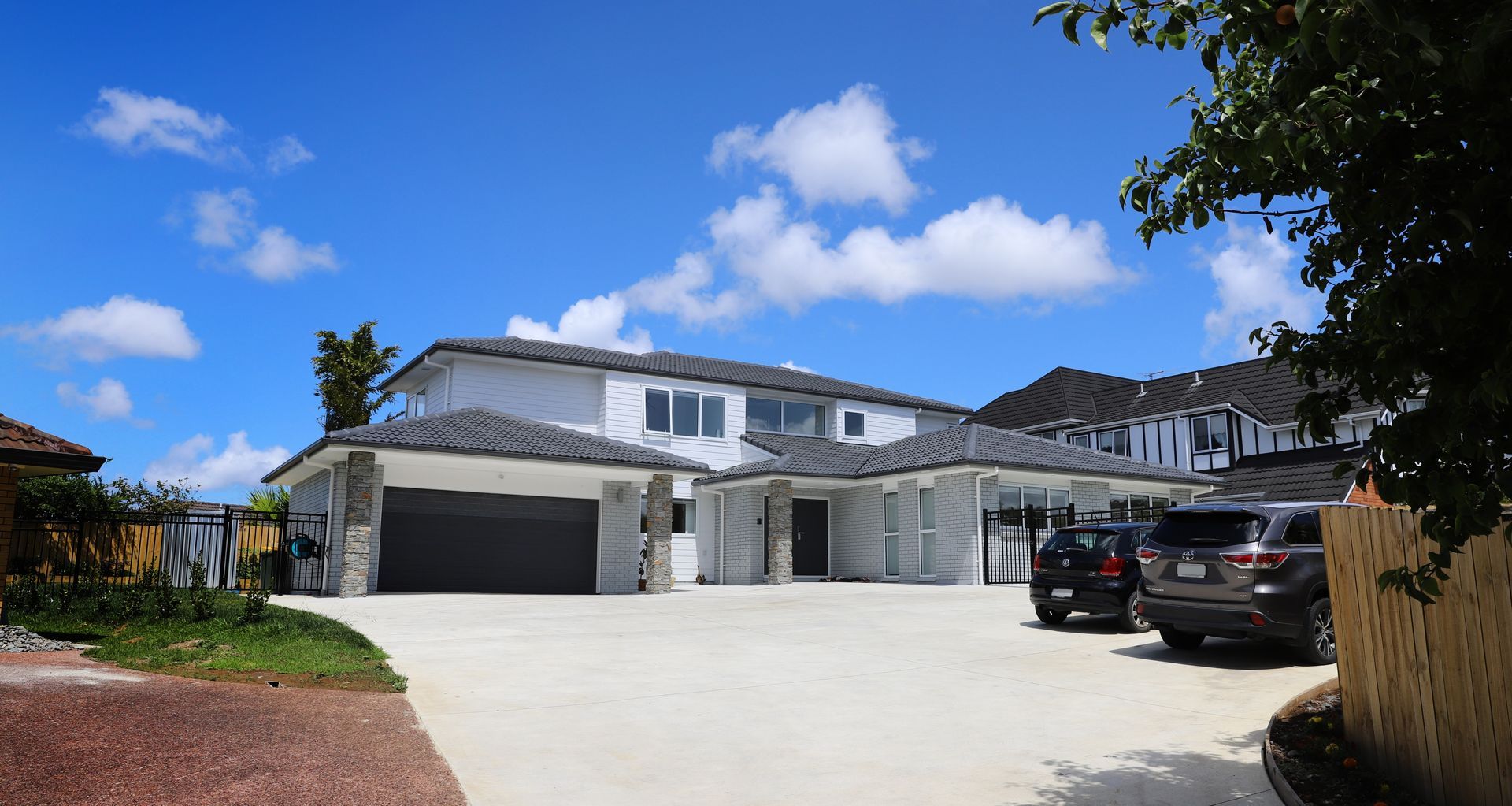
Concrete Driveways in NZ: What They Cost, Your Options, and the Bits Nobody Tells You
A concrete driveway is one of the biggest single spends around a Kiwi home that most people budget for last — and get quoted for worst. The number you see online ("$120 a square metre!") is the surface, not the job. The job is what sits underneath it, the drainage that stops it pooling every Auckland winter, and whether the truck can even get to your section.
Here's the honest version. A plain concrete driveway in NZ runs roughly $120 to $160 per square metre supplied and laid, and exposed aggregate or a decorative finish pushes that to about $150 to $250. But the surface rate is the easy part of the sum. Prep, drainage, demolition of the old surface and a kerb crossing can quietly add thousands before a single load of concrete arrives. This guide walks through what concrete driveways actually cost in New Zealand, how the finishes compare, where the money really goes, and why a driveway is often smartest done as part of a wider renovation rather than as a job on its own.
What a Concrete Driveway Actually Costs in NZ
So, what does a concrete driveway cost in New Zealand in 2026? For a standard plain, broom-finished driveway on a flat, accessible site, most Auckland pricing sits around $120 to $160 per square metre, supplied and laid. Go decorative and the rate climbs: exposed aggregate and coloured or stamped finishes land in the $150 to $250 range depending on the aggregate, the pattern, and how fiddly the layout is.
Put that against a real driveway size and it gets concrete, so to speak. A modest single-car run of about 40m² of plain concrete is roughly $4,800 of surface. Add base and edging, a sensible contingency, and you're closer to $6,000–$6,500 all in — around $160 a square metre once everything's counted. A double-width driveway of 50–60m² in exposed aggregate can comfortably run past $12,000 once prep is in.
A few things move that number more than the finish ever will:
- What's under the slab. Auckland's clay soils don't forgive lazy prep. A proper compacted base course is what stops the driveway cracking and settling two winters in. Skip it to save money and you'll pay for it twice.
- Drainage. Our rainfall is not a suggestion. Falls, channel drains and soakage all cost money up front and save a fortune in not-pooling later.
- Access and demolition. Ripping out an old driveway, or a site a concrete truck can't back onto, adds hours, labour and disposal fees.
- Thickness and reinforcement. Standard residential is 100mm with mesh. Park anything heavy and you're into 125–150mm, which lifts both material and labour.
The takeaway: judge a quote on what it includes, not the headline rate. A cheap per-square-metre price with vague prep is the oldest trap in the trade.
"The single biggest mistake we see is people comparing driveway quotes on the surface price alone. Two quotes at the same rate per square metre can be thousands apart once you read what each one actually includes for base prep and drainage — and on Auckland clay, that's exactly where a driveway lives or dies." — Dorothy Li, Design Manager, Superior Renovations
Plain, Exposed Aggregate, or Something Else? Your Driveway Options in NZ
Concrete isn't one thing. The finish you pick changes the price, the look, and how the driveway wears — so it's worth knowing your driveway options before you sign anything.
Plain concrete
The default, and for good reason. A broom-finished plain concrete driveway is the most affordable option, durable as anything, and handles heavy vehicles without complaint. The trade-off is looks — it's honest and functional rather than a feature. It's also the finish that shows oil marks and tyre scuffs most.
Exposed aggregate
The popular upgrade. Exposed aggregate strips back the top layer of cement to reveal the stone in the mix, giving a textured, speckled surface. It hides marks far better than plain, grips better in the wet (handy on the sloped driveways you get all over Titirangi, Mt Eden and the North Shore), and adds genuine kerb appeal. You pay for it — usually $30 to $80 a square metre more than plain — but for a driveway that fronts the street, plenty of Auckland homeowners decide it's worth it.
Coloured and stamped concrete
Colour pigments and stamped patterns let concrete mimic stone, brick or tile. It's the priciest end of the concrete family and the finish most dependent on the crew's skill — a badly stamped driveway looks worse than plain done well.
The non-concrete alternatives, briefly
Asphalt sits a little cheaper than plain concrete over larger areas but needs resealing every few years. Pavers cost more and take longer, but they won't crack and you can lift them to reach services underneath. Gravel is the cheapest and most DIY-friendly, though it washes out in heavy Auckland rain and needs topping up. Concrete wins on the balance of durability, low maintenance and load-bearing — which is why it's the most common driveway material in the country.
The Part Nobody Quotes For: Prep, Drainage and Consent
Here's the thing about driveways. The surface is what you see and the surface is what gets quoted — but the surface is rarely what goes wrong.
Ground prep is the quiet hero. On Auckland's clay-heavy sections, the subbase does the structural work. Get it compacted properly and a concrete driveway lasts 25 to 30 years. Get it wrong and you'll see hairline cracks and settling within a couple of seasons, and there's no cheap fix once the slab's down.
Drainage matters more here than in drier parts of the country. Water needs somewhere to go — proper falls, channel drains where the ground's flat, and a soakage plan. Pooling water is the enemy of any driveway, and it's the first thing that fails when a job's been priced to win rather than priced to last.
Then there's consent, which trips people up. A straight replacement of an existing driveway on flat ground usually doesn't need building consent. But the moment you create a new vehicle crossing onto the road, widen an existing one, work near a retaining structure, or do anything that affects stormwater, you can trip an approval. The rules sit with Auckland Council and the responsibility sits with you, the property owner — so confirm before the digger arrives, not after. (For the current thresholds, the Building Performance team at building.govt.nz and Auckland Council are the sources that actually matter.)
Sloped sites add another layer. The steep driveways common across the western suburbs and the North Shore often need retaining or cut-and-fill earthworks before any surface goes down — and if that's your situation, it's worth getting the retaining and the driveway quoted together rather than as two disconnected jobs.
Why a Driveway Is Often Smarter as Part of a Bigger Renovation
Most driveways get done in isolation — you ring a concrete crew, they pour a slab, they leave. That works fine if the driveway is genuinely the only thing you're touching. It's the wrong approach if the driveway is one piece of a larger do-up.
We see this constantly. A homeowner repaints the exterior, replaces the roof, sorts the fencing, and then — as an afterthought, months later — realises the tired old driveway now makes everything else look half-finished. Doing it piecemeal means paying twice for site setup, coordinating separate crews who don't talk to each other, and living through the disruption more than once.
Bundling the driveway into the outdoor and exterior side of a renovation solves that. The earthworks, drainage and paving get planned alongside the fencing, landscaping and any exterior work, so the site's dug once and the whole front of the property lands as one coherent result rather than a patchwork.
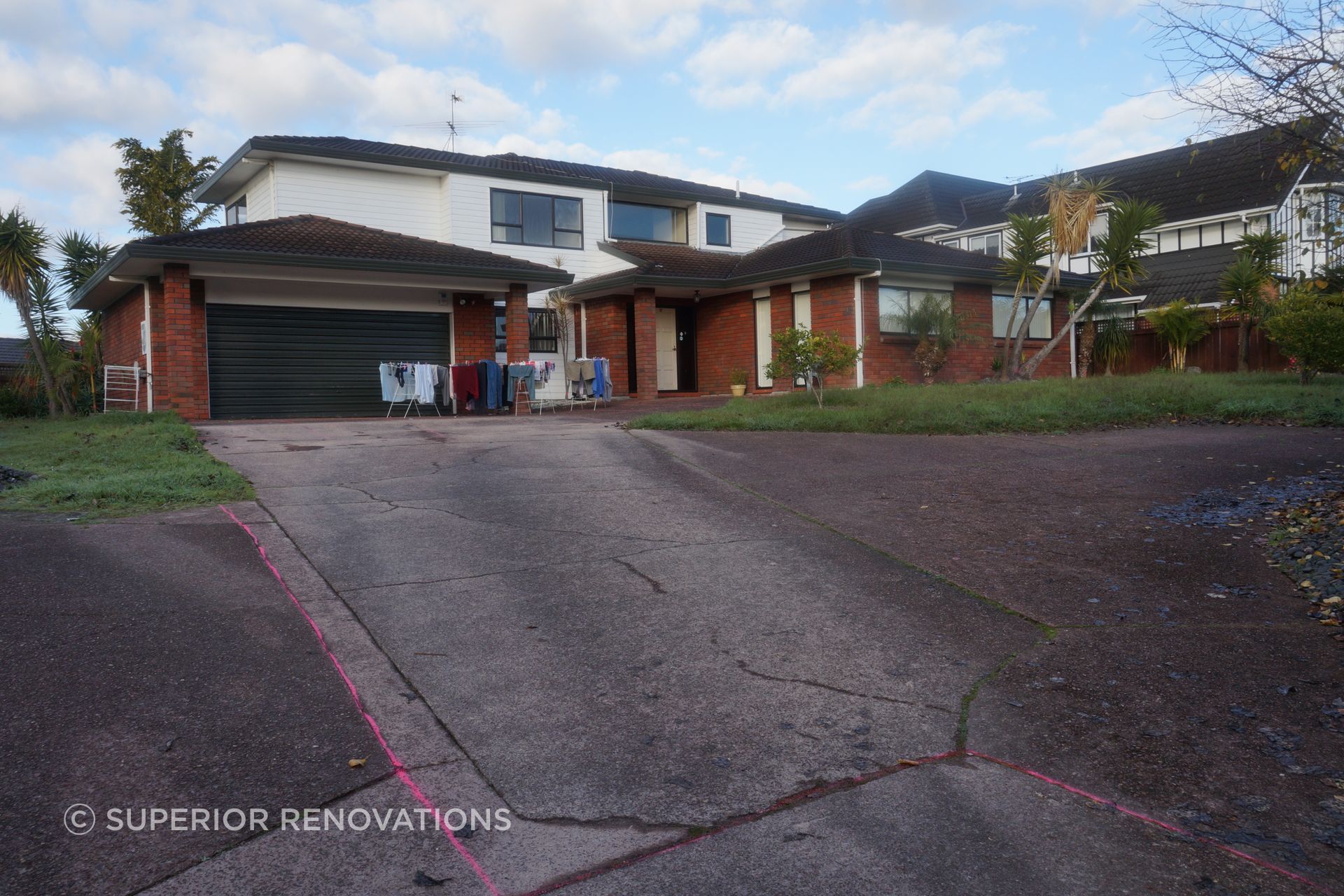
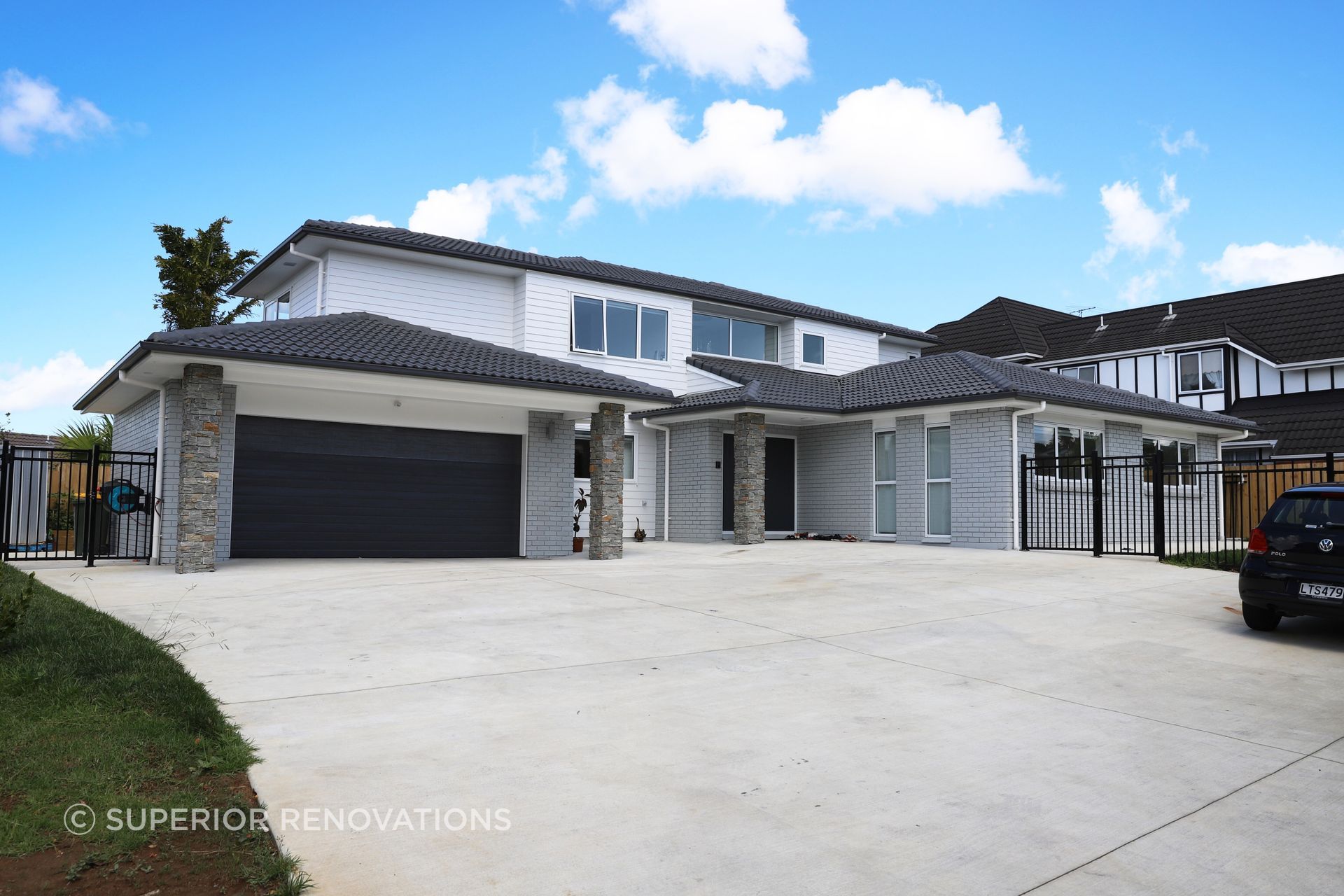
A West Harbour project of ours makes the point. A family of seven renovated their ageing home top to bottom rather than sell up and leave the suburb — new kitchen, four bathrooms, five bedrooms, a re-roof, double glazing, full insulation. The driveway and new paving weren't the headline. They were the finishing move, poured as part of the same coordinated job alongside a landscaped garden and an automatic gate. Done separately, that driveway would have meant a second round of earthworks and a second set of disruption on a house that had already been through enough. Done together, it just... finished the place off.
That's the case for treating a driveway as one line in a bigger scope rather than a standalone slab — especially when you're already renovating a whole property in one coordinated go. One team, one site setup, one plan for how water moves across the section.
"When a driveway comes to us, it's almost never just a driveway. It's the last piece of a bigger exterior refresh, and it looks a hundred times better when it's been designed to sit with the fencing, the landscaping and the entrance rather than bolted on afterwards." — Eunice Qin, Designer, Superior Renovations
None of which means every driveway needs a full renovation wrapped around it. If your driveway is genuinely the only tired thing on an otherwise sorted property, a standalone concrete crew is the right call and we'll happily point you to one. But if you're already eyeing the roof, the paint or the fence, that's the moment to think about the driveway too. You'll spend less overall and live through the mess once.
You can get a feel for how the wider numbers stack up using the renovation cost calculators on our site before you commit to anything.
How to Compare Driveway Quotes Without Getting Caught
A vague one-line driveway quote almost always means variations later. When you're comparing, make each quote spell out the same things so you're comparing like for like:
- Concrete thickness (100mm standard, more for heavy vehicles)
- Reinforcement — mesh or steel
- Base and subbase preparation
- Drainage and falls
- The exact finish (plain, exposed aggregate, coloured)
- Whether GST is included
- Old driveway removal and disposal, if relevant
Ask to see recent local jobs and confirm the crew are actual driveway specialists, not a general handyman subbing out the pour. And be realistic about timing — most residential driveways take two to four days across excavation, pour and curing, and you'll need to keep vehicles off for about a week and avoid heavy loads for a month while the concrete reaches full strength.
Frequently Asked Questions
How much does a concrete driveway cost in NZ?
A plain, broom-finished concrete driveway in NZ typically costs around $120 to $160 per square metre supplied and laid, with exposed aggregate and decorative finishes running roughly $150 to $250. A 40m² single driveway usually lands around $6,000–$6,500 all in once base, edging and contingency are counted. Site prep and drainage move the figure most.
Is exposed aggregate worth the extra cost over plain concrete?
For many Auckland homeowners, yes. Exposed aggregate costs around $30 to $80 more per square metre, but it hides oil marks and tyre scuffs, grips better in the wet, and adds kerb appeal that supports resale value. On a driveway that fronts the street or sits on a slope, the upgrade often earns its keep.
Do I need consent for a new concrete driveway in Auckland?
Usually not for a straight replacement on flat ground. But creating a new vehicle crossing onto the road, widening an existing one, working near retaining structures, or affecting stormwater can trigger approval. The responsibility sits with the property owner, so confirm current rules with Auckland Council before starting.
How long does a concrete driveway take to install?
Most residential concrete driveways take two to four days — excavation and base prep, then the pour, then finishing. After that, keep vehicles off for at least seven days and avoid heavy loads for around 28 days while the concrete cures to full strength. Weather and site access can stretch the timeline.
What's the biggest hidden cost in a driveway project?
Everything under the surface. Ground prep, subbase compaction, drainage and — on sloped sites — retaining or earthworks routinely cost more than people expect, because online per-square-metre rates only price the visible surface. On Auckland's clay soils, underspending on prep is the fastest way to a cracked driveway within a couple of years.
The Bottom Line
A concrete driveway is a 25-to-30-year decision, and the price that matters is the one that includes the prep and drainage, not the headline rate on the surface. If it's the only job on the list, get it done well by a specialist crew. If it's part of a wider exterior refresh, it's almost always cheaper and cleaner to fold it into the bigger scope. Superior Renovations manages full-home and exterior renovations across Auckland from our Wairau Valley showroom at 16B Link Drive — driveways, landscaping and all — so if you're weighing up where a new driveway fits in a larger project, book a free in-home consultation and we'll help you sort the plan before you spend a dollar.