Painting a House During a Renovation: Timing, Prep and Cost

Paint is the last thing you see go on and the first thing you notice when you walk into a finished room. It's also the trade that pays for every shortcut taken before it. A lumpy joint, a patch of wallpaper someone painted over, a ceiling that's quietly rotting: none of it shows until the final coat goes on, and by then it's the painter's problem and your bill.
If you're asking what it costs to paint a house in NZ, start with the dedicated price guides. Superior Painters' breakdown of house painting costs in Auckland covers standalone exterior repaints by cladding type, and the Superior Renovations house painting cost guide sets out interior, exterior and roof budgets. Painting a house during a renovation is a different job: the price and the finish both depend on what happens in the weeks before the painter arrives.
That holds whether the house is a villa in Grey Lynn, a 1970s brick-and-tile in Glendowie or a 40-year-old family home in Mangere, and whether the renovation is one kitchen or every room.
Where painting sits in a renovation programme
On most renovations, painting is the last trade through the door, and that's deliberate. In the trade order we publish for bathrooms, painting is step 10 of 11, after demolition, rough-in, stopping, waterproofing, tiling, both fit-offs and the vanity and glazing. The condition for starting is simple: everything that makes dust or marks is done. Painting early means painting twice. You can see the whole sequence in the trade order we follow on a bathroom renovation.
Kitchens run the same way. The plumber comes before the cabinets, the cabinets before the benchtop, the benchtop before the splashback, and the painter last, working around the installed joinery. Our house painting guide puts the rule of thumb in one line: paint after the plastering is signed off, before new flooring goes down, and in one mobilisation rather than three.
The order matters because every earlier trade can damage a painted surface: an electrician chasing a cable, a cabinetmaker scribing a panel to the wall, a tiler's grout haze on a freshly cut-in edge. Paint that goes on before the dusty work is finished gets touched up at best and redone at worst, and either way someone pays for it.
There's a colour reason too. Paint looks different against a real benchtop and real cabinet doors than it does on a screen or a small chip. Our kitchen advice is to hold off choosing wall colours until the benchtop and cabinetry are installed, then paint A4-sized swatches next to them and look at them in morning and evening light before committing.
What strip-out exposes before a brush is loaded
A standalone repaint works with the walls you've got. A renovation takes them apart, and what turns up behind the old linings often changes the painting scope more than the room size does. These are the discoveries that come up on older Auckland homes.
Wallpaper, sometimes on every wall
It's tempting to paint straight over wallpaper. On the Hillsborough rental we renovated, we stripped every wall of dated paper instead, because paint over old paper never holds: it cracks, and the walls never look right. Once the paper is off, the walls and ceilings usually need plastering and sanding before they're ready for primer, and that's a real line in the programme, not an afterthought.
Damage that paint would only hide
The Hillsborough rental where ceiling rot turned up during painting prep is the clearest example we've documented. In week four of a six-week programme, the team preparing the lounge for the following week's painting found the ceiling was leaking and had rotted from the inside. The owner had been told by other companies to just paint over it. We stripped the ceiling, insulated it properly and rebuilt it instead, with a standby team so the rest of the programme kept moving. Painting over rot hides the problem for a few months and makes the eventual repair bigger.
Leaks behind bathroom walls do the same thing to GIB. On the same job, the bathroom demolition uncovered a leak to chase down and damaged GIB that had to come off before anything new went on.
Fibrous plaster in villas and bungalows
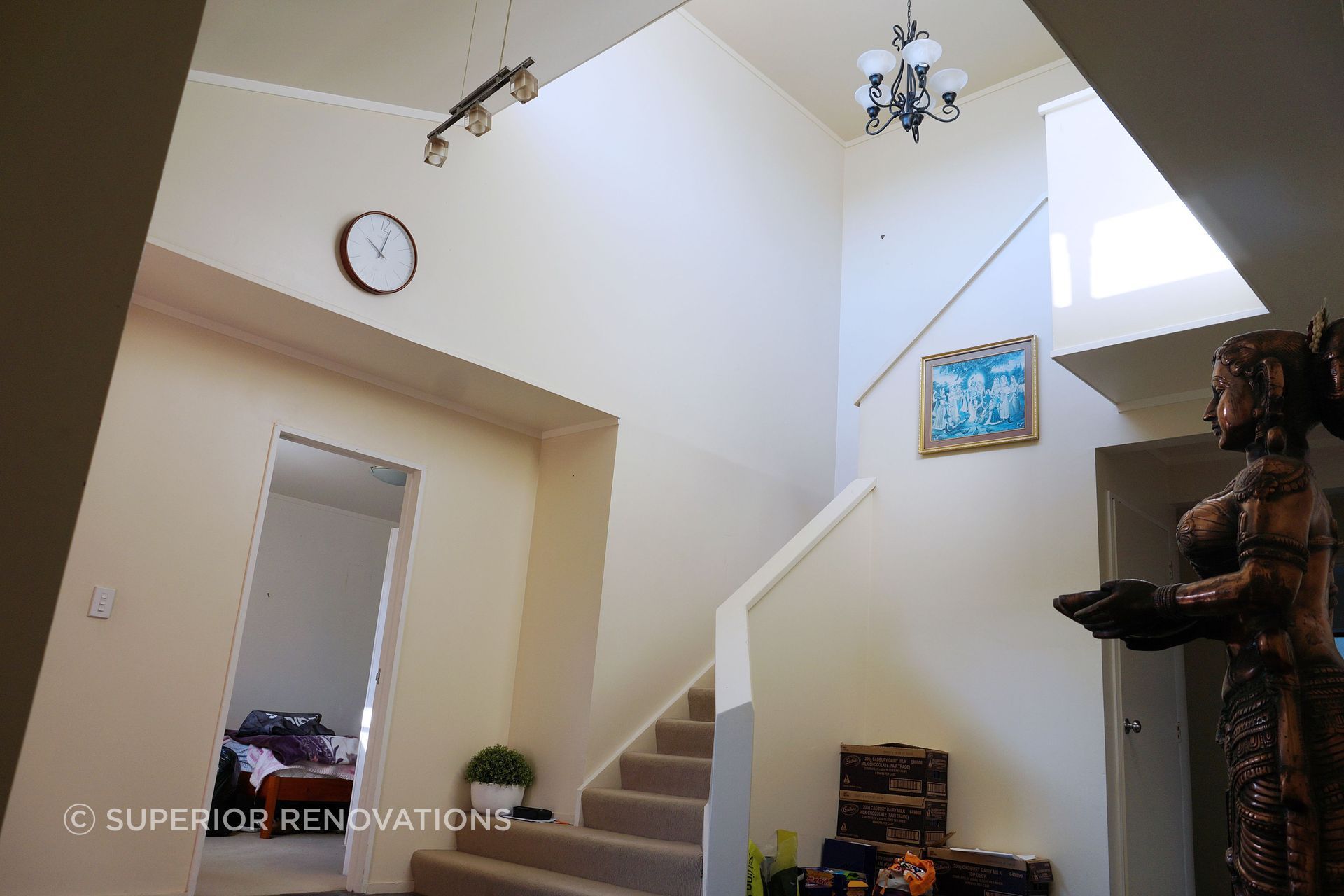
Many pre-1960 villas, bungalows and early state houses have original fibrous plaster walls and ceilings. As Superior Painters explains, fibrous plaster isn't GIB and can't be GIB-stopped. It needs traditional wet plaster repair with a lime-based mix, and filling a fibrous plaster crack with standard stopping compound often cracks again within a year because the two materials move differently. A villa renovation that adds a new kitchen can easily need two trades: a GIB stopper for the new walls and a plasterer for the original ceilings.
Lead and asbestos in older paint and linings
Two legacy materials change how old paint and linings are removed. Test for lead if the house pre-dates 1980, before anyone sands back the old layers. And on any home built before 1 January 2000, textured paint, patching compounds and textured ceilings are on the list of materials that can contain asbestos, so the survey has to happen before strip-out starts. Neither is something to assess by eye; a qualified surveyor or tester makes that call.
Decisions that are locked in before the painter arrives
Some of the most important painting decisions on a renovation aren't made by the painter at all. They're made at design stage and on the day the walls are framed and lined.
The level of finish on new GIB
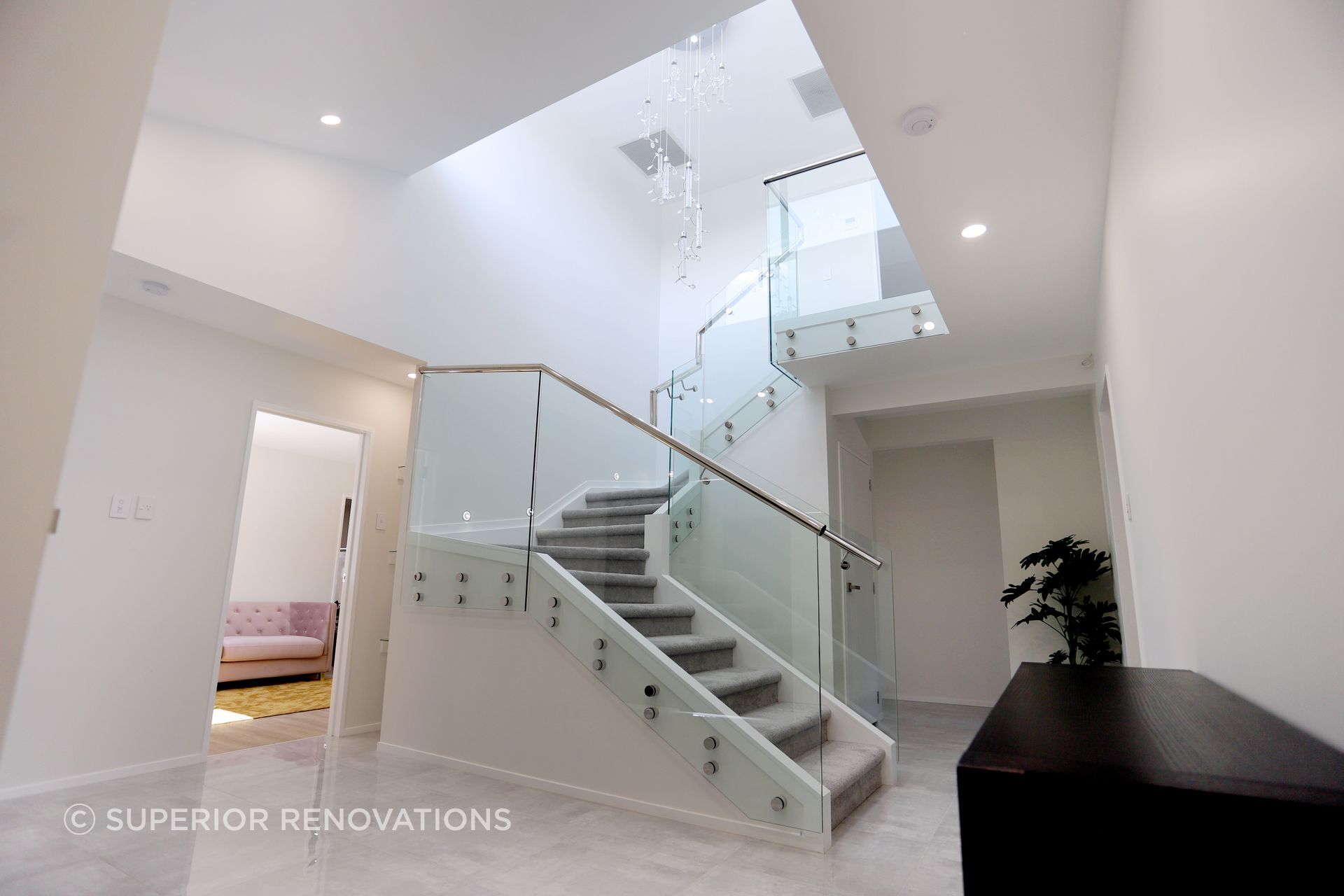
New plasterboard is finished to a defined level before it's painted. Under the GIB guidance, which is based on AS/NZS 2589:2017, Level 4 is the default for flat and low-sheen paint in pale to mid tones, and Level 5 is for semi-gloss or gloss paint, dark colours, or walls hit by raking light, such as a long hallway with a window at the end or a wall washed by downlights. If nobody wrote a level into the scope, Level 4 is what you've been quoted.
The catch is that Level 5 starts at the framing, not the stopping. The framing tolerance is tighter, joints need more back blocking, and the full-surface skim is there to even out porosity, not to flatten a wavy wall. That's why a dark charcoal lounge needs to be on the drawings before the frame goes up. Superior Painters' guide to how Level 4 and Level 5 GIB finishes differ goes into the detail, including the lighting and sheen choices that let a Level 4 wall read well. Levels of finish are guidelines for quality, not a Building Code requirement, so the cost of getting it wrong is how the wall looks, not a failed inspection.
Wet-area paint and primer
Bathrooms and kitchens need a different paint system from the rest of the house. Bathroom walls take a semi-gloss or gloss formulation with mould-resistant additives, the ceiling takes a bathroom ceiling paint with anti-mould properties, and new GIB gets a primer before any topcoat. Flat paint in a bathroom is a recipe for mould and peeling within a few years, however good the extractor fan is. Those products belong in the specification, not in a conversation on the last day.
Which surfaces are actually in the scope
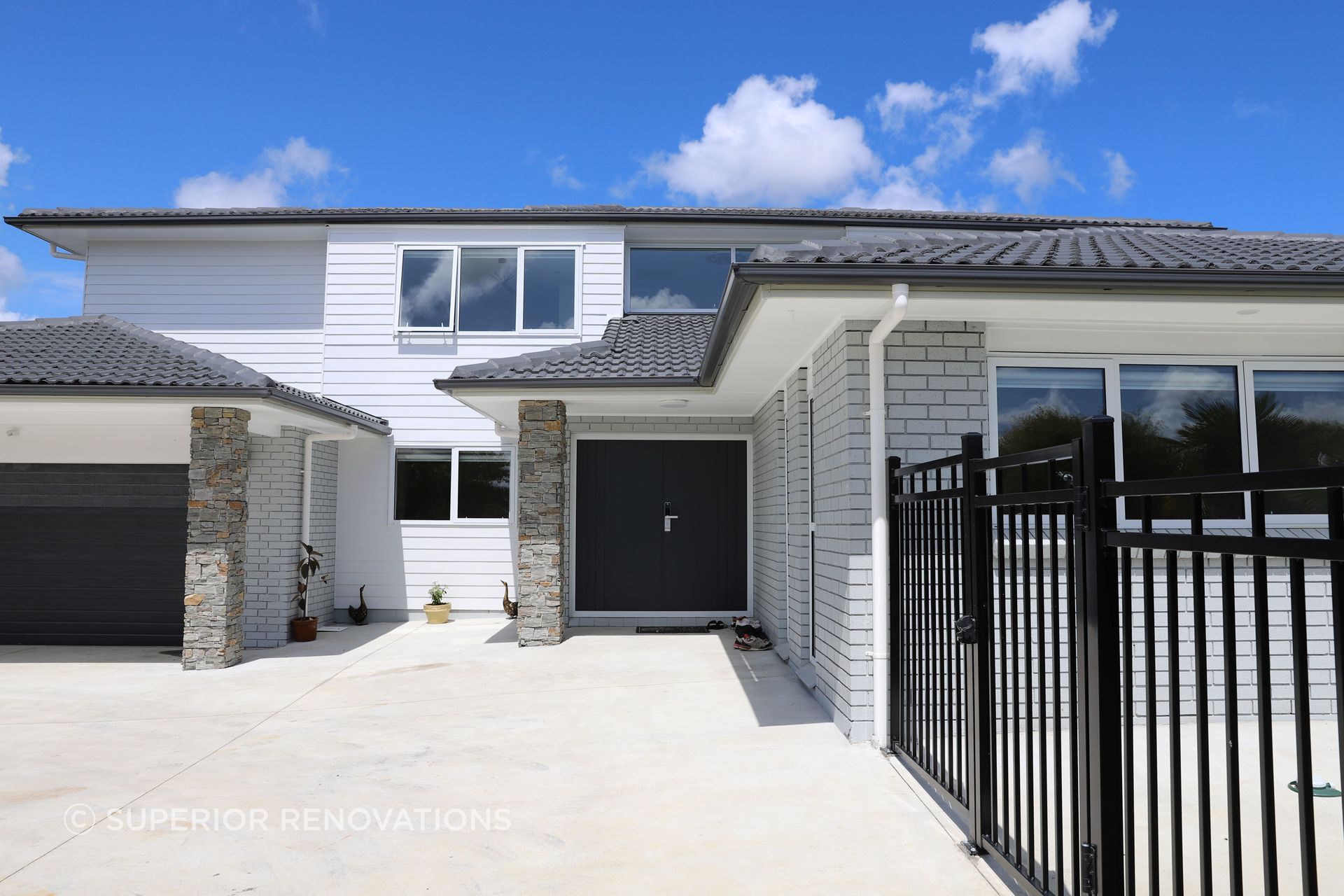
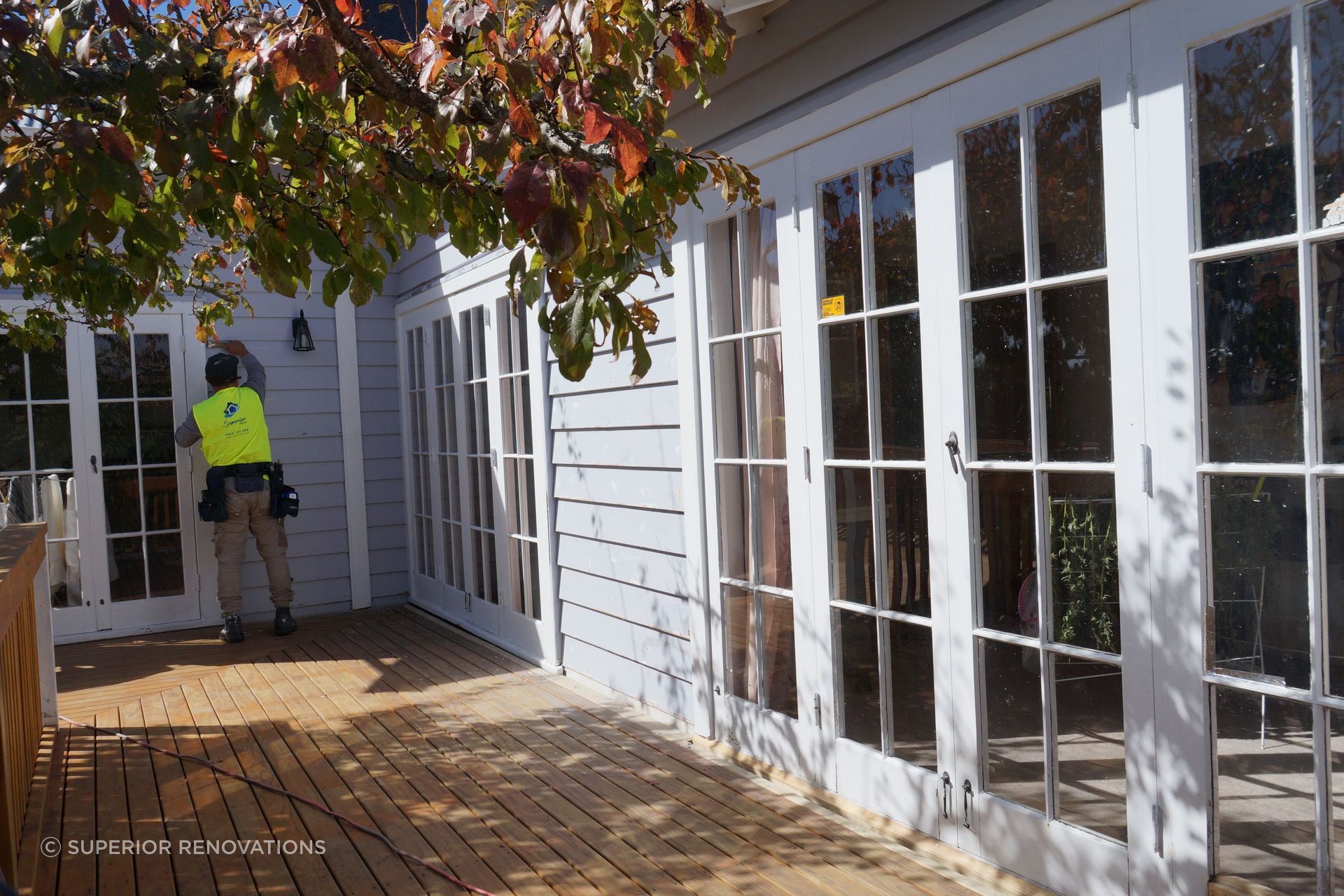
"Painting" in a renovation quote can mean walls only, or walls, ceilings, door frames, doors, window frames and skirtings. On the Hillsborough job, week five covered all of those across both bedrooms, the lounge, bathroom and kitchen. Decide early which rooms outside the renovated areas get repainted too. Fresh walls next to a yellowed ceiling or a tired hallway make the untouched parts of the house look older than they did before.
Painting as part of a kitchen renovation: Mangere
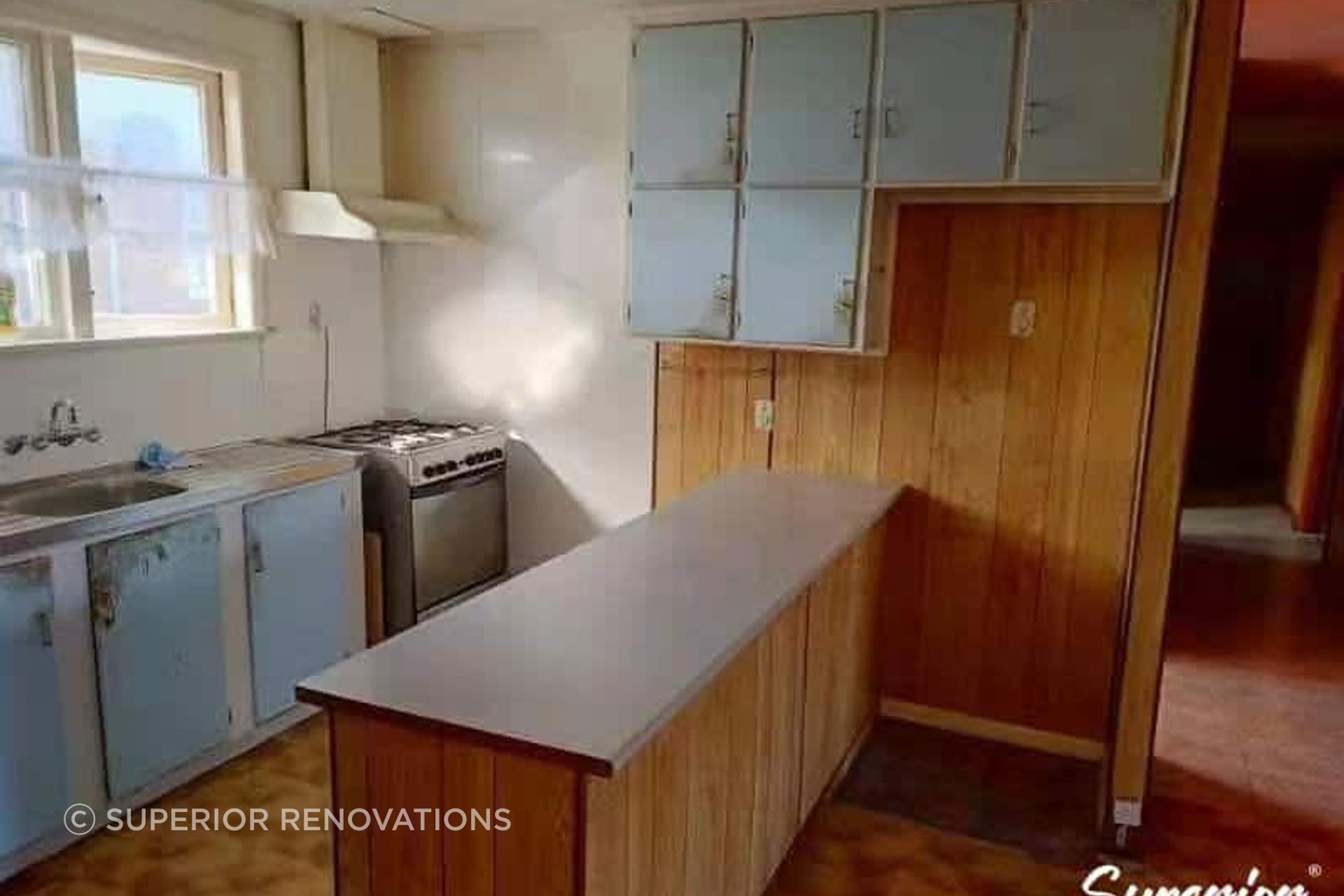
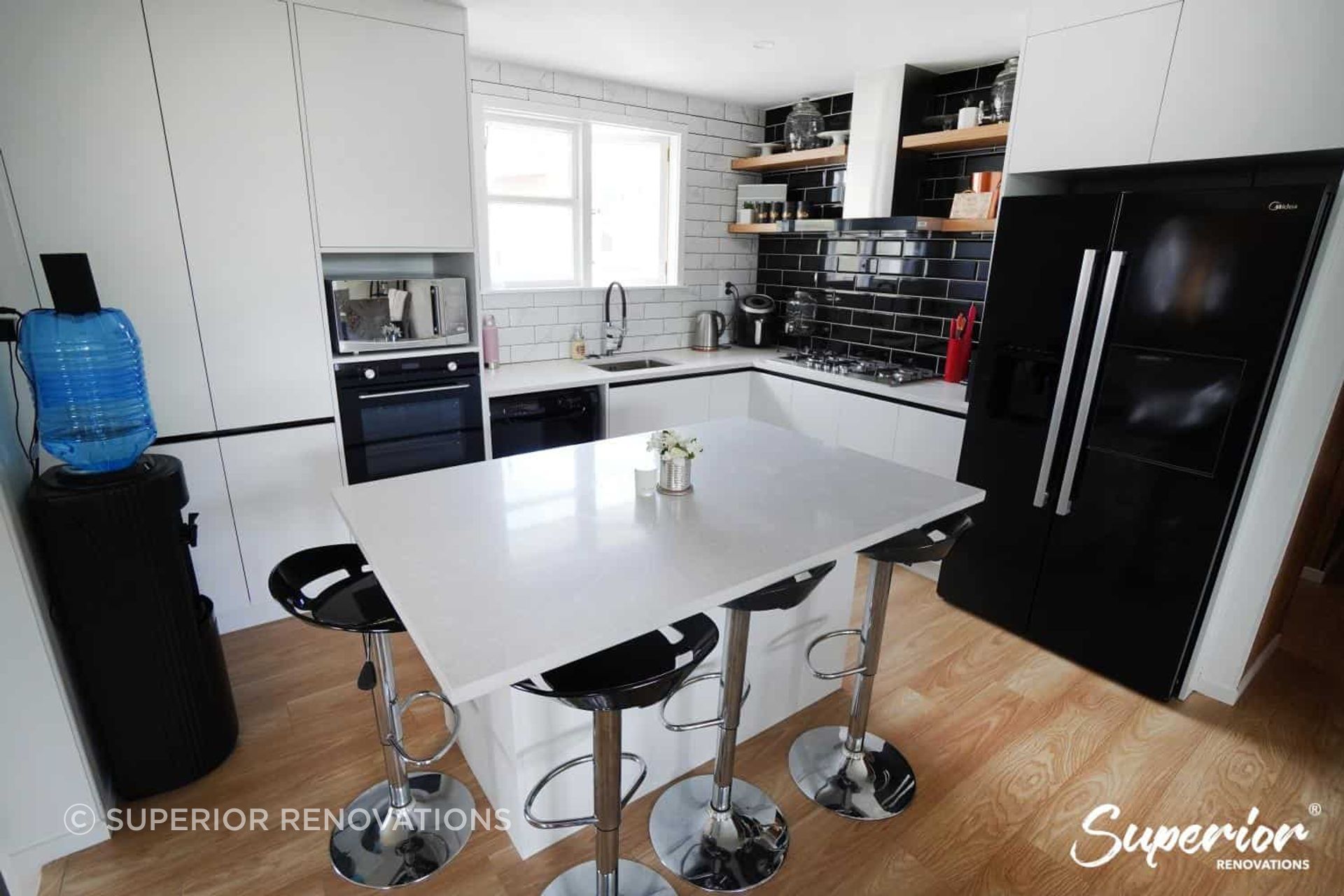
The Mangere kitchen renovation where plaster repair and painting tied three rooms together shows what painting does when it's part of a bigger job. The 40-year-old family kitchen was closed off from the rest of the house, lined in timber panelling with pale blue cabinets. We opened it through to the living area, added steps down into the lounge and ran new flooring continuously through the kitchen, dining and hallway. Strip-out took the panelling off and left the ceiling framing exposed. The photos show the original kitchen before (left) and the finished kitchen after (right).
Painting finished the job rather than decorating it. The specification lists full plaster repair throughout, then one undercoat and two top coats of a Dulux neutral on walls and ceilings. The dining walls and ceilings were painted in the same tones as the living area, so the eye reads three spaces as one room. That's a design decision made on the drawings, not a colour picked on the last day. The job ran during Auckland's COVID-19 lockdown, with one trade in the house at a time and never crossing over, which is the same discipline that keeps a painter off surfaces other trades haven't finished with.
The kitchen's standout finish is a black gloss tiled splashback, and our designer's reasoning for it applies to paint sheen as well. Gloss reflects light, which is exactly why gloss and semi-gloss paint on GIB needs a Level 5 finish underneath.
The black gloss behind the cooktop does two jobs. It's the contrast everyone notices the moment they walk in, and because it's glossy it bounces light around — which makes a fairly compact kitchen feel a lot more open. — Cici Zuo, Designer, Superior Renovations
How painting shows up in a renovation quote
This is where the paint price question changes. When painting is part of a kitchen, bathroom or full-house renovation, it's usually absorbed into the overall renovation quote rather than priced as a standalone job. The painter is sequenced into the trade flow, and the pricing reflects work bundled with the other trades rather than a separate crew setting up, protecting floors and packing down.
That bundling is where the saving sits. Superior Painters' own interior figures show the per-room cost typically dropping 15 to 25 percent when a whole house is painted at once rather than room by room, because it's one setup, one furniture move and one clean-up. On a renovation, the house is usually already emptied and protected for the other trades, which helps again.
For context, Superior Renovations' published mid-range for a full home renovation in Auckland is $80,000 to $160,000, or $2,000 to $4,500 per square metre for standard work, rising to $5,500 per square metre and beyond for high-end or structural jobs. Painting is one of the consistent line items inside those numbers, alongside cabinetry, plumbing, electrical and flooring. For a standalone paint job, use the price guides linked at the top of this article rather than a renovation figure.
When you're reading the painting part of a renovation quote, check that it spells out:
- Surfaces: walls, ceilings, trims, doors, window frames, and which rooms outside the renovated areas.
- Prep: wallpaper removal, plaster repair and any fibrous plaster work, written as their own items.
- Level of finish: the GIB level for new linings, especially where you want dark colours or gloss.
- Products and coats: the named paint system and number of coats, not just "premium paint".
- Exclusions: rot repairs, scaffolding and anything found behind the linings.
A painting line that just says "paint throughout" is where variations come from. The more of the list above is written down, the fewer conversations you'll have halfway through. Already holding a renovation quote with a one-line painting allowance? Bring it to a consultation and we'll go through what it does and doesn't cover.
Exterior and roof painting as part of a renovation
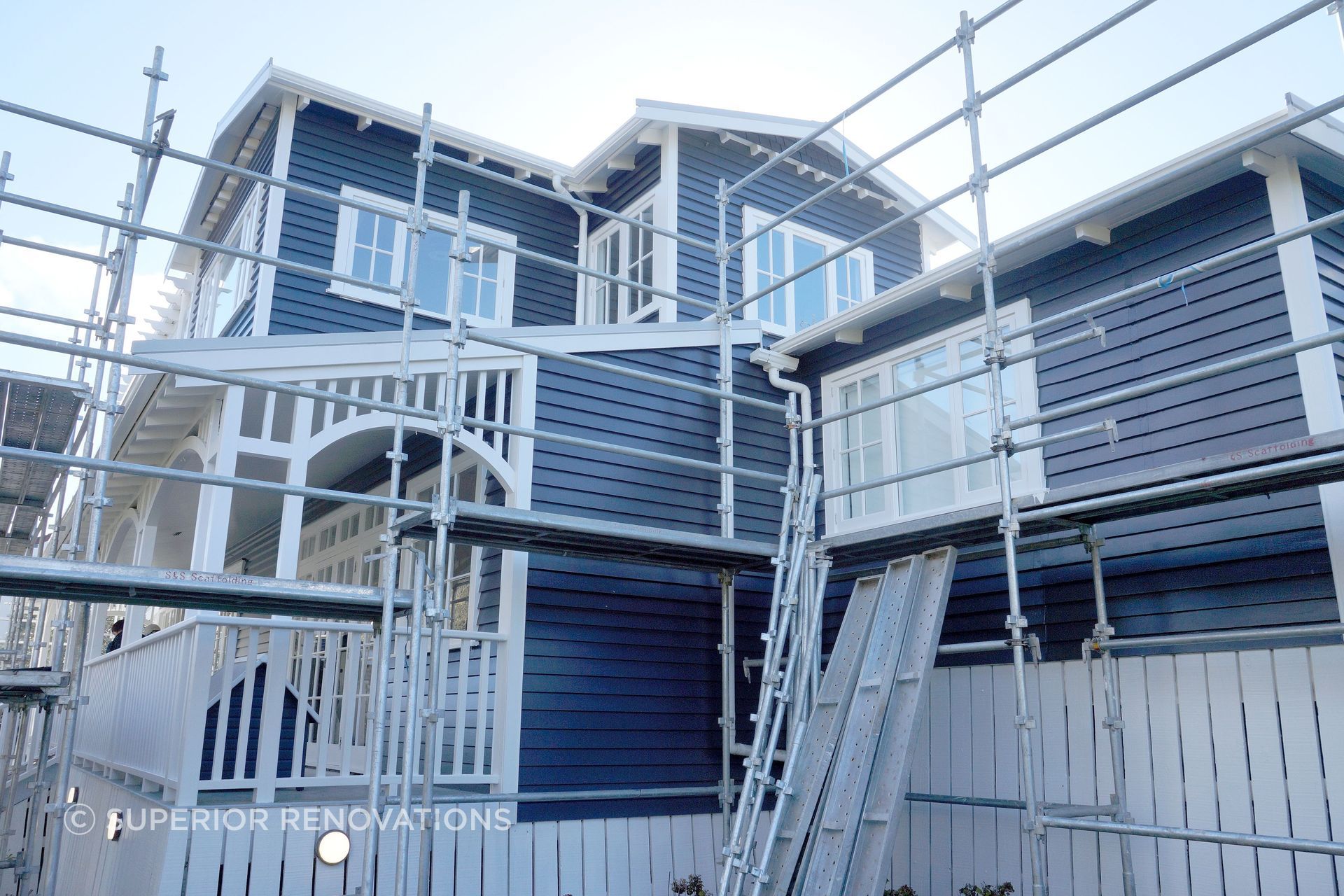
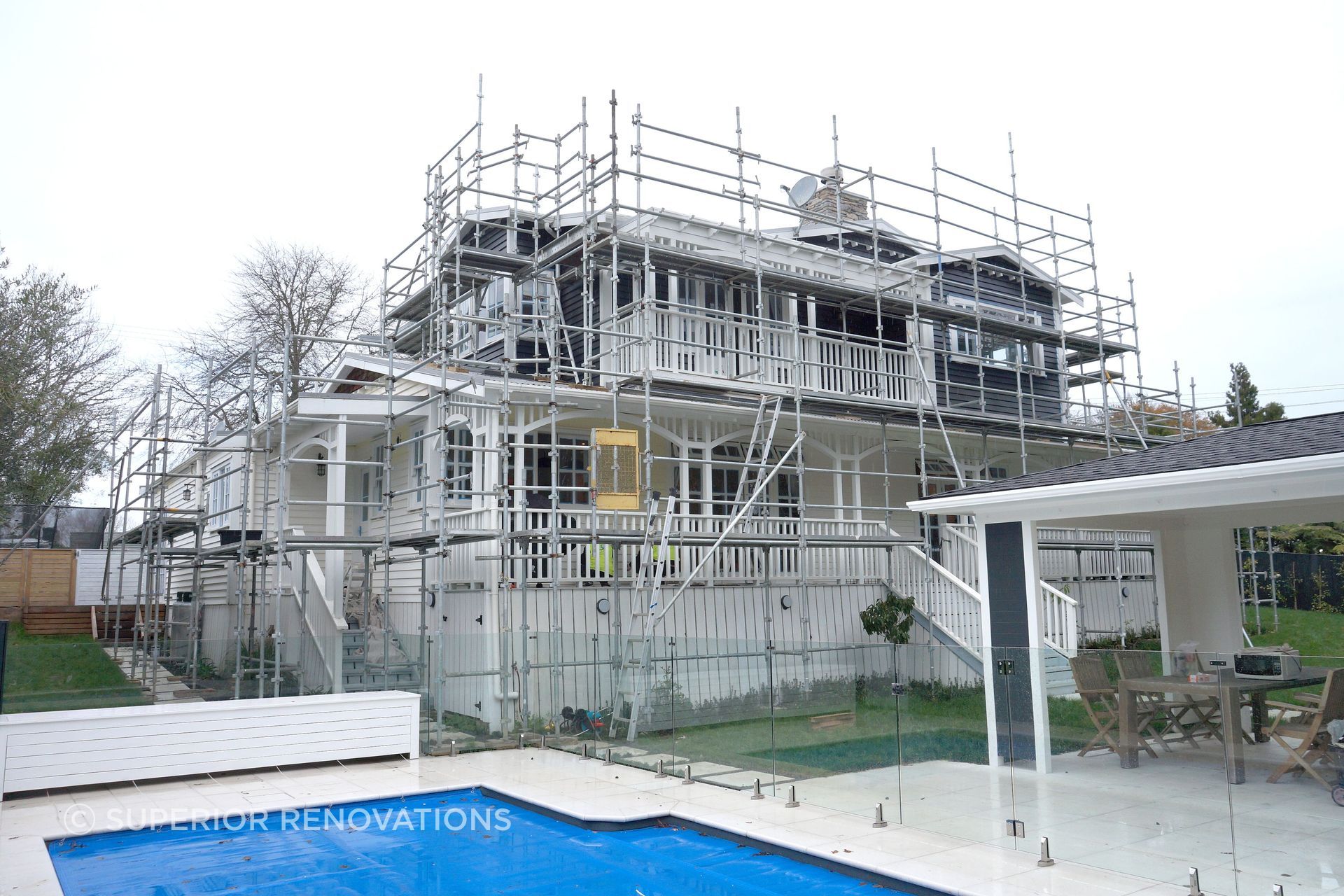
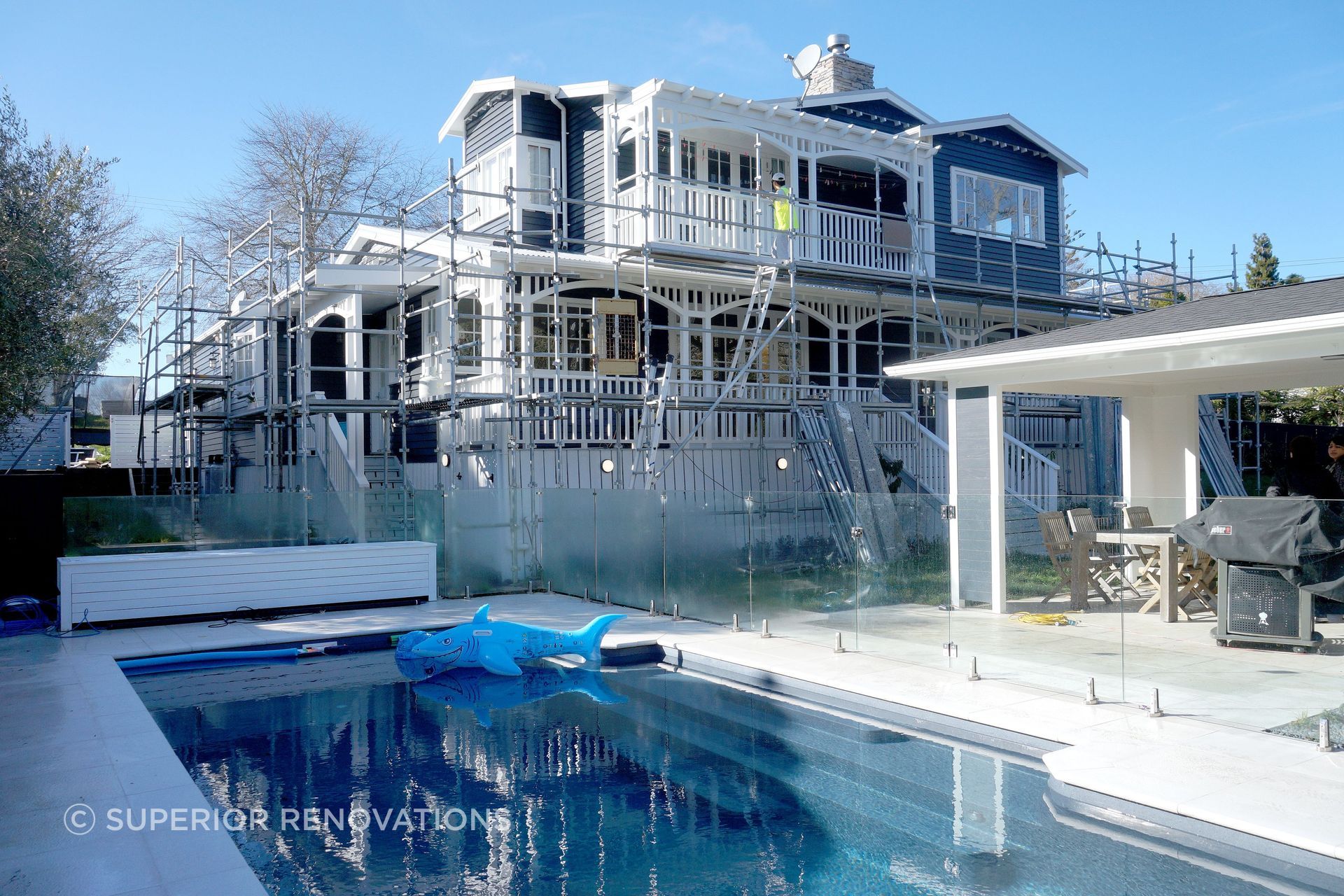
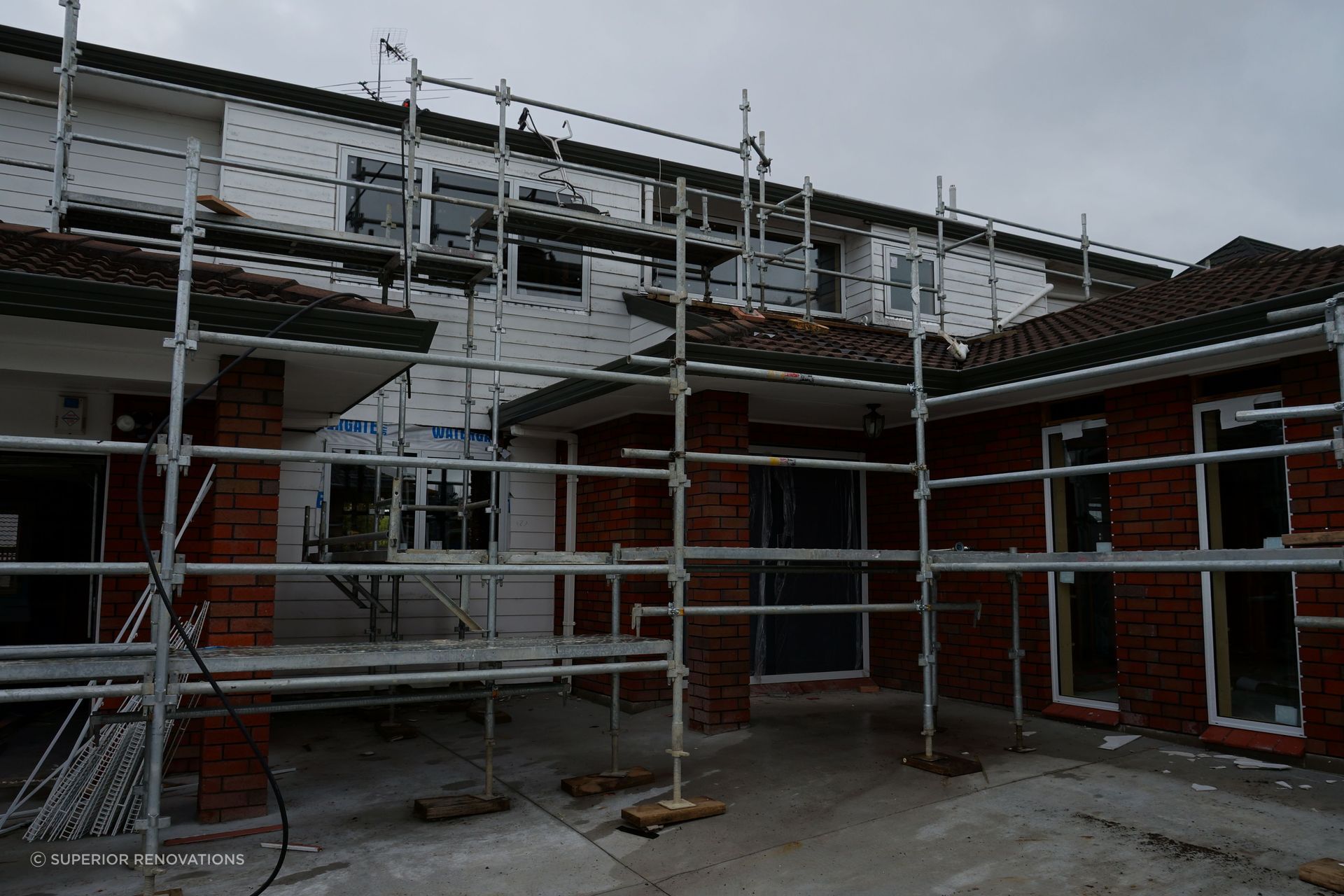
Outside, the same logic applies with one big addition: scaffolding. If the exterior and the roof are both being painted, doing them in the same project means the scaffold goes up once. Roof painting is often the forgotten item, and Superior Painters publishes roof painting cost ranges separately if you want to budget for it on its own.
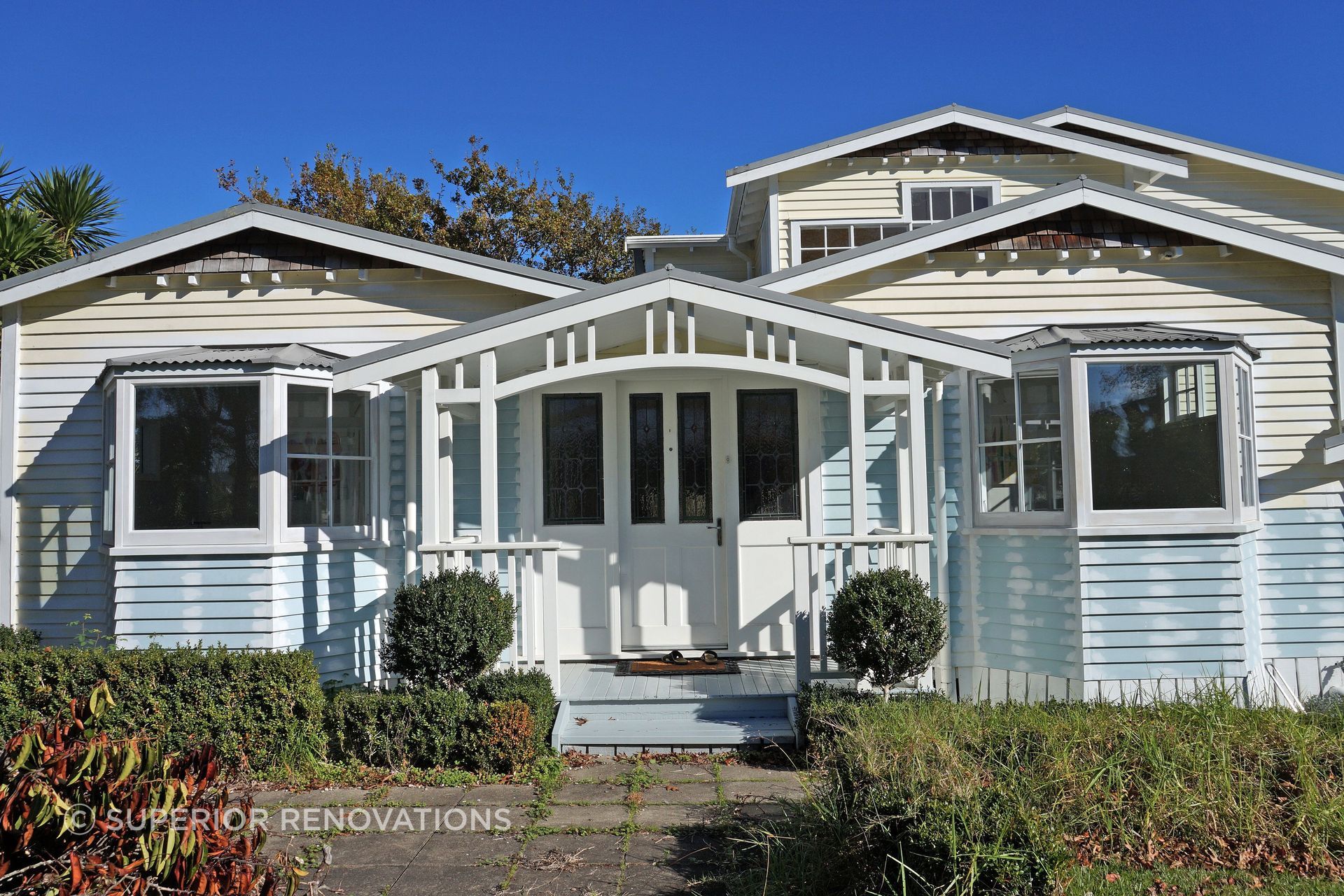
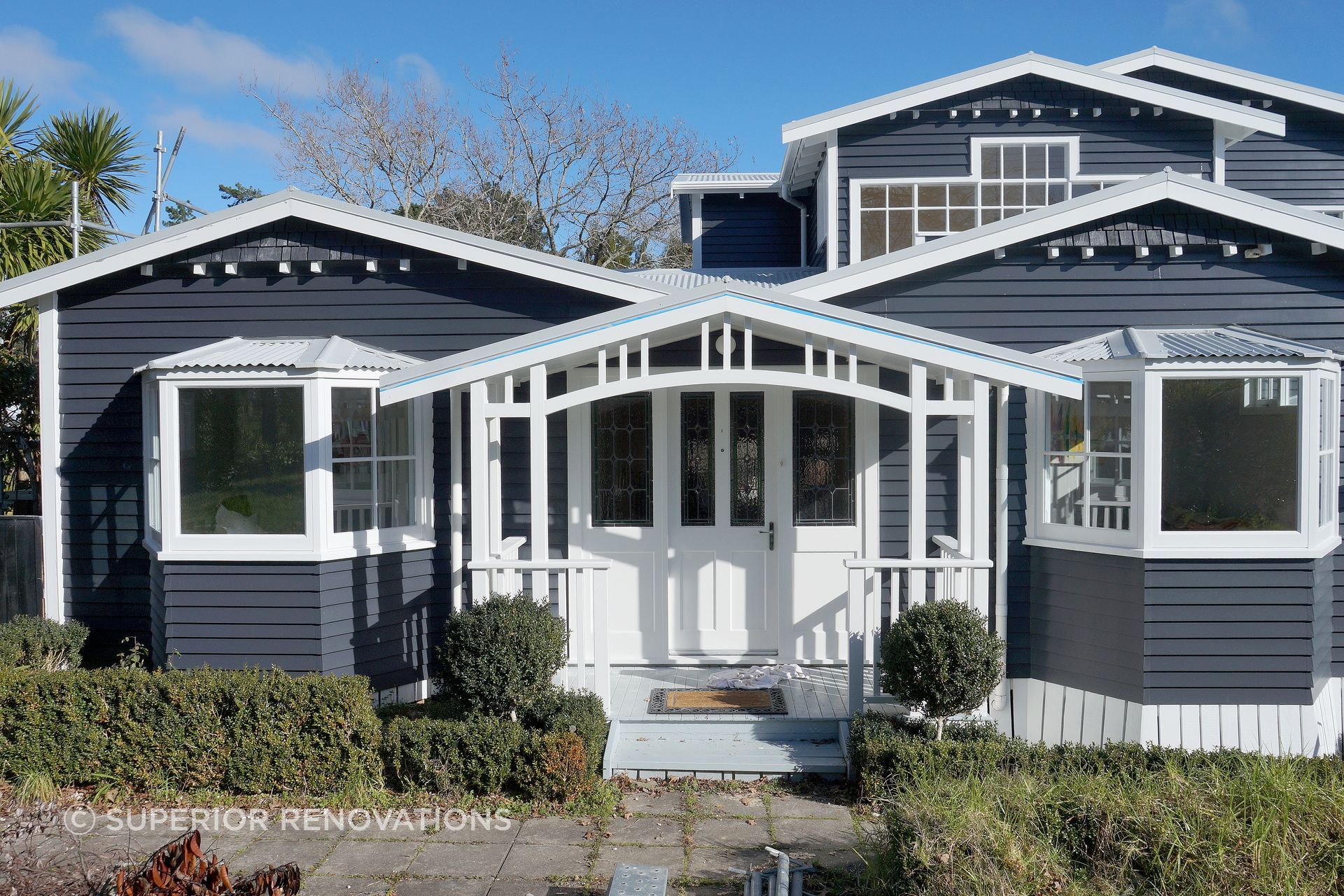
Timing matters more outside. Our villa and bungalow guide is blunt about it: scheduling exterior painting or cladding work through June and July in Auckland is asking for delays. And on some houses, paint isn't the answer at all. If the cladding is failing rather than just tired, or a 1990s-2000s monolithic plaster home shows cracking or moisture signs, the cladding needs assessing before anyone quotes a repaint. A reclad may be the longer-term fix, and it changes the exterior painting scope completely.
When painting should be a separate job
Not every repaint belongs inside a renovation. If painting is the only work you need, a dedicated painting company is the right call, and Superior Renovations points standalone painting to our sister brand Superior Painters for exactly that reason. A renovation company adds value when the painting depends on other trades: new linings, moved walls, new wet areas, a new kitchen or work outside that needs the same scaffold.
The two can also be split in time. If you're living in the house during a big renovation, it's often possible to plan a phased move-back once the home is safe and functional, with finishing touches such as painting and trims still underway. Every week back home is a week of temporary accommodation you're not paying for, so it's worth planning the move-back date with your project manager from the start.
If you'd like to see how that works on a full job, here's how Superior Renovations brings every trade, painter included, under one project manager. You can also browse more of our finished work at superiorrenovations.co.nz or see the materials in person at our showroom at 16B Link Drive, Wairau Valley.
Frequently asked questions about painting during a renovation
How much does it cost to paint a house in NZ?
It depends on whether you're painting the interior, exterior, roof or all three, and on the house's size, condition and cladding. For a standalone job, Superior Painters and Superior Renovations both publish Auckland price guides. When painting is part of a renovation, it's usually priced inside the overall renovation quote rather than as a separate job.
Should you paint before or after new flooring goes down?
On our renovations, painting comes after the plastering is signed off and before new flooring goes down, in one visit rather than several. Painting is the last trade in our bathroom and kitchen sequences because every earlier trade creates dust or marks. Painting early means painting twice.
Can you paint over wallpaper during a renovation?
We don't recommend it. Paint over old wallpaper doesn't hold: it cracks, and the walls never look right. On our Hillsborough rental renovation the paper was stripped from every wall, then the walls and ceilings were plastered and sanded before painting.
Do you need building consent to repaint during a renovation?
Cosmetic work such as painting generally doesn't need building consent in Auckland. The renovation work around it might, especially structural changes, new plumbing or altered wet areas. Consent rules depend on your specific home, so confirm with Auckland Council or a Licensed Building Practitioner before work starts.
Painting is the part of a renovation everyone sees, which is why it deserves a place in the plan from the first drawing, not the last week. Book a free consultation and bring a list of every room you want repainted, and we'll show you where painting sits in your programme and what needs deciding before it starts.