More than skin deep: Why the Building Agency starts at the structure, not the surface
Written by
06 May 2026
•
6 min read


For decades, the building industry has largely worked the same way. A façade is chosen for its aesthetic appeal, then the technical layers behind it are assembled to make that design viable. But what if the thinking was reversed?
For The Building Agency, that reversal is exactly the point. Rather than starting with what a building looks like, the company is championing a model that begins with how it performs. It’s a shift that Managing Director Darren Webster believes could revolutionise how buildings are designed, specified and consented.
“Fundamentally, it's just getting people to think about performance first and aesthetics afterwards, rather than going, ‘It looks pretty, how do I make it work?’” he says.
At the centre of this shift is an integrated enclosure system developed by the company. It replaces the long-standing approach of specifying separate components and hoping they work well together.
A move away from component thinking
Traditionally, the industry has operated through a component supply chain. Architects and specifiers choose individual materials including cladding, membranes and substrates, often sourced from different manufacturers, each with their own documentation and testing.
“We’re moving away from a components supply channel, where people source different products or materials and build the wall piece by piece,” Webster explains. “We have developed a comprehensive or fully integrated system which we’ve tested literally back to front, from the sheathing all the way through to the cladding.”
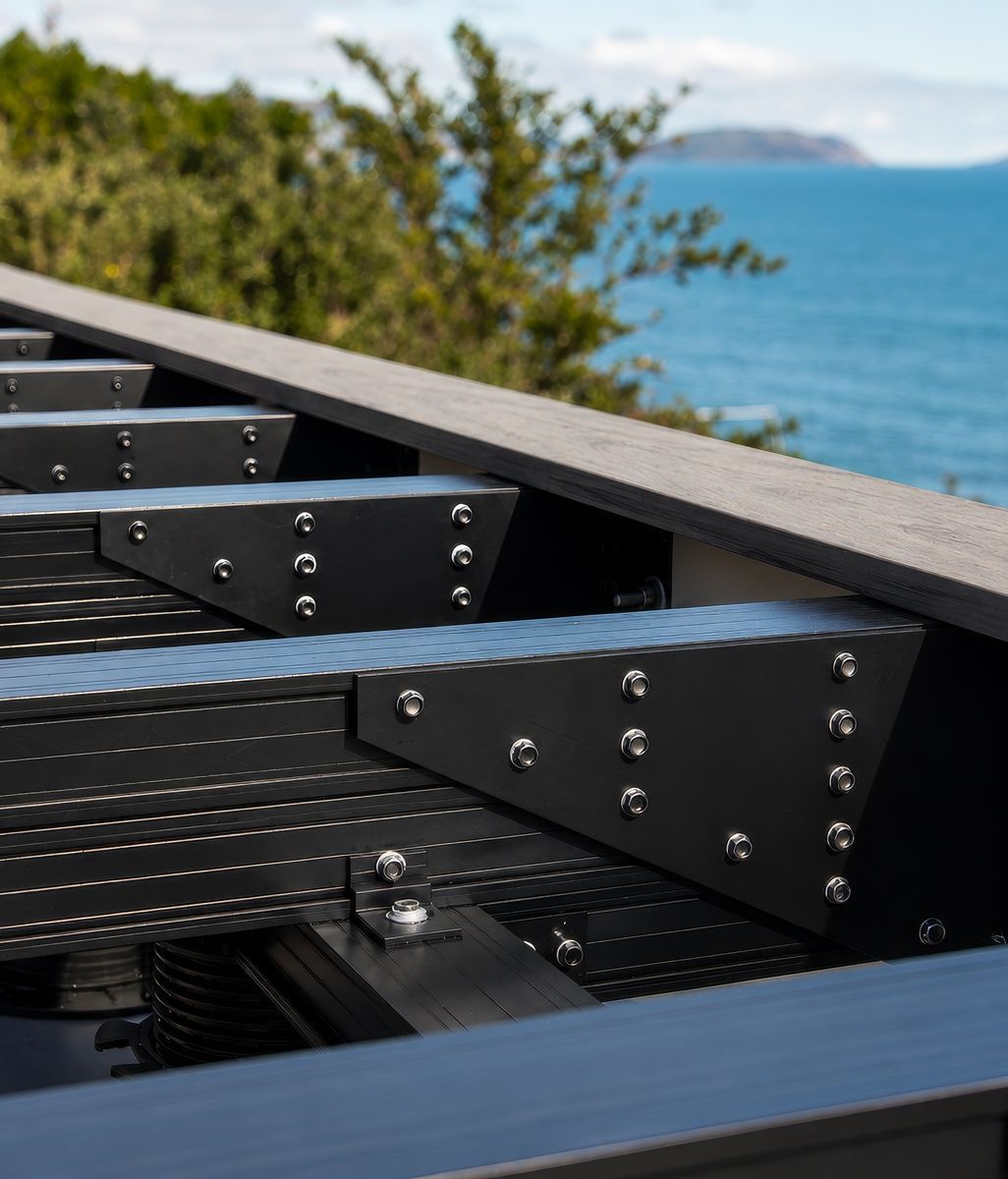
The system is built around four core layers: the sheathing, the membrane or underlay, the anchoring system or substructure, and the cladding itself. Instead of being assembled as unrelated parts, they are designed and tested to function as a single enclosure system.
This seemingly simple change addresses a long-standing problem: performance gaps created when separate components interact in unexpected ways.
“We’re not selling one component,” Webster says. “We’re effectively selling four, plus all the fixings that go with them, as an integrated enclosure system.”
Designing from the inside out
The real shift, however, is not just technical, it’s conceptual. Webster argues that buildings should be conceived from the inside out, starting with performance requirements rather than visual intent.
“If it’s a ten-storey building, a hospital, a hotel or student accommodation, the first question should be: What does the building require in terms of fire resistance, wind loading, seismic performance, inter-storey movement and weather-tightness?” he says.
Those considerations are addressed first through the sheathing layer, which helps satisfy multiple clauses of the New Zealand Building Code including structural performance, durability, fire resistance and weather-tightness. From there, additional layers build outward, with the cladding contributing to the overall performance provided it meets non-combustibility requirements.


Compliance made simpler
For architects and specifiers, the benefits extend beyond performance. One of the most significant advantages of an integrated enclosure system is the simplification of compliance documentation.
With traditional component-based systems, designers must compile multiple sets of product data, testing reports and engineering judgements, which often run to hundreds of pages.
“With a component supply channel, you end up with a library of information and somebody has to sign off and say it all works together,” Webster says. “But because we’ve tested the components together as a system, we can present a BRANZ appraisal that might only be ten or twenty pages long.”
Behind that concise document lies extensive testing including fire performance, bracing, wind loading and durability assessments, but for designers, the complexity is already resolved.
“When we give that appraisal to an architect, it’s putting a nice ribbon on what would otherwise be hours of work and a lot of risk,” he says. “There’s no guesswork. This is documented performance.”
The knock-on effect is a faster path through the regulatory process:
“Where there’s an easier pathway to compliance, there’s also a quicker pathway to consent,” Webster says.
Built to exceed the minimum
The integrated system is designed to comfortably exceed minimum code requirements. Wind loading tests, for example, have demonstrated performance well beyond standard thresholds for residential buildings.
But Webster is quick to point out that building code compliance is only the starting point.
“The building code is actually the minimum requirement,” he says. “To say you meet it is like saying you barely passed: you’re good enough to turn up on the day.”
Instead, the company’s research and development programme is focused on creating enclosure systems capable of performing across a wide range of applications from residential homes to high-rise commercial buildings, hospitals and hotels.
“Why should people use it? Because it’s going to perform better and it’s going to last a lot longer,” Webster says.


Rethinking building health
Underlying the system is a broader philosophy about building health, which Webster often illustrates with a human biology analogy.
“The skin of a person reflects how healthy they are,” he says. “If you’ve got rashes, it’s usually because something else is wrong like diet, exercise or lifestyle. The façade of a building is the same.”
Instead of focusing solely on the external ‘skin’, The Building Agency’s approach looks deeper into the building envelope, addressing moisture management, breathability, fire resistance and structural resilience together.
“We work on the health of the body first,” Webster says. “Then the skin will take care of itself.”
That holistic thinking has led to an unexpected discovery during testing: when systems are designed cohesively, different performance requirements often align.
“It’s amazing how when you get the fire performance right, it works the same way for wind,” he says. “The same system ends up being good for moisture management as well. It all starts to work in harmony.”
A shift in mindset
Ultimately, Webster believes the greatest impact of this approach lies not in a new product, but in a new mindset.
“What really changes is not so much how we build,” he says. “It fundamentally changes the thinking.”
And in an industry grappling with issues from weather-tightness to fire safety and long-term durability, that shift could be transformative.
“It’s a move away from treating the symptoms,” Webster says. “And towards treating the source of the problem.”