Reclad Before Selling or Sell As-Is? Auckland Guide

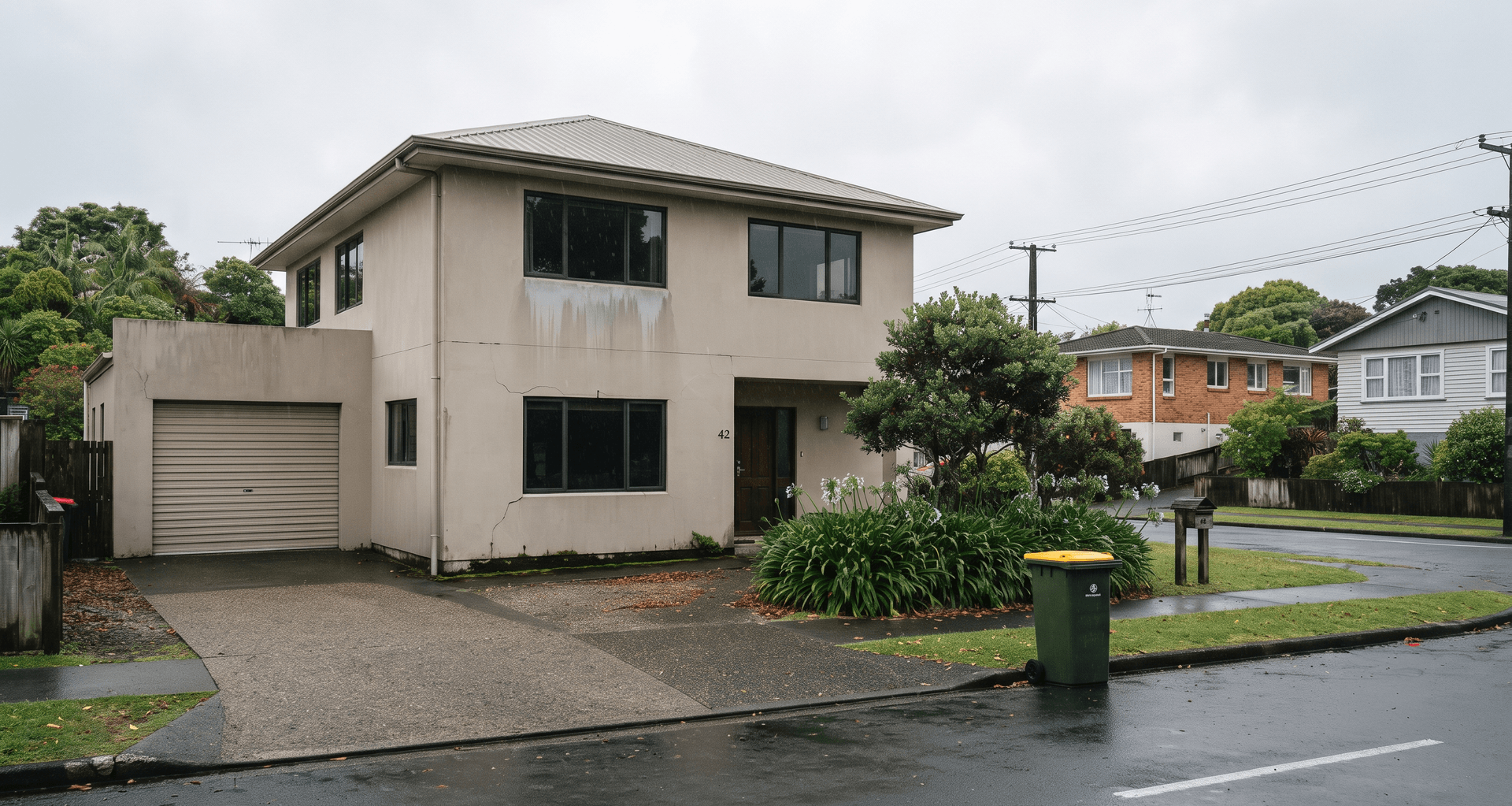
Drive through Albany, Greenhithe or the older streets of Botany and you'll pick them out in a second — smooth plaster homes, flat or low rooflines, barely an eave in sight. They looked sharp when they went up. Twenty-odd years on, they're the houses Auckland buyers get nervous about. If you own one and you're thinking about selling, you've probably already run into the question that keeps a lot of owners up at night: should you reclad before selling, or list as-is and wear the discount?
There's no single right answer, and anyone who hands you one without seeing your home is guessing. The honest version is that it comes down to two numbers — what a reclad would actually cost you, and what the leaky-home stigma is knocking off your sale price — plus one legal reality most sellers underestimate. We reclad these homes for a living. We've sat across the kitchen table with plenty of owners in exactly this spot. Here's how we'd frame the call.
The three situations every plaster-home seller is actually in
Before you weigh reclad against sale, work out which house you've got. They're not the same decision.
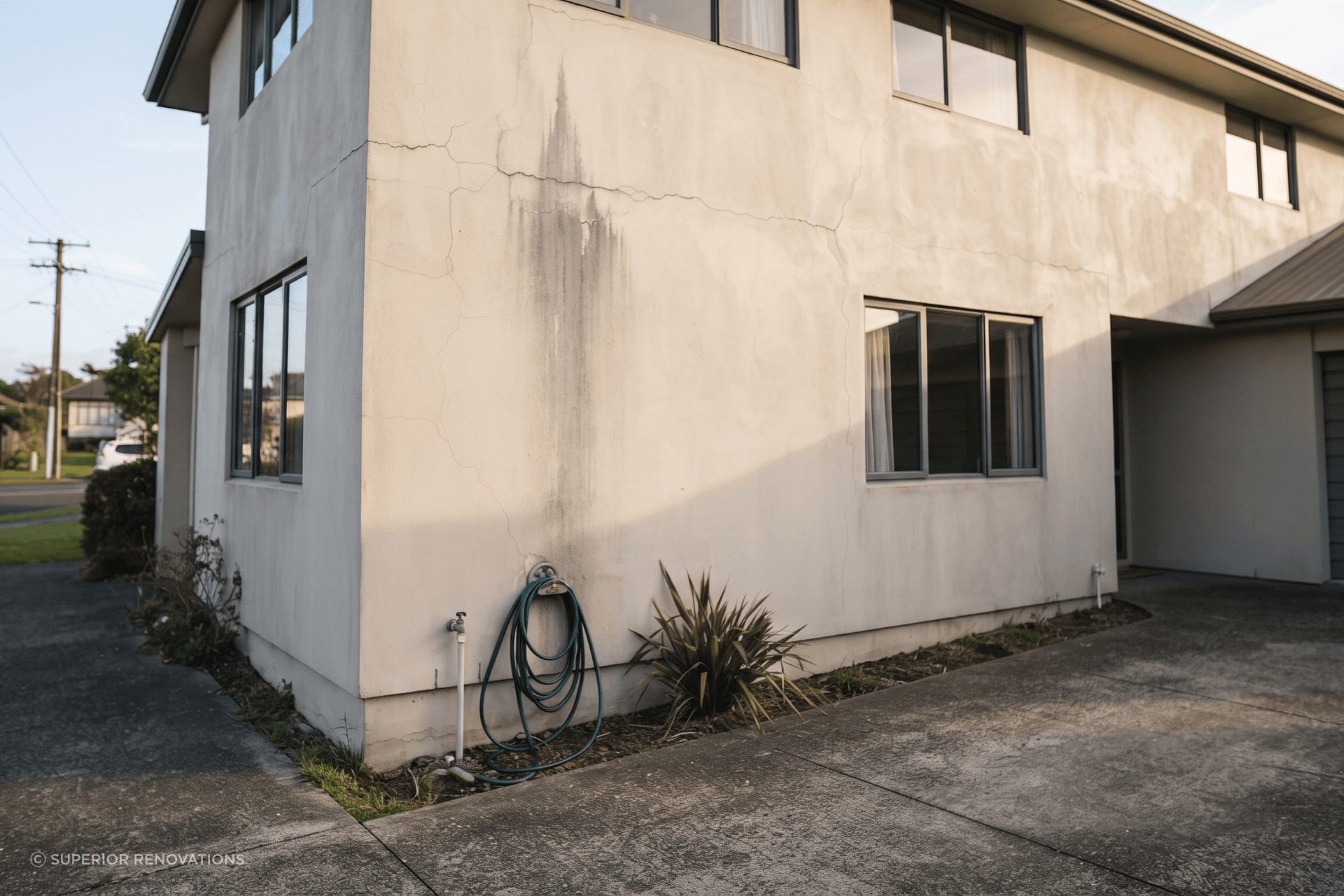
The first is the dry-but-stigmatised home. Solid plaster or a cavity system, sound framing, no moisture problem — but it still wears the "plaster look" that makes buyers, their lawyers and their mortgage brokers twitchy. Nothing's wrong with the building. The discount is coming purely from perception. That's a very different starting point to a house that's actually failing, and it's worth being clear-eyed about it: the cladding type on its own doesn't tell you whether a home leaks. A solid-plaster place with decent eaves and a simple roof is a world away from a polystyrene-clad, eaveless, flat-roofed house from 2001. If you're fuzzy on which camp your home sits in, our full rundown of what monolithic cladding really means for your home walks through the tell-tale design features.
The second is the suspected-but-unconfirmed home. You've never had it properly tested. You don't actually know what's behind the plaster, and neither will a buyer — which means both of you are pricing in risk you can't measure. This is the worst position to sell from, because uncertainty gets discounted harder than a known, quantified problem.
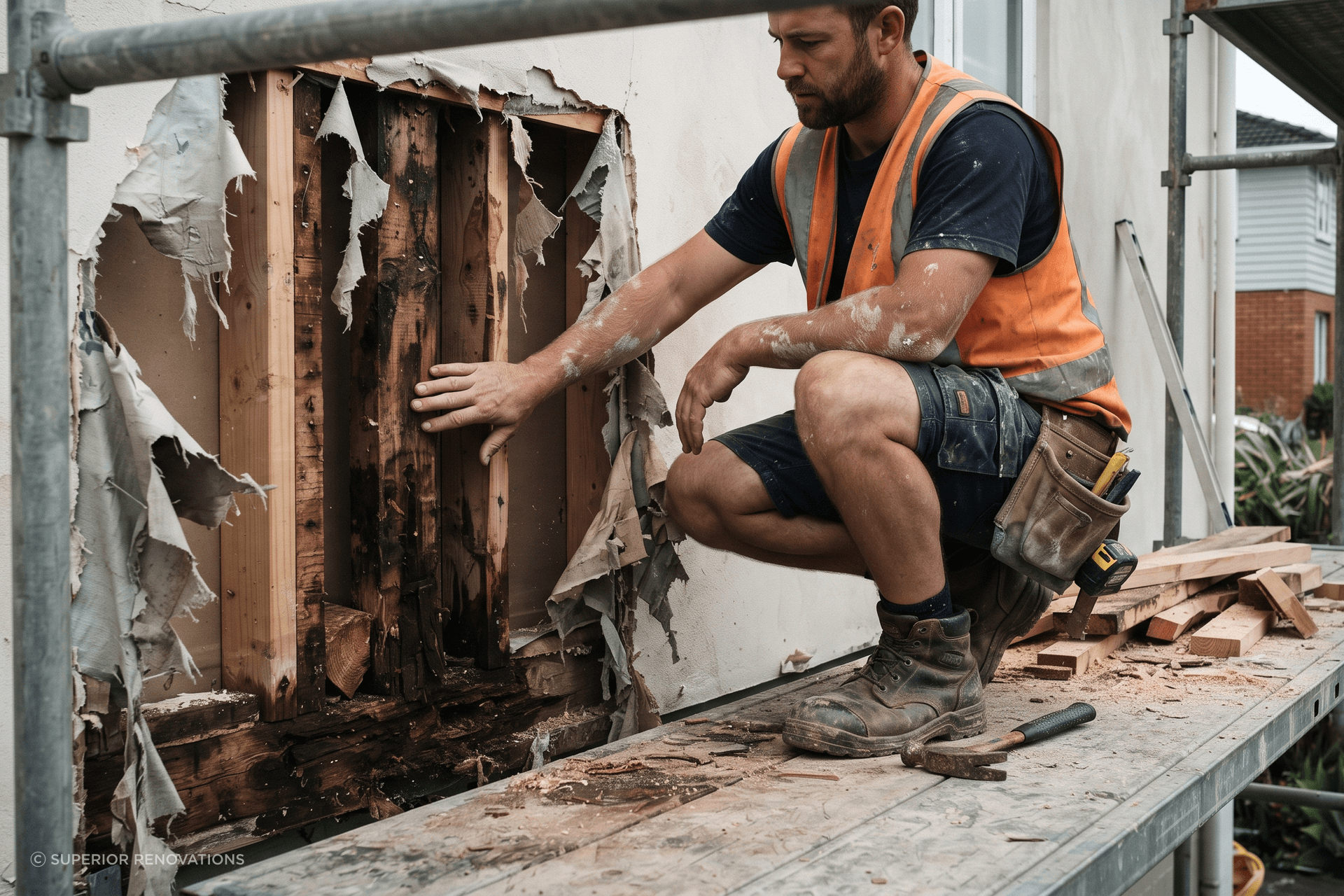
The third is the confirmed-leaky home. Moisture testing or a previous sale falling over has already told you there's damage — soft framing, swollen window reveals, staining, mould. Here the decision isn't really "is there a problem," it's "who fixes it, you or the buyer, and who pays for that in the price."
The real math: reclad cost versus the as-is discount
Now the numbers. This is where most online advice goes vague, so we'll be specific.
Start with the discount. The best NZ data on this comes from the University of Auckland Business School's Department of Property — research by Michael Rehm and colleagues that matched Auckland sales records against building-consent data to see what leaky-era homes actually sell for. The finding is genuinely useful for a seller. Formerly leaky homes that were remediated and reclad in a non-monolithic material — weatherboard, for instance — sold for roughly the same price as homes that had never leaked. The stigma effectively vanished. Homes reclad back into new monolithic plaster still carried around a 6% discount. And unrepaired monolithic homes sold for about 9% less. So the penalty for doing nothing is real, but so is the penalty for recladding in the wrong material.
Put a dollar figure on it. On a $1.2m North Shore home, a 9% as-is stigma discount is roughly $108,000 off your sale price. That's the number you're weighing a reclad against — not zero.
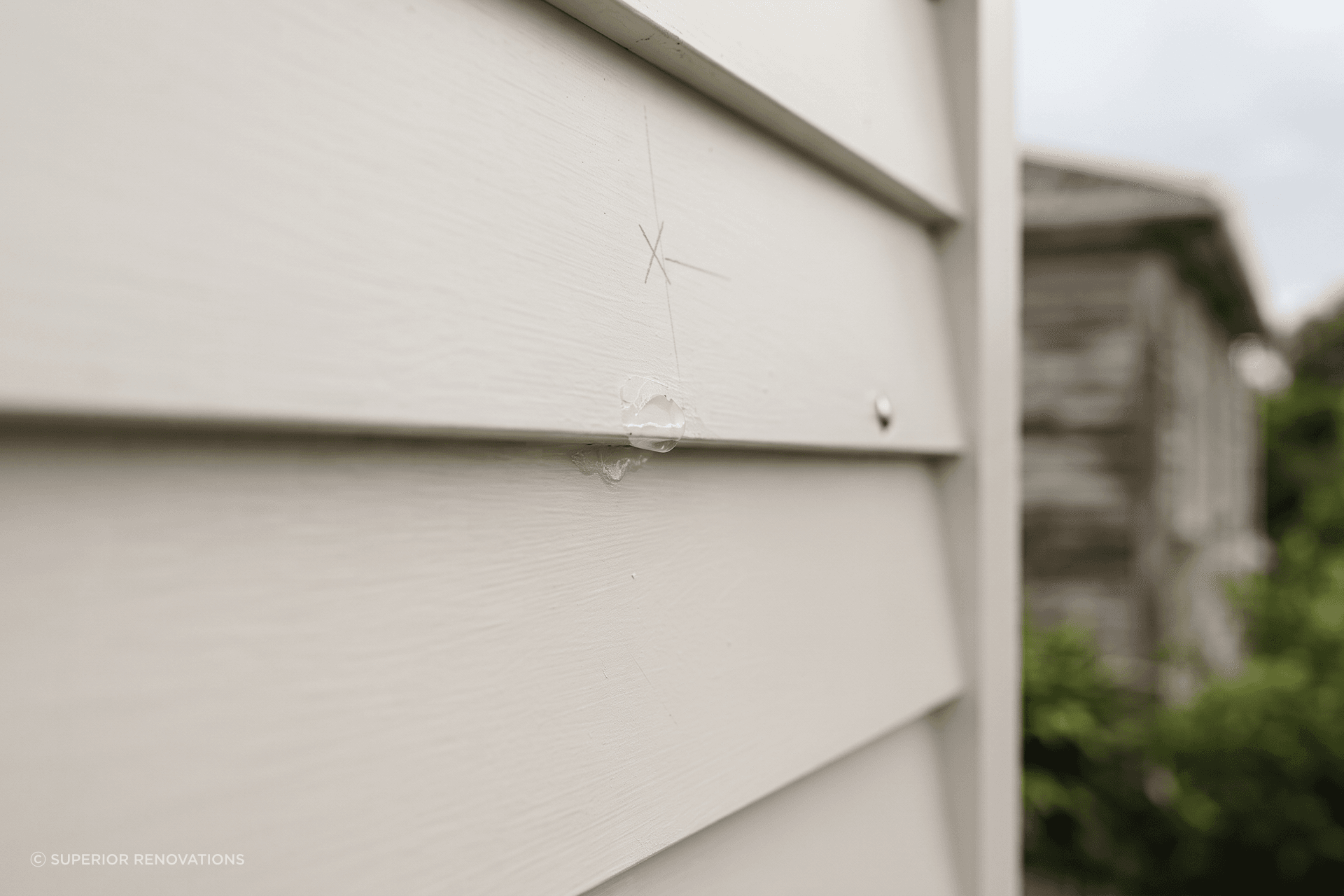
Then the reclad cost, and here scope is everything. "Recladding" covers two completely different jobs. A sound, timber-framed home getting its cladding swapped for fibre cement weatherboard — no rot, no framing repair — typically runs about $40,000–$90,000, or somewhere in the $150–$450 per square metre range for the light-scope work. A 1990s monolithic home with hidden moisture damage, decayed framing, joinery to replace and interior make-good is a different animal: $250,000–$400,000+ is realistic, and the full-scope per-square-metre figure sits closer to $1,750–$2,500. Same word, wildly different reality. (All figures are GST-exclusive, and they scale with your home's wall area, not just floor size.) The only way to know which job you've actually got is to look behind the cladding — which is why we run a destructive moisture investigation before we issue a fixed quote, rather than pricing off assumptions. If you want a rough starting number for your own home before you commit to anything, you can run a ballpark figure for your own place and get a sense of the scale.
Here's where sellers get it wrong. They treat the reclad as a single yes/no. It isn't.
"The mistake I see sellers make is treating a reclad as one decision. It's two. The first is whether to do it at all. The second — the one that actually moves your sale price — is what you reclad in. Go back to plaster and you've spent six figures to keep most of the stigma. Switch to weatherboard and the discount can disappear entirely."
— Dorothy Li, Design Manager, Superior Renovations
So the math is never just "cost of reclad versus discount." It's "cost of reclad in a stigma-clearing material versus discount." A dry home facing a perception-only discount might not justify a six-figure spend at all — you may do better selling as-is and letting the buyer make their own call. A confirmed-leaky home is a harder yes, because the discount is stacked on top of a building that genuinely needs the work regardless of who ends up owning it.
What you actually have to tell buyers
This is the part sellers underestimate, and it can cost far more than any stigma discount.
New Zealand sales run on caveat emptor — buyer beware — and a private seller isn't strictly obliged to volunteer every defect. That's the base rule. But it doesn't get you where you might think. You cannot actively conceal, mislead, or give a "half-truth" that paints a false picture. The standard sale and purchase agreement carries vendor warranties, including a warranty that you have no knowledge of facts that might result in proceedings over the property, and a warranty that any work you've done was properly consented. Liability on those is strict. Run an unconsented patch-up to hide framing rot, or a dehumidifier before the open home, and you're not being clever — you're building the case against yourself.
The courts have made this vivid recently. In two Auckland High Court decisions, sellers who concealed known weathertightness damage — new lining over rot, dampness hidden before viewings — were ordered to pay well over half a million dollars in one case and past $860,000 in another, with a director personally liable. That's the downside of a cover-up. It dwarfs any discount.
Your real estate agent has their own duties, too. Under the Real Estate Authority's rules, an agent who knows or even suspects a property fits the leaky-building profile has to disclose that to buyers — they can't just wave everyone toward a building report and call it done. The settled.govt.nz guidance for sellers is blunt about it: be honest about serious issues when you list.
There's a flip side that works in an honest seller's favour. A reclad done properly — consented, inspected at each stage, and finished with a Code Compliance Certificate — leaves a clean paper trail on the LIM. That documentation is exactly what a nervous buyer's lawyer wants to see, and it's a big part of why a consented reclad matters when you sell, versus a cash-job that leaves gaps a buyer can't verify. None of this is legal advice — get a property lawyer across your situation before you sign anything, including the listing agreement — but the principle is simple. Honesty plus documentation protects you. Concealment plus an unconsented fix does the opposite.
The other exit: selling as-is to a renovator or developer
Recladding first isn't the only path, and it isn't always the smart one.
Plenty of leaky-era and monolithic homes sell as-is to buyers who actively want them — renovators, builders, and small developers who intend to reclad or redevelop anyway and would rather buy the problem at a discount than pay a premium for someone else's fix. For these buyers the stigma isn't a deterrent, it's the entire opportunity. They price on land value plus the cost to put the building right, and they move fast because they're not emotional about the plaster.
This route makes sense when you don't want to sink six figures and several months into a house you're leaving, when your cash is tied up, or when the framing damage is bad enough that a full remediation would eat most of what a reclad-then-sell would recover anyway. You'll take a lower headline price. But you skip the cost, the consent process, the months of disruption, and the risk of surprises once the cladding comes off. For a lot of owners in Henderson, Botany or the North Shore who just want out cleanly, that trade is worth it. The key is to price it honestly against what a remediated sale would net you — not against a fantasy "if it had never leaked" number.
If you do reclad, don't half-do it
Decided to reclad before listing? Then the goal isn't just a new-looking exterior. It's a clean, documented, whole-house fix that clears the stigma — and there are two ways people undercut that.
The first is the partial reclad. Doing one bad elevation and leaving the rest is a false economy on a legacy plaster home, because the unaddressed walls stay a live risk, a decent building inspector will flag them, and you've spent money without buying the clean bill of health that actually lifts your price. On a leaky-era home, a targeted patch is usually a decision to sell the problem twice.
The second is skipping the investigation. You can't quote a reclad honestly, or promise a buyer it's sorted, until you know the framing condition — which is why the work starts with a weathertightness assessment and opening the cladding, not a tidy estimate off a walk-through. A full reclad is a real project: eight-plus trades, a structural engineer, a weathertightness assessor, a designer and council liaison, over roughly 6–14 weeks on site for a straightforward home, and 14–20 weeks for a complex two-storey remediation with joinery and interior reinstatement. It's not a weekend refresh, and pretending otherwise is how people end up half-finished before an open home.
The choice of new cladding is where design earns its keep — it's the difference between recovering full value and keeping a 6% discount.
"A reclad is a rare chance to fix the thing buyers react to before they even walk inside. New window proportions, a warmer material, sorting out those blank parapet walls — done well, the house stops reading as 'ex-leaky' and starts reading as 'renovated'. That shift in first impression is worth real money at open homes."
— Eunice Qin, Designer, Superior Renovations
If you're going down this path, it's worth understanding the recladding work we do across Auckland end to end — assessment, design, consent, structural repair and the reclad itself under one team — because the seller who gets full value is the one whose fix is complete, documented, and finished in a material buyers trust.
So — reclad first, or sell as-is?
If your home is dry and the discount is perception-only, selling as-is is often the rational call — a six-figure reclad to chase a few percent rarely pays, and honest disclosure costs you nothing. If it's confirmed leaky, the decision tilts toward recladding in a stigma-clearing material like weatherboard, because the discount is sitting on top of work the building needs anyway and a documented fix can recover most or all of it. And if you'd rather not deal with any of it, a clean as-is sale to a renovator is a legitimate exit — just price it against what a remediated sale would truly net, and never against concealment. The one move that's always wrong is the cover-up.
Frequently asked questions
Do I have to tell buyers my house is a former leaky home?
You're not obliged to volunteer every defect under caveat emptor, but you can't conceal known problems, mislead, or give half-truths — and unconsented "fixes" breach standard agreement warranties. Your agent must disclose a suspected leaky profile regardless. Honesty plus documentation protects you; a cover-up has cost Auckland sellers six figures.
Will I get my money back if I reclad before selling?
It depends heavily on what you reclad in. University of Auckland research found homes reclad in weatherboard sold on par with never-leaky homes, so the stigma discount can effectively disappear. Reclad back into monolithic plaster and roughly a 6% discount lingers — meaning you've spent big without fully recovering it.
Can I sell a monolithic home as-is in Auckland?
Yes, and many do. Renovators and developers actively buy leaky-era homes at a discount to reclad or redevelop themselves. You'll accept a lower price — unrepaired monolithic homes sell around 9% below comparable homes — but you skip the cost, consent process and months of disruption. Price it honestly against a remediated sale.
Does recladding in weatherboard remove the leaky-home stigma?
Largely, yes, when it's done properly. The Auckland research showed remediated homes reclad in non-monolithic materials like weatherboard sold for the same prices as homes that never leaked. The stigma effectively cleared. The keys are a full reclad (not a partial), a stigma-clearing material, and a consented job with a Code Compliance Certificate.
How long does a reclad take before I can list?
A straightforward reclad on a sound single-storey home runs roughly 6–10 weeks on site. A complex full remediation on a two-storey monolithic home — framing repair, new joinery, interior make-good — can run 14–20 weeks. Add design and consent time before that. Build the timeline into your selling plan rather than rushing it.
Selling a plaster or leaky-era home in Auckland isn't really a cladding question — it's a numbers-and-disclosure question, and the right answer is different for a dry home than a rotten one. If you want a straight read on which house you've actually got and what it'd take to sell it well, come see us at our Wairau Valley showroom at 16B Link Drive, or book a free in-home consultation with our team and we'll walk the numbers with you before you list. After 1,000-plus Auckland projects, we'd rather tell you honestly whether a reclad pays than sell you one that doesn't.