Resene Coolcolour technology: sunscreen for exterior surfaces

Written by

Resene

16 June 2026

 • 

3 min read

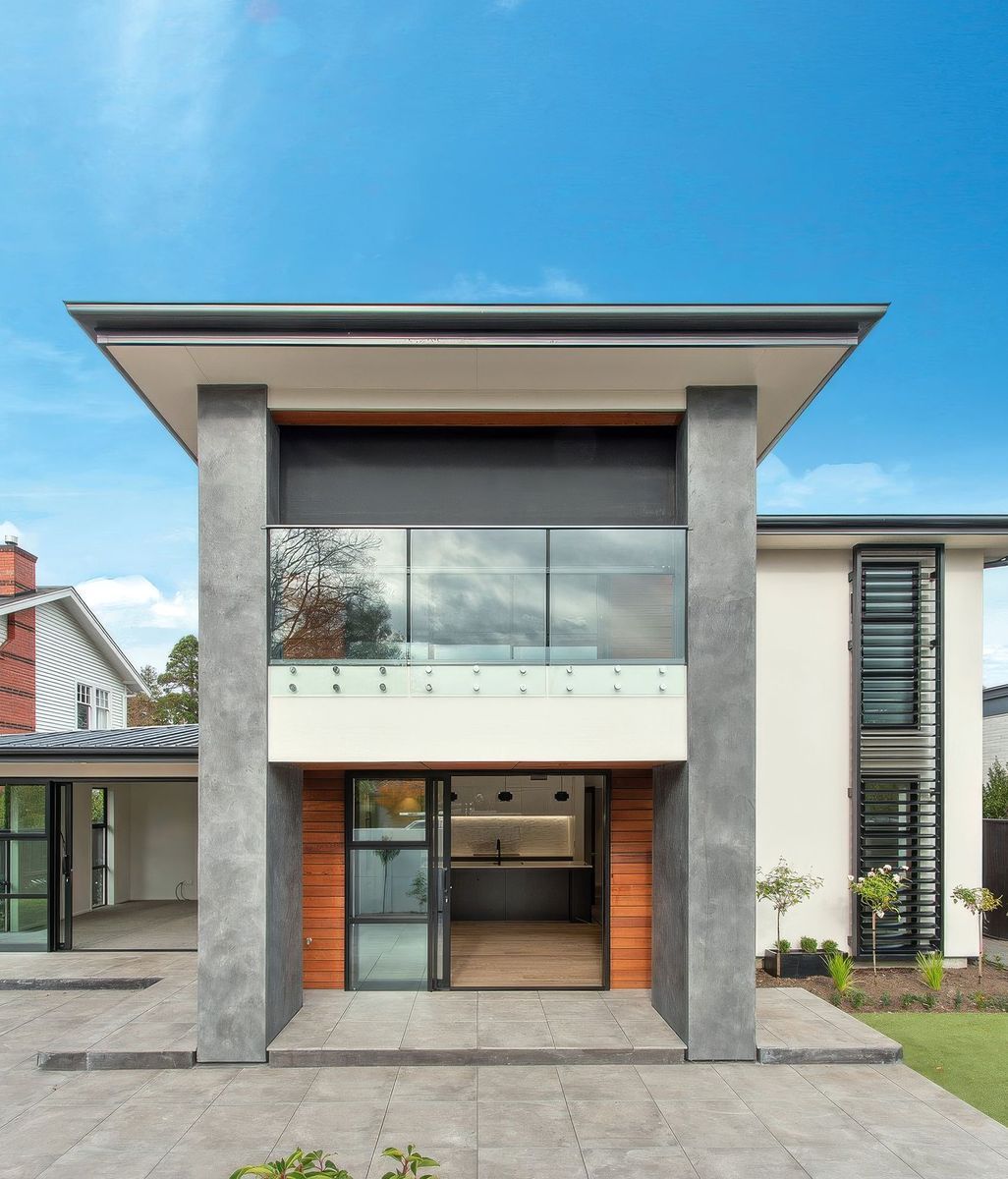
The brick exterior of this 1980s-era home and bold steel pergola have been seamlessly integrated thanks to a monochromatic refurbishment featuring Resene Lumbersider Low Sheen CoolColour in Bokara Grey on the bricks and Lumbersider Low Sheen CoolColour Black on the pergola. 

Project: Atlas Architects. Image: Tess Kelly.
The brick exterior of this 1980s-era home and bold steel pergola have been seamlessly integrated thanks to a monochromatic refurbishment featuring Resene Lumbersider Low Sheen CoolColour in Bokara Grey on the bricks and Lumbersider Low Sheen CoolColour Black on the pergola. Project: Atlas Architects. Image: Tess Kelly.
Discover how Resene CoolColour technology is helping New Zealanders embrace darker exterior colours while reducing heat stress on paint, stains and building substrates.

Most of us, by now, are familiar with the term ‘CoolColour’, after all it has been used by Resene for more than 20 years and is most likely the reason for the upsurge in dark-hued houses and buildings across the New Zealand landscape.


When Resene introduced CoolColour in 2004, the technology was unique in the marketplace and to this day, Resene remains the only paint company to fully embrace its use across a wide selection of paints, coatings and stains. This large-scale appropriation was made possible by Resene’s inclusion of CoolColour pigments on Point of Sale (POS) tinting equipment.

Project: Studio2 Architects

So, what is CoolColour and what are its benefits to specifiers and building owners?

To understand and appreciate the technology that sits behind CoolColour, we must first gain a rudimentary understanding of the electromagnetic spectrum. Essentially, the sun’s energy is sent to earth in differing wave lengths, which include; infrared (IR) radiation, visible light, and ultraviolet (UV) radiation. It is the IR, which we perceive as heat and which represents a little over 50% of the spectrum, that is reflected by the unique tinters used in Resene CoolColour.


So, while not all the sun’s energy is diverted, most of the IR heat energy is, and this can make a significant difference to the performance of the paint or stain finish, not to mention the substrate the coating is applied to.


In practical terms, this means that timber and timber composites can be painted or stained in darker colours with fewer heat-related issues, such as cupping and warping.


When used to coat concrete and cementitious substrates, as well as steel cladding, the treated surface will attract less heat energy and remain cooler. It is worth noting that any potential warming in winter is minimal and at the margin.


The introduction of this technology has seen Resene champion the use of Total Solar Reflective (TSR) instead of Light Reflective Values (LRV) as the measure for noting substrate heat absorption limits (which seem set permanently at 40%).

There is one more benefit to the use of CoolColour pigments: studies show they stand up better to exterior exposure when compared to the same colour without CoolColour pigmentation – our research indicates an approximate 20% durability improvement. We attribute this to less heat stress on both the coating and the substrate.


First devised as a means of increasing the durability of roof and trim paints, 20-plus years later and the most popular product using CoolColour technology is Resene’s Woodsman wood stain range, which does help explain the plethora of dark grey- and black-stained homes in New Zealand’s built environment.