What a Weathertightness Inspection Actually Involves in Auckland (And What It Costs)

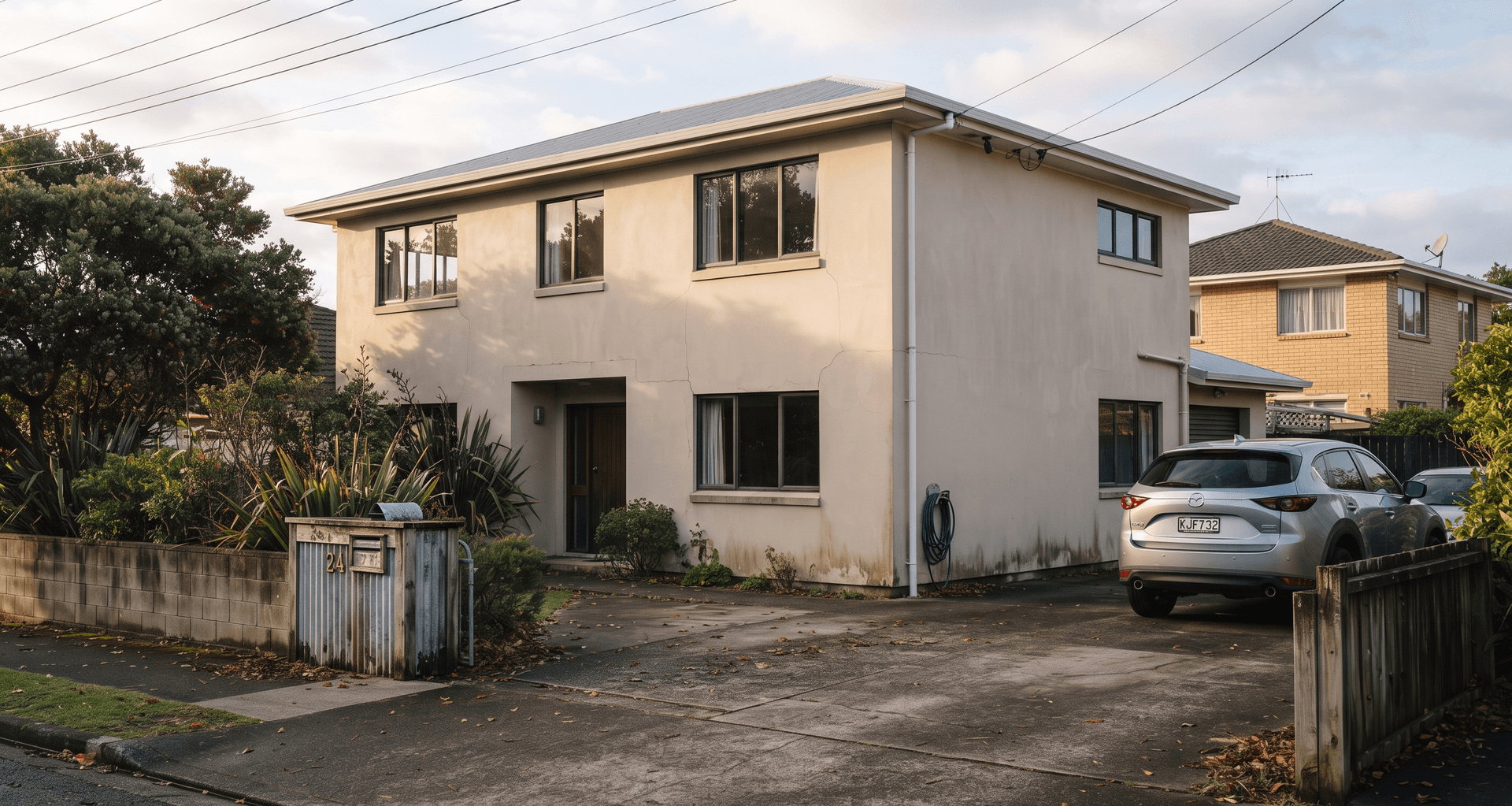
Your bank wants a weathertightness report before it'll lend on the place. Or the building inspector took one look at the smooth plaster, the flat roof and the missing eaves and told you this one needs a specialist. Either way, you're now trying to work out what a weathertightness inspection actually is, whether you need one, and what it's going to set you back.
Here's the short version. A weathertightness inspection is a targeted moisture and building-envelope assessment — moisture meters, thermal imaging, sometimes invasive testing — carried out against New Zealand Standard NZS 4306:2005 to work out whether water's been getting into the structure. In Auckland it usually runs between $500 and $1,500, depending on the home and how deep the inspector goes. It's the standard due-diligence step for any plaster home built between roughly 1994 and 2004, and banks often insist on one before they'll approve the loan.
We reclad leaky-era homes across Auckland for a living, so we sit on the other side of these reports all the time. This is what one covers, what it costs, and — the part the inspection sites tend to skip — what it still can't confirm until the cladding comes off.
A weathertightness inspection isn't the same as a standard building inspection
A standard pre-purchase building inspection is a broad visual check. The inspector works through the site, exterior, roof space, subfloor, interior and visible services, writes it up against NZS 4306:2005, and hands you a report on the general condition of the home. In Auckland that's typically $500 to $900 and takes about an hour and a half. On a sound timber-framed bungalow in Grey Lynn or a tidy 1990s home with good eaves, that's usually enough.
A weathertightness inspection is narrower and deeper. It zeroes in on one question: is water getting into the building envelope? The inspector runs moisture meters across wall linings, wet areas and cladding junctions, uses thermal imaging to pick up cold, damp patches behind the plaster, and scores the home against a weathertightness risk matrix — build year, roof pitch, eave width, deck and window detailing, all weighted for risk.
So is a normal builder's report enough? On most homes, yes. On a monolithic plaster home from the leaky-building era, no — and a good inspector will tell you so upfront. Some standard inspectors will bolt a weathertightness assessment onto a normal inspection for an extra $200 to $500. Others hand you to a specialist. Either way, the plaster home needs more than a walk-through.
When you actually need a weathertightness inspection
Four situations, and they cover most people who land on this page.
You're a buyer under contract, or close to it, on a plaster-clad home built between about 1994 and 2004. This is the big one. That era combined direct-fixed monolithic cladding, no drainage cavity and untreated timber framing — the exact recipe behind the leaky-building crisis. If you're looking at a smooth, render-finished home with a flat or low-pitched roof, barely any eaves, recessed windows and maybe a decorative parapet or two, you're in risk territory. We've pulled together our rundown on monolithic cladding and why those 1994–2004 homes carry the risk if you want the background before you commit.
Your bank has asked for one. Lenders know this housing stock well. On a monolithic home, plenty of them won't release funds without a current weathertightness report, and some insurers won't quote cover without one either. That's not the bank being difficult — it's the bank not wanting to lend against a home that might need six figures of remediation.
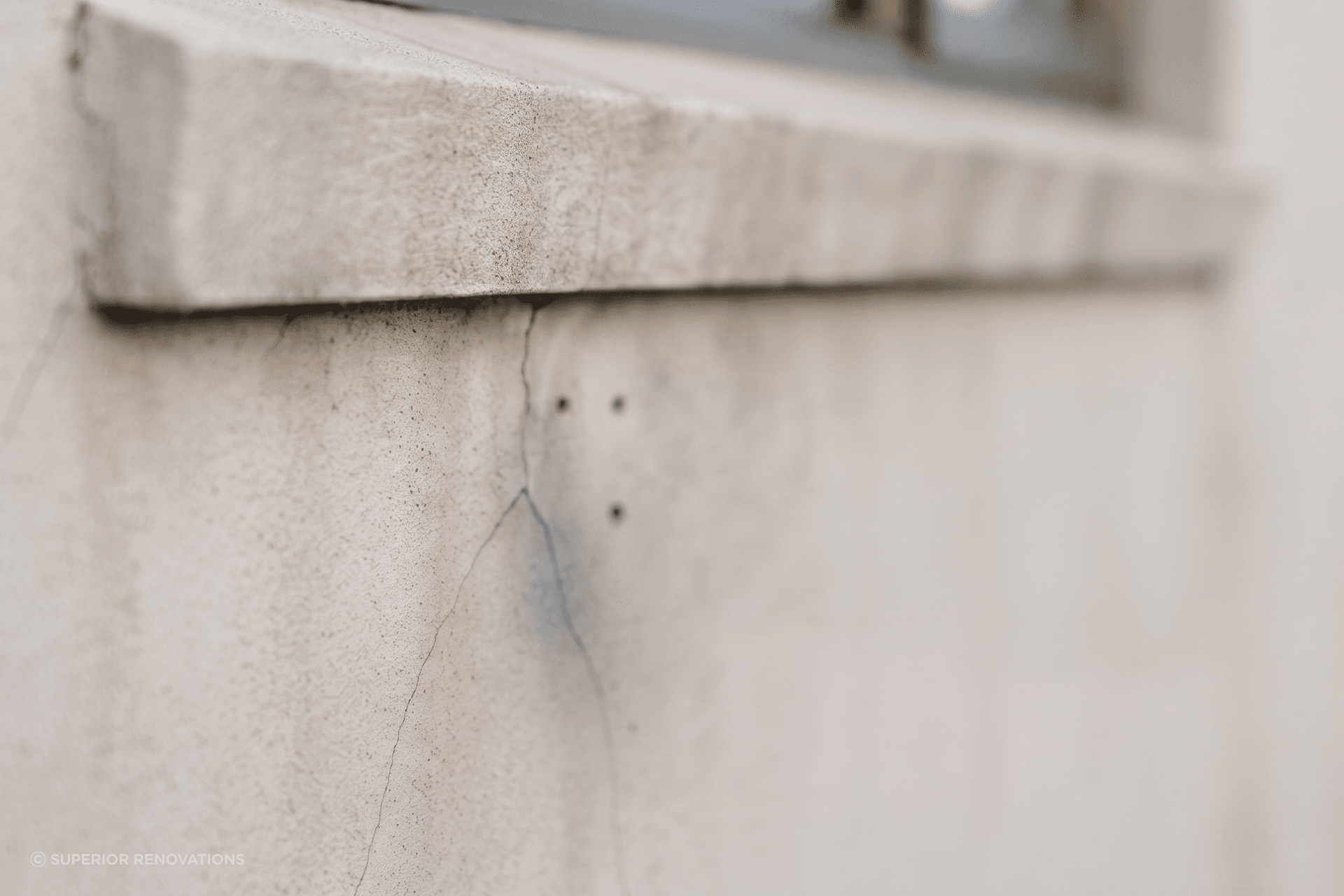
You already own a leaky-era home and you're seeing symptoms. Staining that keeps coming back on interior walls, swollen or soft window reveals, a musty smell in a corner room, paint blistering on the plaster, mould that won't quit. None of those confirm a leak on their own, but together they're worth a proper look before the damage spreads.
Or you're doing your homework on a specific pocket of Auckland. The North Shore copped it hard — Albany, Greenhithe, Browns Bay, Milford and the East Coast Bays are thick with 1990s and early-2000s plaster homes. East Auckland too: Howick, Botany, Dannemora, Flat Bush. West Harbour and the western fringe have their share. If the home you're eyeing sits in one of those and wears plaster from that era, budget for the inspection now.
What the inspector actually does on the day
Most weathertightness inspections are non-invasive, which is the first thing worth understanding. The inspector doesn't cut into your walls. They work from what they can see, touch and read with instruments.
That means a close visual over the whole exterior — cladding condition, cracking around windows and floor-level junctions, deck-to-wall flashings, roof-to-wall junctions, the spots where these homes typically fail. Then moisture meters across the internal linings and the high-risk external junctions, picking up elevated readings that suggest water sitting where it shouldn't. Thermal imaging comes out for the areas that warrant it — a camera that reads temperature difference, since damp framing runs colder than dry framing behind an intact wall. The lot gets scored against the NZS 4306:2005 risk matrix and written into a report with photos, readings and a plain-English summary of where the home sits.
Invasive or destructive testing is the next level up, and it's a different job. That's where small holes are drilled to take moisture readings inside the wall cavity itself, or sections of cladding are lifted to look directly at the framing. It needs the owner's permission, which you rarely have as a buyer still under contract, and it costs more because it's slower and the openings have to be made good afterwards. It's also the only way to confirm what's genuinely happening inside the wall.
"A non-invasive report tells you how nervous to be, not how bad it is. The moisture meter and the thermal camera read the surface and the symptoms — they flag the risk. But the timber that's actually rotten sits inside the cavity, and the meter can't see through the plaster to it. I always tell people to treat the report as the reason to investigate further, not the final answer." — Dorothy Li, Design Manager, Superior Renovations
What a weathertightness inspection costs in Auckland
Here's where the numbers land in 2026.
A standard pre-purchase building inspection runs $500 to $900 across Auckland. If the home's monolithic and you ask the inspector to pay proper attention to weathertightness, expect another $200 to $500 on top of that base fee for the extra moisture work.
A dedicated weathertightness assessment — a specialist report focused purely on the envelope — sits higher, generally $500 to $1,500 and up. Specialist firms often start their written weathertightness reports around $750 plus GST, and a full visual-and-verbal assessment combined with a written report can run past $1,200 plus GST on a larger or more complex home. Two-storey plaster homes, tricky rooflines, multiple decks and coastal exposure all push it up.
Invasive testing is quoted per job on top of that, since the scope depends on how many openings the inspector needs and where.
So why the big spread? Property size, build complexity, cladding type and how far you want the inspector to go. A single-storey unit with simple detailing is quick. A two-storey monolithic home in Milford with cantilevered decks and parapets is a full day's careful work.
Put it against what it can save you and the maths gets easy. Auckland buyers regularly negotiate $10,000 to $50,000 off a purchase price on the back of inspection findings — and if the report steers you away from a home that would've needed a full reclad, it's the best thousand dollars you'll ever spend. If the report does come back bad and you want a sense of the remediation number, you can get a rough remediation figure for your place in about a minute before you talk to anyone.
What the report can't tell you until the cladding comes off
This is the bit the inspection firms don't dwell on, because it's not their job to fix what they find. It is ours, so we'll be straight with you.
A non-invasive weathertightness report is a risk flag, not a verdict. The moisture meters and thermal imaging read the surface and the symptoms. The risk matrix weighs up the odds based on the home's design and age. What none of it does is confirm the exact extent of the damage — because the damage lives inside the wall cavity, behind the plaster the inspector can't see through.
We've stripped the cladding off enough 1990s and early-2000s homes to know how loosely that connection can run. A report scored "moderate risk" has opened up to reveal framing you could push a screwdriver straight through. And a home flagged "high risk" has come apart to show damage far more contained than the paperwork suggested. The report gets you to the right level of caution. It doesn't hand you the scope of works.
"The risk matrix and the moisture readings give you a shape of the problem, not the invoice. When we run a destructive investigation and start opening walls, we're mapping the report's risk zones against what's actually rotten — and the two don't always line up. That's not the inspector getting it wrong. It's the honest limit of testing you can do without cutting into the building." — Dorothy Li, Design Manager, Superior Renovations
That gap is exactly why the next step after a concerning report isn't a reclad quote off a spreadsheet. It's a proper look inside.
What happens if the report comes back bad
First, don't panic and don't run — but don't go unconditional blind either. A bad weathertightness report is a starting point. Plenty of Auckland plaster homes have been remediated properly and are perfectly good buys; the ones that turn into a financial disaster are the ones people bought without knowing what they were taking on.
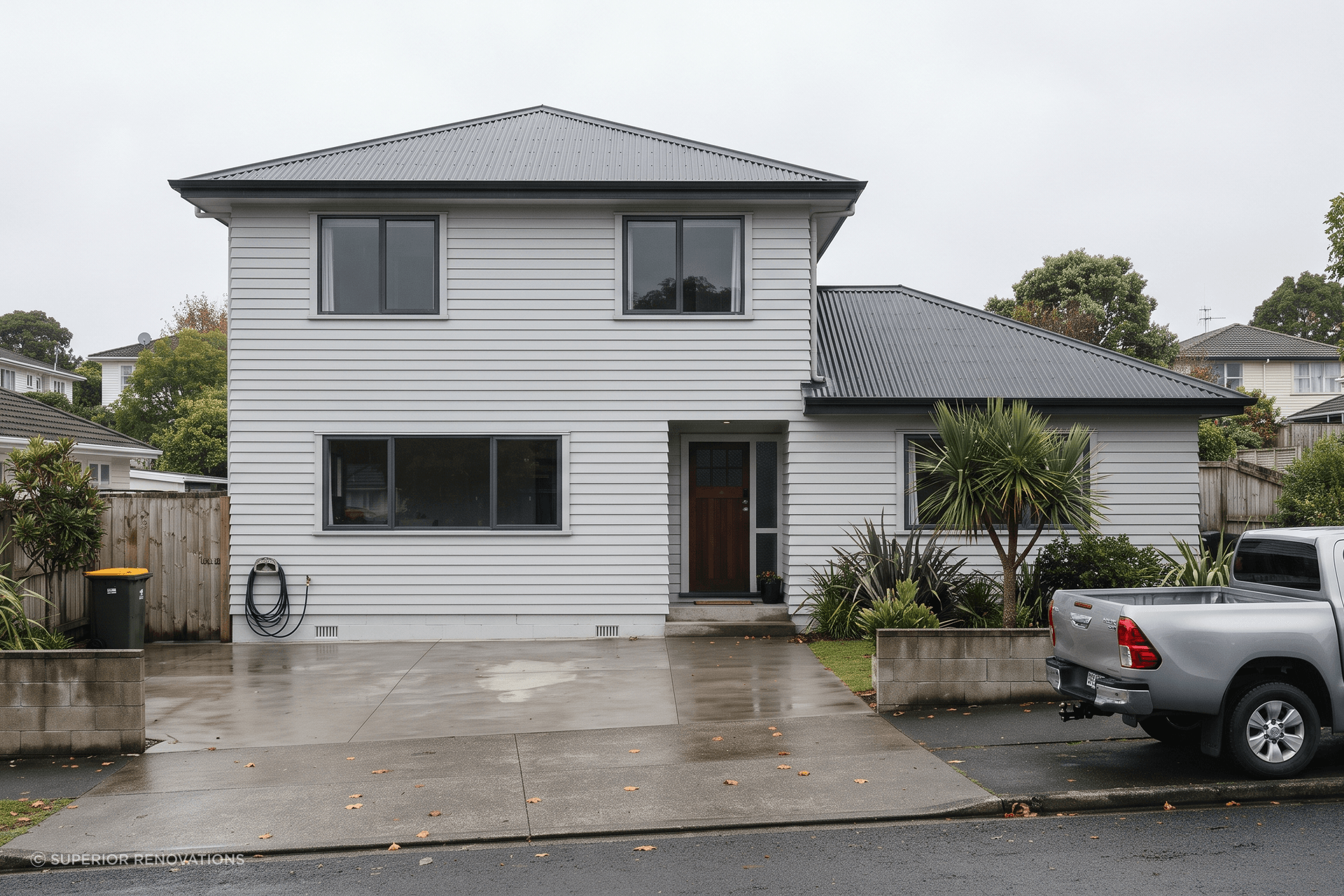
The real next step is a destructive moisture investigation — strategic openings in the existing cladding to confirm what's genuinely behind it — followed by a scoped, fixed-price reclad quote based on that reality rather than a guess. That's how we run it: we open the walls and confirm the framing condition before we issue a final number, so there are no mid-build surprises when the cladding comes off and the real state of the timber shows up. If you want the mechanics of that whole process, here's how we handle a reclad, from moisture investigation through to a weathertight finish.
On cost, the range is enormous, and it maps directly to what the investigation finds. A timber-framed home with sound framing that just needs its cladding swapped for fibre cement is a $40,000 to $90,000 job. A 1990s monolithic home with hidden moisture damage, decayed framing, joinery to replace and interior make-good is a $250,000 to $400,000-plus job. Same word — "reclad" — very different reality, which is the whole reason cost uncertainty is so high on these homes. There's the full breakdown of what a reclad costs in Auckland if you want to understand which end of that range your situation sits in.
One more thing worth knowing: if the home has a history with the Weathertight Homes Resolution Service (building.govt.nz), or you're buying and want to understand your due-diligence obligations, check Settled.govt.nz before you go unconditional. Get the report, get the investigation, then decide with the full picture in hand.
Frequently asked questions
Do I need a weathertightness inspection if I've already had a building inspection?
If the home is a plaster-clad build from the 1994–2004 era, usually yes. A standard building inspection is a broad visual check across the whole property. A weathertightness inspection goes deeper on the building envelope specifically — moisture readings, thermal imaging and a risk-matrix score. On monolithic homes, the general report often isn't enough for your bank or your own peace of mind.
How much does a weathertightness report cost in Auckland?
A standard building inspection runs $500 to $900, with roughly $200 to $500 added if the inspector focuses on weathertightness on a monolithic home. A dedicated specialist weathertightness assessment generally sits between $500 and $1,500 or more, depending on the home's size, age, roofline and coastal exposure. Invasive testing is quoted separately.
Will the bank lend on a monolithic home without a weathertightness report?
Often not. Many lenders require a current weathertightness report before releasing funds on a plaster home from the leaky-building era, and some insurers won't quote cover without one. It's worth confirming your bank's requirements early, because a bad report can affect both the loan approval and the premium you're offered.
Does a clear weathertightness report mean the house definitely isn't leaking?
Not with total certainty. A non-invasive report reads the surface and the symptoms and scores the risk — it can't see moisture damage sealed inside the wall cavity. A low-risk result is genuinely reassuring, but the only way to confirm the framing condition is invasive testing, where small openings are made to check inside the wall directly.
The bottom line
A weathertightness inspection is the single most useful few hundred dollars you'll spend on a plaster home from the leaky-building era — it tells you how worried to be, and whether to keep going. Just remember it's the first word on the home's condition, not the last. If your report's come back with question marks and you want to know what remediation would actually involve, book a free in-home consultation with our team at Superior Renovations. We're at 16B Link Drive, Wairau Valley, and we've reclad more than a thousand Auckland homes — so we can tell you, straight, what you're looking at. You can see the rest of our work at superiorrenovations.co.nz.