Working with stone: why early decisions matter

Written by

Wanaka Stone

28 June 2026

 • 

4 min read

banner
Stone is one of the most visually striking choices you can make for a building. But getting the most out of stone depends on understanding early how it can impact on structural requirements, before design decisions become costly to change.

In contemporary construction, stone is almost always used as a veneer — a non-load-bearing external layer rather than a structural component of the building. But the weight, thickness and fixing requirements of stone cladding all place demands on the structure behind it, and these need to be considered and planned for from the earliest design stages.

It's all about the footing

The footing is the base that bears the weight of the stone veneer and transfers that load safely into the ground or floor structure. If it is not designed and sized correctly for the weight and type of stone being used, the cladding can fail. If stone cladding is incorporated after the foundation has already been designed or poured, retrofitting an adequate footing or reducing the stone dimensions can be expensive and disruptive. Getting the stone specification right early avoids this additional cost.

Getting the footing size right

The size of the footing determines the size of the stone. Larger footings can accommodate larger stones and larger stones mean faster installation, as there are fewer pieces to lay.
Smaller stones on big footing require more cement to fill the gaps, and stone that is too wide for its footing will need to be cut or chipped down to fit, adding cost and time.

Stone should not overhang the footing too far as this can create a structural concern, particularly in seismic events. Where there are geotechnical or structural complexities on a site, this may limit the weight of stone that can be used, so seek engineering advice early.

Bigger or smaller — which stone is right?

At Wānaka Stone, our standard cladding stone ranges from 150mm to 250mm. Below 150mm, stones become too small. Above 250mm, individual pieces can exceed what a stonemason can safely lift and handle.

Larger stone works best on expansive walls where smaller stone would look busy, on larger projects where the stone is intended to appear structural, and where faster installation is a priority. Larger stones also create larger window reveals which can create a bold, confident aesthetic.

Smaller stone comes into its own on compact walls or as a feature element, where large stones would look out of proportion. It is also the better choice on geotechnically complex sites as 150mm schist weighs close to 100kg per square metre less than larger formats, and where transport costs are a consideration, as there is more coverage per tonne.

This stone uses 150 mm footings, smaller footings result in a finer overall scale.
With a 200mm width, this natural stone creates a bold, chunky wall finish.

When lightweight stone is the answer

Where engineering constraints make traditional stone veneer impractical, lightweight stone is worth considering. Rather than being laid with mortar, it is adhered to a backing board, eliminating the need for specific engineered design while delivering a similar aesthetic finish to traditional stonework. It is more expensive to install than non-load-bearing anchored veneers, but the engineering savings could offset this.

Different footing sizes were used in this project. Achieving a seamless finish requires careful consideration from both the designer and the stonemason, but by working collaboratively, this can be successfully achieved.

Stone is more versatile than you might think

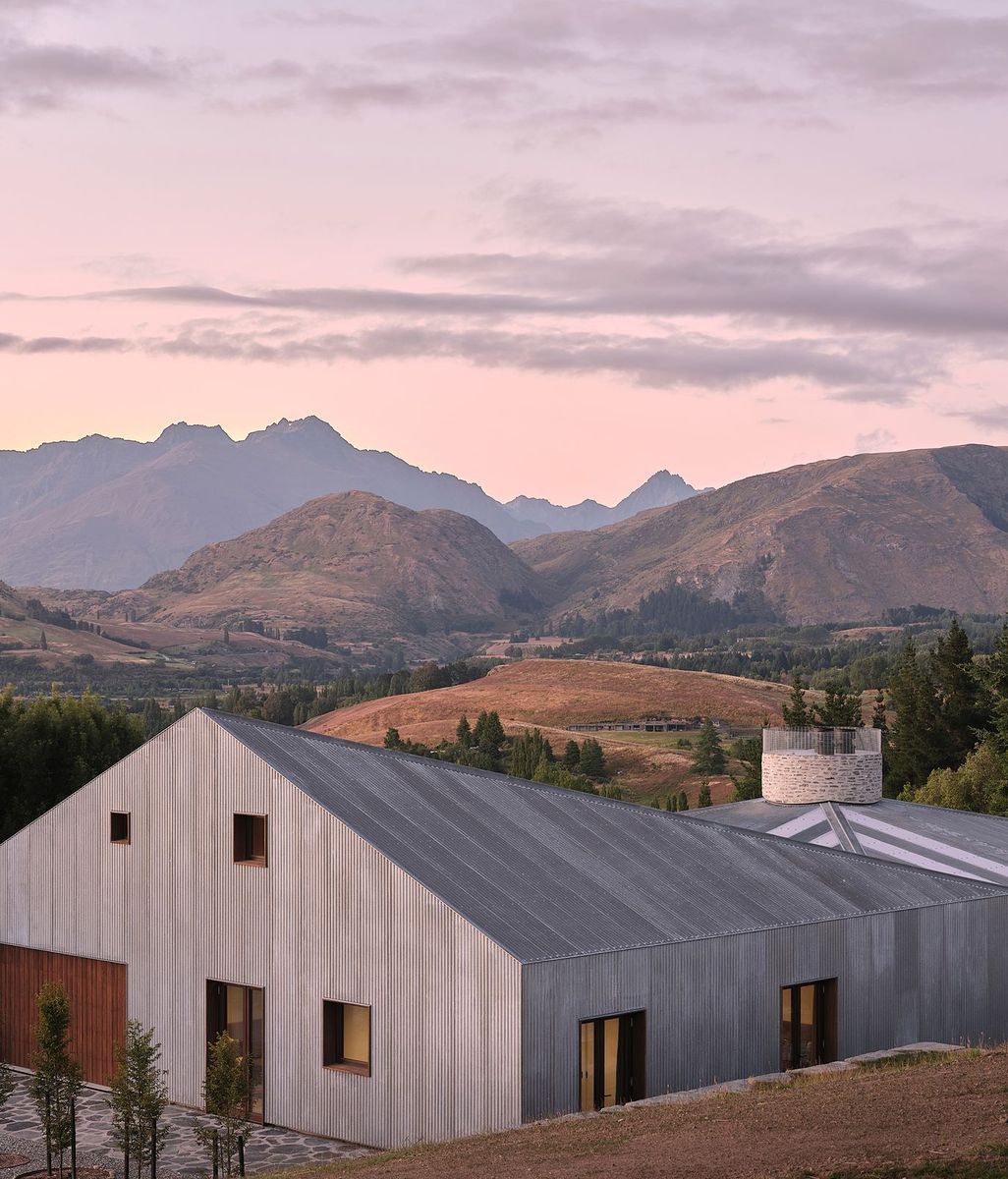
Mixing stone thoughtfully across a project can maximise the versatility of stone. You can use different stone sizes for different elements of the same project — a chimney in lightweight stone, narrower cladding on the walls, and larger format stone for landscaping and garden features.

Like any element of a build, stone rewards careful planning. Get the structural decisions right early, and the beauty of the stone will do the rest.

9-Front-Door.jpg