Exterior Painting and Home Value: What to Fix First

What exterior painting does for the value of your home, and what it doesn't
A fresh exterior repaint changes how a house looks from the street in a week. What it can't do is fix the rotten weatherboard under the kitchen window, the cracked plaster on the sunny side or the roof that's rusting at the laps. Paint over those and the house looks cared for until the first wet winter, and then it looks worse than it did before.
Exterior painting can increase the value of your home in two plain ways: it protects the cladding, and it shapes the first impression a buyer forms from the listing photos and the kerb. That value only holds when the surface under the paint is sound, which is why the useful question is what the exterior needs before it gets painted, not which colour to choose. If you're after prices, Superior Renovations' guide to what a house repaint costs in Auckland breaks the numbers down by cladding, storeys and roof.
This guide is for Auckland homeowners weighing up a repaint, either to look after the house or to get it ready for sale. It covers what paint does and doesn't do for value, how to read your own exterior before anyone quotes, the patterns we see by housing type, and the point where a repaint turns into a repair or a reclad.
We won't give you a percentage. We haven't seen a New Zealand source such as REINZ or QV publish one for exterior painting, and a number that can't be traced is worse than no number. What we can say is where the money on paint actually goes to work.
Protection comes first
Exterior paint is the barrier between the weather and your cladding. Once the paint film breaks down, water gets into timber weatherboards and joinery, and a recoat problem becomes a rot problem. On plaster and monolithic cladding, a cracked or worn coating lets water into the wall itself. Keeping the paint system intact is basic maintenance of the most expensive part of the house you can see from the street.
Presentation is what buyers notice
Buyers form a view of a house before they reach the front door, and the listing photos form it before they even book a viewing. Faded, chalky or peeling paint reads as a house that hasn't been looked after. Fresh, even paint reads as the opposite. A repaint doesn't make a house bigger or better built. It stops the exterior from making the case against you.
What paint can't do
Paint won't fix a weathertightness problem, and it doesn't hold on rotten timber, failed sealant or a surface that's still chalking. Nor will a new colour make a dated elevation look modern when the cladding profile, the windows and the roofline all date from the same decade. When those are the real issues, the value question is really a repair, joinery or cladding question, and painting is the last step rather than the first.
Read your exterior before anyone quotes
You don't need a ladder for this. Walk around the house on a dry day, one side at a time, and write down what you see. It gives you a way to check whether each quote has actually looked at your house.
The signs the paint is failing
- Fading and chalking. Run your hand across the wall. If a powdery residue comes off, UV has broken the paint down.
- Cracking, flaking or peeling. The film has stopped sealing the surface.
- Gaps at joints. Around window frames and weatherboard ends, where water gets in first.
- Mould, moss or lichen. Common on shaded, south-facing walls.
Superior Painters puts a quality exterior repaint in Auckland at about 8 to 12 years, with weatherboard and sun-facing walls needing attention sooner. Superior Painters' guide to how often an Auckland exterior needs repainting covers the signs elevation by elevation.
The signs it's more than paint
- Soft or dark-stained timber. Press a screwdriver into it. If the timber gives without resistance, it's rotten, and rot has to be cut out and replaced, not filled and painted over.
- Blistering or cracking on monolithic plaster, especially below windows and at the base of walls.
- Staining or mould inside, on the inner face of an outside wall, or window reveals that have swollen.
- Rust at the roof laps and fixings, or a roof that's been painted before and is lifting again.
- Decks, balustrades and steps where the timber moves underfoot.
If anything on the second list turns up, get it assessed before you get painting quotes. A painter's job is the finish. Deciding whether the wall behind it is sound is a builder's job, and on some homes it's a weathertightness specialist's.
Check each face separately
The wall facing the afternoon sun and the prevailing weather wears out years before the sheltered south side. Coastal suburbs such as St Heliers, Devonport and Takapuna add salt air to that. It's normal for one elevation to need work while the rest of the house is fine, so a quote that treats the whole exterior as one number is worth questioning.

What different Auckland houses bring to a repaint
The age and construction of the house decide what a repaint is likely to uncover. These are the patterns worth knowing before you ask for a price.
Villas and bungalows
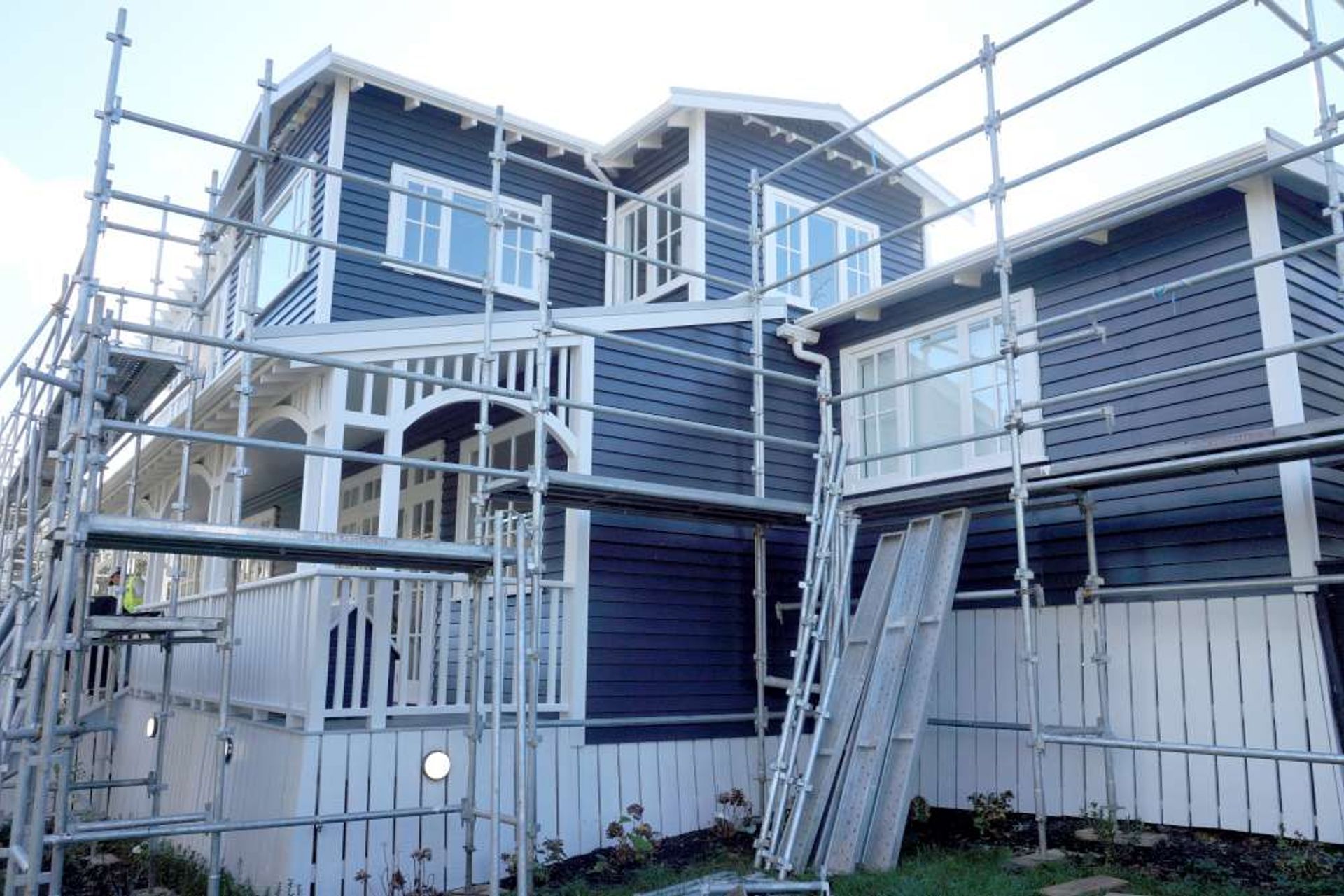
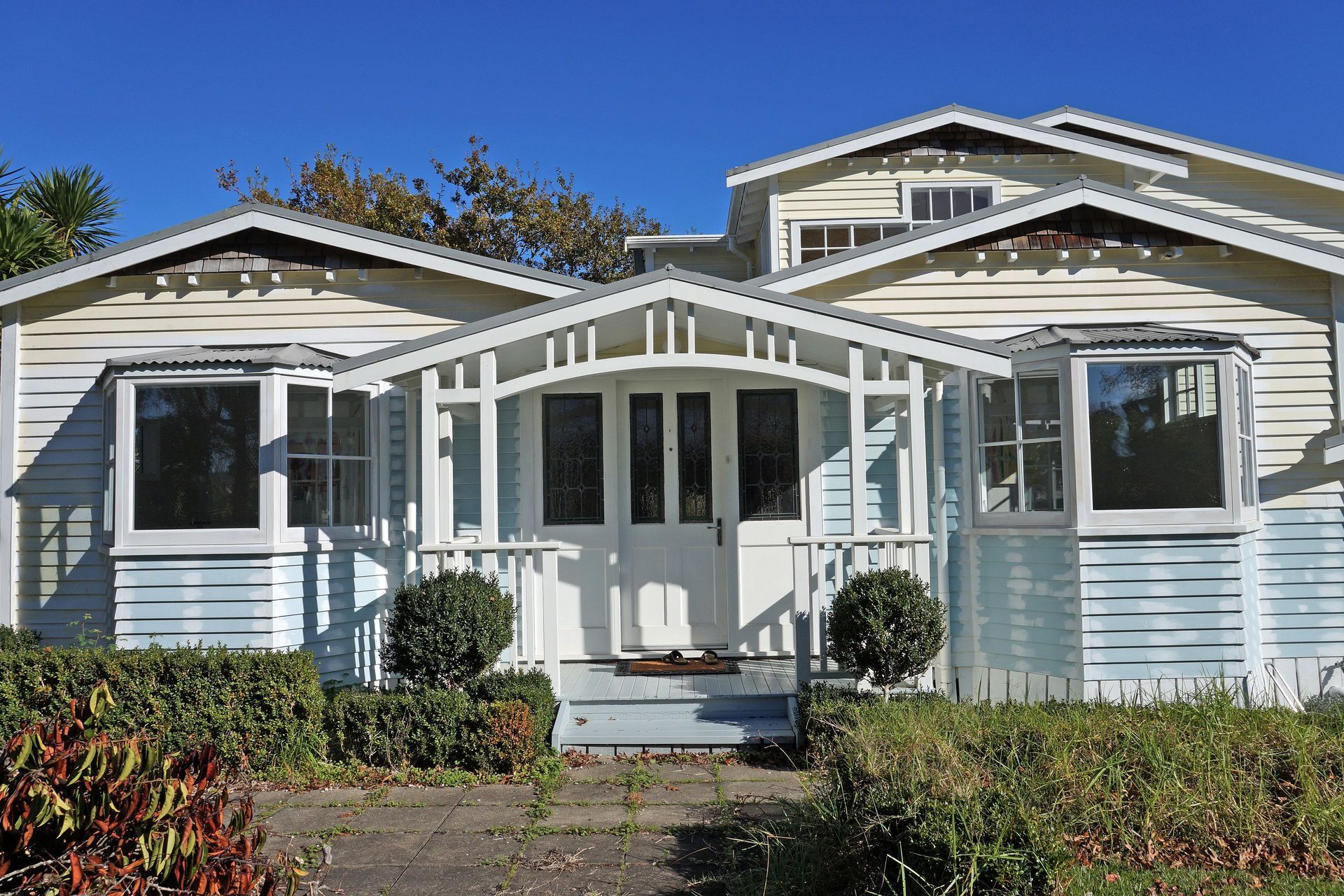
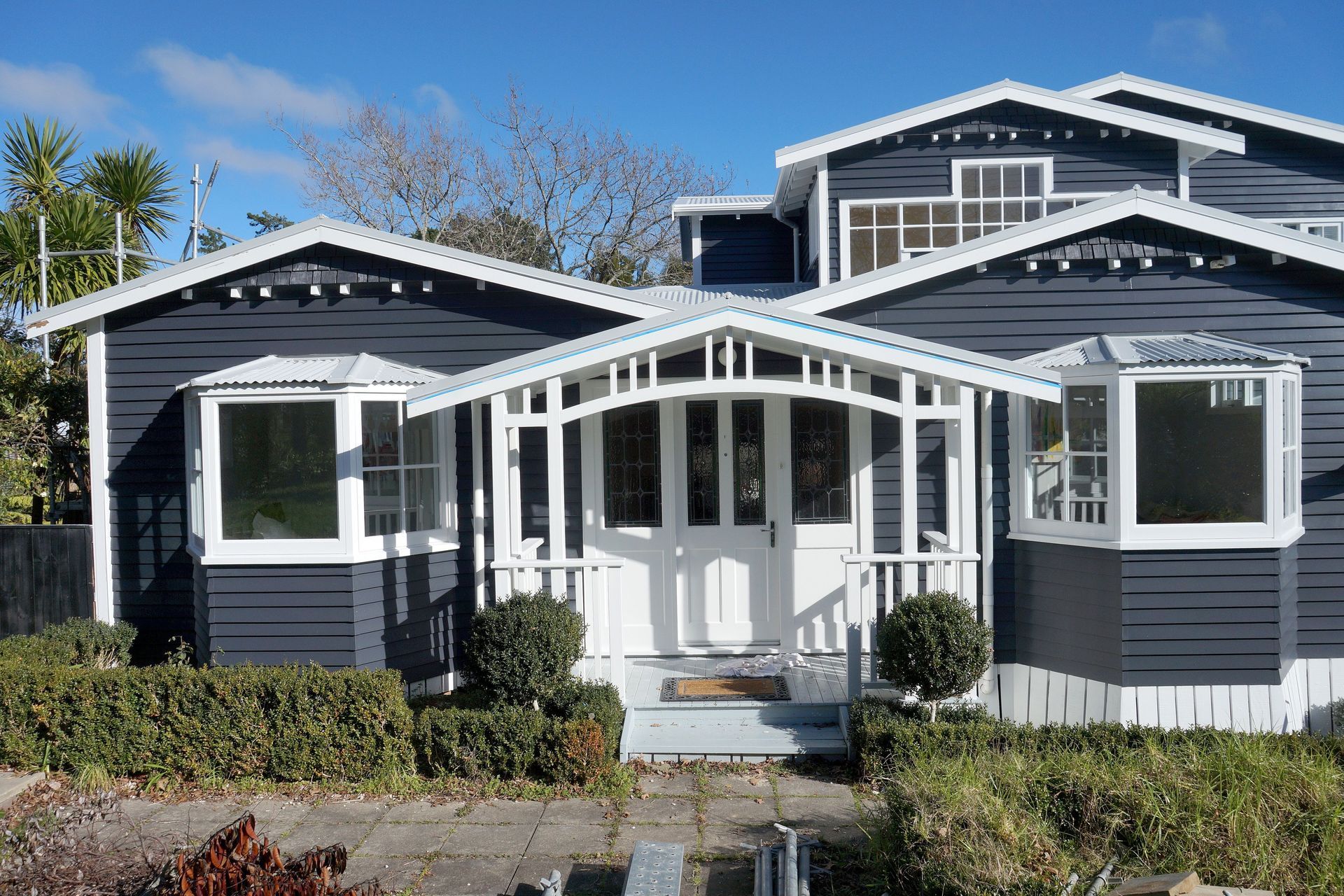
In the character suburbs of Grey Lynn, Ponsonby, Mt Eden and Herne Bay, timber weatherboard carries decades of paint layers, and some of those layers have lost their grip in patches. These houses usually need more sanding and priming before the new paint goes on, and anything built before 1980 should be tested for lead before sanding starts. For the wider picture, see what else an Auckland villa or bungalow tends to need in a renovation.
1970s to 1990s brick-and-weatherboard
West Harbour grew up through the 1980s and 90s, and plenty of its homes mix brick with weatherboard, the same combination found in other suburbs built in that era. Brick is forgiving and holds up well. The weatherboard, the fascias and the timber window joinery are where the work sits. A house this age can also be due a new roof or better glazing, as the West Harbour home further down was, and that changes the order the work should happen in.
Monolithic plaster homes from the mid-1990s to mid-2000s
This is where a repaint goes wrong most often. Plaster and stucco systems from the leaky building era rely on the coating to keep water out. If one of these homes shows blistering paint, cracks, internal staining or swollen window reveals, the wall needs a weathertightness assessment before anyone paints it. Our recladding team starts with exactly that assessment, including strategic openings in the cladding to see what's behind it, and its advice is to commission it for any monolithic home built between 1994 and 2004 before getting recladding quotes. Consent for remediation work runs through Auckland Council, and scope questions belong with a Licensed Building Practitioner, not a paint quote.
Repaint, repair or reclad: making the call
Most exteriors fall into one of three groups. Knowing which one yours is in saves you paying for the wrong job.
A straight repaint
The cladding is sound, the paint is tired, and the repairs are small: a few boards, some sealant, a sill. This is a painting job with good preparation, and it's Superior Painters' territory. The quality of the result depends on the prep: washing, drying, scraping to a sound edge, sanding, and priming any bare or repaired timber. Superior Painters' explanation of what proper exterior preparation involves is a good checklist to hold each quote against.
Repair, then repaint
The paint is failing because something else failed first. Rotten boards, leaking flashings, a roof past recoating, timber windows that no longer close properly, a deck that's gone soft. The repairs come first, then the paint, and the paint should be scheduled around them rather than squeezed in before them. This is where a renovation company is worth having, because the carpentry, roofing, joinery and painting need to happen in the right order under one plan. If your walk-round turned up anything from the second list, that's the conversation to have with our team before a painter prices the job.
A reclad
The cladding itself is the problem, either because it isn't keeping water out or because it's sound but dated in a way paint can't change. No amount of paint fixes the first, and paint only freshens the second. If you're wondering whether a reclad is the real answer rather than a repaint, the assessment tells you before you spend anything on finish. A reclad is a much larger job than a repaint, often consented, and not one to decide from a colour chart.
How exterior painting fits inside a bigger renovation
Painting is the last trade through on most exterior work, and the order is where money gets saved or wasted. If the roof, the windows or the cladding repairs are coming in the next few years, paint after them, not before. A new roof or new joinery goes in, flashings get detailed, and then the paint seals the lot. Paint first and some of it gets scuffed, cut into or replaced when the other work happens.
Scaffolding is the other reason to combine. If the exterior and the roof are both being painted, doing them while one set of scaffolding is up is simpler than putting it up twice. The same logic applies to gutters, spouting and fascia replacement.
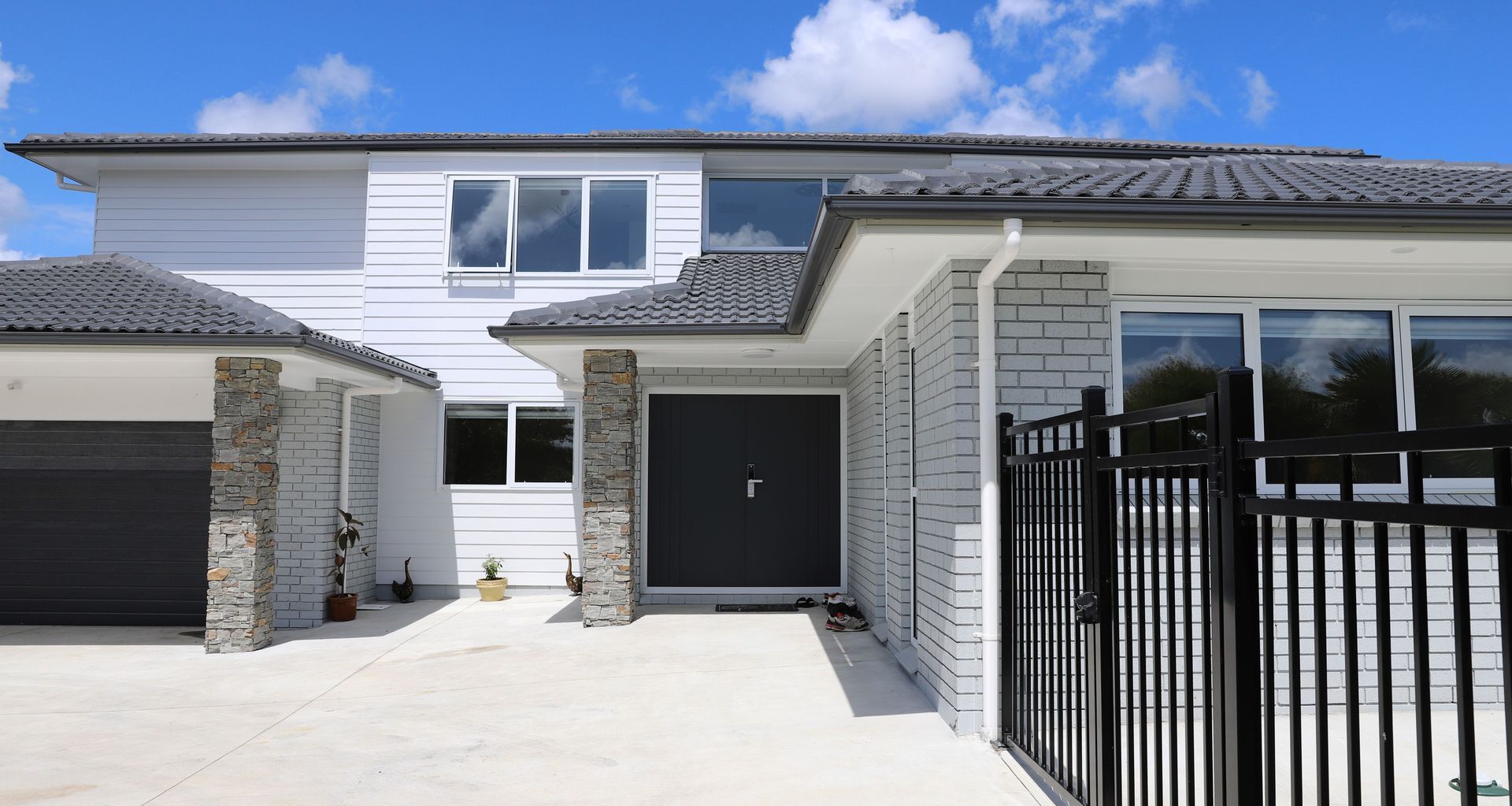
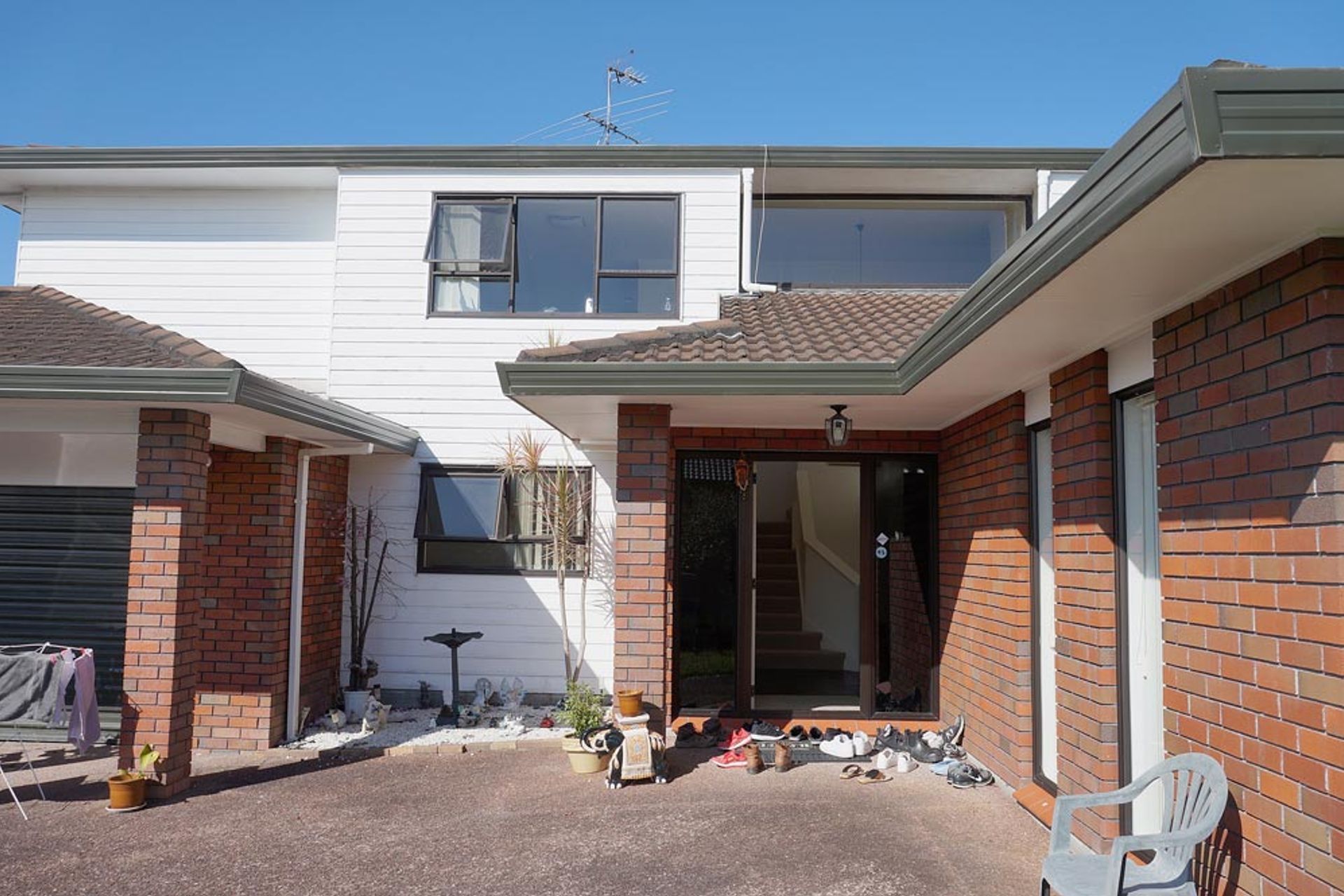
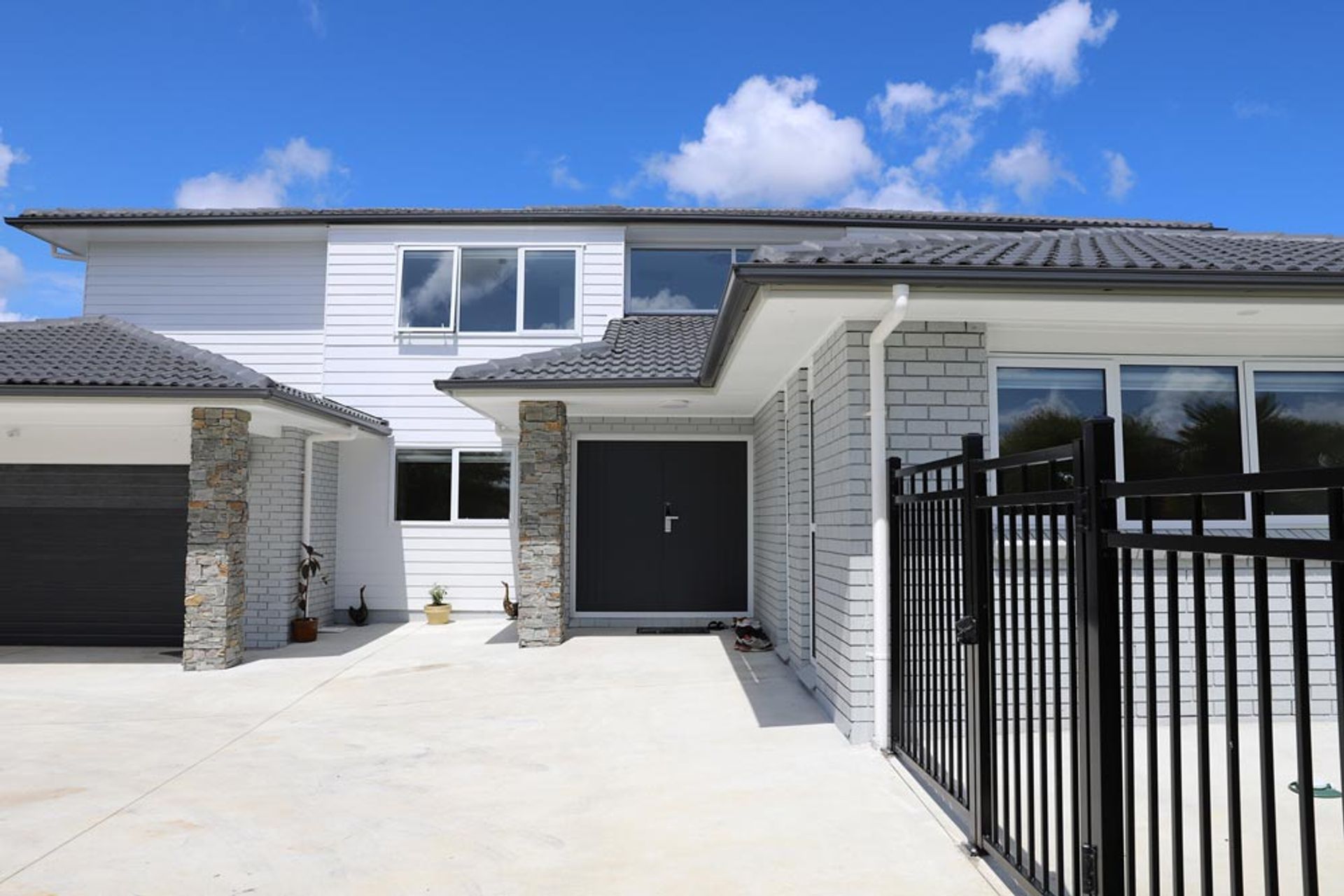
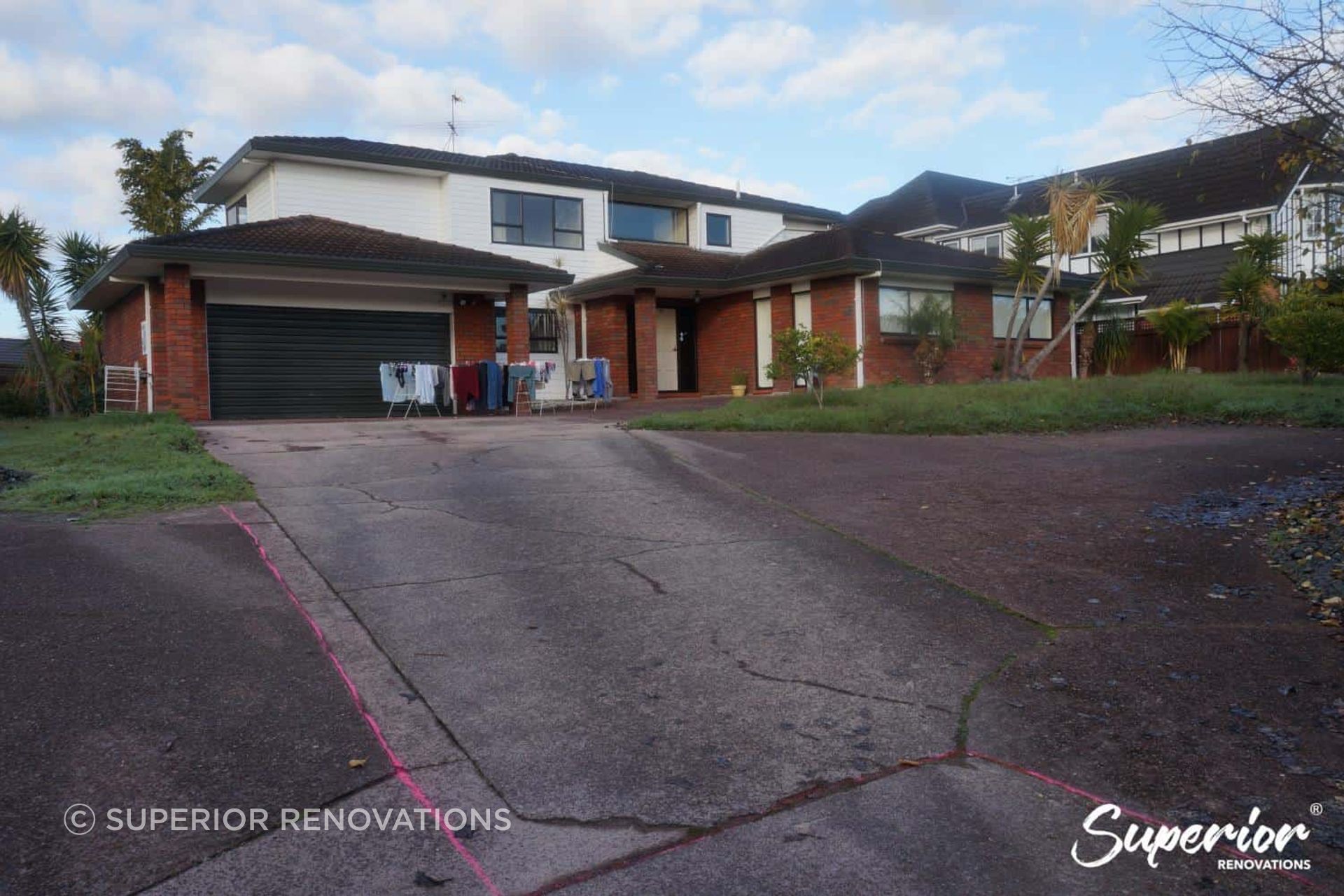
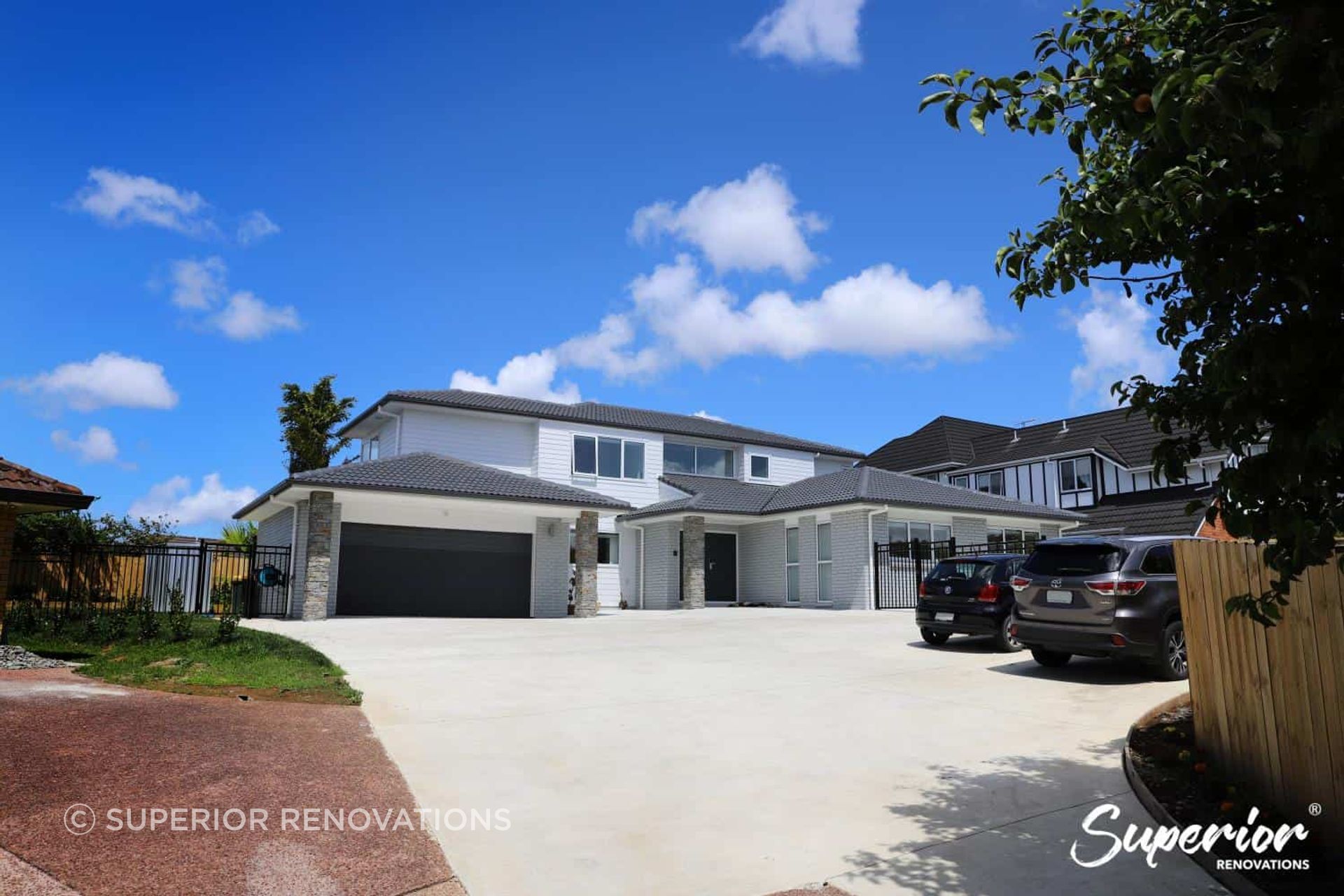
The three-generation family home we renovated in West Harbour shows what that looks like. It's a two-storey brick-and-weatherboard house on the western shore of the Waitemata, and the family chose to renovate rather than sell. Alongside four bathrooms, a kitchen and five bedrooms, the roof was replaced, double glazing went in, the house was fully insulated, and then the exterior and roof were painted top to bottom before a new driveway and paving finished it off. The photos below show the front of the house before (left) and after (right).
Look closely at what changes between the two photos. It isn't paint alone. It's a new roof, repainted brick and weatherboard, a new driveway, fencing and a gate, in that order. The paint is the part everyone sees, and it would have been wasted if it had gone on before the roof.
Painting the exterior before you sell
If you're listing in the next few months, the aim changes. You're not planning the next ten years of the house. You're deciding what a buyer's building inspector and a buyer's eye will pick up.
- Fix before you paint. A building inspection will find soft boards and failed sealant whether they're painted or not, and fresh paint over obvious rot invites harder questions about what else has been covered.
- Prioritise the street face and the entry. If budget or time is tight, the front elevation, the front door and the path to it carry the first impression.
- Keep the colours calm. A neutral exterior photographs well and doesn't give buyers a repaint to budget for.
- Leave enough time. Superior Painters' view is that six weeks before listing is plenty for a professional repaint in decent weather, provided no repairs are hiding underneath.
Don't paint over a problem you know about to get it past a sale. Beyond the ethics, a buyer's inspector is paid to find it, and a monolithic home with signs of moisture needs an honest assessment far more than it needs a new coat.
Exterior painting and home value FAQs
Does exterior painting increase the value of your home?
It protects the cladding and improves how the house presents to buyers, which matters most in listing photos and at the kerb. We haven't seen a New Zealand source such as REINZ or QV publish a reliable figure for how much value it adds, so be wary of anyone quoting a percentage. The benefit only holds if the surface underneath is sound.
Should I repaint or reclad my house?
Repaint if the cladding is sound and the paint is simply tired. Reclad if the cladding isn't keeping water out, which is a risk on monolithic plaster homes from the mid-1990s to mid-2000s, or if it's sound but dated in a way paint can't change. A weathertightness assessment settles the question before you spend on either.
Can you paint over rotten weatherboards?
No. Rotten timber has to be cut out and replaced before painting. Filled and painted rot holds for a short while, then moisture pushes back through the new paint. Test suspect boards with a screwdriver: if the timber gives without resistance, it needs replacing, and the cause of the moisture needs finding.
Should I paint the exterior before or after other renovation work?
After. Paint is the last trade through. If a new roof, new windows, cladding repairs or new spouting are planned, do those first, then paint once. It avoids damaging fresh paint and lets the roof and exterior share one set of scaffolding if both are being painted.
Not sure whether your exterior needs a painter, a builder or both? Superior Renovations has completed more than 1,000 renovations across Auckland, and our team can walk the house with you and tell you which it is. See how Superior Renovations runs exterior and interior work under one project manager, then book a consultation and bring photos of each side of the house. You'll find us at 16B Link Drive, Wairau Valley, and on superiorrenovations.co.nz.