A four-level Mosman home designed to capture the harbour at every turn
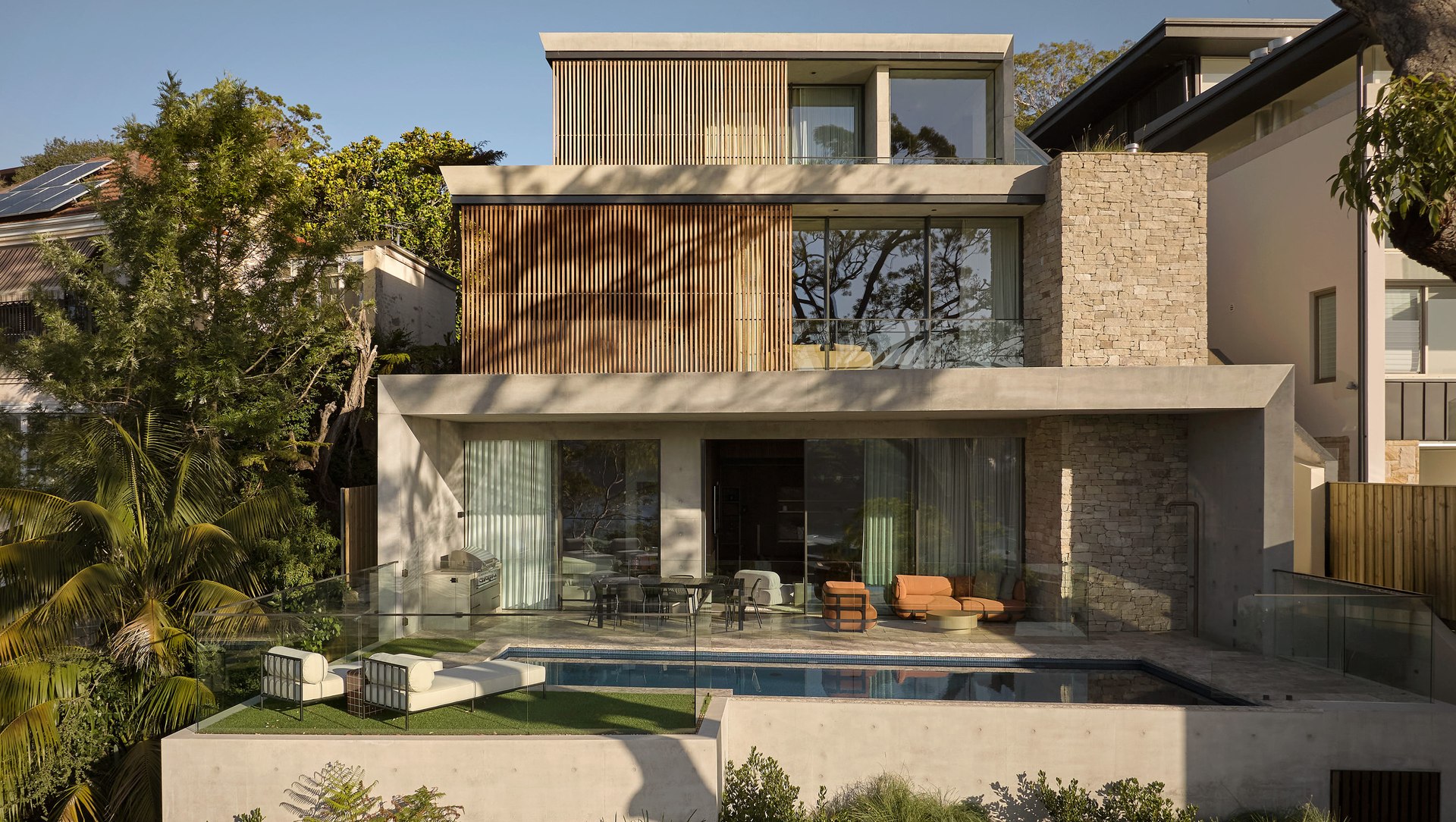
In Sydney’s Mosman, houses often step down toward the harbour, each one competing for its share of the view. Residence Allure does more than simply face the water. It is shaped entirely around it.
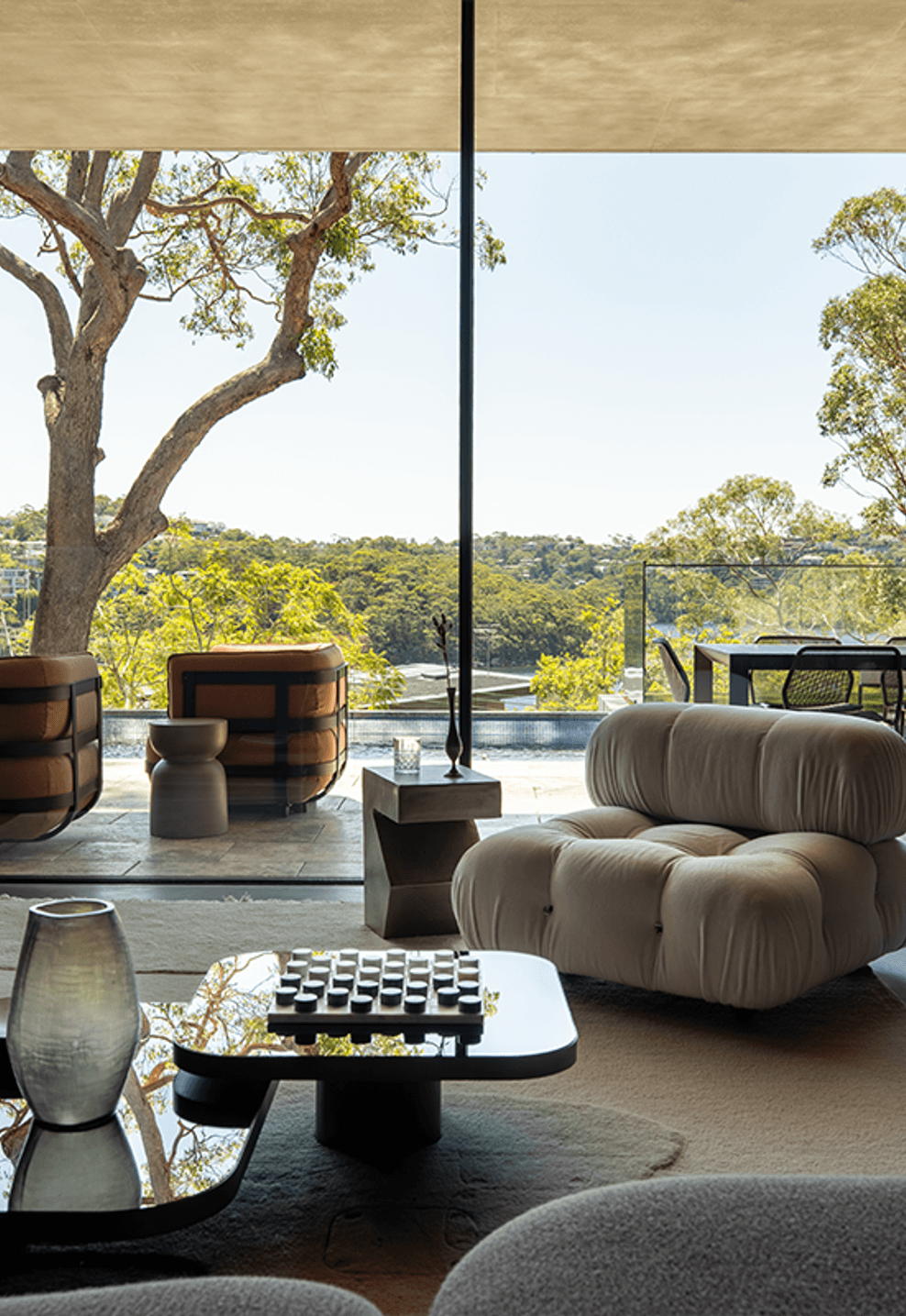
From the main living areas to the private bedrooms, every level of the house looks outward toward Quakers Bay, a calm inlet connected to Sydney Harbour.
“It was always about the view,” says designer James Kennedy of JPWK Design. “Each level was oriented so the house could take advantage of that outlook.”
The result is a home that unfolds vertically, gradually revealing the landscape as you move upward through the building.
The project reached James' practice under unusual circumstances. The original concept designer entered administration during the early stages of development, leaving the project without architectural leadership.
James stepped in as technical designer and planner, eventually taking on responsibility for guiding the project through the remainder of its design and construction. Interior designer Alice Dalloz of Ancré Studio, who had been involved from the earliest concept stages, remained closely embedded in the project, shaping both the interior experience and the way the home would ultimately be lived in.
Together with Toki Construction, the project developed through a close working relationship between all parties involved.
“It was very collaborative,” James says. “Everyone stayed quite engaged throughout the build.”
The house relies on a deliberately simple palette of materials. Dry-stack stone forms much of the exterior façade, creating a strong, textured surface without visible grout lines. Cedar appears in sliding screens, cladding elements and the garage door, bringing warmth to the otherwise robust architecture.
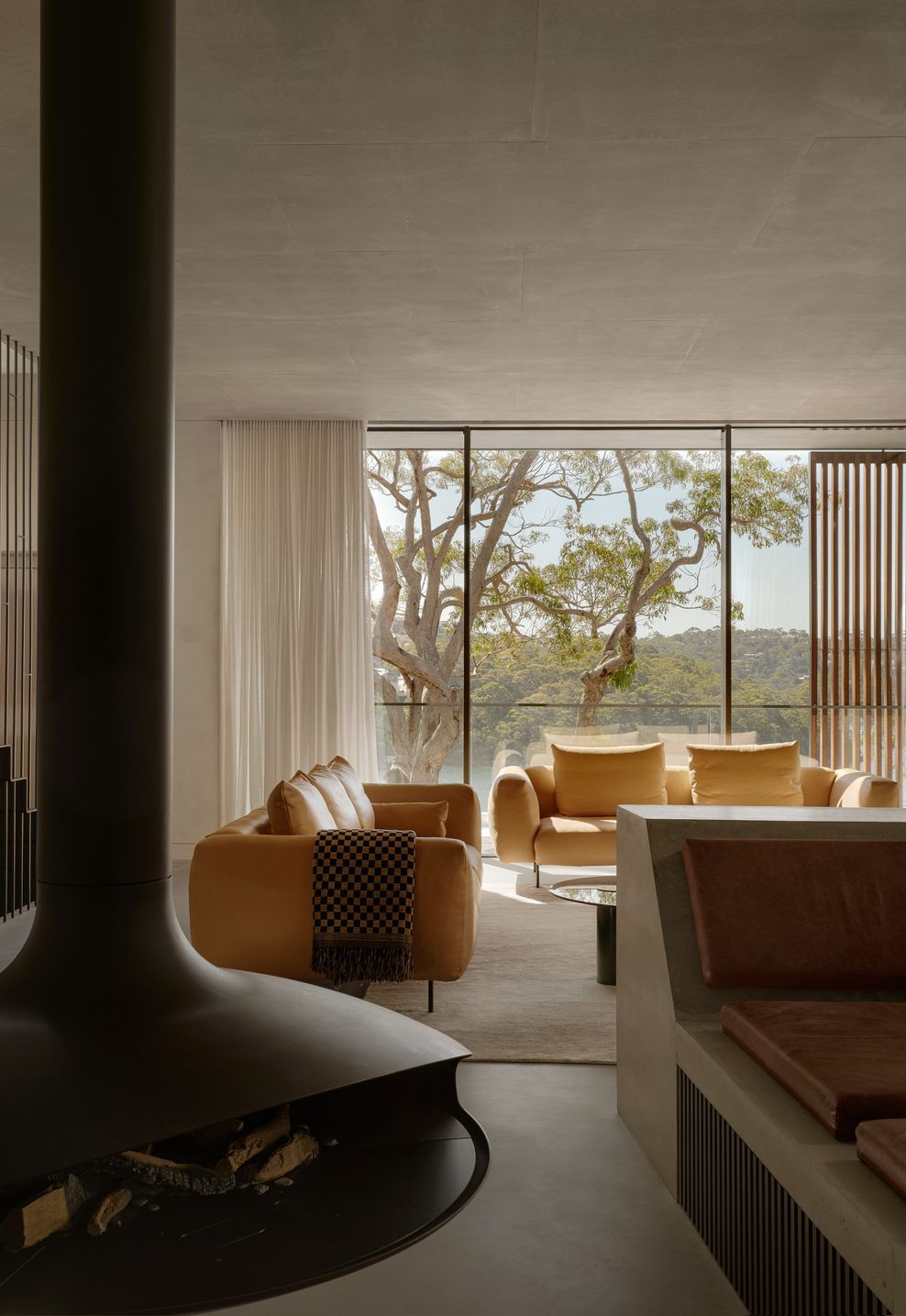
Large aluminium glazing systems frame the surrounding landscape while allowing natural light to penetrate deep into the home. Concrete plays an important structural role as well. A material choice that reflects the homeowner’s background in the construction industry.
Together, these materials give the house a calm and grounded presence.
While the architecture establishes a strong, sculptural language, the interiors work to temper that expression.
“Initially, the brief leaned quite masculine. Strong geometry, darker tones, a more angular feel,” says Alice. “But as the client’s life evolved, the house needed to evolve with it.”
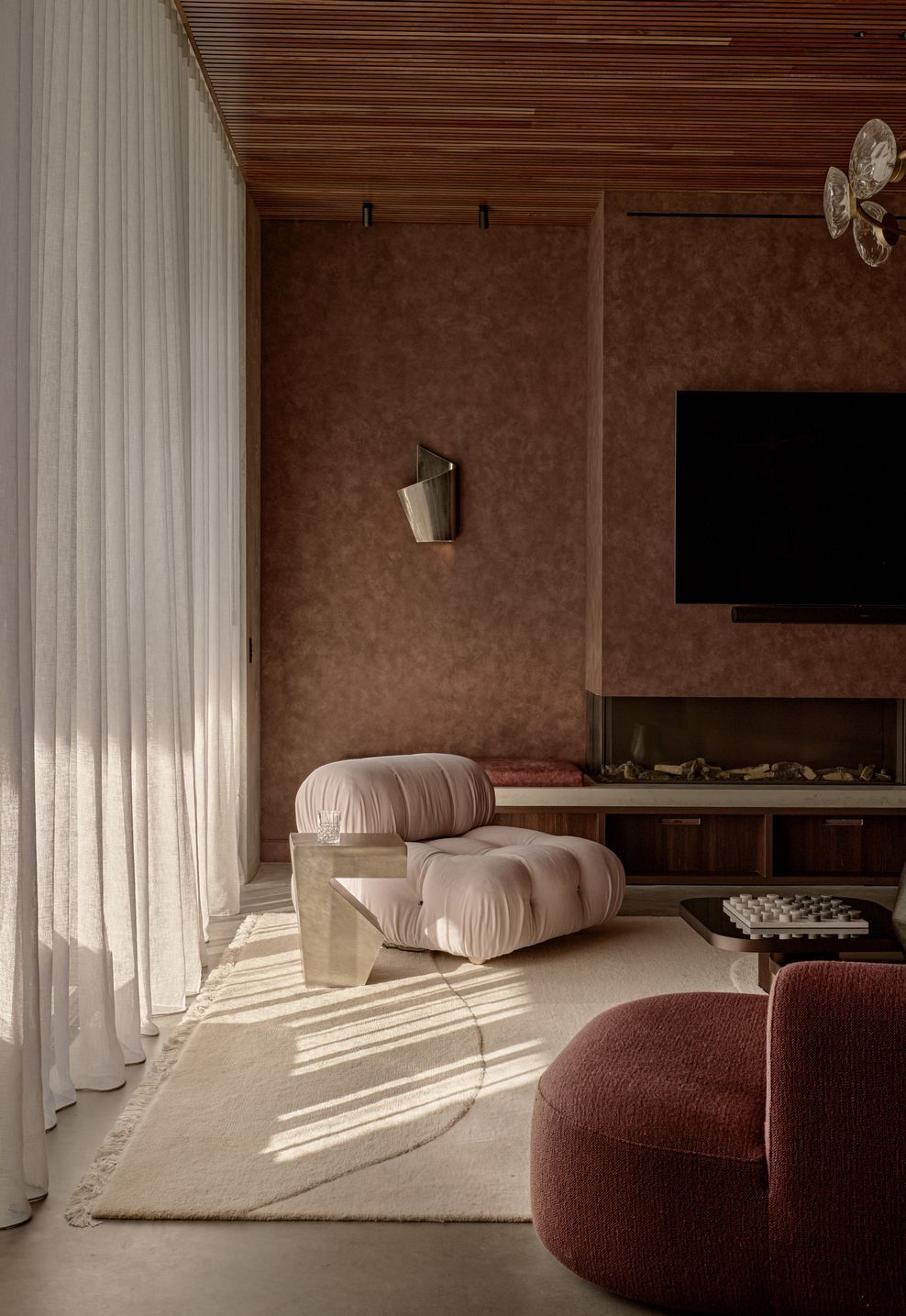
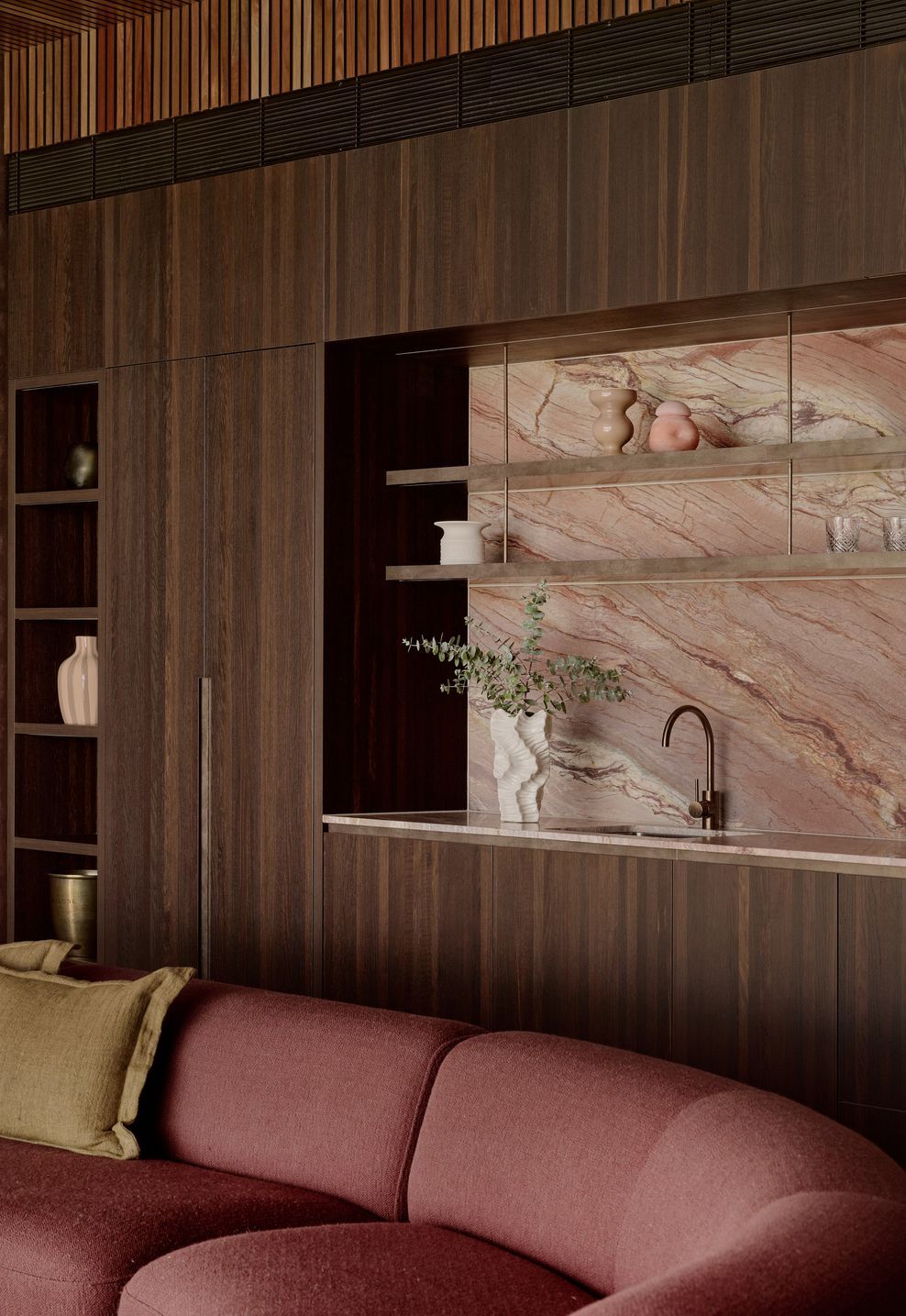
What began as a more monolithic vision gradually softened into something more layered and liveable. A shift reflected in the introduction of warmer timbers, tactile stone and a more nuanced material palette.
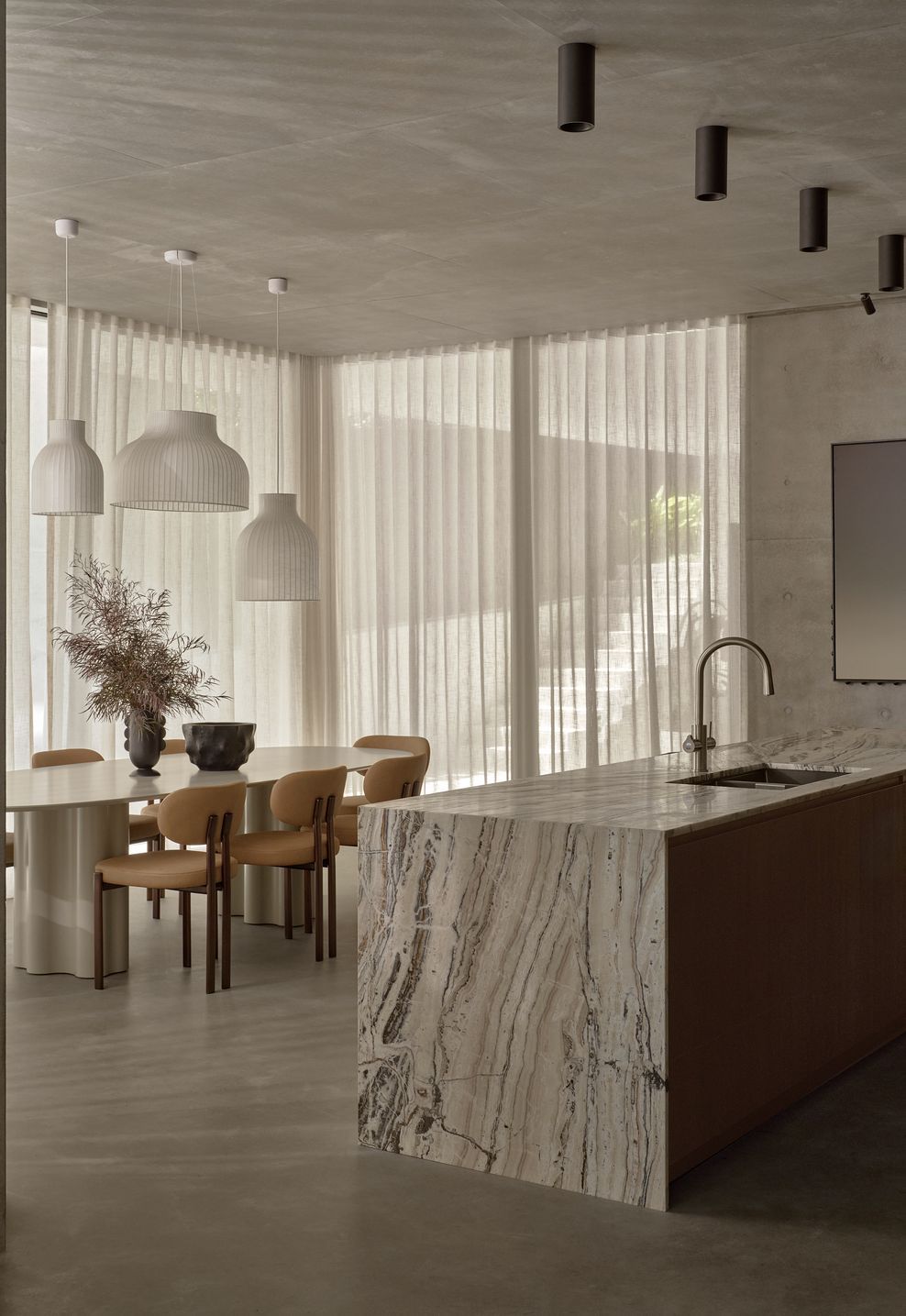
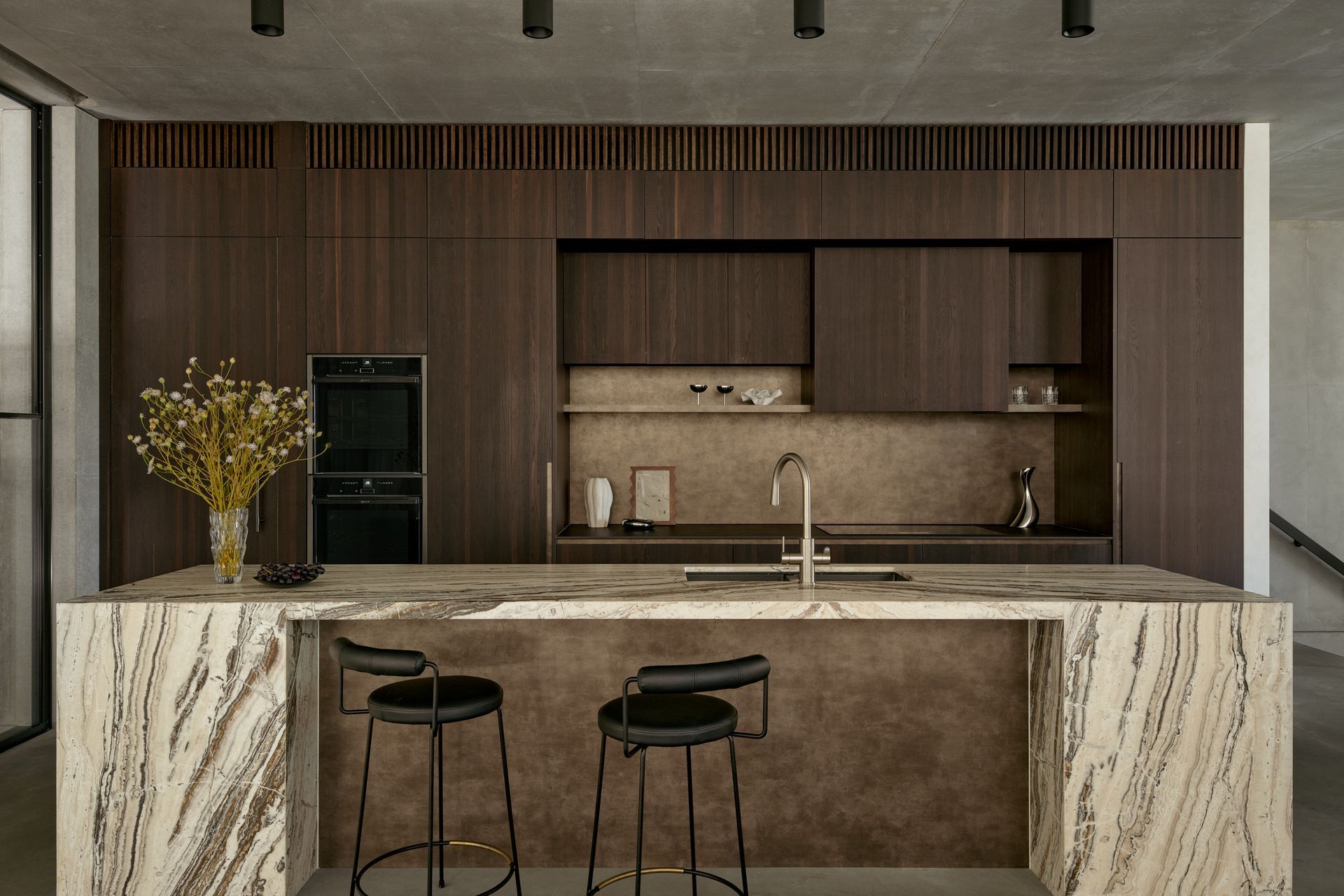
The home is organised across four distinct levels, each designed with its own function. At the base of the house sits the garage, gym and wine cellar. Above this level is a leisure floor featuring a pool, rumpus space, bathroom and guest bedroom. The main living level sits above, housing the kitchen, dining and living areas along with a butler’s pantry and laundry. The social centre of the home, positioned to capture the best harbour views.
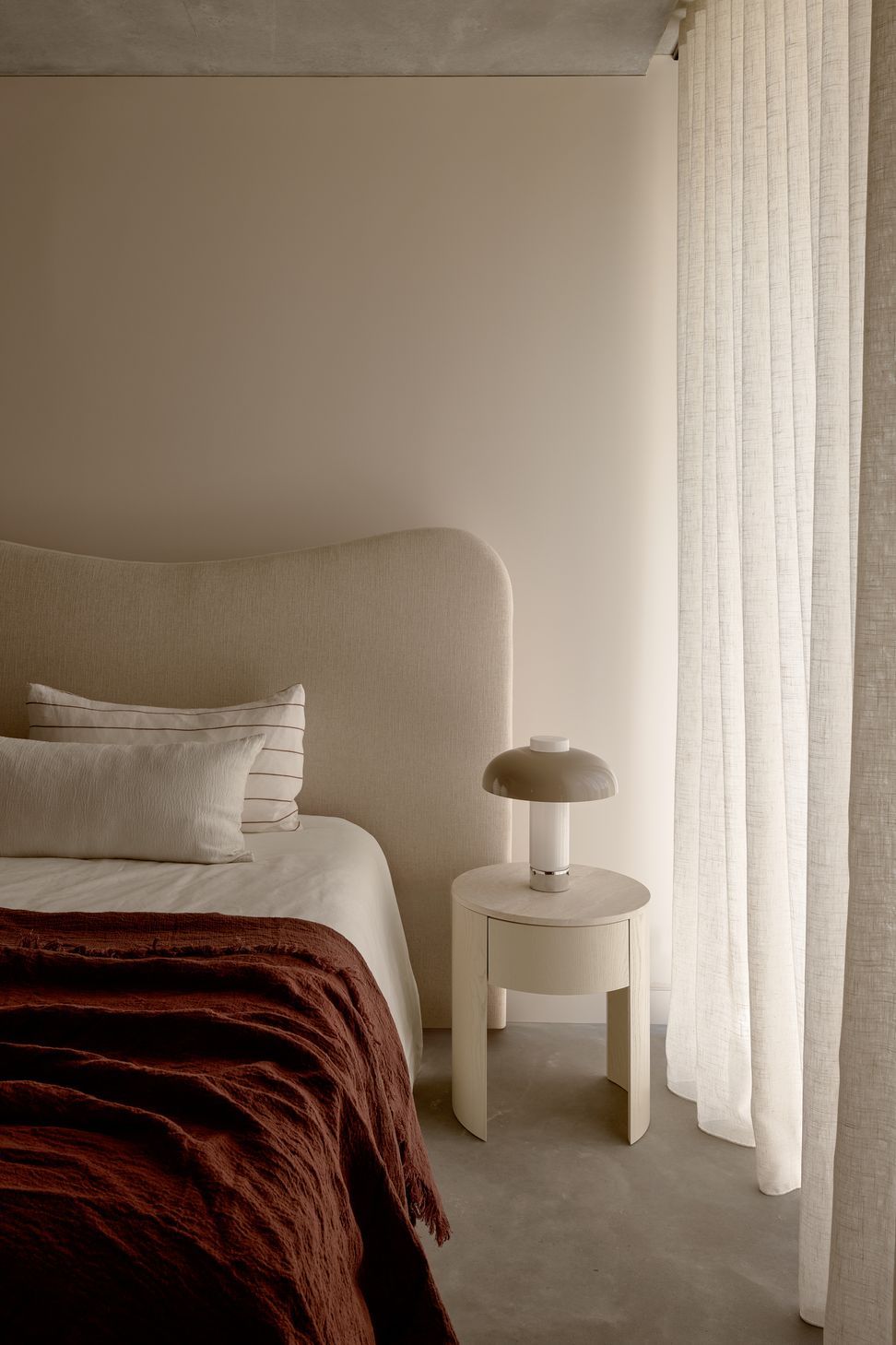
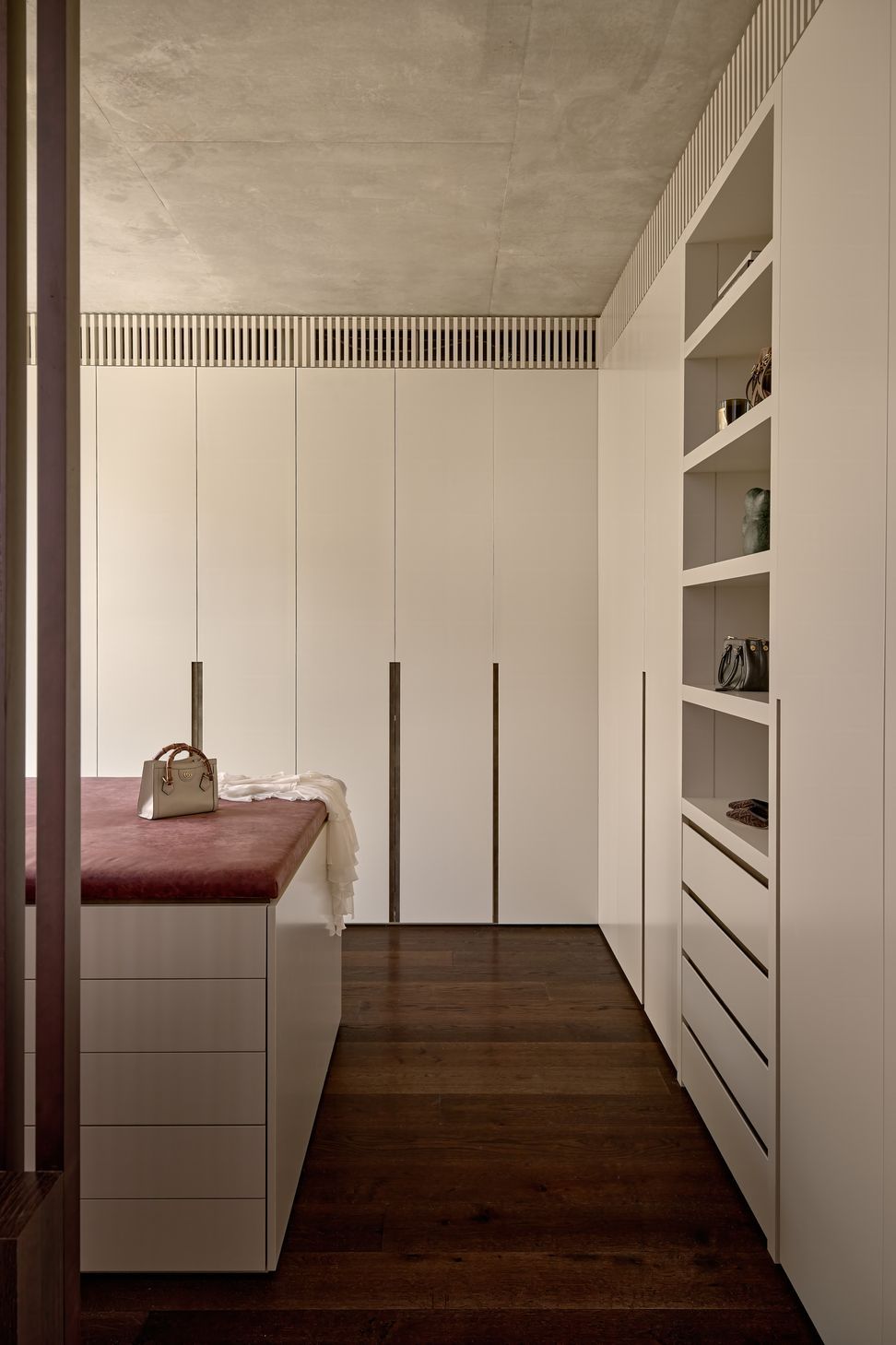
The upper level contains the private family spaces, including the master bedroom and additional bedrooms. From here, the house opens toward landscaped outdoor areas and entertaining spaces.
The sequencing is deliberate. As you move upward, the spaces become quieter, more private, more personal. A gradual transition from social to retreat.
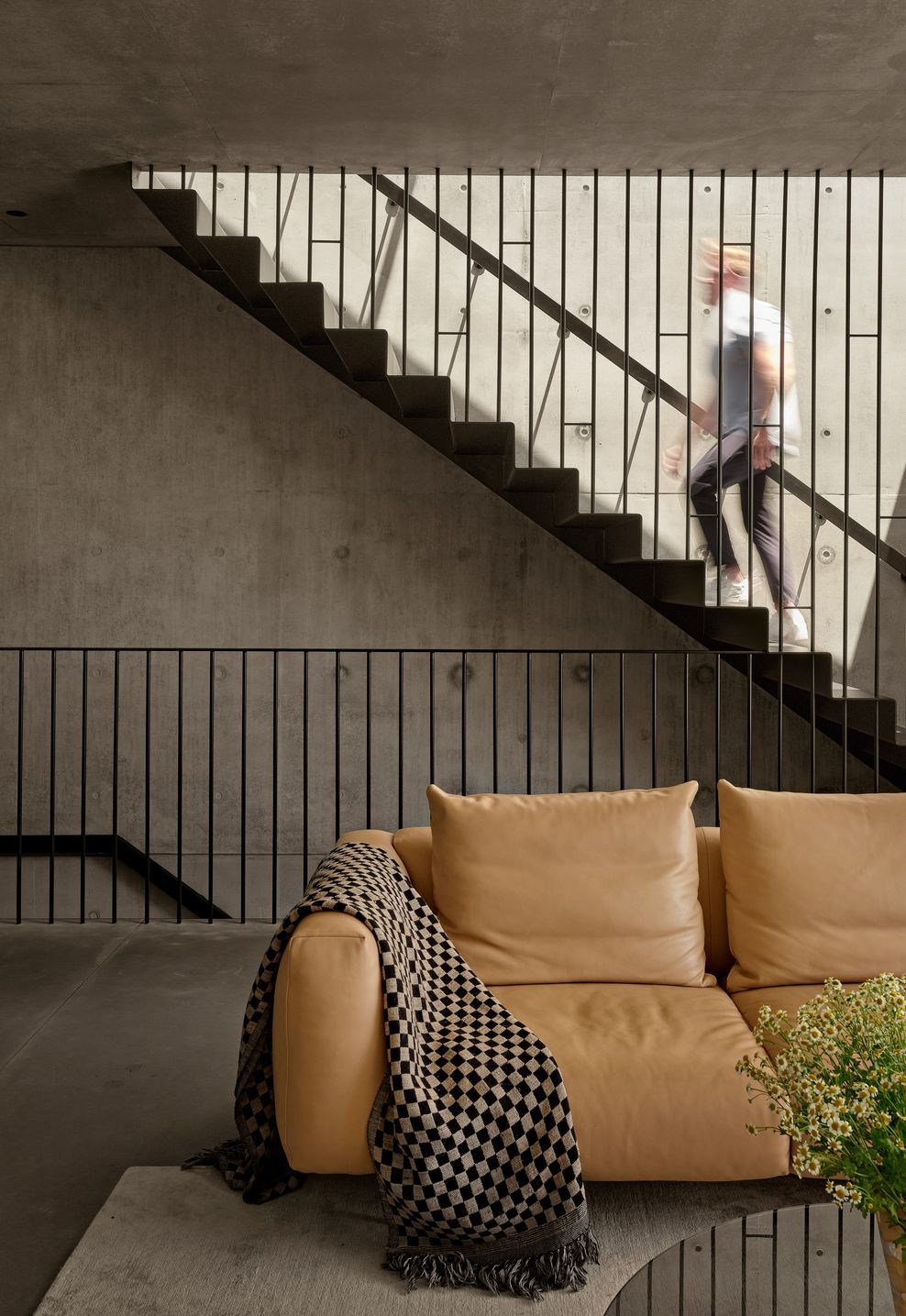
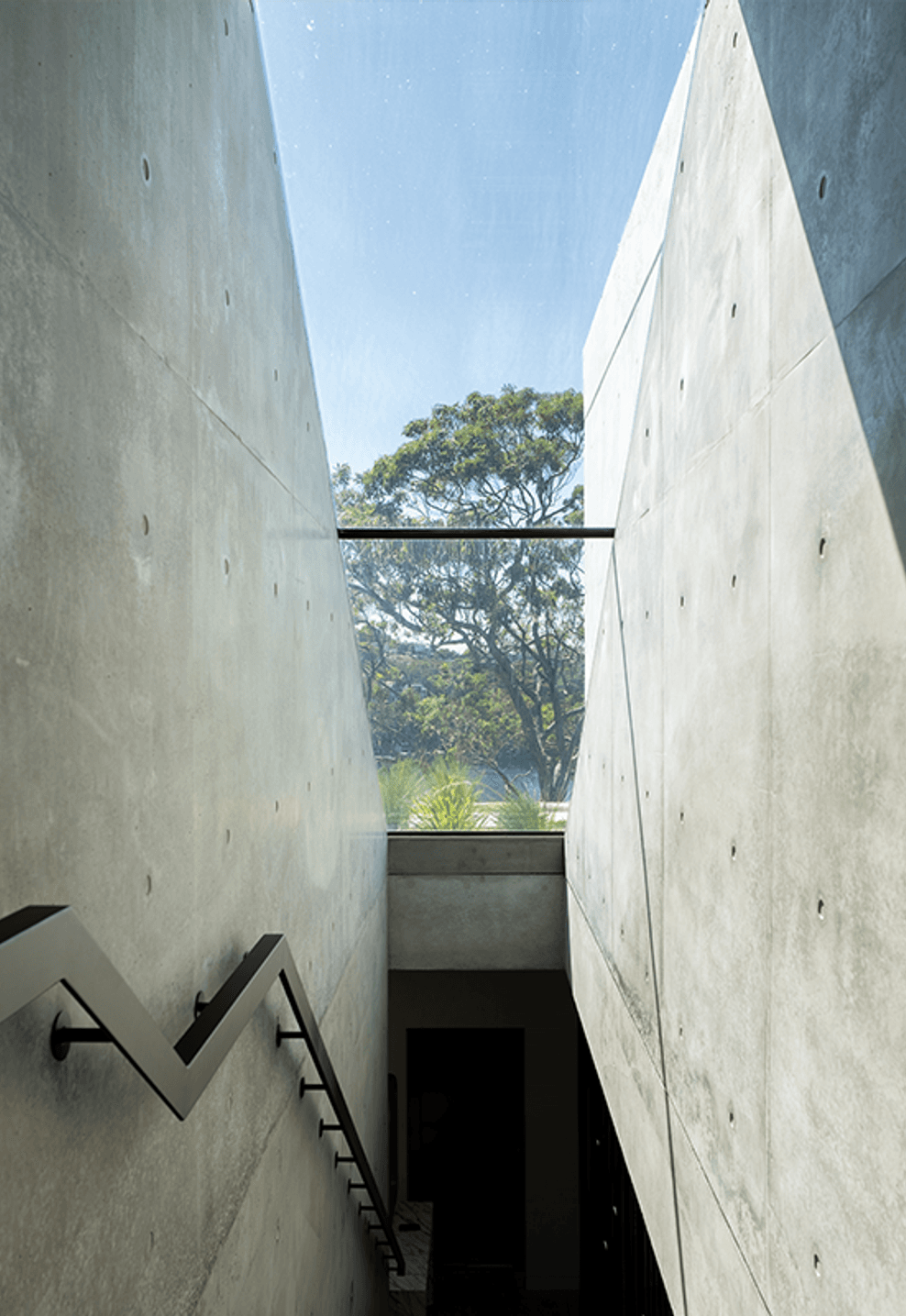
Because the house spans four floors, bringing natural light into the centre of the building was essential. Strategically placed light wells above the stair core draw daylight down through the structure. A custom low-iron glass panel introduces natural light into the middle level, which might otherwise rely heavily on artificial lighting.
Two additional voids on the upper level allow midday sun to filter deeper into the home. These subtle architectural moves ensure the interior remains bright despite the home’s vertical layout.
That balance between light and control was equally important to the interior approach.
“The house is very exposed to the sun, so it was about softening that intensity,” Alice explains. “The sliding timber screens became essential, not just functionally, but as a way to bring warmth and rhythm into the spaces.”
Alongside this, performance was considered from the outset. Double glazing, full insulation and passive strategies work in tandem with the architecture, creating a home that remains comfortable year-round while reducing reliance on artificial heating and cooling.
One of the defining features of the design is the use of deep overhanging eaves. These extended rooflines create shaded outdoor areas that blur the boundary between inside and outside.
Each level maintains some form of connection to landscape, whether through terraces, planting or framed views. Existing trees on the site were carefully retained and incorporated into the design. In the master suite, the bath is positioned to look directly toward one of these trees, with the harbour visible beyond.
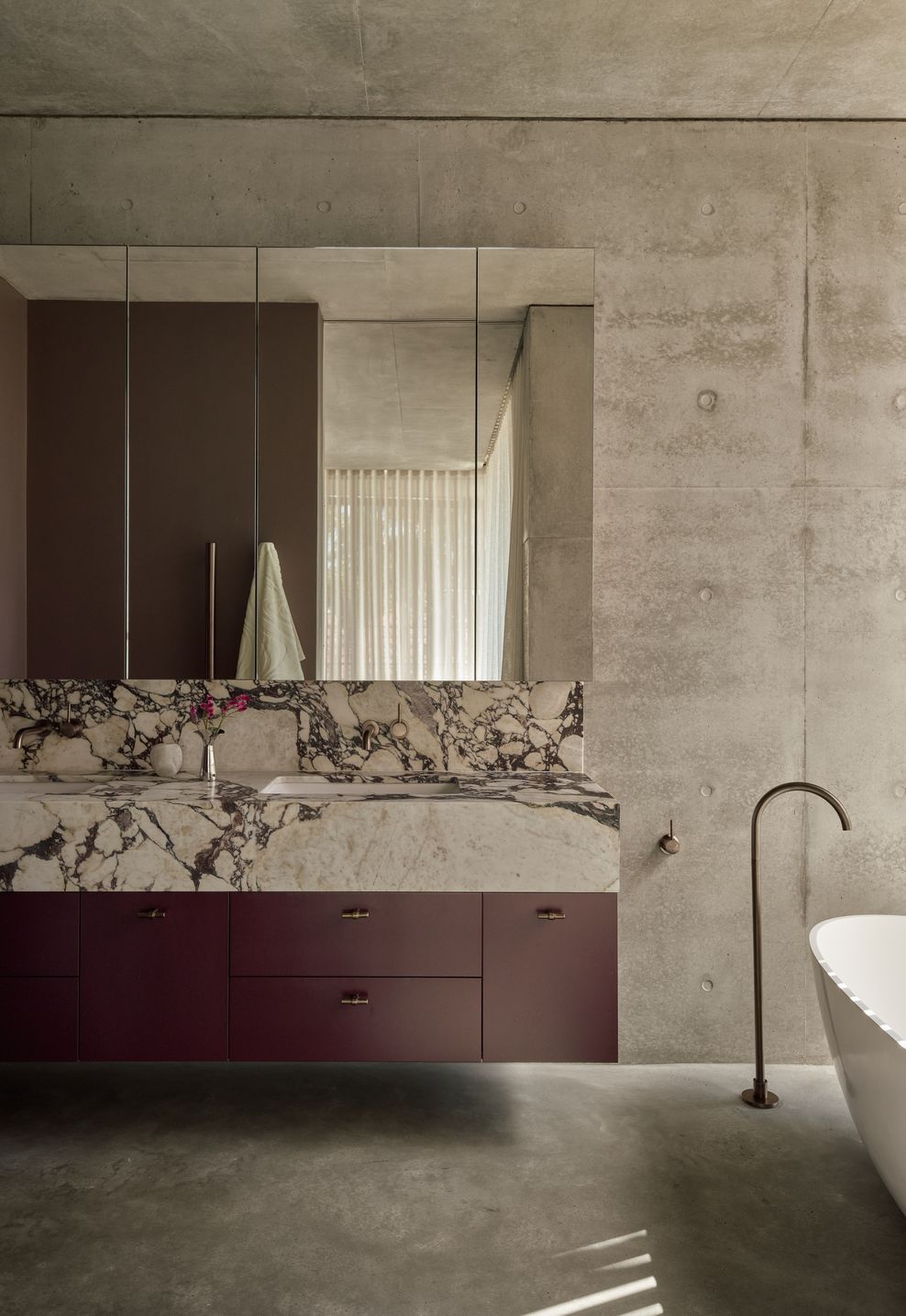
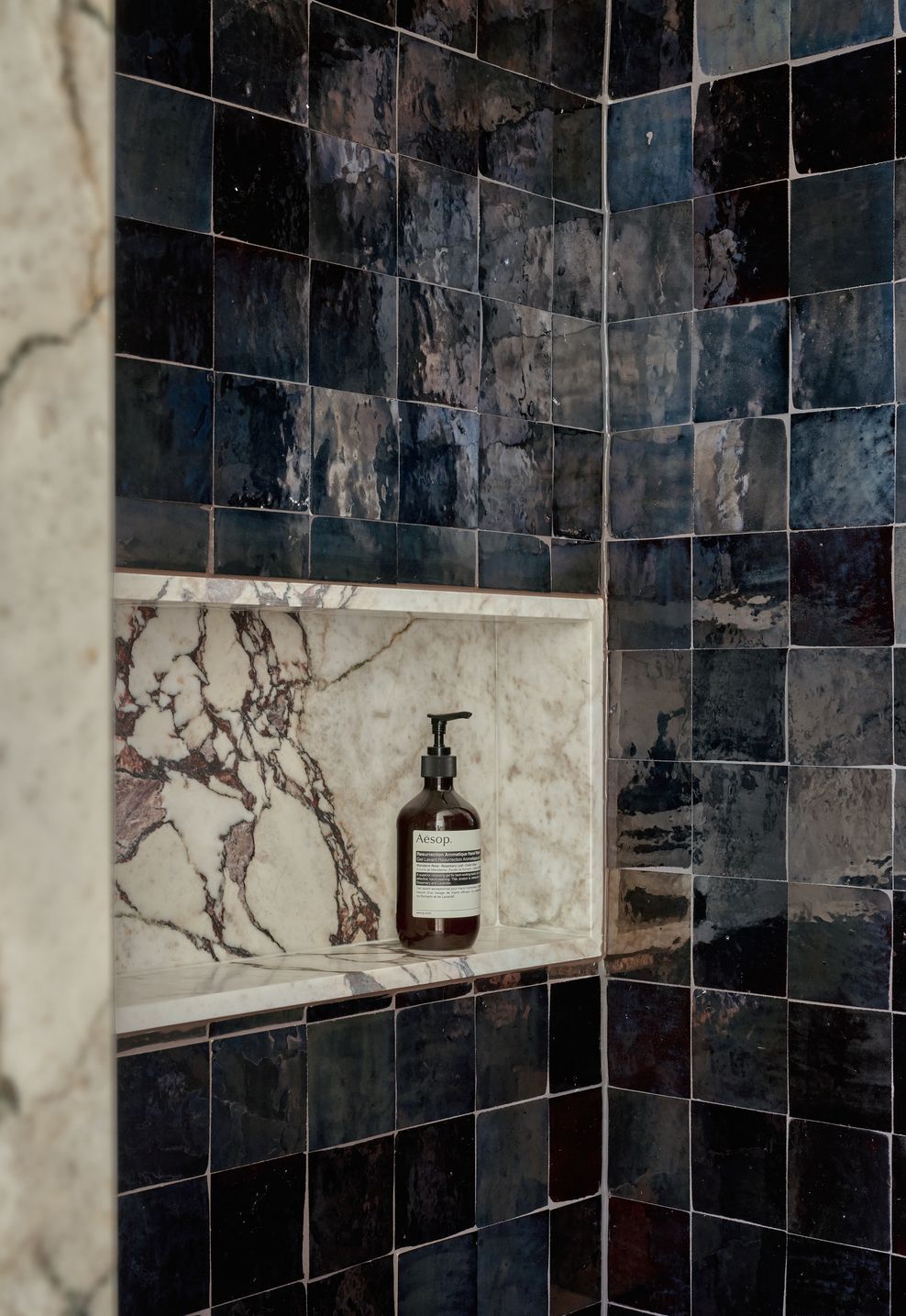
Within, material consistency plays a quiet but important role. Bathrooms are unified through the use of travertine and tonal tiles, with subtle variations in colour introducing individuality across each space. In more expressive moments, such as the powder room and master ensuite, richer tones and softer forms introduce contrast, balancing the home’s otherwise linear, geometric language.
For Alice, the project was ultimately about making a bold architectural idea feel effortless to inhabit.
“I’m always thinking about how people actually live in a space,” she says. “It’s not just about how it looks, but how it works day to day. How it feels as you move through it.”
That thinking is reflected not only in the material palette, but in the way the home unfolds. A series of spaces that respond to both the landscape outside and the lives within.
For James, the success of the project reflects the collaborative nature of the design and construction process. Rather than stepping away after the design stage, the project team remained closely involved during construction, working alongside the builder to resolve details as the home took shape.
“When designers and builders stay engaged with each other, things tend to run much more smoothly,” he says.
The finished house reflects that shared effort. A carefully considered residence shaped by its harbour setting, its restrained material palette and the people who brought it to life.