A home designed around heritage
It’s a pretty unusual thing, for an interior design brief to be truly carte blanche, particularly for someone’s home. But for this inner-city Melbourne interior, the client had only one request.
“We needed to pick a really comfortable sofa that he could relax on,” says interior architect Candyce James of AKI Design. “That was pretty much it.”
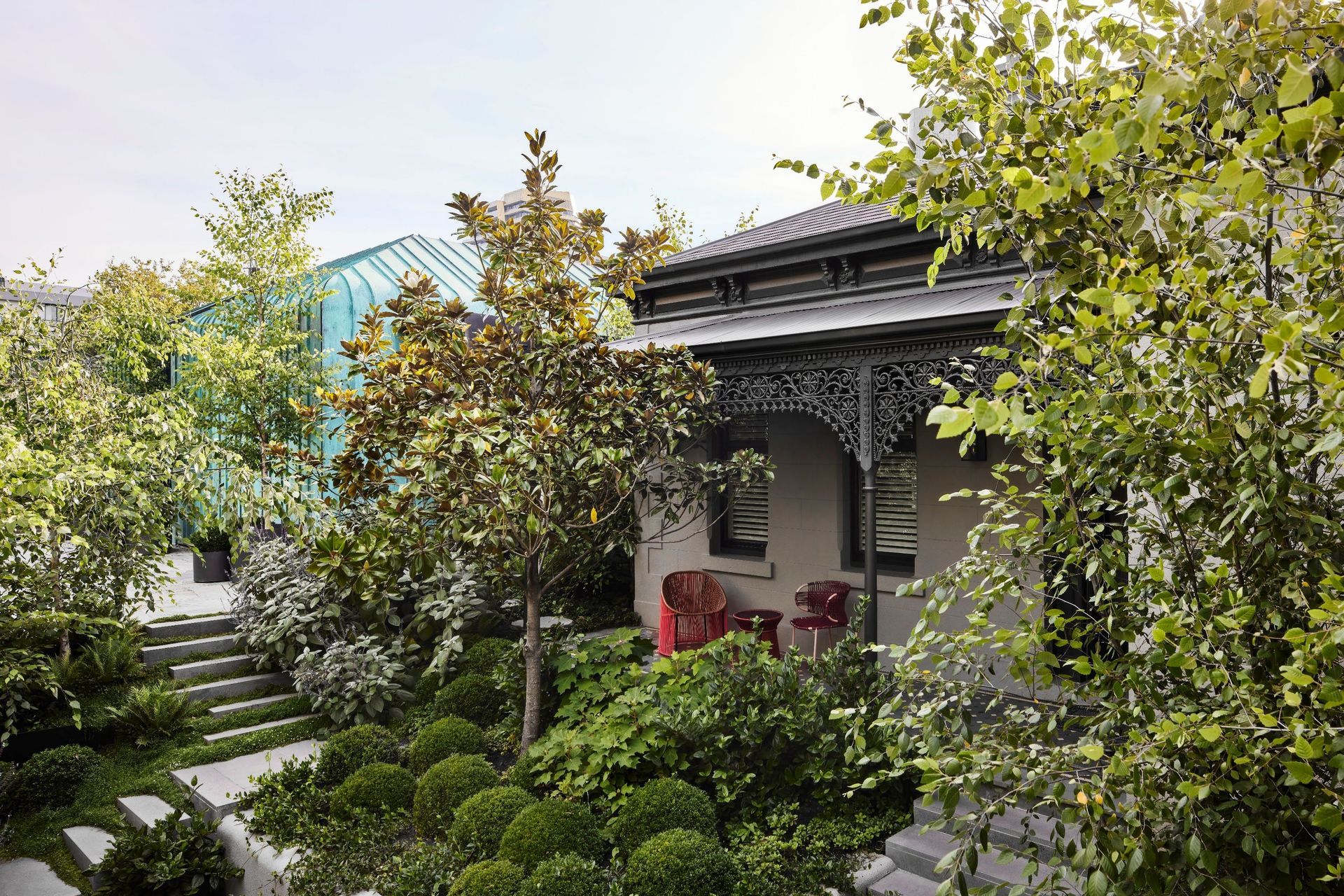
For an architect, that kind of trust is both rare and liberating. The client, a long-time homeowner in South Yarra, had already spent more than a decade living in the property before embarking on a significant redevelopment. After purchasing the neighbouring house and demolishing it to create a contemporary extension, he invited AKI Design to reimagine the original Victorian portion at the front.
What followed was a project that balanced heritage elements with contemporary living. With almost complete creative freedom, the design team set out to create a home shaped by mood, narrative and a clear understanding of how the client liked to live, which meant entertaining was at its heart.
Embracing heritage & creating a design narrative
The house sits on a leafy stretch within one of Melbourne’s most established residential pockets. Known for its handsome period homes and architectural pedigree, the street already provided a strong contextual starting point.
“It’s a very prominent part of Melbourne with some beautiful homes,” Candyce says. “The house itself is in a lovely position in South Yarra, so it already had a strong sense of character.”
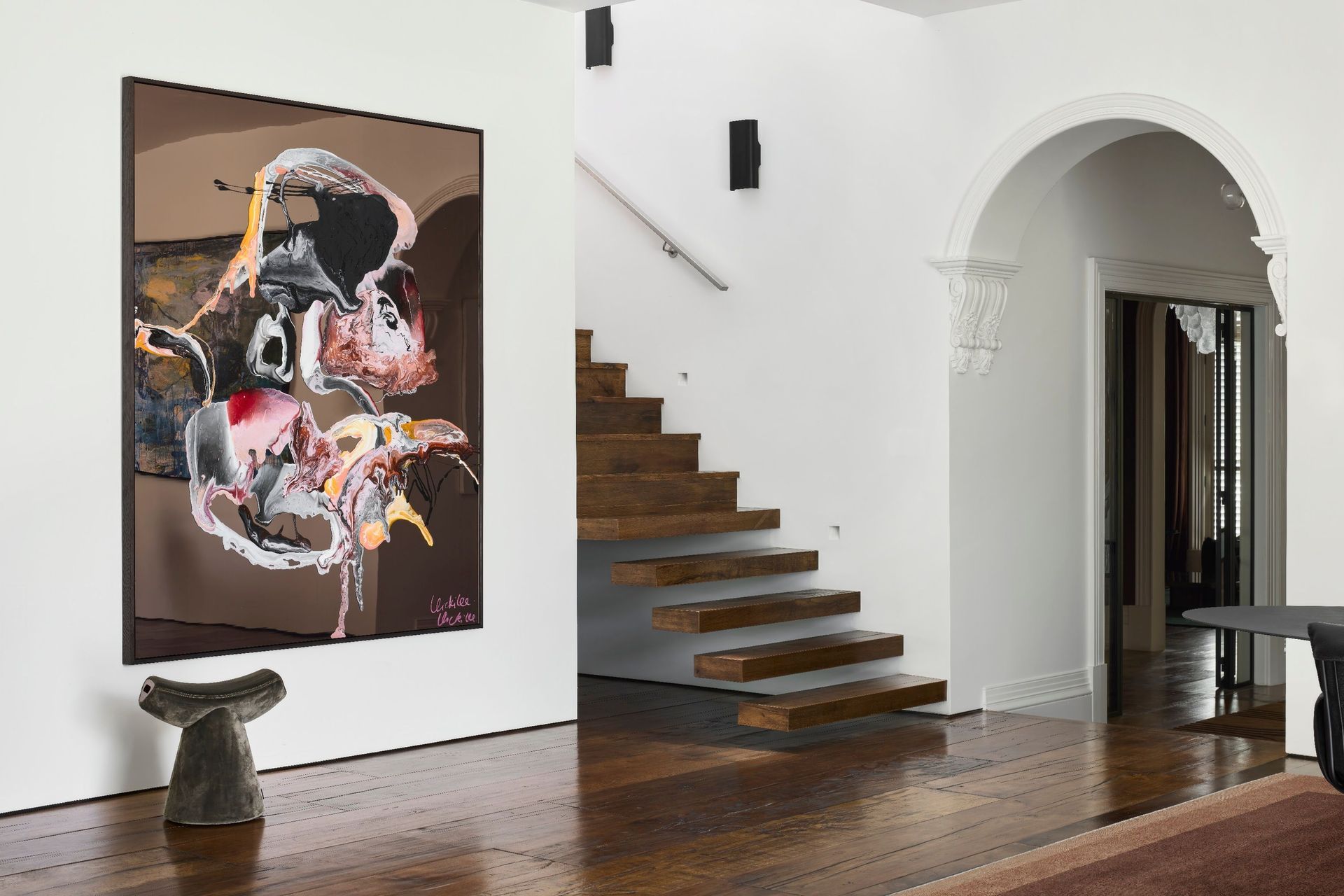
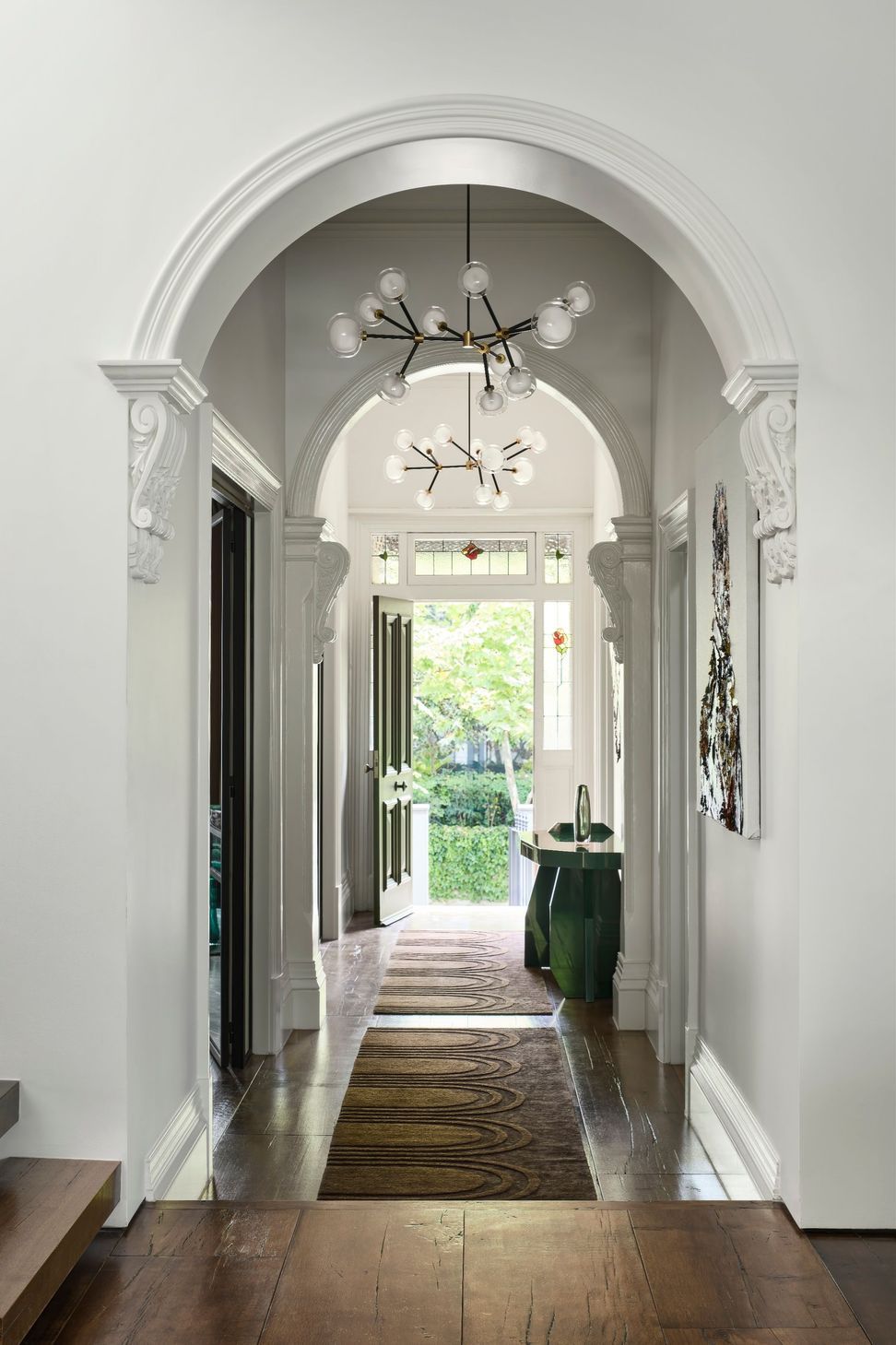
Rather than dilute that heritage, AKI Design chose to lean into it. The studio began by studying the context of the area, using this as a foundation for the design language that would unfold across the interiors.
“When we start a project we really look at the history of the home and the area,” Candyce says. “That becomes the base for launching the rest of the design, and from there we try to create a story and narrative through the house.”
The first chapter of that story appears in the home’s two front rooms. Originally intended as spaces for listening to music and drinking wine, the design restores these uses with a rich palette that immediately sets the tone.
Walls are enveloped in deep burgundy in the wine room and saturated green in the music room, creating intimate environments designed for evenings spent entertaining. The darker hues lend a sense of drama while also acknowledging the formality of the Victorian architecture.
Material choices reinforce this layered mood. Velvet armchairs, a vintage Merenco sofa set and richly veined marble surfaces bring texture and visual depth to the rooms, encouraging a slower pace of living.
“Those spaces were designed for sitting, relaxing and socialising,” Candyce says. “We wanted them to feel rich and luxurious so they really created a mood.”
Lighting brings another layer of character to these spaces with vintage Italian chandeliers sourced through specialist importers adding a sense of historic elegance.
Transitioning from heritage to contemporary
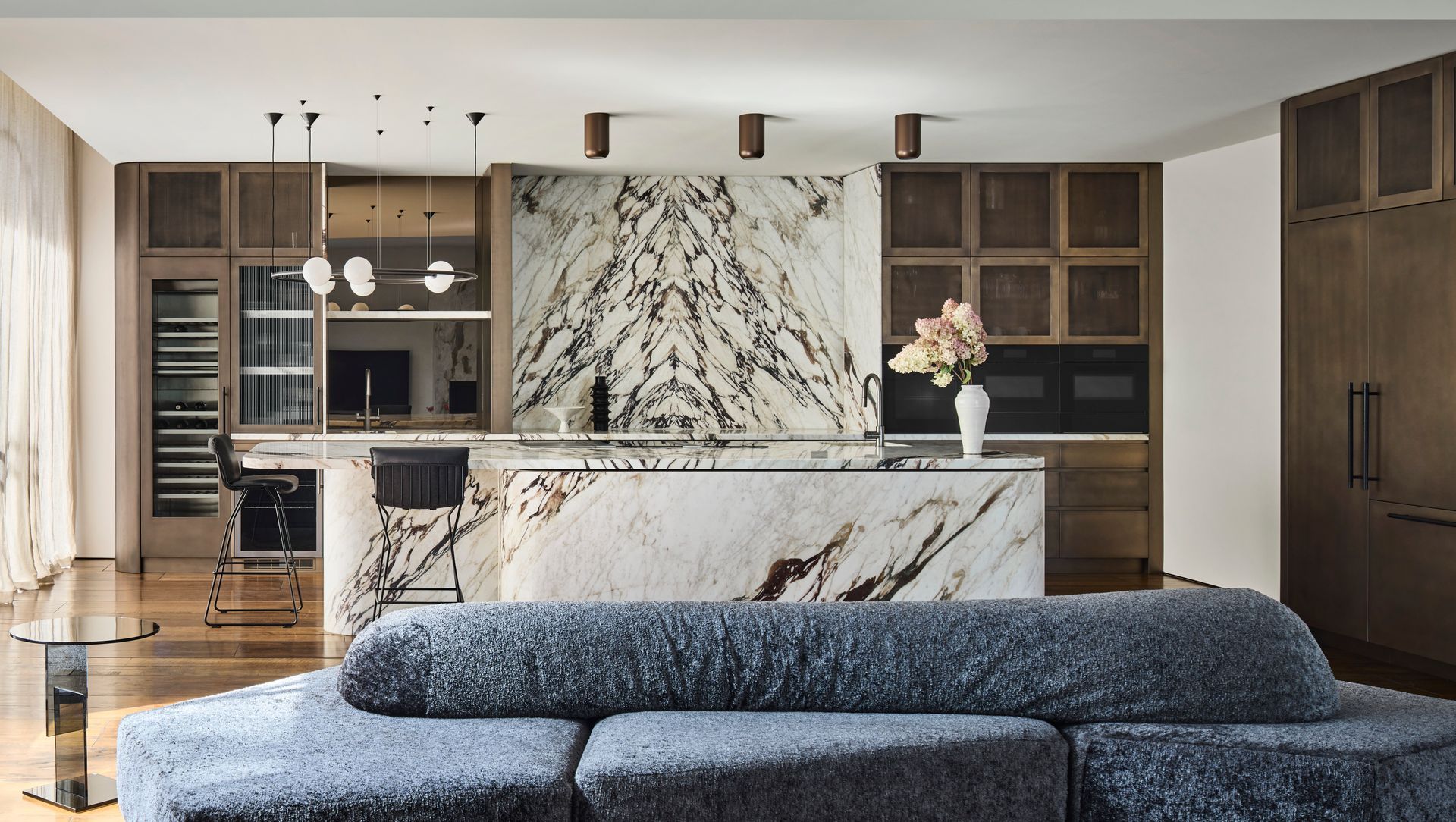
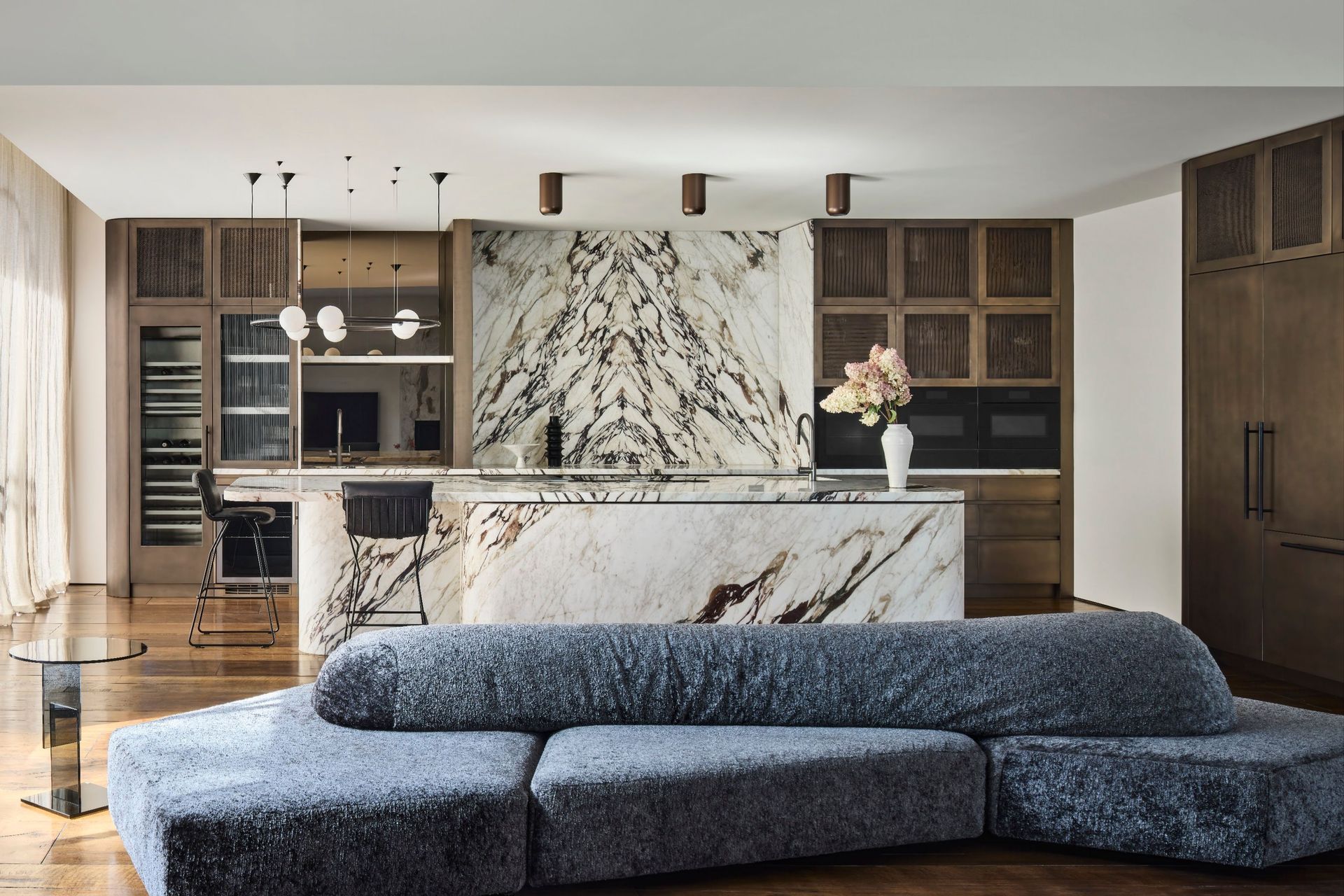
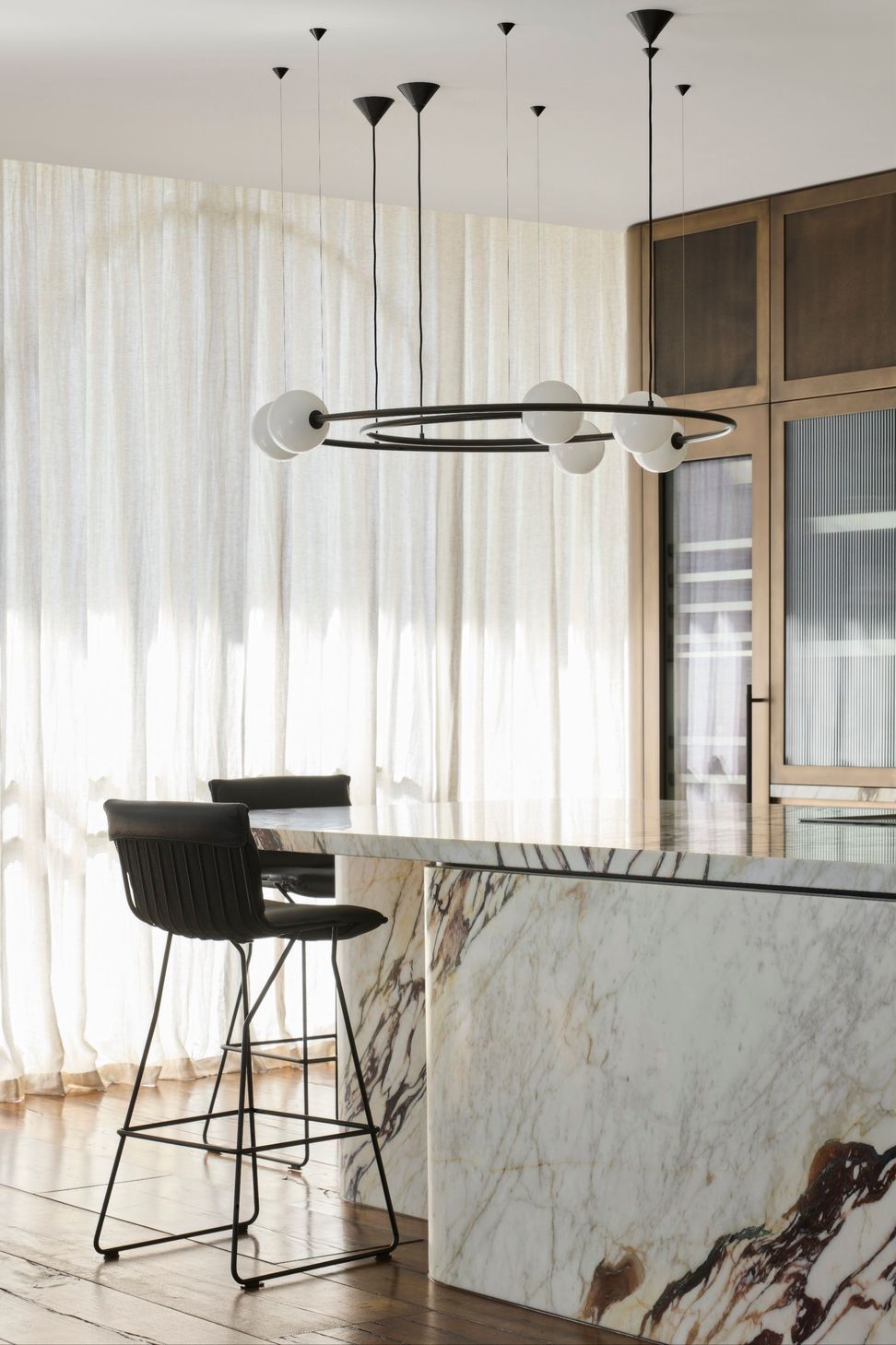
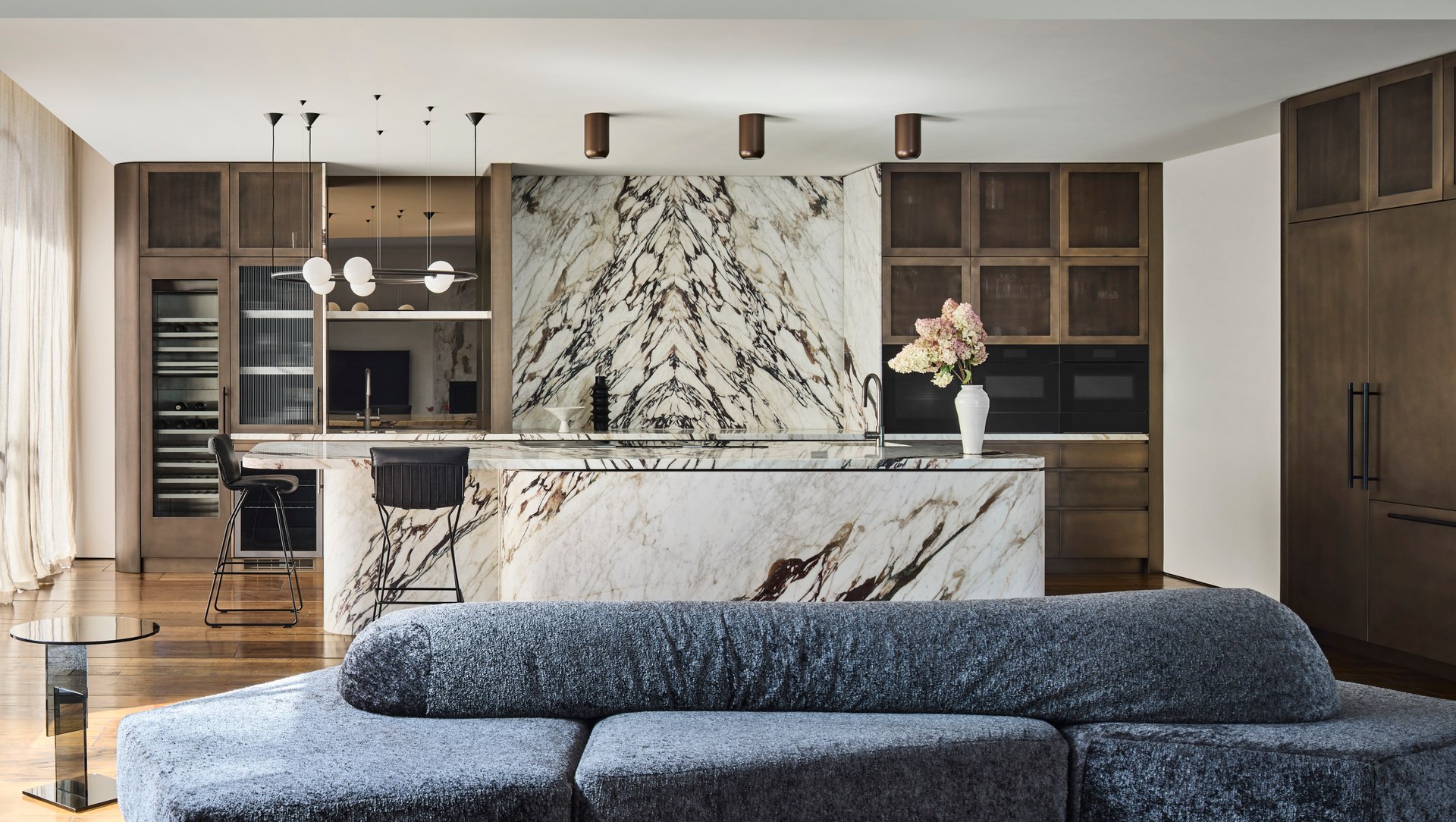
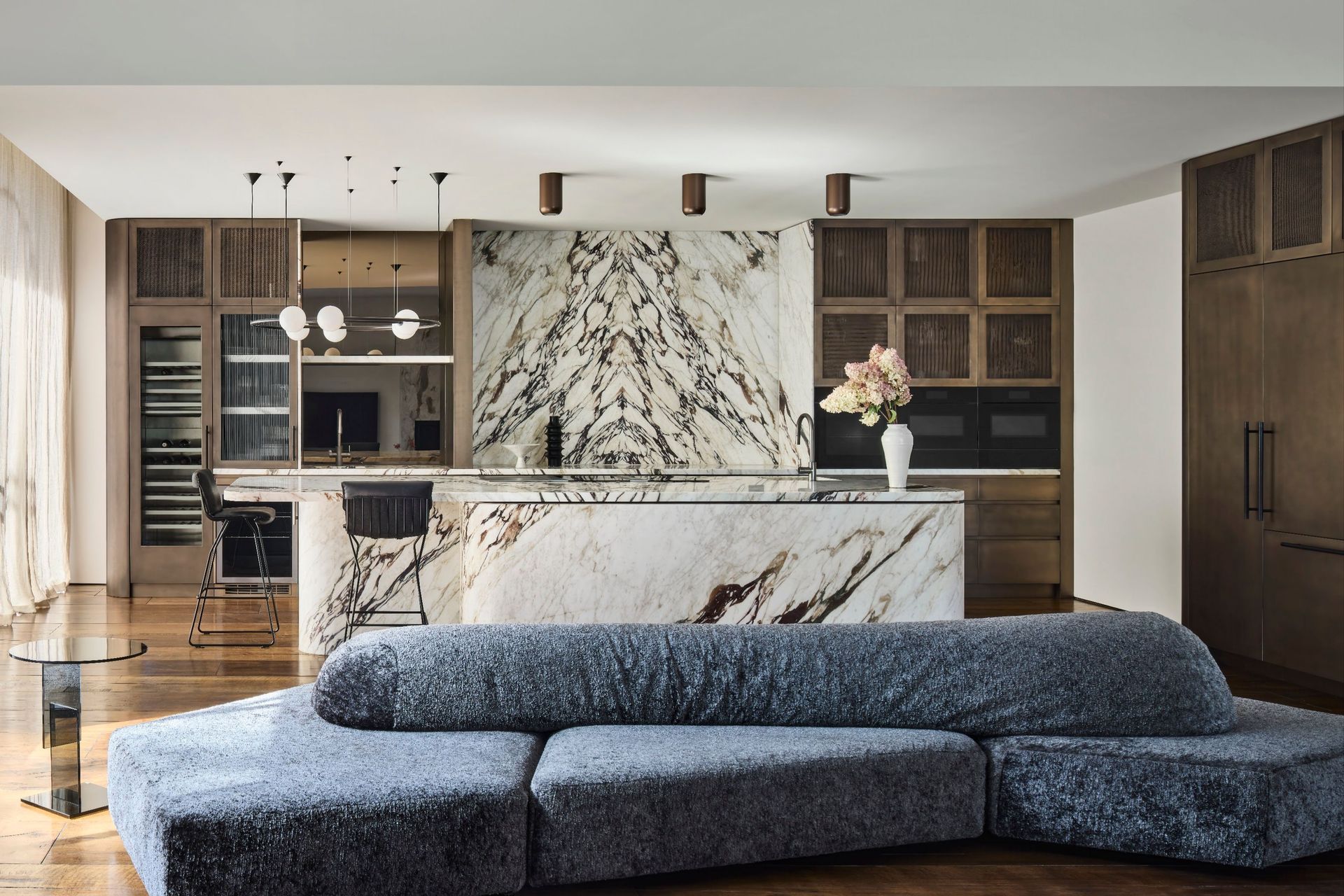
As the interiors progress through the house, the intensity of the mood created in the front rooms begins to soften. The kitchen continues the material language established at the front through the use of expressive viola marble across the island and splashback, yet contrasts it with a contemporary custom pendant light.
“It’s a really beautiful stone with a lot of colour in it,” Candyce says. “It’s not right for every client, but he was very open and willing to take those risks.”
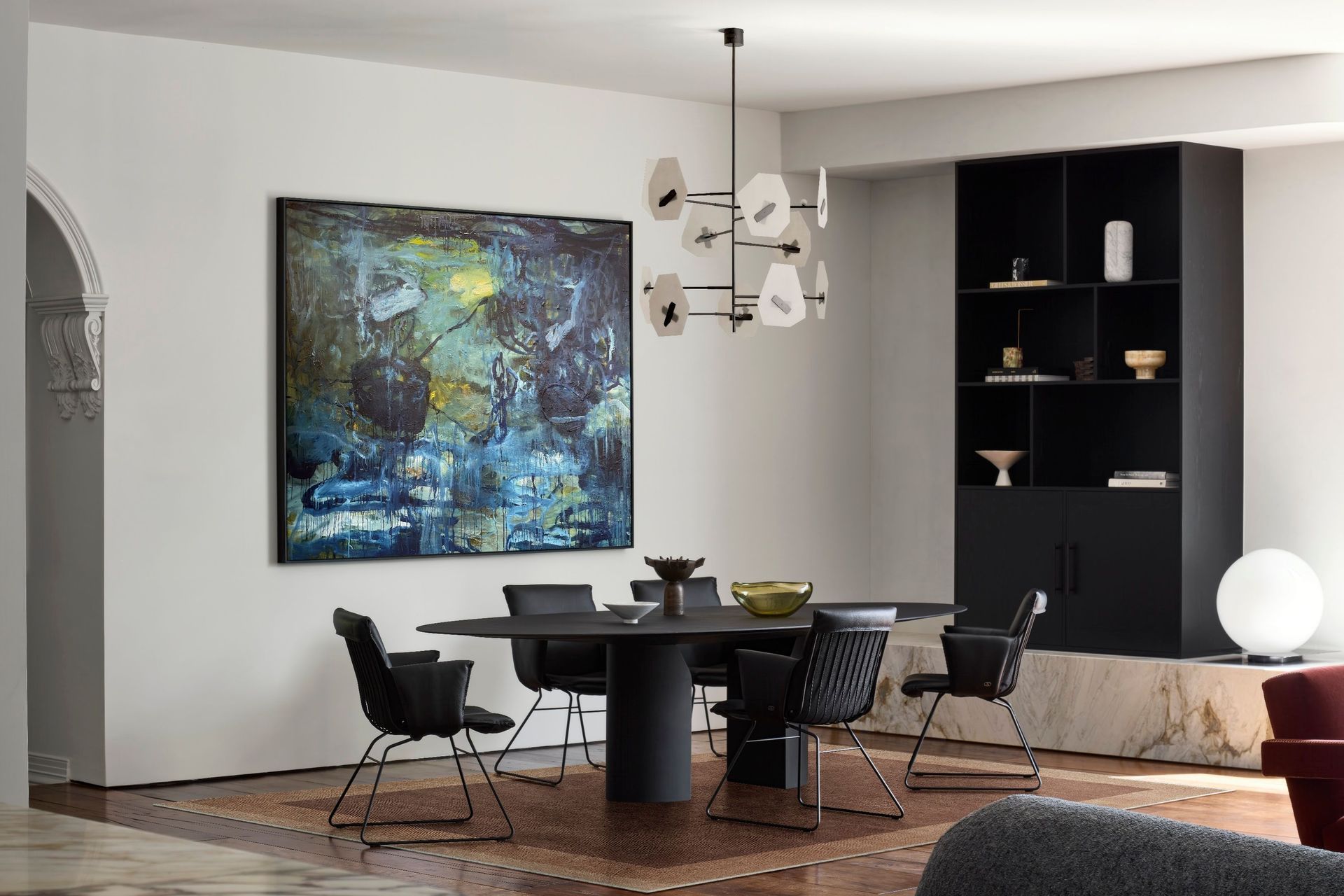
The living room also marks the beginning of a transition toward the lighter palette of the modern extension. The rear of the home is brighter and more contemporary and opens into a generous living and entertaining zone that connects with the extension. Designing this space required careful spatial planning to ensure that the openness still felt purposeful.
“The biggest challenge was that large open area at the back,” Candyce explains. “We needed to create spaces that made sense within it. There’s a living area, another conversational sofa near the bar, and different zones so the client can entertain but also relax.”
Furniture played a crucial role in defining these areas and AKI Design selected each piece to reinforce the narrative already established by the architecture and materials.
At the centre of this space sits the one request the client had at the outset. The living room sofa anchors the open plan space with a generous, modular form designed for both comfort and sociability. Oversized in scale, it allows the client to face the kitchen, dining area or bar depending on where the conversation is happening.
“He wanted something he could really relax on,” Candyce says. “It needed to be comfortable enough that he could sit there all day, especially on a Sunday.”
The piece, the modular Pixel sofa by MDF, was the first of its kind to arrive in Australia, and it delivered exactly what the client had hoped for.
For Candyce, this is the most satisfying moment of any project: at the end of the process when the design narrative meets the lived experience of the client.
“He really does sit in the wine room and drink wine, and in the music room listening to music, and he really does relax on his couch on a Sunday,” Candyce says. “That’s when you know you have truly delivered on the brief.”
Words: Joanna Seton