A house designed to let the landscape lead
Seven Canyons was born from a simple decision: two well-traveled clients, having lived almost everywhere, chose Sedona as the place worth staying.
The young couple had spent years traveling across the world, living in different countries for months at a time. When they purchased a property in Sedona, Arizona, they were not simply looking for another beautiful place to stay, they were looking for a home base.
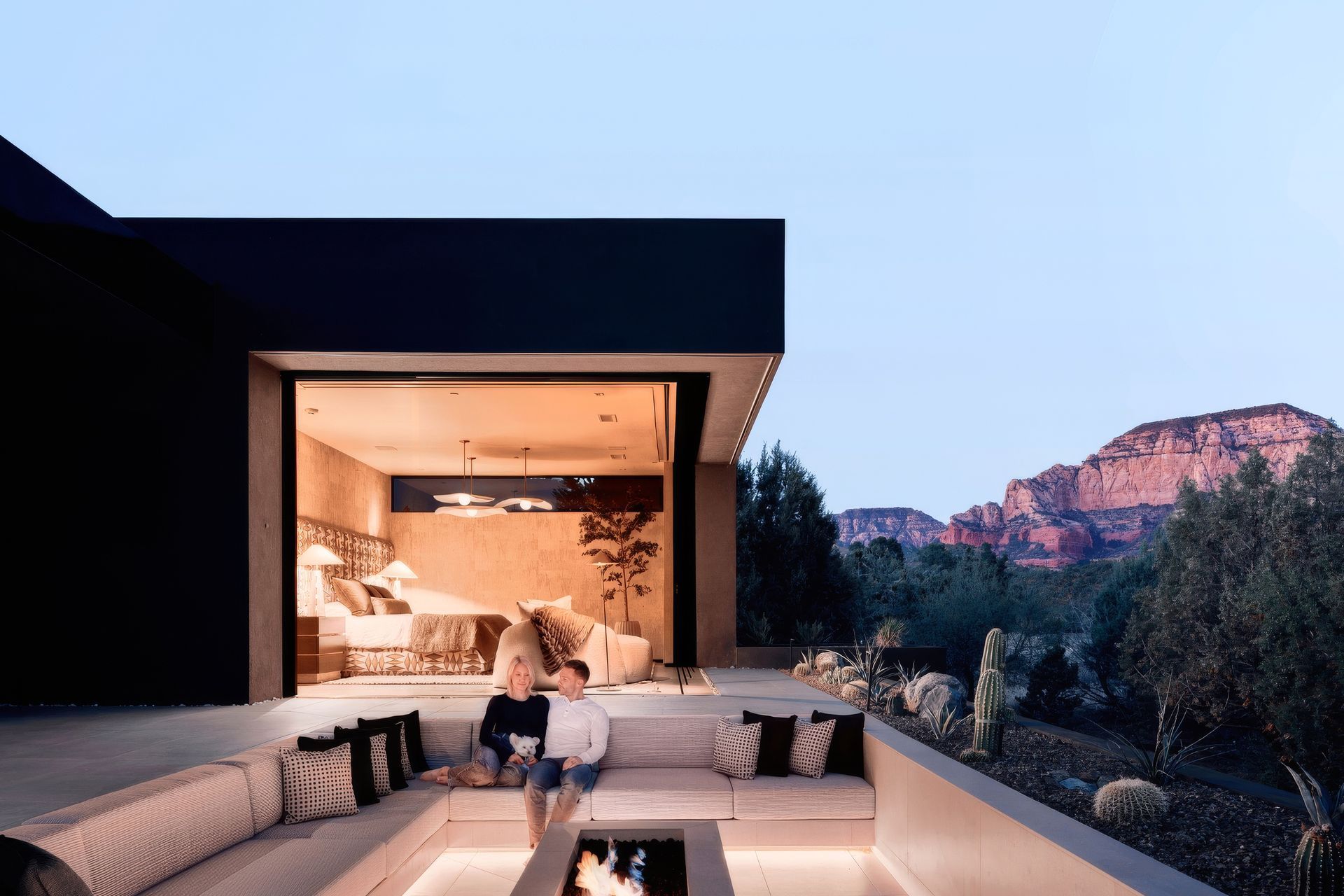
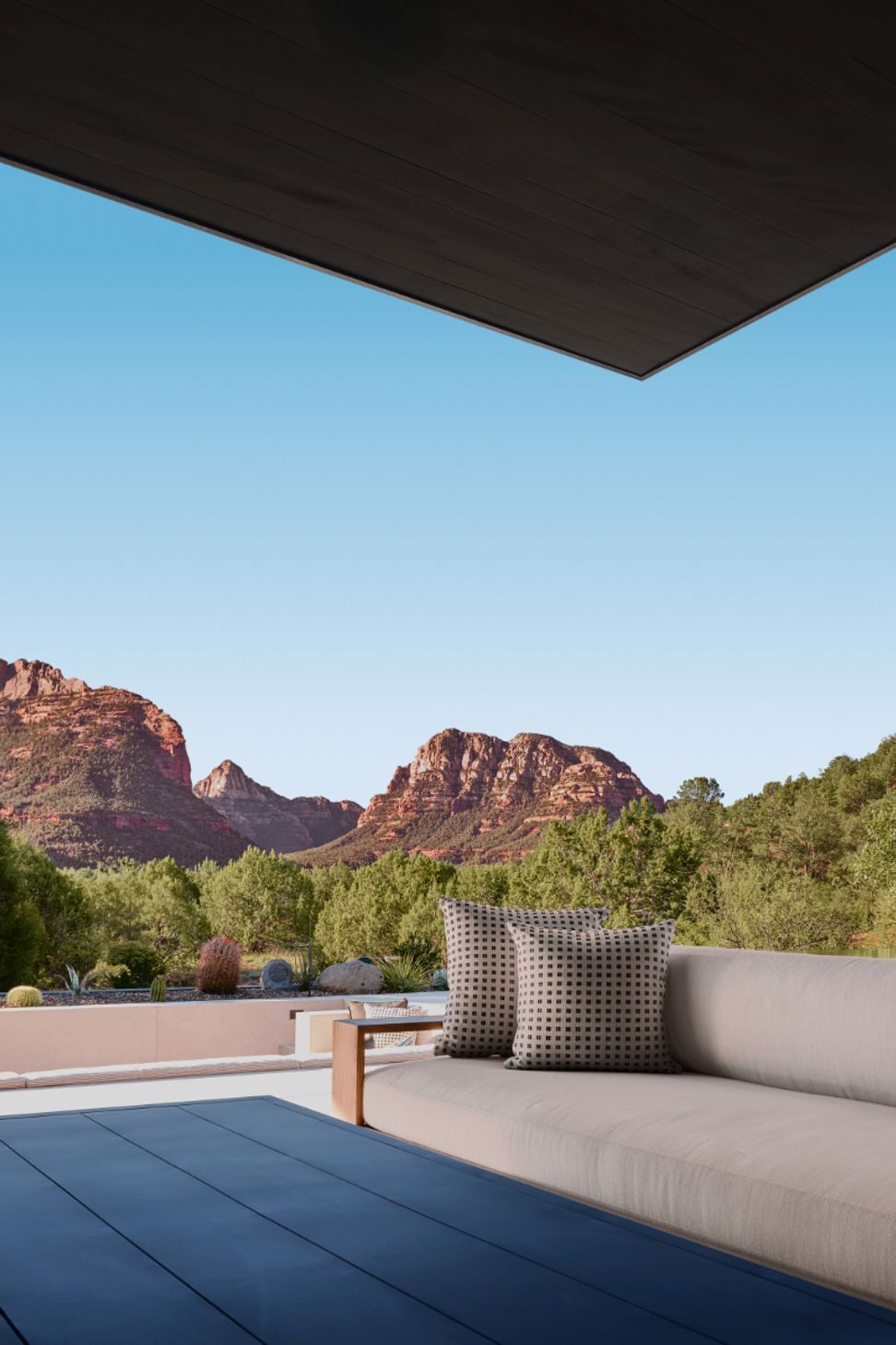
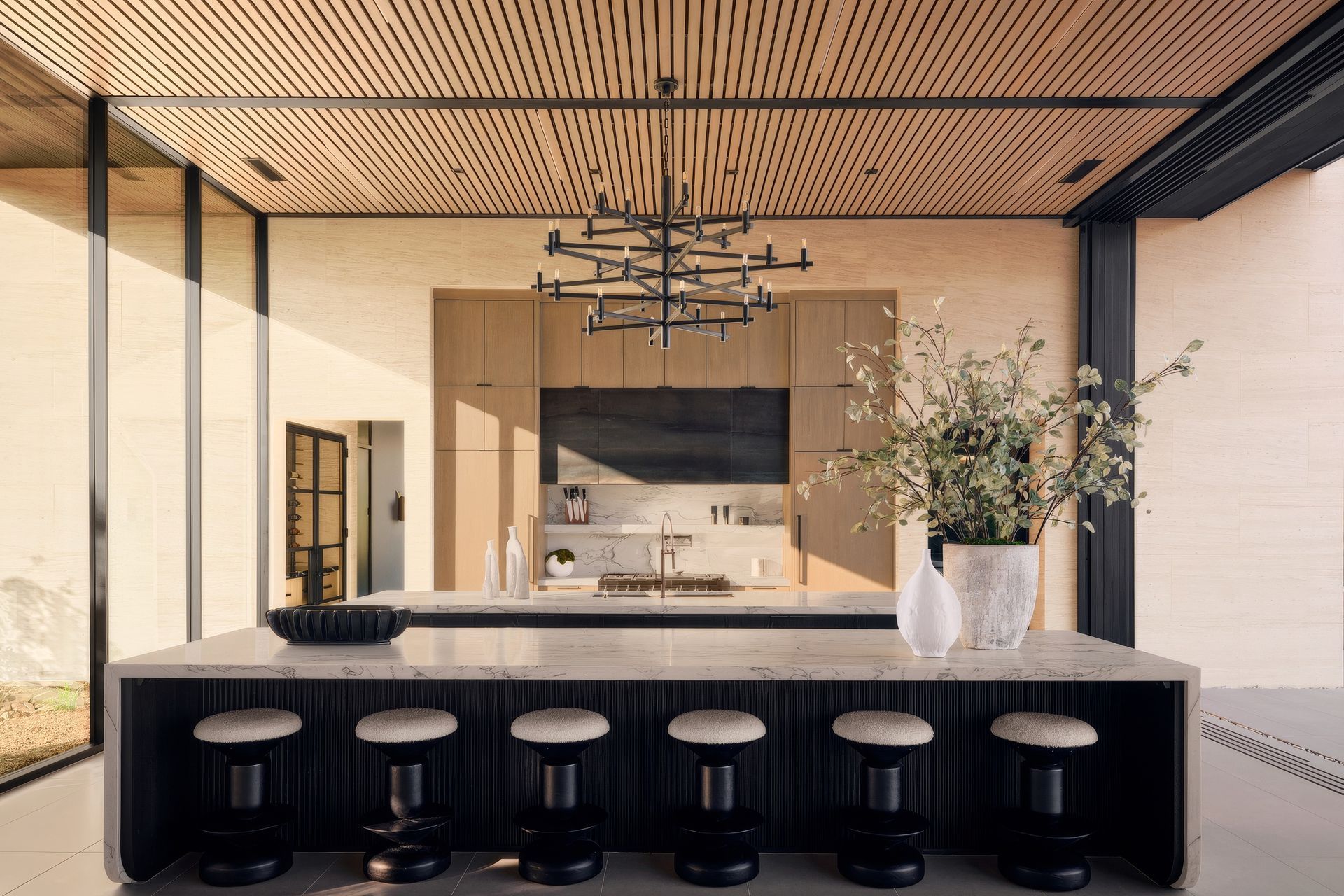
For The Ranch Mine, that distinction mattered. The house needed to respond to the extraordinary landscape, but it also needed to reconcile two different ways of living. One client, Cavin Costello recalls, would “live outside if [I] could”. The other loved to cook, entertain and create a more enclosed sense of home. The architecture had to uphold both desires at once.
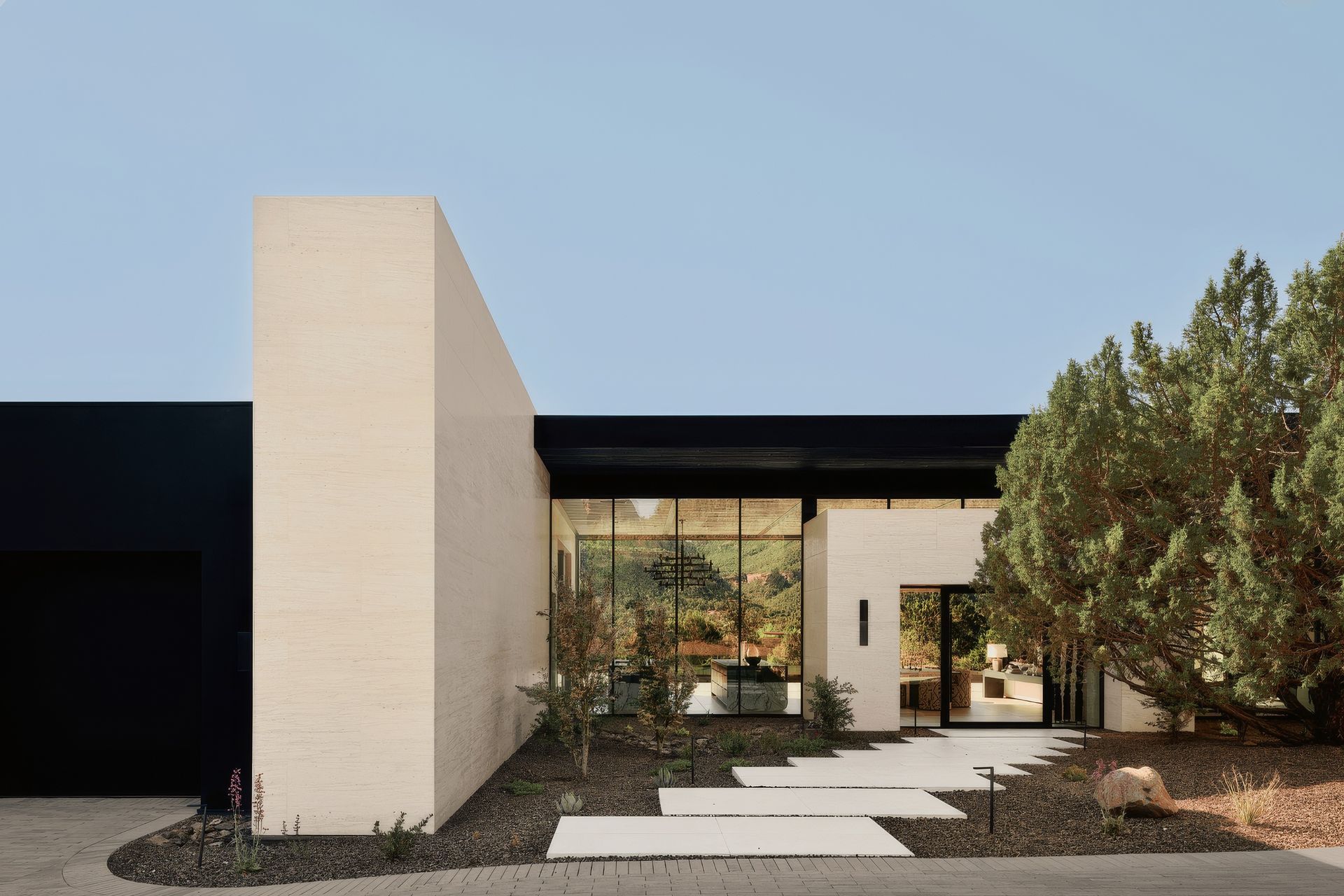
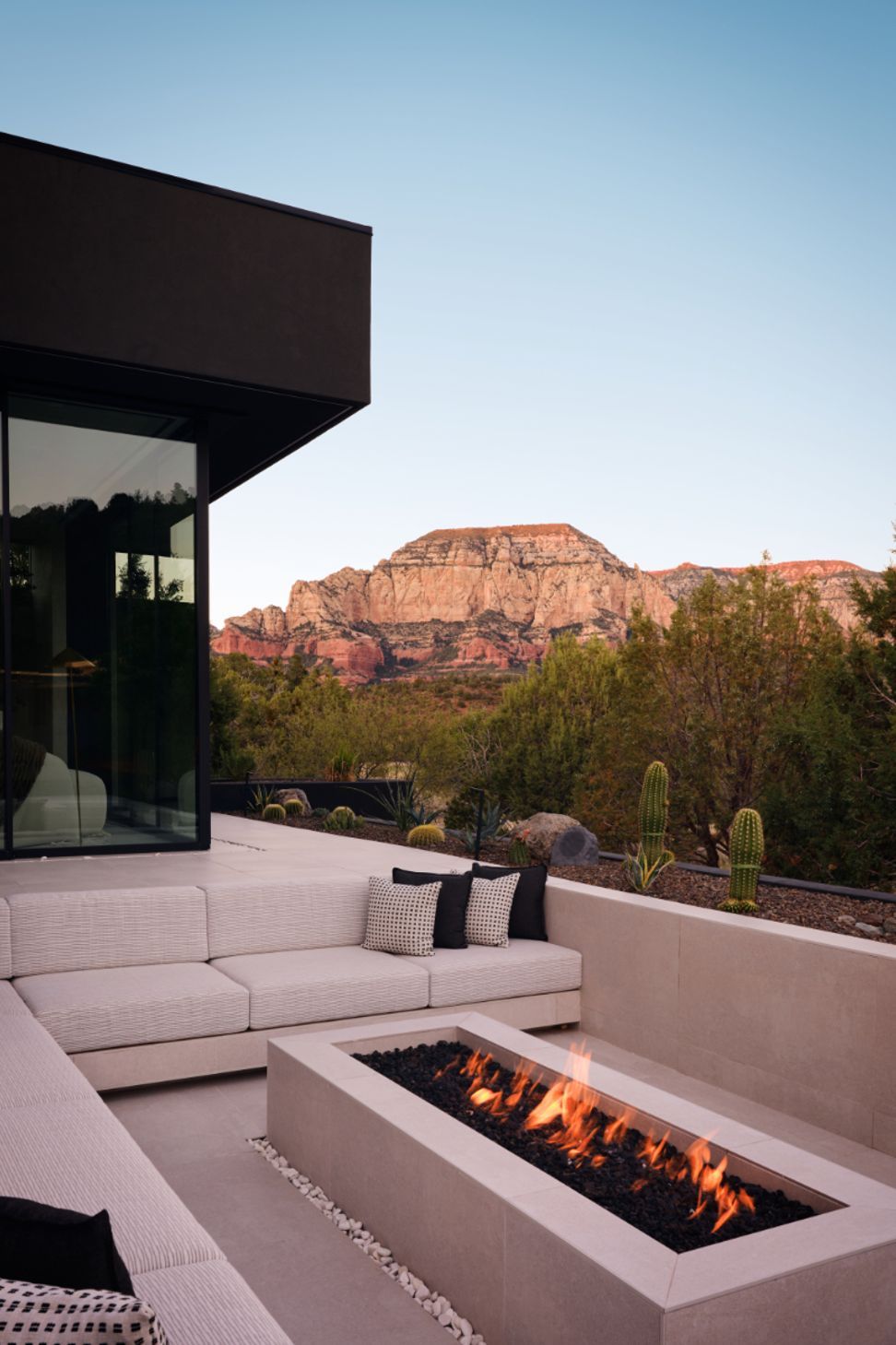
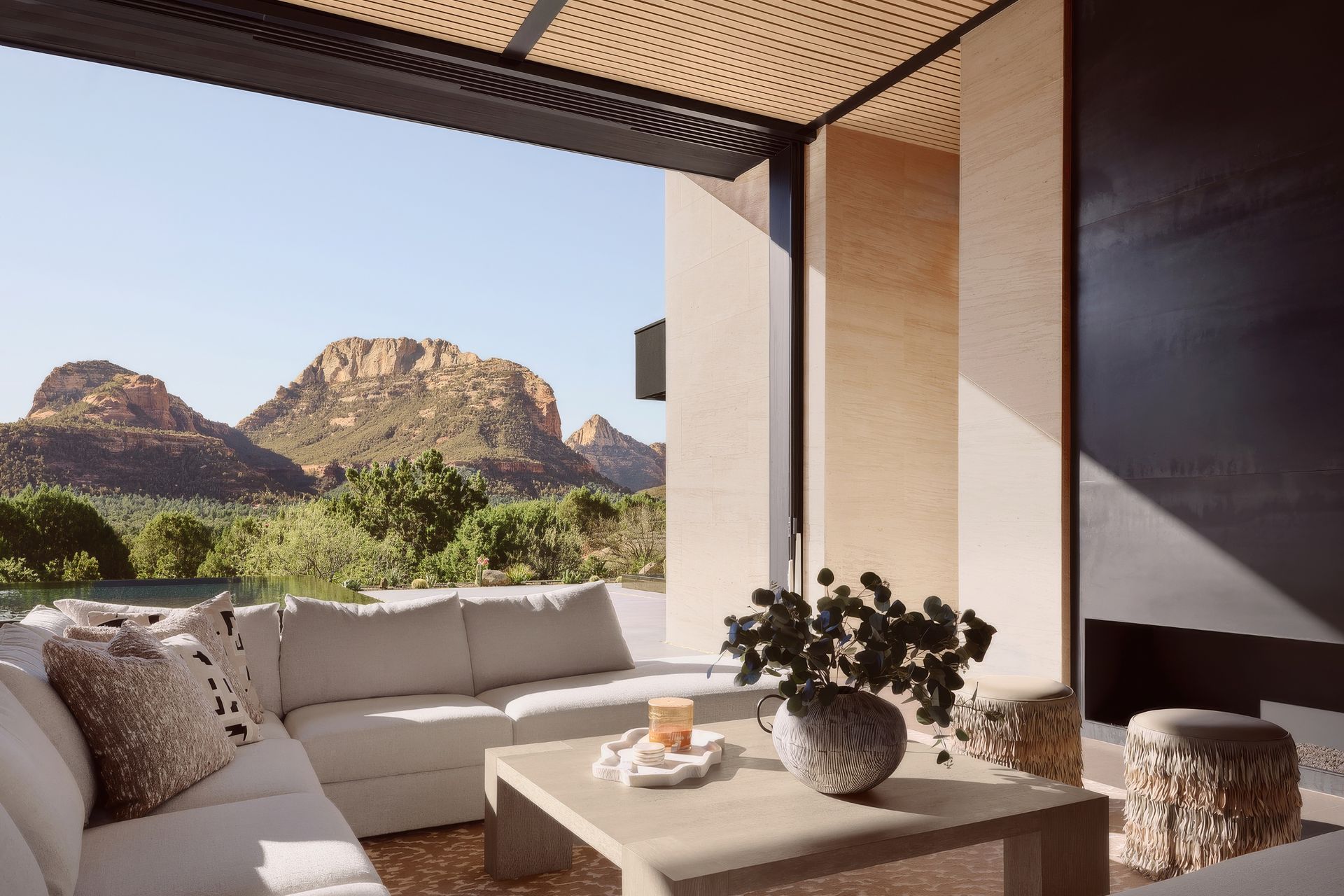
Set within a canyon landscape of red rock, mature trees, and dramatic views, the first move was restraint. “When I first went to the site, my first thought was how do we get out of the way and let the landscape be the star of the show,” says Costello, co-founder of The Ranch Mine.
That idea shaped the house from the beginning. Rather than compete with the canyon, the architecture is low, quiet, and deliberate. Strict height restrictions from the homeowners’ association pushed the roofline down, while the slope of the site allowed the house to lift its outdoor living areas just enough above the landscape to create protection, perspective, and a sense of elevation.
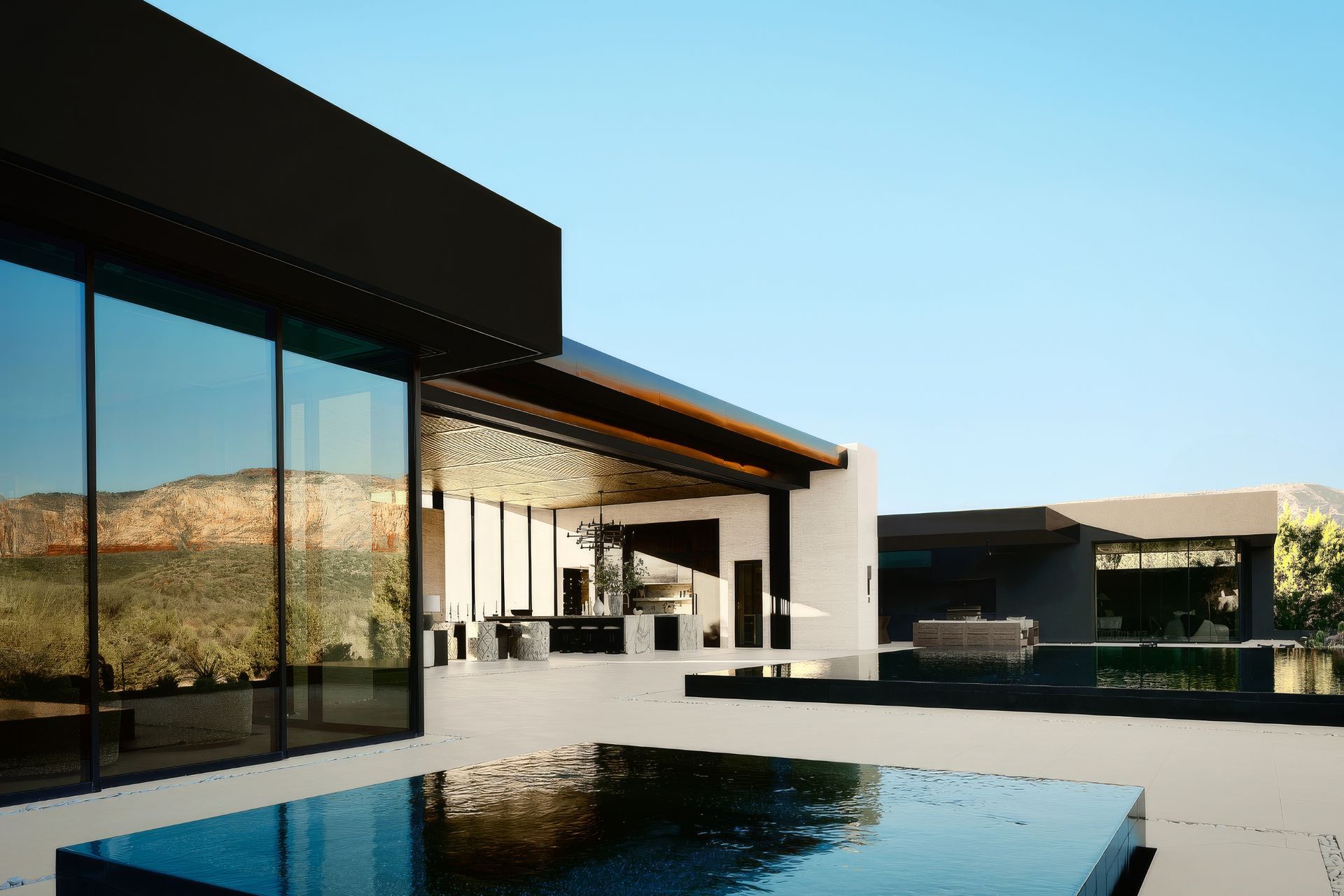
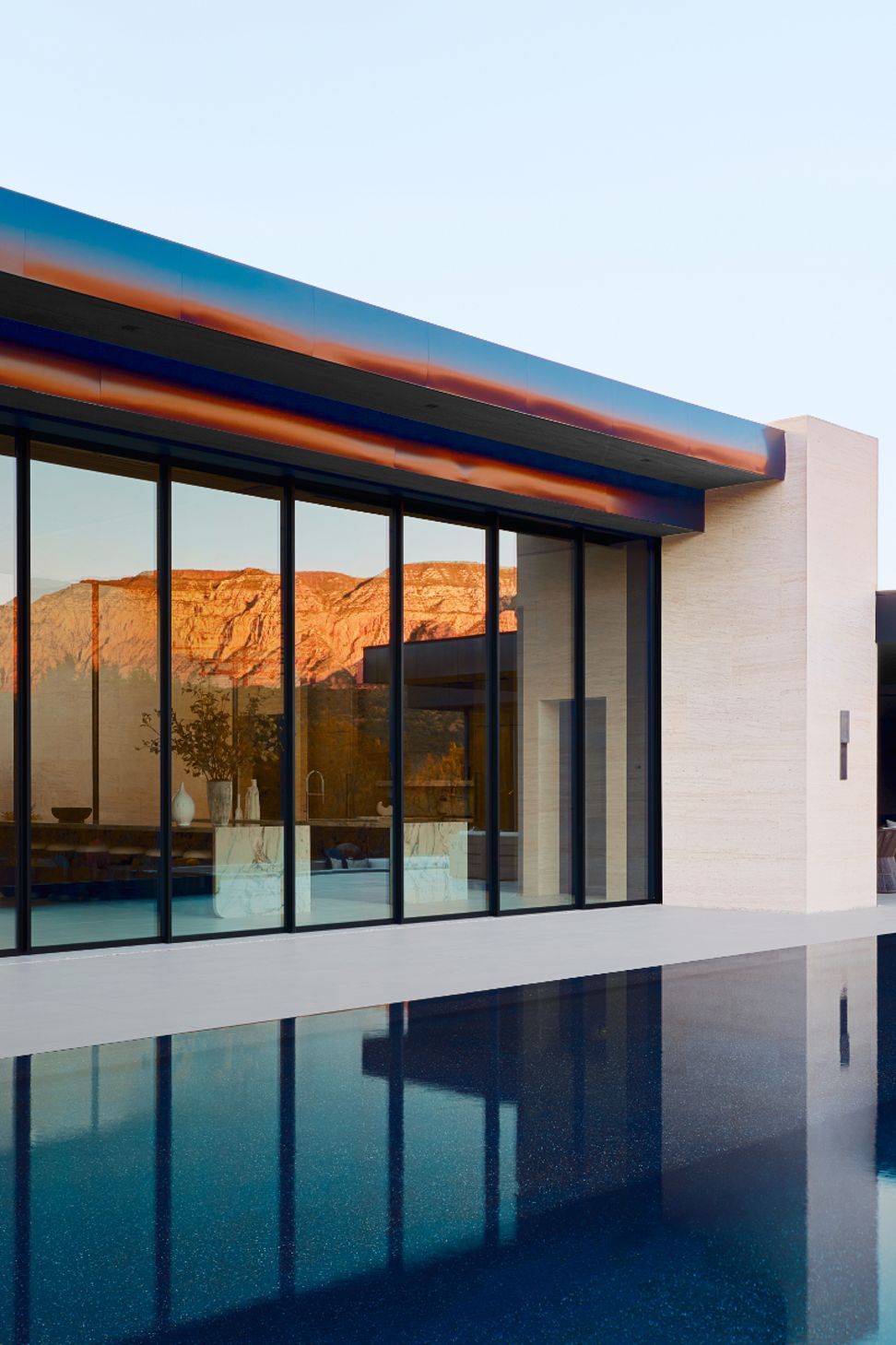
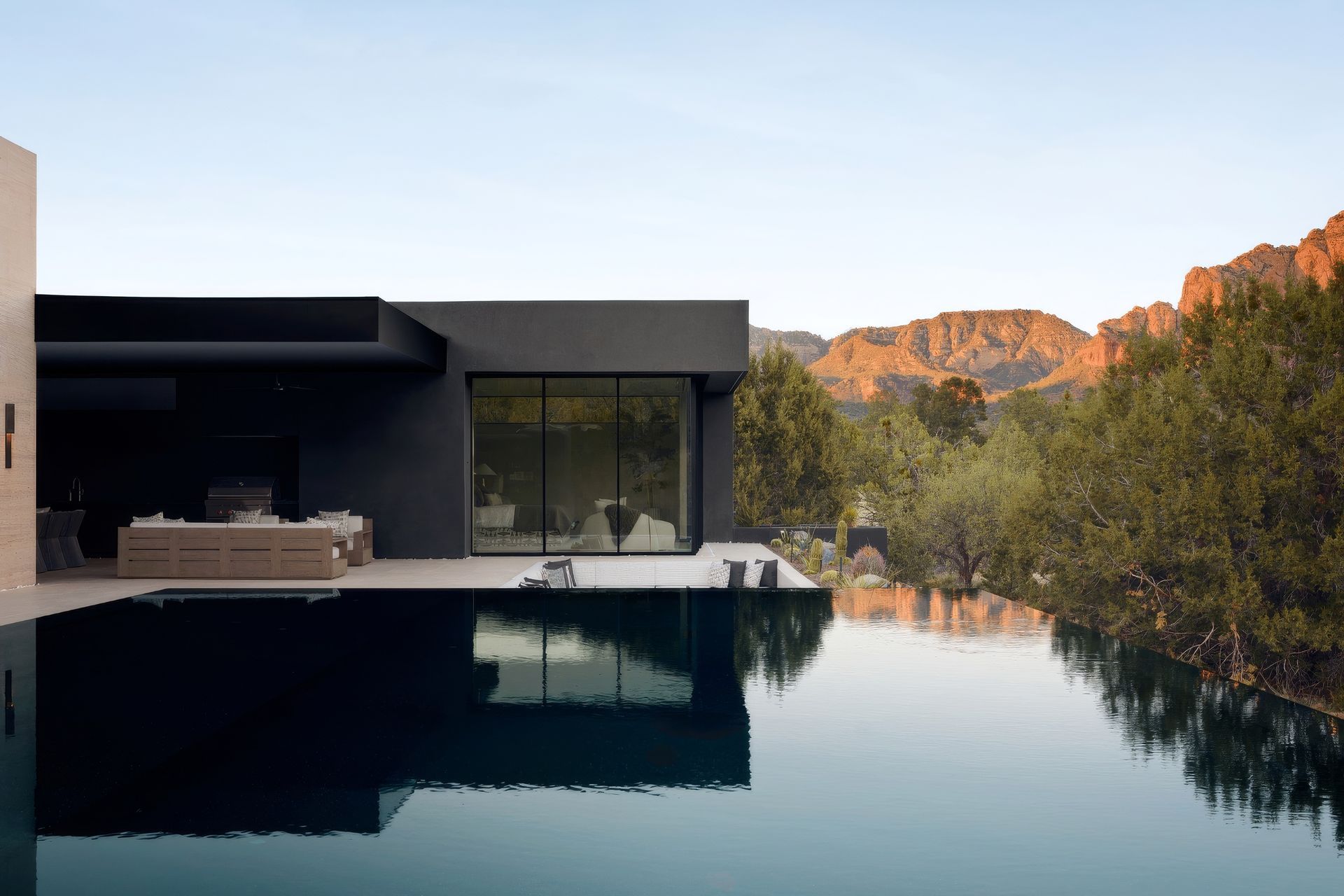
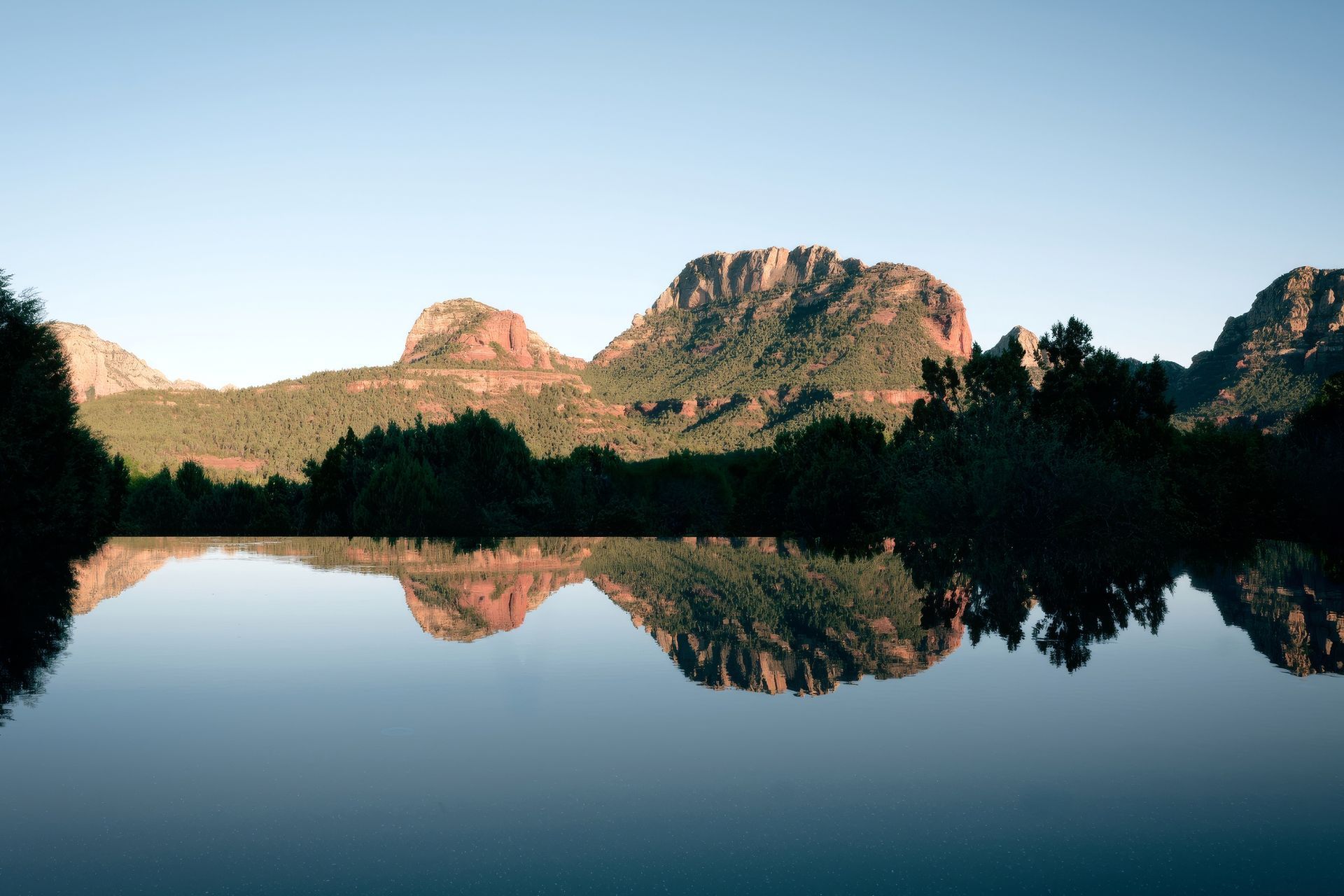
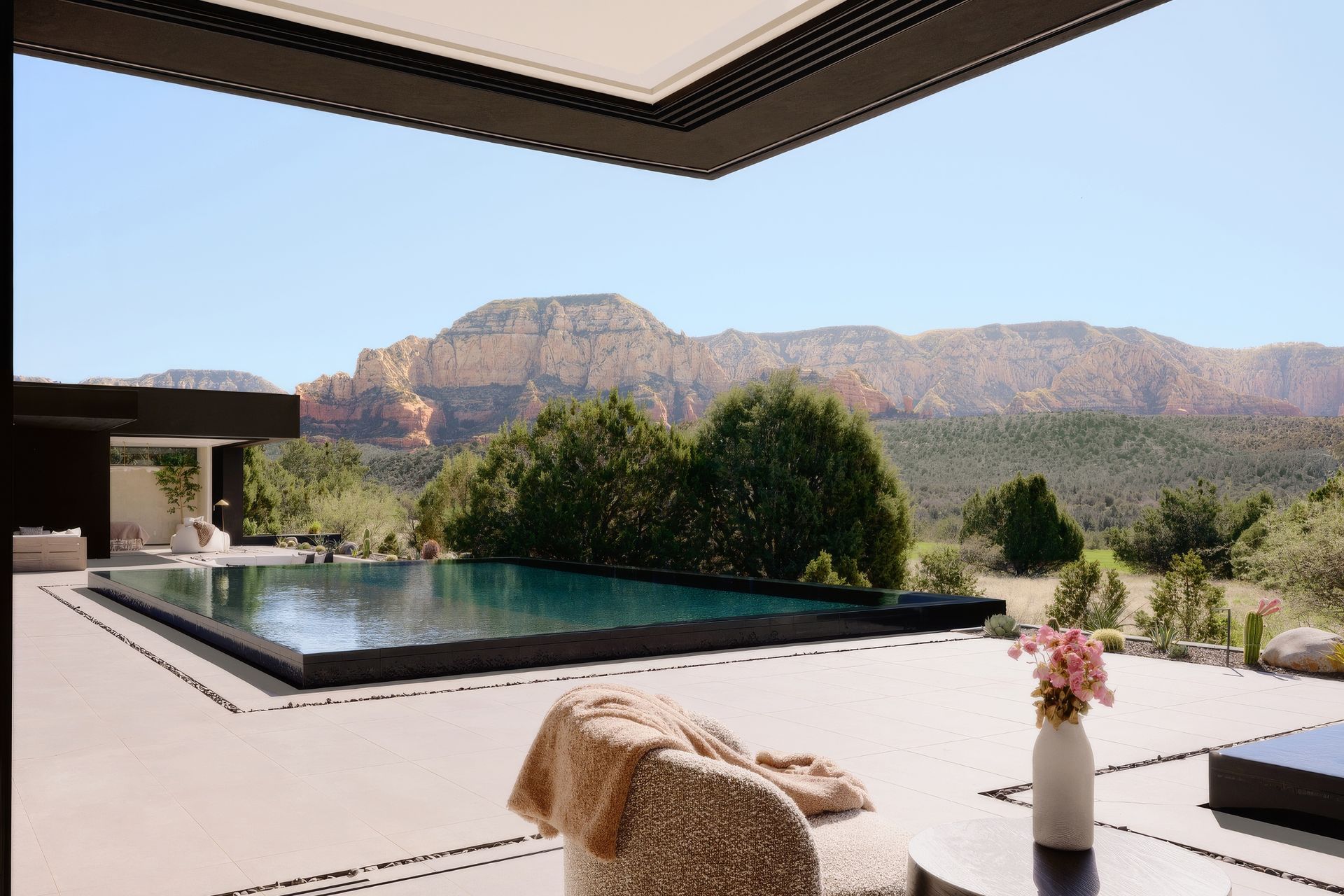
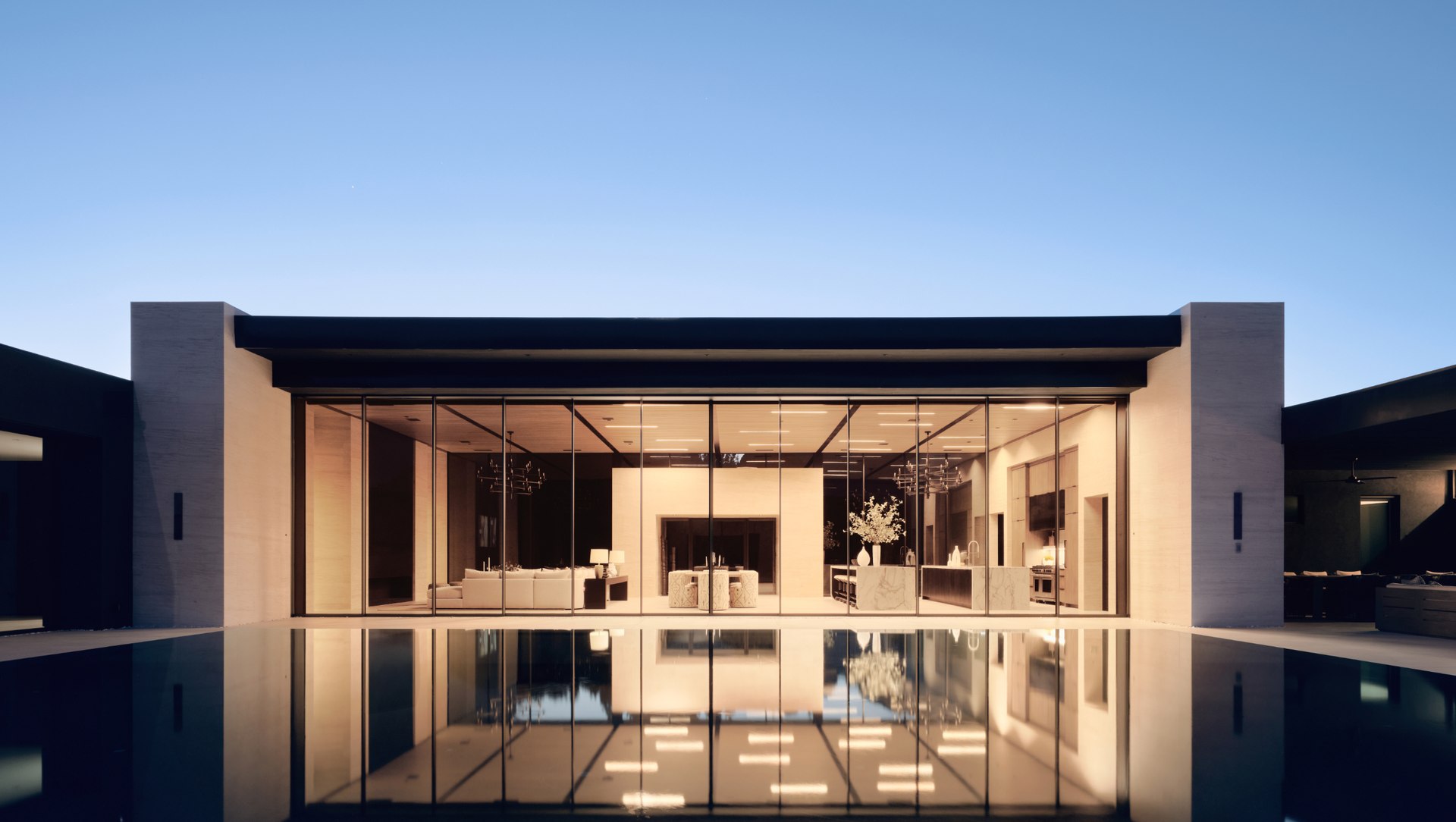
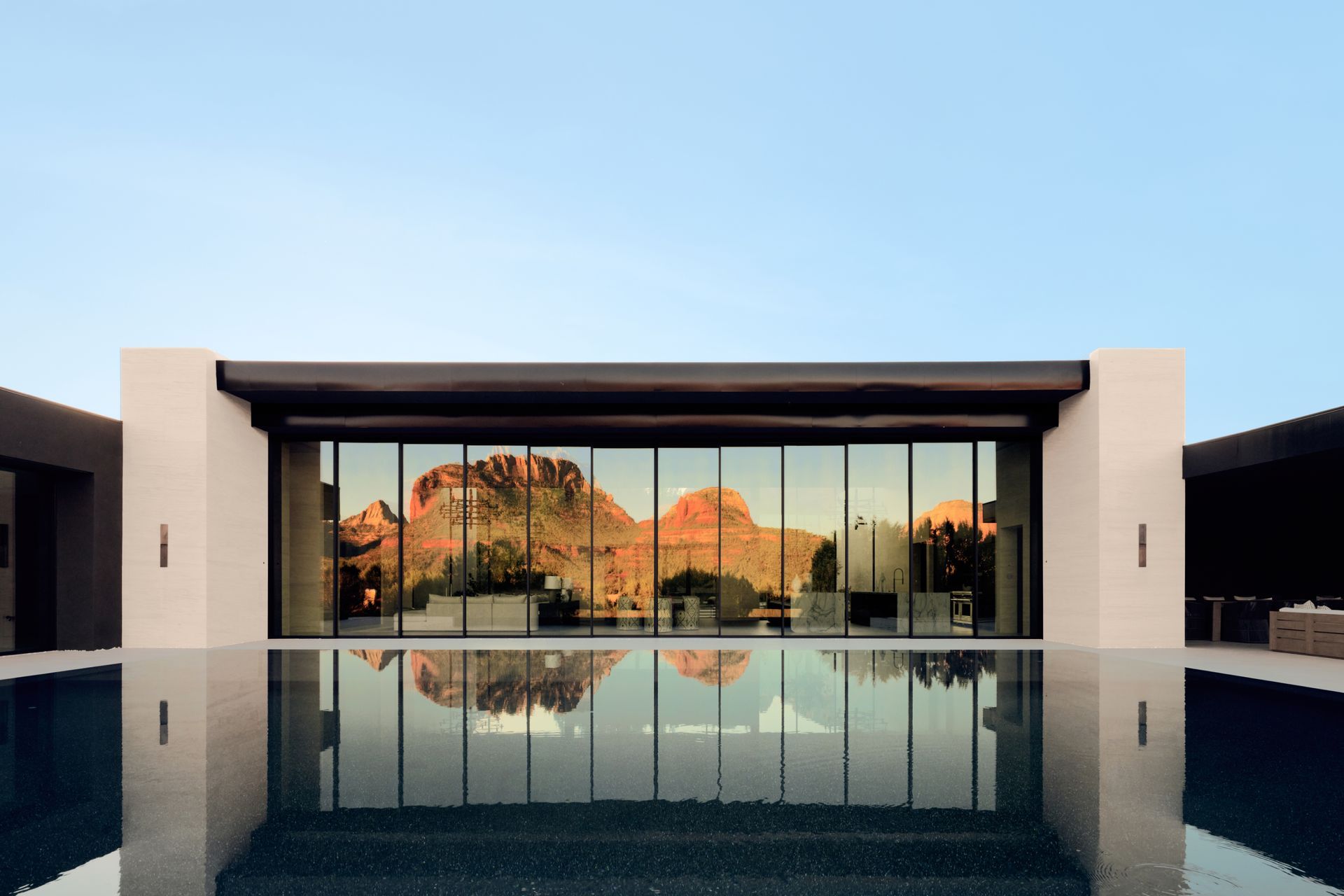
The pool became one of the project’s most important amenities. Pools are not especially common in Sedona, where the climate is cooler and less arid than Phoenix. Costello wanted the pool to work even when it was not being used, so instead of becoming a visual interruption between the house and the canyon, it was designed as a black reflective plane.
The effect is subtle and powerful. By day, the pool reflects the shifting colors of the red rock landscape. At night, it catches the stars, and becomes not only a visual feature, but also an amplifier of place.
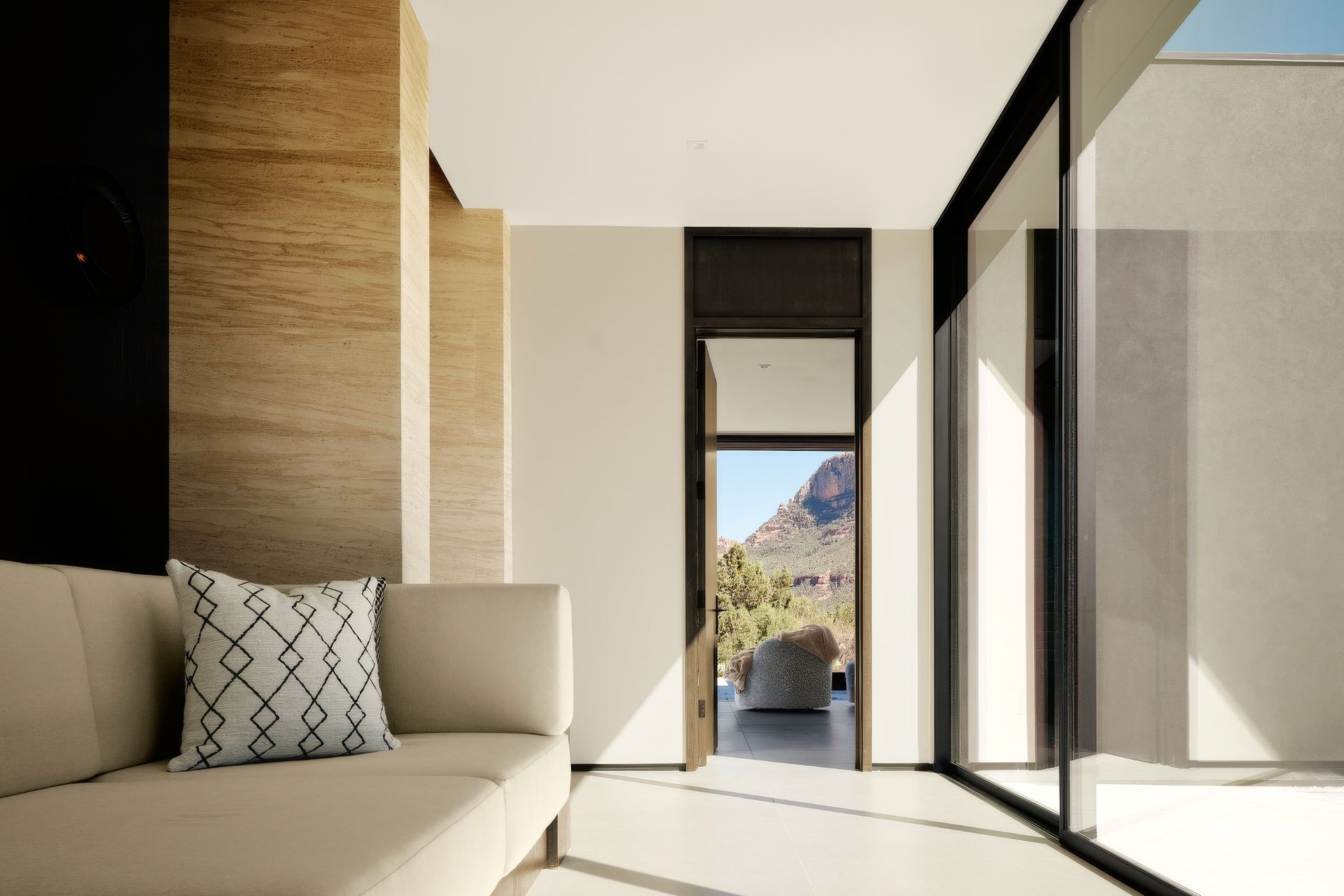
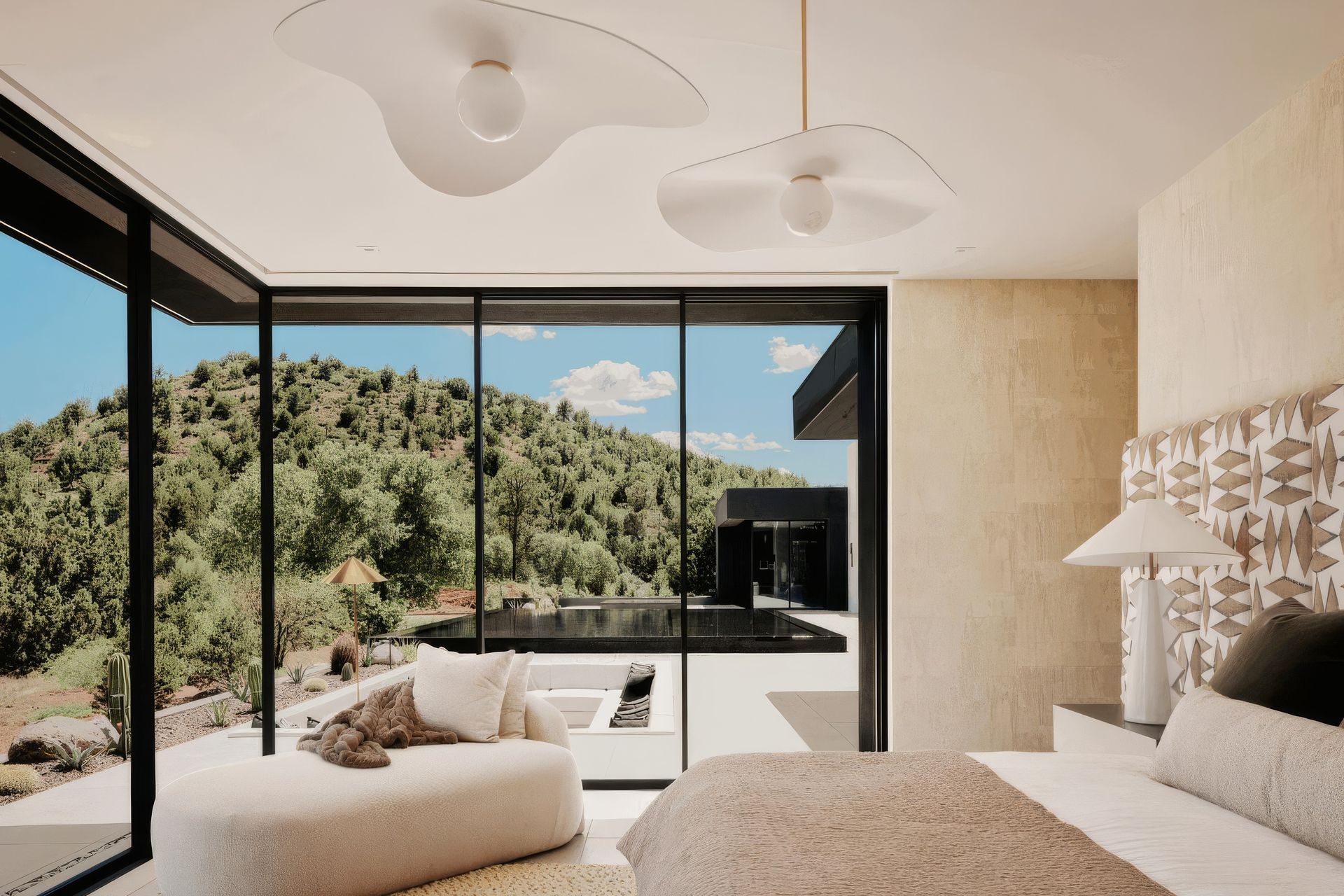
The house is arranged to give the most important rooms the view. The primary suite, living room, and home office all face towards the canyon, allowing work, rest, and daily rituals to remain connected to the landscape. Around the central living space, the floorplan gathers different parts of the home into distinct corners. The more private rooms are quieter and more retreat-like, while the main living areas open outward.
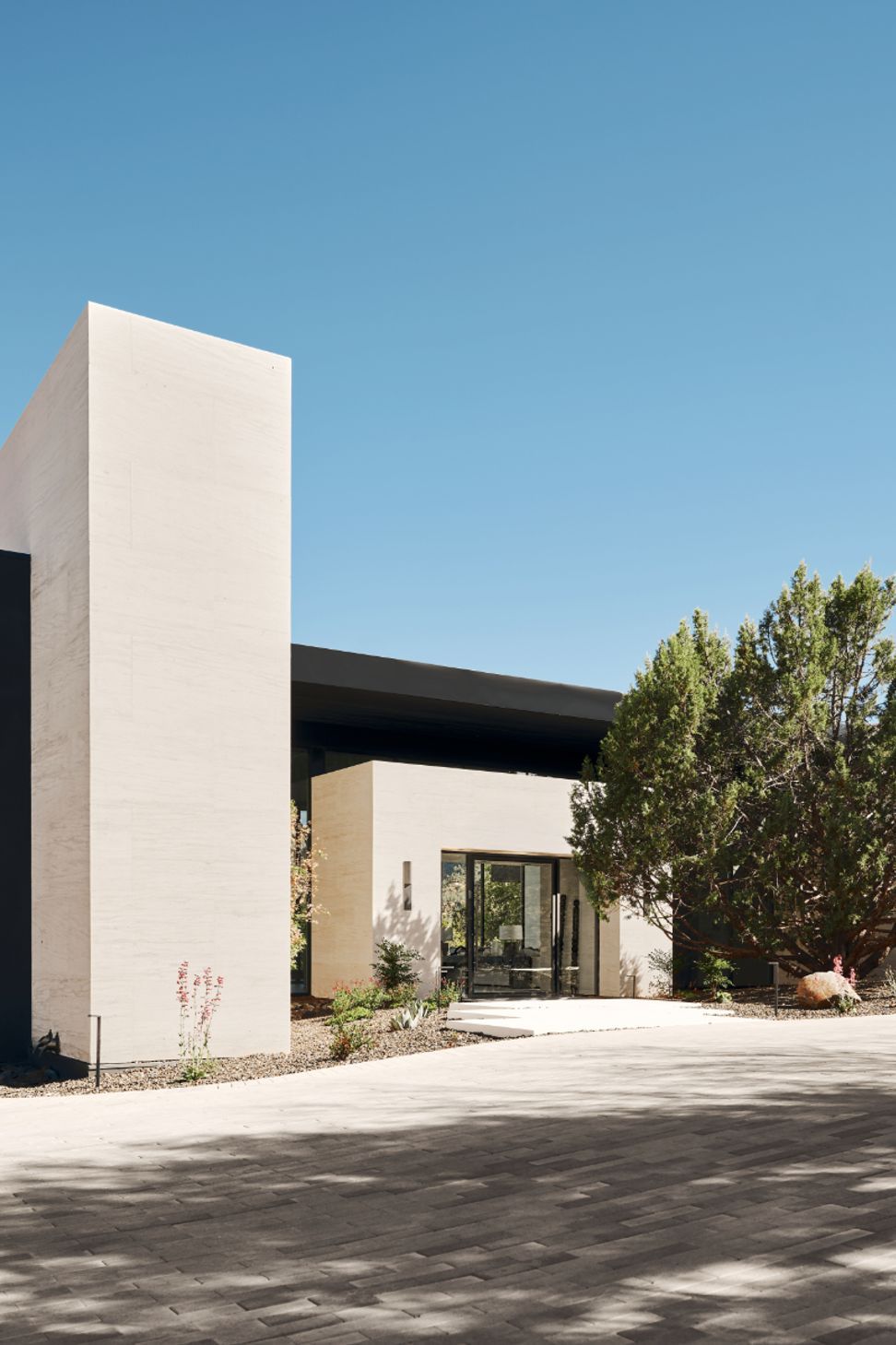
The H-shaped plan also responds to the existing landscape. A mature tree, estimated to be hundreds of years old, sits near the entry and was carefully retained. Costello was drawn to the contrast between the contemporary architecture and the ancient tree beside it. As visitors arrive, they pass close enough to smell the pine needles. It is a small sensory moment, but it sets the tone for the house.
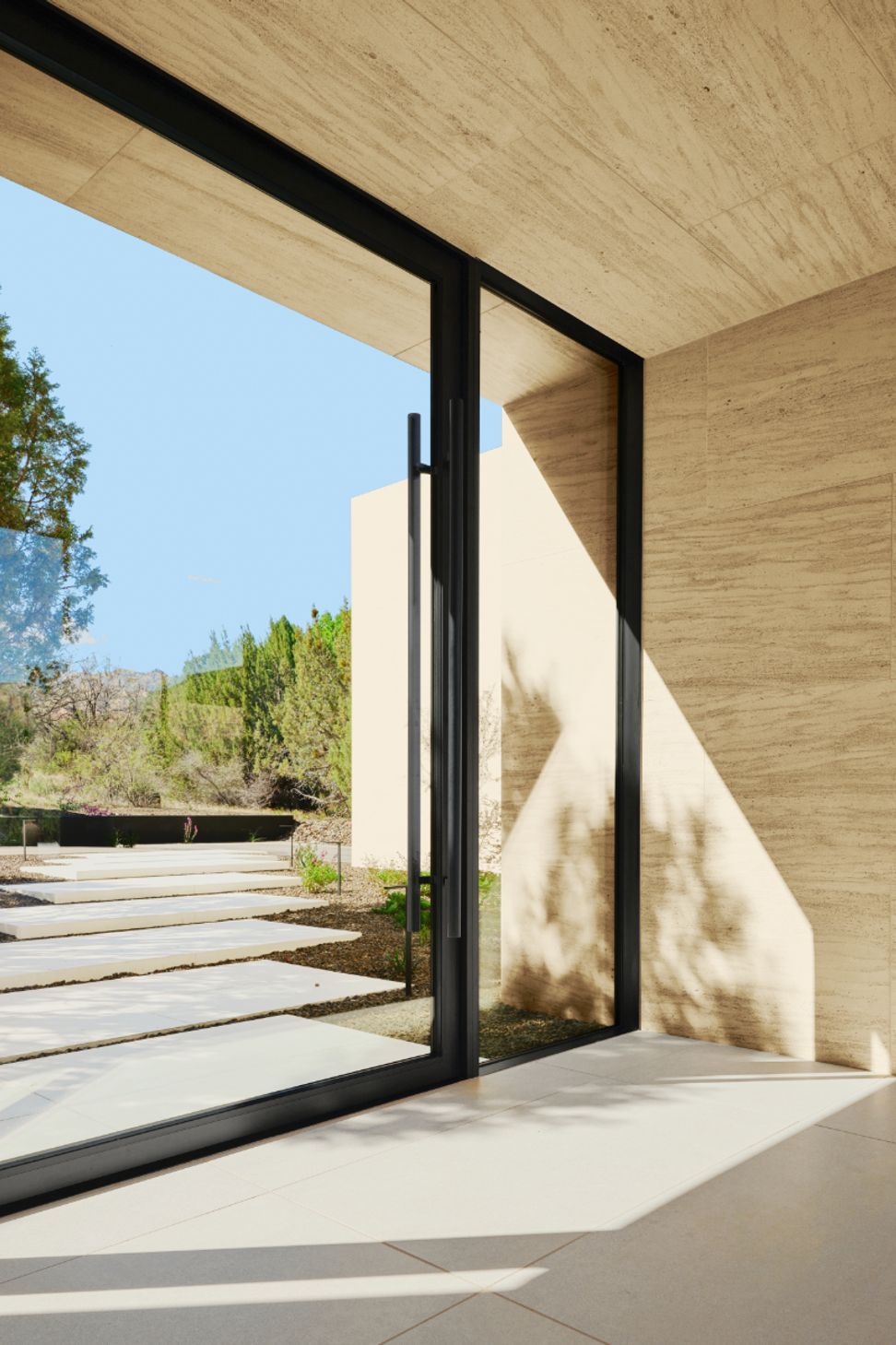
Materiality reinforces that desire to recede. The exterior uses charcoal stucco and dark timber, with stone supplied by Solstice Stone in Scottsdale. The intention was for the house to read almost like a shadow in the landscape. Even the roof, largely unseen in photographs, was finished in red so that from above it would blend into the colour of the surrounding rocks.
The climate and location also shaped the construction. The home sits within a wildland urban interface zone, meaning fire performance was essential. The entire envelope was designed to meet a one-hour fire rating, responding to the increased wildfire risk of the area. Sun exposure was another key consideration, although Sedona’s climate is more temperate than the lower desert, with cool nights and a broader seasonal range.
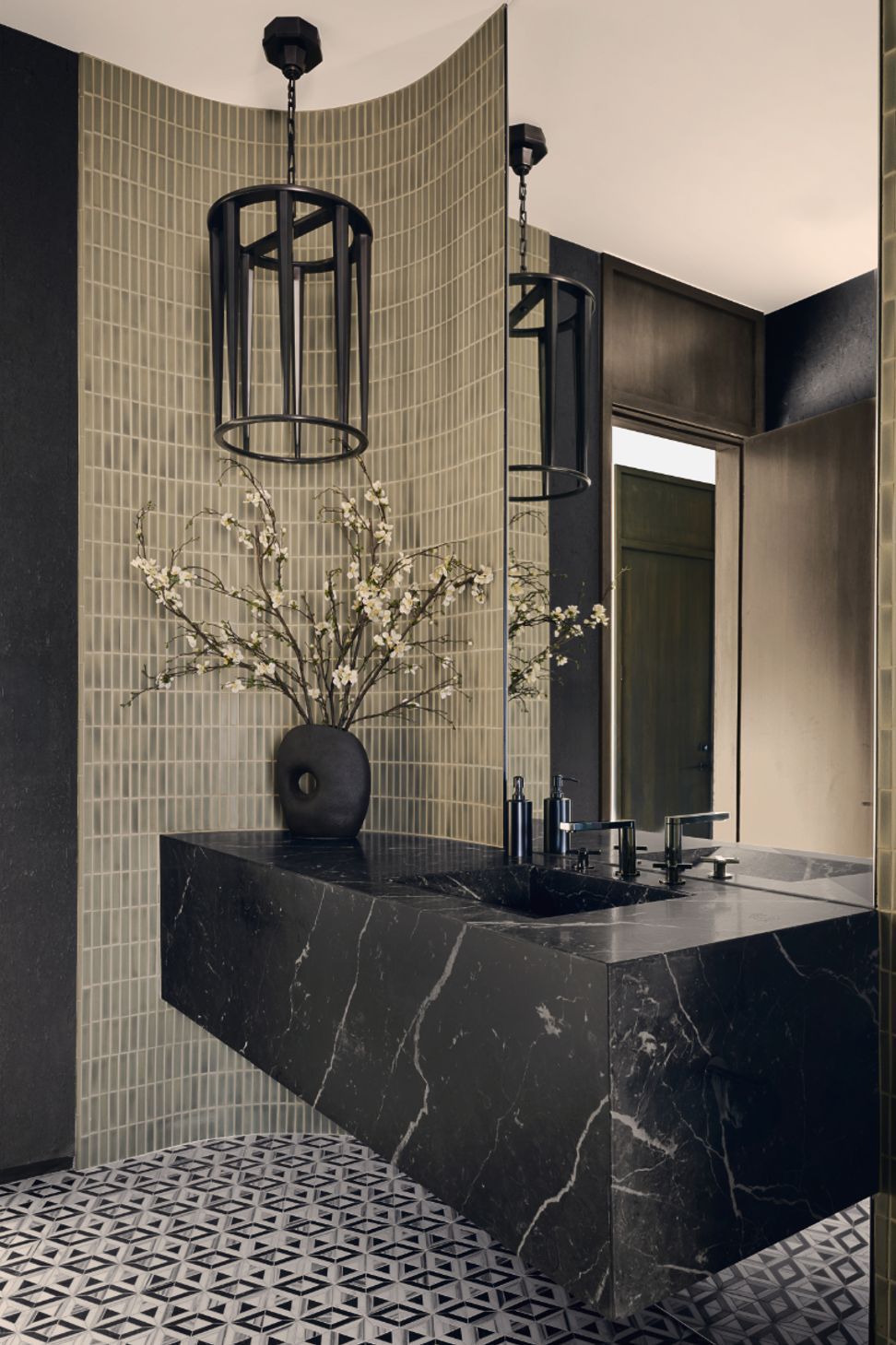
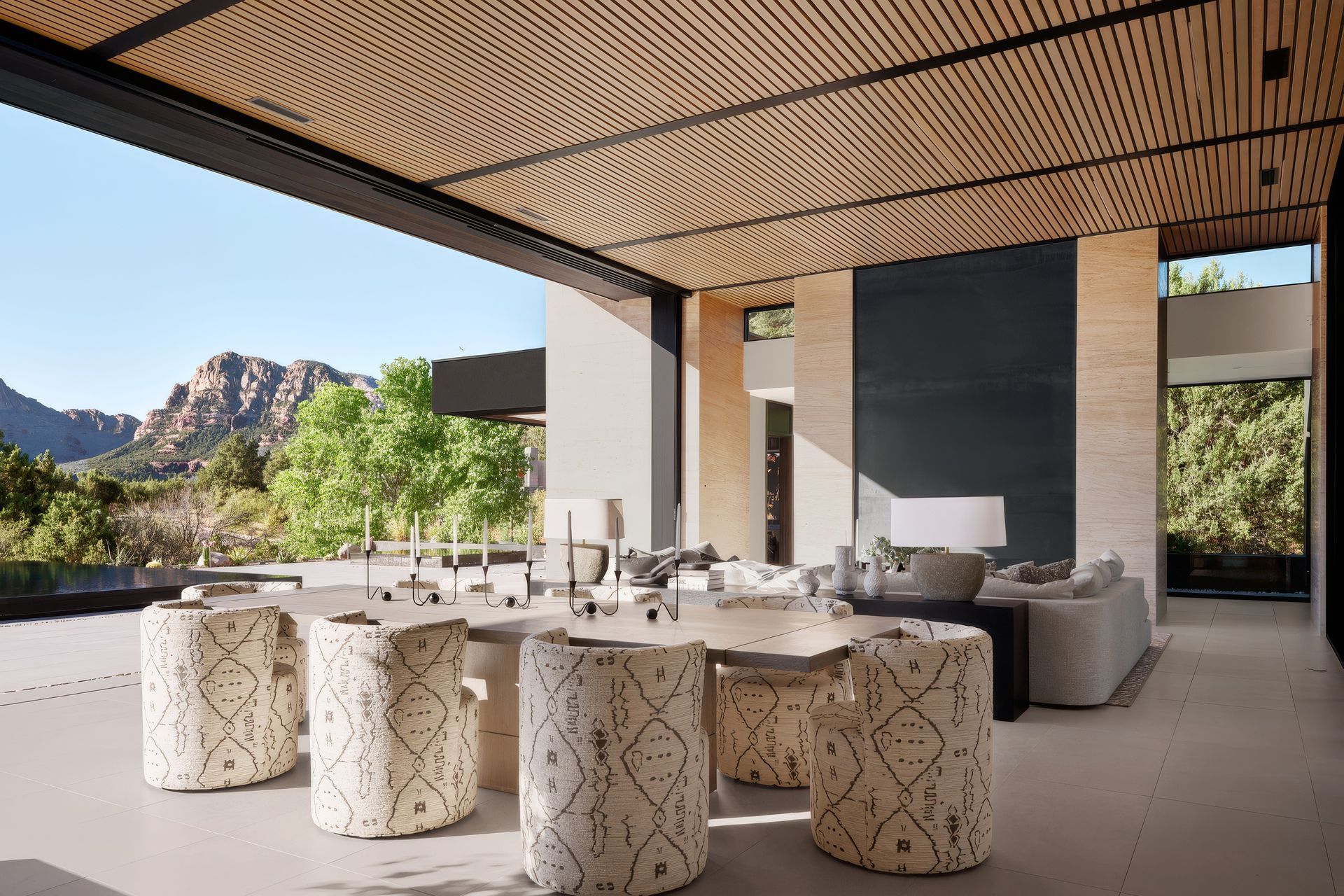
Inside, the architecture balances openness with comfort. The wife’s preference for pattern and warmth was brought into the interiors, while The Ranch Mine introduced a wood ceiling in the main living space, partly for atmosphere and partly for acoustics. In a room with large expanses of glass and stone, sound control mattered. Above the timber ceiling sits an acoustic layer, reducing echo and making the space more comfortable to occupy.
Large-format windows and doors from Awake became another defining element. With slim sightlines and 14-foot-tall doors stretching 56 feet wide, the glazing can disappear at the push of a button, allowing the house to open almost completely to the landscape.
What makes Seven Canyons compelling is not excess, but alignment. The clients knew themselves. The architect listened to the land. The house became a precise answer to both.
For homeowners, the project offers a lesson in restraint. The most memorable home is not always the one that does the most. Sometimes, it is the one that knows when to step back. ArchiPro helps make those decisions visible by connecting completed projects with the architects, builders, materials, products, and suppliers that shaped them. Explore The Ranch Mine on ArchiPro, browse more homes designed around landscape or discover the professionals and products that can help a site become a place to belong.
Words by Tara Bird