Project team
- Yoke
- Vaughan Brookfield
- Thomas Seear-Budd
Designed as both an immediate retreat and a prototype for a future project, this Central Otago pool house balances performance, landscape and an immersive swimming experience.
A modernist pool house in Central Otago
When a client purchased a property between Queenstown and Arrowtown, one thing quickly became apparent: They needed an indoor pool—and they wanted it fast.
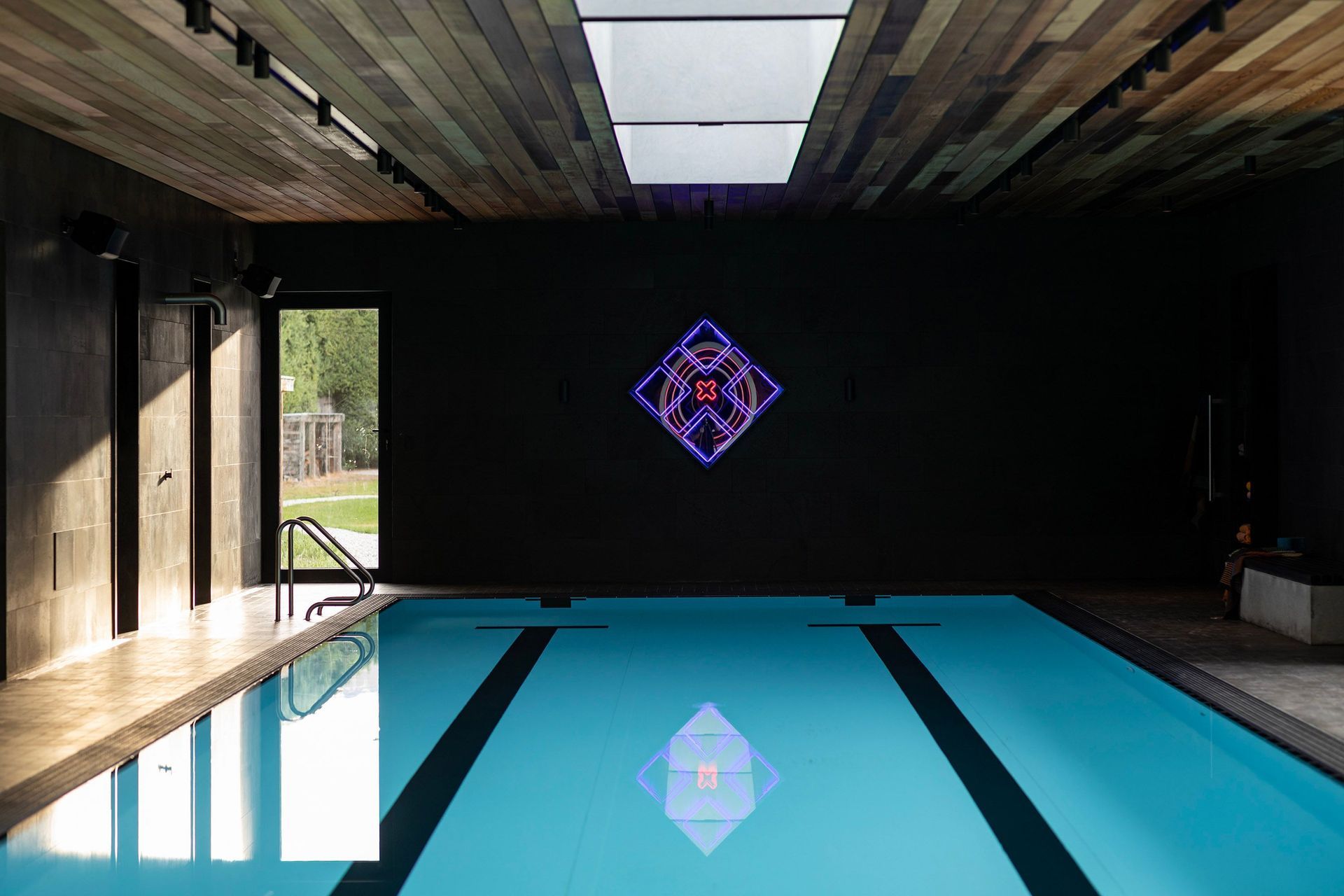
The solution, a standalone indoor pool house positioned beside the existing residence, is conceived as both an amenity to enjoy personally and a facility to accommodate visiting high-performance athletes and their training and rehabilitation.
The project was driven by an unusual combination of urgency, experimentation and functionality.
From the initial briefing to completion, the project took just 18 months, an ambitious timeline given its location, technical complexity and bespoke design.
"The brief was pretty simple," says Yoke director Camden Pyke. "A 25-metre indoor pool, gym, facilities, and it needed to happen as quickly as possible."
"The builders were ordering windows out of Europe before we had resource consent," Pyke recalls. "It was quite an interesting process. But it was also a really exciting project because it was reasonably open-ended and had to happen quickly. We had quite a lot of creative control on it."
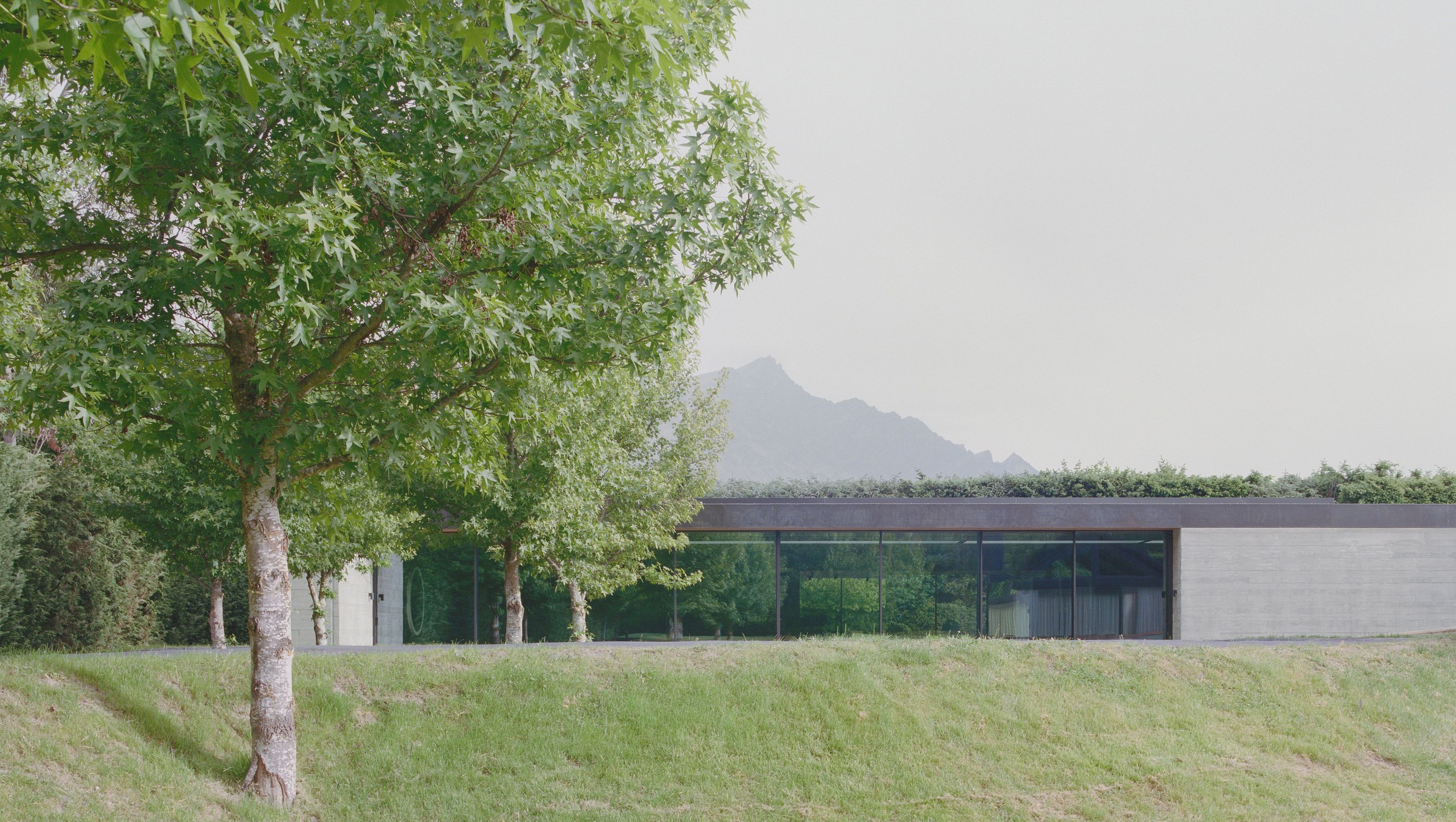
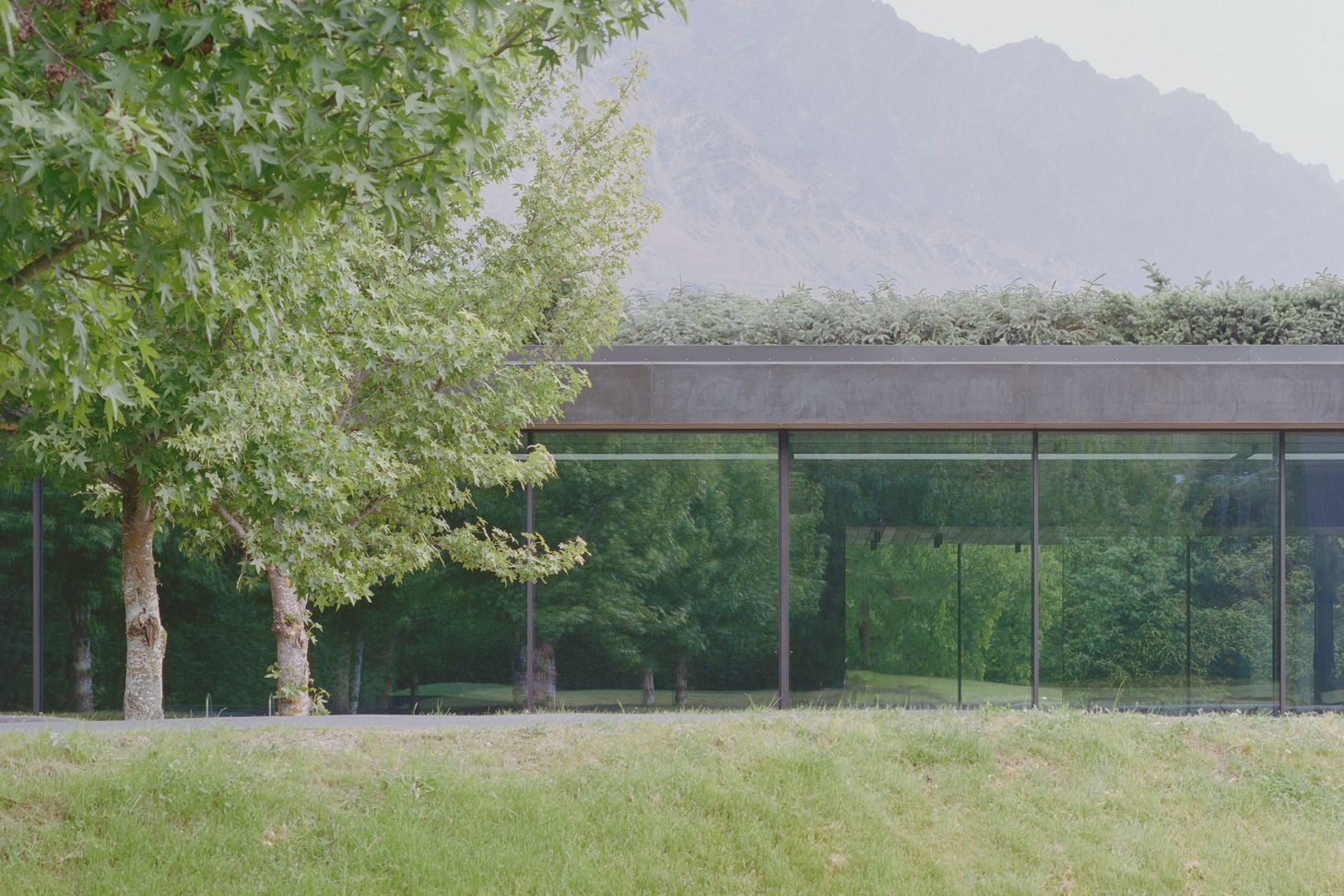
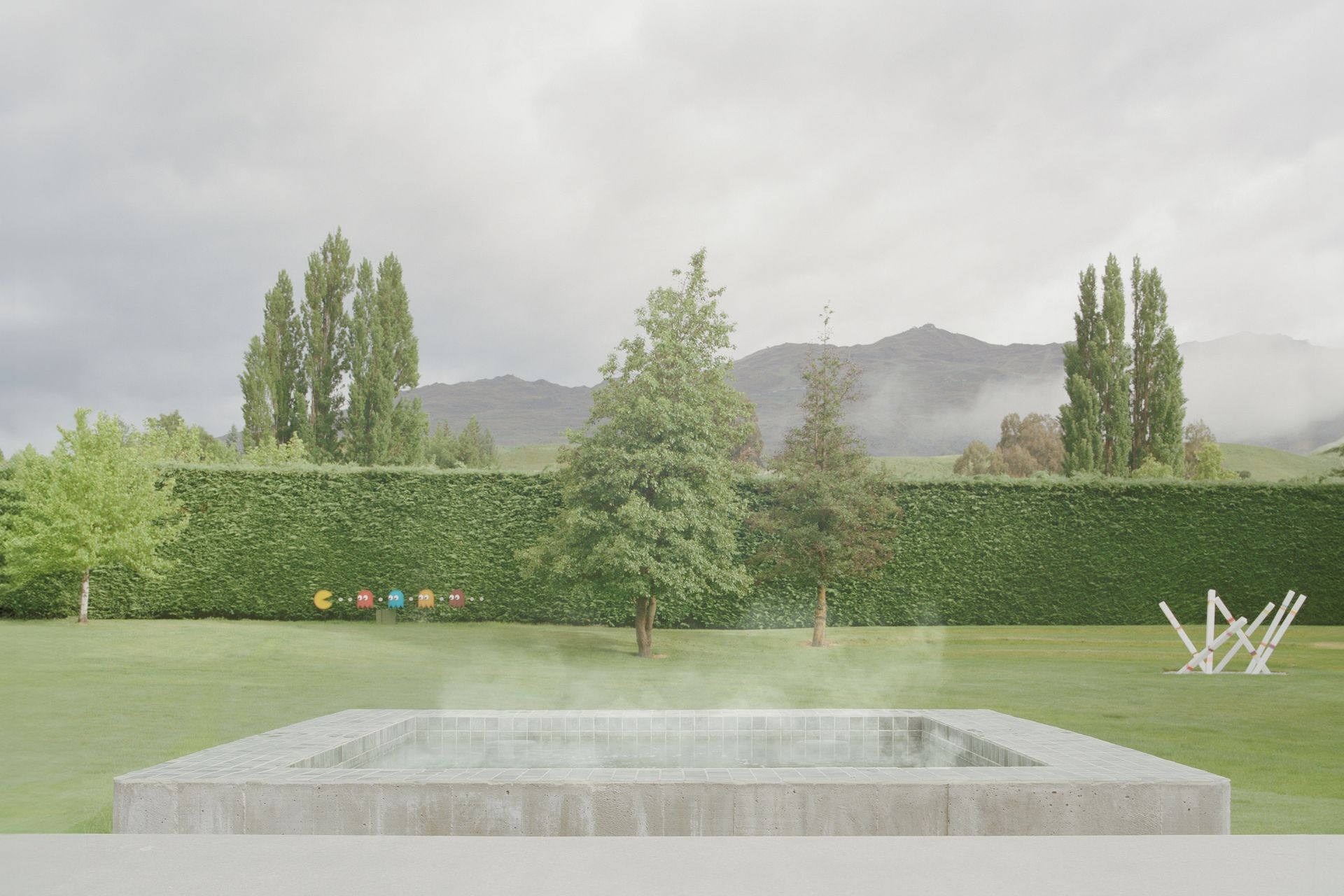
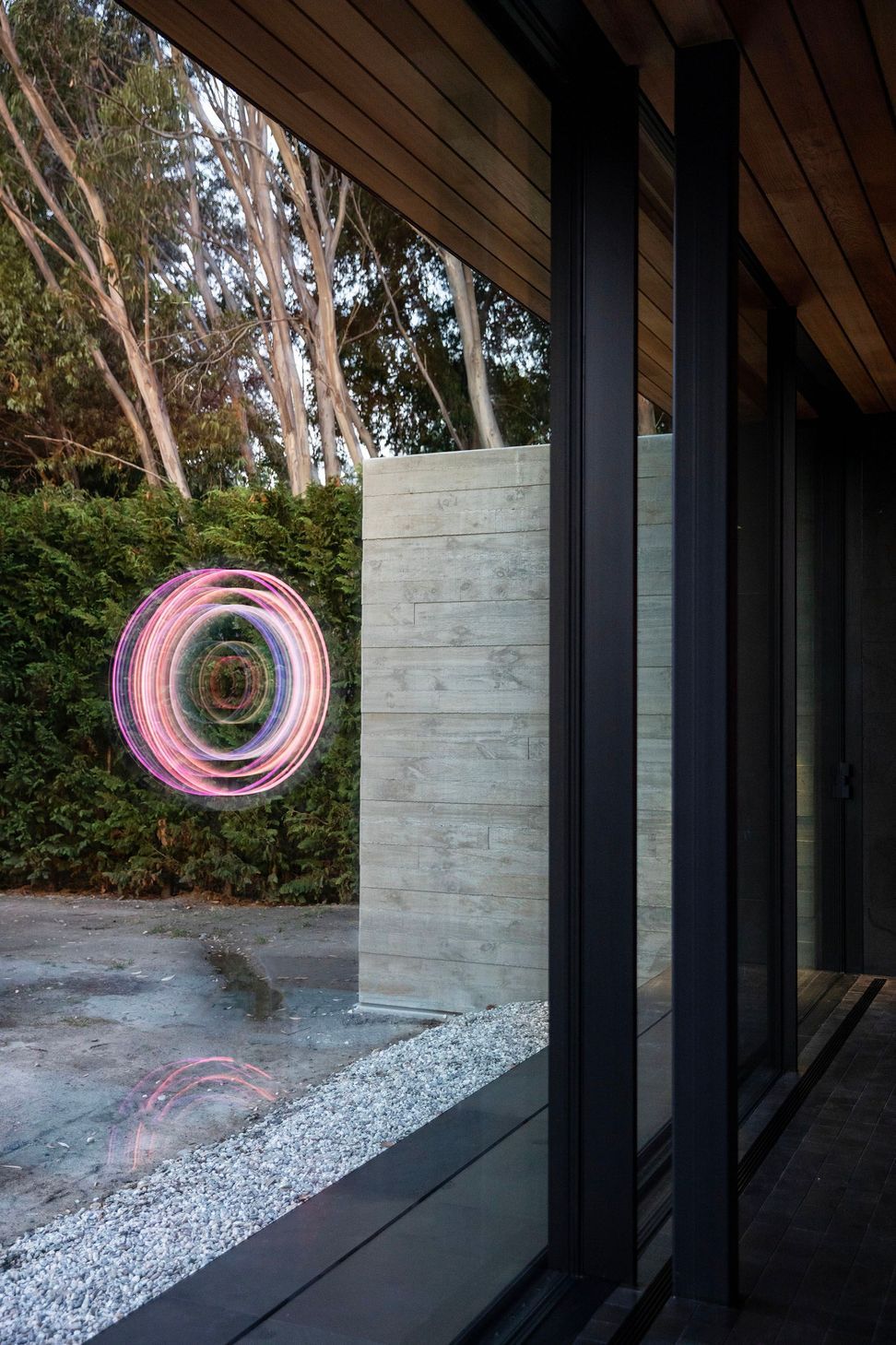
Positioned at the rear of the site, the building sits within a landscaped garden setting and is carefully oriented to the north, maximising solar gain and framing expansive views towards Coronet Peak. Although the pool is indoors, the architecture actively works to dissolve the boundary between inside and out.
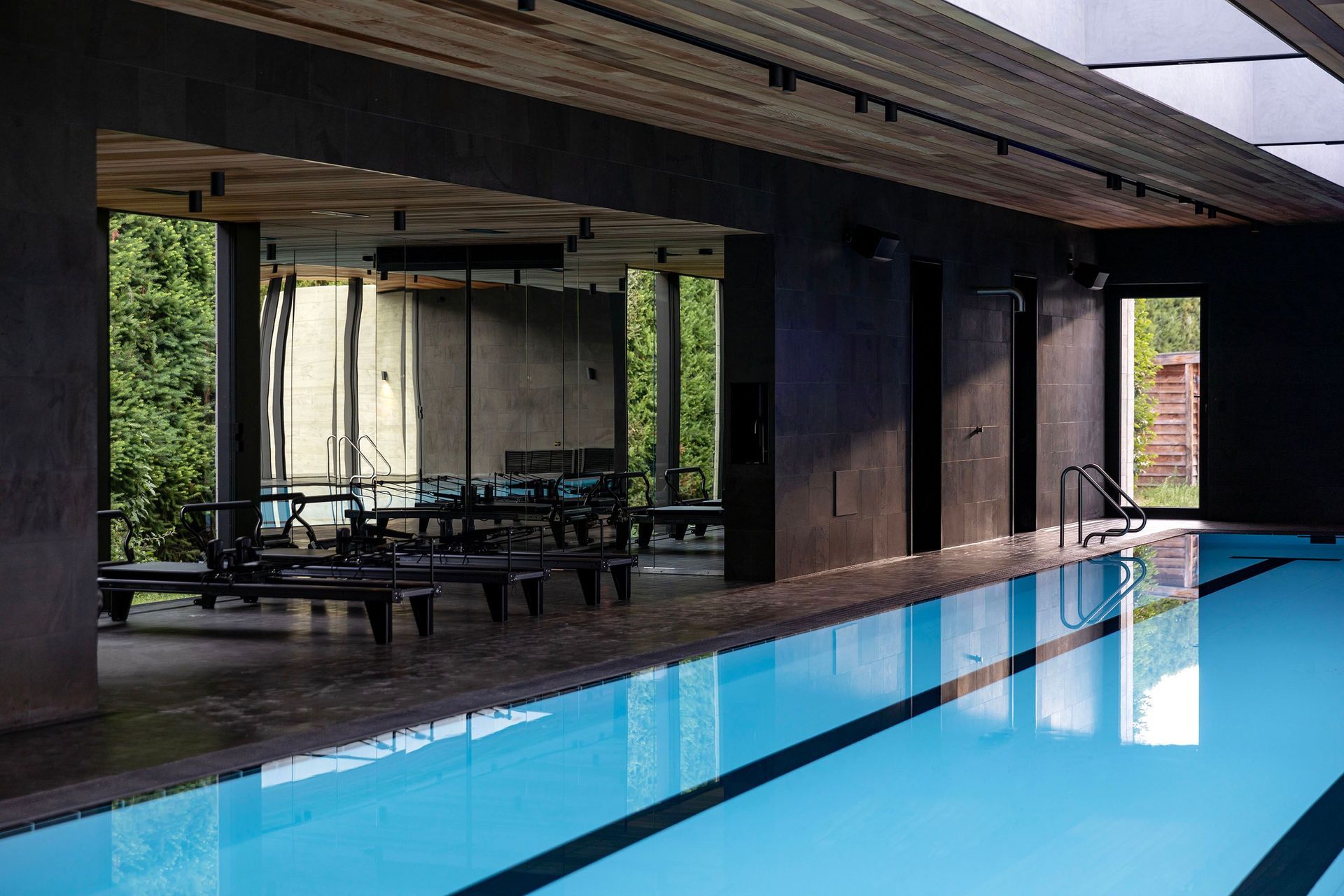
Large areas of glazing establish a strong visual connection to the landscape, while the building's placement within the gardens creates a sense of immersion in its surroundings. The result is a space that feels simultaneously protected and open, offering year-round usability in a region known for its dramatic seasonal extremes.
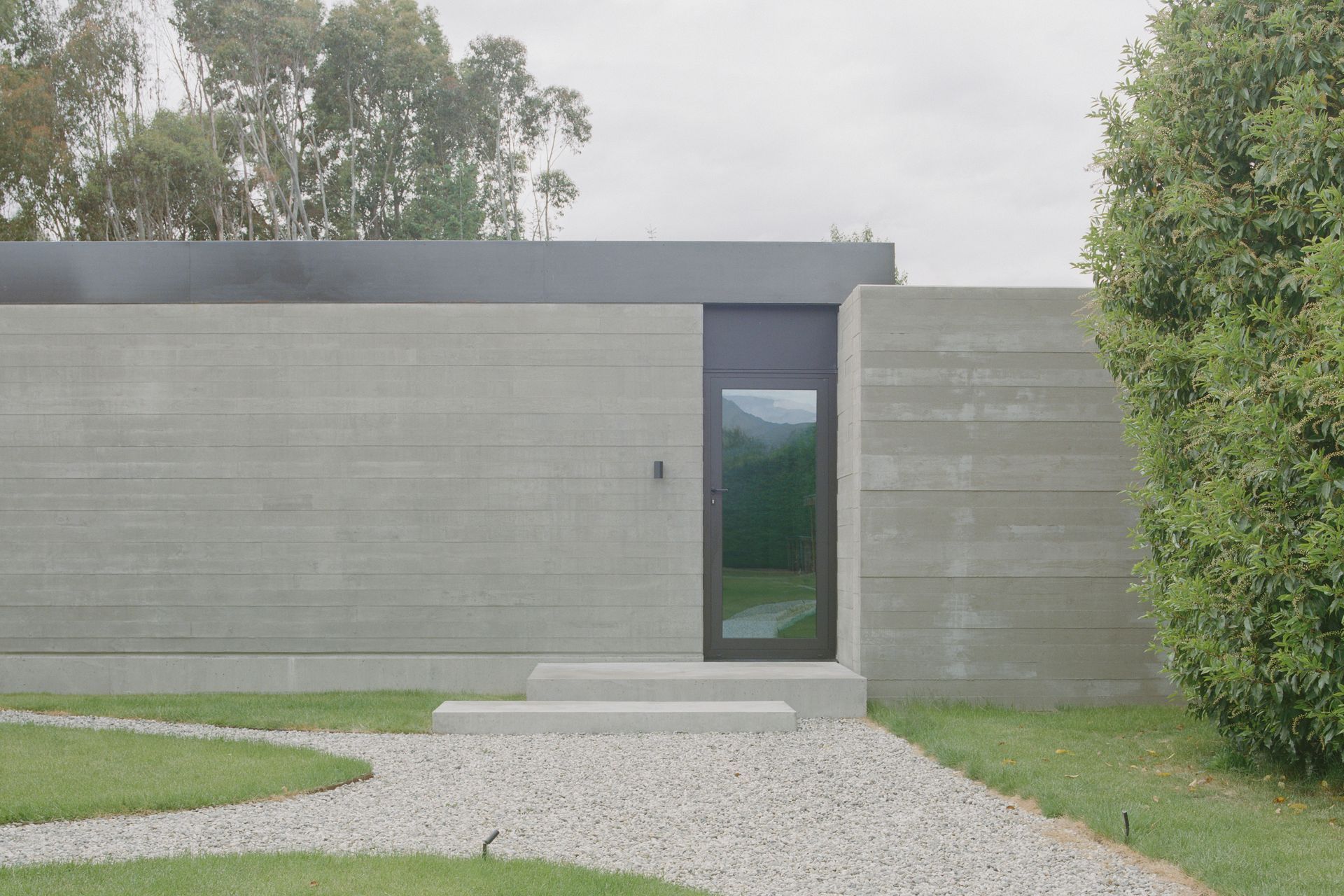
Architecturally, the building deliberately distinguishes itself from the existing house. While the residence adopts a more familiar Queenstown language of schist cladding and gabled forms, the pool house embraces a restrained modernist expression.
"The house that's on the site is very Queenstown with schist and the traditional gable forms we see a lot," says Pyke. "We were quite keen for this to be a standalone, modern element that complemented the house in terms of materiality, but was very much its own building with its own language."
That balance is achieved through a carefully considered material palette. Board-formed concrete provides the primary structure and exterior finish, its texture and tonality subtly echoing the schist of the existing dwelling. A band of sealed Corten steel wraps the upper portion of the building, introducing a darker element that references the roof tones of the house while giving the pavilion a distinct identity.
The material choices, however, extend well beyond aesthetics.
In Central Otago, where winter temperatures can fall to minus ten degrees, designing an indoor pool presents significant environmental challenges. Large expanses of north-facing glazing create opportunities for passive solar gain but also require careful management of temperature differentials, humidity levels and condensation.
"The insulated precast concrete sandwich panels work really well as a structure, but they also help mediate the internal environment," Pyke explains. "You've got a very big change between indoor and outdoor temperatures, and the layers of the panels help balance that environment. Along with the triple-glazed window suite, they help create a high-performance building envelope."
Performance remains a defining theme throughout the interior. Almost every material has been selected not only for its visual qualities but also for the role it plays in shaping the experience and usability of the space.
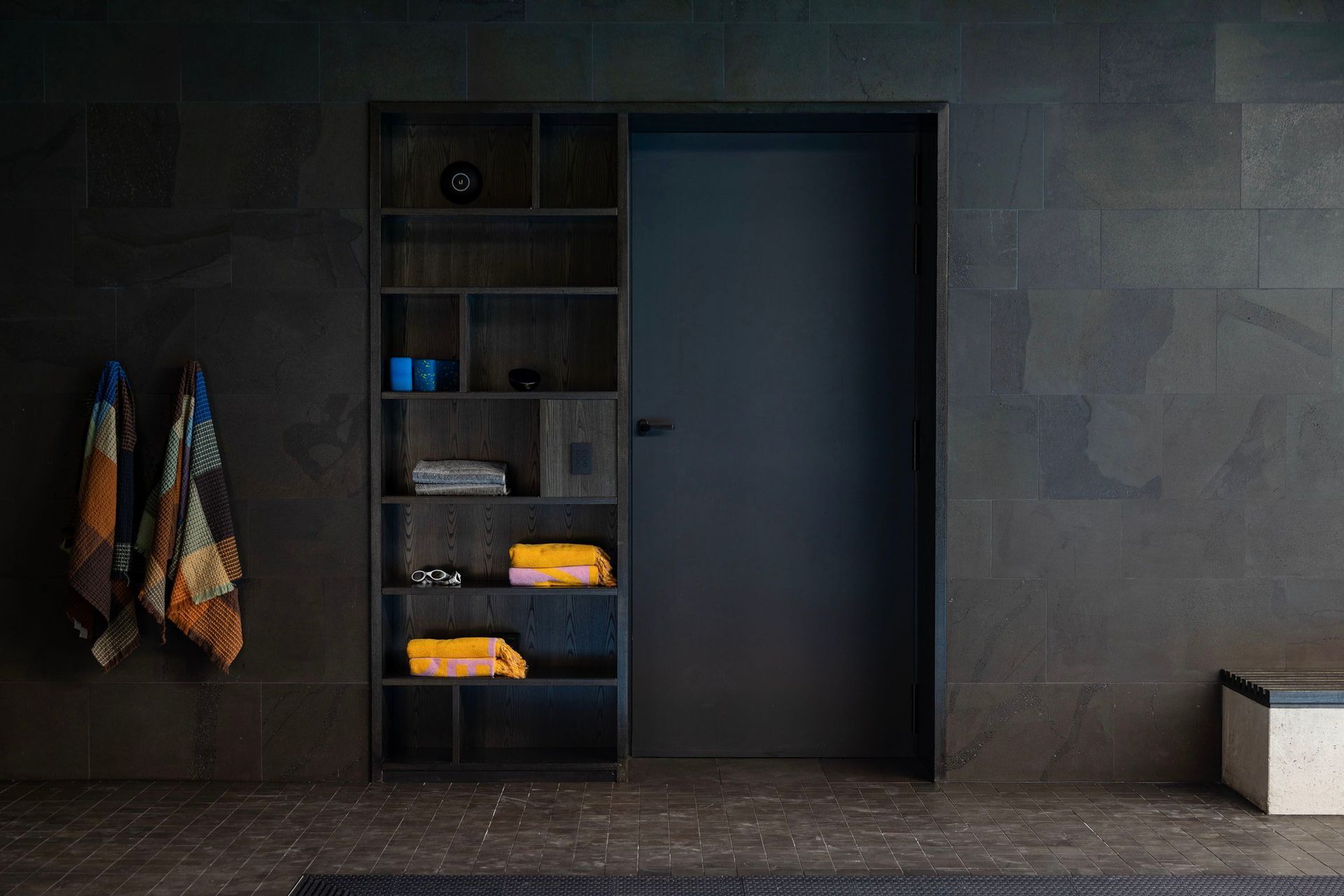
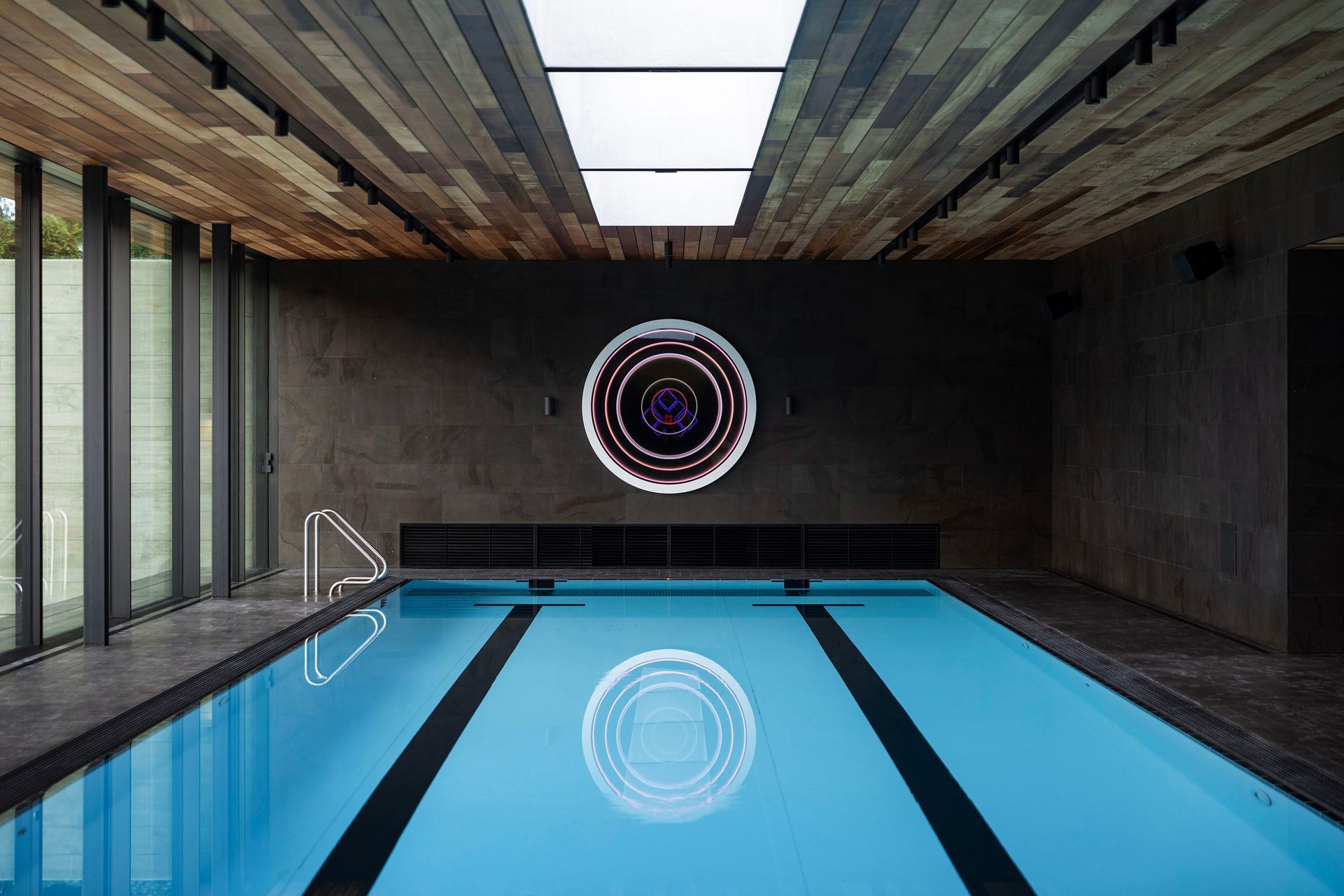
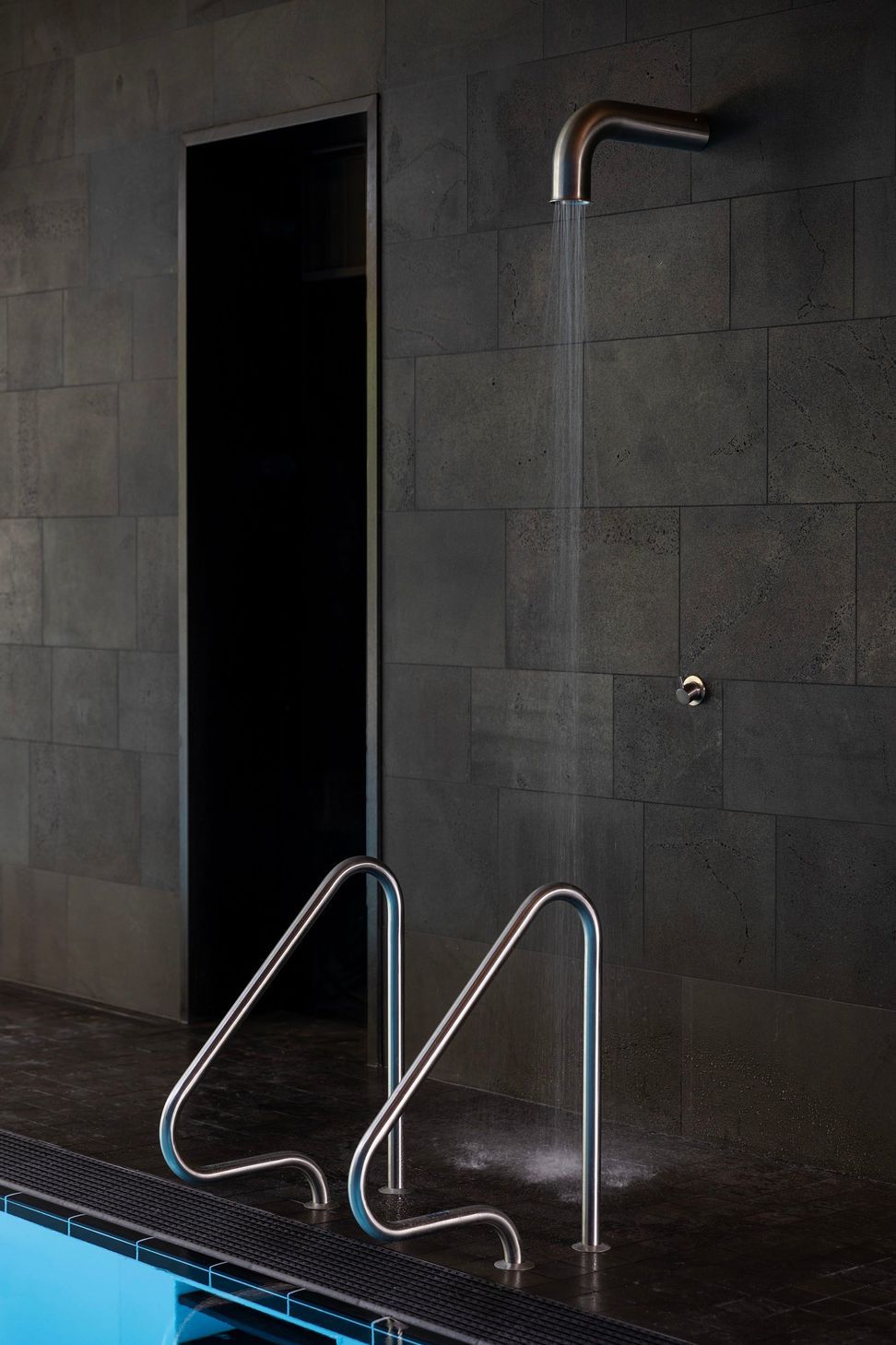
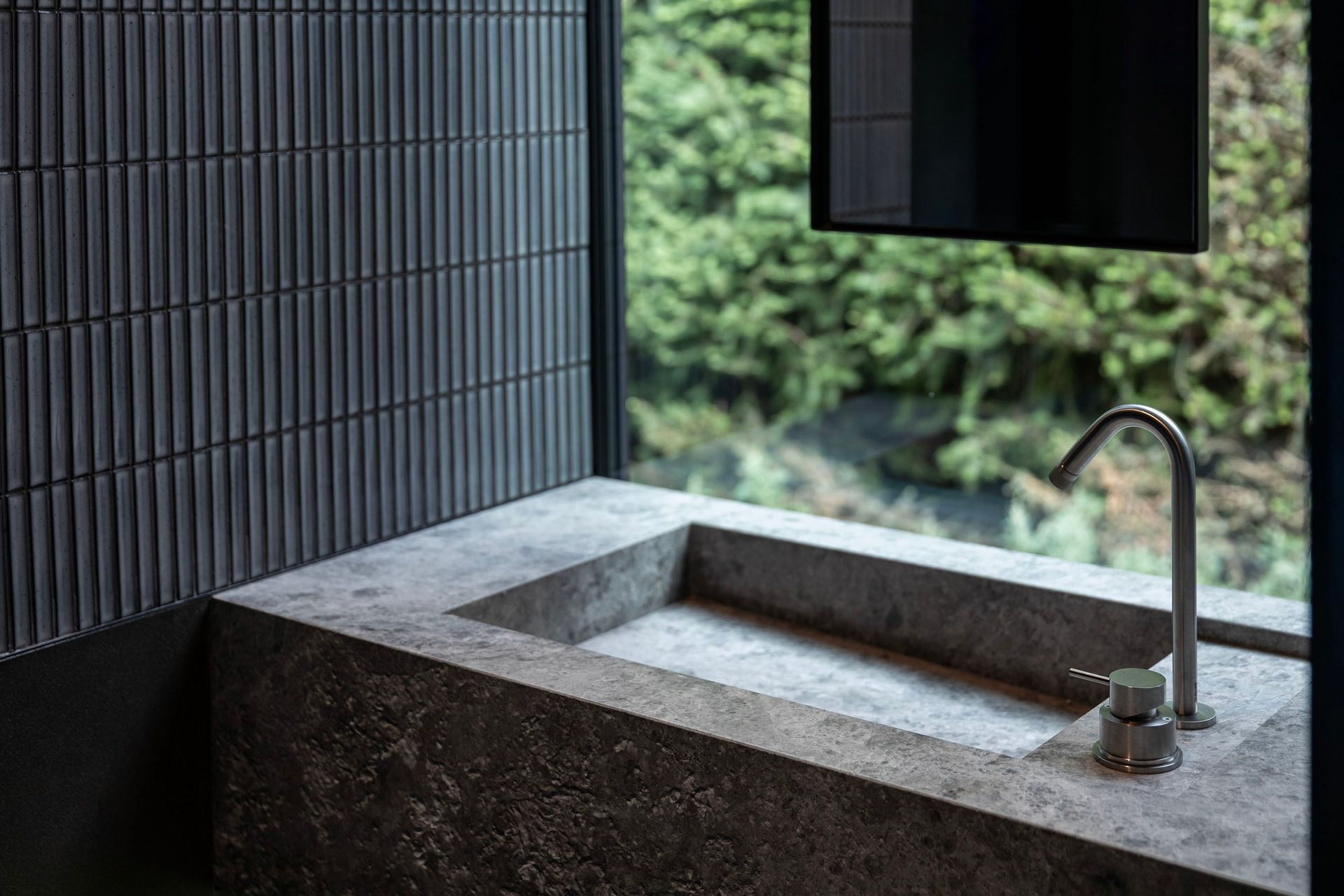
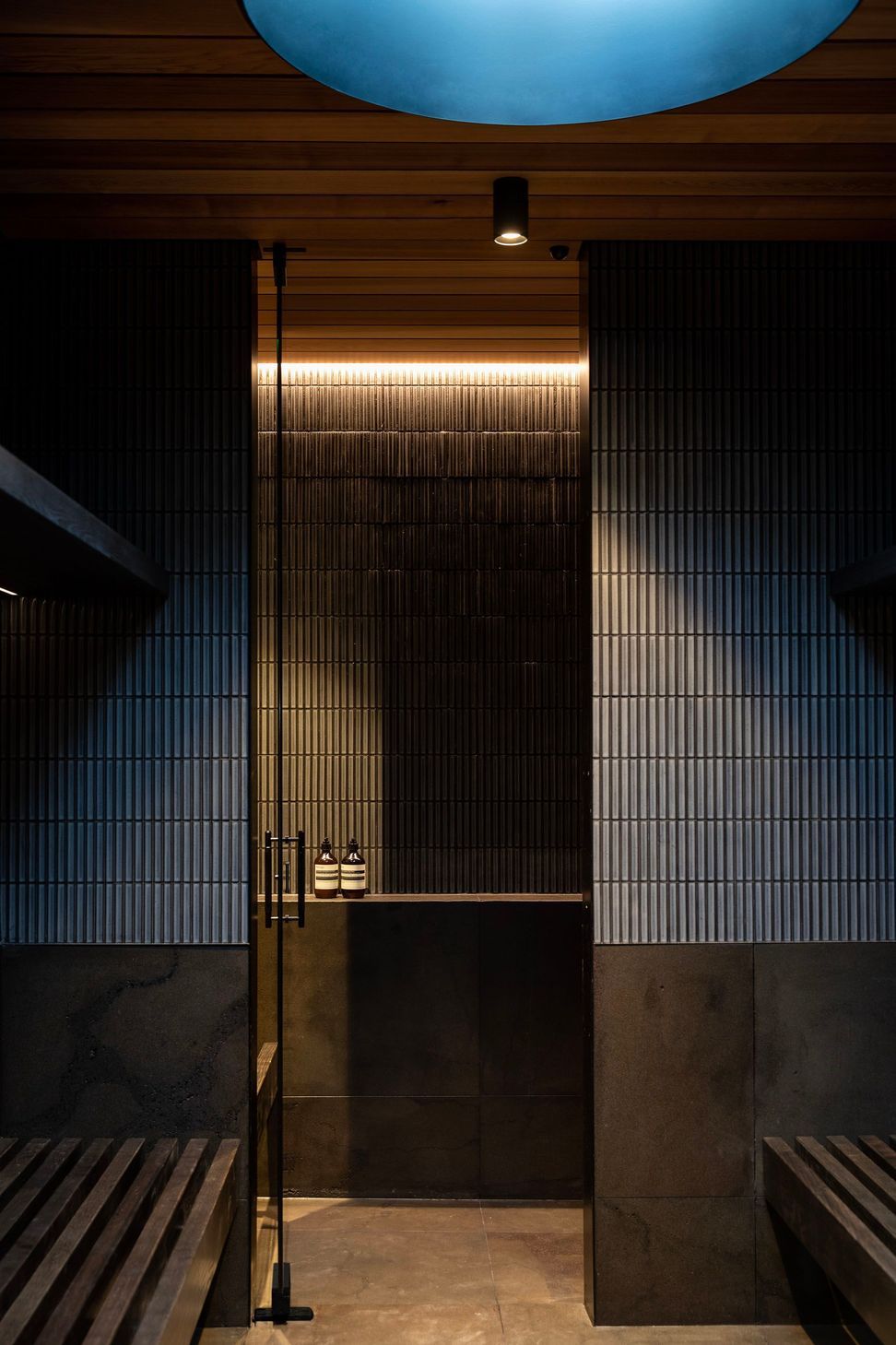
Timaru Bluestone forms the foundation of the interior palette, appearing as wall tiles and cobbled flooring that extends from the pool surrounds into the gym and changing facilities. Dark timber joinery introduces warmth and contrast, while a cedar-lined ceiling softens the otherwise robust material language.
The ceiling, however, is doing more than simply adding visual warmth.
"The cedar works aesthetically, but it's also working from a performance point of view," says Pyke. "The gaps between the boards help acoustically, and there's a vapour barrier behind it as well to help manage the environment."
The ceiling also became a critical component of the lighting strategy. A continuous track runs the length of the pool, allowing illumination levels to shift dramatically depending on how the space is being used.
During the day, natural light dominates. A central skylight lined with polished plaster reflects and refracts sunlight throughout the interior, casting shifting patterns across walls and water. The effect is subtle yet dynamic, changing continuously as the day progresses.
At night, the atmosphere transforms entirely.
"We did a lot of modelling around the lighting environment," says Pyke. "We wanted it to feel more residential and less commercial."
The approach resulted in an intentionally restrained lighting scheme that relies heavily on illumination from within the pool itself. As daylight fades, reflections ripple across the polished plaster and cedar ceiling, creating an immersive environment that feels markedly different from the daytime experience.
For Pyke, it remains the most memorable aspect of the project.
"How it feels at night is probably the coolest thing," he says. "It's a very, very different space."
Beyond the pool itself, the adjacent gym introduced another layer of technical complexity.
Intended primarily as a yoga and exercise space, it required a substantially cooler environment than the pool, which operates at around 28 degrees.
Achieving those differing conditions within a connected space demanded close collaboration with specialist consultants and careful integration of mechanical systems.
"That's one of the areas where the commercial nature of the project comes in versus residential," says Pyke. "There was a lot of complexity around making the gym feel colder while maintaining the pool environment."
The experience ultimately fulfilled a purpose beyond its immediate function. As a testing ground for a future scheme, the project allowed the client to experience materials, systems and spatial ideas firsthand to inform future outcomes.
It also delivered something outside of what he had imagined.
"I don't think it's quite what the client was expecting as an outcome," says Pyke. "But I think it really raised his expectations for future projects, and he completely embraced it."
Words: Joanna Seton Photography Credit: Vaughan Brookfield
- Completed
- 2023





Awards
Southern Architecture Awards - Winner
NZIA
Like this Project?
Hire Yoke
The products behind the project
Eleven products specified into this build from eight suppliers, verified ArchiPro members. Tap through to specifications, suppliers and lead times.


Professionals used in
this project
The practices and trades credited on this project.








More projects from
Yoke
Other work by Yoke, across every category they build in.


More in
Alpine House
Everything else in Alpine House, from every practice on ArchiPro.


Next Project
Keep scrolling