12 best questions to ask a landscape designer or landscape architect in Sydney

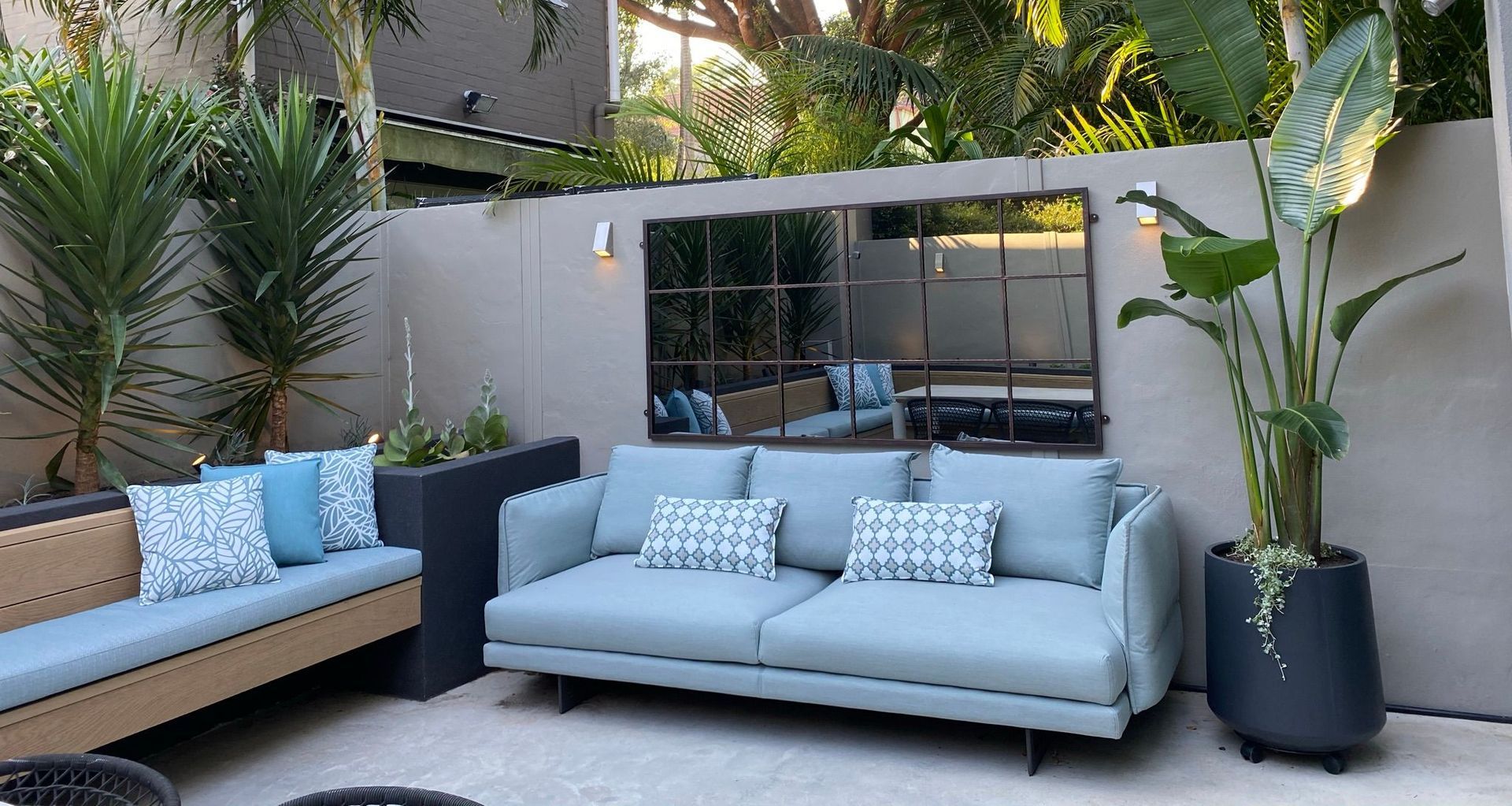
Hiring a landscape designer in Sydney can feel exciting and daunting. Coming prepared with some research will help with your decisions including budget, approvals, site constraints, timelines, and who should coordinate what.
The fastest way to avoid surprises is to ask the right questions early, before drawings are locked in and quotes start rolling in.
This guide is a practical checklist of the best questions to ask your landscape designer in Sydney.
1) What does landscape design in Sydney usually include?
Most landscape design packages cover:
- Site review + brief
- Concept layout (zones, circulation, levels)
- Materials + finishes schedules
- Pots & planting plan & schedules
- Optional: lighting, irrigation, drainage notes, documentation, supplier/trade coordination
At Vogue & Vine - we tailor packages to your garden size & budget.
For example smaller balcony gardens don't require the same level of detail as a larger sloping backyard garden with different levels.
2) How much does landscape design cost in Sydney?
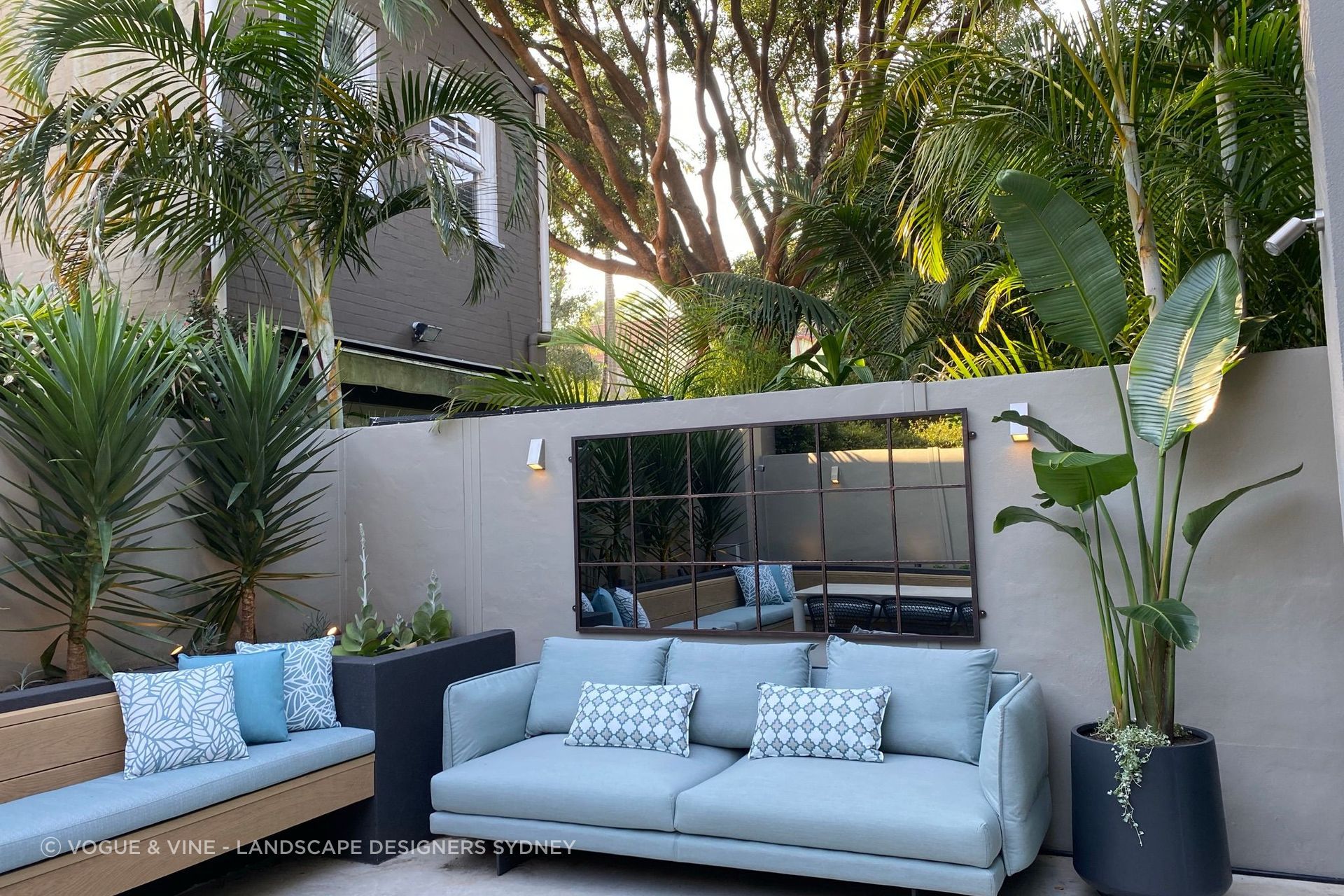
Estimated design, supply and installation costs and ranges for Sydney gardens are outlined below.
Small balcony gardens with pots & plants range from $8,000 to $20,000
Urban courtyards including pots, plants and styling range from $15,000 to $50,000
Larger gardens involving planting and construction range from $30,000 to $150,00
It depends on scope and complexity, not just garden size.
Cost drivers include:
- levels/retaining + drainage
- access constraints (terraces, tight lanes)
- custom elements (joinery, screens, planters)
- documentation detail + coordination required
3) Do I need council approval for landscaping in Sydney?
New pots & plants do not require council approvals in Sydney
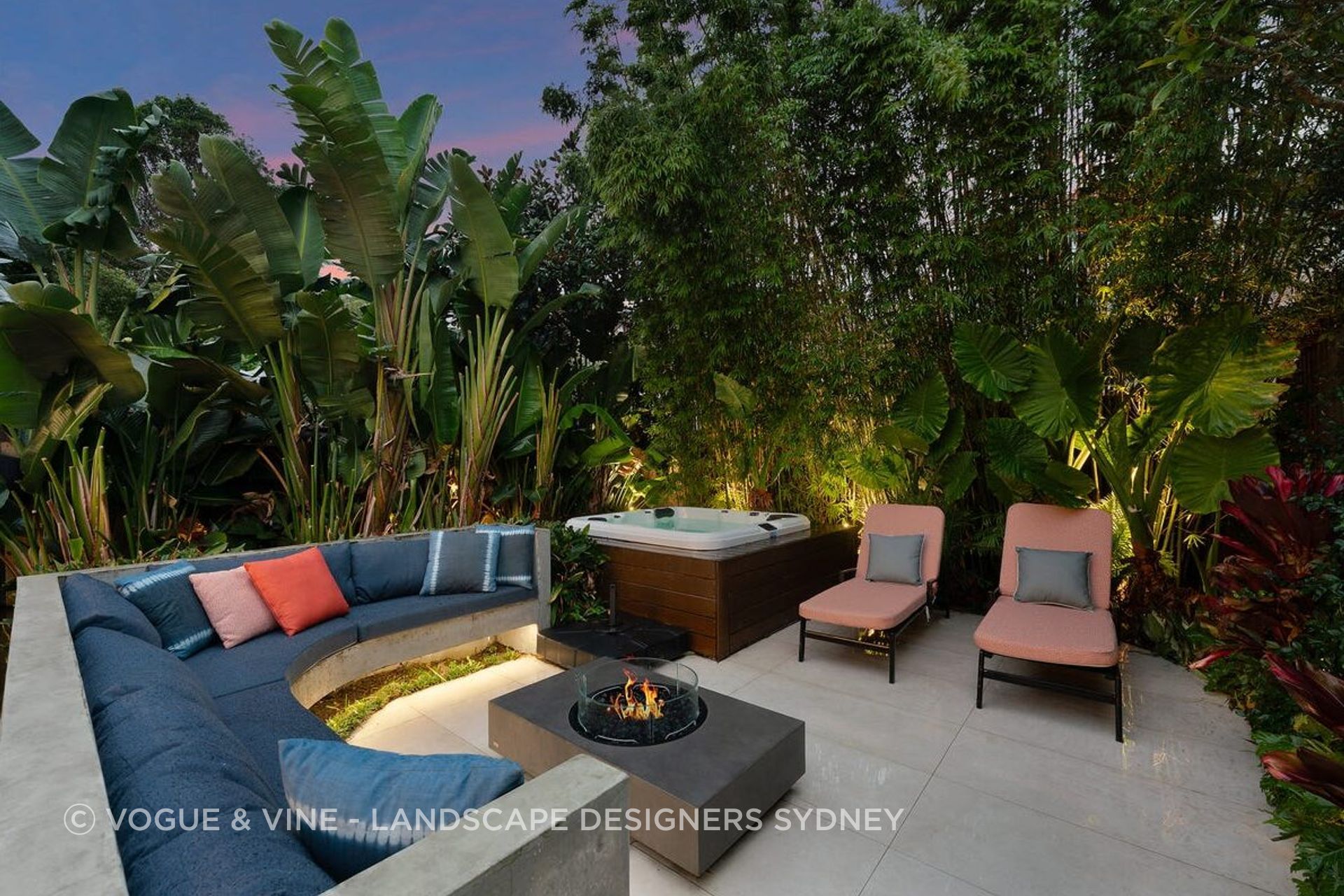
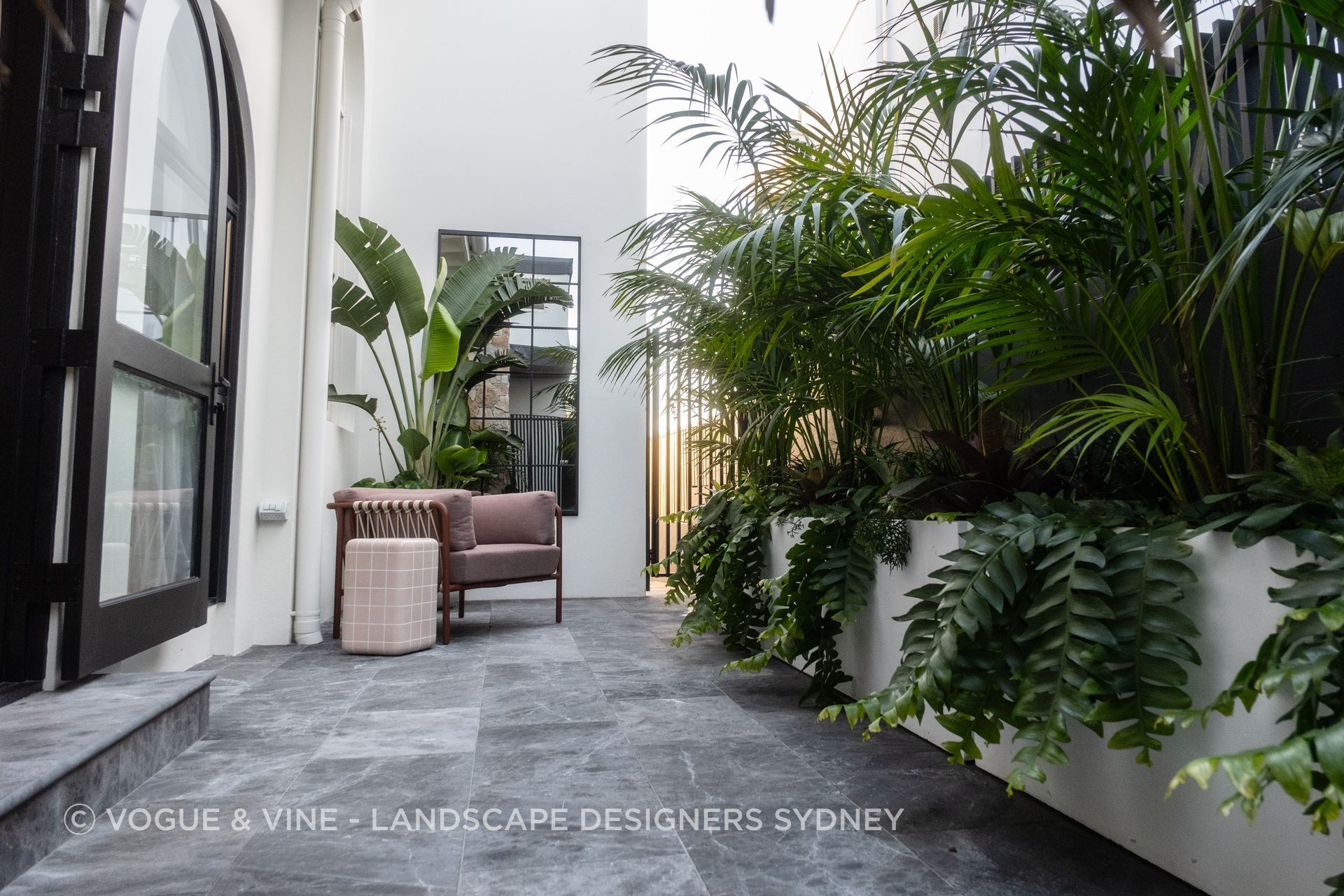
These are the garden elements that will require council approval in Sydney:
- Retaining walls over certain heights
- Decks over 25sqm, pergolas, structures, major excavation
- Tree removal (including protected species)
- Stormwater/drainage changes
4) Do you need strata approval for balconies and courtyards?
Strata approval is often required for:
- Waterproofing interfaces and drainage
- Planter weights and load limits
- Screening/privacy panels
- Irrigation lines or tap changes
- Noise/working hours and access for trades
Ask for bylaws + approvals process upfront to avoid delays.
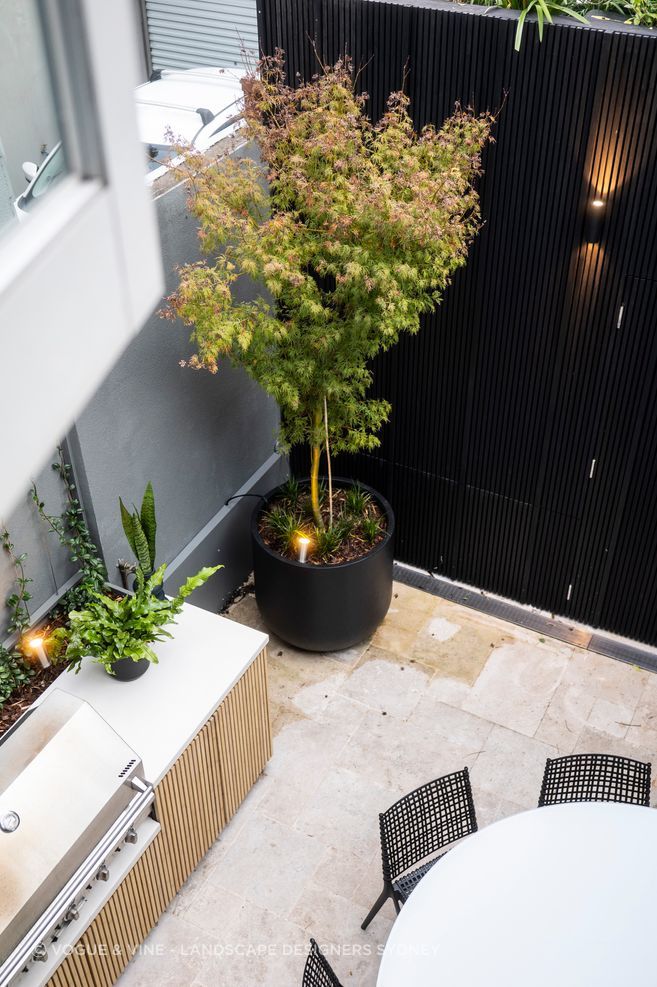
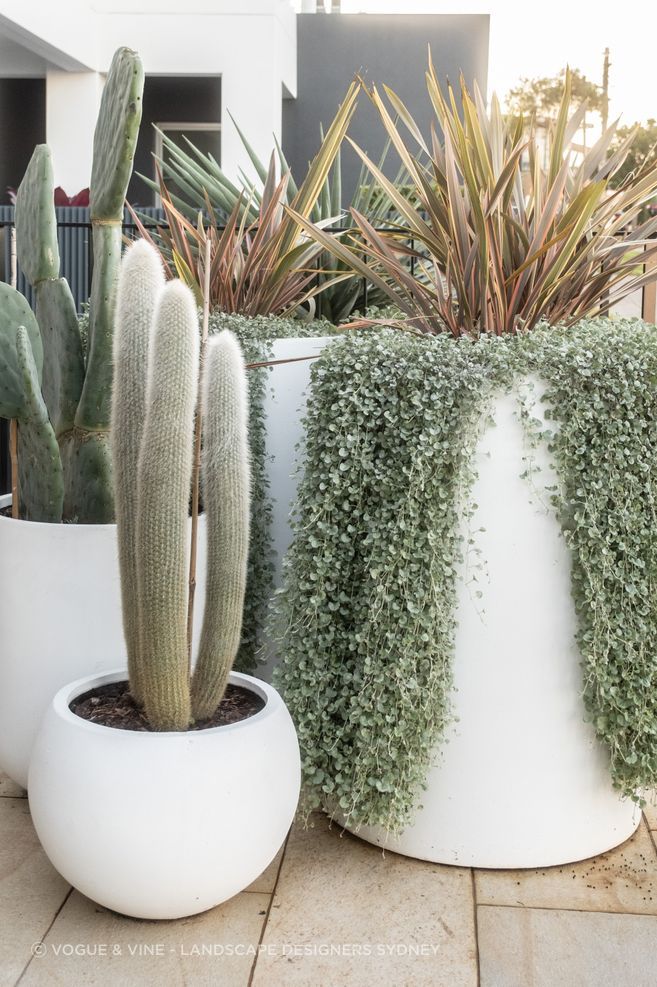
5) How long does a Sydney landscape design project take?
Typical design stages and timing include:
Small garden design: 2–4 weeks (depends on revisions + documentation)
Larger garden design 4-8 weeks
Quoting/procurement: 2–4+ weeks
Plant & pots installation: 1-2 weeks (balcony gardens 1-2 days)
Build: 1–12+ weeks (depending on scope + weather + access + trades)
Lead times for stone, custom steel, or joinery can extend timelines.
Lead times may vary depending on the gradient of the property. For example larger sloping sites on the North Shore will take longer than level gardens with fewer established trees in the Eastern Suburbs or Inner West of Sydney.
6) Can you design to a fixed budget?
Yes, Vogue & Vine often design to a fixed budget.
A good process usually includes:
- Setting priorities (must-haves vs nice-to-haves)
- Staging the work (now vs later)
- Specifying alternatives (e.g. paver options, screening types)
- Value-engineering before quotes land
- Size of planting eg smaller plants vs more mature plants
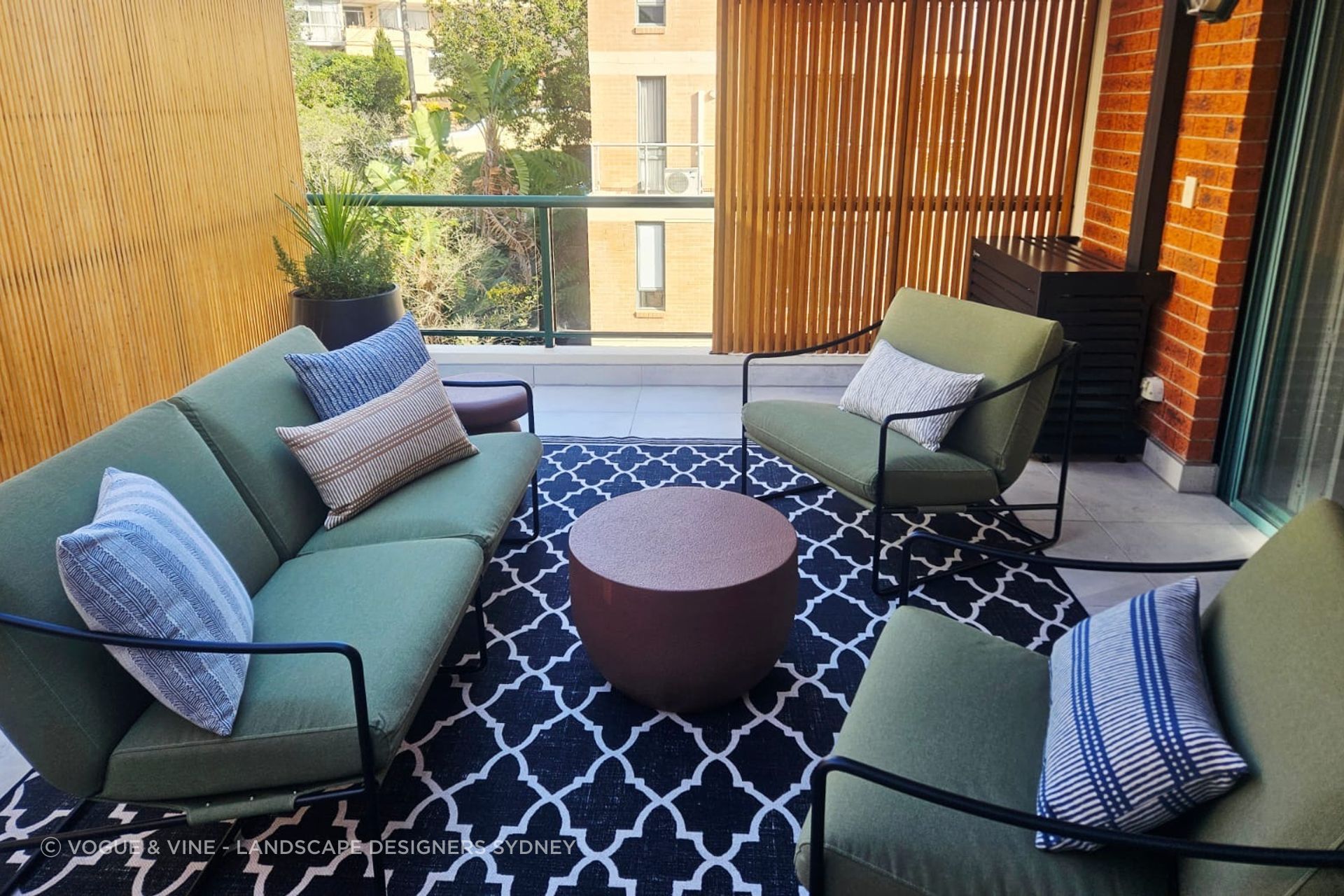
7) What information do you need from my site to start?
It is best to provide the following information to your designer
- Basic measurements or a survey (best)
- photos + rough plan
- notes on sun/wind, privacy, and drainage issues
- constraints: access, strata rules, council considerations
- For complex sites, levels and drainage details matter early.
Smaller balcony gardens or courtyards will not require the same detail of information as a larger garden.
Most smaller garden information will be gathered during the initial onsite consultation.
8) How do I choose plants that actually thrive in Sydney?
Successful plant choice in Sydney depends on:
- Aspect (north/south), wind exposure, heat reflection
- Soil condition and drainage
- Irrigation and maintenance preference
- Pets/kids and allergies
Sydney microclimates vary a lot—what works in coastal areas will vary to more protected leafy suburbs.
The team at Vogue & Vine are qualified horticulturalists - so ask our plant advice during your design or consultation.
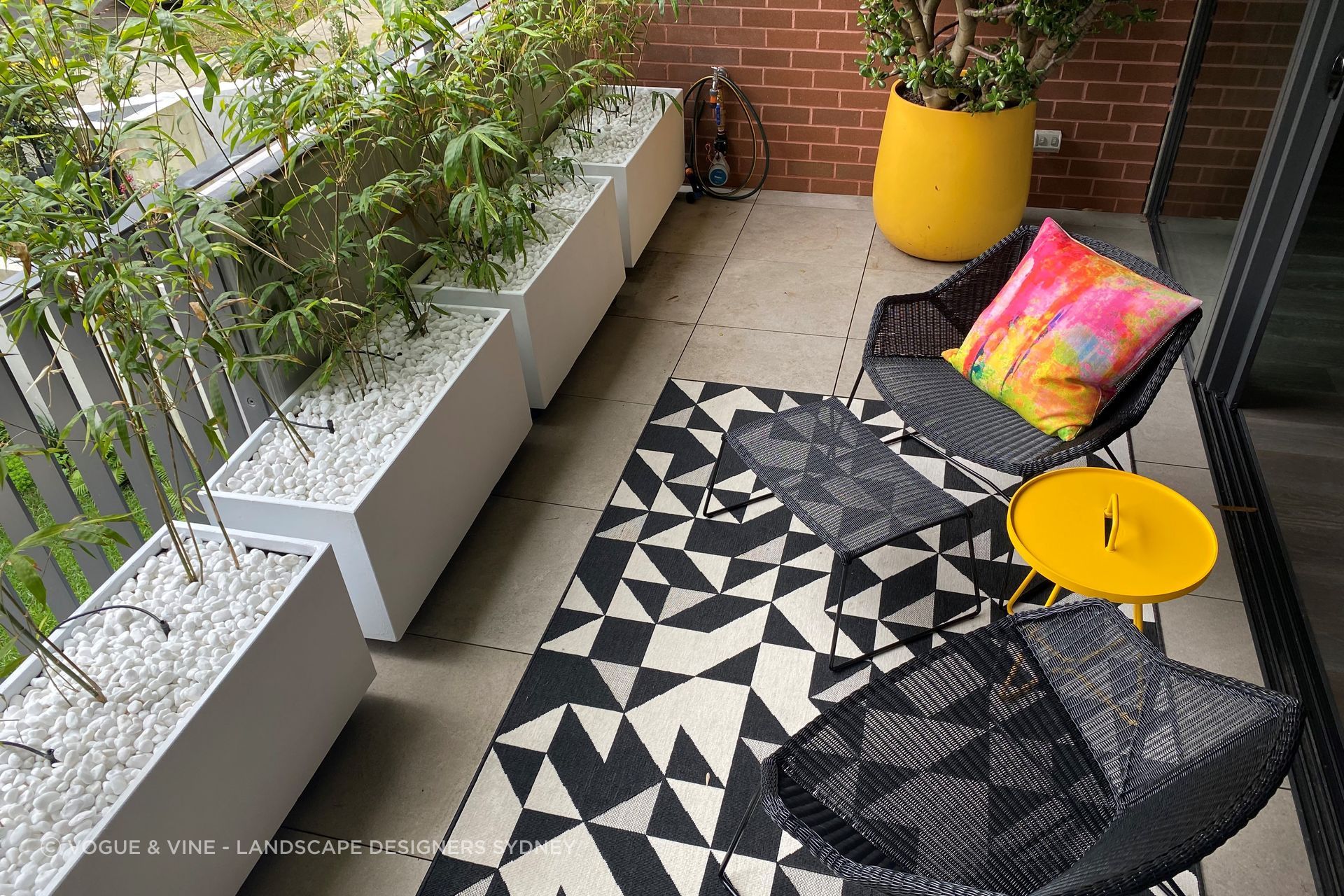
9) Can you help with drainage and stormwater issues?
Design can address drainage & stormwater symptoms and issues by:
- Reshaping falls and surface levels
- Specifying subsoil drainage where needed
- Reducing runoff with permeable zones
We Coordinate with a landscaper/plumber specialists for compliant stormwater outcomes.
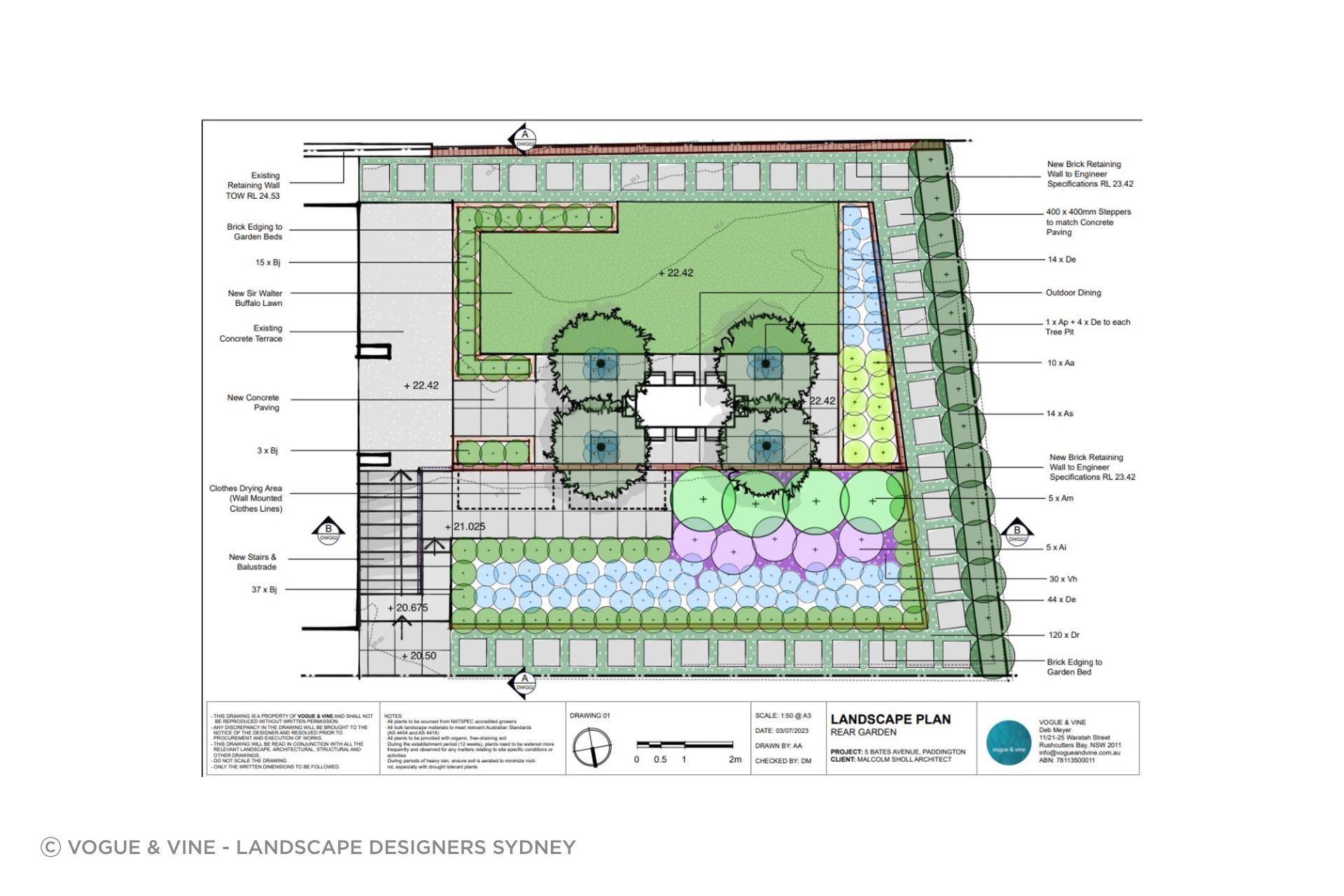
10) What’s the difference between concept design and full documentation?
Concept design covers the layout + look/feel + planting direction. It provides the overall look and is great for quick clarity.
Full documentation includes detailed dimensions, setouts, materials specs, and construction notes
If you want accurate quotes and fewer surprises, documentation is important especially for larger gardens that may require hardscaping or construction.
11) Can you manage quotes and coordinate landscapers in Sydney?
Yes—many clients ask Vogue & Vine to arrange landscaper quotes and coordinate the project.
This includes:
- Brief the landscaper clearly (scope + drawings)
- Compare quotes “apples with apples”
- Coordinate suppliers, deliveries, and sequencing
This reduces mistakes like wrong levels, mismatched finishes, or missing drainage allowances or wrong plants due to seasonal availability.
12) How do I avoid budget blowouts during construction?
Preparation & communication with your designer & landscaper helps avoid budget blowouts.
We recommend:
- Lock in scope of works before quoting (no “guessing”)
- Document key details (pots, plants, materials)
- Confirm access and waste removal plan
- Confirm pot & plants availability and secure pots with a deposit early
- Choose alternates in advance (Plan A / Plan B finishes)
Stage high-cost items towards the end eg screens, lighting, joinery if needed.
These can potentially be delayed or cancelled due to budget constraints.
If you take one thing from this list, let it be this: the right questions upfront save you time, money, and a lot of back-and-forth later.
A good landscape designer won’t dodge these topics—they’ll welcome them, because clarity is what leads to a smoother build and a result that actually suits how you live. Keep this checklist handy, and you’ll feel confident choosing a designer, setting expectations, and moving forward with a plan you can trust.