How to pair designer mirrors with high-end lighting

Written by
18 August 2025
•
5 min read
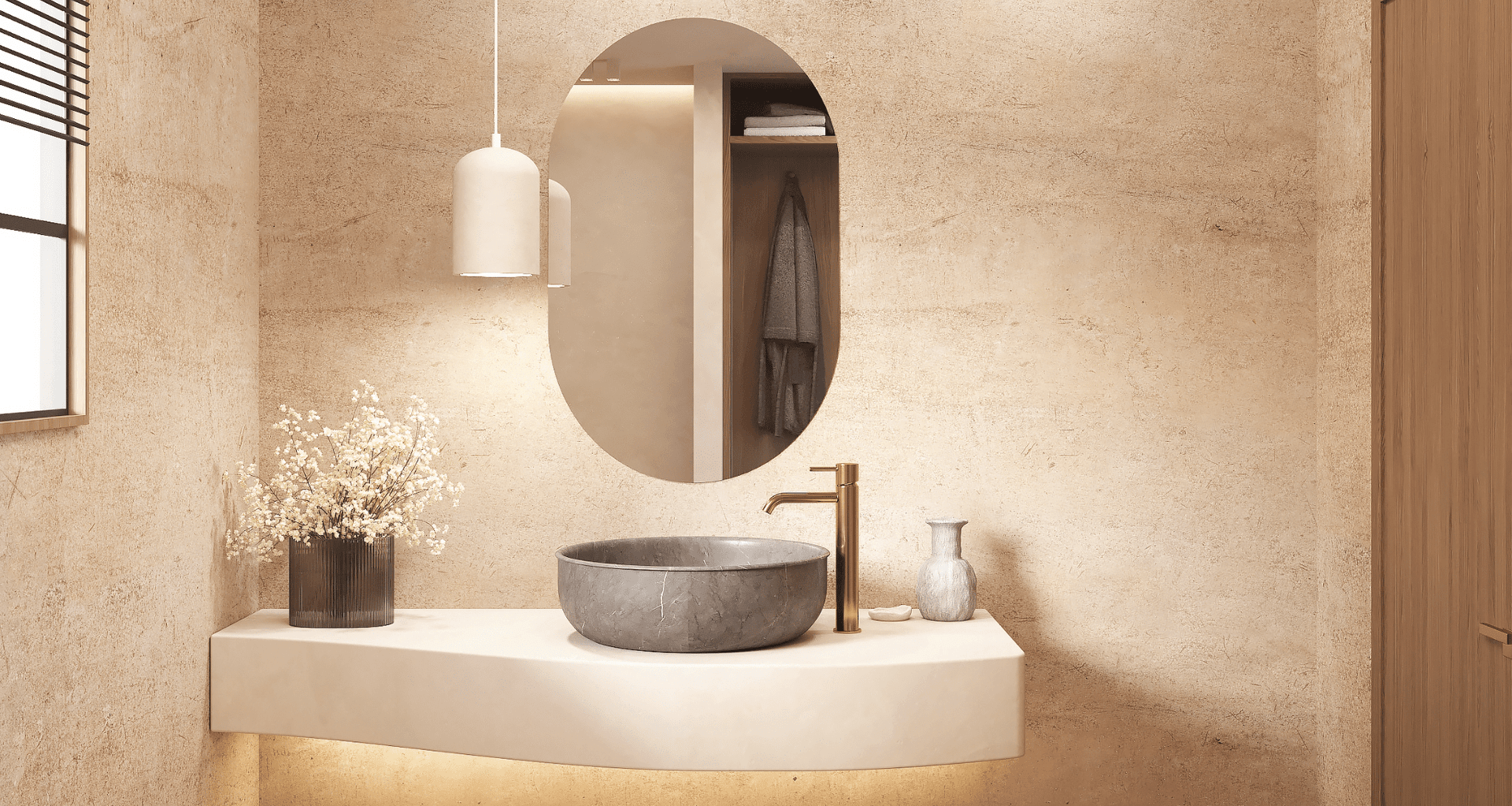
Mirrors by Reflect are known to push boundaries, often going beyond standard limits on weight or size to achieve the desired design brief.
“I was looking for a mirror that combined scale, quality and design in a way that would transform a space,” says Nadia Smith, Founder of Mirrors by Reflect. “Most mirrors at the time felt like an afterthought rather than a statement piece, and I wanted to create something that would become the focal point of a room, not just fill a gap.”
On the eve of the brand’s fifth anniversary, Nadia shares her top tips with ArchiPro for successfully pairing mirrors with lighting in design.
How to pair lighting with designer mirrors
“In both retail and residential settings, warm lighting is generally more flattering and creates an inviting atmosphere, while dimmable options let you adjust the mood as needed.”
“In upscale spaces, I always recommend layered lighting (mixing ambient and accent light), so the mirror is flattered from every angle.”
Nadia adds, “Harsh overhead lights often cast unflattering shadows; therefore, positioning lighting at eye level, on either side of the mirror, or incorporating subtle backlighting becomes crucial.”
The importance of mirror shape and frame finishes with lighting design
According to Nadia, the shape and frame of mirrors significantly influence the types of lighting selected.
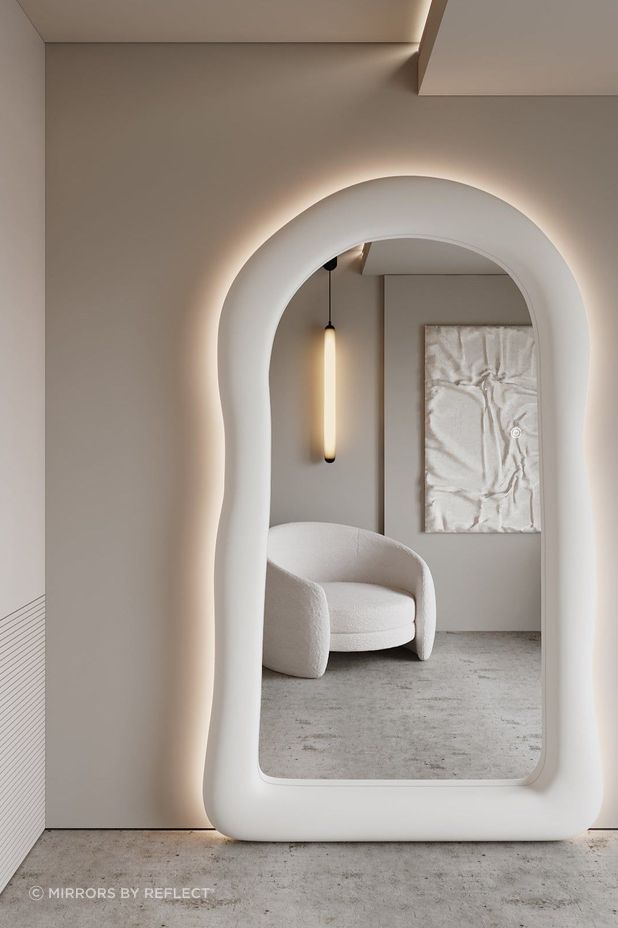
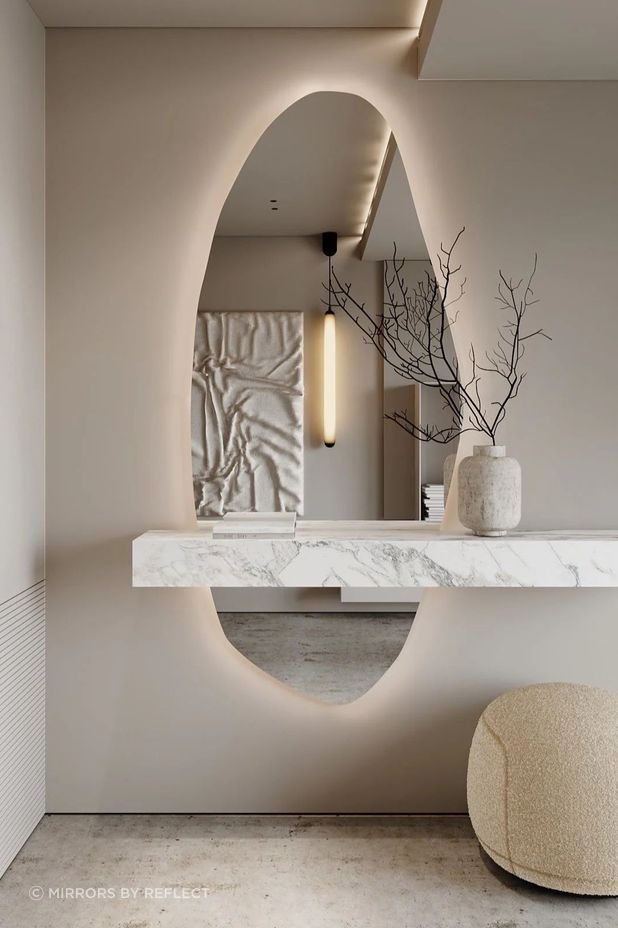
- Curved or organic-shaped mirrors naturally soften a space, so I often pair them with diffused wall sconces or warm, indirect lighting.
- Angular mirrors or bold frames work beautifully with focused lighting elements to create striking contrasts and drama.
- Frameless mirrors are ideal for LED backlighting, as the light can breathe around the edges to create a soft halo.
- Vertical or elongated mirrors pair stunningly with pendant lighting, especially when pendants are hung low on either side to frame the mirror’s shape.
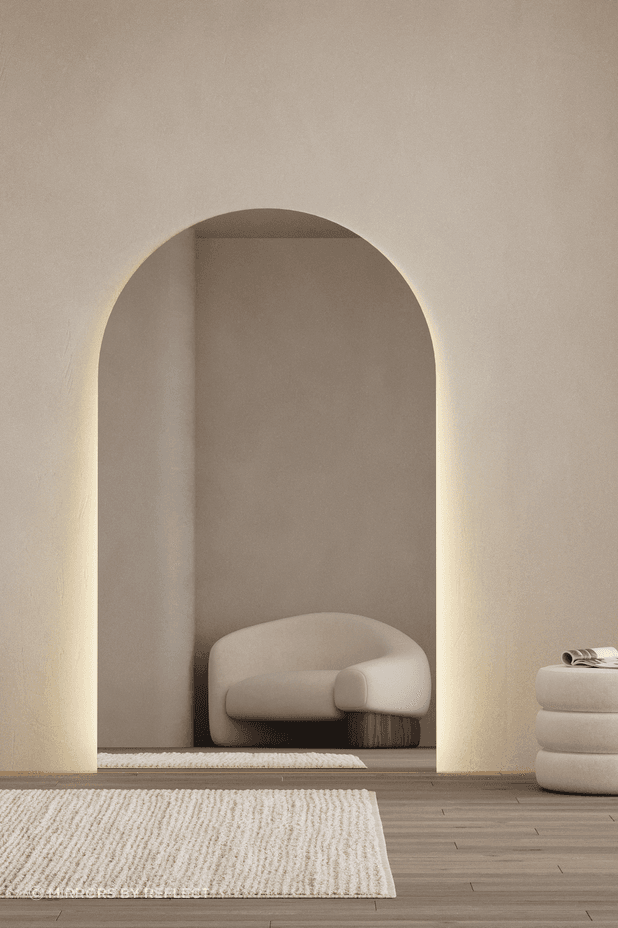
- Round, arched, and half-moon designs lend themselves well to wall-mounted sconces, creating visual intrigue and drawing attention to the interplay of light and reflection.
- A gold or brass frame rarely benefits from LED backlighting, as it can detract from the warmth of the metal. Lighter or metallic finishes bounce and amplify light, while matte or darker frames absorb it and often need a stronger light source.
How to combine mirrors and lighting in open-plan spaces?
Nadia emphasises in open-plan spaces, the mirror and lighting need to feel like part of the same design story, with scale being the main factor. Too small and the mirror gets lost; too large, and it overwhelms the room.
“High ceilings demand mirrors that hold presence without throwing off proportions. In larger rooms, mirrors often need to be oversized but balanced with walls, furniture and lighting,” says Nadia.
Which mirror styles are trending right now in luxury interiors?
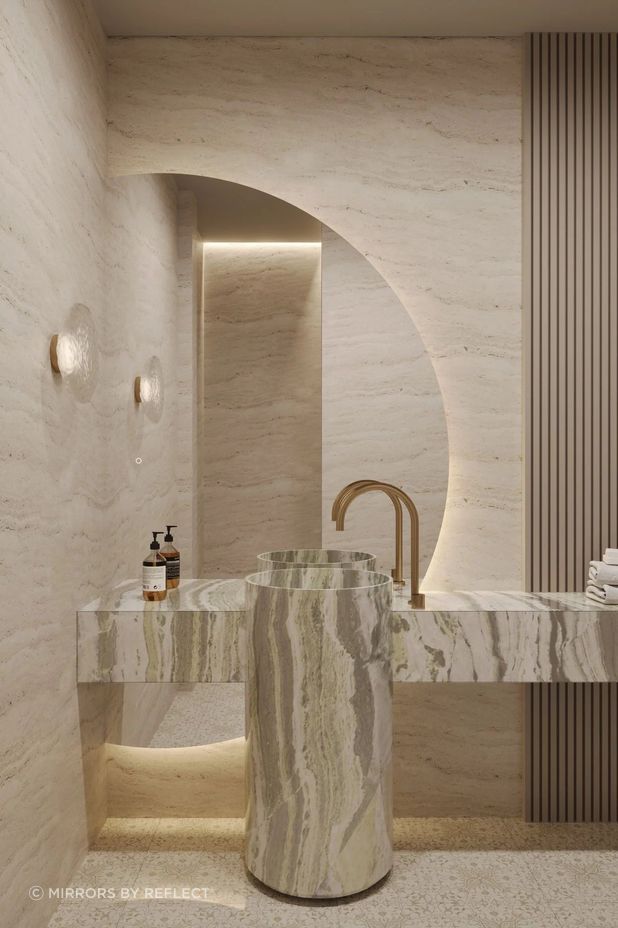
Nadia remarks that LED mirrors in custom shapes are leading the way. “Split vanity designs with half moon mirrors (positioned so part sits above and part below the vanity) are particularly popular,” she says.
“Also, in a recent Western Australian project for Chanelle Galante and Beaumond Homes, we installed a bespoke stone shelf at their Ravenna project, and after sharing the content, we received a load of enquiries for the same look.”
A recent project for Pilates studio, One Body Health & Wellness, featured the brand’s frameless, softly backlit LED mirrors. When paired with the studio’s warm, ambient lighting, the effect completely transformed the atmosphere, making it feel larger, brighter and creating a sense of calm to complement the studio’s wellness philosophy.
The right lighting should make both the mirror and the person in it look their best. “In bathrooms, avoid the harshness of overhead-only lighting, which can cast deep shadows. Instead, position warm, diffused light at eye level. For example, a pair of sculptural wall sconces or integrated LED strips running the full height of the mirror to create an even, flattering glow,” says Nadia.
In entryways, amplify the mirror’s presence with a statement pendant or chandelier overhead, paired with softer side lighting to add depth and dimension.
What are the most common mistakes when combining mirrors and lighting?
Relying solely on overhead lighting, which casts harsh, unflattering shadows, “Cool, blue-toned bulbs can strip a space of warmth.”
Another mistake is placing lights too far from the mirror or unevenly, creating glare and shadow. Nadia remarks, “The solution is to choose warm (2700K–3000K), diffused lighting at eye level, think elegant sconces framing the mirror or integrated LED backlighting for a soft, ambient glow.”
The future of Mirrors by Reflect
Feedback from architects and interior designers has been invaluable in shaping product development as the brand continually refines its style, for example, adding extra hanging points so each mirror can be hung in any orientation.
Education is also a key focus for the local brand, not just on styling but on the value of quality mirrors. “We’re not competing with mass-produced pieces, our mirrors are larger, heavier and made with premium materials,” says Nadia. “Large, fragile items are never easy to ship, though, so we’ve invested heavily in packaging and processes to ensure our mirrors arrive in perfect condition.”
Nadia notes, “I think we’ll see luxury mirrors and smart lighting become increasingly connected and customisable, but always in a way that feels effortless. We’ve already embraced this in our designs, with all stock mirrors featuring dimmable, three-way colour lighting to suit any mood or time.”
“But ultimately, a mirror should remain beautiful and timeless even when the lights are off.”
Mirrors by Reflect plans to unveil a new Melbourne showroom, offering a tactile experience that showcases the scale and quality of its designer products.
Available Australia-wide, explore Mirrors by Reflect’s extensive product range on their website or contact them on ArchiPro today.