The LA architects who made fashion retail feel like home
Written by
02 June 2026
•
5 min read
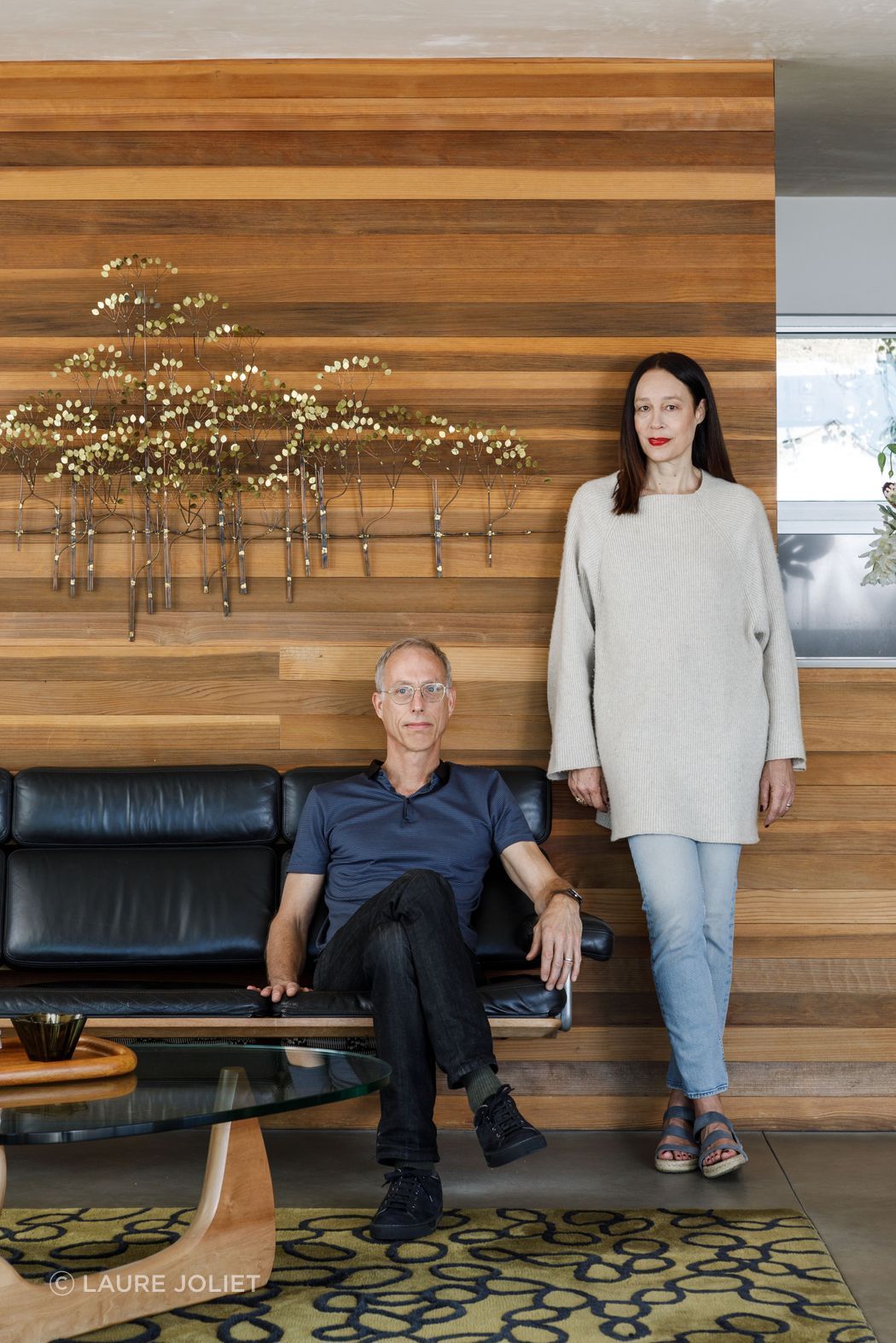
When Jeffrey Allsbrook and Silvia Kuhle first arrived in Los Angeles during the mid 1990s, the city’s architectural culture looked very different from the one that exists today.
At the time, architecture in LA was still largely dominated by monumental gestures and formal experimentation. Buildings were designed as objects to be admired from the street, often prioritizing sculptural identity over atmosphere or intimacy. But Allsbrook and Kuhle arrived with a different sensibility, one shaped as much by interiors, art and fashion as architecture itself.
The origins of Standard Architecture can be traced back to an unlikely intersection between architecture and the Los Angeles fashion world. Shortly after graduating, Allsbrook found himself designing a restaurant in Hollywood for Michèle Lamy, wife of fashion designer Rick Owens. Through that relationship came introductions to some of the most influential figures shaping LA retail culture at the time.
One of those early clients was Tommy Perse, founder of the influential luxury boutique Maxfield, who later introduced Allsbrook to his son, fashion designer James Perse.
Those early projects for James Perse became foundational for the studio, establishing many of the ideas that would later define Standard Architecture’s work across both residential and retail design.
At the same time, Kuhle was building her own architectural career at Morphosis Architects before joining the practice in 2006, bringing with her a new level of organizational rigor and ambition as the studio began taking on increasingly complex projects.
Together, they began developing a design language that blurred the boundaries between architecture, interiors and hospitality.
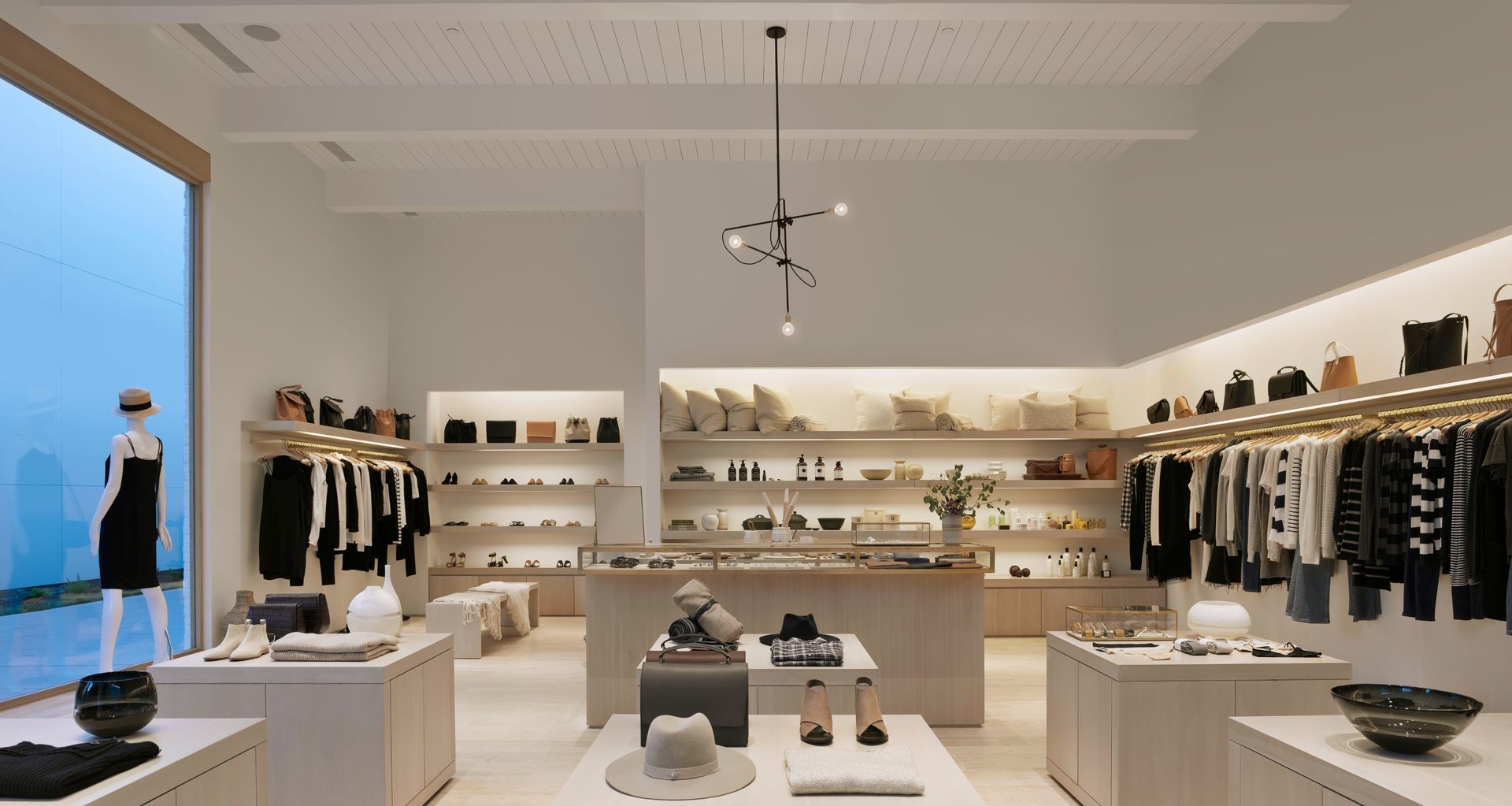
“I loved the minimalism that I learned working in London,” says Allsbrook, who spent part of his early career designing stores and homes there, including projects connected to Yohji Yamamoto and collector Charles Saatchi. “What we started doing in LA was making stores feel more like homes. Comfortable places where people feel hosted.”
Rather than designing retail environments as hard commercial spaces, the studio approached them with the intimacy and ease of residential design. Seating areas replaced purely transactional layouts. Cash registers disappeared from sight. Skylights, courtyards and natural materials softened the experience of shopping.
“It’s more like an experience of being hosted. There are places to sit down, and you might be offered water - it feels casual,” says Allsbrook.

That philosophy arrived at a pivotal moment within Los Angeles culture itself. During the late 1990s and early 2000s, the city’s fashion, art and design scenes were beginning to merge in entirely new ways, and Standard Architecture became deeply embedded within that shift.
Kuhle believes the practice emerged during the beginnings of a broader movement away from architecture as pure form-making and toward something more layered and tactile.
“The generation before us was very much architecture with a capital A,” she says. “Heroic forms and sculptural buildings. What we started doing was thinking about design as applied art.”
For the studio, that meant understanding architecture not simply as an exterior object, but as part of a continuum that included furniture, lighting, materiality and atmosphere. The experience of a room became just as important as the building’s silhouette.
“We see architecture on the spectrum of furnishings,” says Allsbrook. “Not just as an object you drive by.”
Those ideas quickly resonated within the fashion world. Following their early work with James Perse, the studio was commissioned by Jenni Kayne, whose stores and home became defining projects for the practice.
The residence they designed for Kayne proved especially significant. After appearing in Architectural Digest, the house unexpectedly became something of a cultural phenomenon.
“We were in New York and suddenly saw the house plastered across these giant banners,” recalls Kuhle. “It was surreal.”
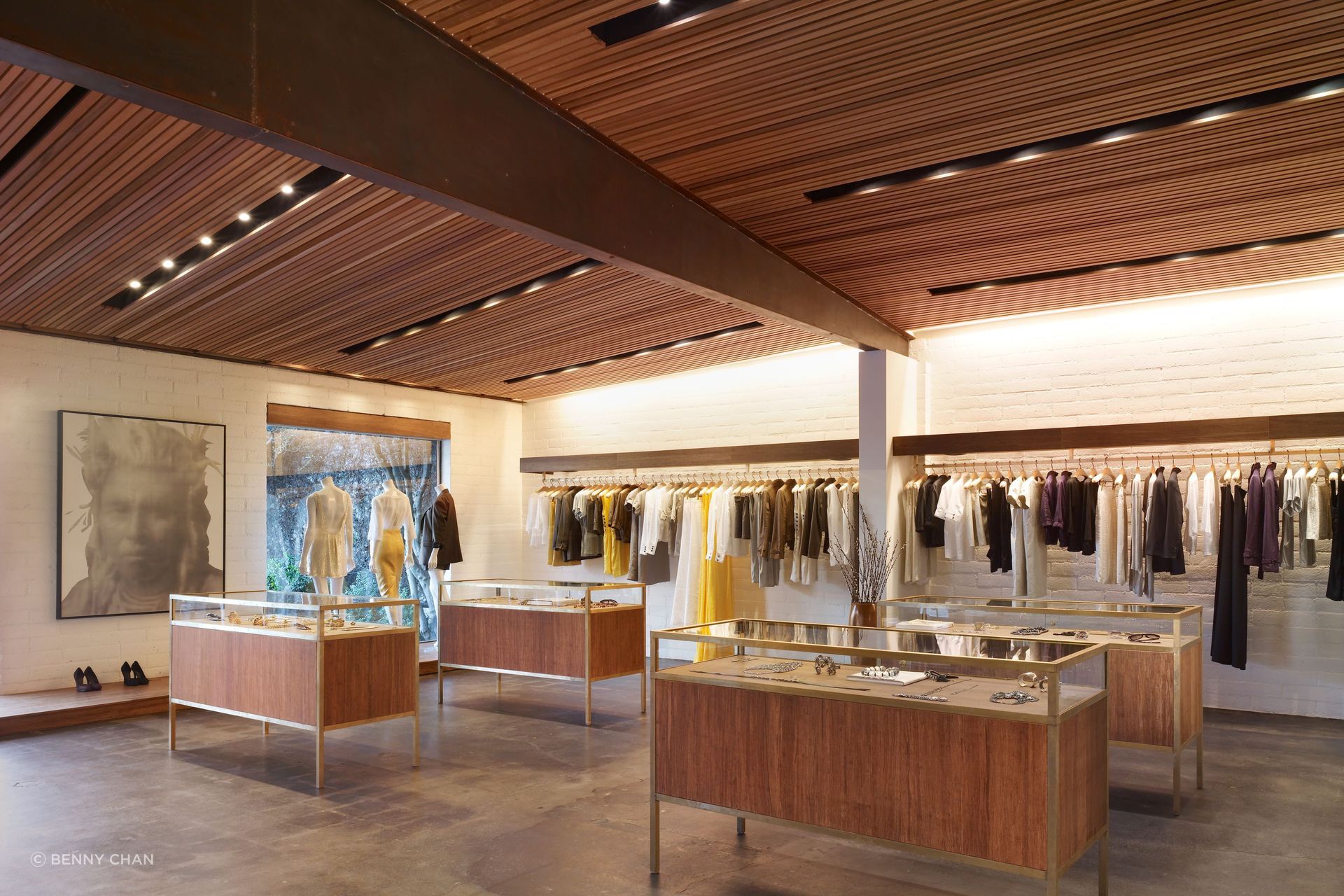
That exposure propelled the studio into a new phase. Projects for Helmut Lang followed, alongside the now widely recognized Forest Knoll Residence, where many of the ideas first explored in retail began flowing fully into residential architecture.
In many ways, the studio’s retail and residential work became inseparable. Domestic ideas entered stores, while hospitality and retail thinking informed homes.
Allsbrook says one of the most important lessons imported from his London experience was the idea of making spaces feel emotionally comfortable rather than formally intimidating.
“We were interested in how a space could make you feel hosted,” he explains.
That thinking manifests through countless small architectural decisions. Retail displays are designed more like personal closets than commercial fixtures. Furniture pieces resemble domestic objects rather than store fittings. Large walls of glass frame courtyards and gardens. Seating becomes integral to circulation. The result is architecture that feels inhabited rather than staged.
Even now, as the practice continues to grow, those early ideas remain central to the studio’s identity.
What began with interiors and fashion has expanded into large-scale residential projects, galleries, hospitality work and urban planning. The studio recently completed new retail projects collaborating with brands like Paul Smith and KHAITE, while simultaneously working on projects at vastly different scales.
“We’re now designing everything from furniture to houses to entire communities,” says Kuhle.
Among the practice’s current projects is a major golf development in Las Vegas, comprising a 50,000 square foot clubhouse alongside 15 residences arranged across the landscape. For a studio that took nearly a decade to complete its first ground-up home, the scale of that evolution feels remarkable.
Yet despite the growth, the philosophy remains largely unchanged. Whether designing a boutique, a house or an entire community, Standard Architecture continues to approach architecture through its lived experience.
As the boundaries between architecture, interiors, hospitality and retail continue to blur, practices like Standard Architecture reflect a growing shift toward more immersive and emotionally driven design experiences. Platforms such as ArchiPro continue to play an important role in connecting architects, designers and clients, bringing together the projects, products and expertise that help ambitious creative visions come to life.