Kwila (Merbau)
by ITI NZ
Auckland

- 720.6K profile views
- 236 saves
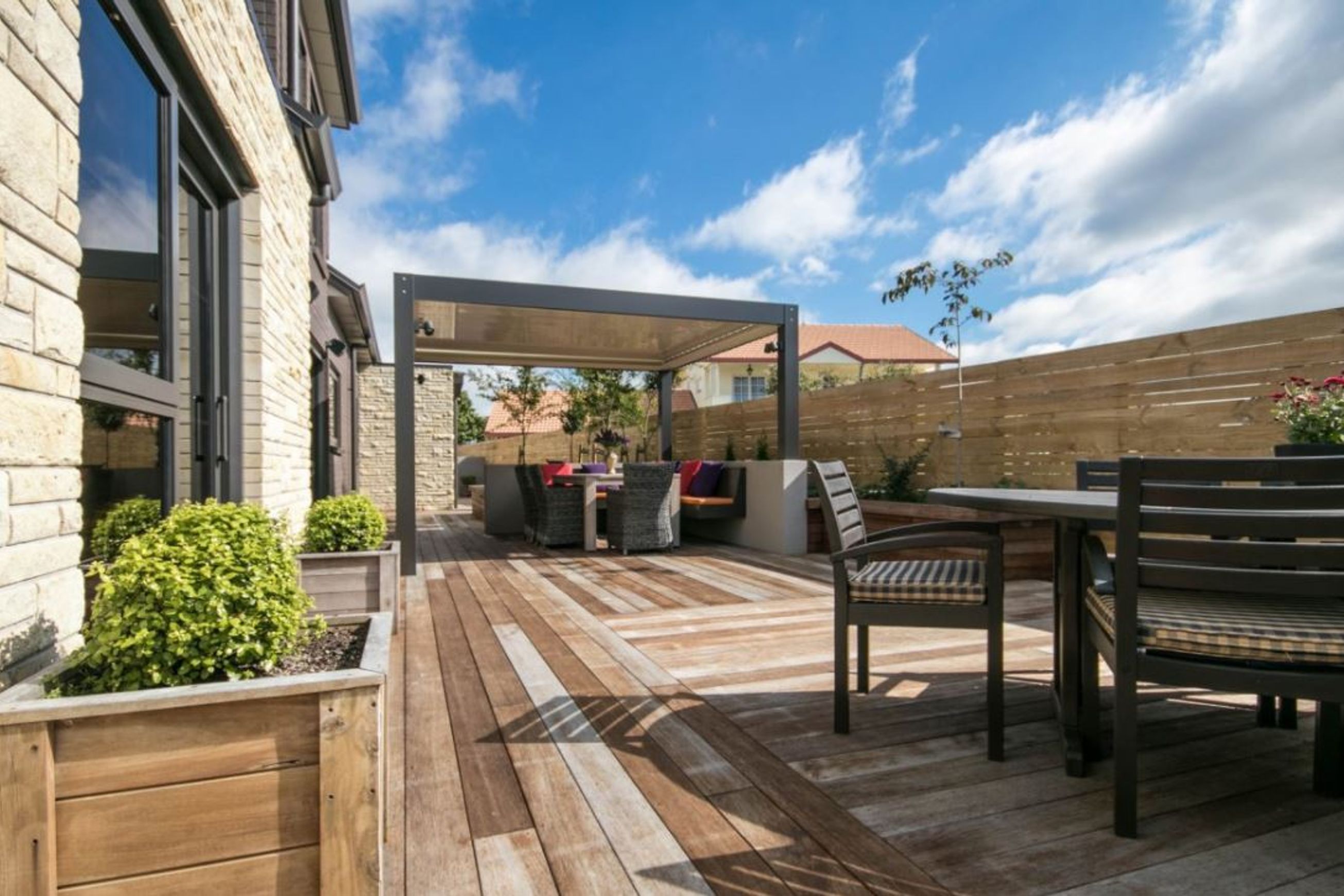
Kwila is a high-quality, strong and durable hardwood. The heartwood is yellowish-brown, brown or dark red, red-brown, turning to a dark red-brown with age. The wood is hard and heavy, the texture moderately coarse but even, and the grain may be straight or interlocked but is often wavy. Sulphur-yellow and dark-colored deposits are characteristic of the species and can be commonly seen in vessel cavities. Kwila timber is prone to "bleeding" when wet, producing dark-red-brown staining.
Product Details
- Product
- Kwila (Merbau)
- Category
- Timber Flooring
- Sold by
- ITI NZ
- Range
- Hardwood Decking
- Brand
- ITI NZ
ITI NZ is specified by
 Ponting Fitzgerald ArchitectsArchitects
 Ben Hudson ArchitectsArchitects
 Theca ArchitectureArchitects
 DLA ArchitectsArchitects
 Studio2 ArchitectsArchitects
 Stephenson&TurnerArchitects
 Herriot Melhuish O'Neill Architects LtdArchitects
 Christian Anderson ArchitectsArchitects
 Mercer and Mercer Architects LtdArchitects
 Bonnifait + Associates ArchitectsArchitects
 Don Jamieson ArchitectureArchitects
 Abri ArchitectsArchitects
 Chaplin Crooks ArchitectsArchitects
 Hark ArchitectsArchitects
 Tennent Brown ArchitectsArchitects
 prauArchitects
 Aspect ArchitectureArchitects
 Edwards White ArchitectsArchitects
 HB ArchitectureArchitects
 Novak + MiddletonArchitects
 Hoxha Bailey ArchitectsArchitects
 AW ArchitectsArchitects
 TS ArchitectsArchitects
 MacKay CurtisArchitects
 SGAArchitects
 Salmond ArchitectureArchitects
 Architect PeopleArchitects
 Four Walls ArchitectureArchitects
 John Mills ArchitectsArchitects
 MJWarchitectureArchitects
 Julian Guthrie ArchitectureArchitects
 PAUA Architects LtdArchitects
 Chaney & Norman ArchitectsArchitects
 Natural Habitats LandscapesLandscape Architects
 Cogan Custom HomesBuilders
 PeterFellManufacturers and Suppliers
 JMC BuildBuilders
 LAD ArchitectureArchitectural Designers
 Home ProjectsBuilders
 Trinity ConstructionConstruction
 TransbuildBuilding & Renovation
 Insight ArchitectureArchitectural Designers
 Create + ConstructConstruction
 RuamokoStructural Engineers
 KKIDInterior Designers
 Brogan BuildersBuilders
 McBrimarDesign & Build
 Mark Scowen PhotographyPhotographers
 Drinkrow BuildingBuilders
 Proactive BuildBuilders
 eHausDesign & Build
 Red ArchitectureArchitectural Designers
 Build ThisBuilders
 Crampton & Smith BuildersBuilders
 Precision ConstructionBuilders
 Lite HouseBuilders
 DrydenManufacturers and Suppliers
 VidaSpace®Manufacturers and Suppliers
 Owens BuildingBuilders
 David Reid HomesDesign & Build

Kwila is a high-quality, strong and durable hardwood.
The heartwood is yellowish-brown, brown or dark red, red-brown, turning to a dark red-brown with age. The wood is hard and heavy, the texture moderately coarse but even, and the grain may be straight or interlocked but is often wavy. Sulphur-yellow and dark-colored deposits are characteristic of the species and can be commonly seen in vessel cavities. Kwila timber is prone to "bleeding" when wet, producing dark-red-brown staining.
- Specs
Botanical Name
Intsia sppOther Names
Merbau (Malaysia), Vesi (Fiji)Origin
Southwest Asia- Features
Working Properties
Kwila saws well, however, with the fairly high incidence of gum occurring, saws tend to become clogged. It planes well but there is a tendency for the grain to tear out in quarter-sawn material. The wood tends to split when nailing but holds screws well and can be stained and polished reasonably well. However, patches of oil can exude and may affect the finish. The yellow deposits are soluble in water and the dye produced does stain. If early attention is given to any staining it can generally be removed by scrubbing with milk or lactic acid.Main uses
Landscaping & heavy construction, flooring, decking, exterior joinery & construction, interior joinery & furniture and mouldings. Well suited for premium heavy construction due to its low shrinkage and durability.- Scope of use
Interior
- Structure
- Furniture
- Flooring
Exterior
- Structure
- Deck/Floor
- Doors/Windows
- Wall/Cladding
- Basic Info
Durability In Ground Perishable/Non Durable
Durability Above Ground DurableDensity Air Dry 830 kg/m3
Shrinkage Radial 2 %
Shrinkage Tangental 3 %Stability Kiln Dry Very Stable
Stability Green Stable- Mechanical Properties
Janka Hardness 8.6 kN
Modulus of Rupture 147 MPa
Modulus of Elasticity 18 GPa
Max Crush Strength 81 MPa- Overview
Certifications Available
FSCSeasoning
The timber dries slowly without appreciable degradation but if submitted to rapid drying conditions, there is a definite tendency for end splitting and surface checking to occur. It has a low shrinkage factor.Working Qualities
Saws well, however, with the fairly high incidence of gum, saws tend to become clogged. It planes well but there is a tendency for the grain to tear out in quarter-sawn material. A reduction in the cutting angle to 20º is beneficial. The wood tends to split when nailing but holds screws well and can be stained and polished reasonably well, however, patches of oil that exude may affect the finish. The yellow deposits are soluble in water and the dye produced does stain. If, however, early attention is given to any staining it can generally be removed by scrubbing with milk or lactic acid.Uses
Very good heavy construction timber. Ideally suited for decking and outdoor furniture. It is also used in internal joinery and flooring, striking tool handles and carving.
Downloads
Downloads (3)3 Direct downloads • 7 Available on request
Frequently asked questions about
Kwila (Merbau)
The Kwila (Merbau) is supplied by ITI NZ. It is also on their website, and you can browse every product ITI NZ lists on ArchiPro.
ITI NZ does not publish a price for the Kwila (Merbau) on ArchiPro. for pricing, or visit their website.
It is listed under Timber Flooring on ArchiPro, where you can compare it with timber flooring from other suppliers.
Yes. It is part of the Hardwood Decking range from ITI NZ, where you can see every product in the range together.
from this page, see their contact details on ArchiPro, or visit their website. The ITI NZ profile on ArchiPro has the rest of their products.
More products from
ITI NZ
The rest of this range, and everything else ITI NZ makes.


More in
Timber Flooring
Everything else in Timber Flooring, from every supplier on ArchiPro.


