

InSinkErator
Manufacturers and Suppliers

About us
InSinkErator is not only the world’s number one selling brand of food waste disposers…we invented it.
It all started back in 1927 when architect John W. Hammes of Racine, Wisconsin was tinkering with some sheets of metal and invented the first food waste disposer. From that point on InSinkErator has grown into the brand we know today. InSinkErator is still based in Racine, where its food waste disposers are invented, designed and assembled.
In addition to food waste disposers, InSinkErator also produces a range of instant hot water taps and multi-purpose mixer taps that provide filtered boiling and chilled water at the touch of a lever.
InSinkErator products have been sold in New Zealand for over 40 years, and with a nationwide sales and service network you get peace of mind when choosing InSinkErator.
What’s safe to go down a disposer?
InSinkErator food waste disposers are designed to handle just about any type of everyday food waste. But the topic of what not to put in a garbage disposal is alive and well, usually based on myths and old family stories rather than facts.
First things first, never place any type of fats, oils, grease in a food waste disposer, or any household drain for that matter.
Those materials collect inside the plumbing pipes and are usually the cause of many plumbing issues.
Here’s a handy link from WaterCare on the best way to get rid of fats, oils and grease: Click Here.
Household Foodwaste
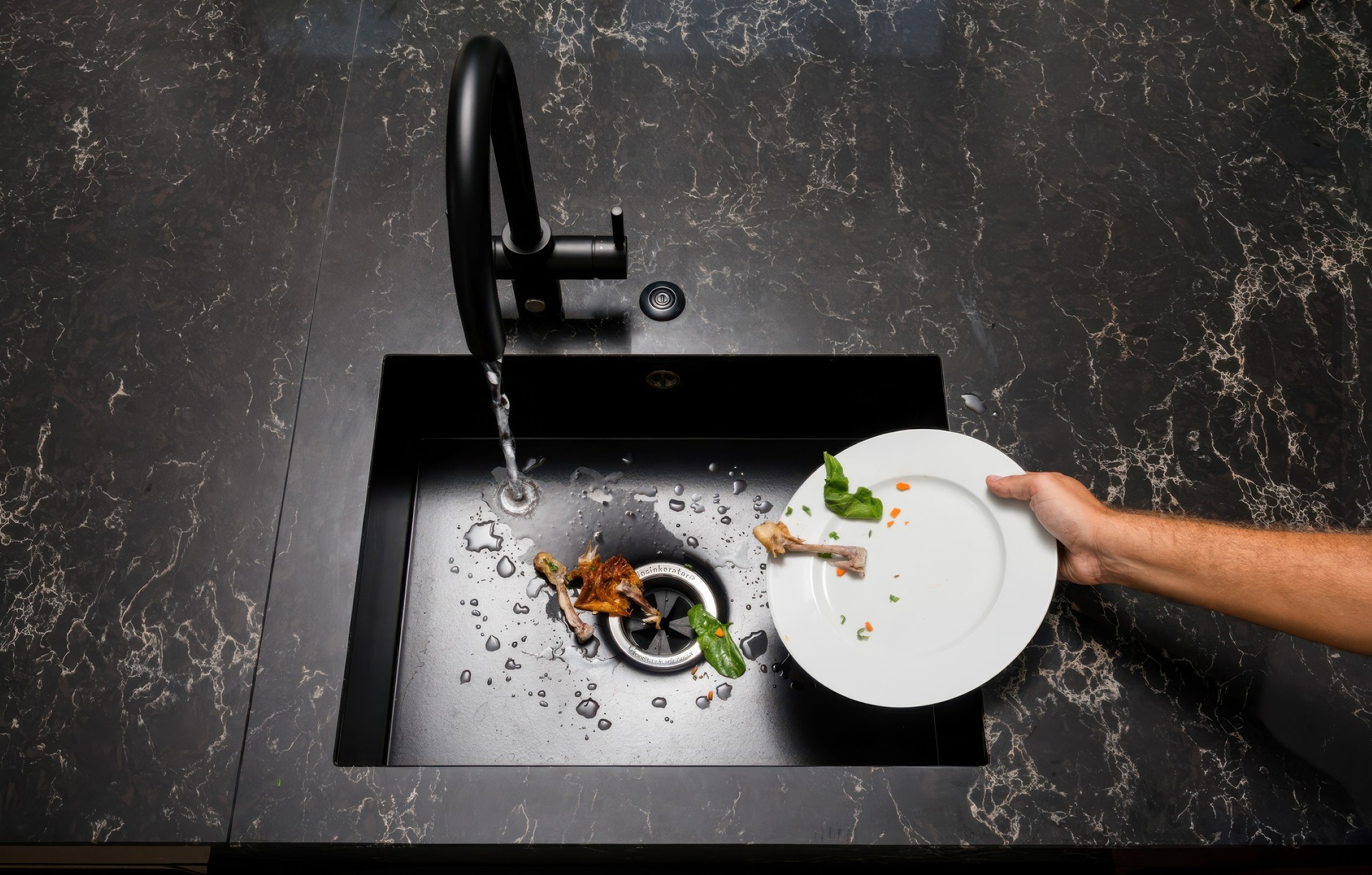
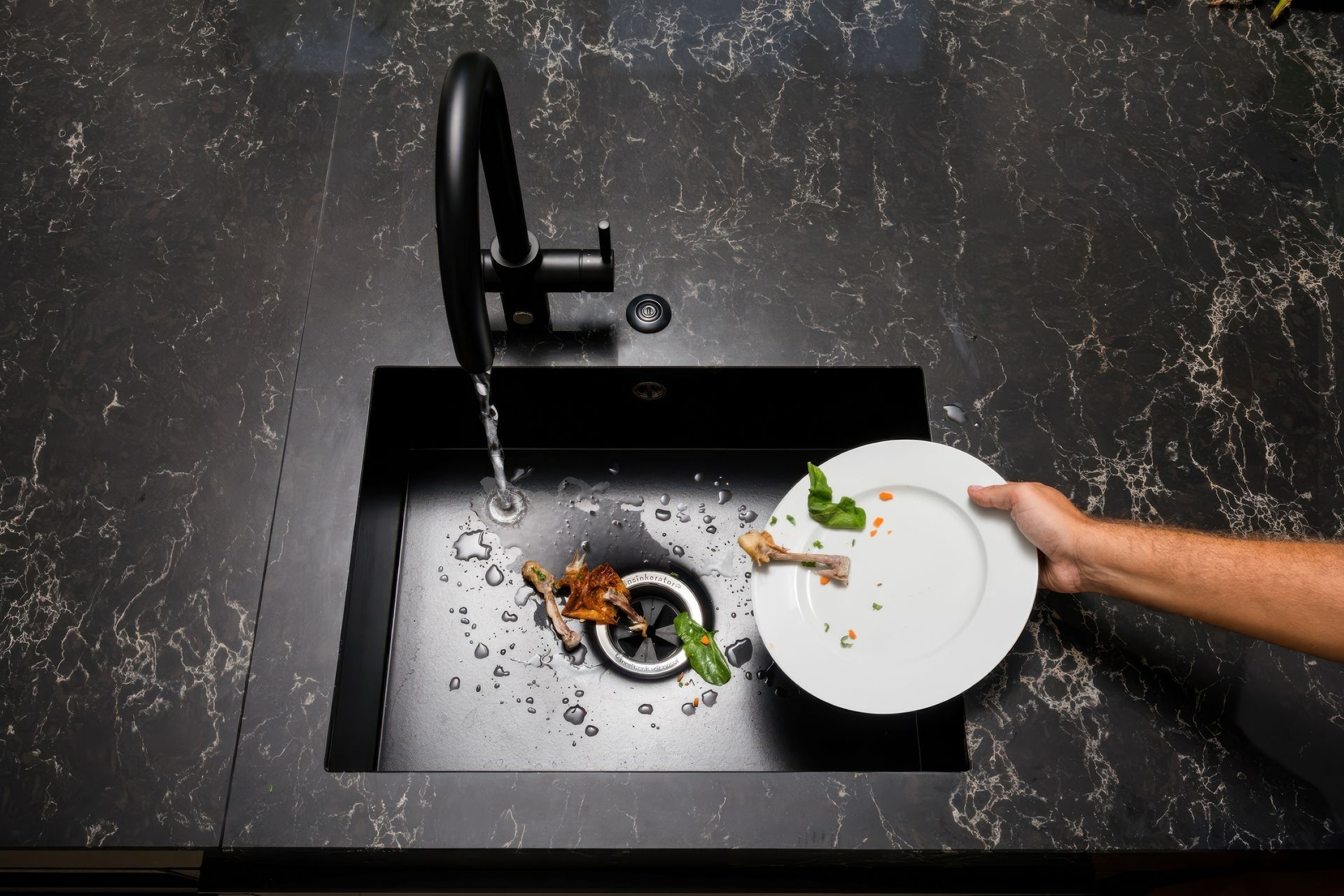
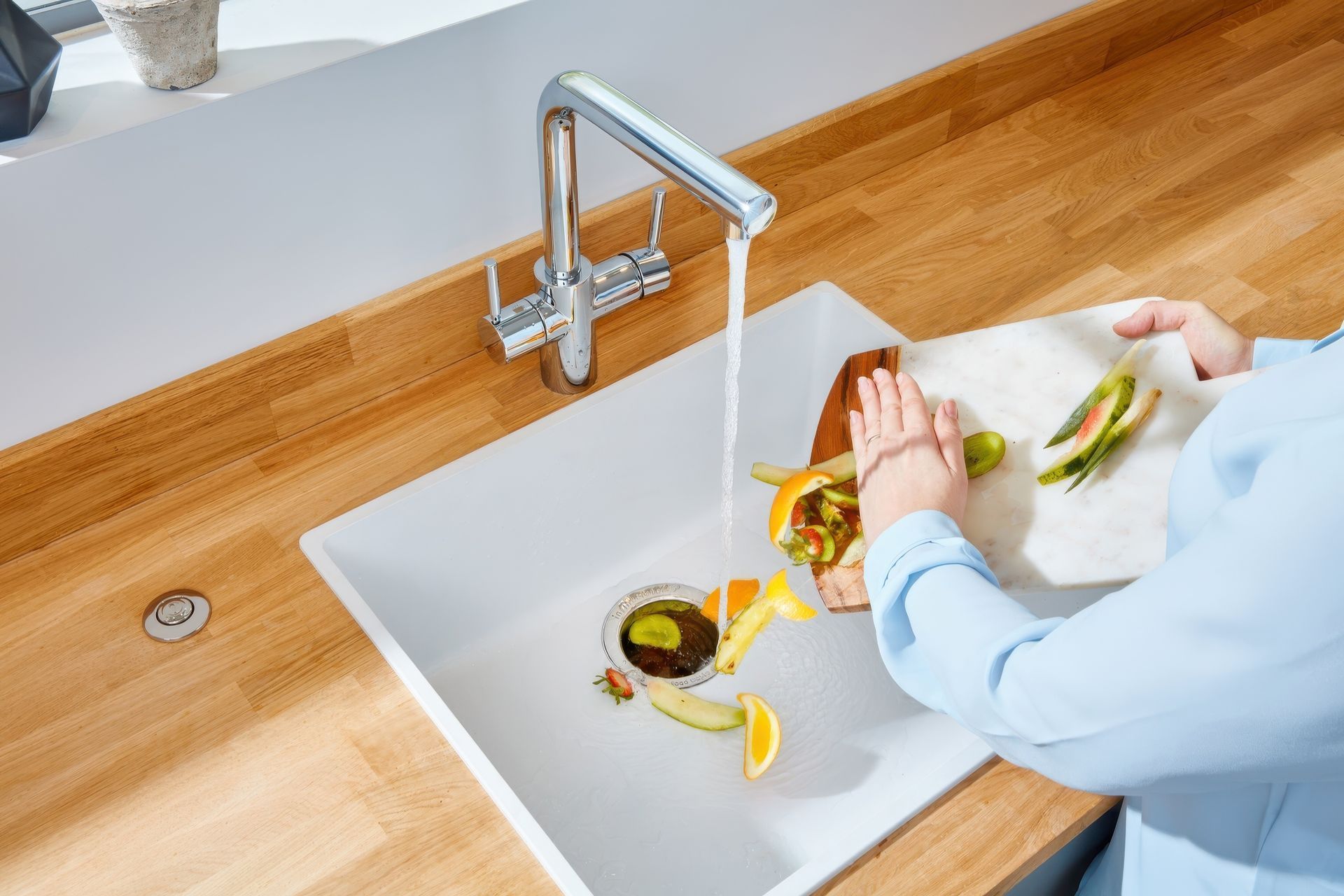
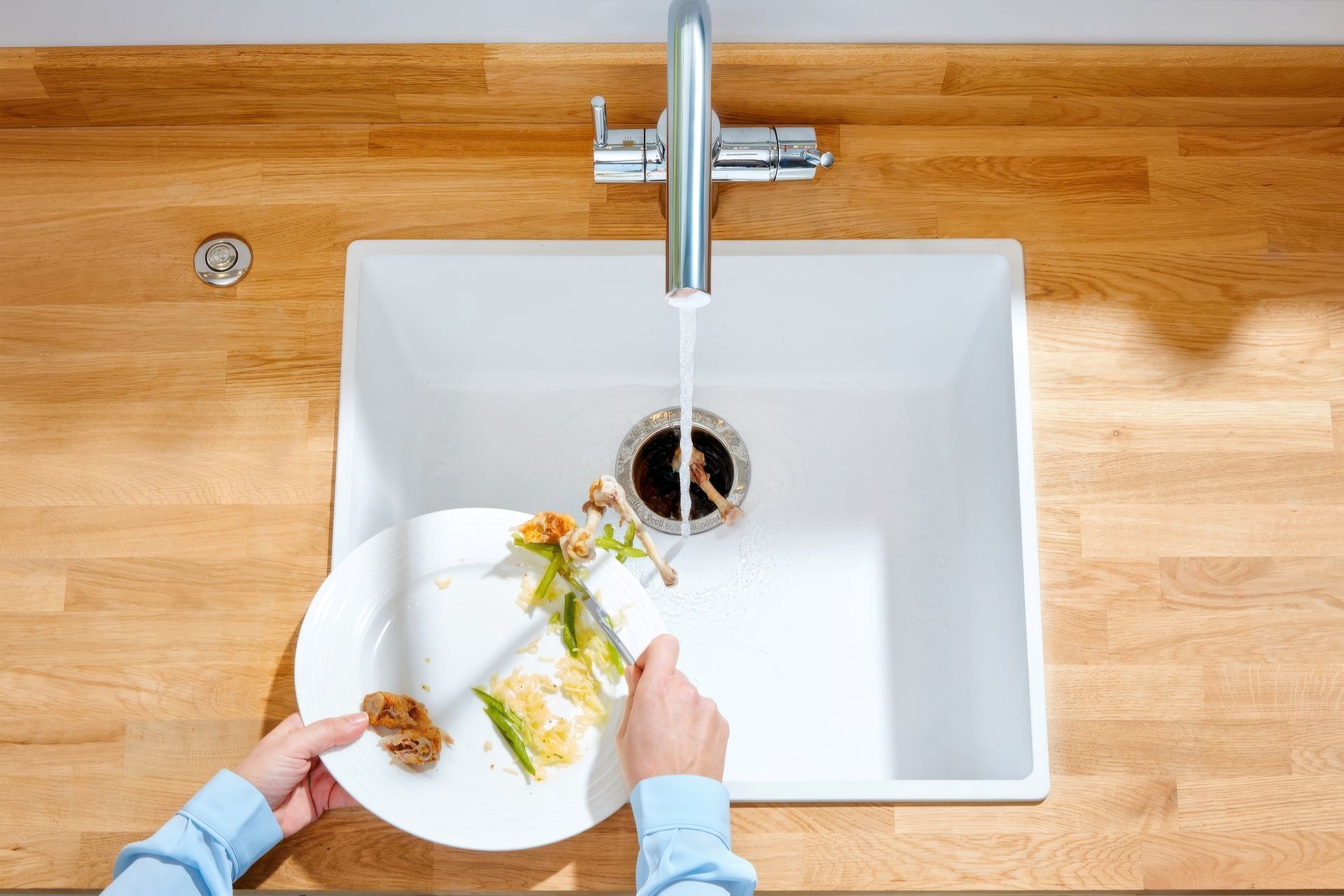
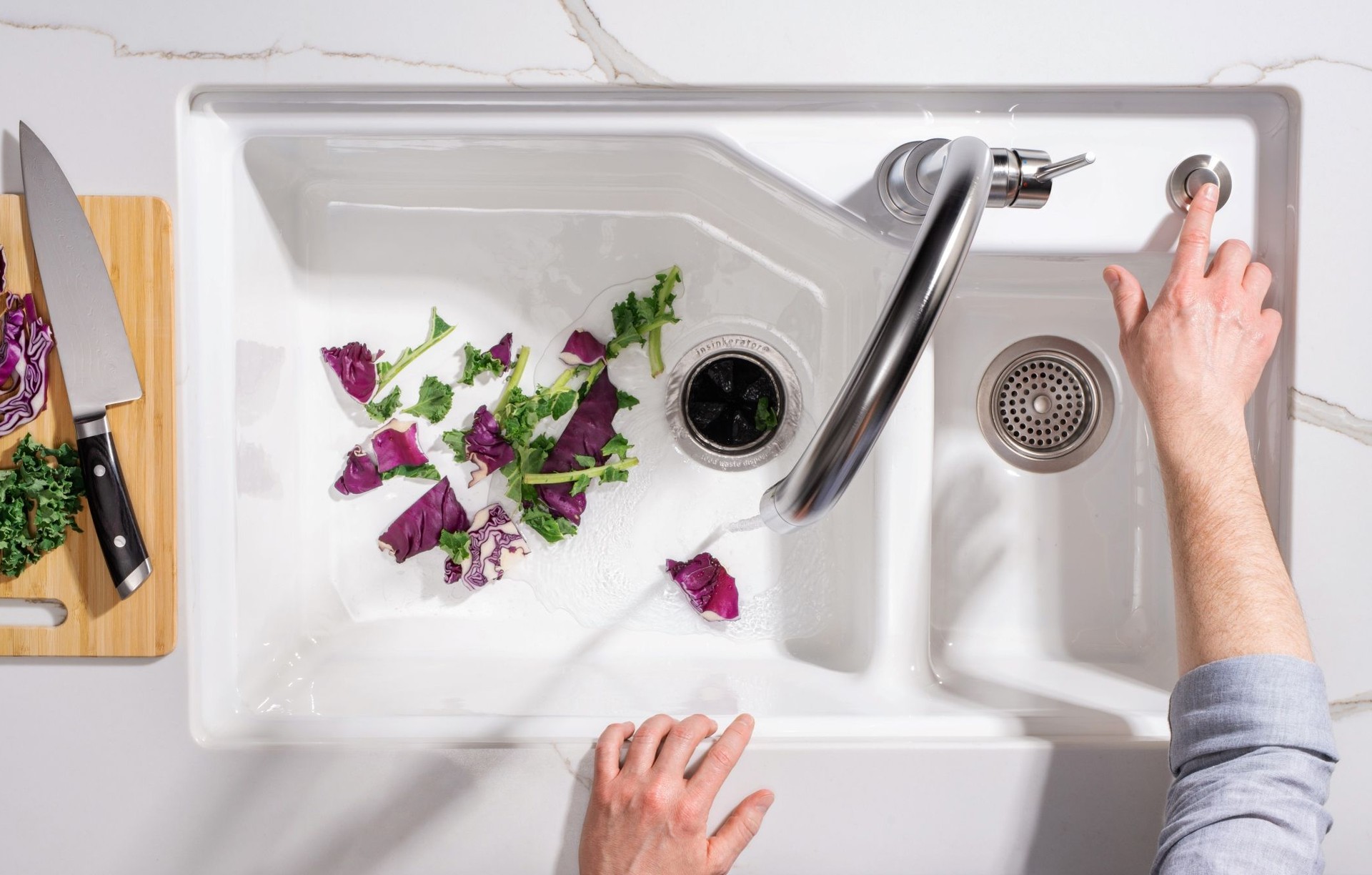
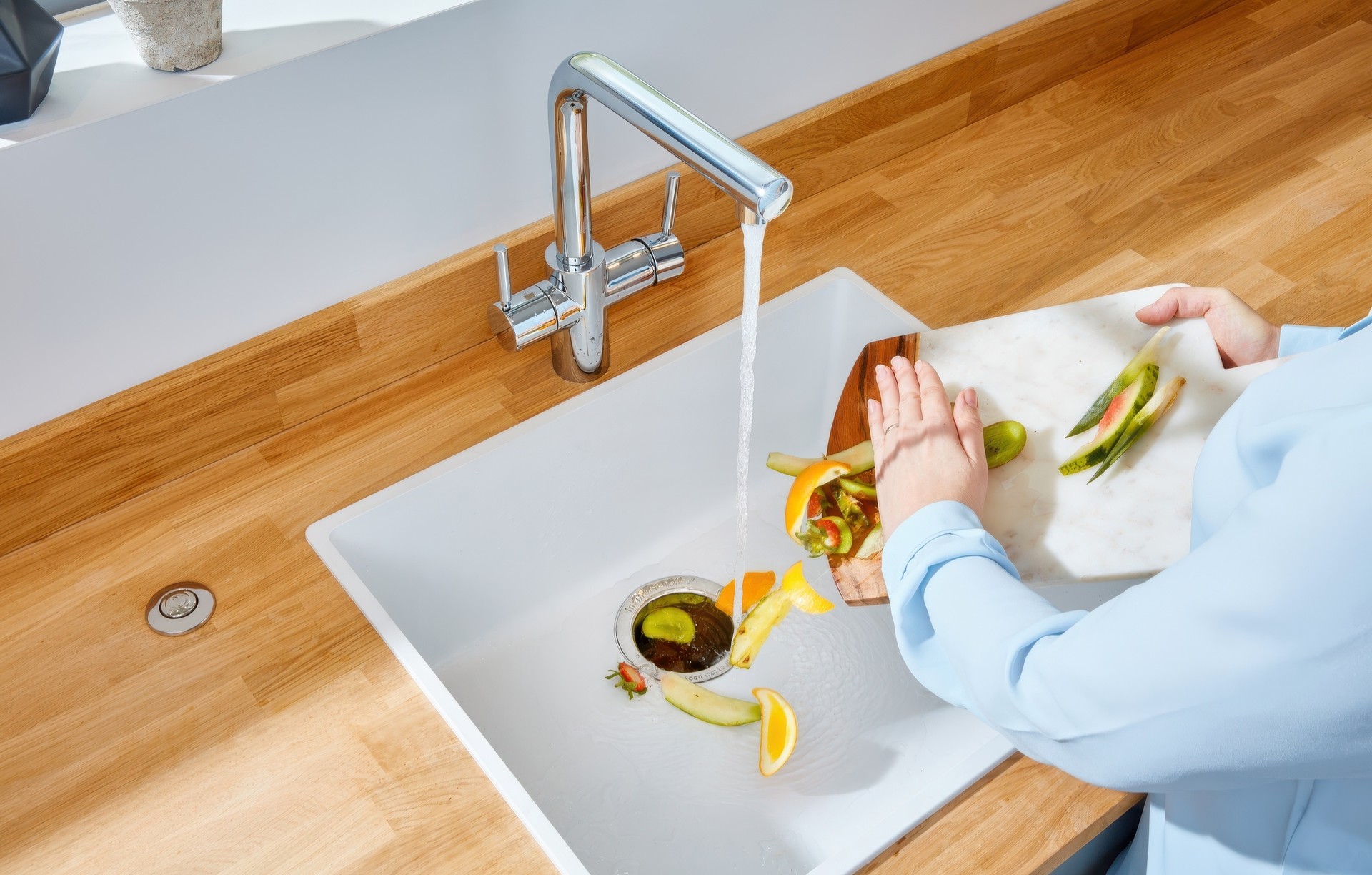
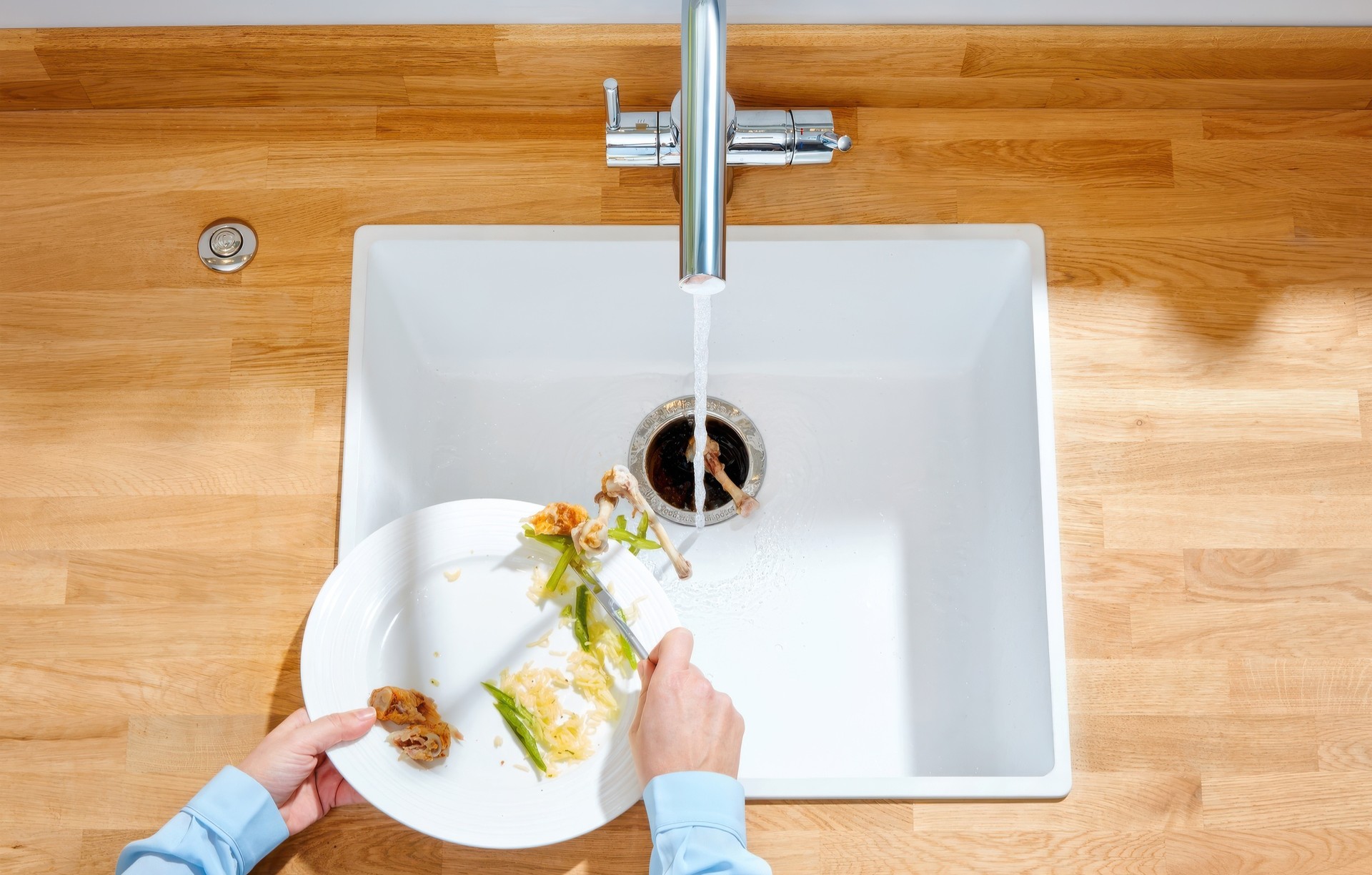
InSinkErator disposals can quickly and efficiently grind most everyday food wastes, including leftover meats, vegetables and fruits, as well as food preparation waste.
The key to keeping a disposal working properly is to follow the “How to operate your Food Waste Disposer” and avoid filling the disposal with too much food waste at one time.
Coffee Grounds and Eggshells
There is often the question of using a disposal for eggshells and coffee grounds. In fact, neither of these materials is harmful to a disposal, and will pass through it without a problem. However, problems can arise with household plumbing – especially if it is older, or has not been cleared in some time.
Both coffee grounds and eggshells are sedimentary in nature, if too much is placed in at one time, or if the plumbing is restricted, it can create a clog or a ‘slow drain’ situation. To help avoid any problems, feed these materials into the disposer gradually, and utilize a strong flow of cold water to help flush it through the pipes.
Safe On Septic
You can have the hygiene and convenience of a food waste disposer in your kitchen when you are on a septic tank.
6 Million Homes on a Septic Tank Have a Food Waste Disposer
You’ll find an InSinkErator food waste disposer in over 6 million American households with a septic tank.
InSinkErator Food waste disposers have always been safe for properly sized septic systems.
For example, if your system is sized for a dishwasher or clothes washer, it can handle a disposer. A disposer uses only about as much water per day as one flush of a toilet.
No fuss, no mess, no problem . . .
We did a grind test to show how little load there is on a septic system
This video shows different food waste being ground, and how small the particles become once the food waste has gone through a food waste disposer.
The Facts - I Can’t Use a Garbage Disposal Because I Have a Septic System.
Not true! Garbage disposals grind food scraps into a slurry that can easily be handled by your septic system.
Food scraps decompose faster than other waste sent into the tank, and because food scraps are 70% to 80% water, they add very little to the solids that settle at the bottom. Studies show that septic systems attached to a garbage disposal don’t require more frequent pumping than those that aren’t.
The Facts - Water usage with a septic system
Food waste disposers use water to transport ground-up organic matter through internal plumbing and sewer pipes, and so food waste disposers are often perceived as water wasters.
Myths are perpetuated that they will hydraulically overload wastewater infrastructure, both centralized and decentralized, septic systems. To address these concerns, research was undertaken on quantifying the amount of water used by food waste disposers.
A review of ten studies found that the water use of food waste disposers is less than five (5) litres per household each day, which is around one flush of the toilet of water per day.
The Facts - Organic Loading on a Septic System
The use of food waste disposers does add organic material to wastewater and a septic system.
Research from ten states in the US specified that where food waste disposers are commonly used, the Total Suspended Solids increased by 20 grams per day.
Another finding from the research found high carbon-to-nutrient ratios indicate there may be a positive impact for enhanced biological phosphorus removal at wastewater treatment plants, which implies there may also be potential benefits of this high carbon ratio on nutrients discharged from septic tanks.
This means the food waste’s high carbon content could help remove nutrients like nitrogen and phosphorus when they discharge into drainage fields.
The Benefits of Having a Food Waste Disposer
- Keeps your kitchen hygienic & clean
- Quietest models on the market
- Can reduce nitrogen into drainage fields
- Reduce waste going into the bin
- Reduce smells coming from the bin
- Uses only $2 of power a year
- Uses around one flush of the toilet of water per day
- Part of the solution to reducing food waste going to landfills
- Grinds egg shells, banana skins, avocado peel & pips, chicken & fish bones
- Nationwide installation & service
- Up to 10-year warranty
Septic1000 - Food Waste Disposer
The SEPTIC1000 has two-stage grind technology and is perfect for a properly sized septic tank. SoundsealTM Plus, making it a very quiet food waste disposer.
Don’t worry about what you can and can’t grind… The SEPTIC1000 grinds nearly everything!
Product Features
- Dura-DriveTM Motor
- Soundseal PlusTM Noise Reduction
- Multigrind PlusTM 2 Stage Grinding
- QuicklockTM Sink Mount
- Large Stainless Steel 1005ml Grind Chamber
- Compact Design
- Invented, Designed & Assembled in the USA
- 5 Year Warranty
- Built-In Air Switch
Septic2000 - Food Waste Disposer
The SEPTIC2000 with its three-stage grind technology is perfect for use with a properly sized septic tank. SoundSealTM Plus makes it our quietest model.
Don’t worry about what you can and can’t grind…
The SEPTIC2000 grinds it all!
Product Features
- Dura-DriveTM Motor
- Built-In Air Switch
- Multigrind PlusTM 3 Stage Grinding
- Soundseal PlusTM Noise Reduction
- Largest Stainless Steel 1180ml Grind Chamber
- QuicklockTM Sink Mount
- Invented, Designed & Assembled in the USA
- 10 Year Warranty
Food Waste Tips
As we spend more time at home, it’s critical to have a plan for responsible food waste management and kitchen hygiene. Below are seven tips to help you get started.
Tip #1 - Shop Responsibly
Make a shopping list of items you need before you get to the supermarket. Resist the temptation to hoard groceries, especially fresh foods that can spoil. Choose shelf-stable foods like canned goods, pasta, rice and legumes. Utilize your freezer to store bread, meats, vegetables and fruit. These are great strategies to avoid food waste while ensuring you have nutritious food available when trips to the grocery store are limited.
Here’s a link to a variety of healthy foods that don’t spoil easily >
Tip #2 - Plan meals and save leftovers
Taking an inventory of your pantry is a great first step to plan your meals and avoid food waste. Check expiration dates to use foods
before they go bad. Plan meals that build on one another and provide leftovers for lunches and second meals.
Check out these easy ways to reduce food waste through proactive meal planning >
Tip #3 - Use your food waste disposer more frequently
With even moderate use, food waste disposers are proven to reduce the amount of food waste in your trash by up to 30%. Using disposal keeps stinky food scraps out of your rubbish and reduces harmful
bacteria – all while diverting food waste from the landfill.
Tip #4 - You can grind more than you would think
Today’s food waste disposers enable you to grind more types of food waste than you may realize. Chicken wing bones, fruit pits and fibrous fruit and vegetable skins are all safe with proper usage.
Click here for a handy guide on what not to put into your food waste disposer and other handy FAQs
Discover Brush’N’Push – The tool to help with clean-up!
Tip #5 - Clean kitchen surfaces and household items
The CDC recommends the routine cleaning of frequently used items and surfaces to fight against infection. So it’s especially important now to clean your kitchen thoroughly with disinfectants that kill germs and viruses. But don’t forget that near-boiling water and soap are also part of an effective cleaning routine. You can use an InSinkErator, MultiTap or HotTap to efficiently clean surfaces, dishes, baby toys, toothbrushes and other frequently used household items – all without using harsh chemicals!
Tip #6 - Debug your baffle
Kitchen sinks are known to harbour their share of household bacteria, so anything that reduces germs can be a welcomed addition. Beyond reducing disposal noise and preventing food and water from splashing upward, InSinkErator Quiet Collar Baffles are anti-microbial, inhibiting the growth of 99.9% of common bacteria.
The Myths
Each year in New Zealand, 700,000 tonnes of organic waste is trucked to landfills
according to information from the NZ Ministry for the Environment1. Organic waste is the single largest component of municipal solid waste sent to landfills. Once there, it quickly decomposes and produces methane, an environmentally harmful greenhouse gas around 27 times more potent than carbon dioxide. Landfills are considered the third largest sources
of methane in the world.
“While composting and kerbside food bin schemes have received a lot of attention as of late, it’s not for everyone,” said Michael Keleman, manager of environmental engineering for InSinkErator, the world’s leading manufacturer of food waste disposers. “Food waste disposers offer one alternative to composting, but only 36% of New Zealand homes have an installed disposer.”
What’s keeping over half of NZ homes from installing a disposer?
There are several common myths that might be holding people back.
Myth: Food waste disposers will clog sewerage pipes.
Fact:
Modern disposers grind food waste into very fine particles. Also, food waste is essentially the same density as water, so properly used disposers allow plumbing to efficiently transport particles to the wastewater treatment plant. FOG (Fats Oils & Grease) can create soap-like deposits in sewers, a phenomenon seen around the world, however these deposits occur in locations where disposers are virtually non-existent, demonstrating the problem is not directly associated to their use. InSinkErator recommends that people never pour grease or fat into your disposer, kitchen sink, drain or the toilet.
Myth: Food waste disposers overload the sewerage system.
Fact:
The amount of additional loading to wastewater infrastructure is well studied and understood with textbook references indicating a 20-30% increase in the strength of the wastewater. Modern design standards account for the modest increase in loading expected from disposers, yet even in places where there is a very high penetration of disposers, the actual impacts are negligible.
Myth: Food waste disposers use a lot of water and electricity.
Fact:
Although operating a food waste disposer does involve running water and using electricity, the environmental impact is minimal. Disposers use only about one percent or less of a household’s total water consumption (about as much water per day as one flush of a toilet) and use only about $2 of power a year.
A review of ten studies found that water consumption for food waste disposers is less than five (5) liters per household each day. The five liters per household conclusion was the typical finding from five of the studies. The other five studies concluded that water use decreased where disposers are used, or no statistically significant difference in water consumption could be associated with their use. Further, one recent study by DeOreo et al determined that residential disposers save 13 gallons of water per household per day and suggested they should not be considered “water wasting appliances.”
Myth: Food waste disposers are noisy.
Fact:
InSinkErator SoundSeal® technology means Evolution Plus models can operate with very little noise versus a standard disposer. We also recommend installing a good quality sink with your food waste disposer, which can eliminate vibration and noise.
Myth: Food waste disposers have blades and are dangerous to use.
Fact:
InSinkErator food waste disposers do NOT have blades. Instead they have small lugs fixed to a grinding plate that act like hammers breaking down the food whilst spinning 360 degrees.
Once small enough, food waste particles pass through small holes in a stationary grind ring, out of the disposer and into the sewerage system. If users are not confident operating a food waste disposer they can always use a dish brush or wooden spoon to help push food down the mouth of the disposer.
Myth: Using a food waste disposer means that energy and water from food can’t be harnessed or used.
Fact:
Modern wastewater treatment plants throughout New Zealand capture methane gas generated during processing and convert it to renewable energy in the form of heat and electricity. In addition, the water content of food (on average 70-80%) is also recaptured and processed at the wastewater treatment plant.
Myth: You need a double sink bowl to have a food waste disposer installed.
Fact:
A food waste disposer can be installed with both a single bowl sink or a double bowl sink, this is a personal preference. Check sink and food waste disposer dimensions for details. InSinkErator recommend installing a good quality sink with your food waste disposer, which can eliminate vibration and noise.
Myth: Using a food waste disposer means you can’t compost food.
Fact:
InSinkErator food waste disposers are complementary to home composting systems. Food types such as meat, dairy and citrus which are not compostable can be placed down the food waste disposer and ultimately kept out of landfills.
Myth: Food waste disposers can’t be used on a septic tank.
Fact:
InSinkErator food waste disposers are compatible with properly sized and maintained septic systems. For example, if your system is sized for a dishwasher or clothes washer, it can handle a disposer. After all, a disposer uses only about as much water per day as one flush of a toilet.
Myth: Food waste disposers are an old technology from the 80’s.
Fact:
Food waste disposers have been around since the 1930’s, however the grind and sound technology is always evolving. The top of the range Evolution Plus models (750 SR and 1000 SR) can grind 99% of food types and are ultra-quiet versus a standard disposer when in use.
Myth: Certain food waste items can’t go down a disposer.
Fact:
The truth is that most food can go down a disposer. High performance models can even handle virtually any waste, including bones and fibrous materials like celery. As long as consumers follow these best practices, they should have nothing to fear:
- Run a moderate flow of cold water
- Turn on the disposer
- Gradually feed food waste while disposer and water are both running
- Continue to run cold water for a few seconds after grinding is complete
- Never pour grease or fat into your disposer or drain
Environmental Benefits
Each year in New Zealand, tonnes of food waste is trucked to landfills. Once there, it quickly decomposes and produces methane, an environmentally harmful greenhouse gas that is around 27 times more potent than CO2.
While composting provides one approach to tackling the food waste management challenge, it isn’t always practical for today’s busy lifestyle.
Enter InSinkErator®. Our food waste disposers provide a convenient and environmentally friendly alternative to transporting leftovers to landfills. Plus, capable wastewater treatment plants can even recycle food scraps into energy and fertilizer.
Operating a Disposer
First things first, never place any type of fats, oils, grease in a food waste disposer, or any household drain for that matter.
Those materials collect inside the plumbing pipes and are usually the cause of many plumbing issues.
Here’s a handy link from WaterCare on the best way to get rid of fats, oils and grease: Click Here.
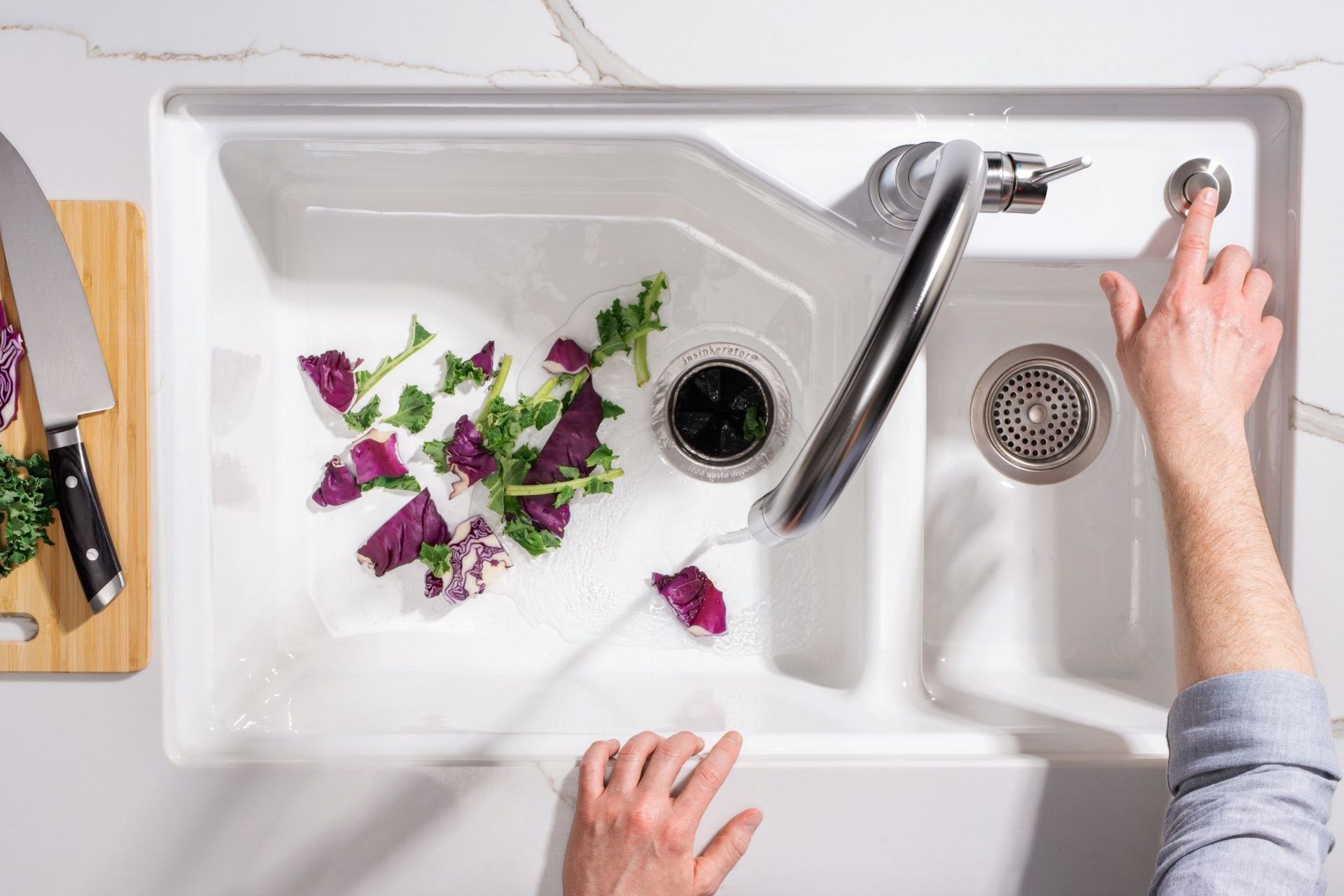
Step One: Run a steady stream of cool water into the sink before turning on the food waste disposer.
Step Two: Before placing any food waste into the disposal, turn your food waste disposer on.
Step Three: Gradually feed food waste into the disposer, avoid putting large amounts of food waste all at once as
this may slow the grinding process.
Step Four: Once the food waste has been broken down, turn the disposer off.
Step Five: Let water run for a few seconds to flush the drain pipe then turn tap off.
FAQs
Click through here to see the answers to the most frequently asked questions about the InSinkErator Food Waste Disposer, MultiTap and HotTap
Get in touch
Business details
- Category:
- Manufacturers and Suppliers
- Average response time:
- Within 18 hours
- Business focus:
- Residential & Commercial
- Verified ArchiPro member since:
- 2021