

Project team
- Anderson Architecture
- Lachlan Kain
Product Suppliers
Designed as a bush retreat, this off-grid home reflects both its owners’ creative lives and their desire to live more lightly on the land.
A secluded off-grid retreat in deepest NSW bush
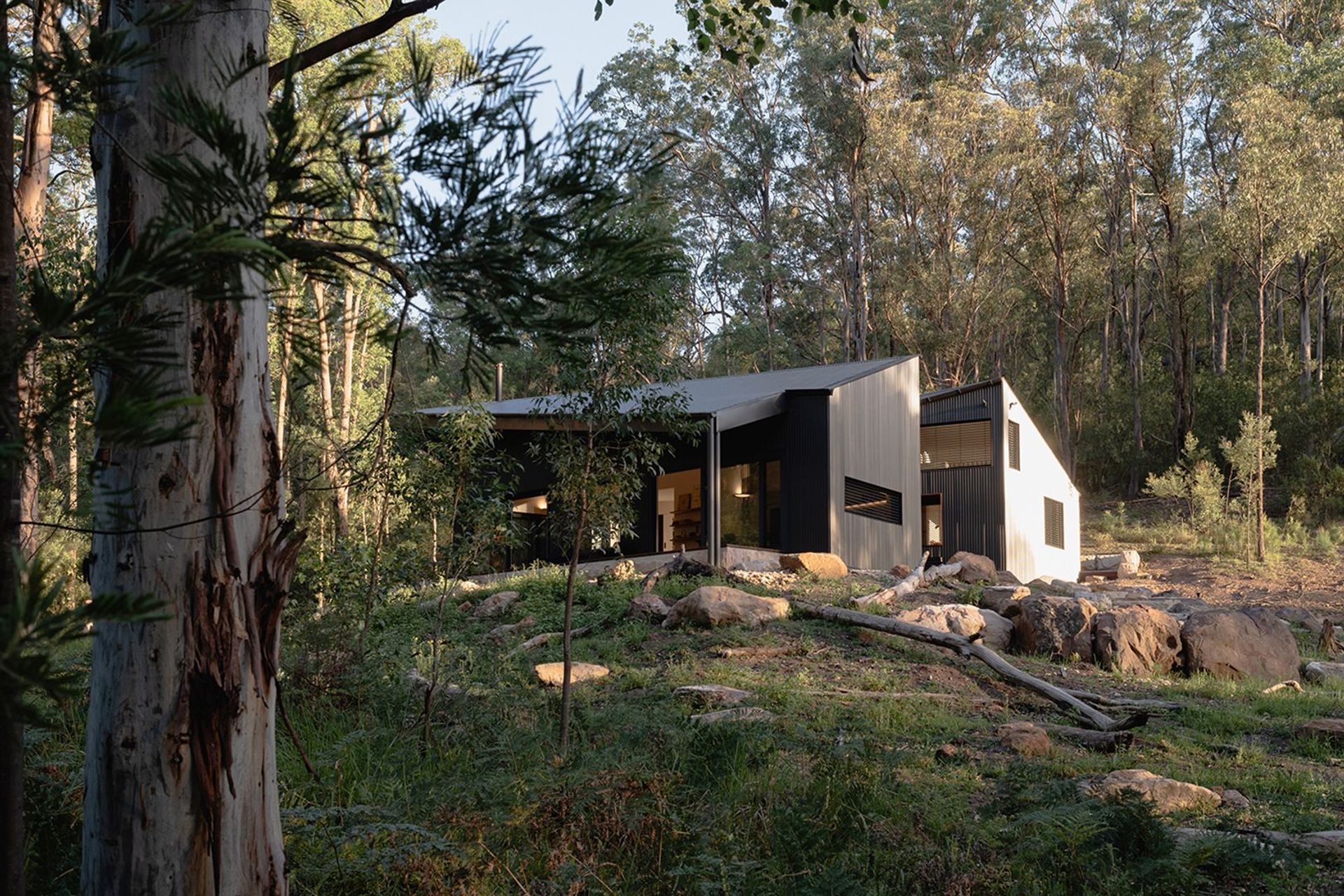
Putty Valley is found deep in the largest wilderness area in New South Wales, surrounded by the dense and wonderful Wollemi and Yengo National Parks. Tucked deep within this wonderland of native flora and fauna is a house that was designed to sit as lightly on the land as possible.
For architect Simon Anderson, that initial journey to the site was as formative as the design itself.
“It’s a valley within a valley,” he says, “and when arrive, you cross a bridge, go through someone else’s property, and then climb further into this secluded little nook.”
The bridge needed significant repair, which influenced many early design decisions, prompting lightweight solutions for material delivery. It wasn’t the only challenge.
“The site had all sorts of issues in terms of satellite connectivity and access to sunlight for power generation,” Anderson reflects. “We were initially concerned about how an off-grid house would even work.”
But his experience building his own off-grid house in the Blue Mountains informed his approach, which prioritises sustainability and energy efficiency, to deliver a comfortable and beautiful home that the clients, a psychologist and an artist, could use as a retreat from busy Sydney life.
They had been drawn to Anderson’s previous work, and their artistic sensibilities subtly influenced the home’s geometric forms at the outset, says Anderson.
“The house is very triangulated, reminiscent in some ways of the client’s artworks,” he shares. “It wasn’t purposely designed that way, but it’s interesting how the form directly reflects the artist’s style.”
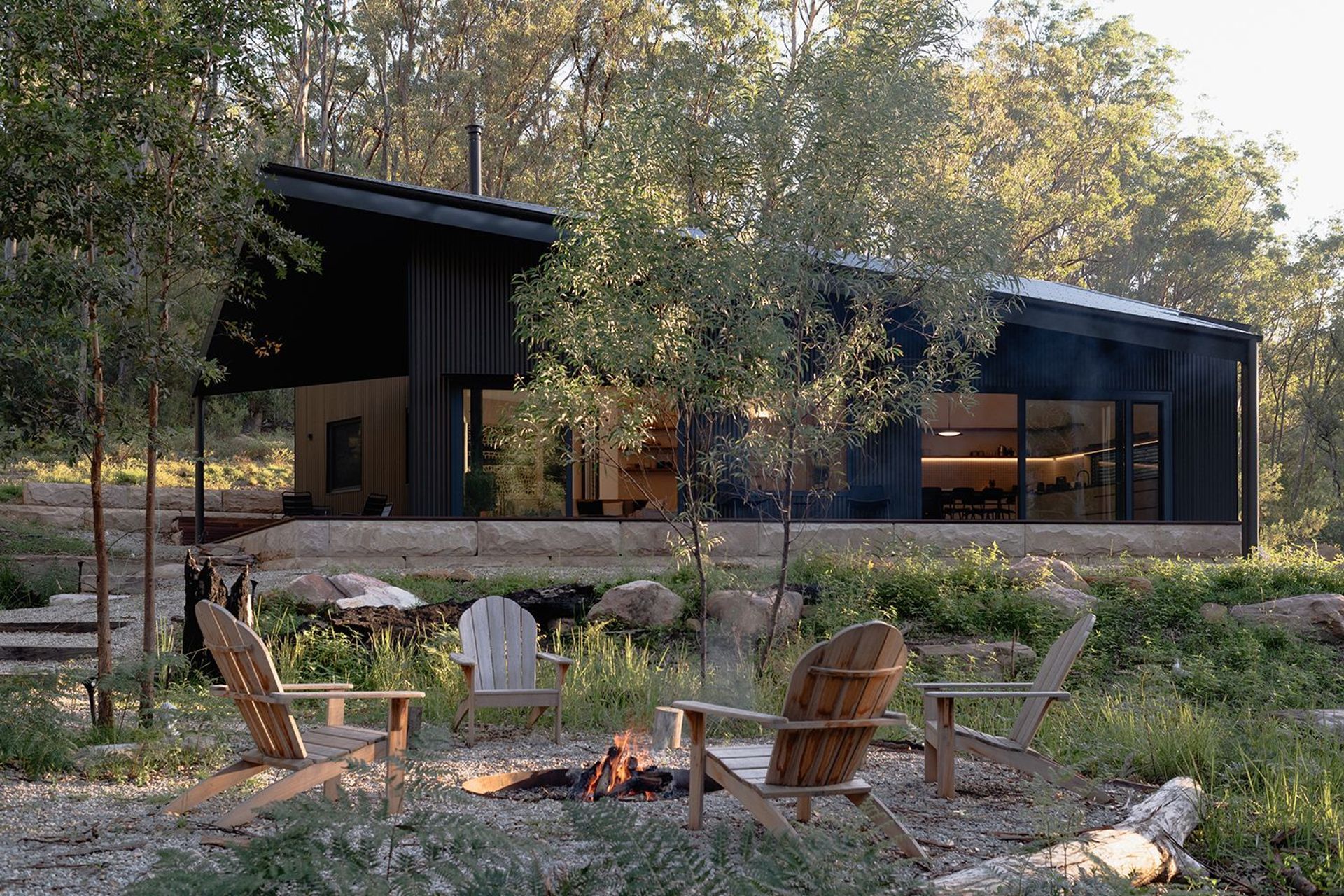
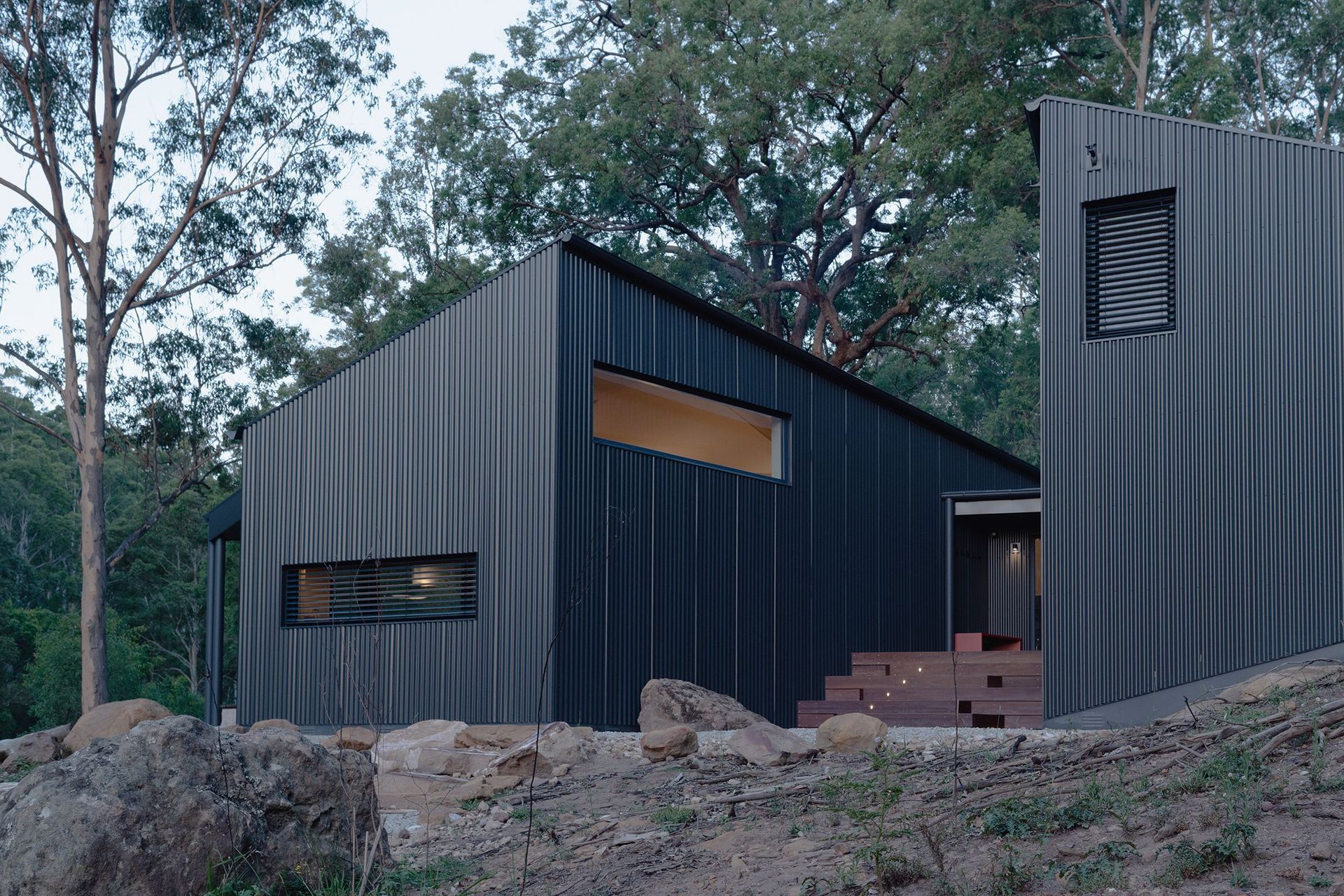
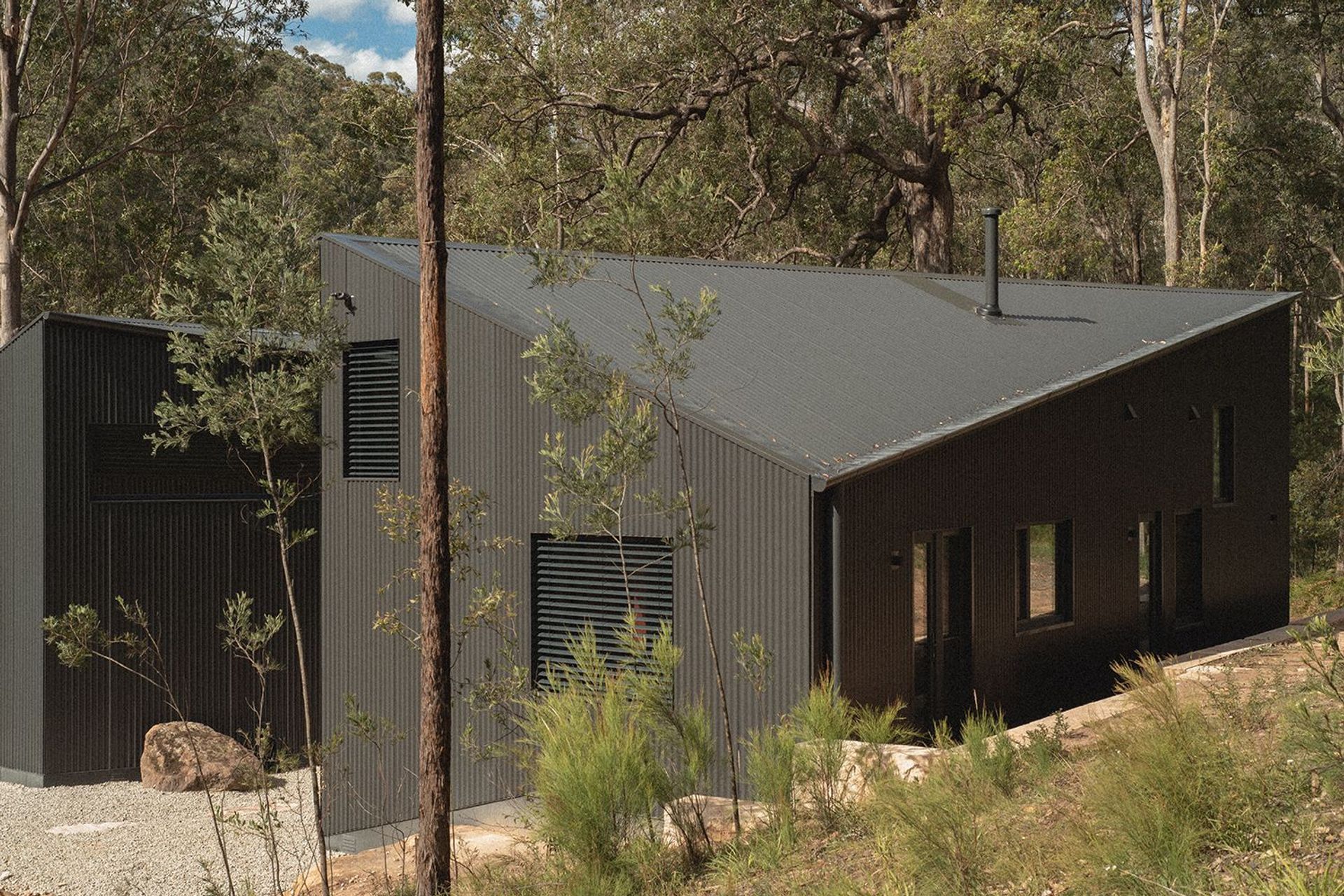
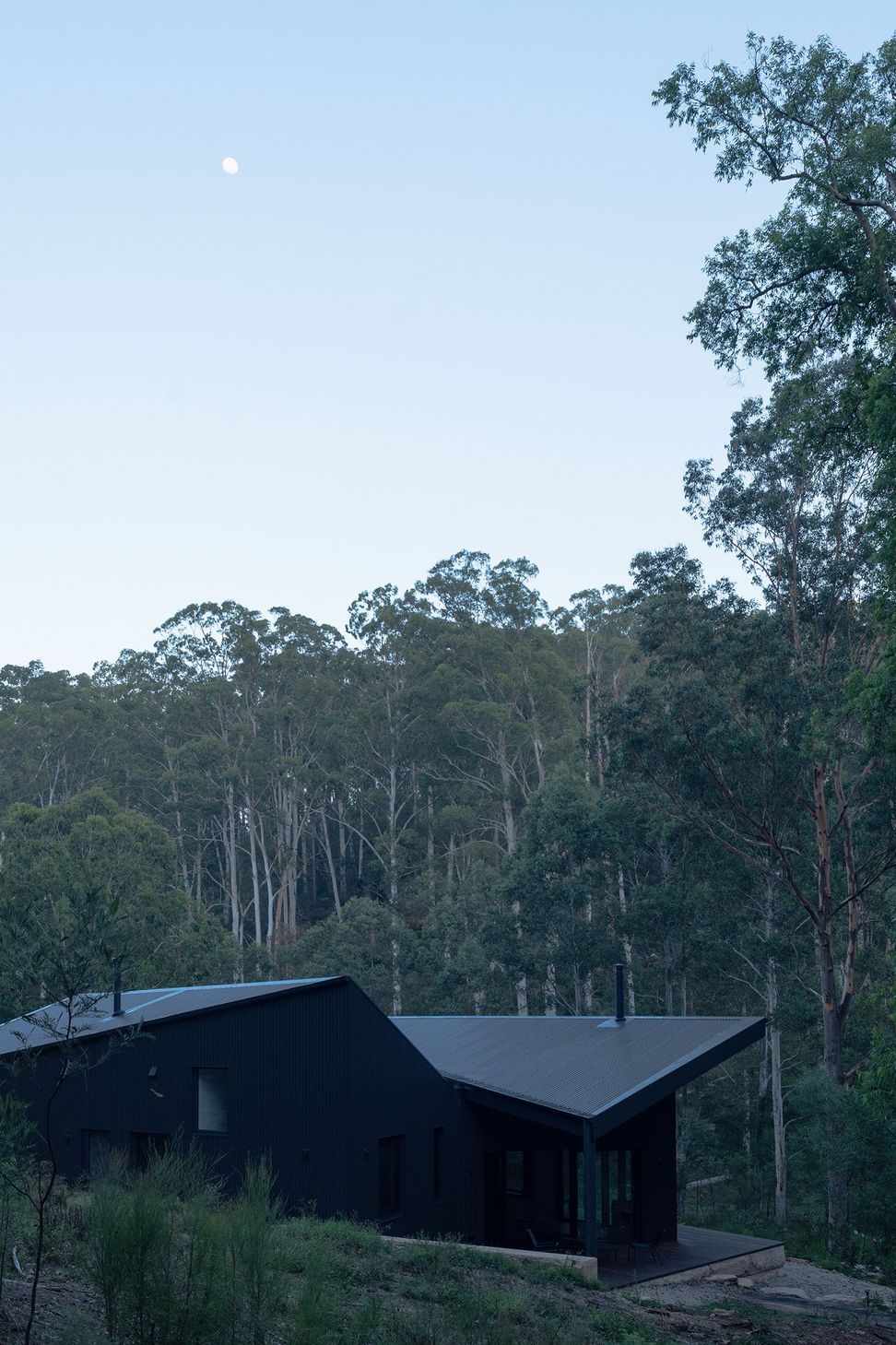
The form of the home comprises of two single-pitch pavilions connected by an entry space. The bedroom wing aligns with the slope of the land, while the northern living pavilion is optimally oriented for passive solar gain.
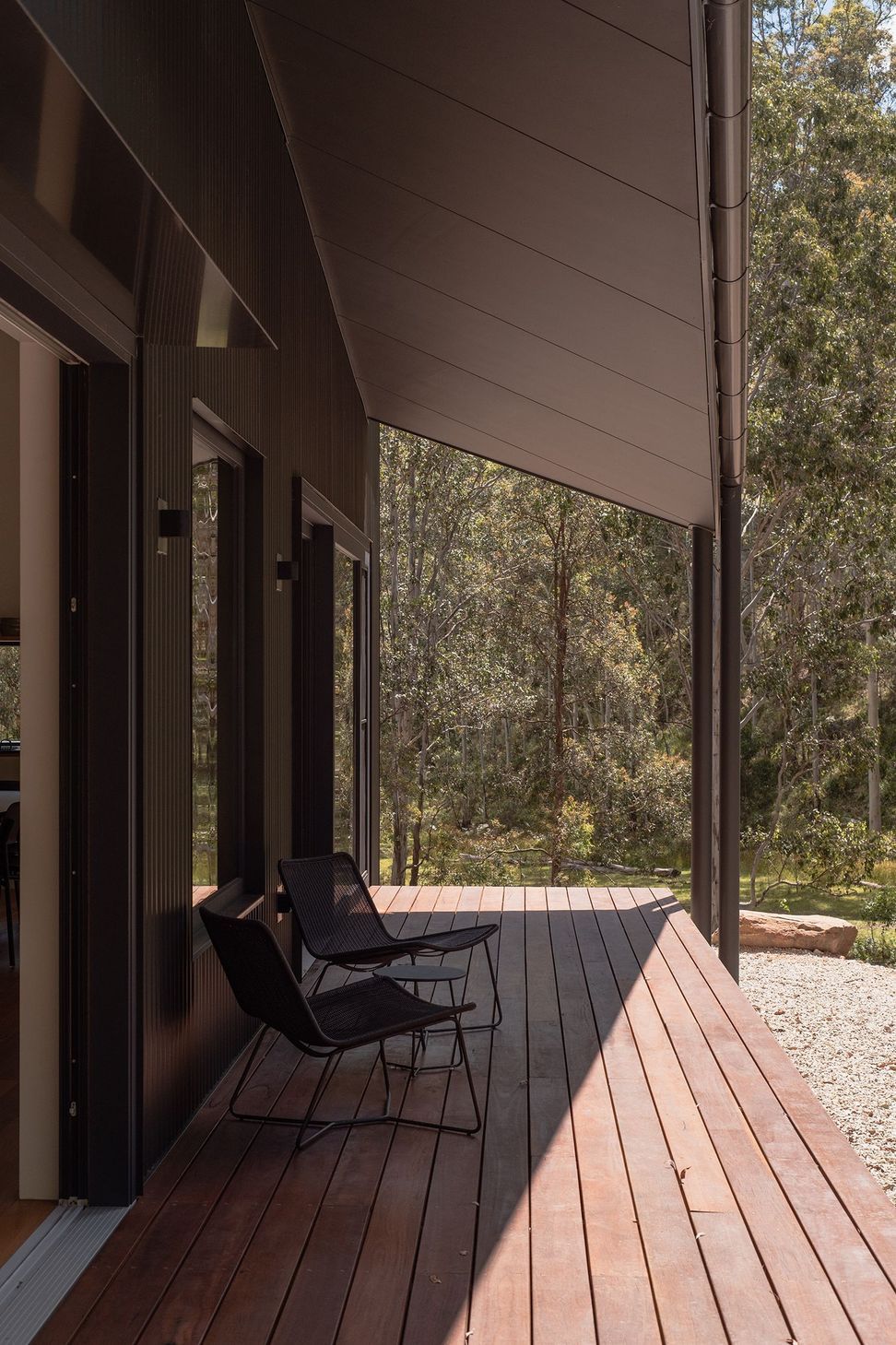
“The northern living space has a wraparound veranda that responds to a remarkable series of caves and overhangs nearby on the property,” Anderson says. “It lets winter sun filter in while providing summer shade, creating a natural rhythm of light and warmth.”
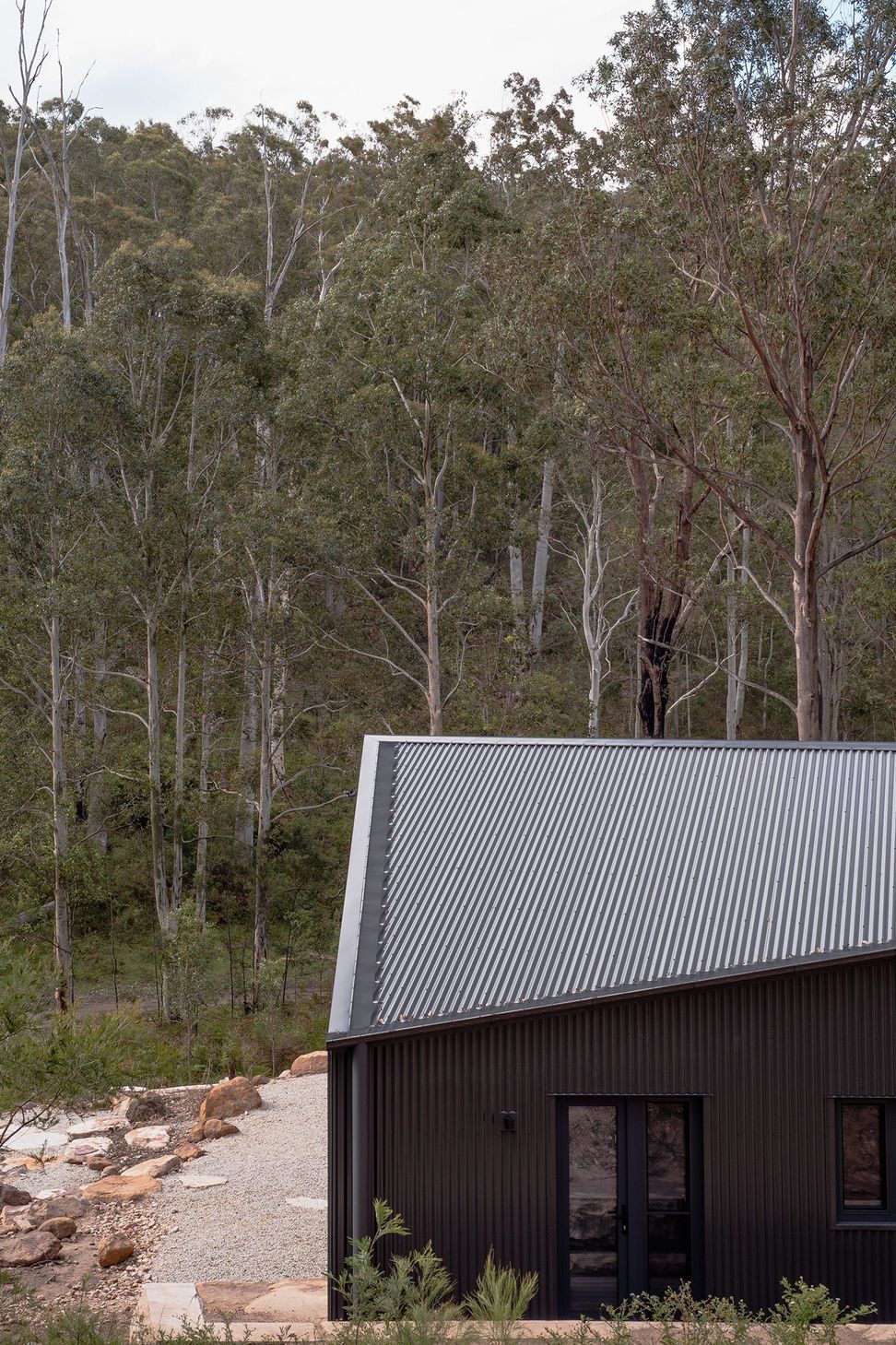
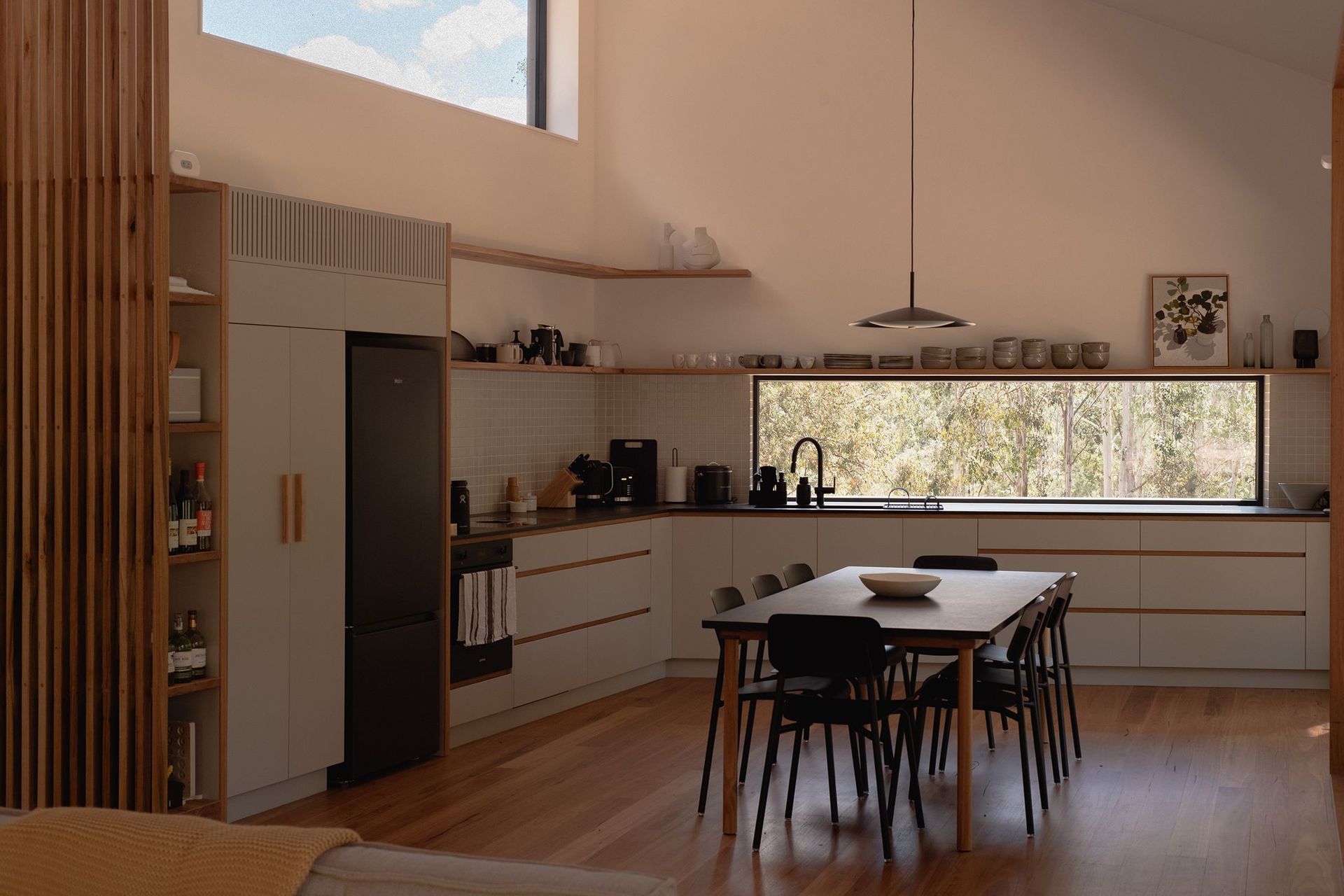
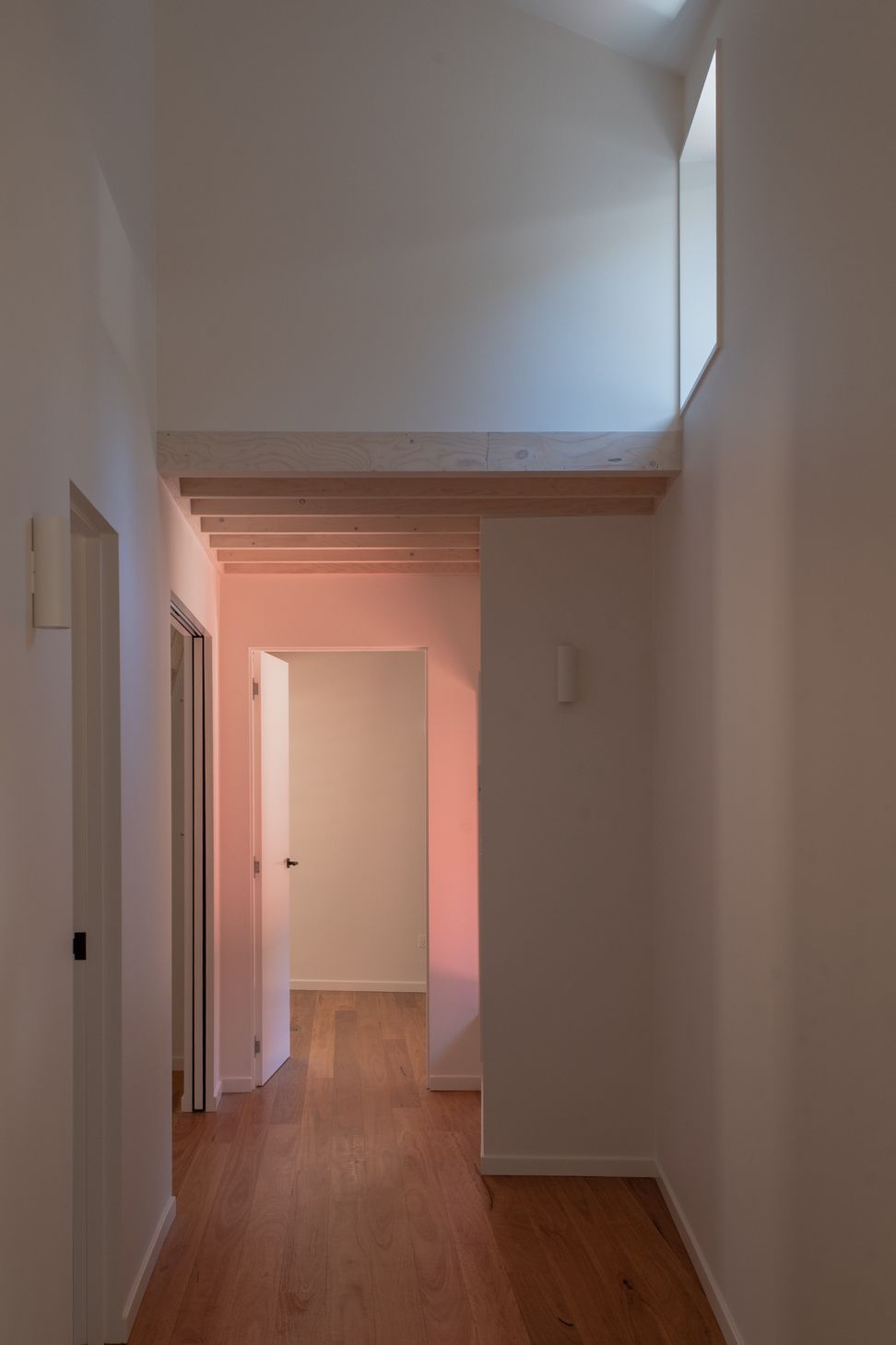
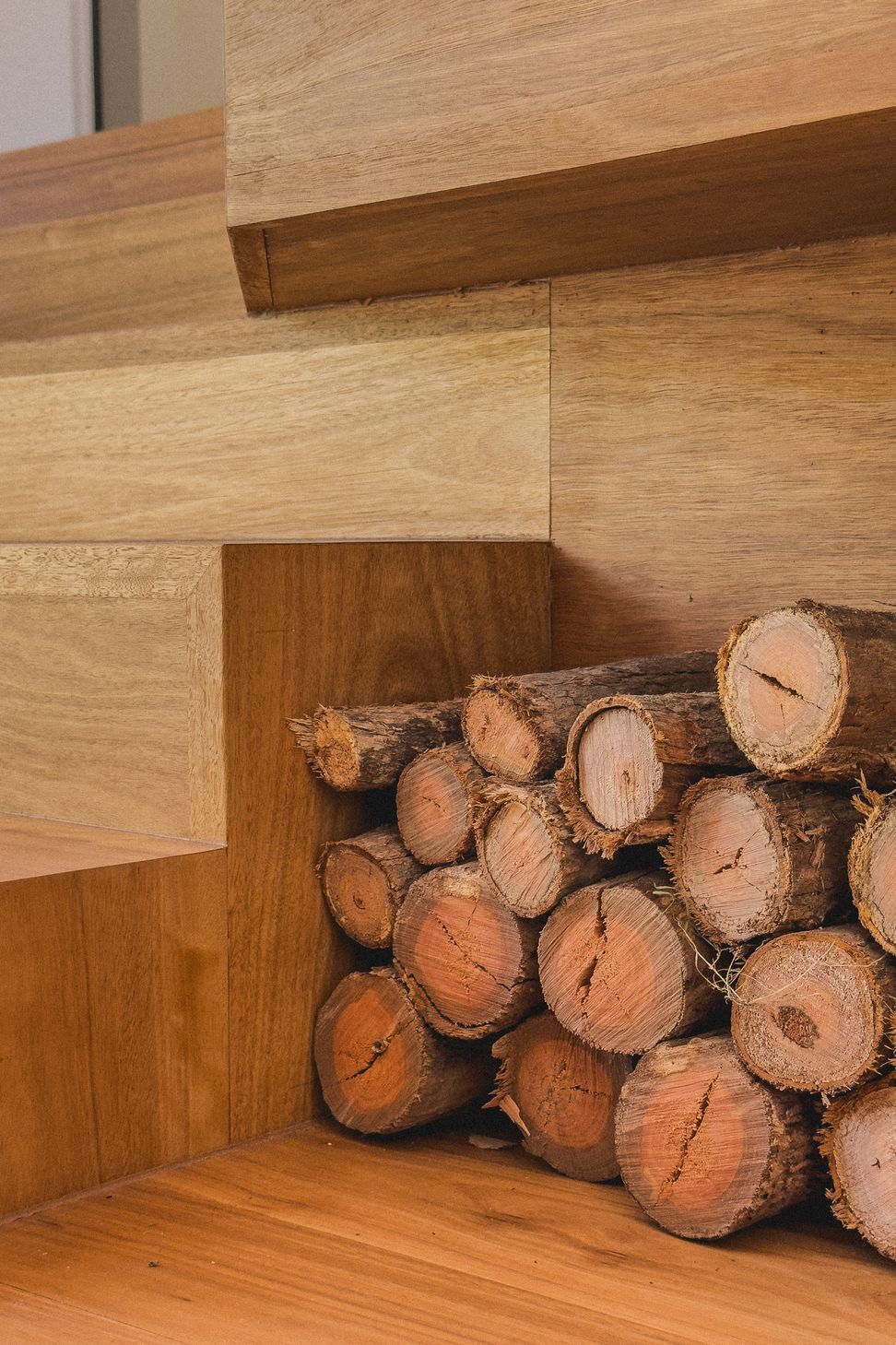
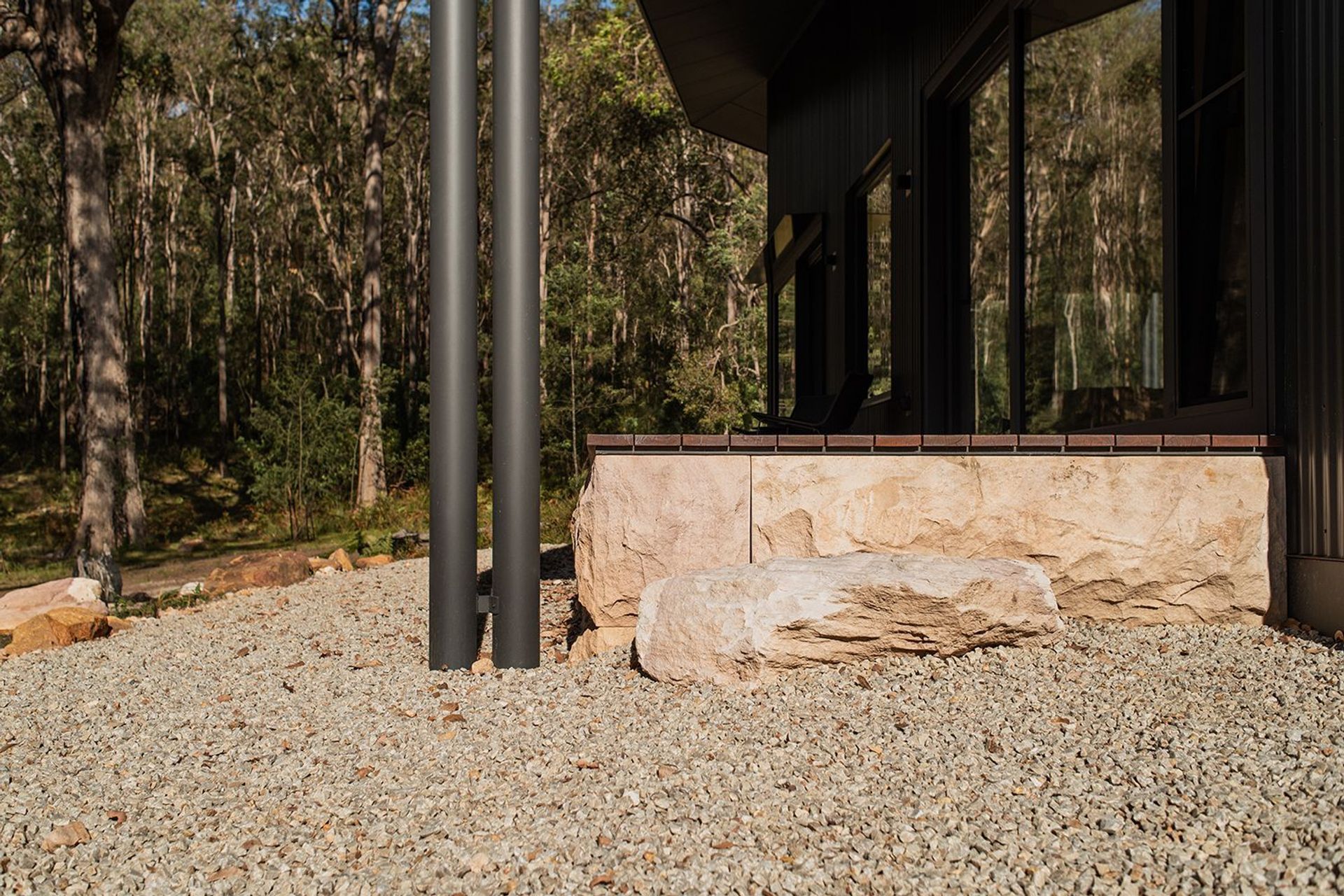
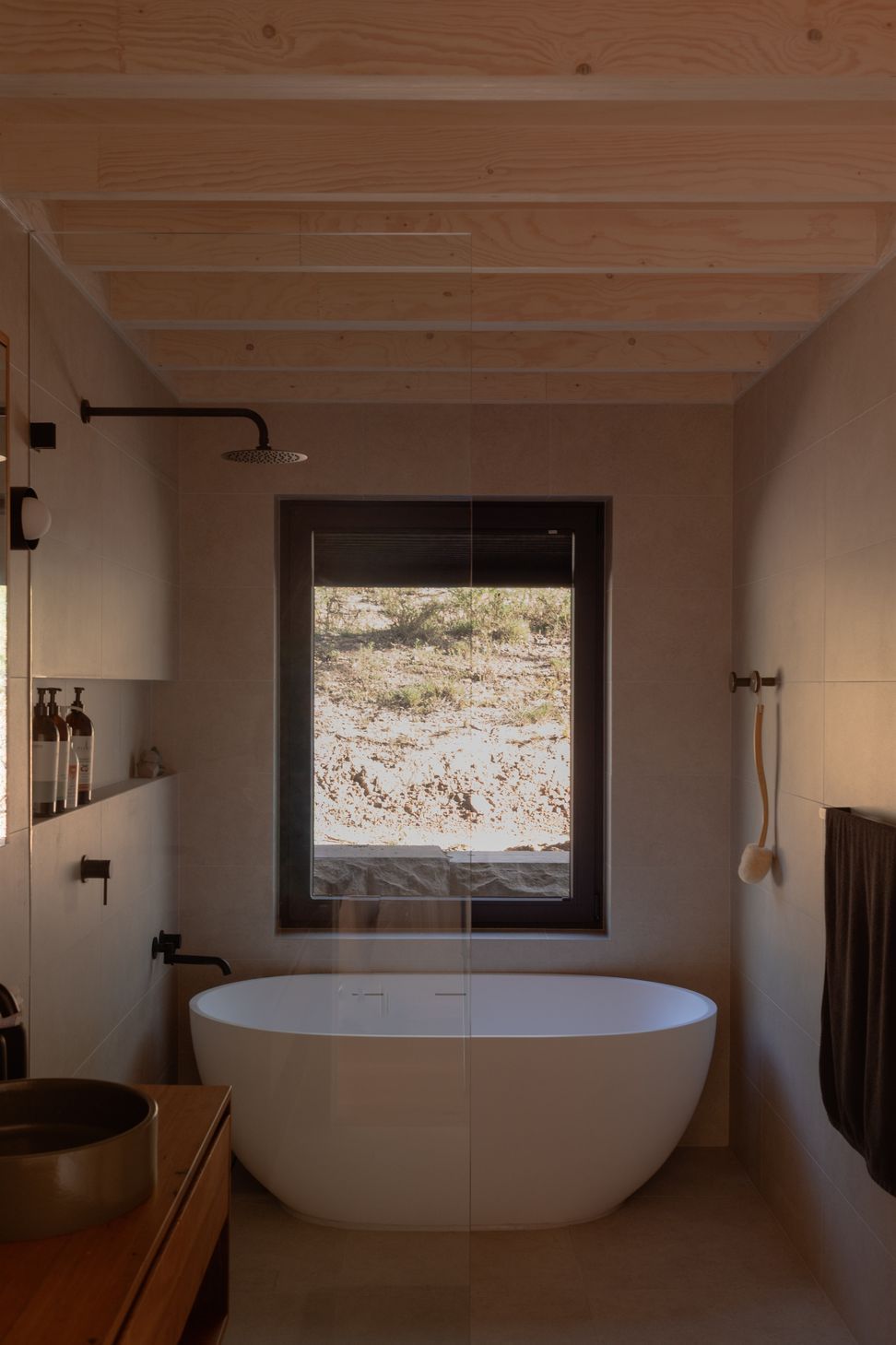
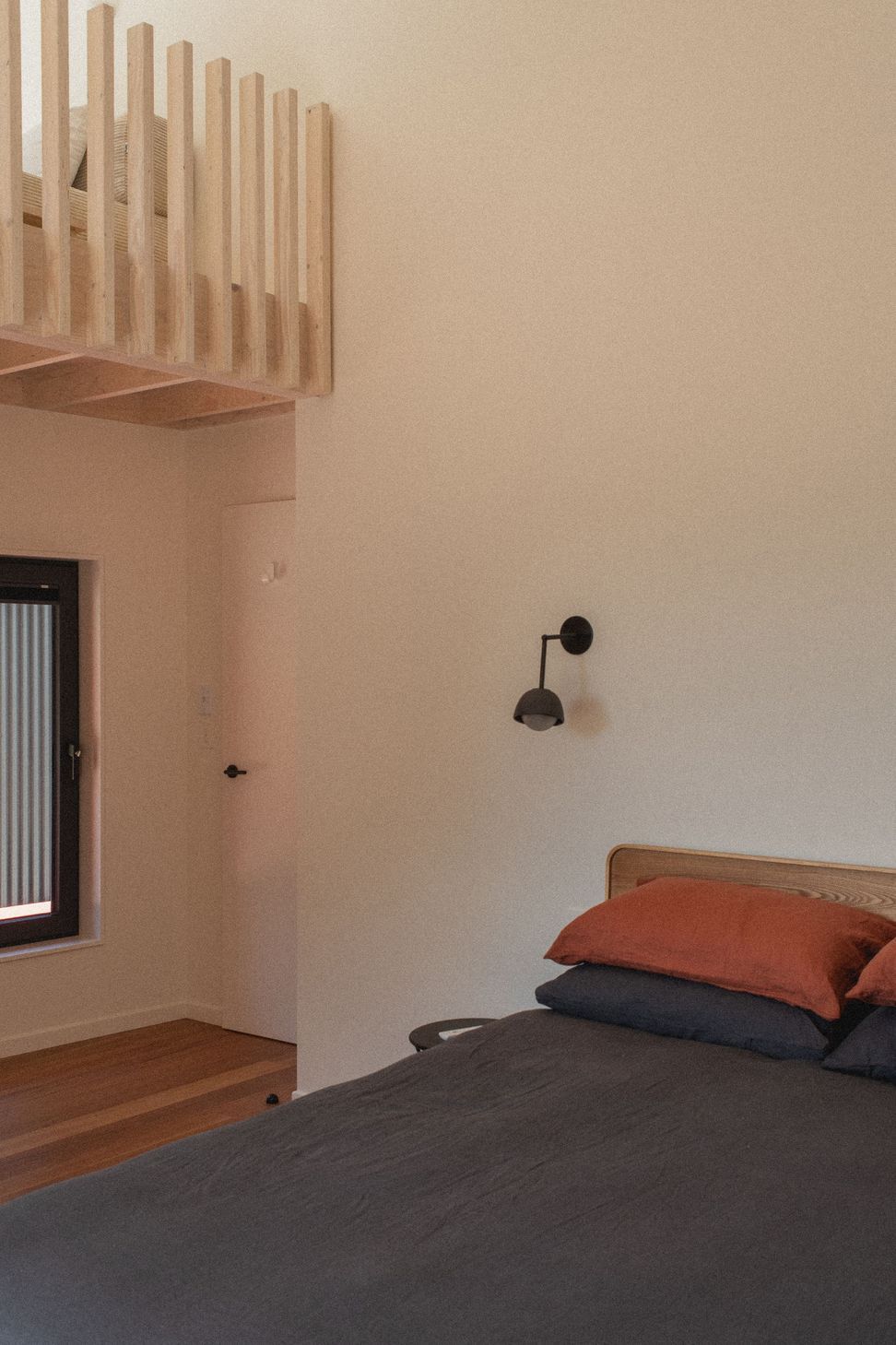
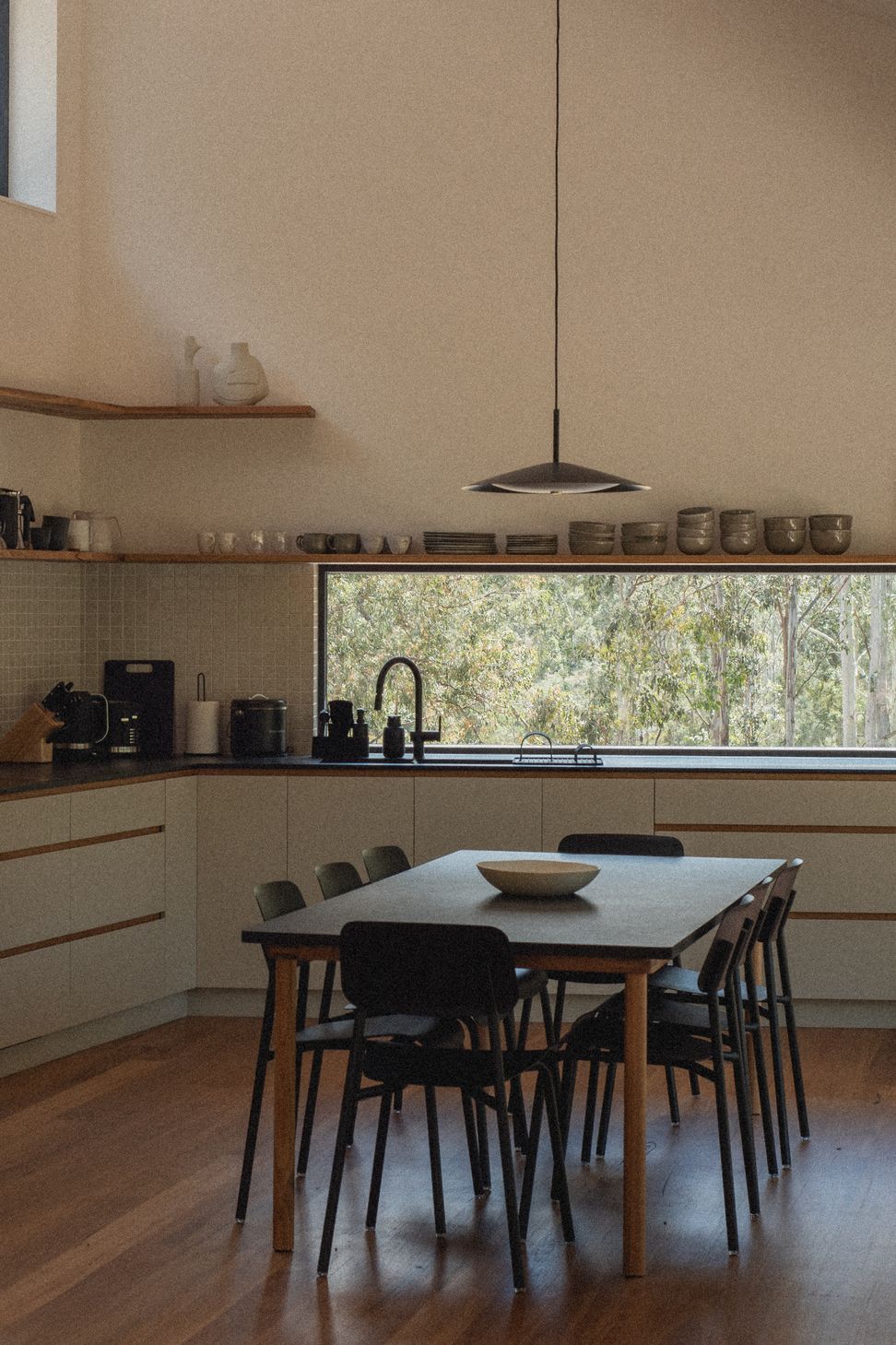
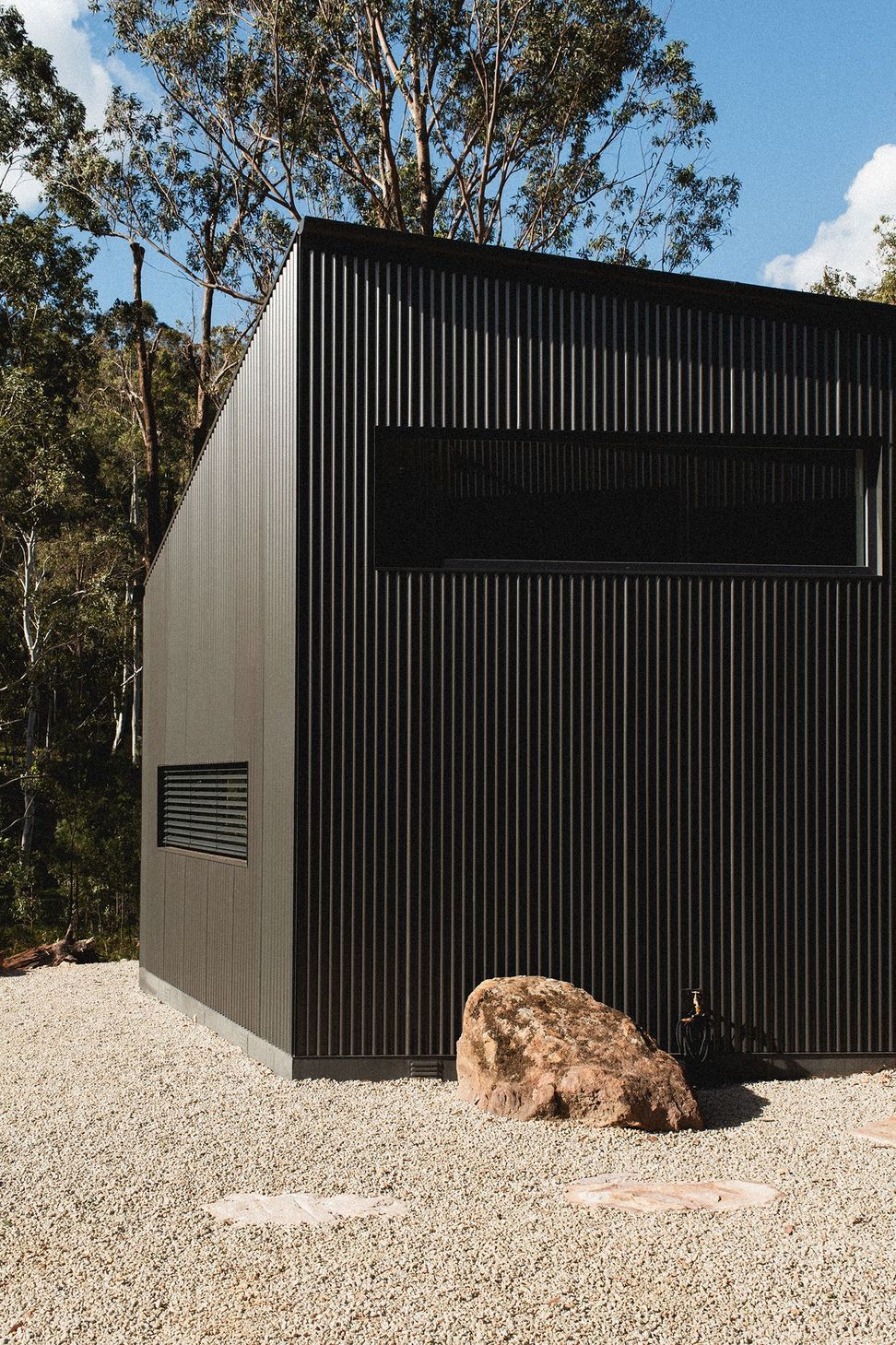
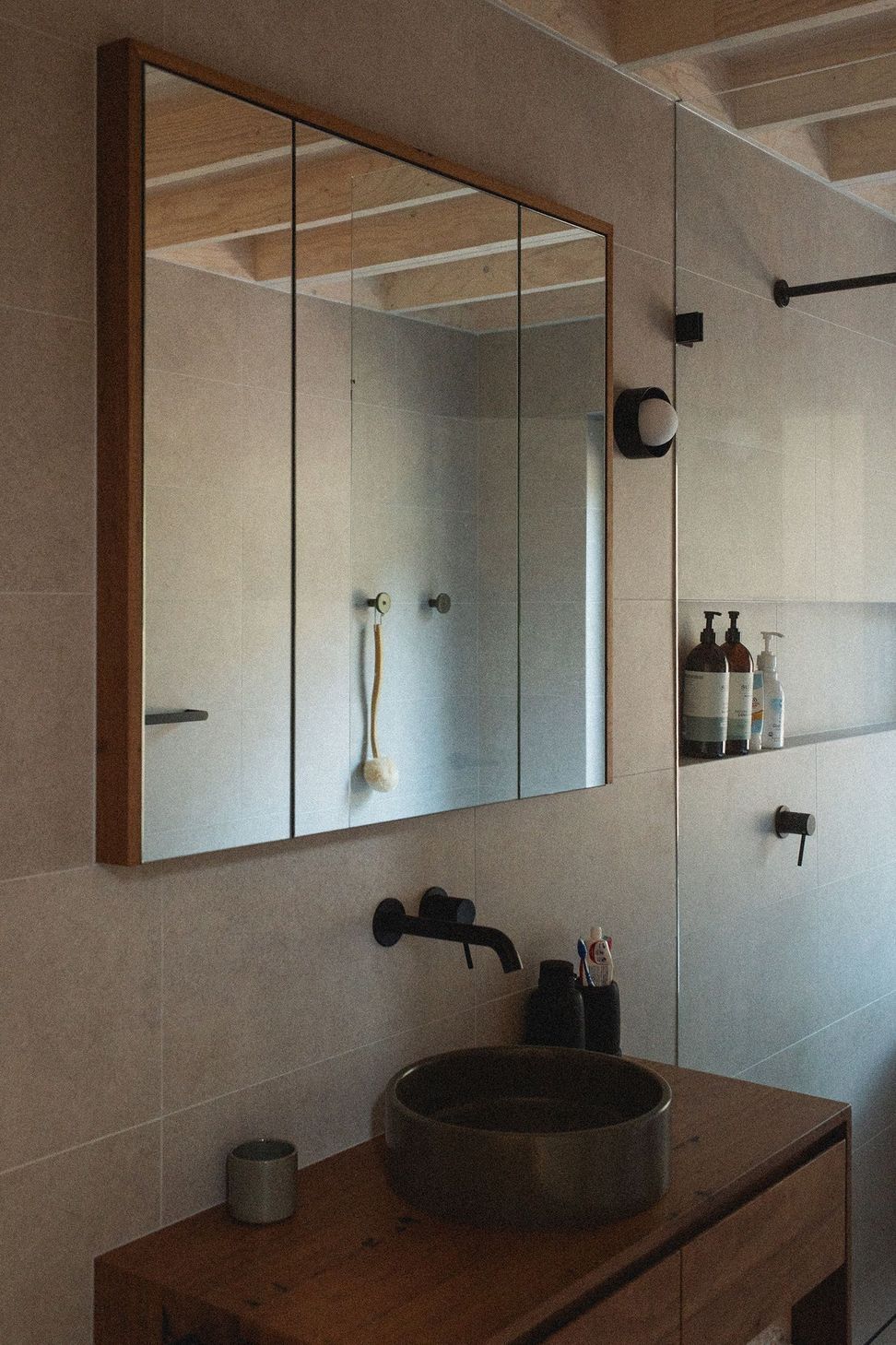
Sustainability was central to the material choices. The exterior presents a “shed aesthetic” with dark, bushfire-resistant corrugated steel, a black base skirting, and shutters designed to protect the house from western summer sun. Internally, a restrained palette of hardwood floors, white walls, and exposed LVL beams offers warmth and tactility, while sculptural timber elements, inspired by the nearby cliffs and the client’s art, punctuate the spaces. The kitchen and dining areas feature compressed black paperock benchtops, a striking yet environmentally conscious detail commissioned to match the home’s interior.
“It’s a very low-carbon house,” says Anderson. “Most of it is made from timber with minimal concrete and steel, aligning with a benchmark similar to Danish standards for low-carbon construction.”
Environmental sustainability extends beyond materials and orientation to energy efficiency. The house employs heat recovery ventilation, a high level of insulation, and a fireplace for occasional use. The prefabricated panels were modelled using passive house software to optimise insulation and sun exposure.
The careful integration of off-grid infrastructure: solar panels, battery storage, and a generator are located discretely in a shed adjacent to the home, preserving the house’s visual simplicity.
“They haven’t had to use the backup generator once. The house basically looks after itself,” says Anderson.
The project also reflects a thoughtful approach to bushfire risk. Non-combustible materials are used on the exterior, while timber decks are separated from the house by fire wall below the deck. The house is able to withstand the elements even if the occupants are away.
Beyond technical considerations, Putty Passiv is a place for connection to nature, art and to the rhythms of daily life.
“The clients often take photos of wildlife against the backdrop of the house,” says Anderson “It’s an amazing refuge, which is exactly what they asked for in the first place.”
Words: Joanna Seton
At Anderson Architecture, we believe your home should work with you, not against you. Putty Passiv’s passive design ensures minimal energy consumption, so you can enjoy a cosy, well-insulated space all year round. This project is a testament to our commitment to creating inspiring, sustainable solutions that elevate your lifestyle while maintaining harmony with the natural landscape.
- Completed
- 2025
- Price range
- $2m - $3m
- Building style
- Passive



Like this Project?
Hire Anderson Architecture
Professional Reviews
The products behind the project
Three products specified into this build from two suppliers, verified ArchiPro members. Tap through to specifications, suppliers and lead times.


Professionals used in
this project
The practices and trades credited on this project.



More projects from
Anderson Architecture
Other work by Anderson Architecture, across every category they build in.


More in
Rural / Estate / Lifestyle
Everything else in Rural / Estate / Lifestyle, from every practice on ArchiPro.


Next Project
Keep scrolling