
Multi-purpose building at Queen Elizabeth Park, designed to enhance visitor experience while honoring Maori heritage and WWII history, featuring meeting spaces, ranger's office, and extensive outdoor areas, completed in 2017.
Design brief
Greater Wellington Regional council engaged Gil-plans in 2014 to design a new multi-purpose building at their most visited park in the region, Queen Elizabeth Park in Paekakariki. The building was to be the centerpiece of the park's revitalisation, including the park's entry and roading. The new building was to comprise a meeting space, kitchen, and ranger’s office and incorporate the existing public toilet block that was to be refurbished with the project. The meeting room was to provide 60people seating capacity and have the ability to hold large volumes of visitors when major events were held at the farm within the park, GWRC was also to use the building as a civil emergency headquarters.
The Park has a rich and diverse historical connection to both Maori heritage and the occupation as a US Marine camp inWW2. The design brief was to respond and reference all aspects of the site’s heritage in the context of the surrounding landscape and regenerating wetlands. Due to the significance of the site the developmentrequiredbothIwi and Heritage New Zealand’s consultation and approval.
Design features
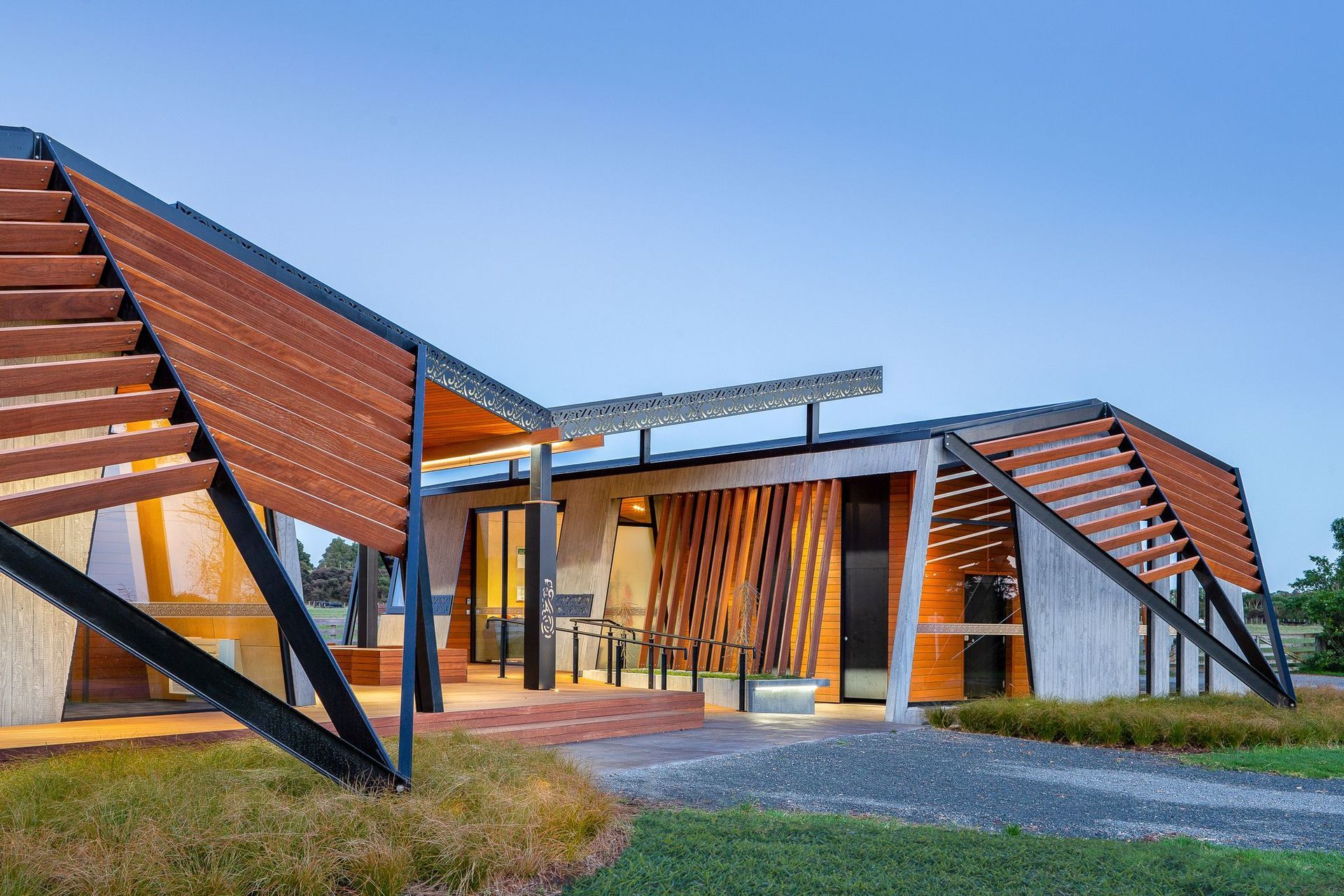
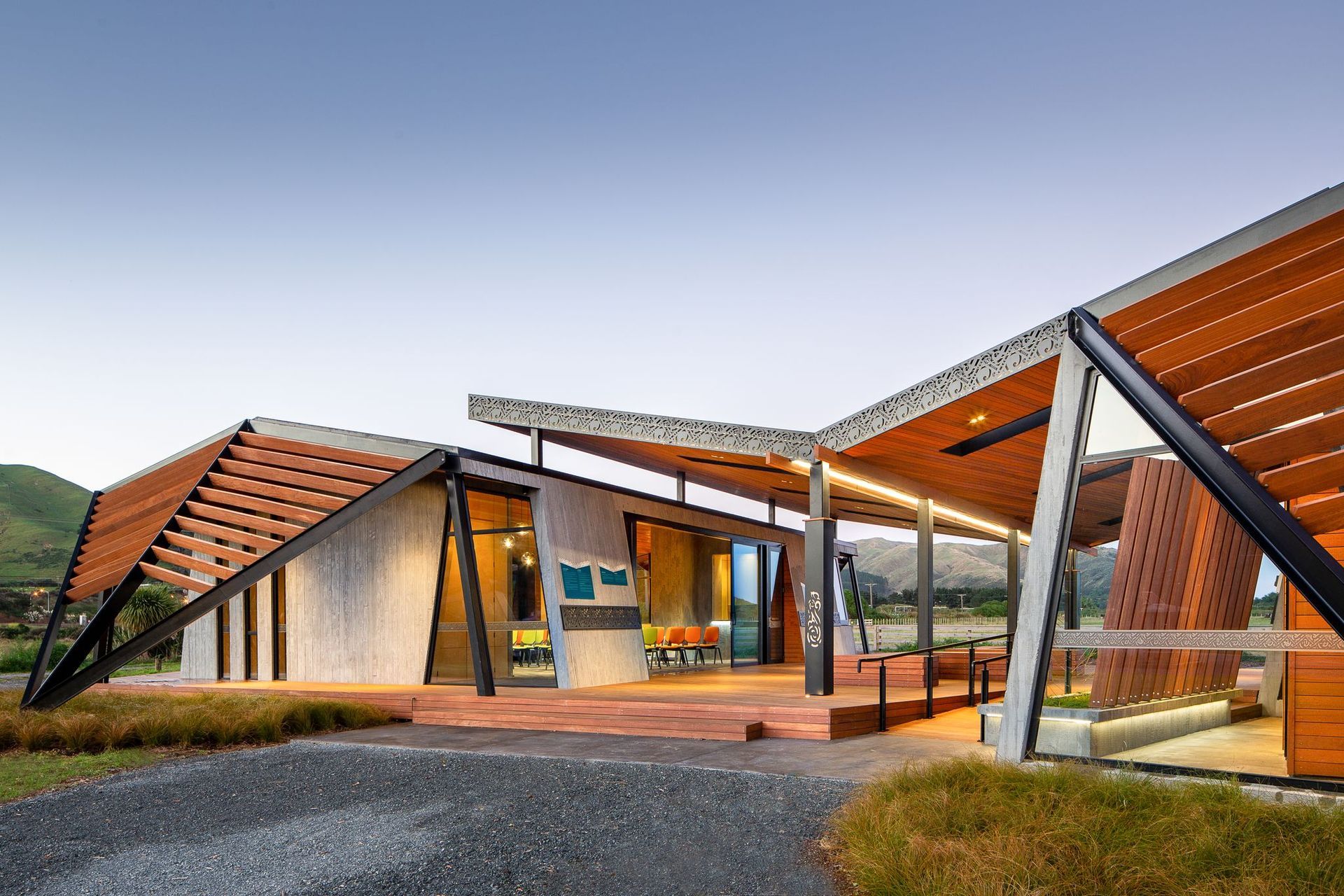
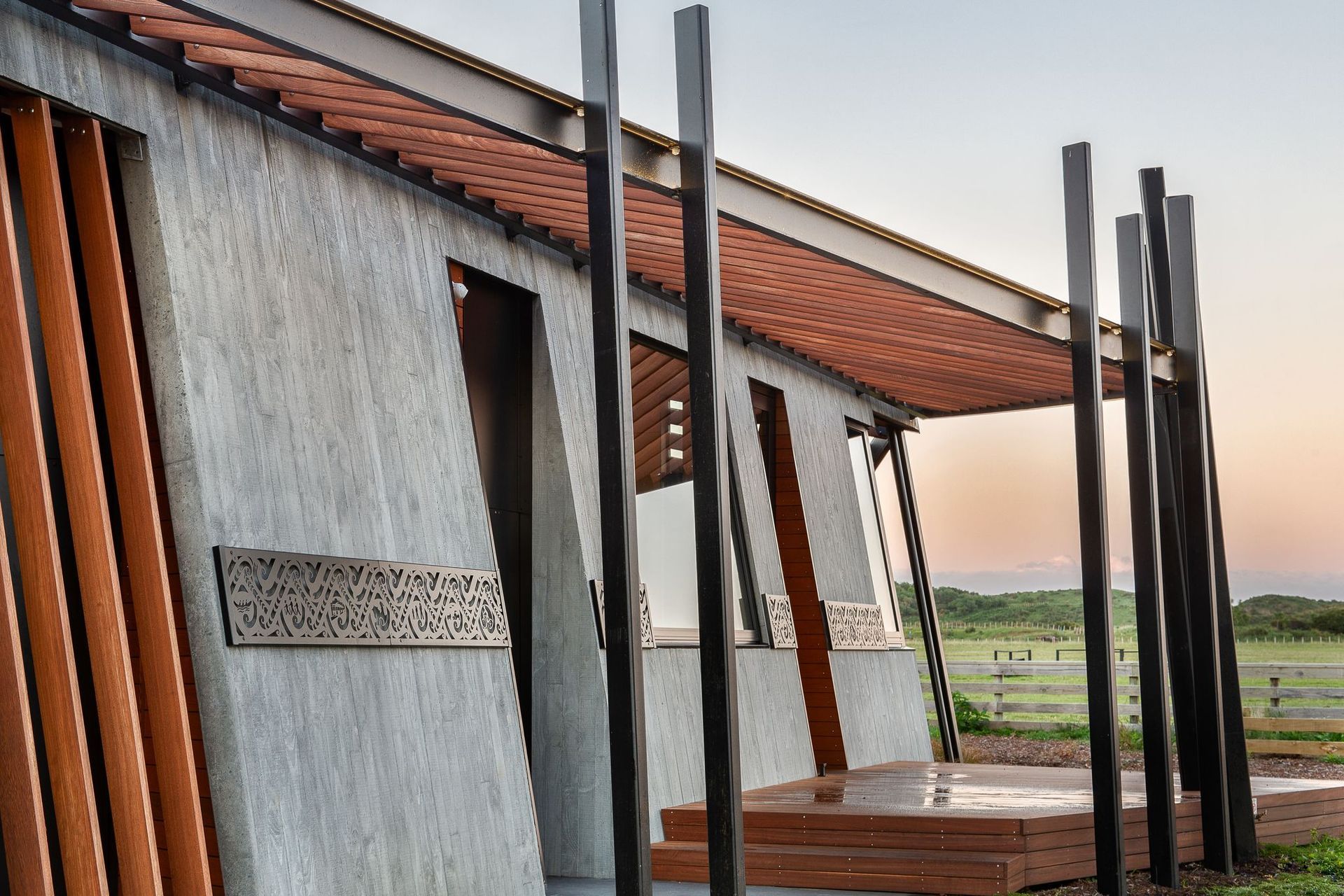
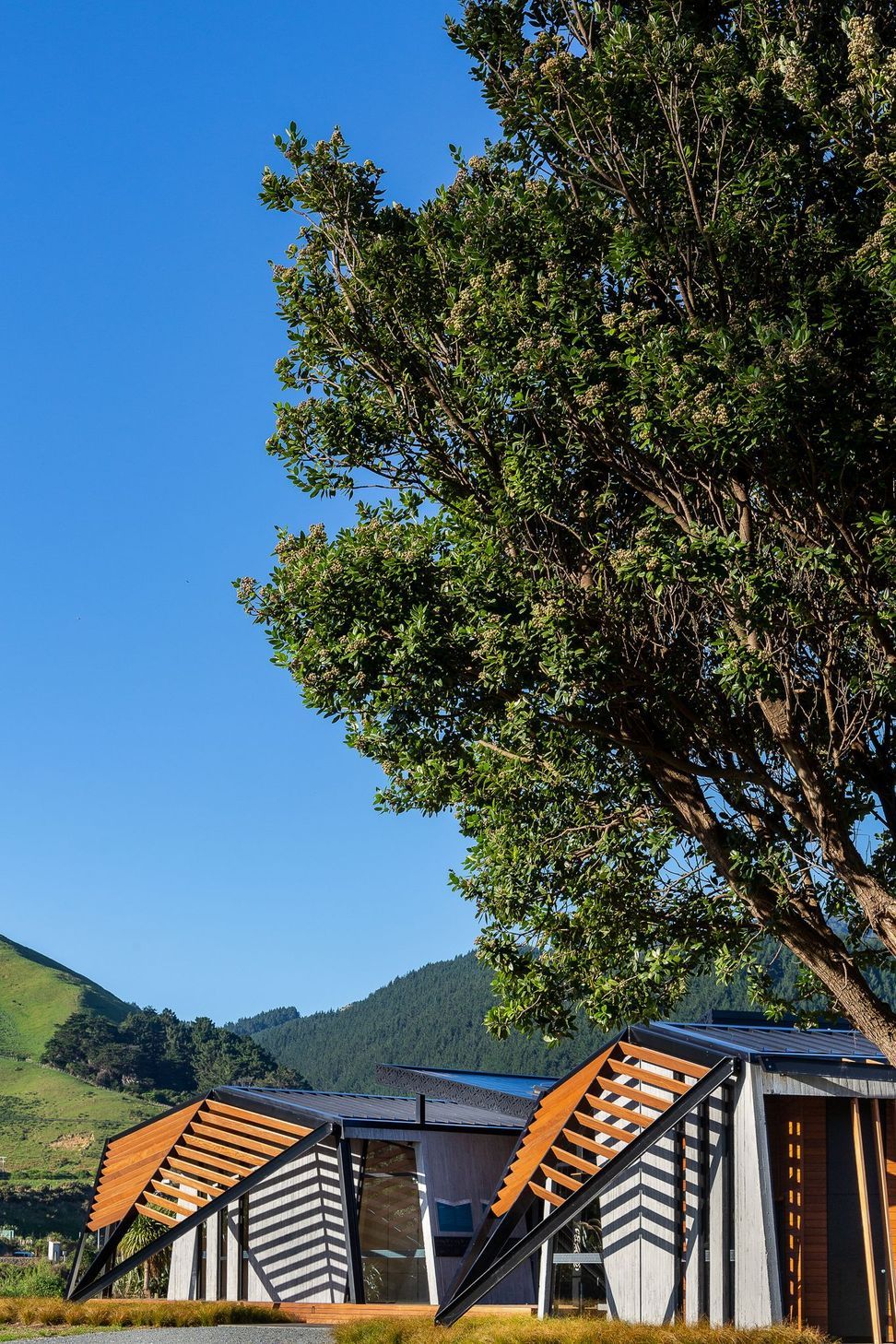
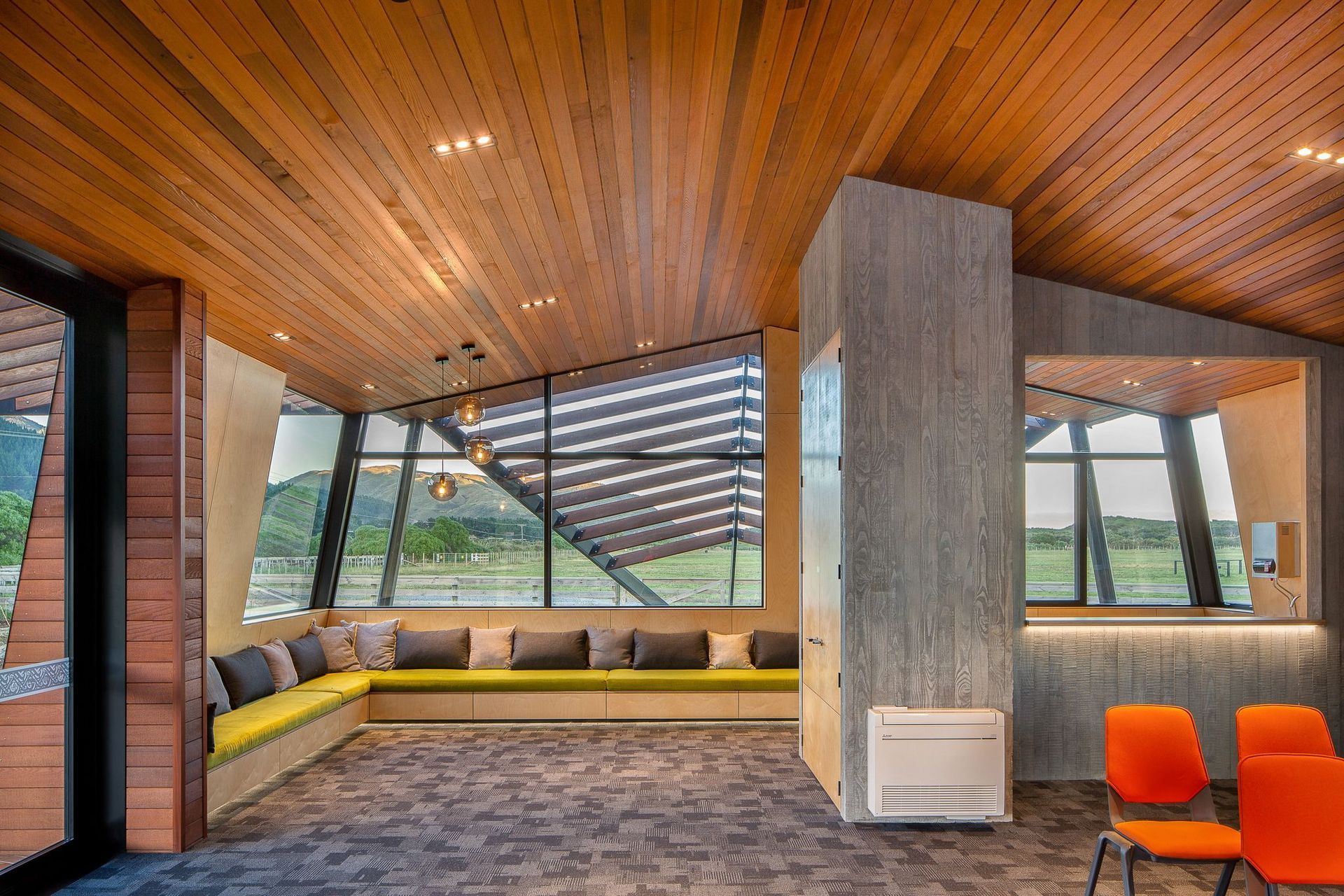
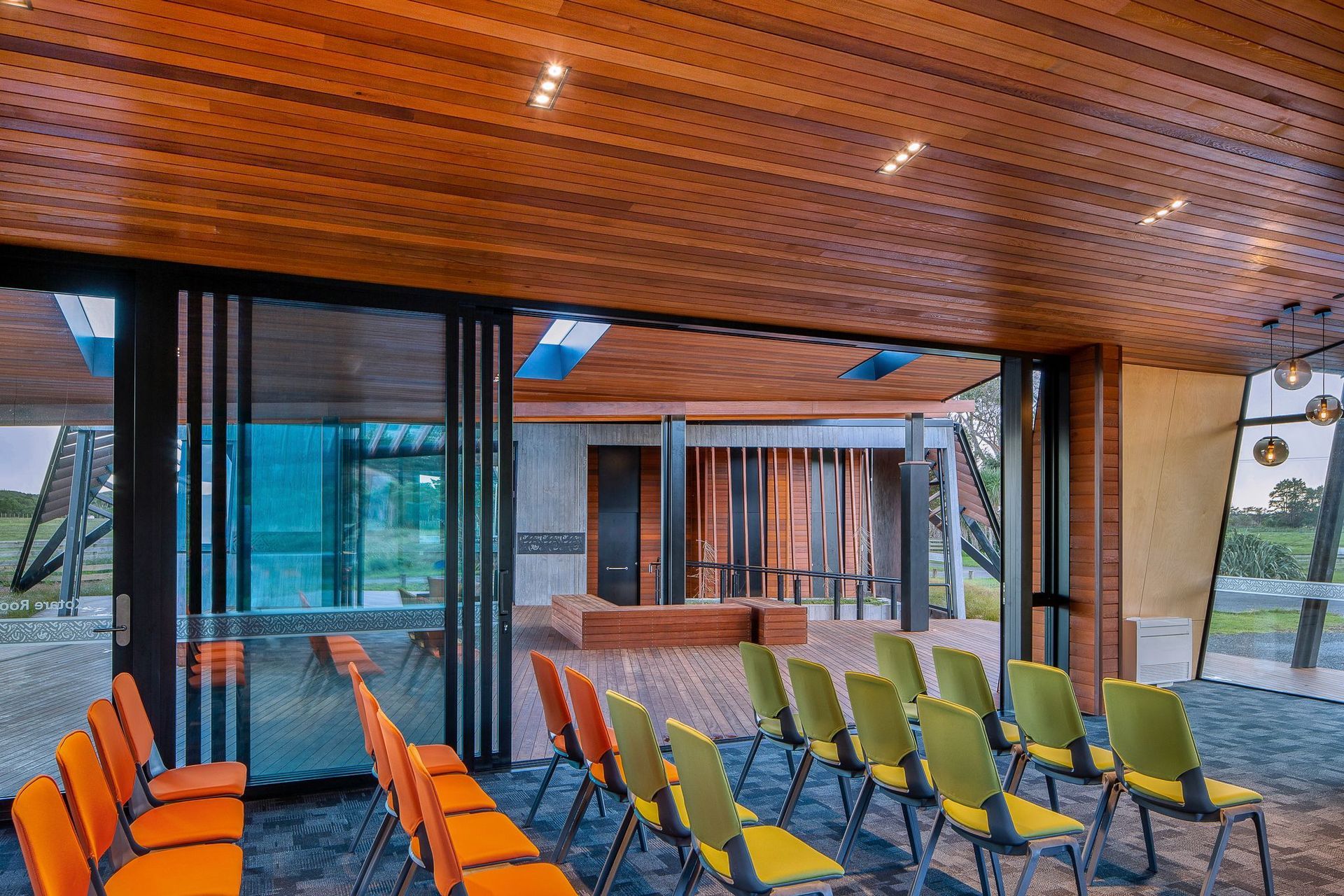
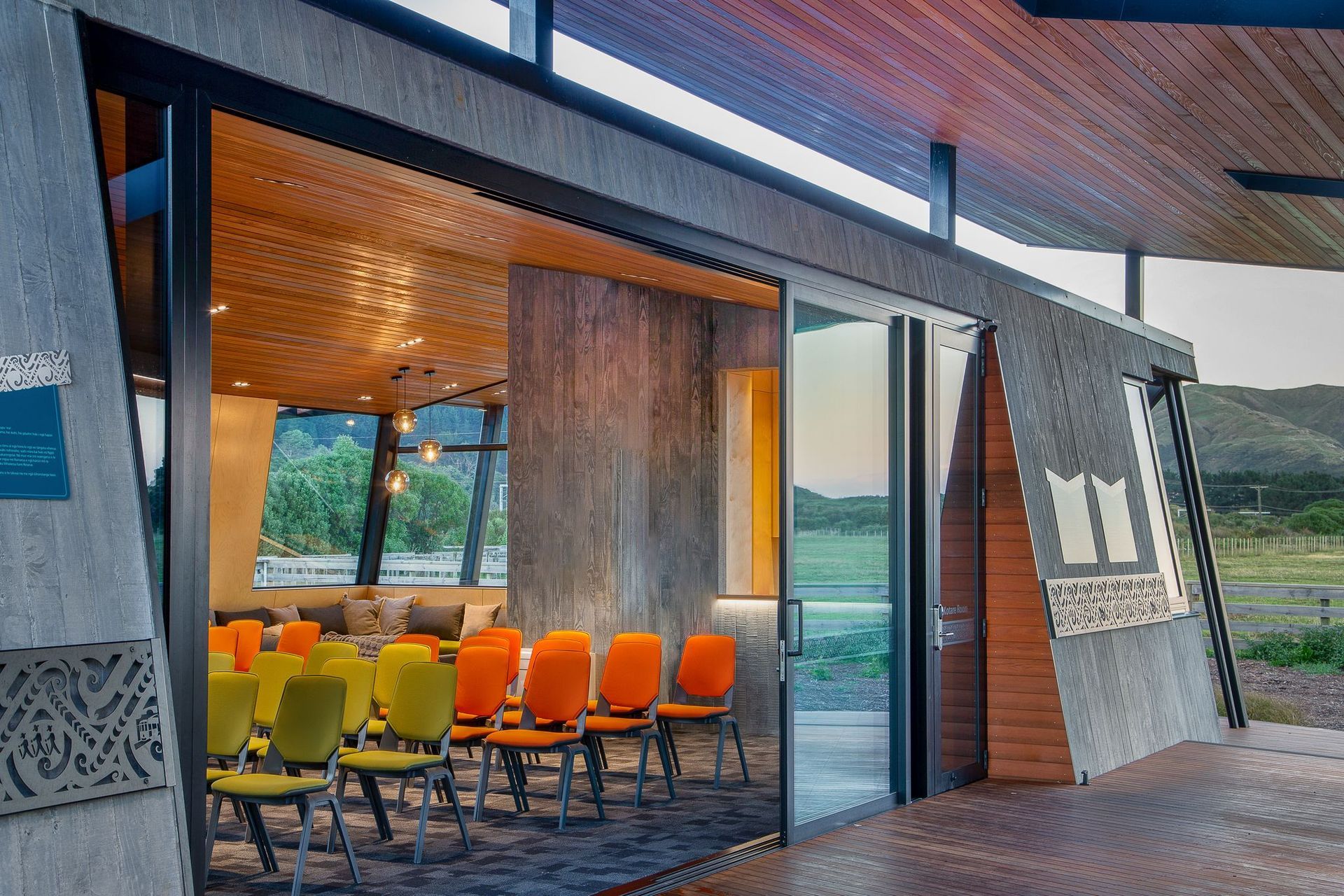
Spatial - for both functional use, and to create a camp and Pa-like setting, the building was divided into two pavilions, the meeting room, and rangers' offices. The buildings were rotated from one another to further separate the two pavilions and provide an axis drawing a connection to the farm beyond. A large deck accessed with expansive sliding doors and covered by a gullwing roof links the space between the pavilions providing additional multi-purpose space for use in major events. The meeting room was sited to view over the regenerating wetlands and farm with the ranger's offices sited to overlook the entrance and roadways of the park. An informal social area with a large inbuilt window seat, located at the rear of the meeting room, further captures views over the farm and wetlands beyond. The ranger's pavilion extends over the existing public toilets with batten screening installed for privacy and forming separation.
Form/aesthetics
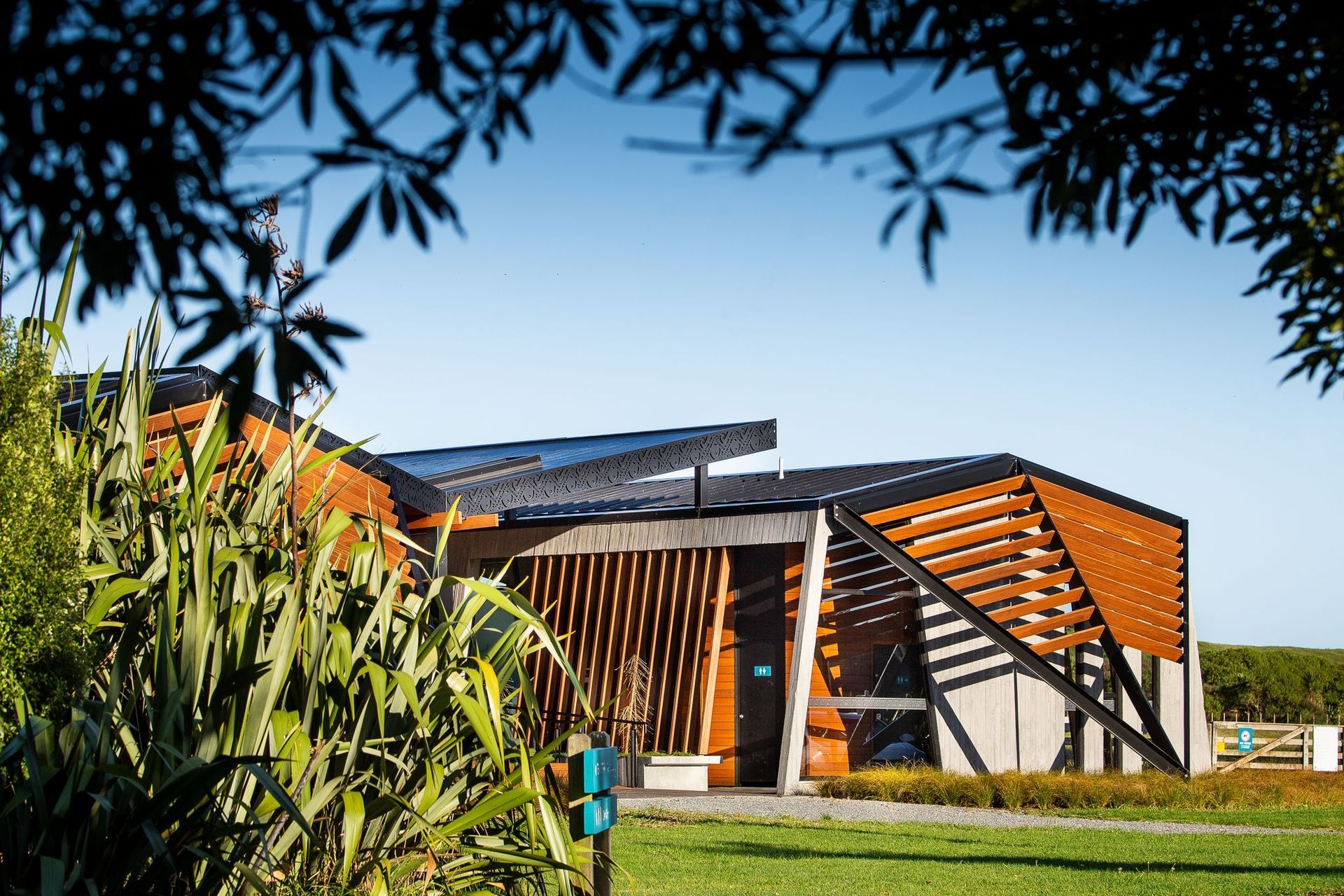
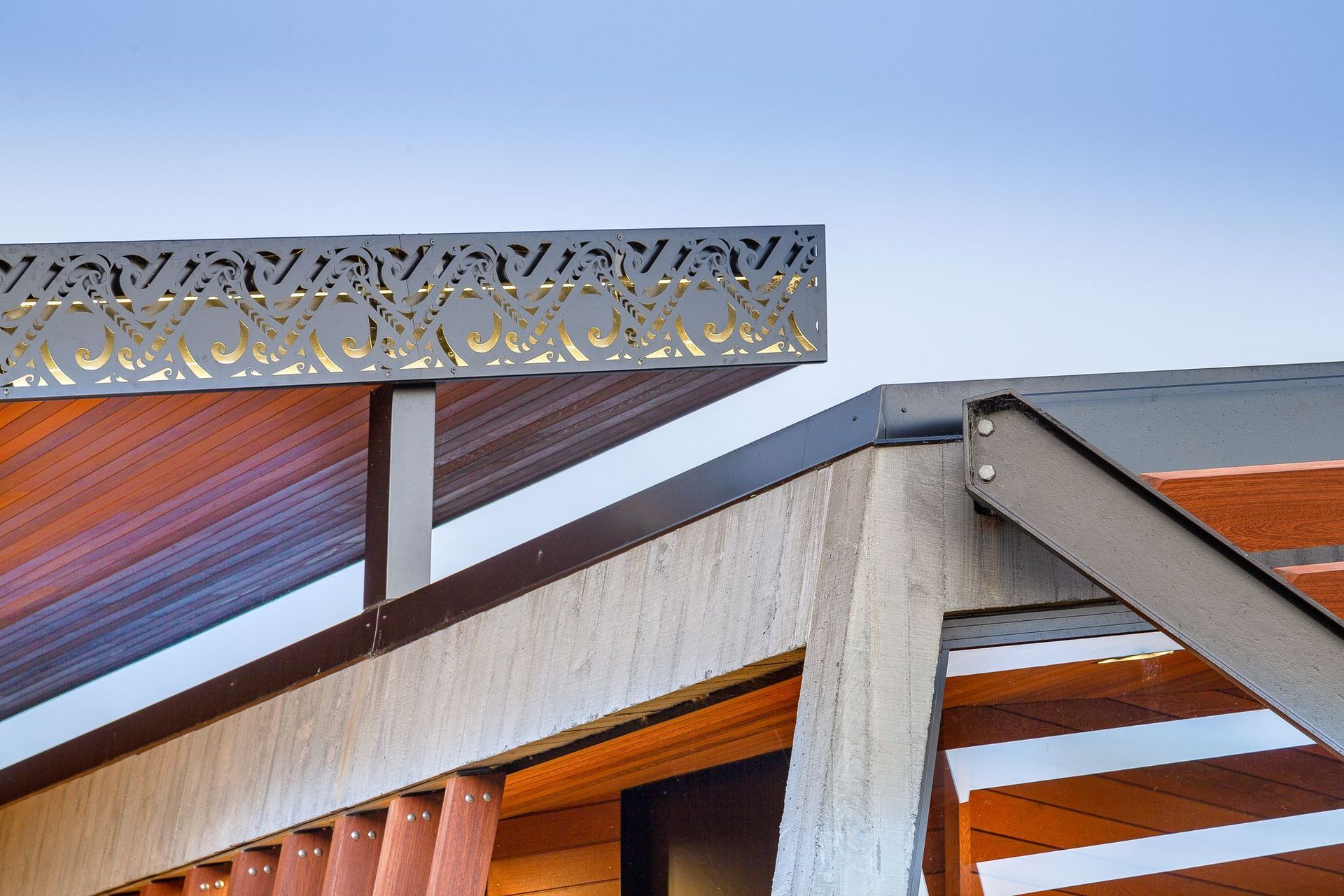
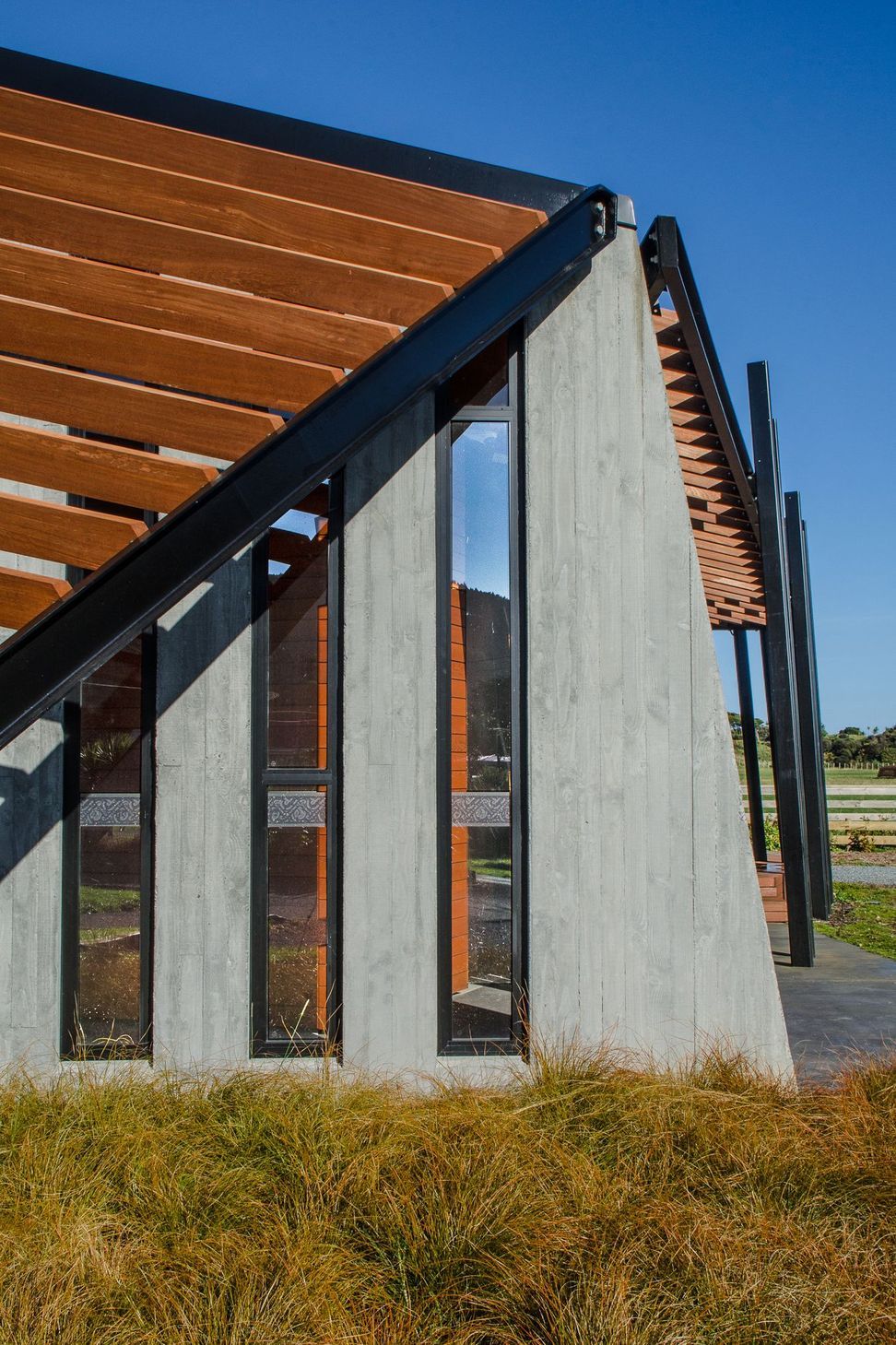
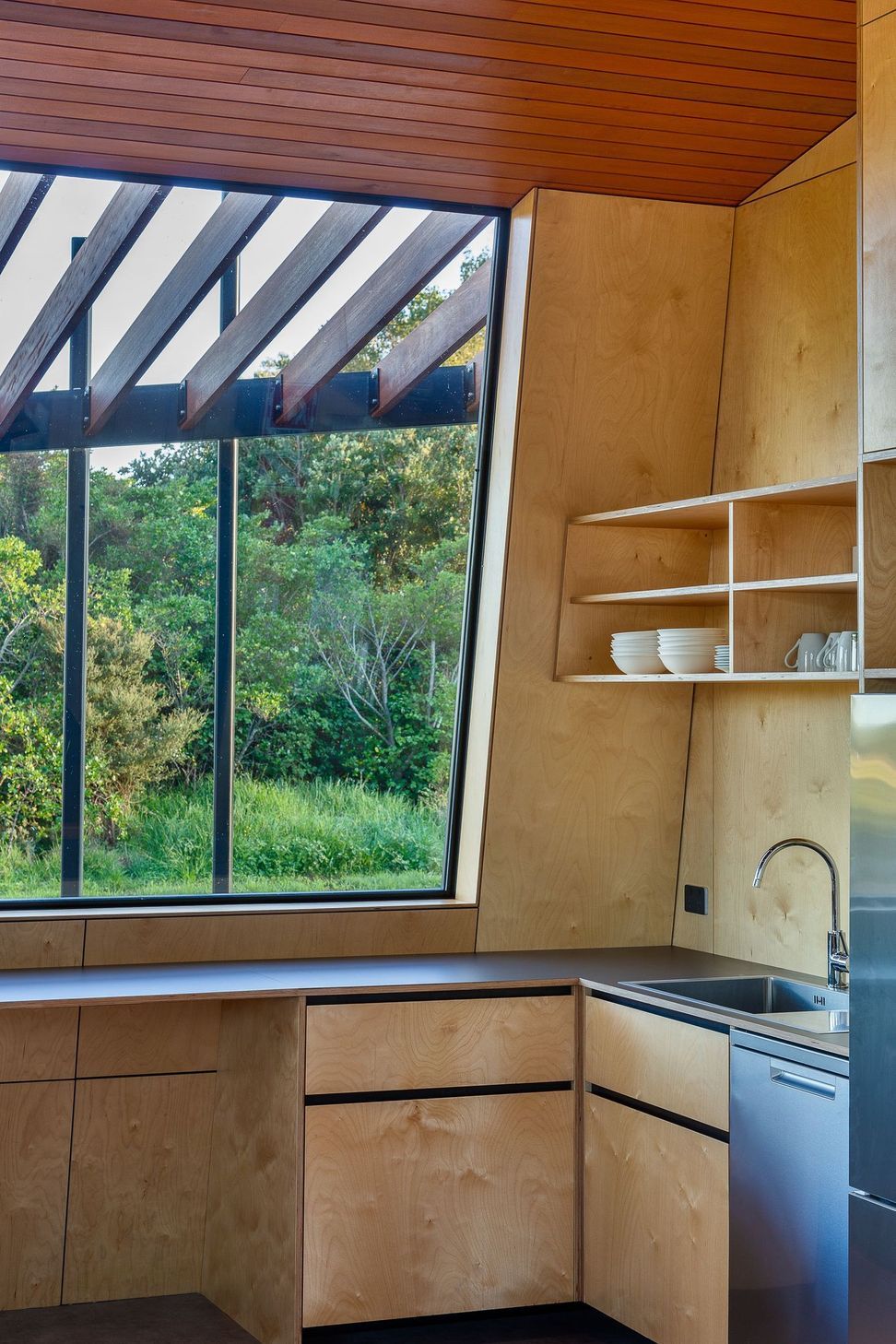
The pavilions are gabled structures reminiscent of traditional Maori Wharenui. Contemporary Maori Whakairo (carvings) were specified to adorn the Pou(posts)supporting the gullwing roof and also clad the associated roof fascia. All carvings were designed by local Iwi carvers enhancing the Maori ancestral connection to the building. The walls of the gable structures were tilted to 10 degrees referencing the tents and structures from the Marine camp in WWII. The triangulated gable screens and large wedge-shaped pergolas resemble tent flies and are also symbolic of Maori design, play with light and provide shade on the extensive deck spaces. The gullwing roof, rising to the front welcoming visitors, floats above the main pavilions allowing light deep into the deck area below and offers cover for use in all weather. The form of the roof encapsulates the coastal setting and birdlife of the park. Extensive glass and doors offer views and connections to all aspects of the site. Durable precast concrete panels, steel, and rich warm timber materials were selected for a finish that is welcoming, integrates with the setting, and will be preserved for many years to come. Materials flow from external to internal spaces blurring the transition from inside to out forming a cohesive design. The overall site development is to be completed in late 2018 which will provide integrated public facilities including fully landscaped picnic areas, large car parking pace, interpretive information on the park's history and a reptile garden.
Ramaroa, QE Park - completed 2017
Like this Project?
Hire Gil-Plans Architecture
Professionals used in
this project
The practices and trades credited on this project.

More projects from
Gil-Plans Architecture
Other work by Gil-Plans Architecture, across every category they build in.


More in
Mixed-use Spaces
Everything else in Mixed-use Spaces, from every practice on ArchiPro.


Next Project
Keep scrolling