

Project team
- Tom Mark Henry
- Rémi Chauvin
Product Suppliers
Tom Mark Henry’s Gina channels the golden warmth of an Italian seaside holiday into a richly textured Barangaroo restaurant where sunlit materials, crafted details and a waterfront setting come together to create a transportive dining experience.
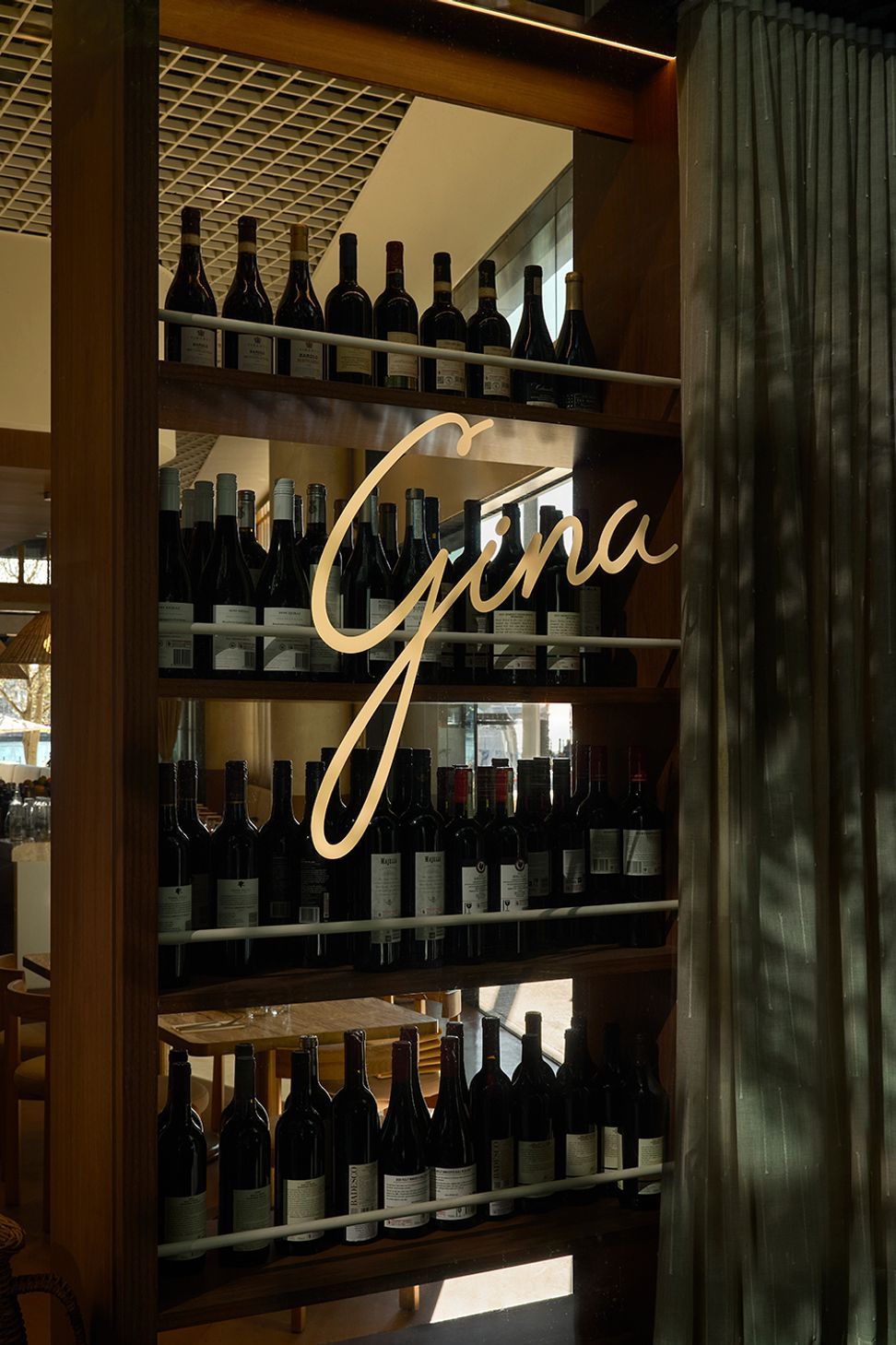
Gina: A taste of the Italian Riviera on Sydney Harbour
At the water's edge in Barangaroo, where ferries crisscross Sydney Harbour and diners spill out onto generous promenades, Gina offers something more transportive than a meal. Designed by Tom Mark Henry, the restaurant captures the easy romance of an Italian seaside holiday, translating memories of sun-drenched trattorias, coastal villages and long lunches into a warm, tactile dining experience.
Occupying a prominent corner site within Barangaroo's hospitality precinct, Gina benefits from a setting that already feels a little removed from everyday life. With harbour views and expansive alfresco dining, the location provided fertile ground for a concept built around escape.
"The client came to us because they saw an opportunity for this beautiful corner site that had a generous space for outdoor alfresco dining," says Tom Mark Henry interior designer Yvonne Li. "They were operating other venues and wanted something a bit different from their usual offer, which was an Italian dining experience. Aesthetically, they really let us take the reins."
For Li and the design team, the brief quickly became less about recreating Italy and more about evoking the feeling of being there. The practice looked beyond traditional hospitality references and towards the atmosphere of European summer travel, drawing inspiration from the ease of coastal dining and the nostalgic appeal of old-school Italian trattorias.
"Barangaroo is almost like a tourist destination now, but it's also very family-friendly and feels a bit like you're on holiday when you're around that area," Li explains. "Because of the Italian dining offer, we explored the idea of going on a European holiday and sitting by the coast in an old school Italian trattoria. That became the foundation of the concept, while bringing in a more contemporary Australian design sensibility with playful textures and patterns."
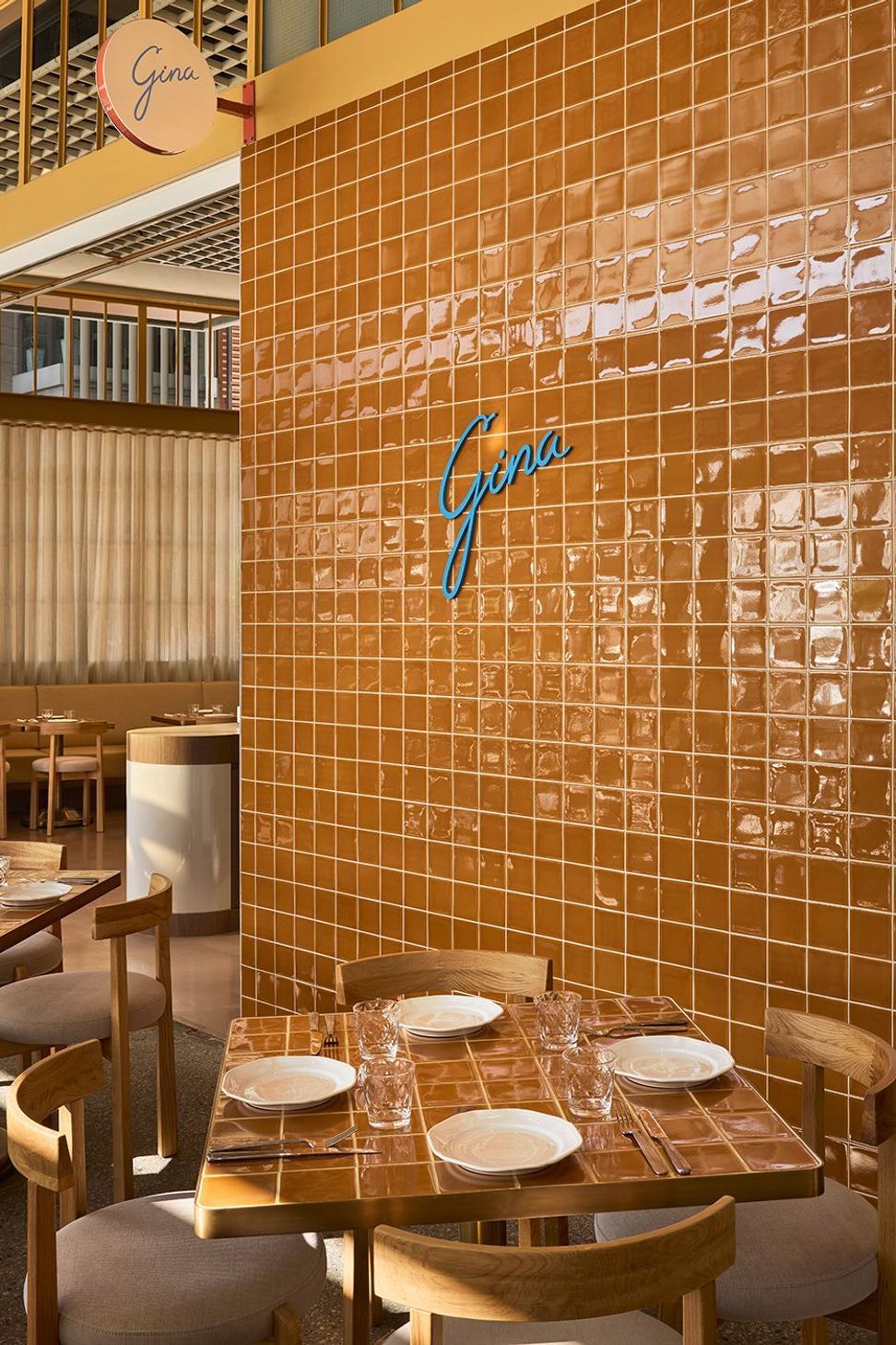
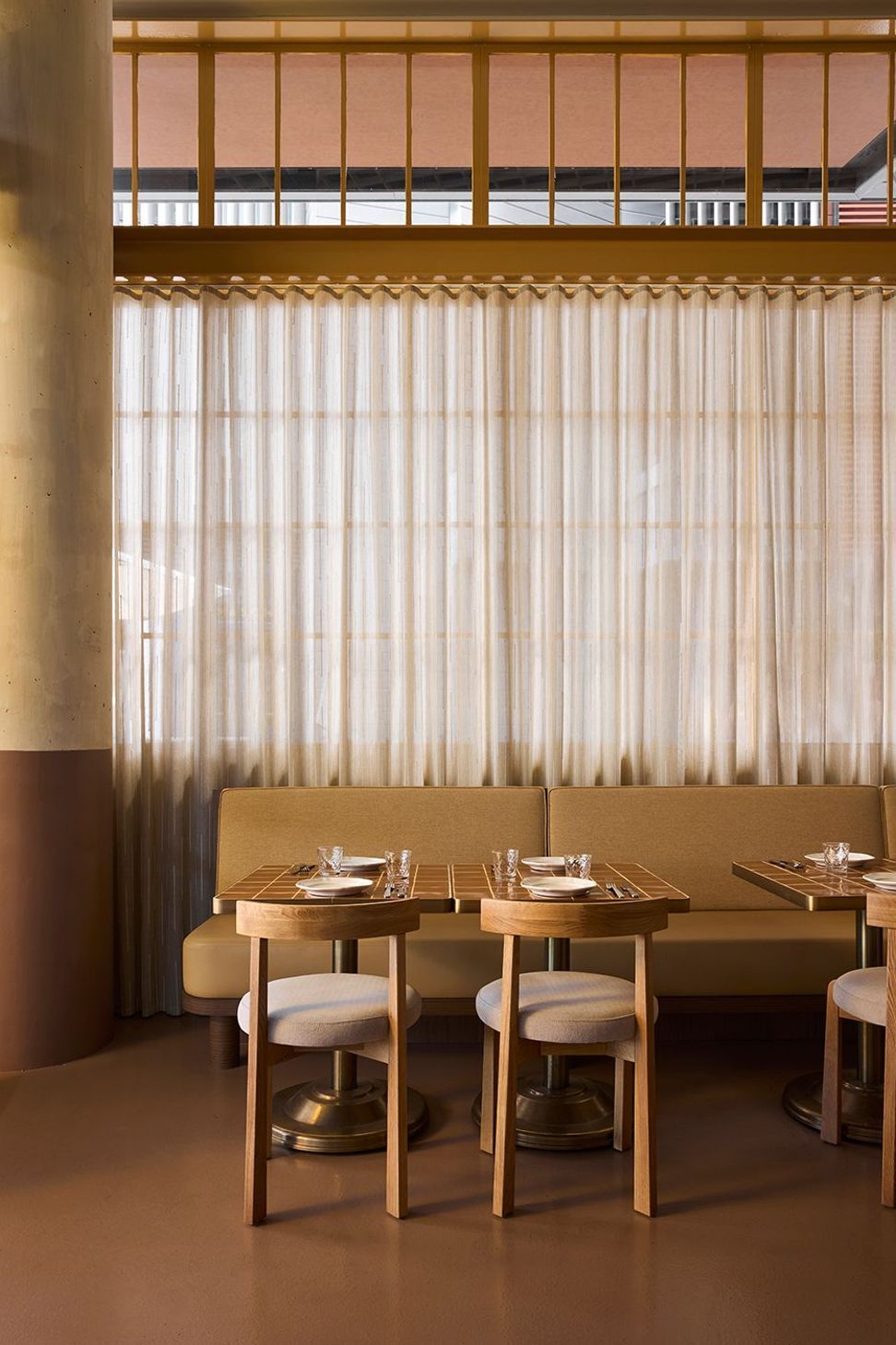
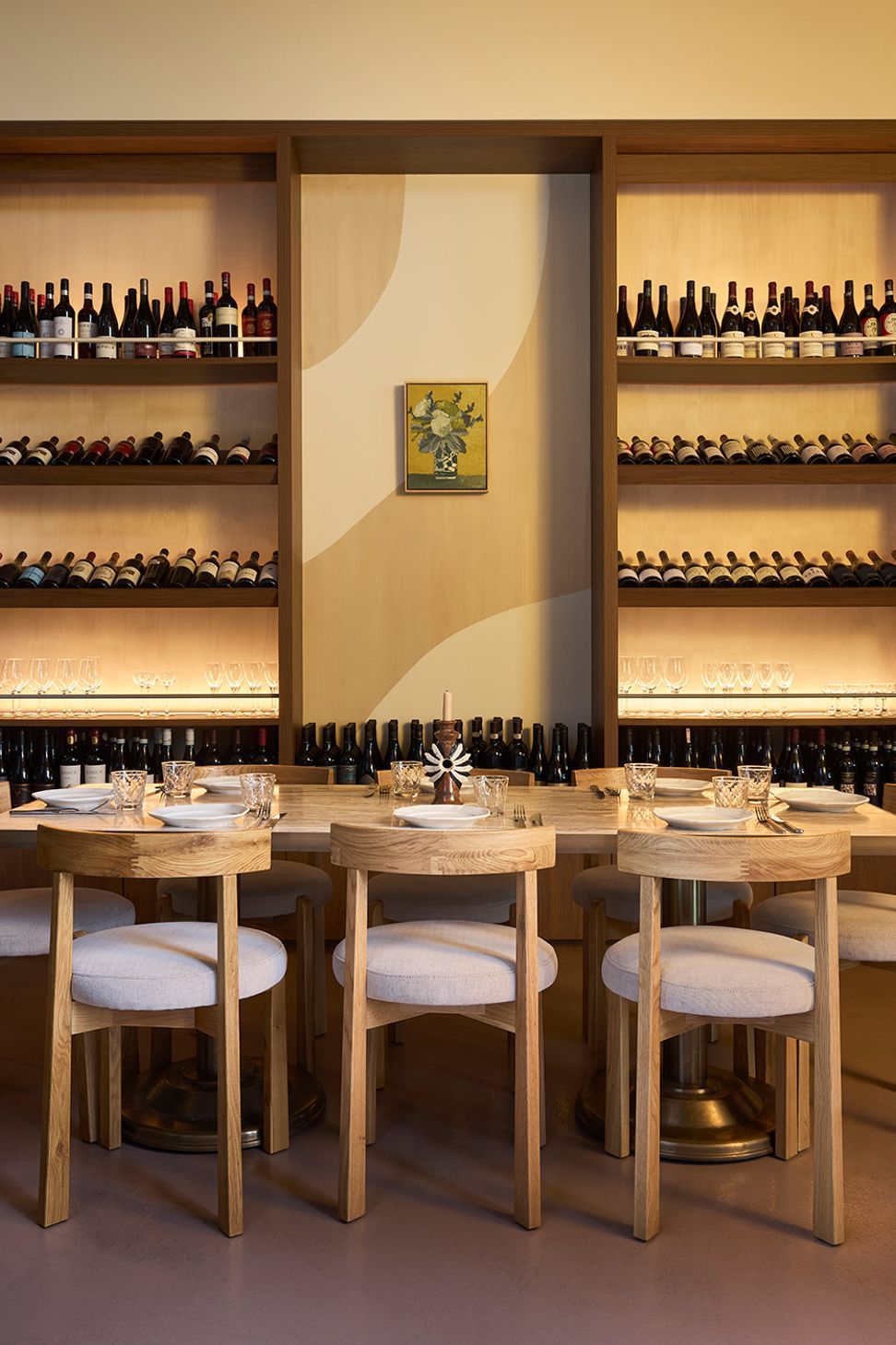
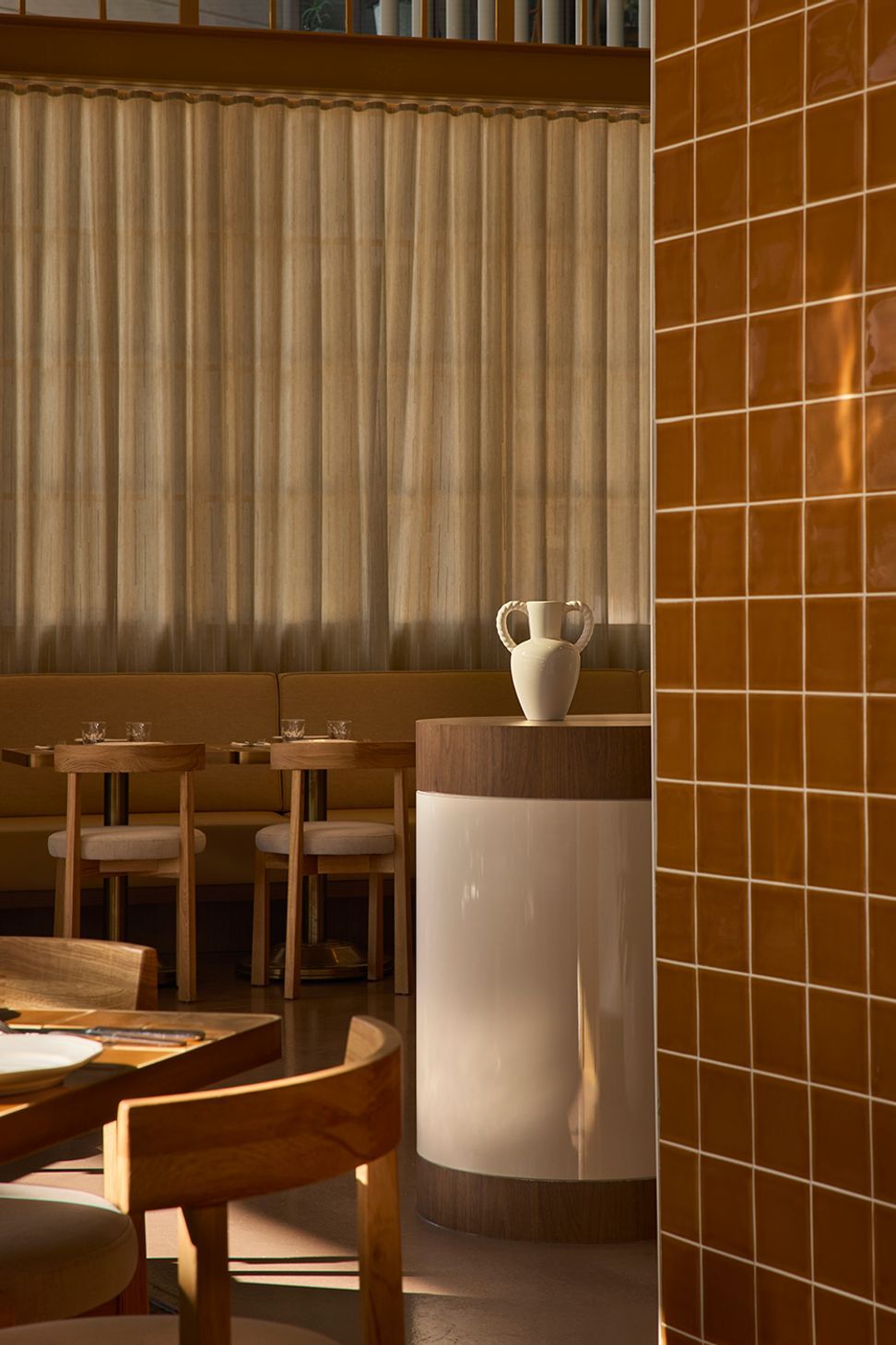
The resulting interior is bathed in warmth. Golden tones ripple across surfaces, creating a palette that feels sun-kissed and inviting. Terracotta-inspired flooring grounds the space, while glossy tiles and a luminous mural catch and reflect light throughout the day.
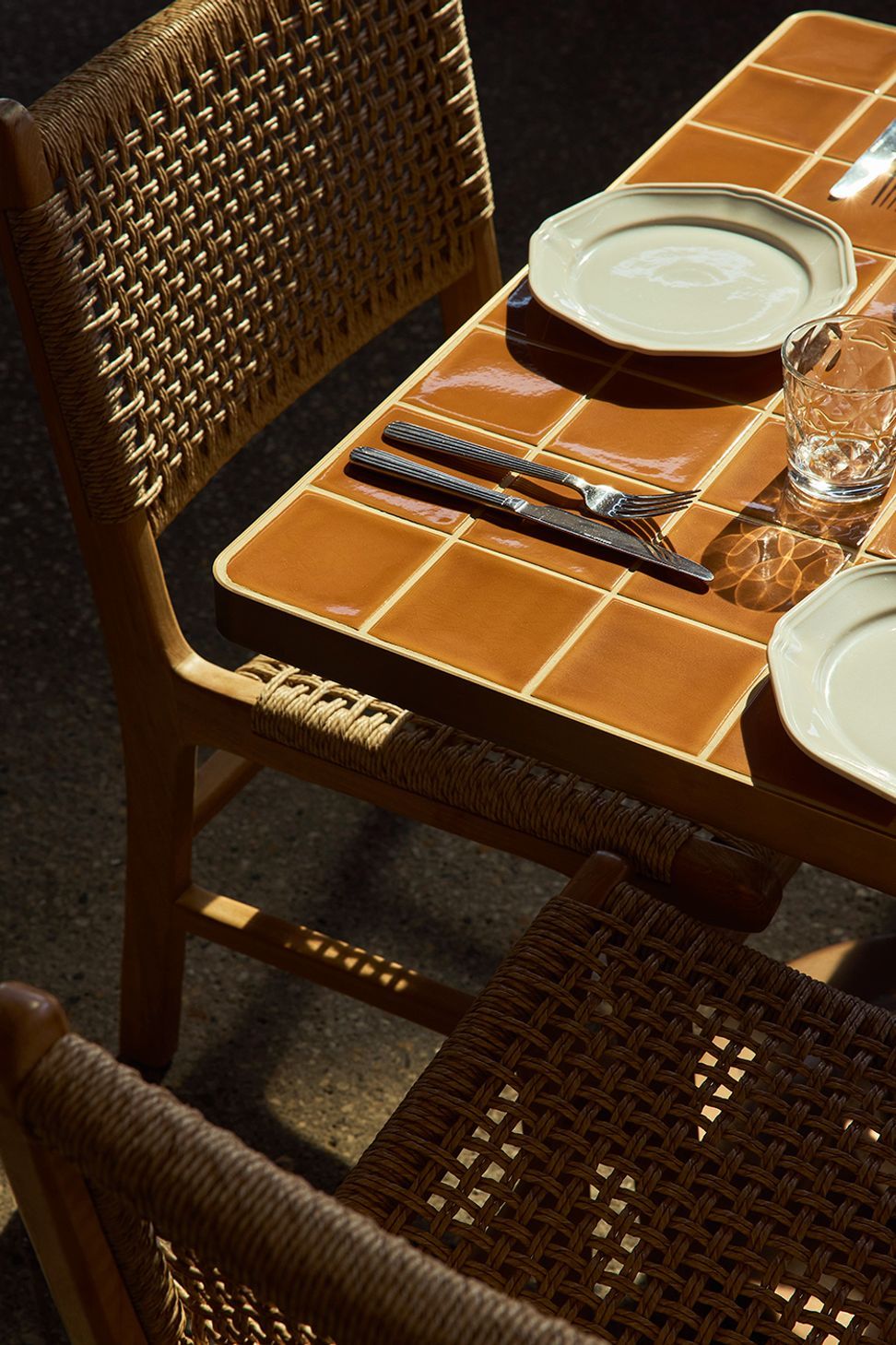
"We wanted to play with the idea of gloss in our palette because of the idea of the sun and natural light reflecting against things," says Li. "The golden hues, the mural and the glossy tiles all came from that feeling of being under the European sun."
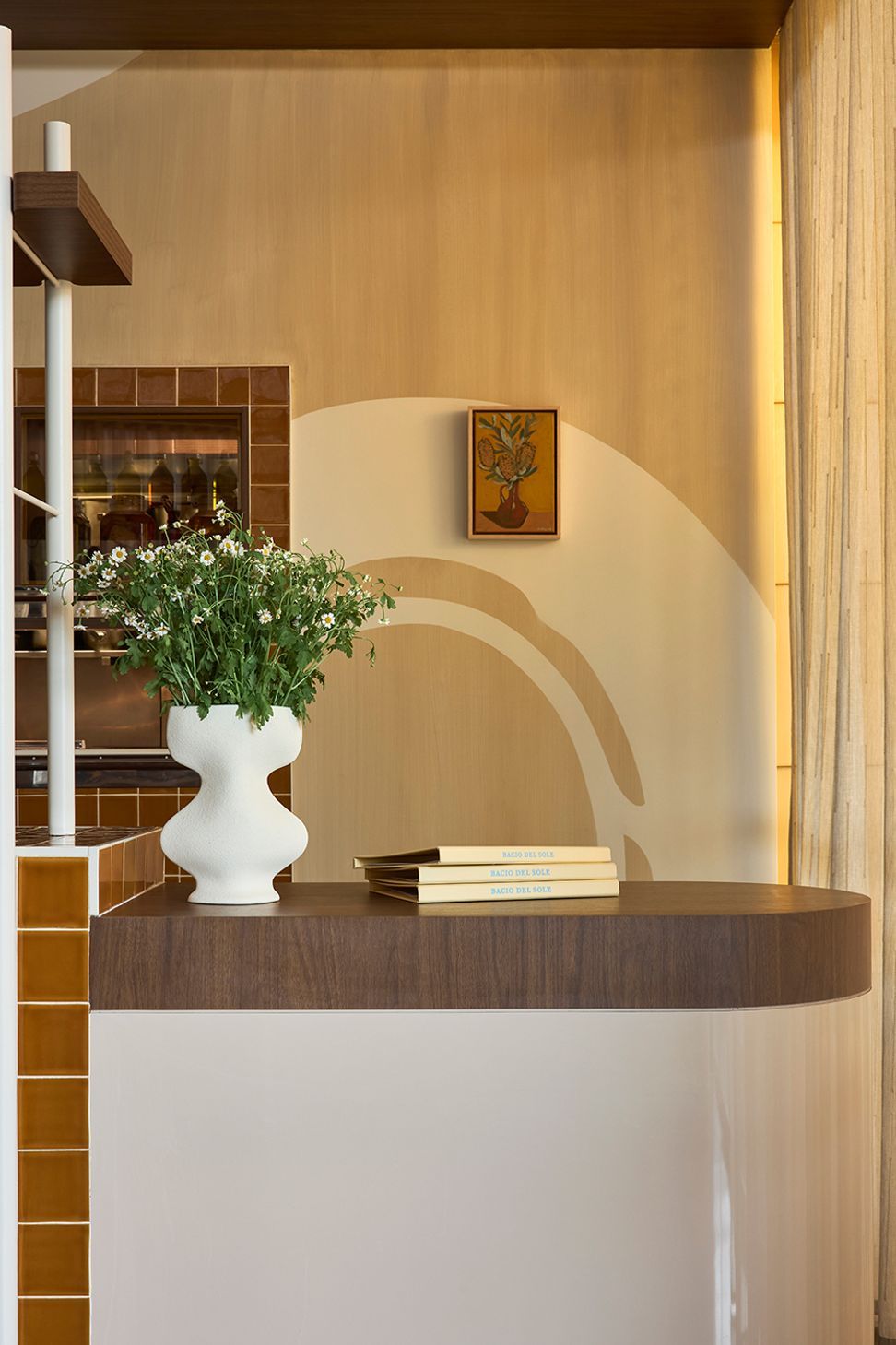
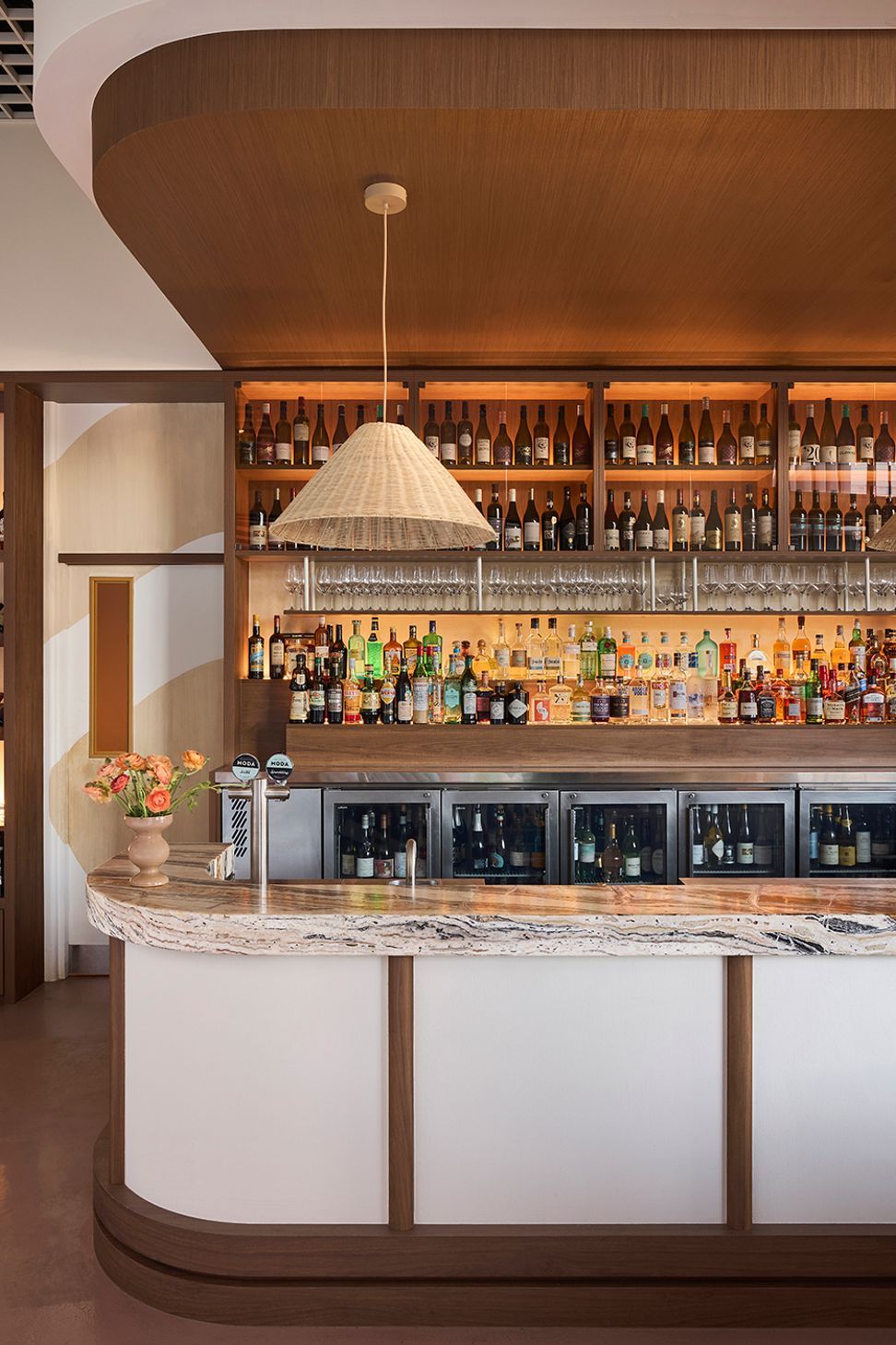
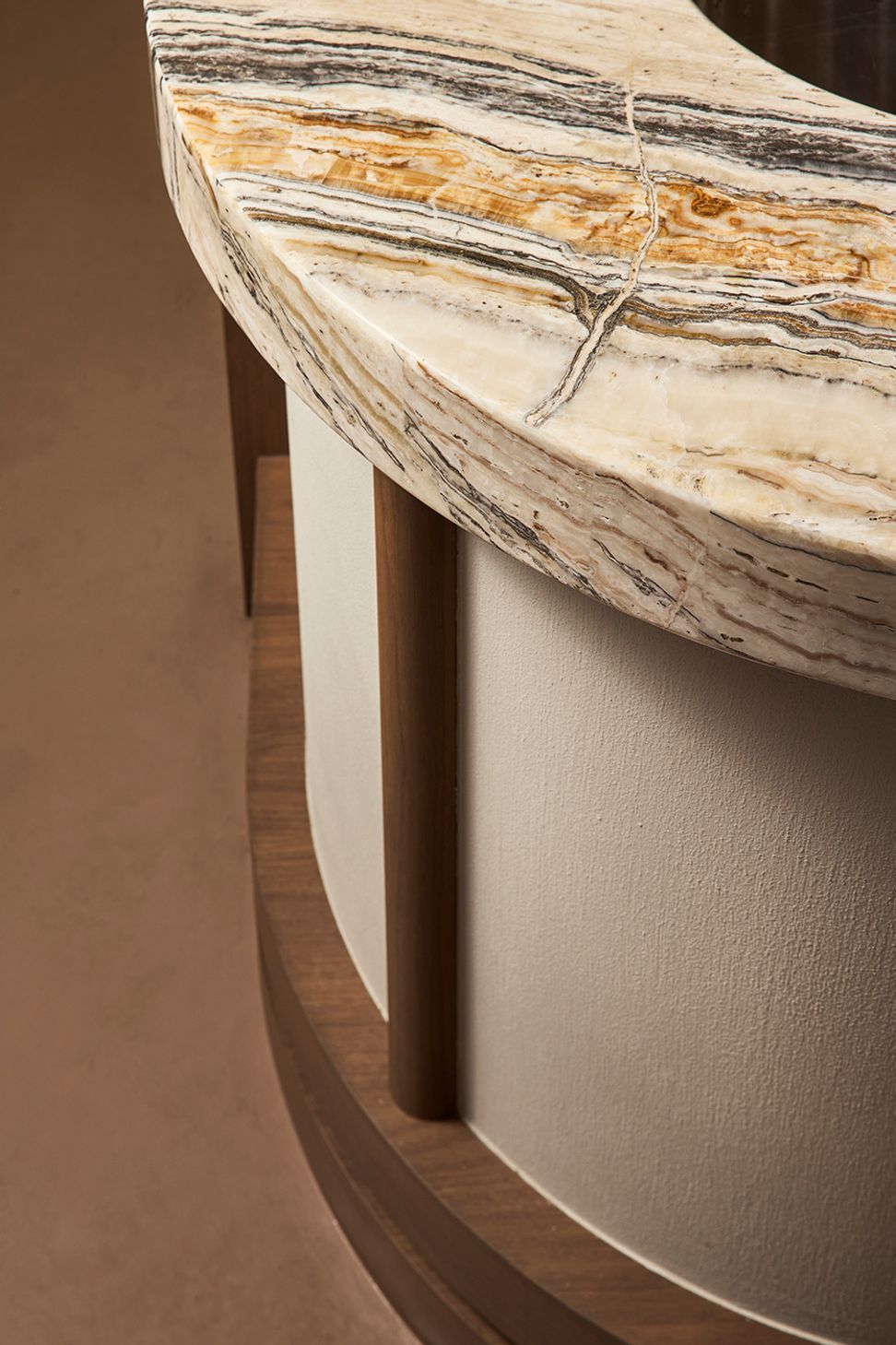
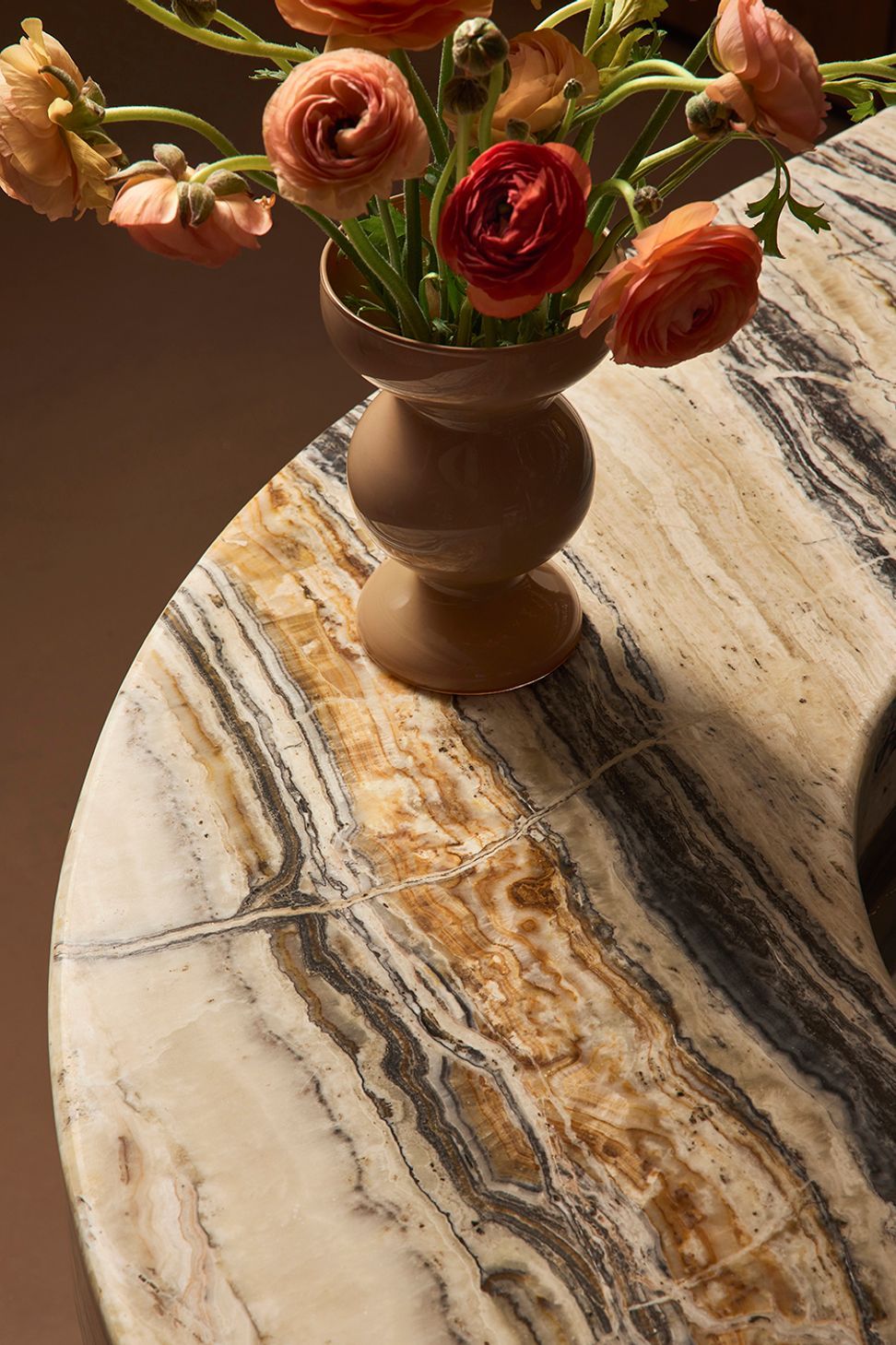
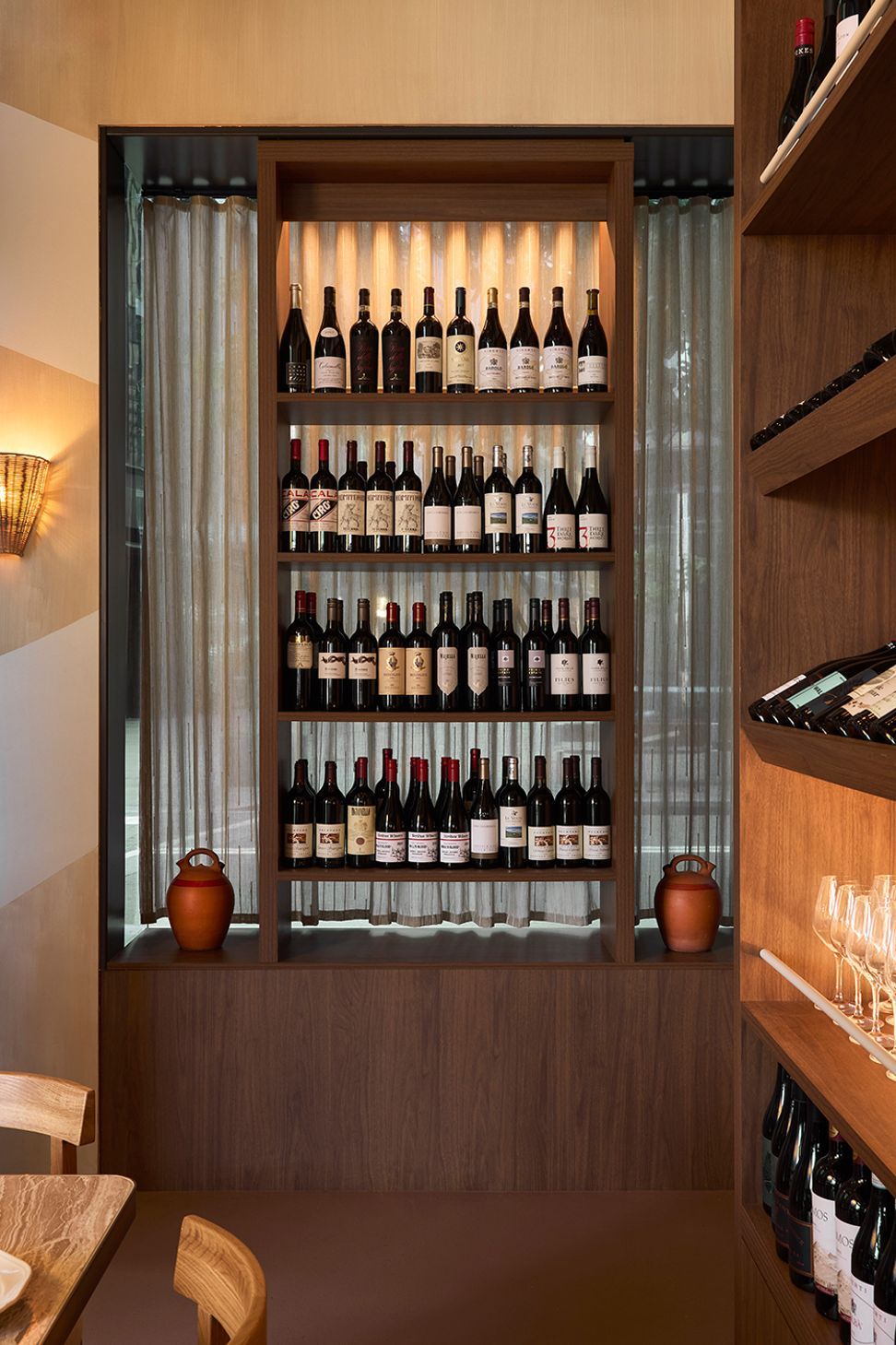
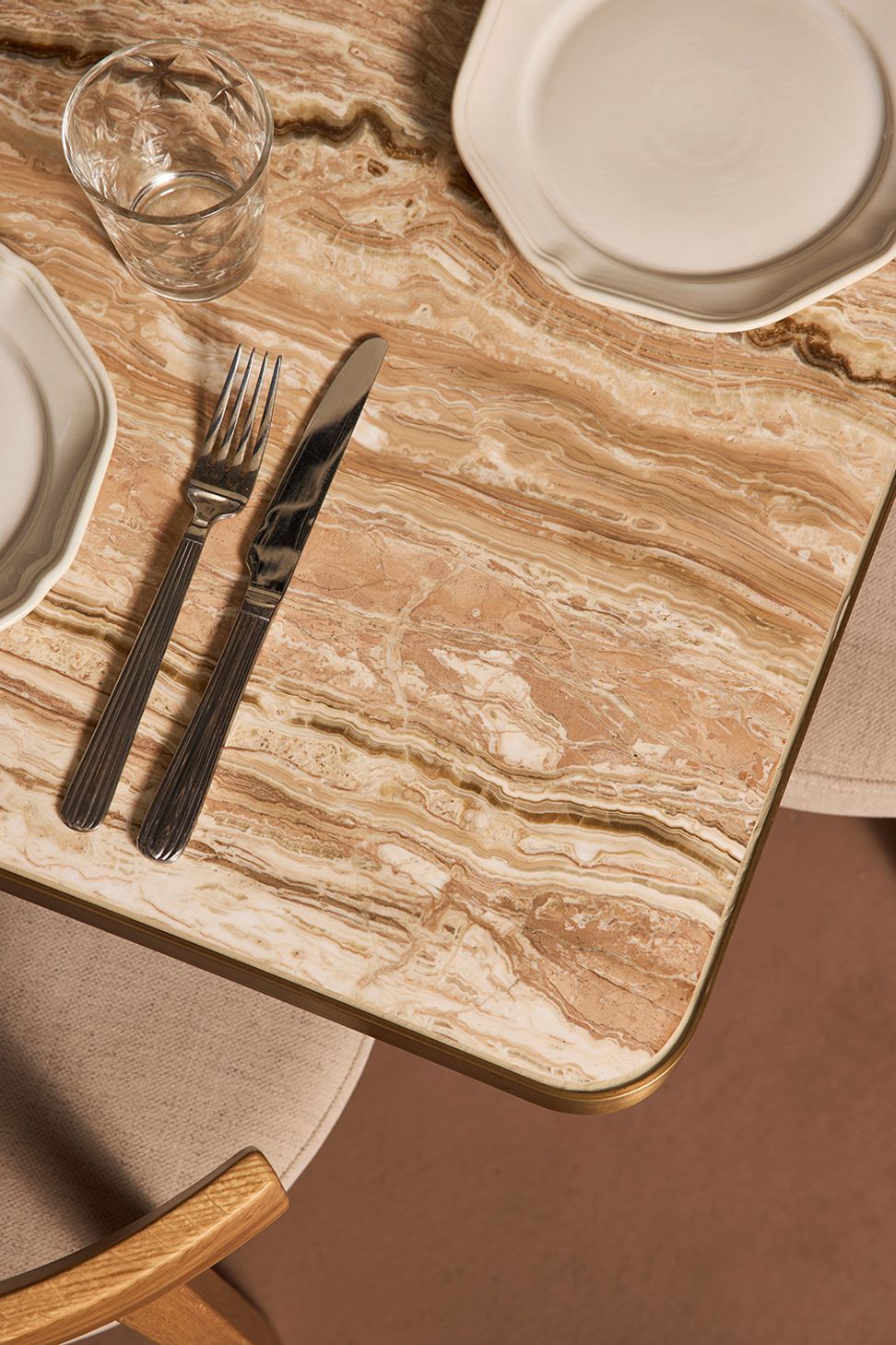
Material selection became one of the project's defining gestures. Traditional walnut timber introduces a familiar trattoria warmth, while carefully chosen stone elevates the experience. Most striking is the Striato Onyx that wraps the bar, its dramatic veining weaving together white, gold and black tones in a single expressive surface.
"The Striato Onyx was one of the first materials we pulled," Li says. "It's quite a unique stone and can be divisive, but I'm so glad the clients loved it and approved it. To see it go from that initial selection all the way through to construction and operation is always beautiful."
While the aesthetic story feels effortless, the planning required a more strategic approach. The existing tenancy came with infrastructure that needed to be retained, and the site's prominent position created multiple points of entry from the waterfront, the promenade and surrounding precinct.
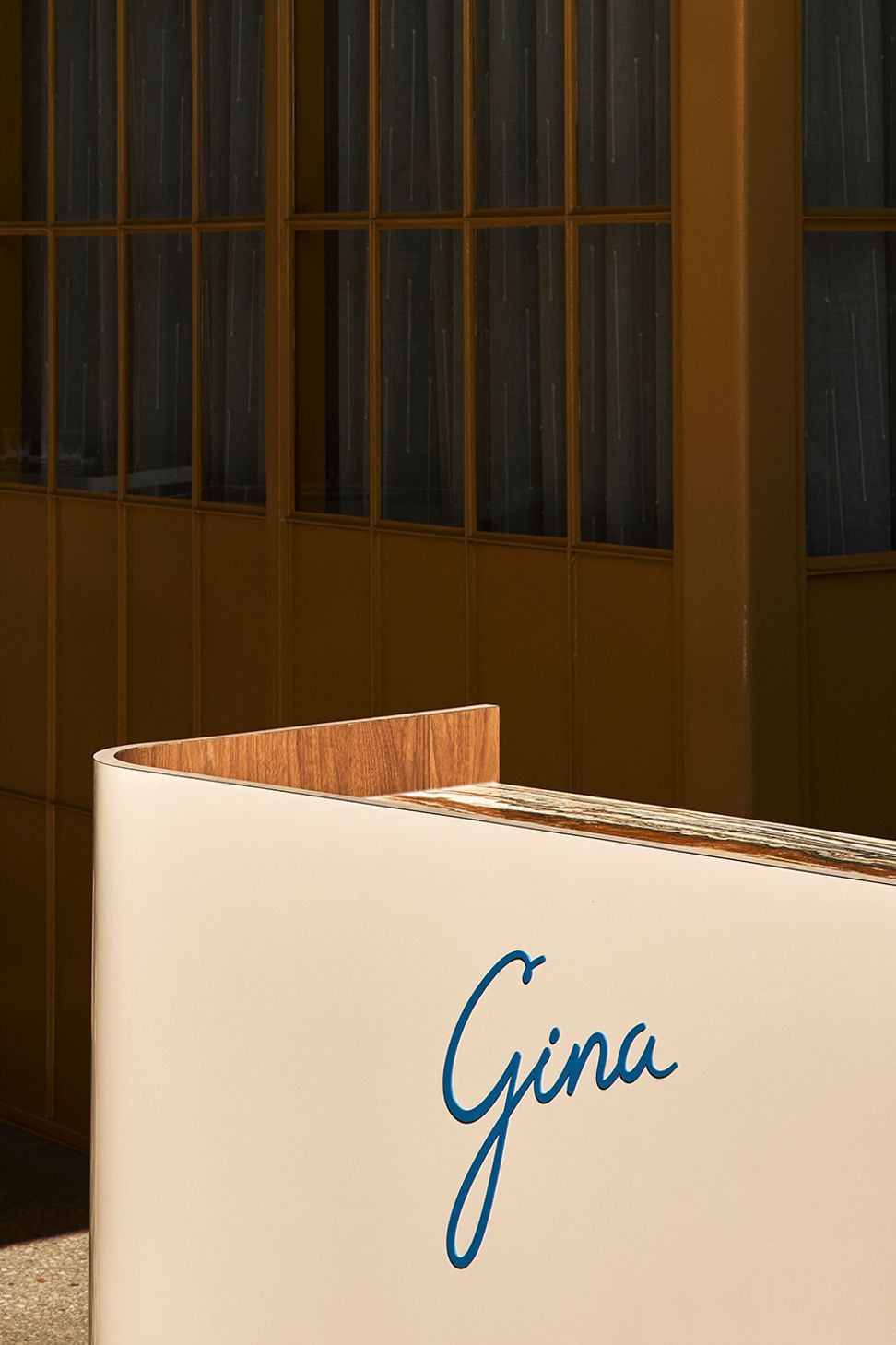
Rather than fighting these conditions, the team used them to shape the experience. The bar was elevated as the central anchor, drawing guests inward and providing an immediate point of orientation. Nearby, a tiled host station complete with a deli slicer and hanging cured meats reinforces the restaurant's identity while creating a clear service touchpoint.
"We had to think about the arrival moment from several different directions," says Li. "That made it clear that we needed to hero the bar as a central anchor to draw people in. The host stand became another grounding point for the space, making it easy for guests to understand where service begins whether they're dining inside, outside or closer to the water."
Flexibility also informed the layout. A mix of seating arrangements caters to the varied rhythms of Barangaroo life, from quick lunches and after-work drinks to intimate dinners and larger celebrations. High seating along the perimeter offers a more casual experience, while the interior accommodates smaller groups seeking a slower, more curated meal.
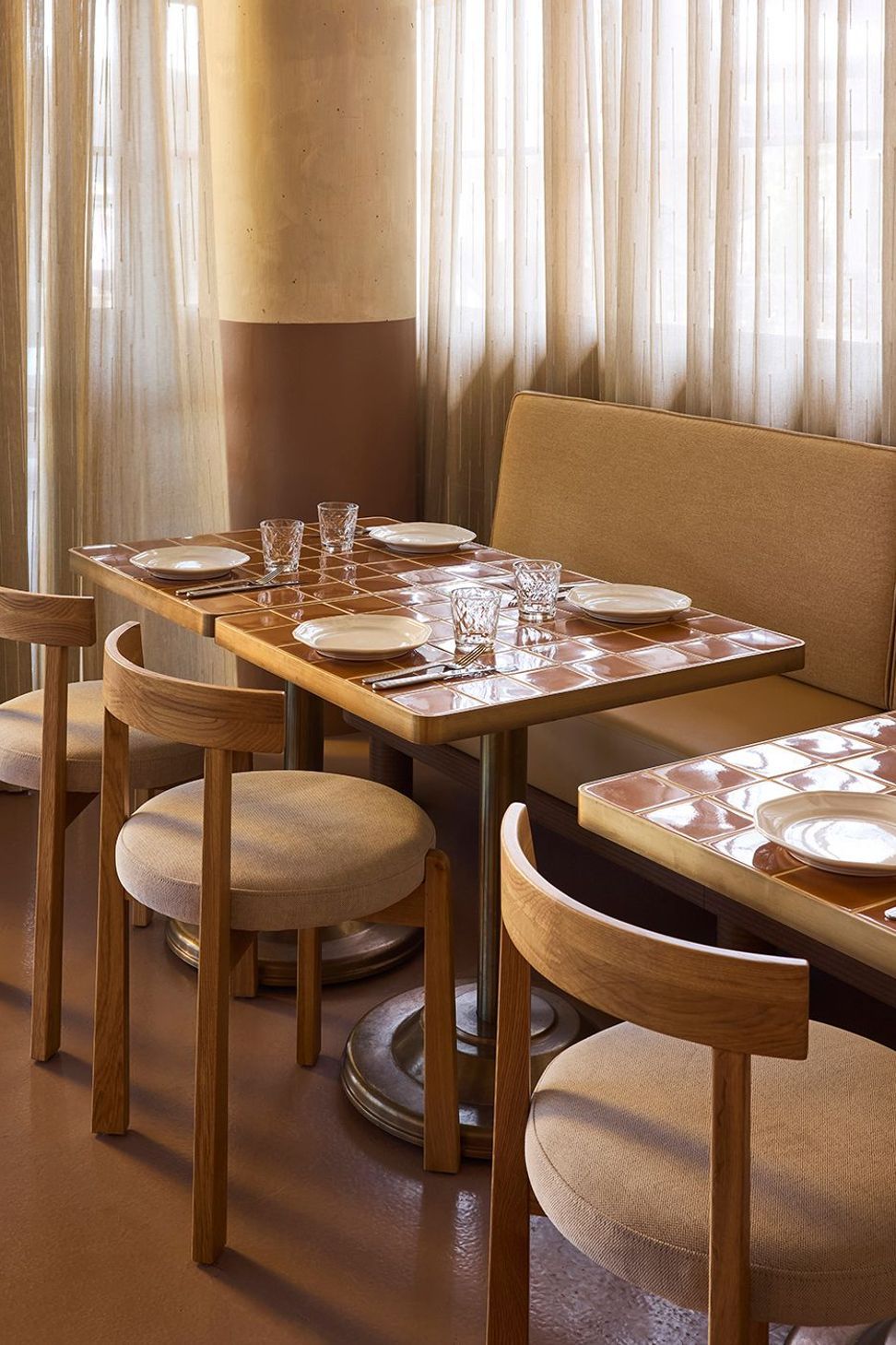
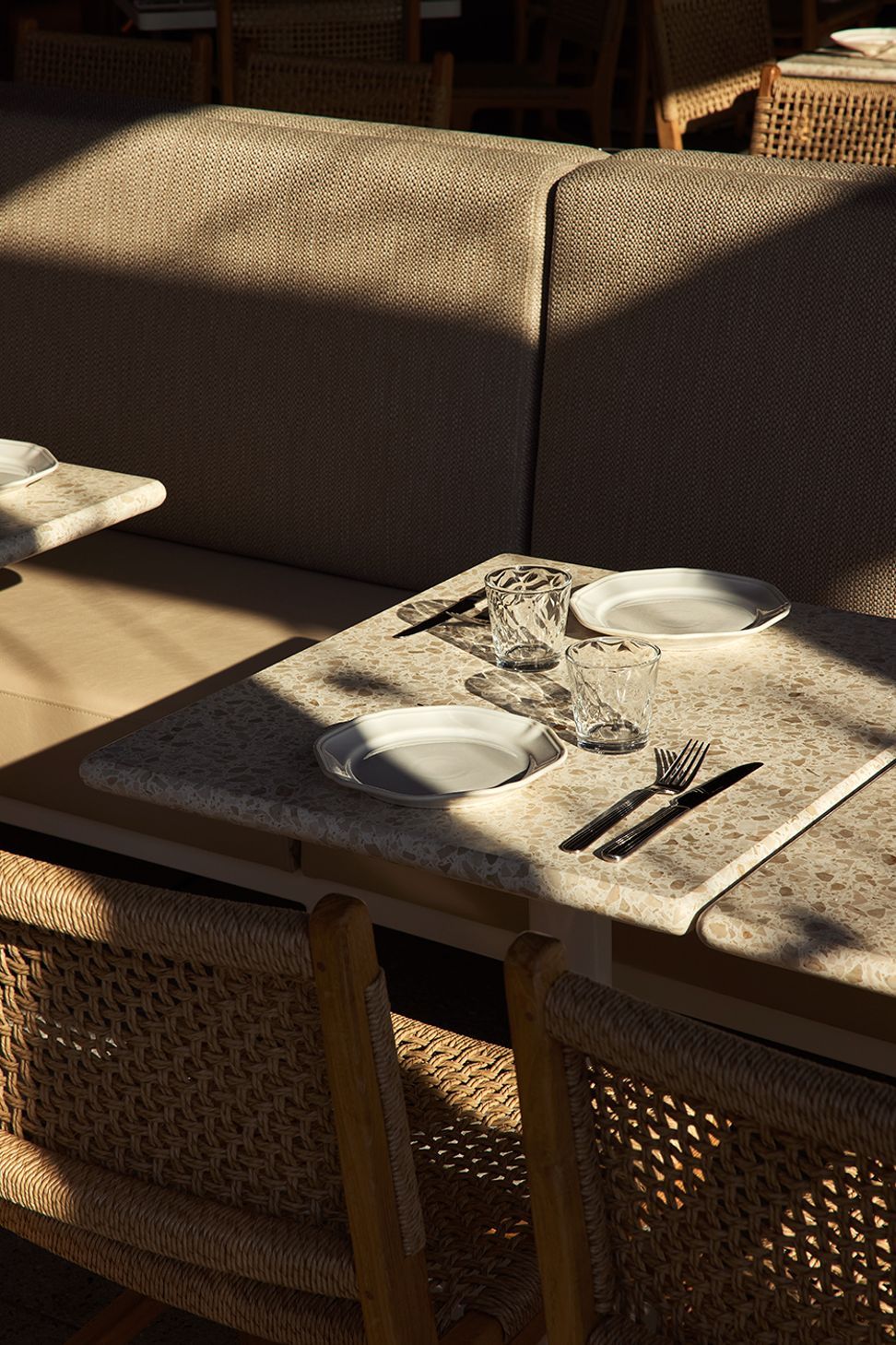
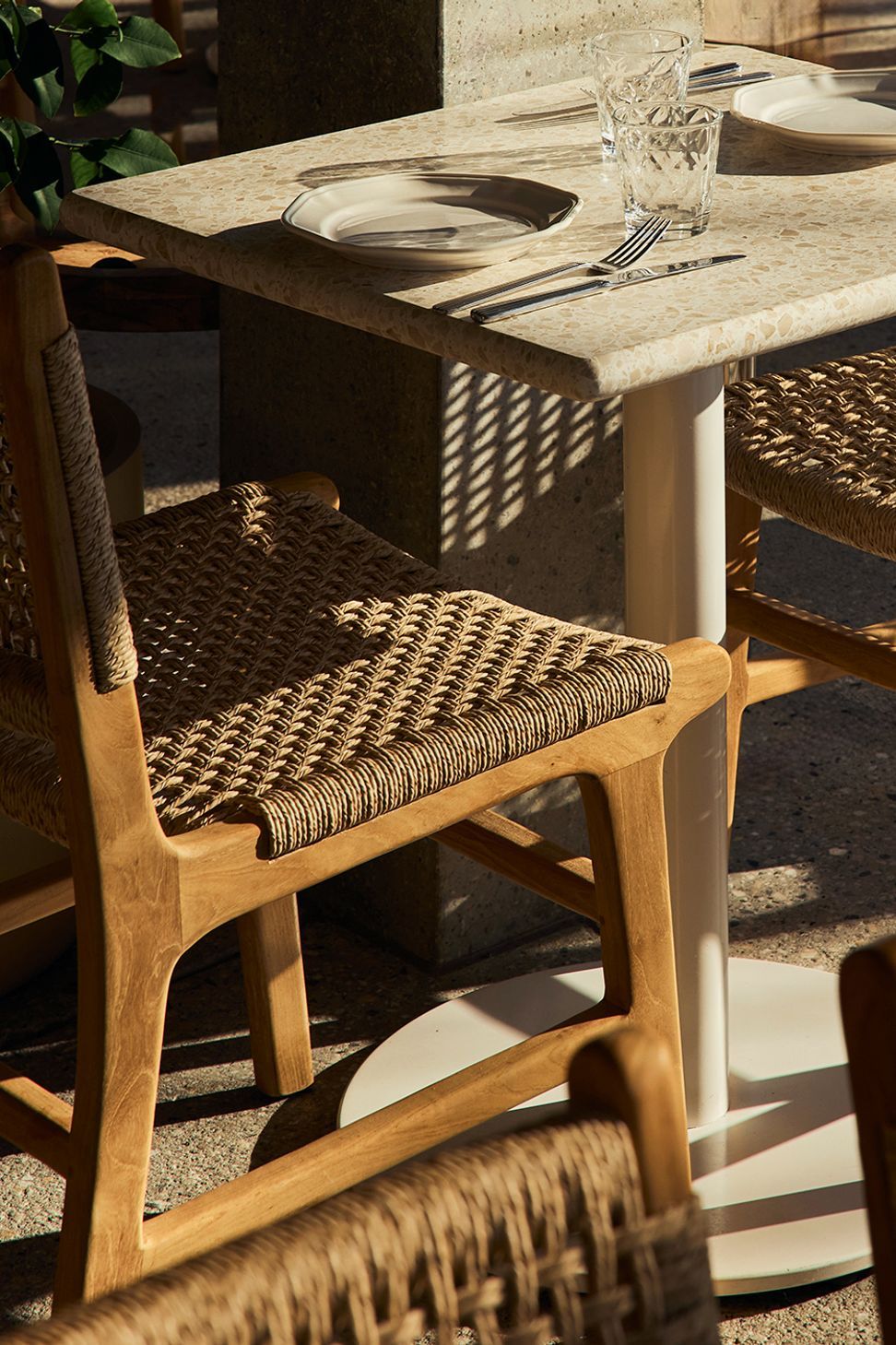
This diversity extends to the furniture itself. Custom-designed tables were developed in collaboration with local makers, each contributing another layer of material richness. Stone inlays, metal trims, terrazzo surfaces and tiled finishes create subtle variation throughout the venue, while carefully crafted curved edges reveal the level of detail invested in even the smallest elements.
For Li, these bespoke pieces remain among the most rewarding aspects of the project. They reflect a commitment to craftsmanship that underpins the entire design, proving that hospitality spaces are often defined by the details guests may not consciously notice but inevitably feel.
Since opening, Gina has found its footing within the ever evolving Barangaroo dining scene, establishing a distinct identity while sitting comfortably within the broader waterfront precinct.
"It's been such a successful venue in terms of bringing in people and being part of that Barangaroo community," says Li. "Knowing that Gina has found its own grounding there has been really great."
Perhaps the most meaningful endorsement, however, came not from the public but from within the studio itself. Last year, the Tom Mark Henry team chose Gina as the venue for its Christmas celebration, giving colleagues the chance to experience the project not as designers, but as diners.
For Li, it was a rare and satisfying full-circle moment. After months of design development, material selections and construction coordination, the team gathered around one of their own custom tables, sharing food, conversation and a restaurant filled with life. In a profession often focused on drawings and details, it was a reminder of the real purpose of hospitality design: creating places people genuinely want to be.
And, as Li notes with a smile, the food was excellent too.
- Completed
- 2025
- Building style
- Art Deco
Like this Project?
Hire Tom Mark Henry
The products behind the project
One product specified into this build from one supplier, a verified ArchiPro member. Tap through to specifications, suppliers and lead times.

Professionals used in
this project
The practices and trades credited on this project.







More projects from
Tom Mark Henry
Other work by Tom Mark Henry, across every category they build in.


More in
Cafes and Restaurants
Everything else in Cafes and Restaurants, from every practice on ArchiPro.


Next Project
Keep scrolling