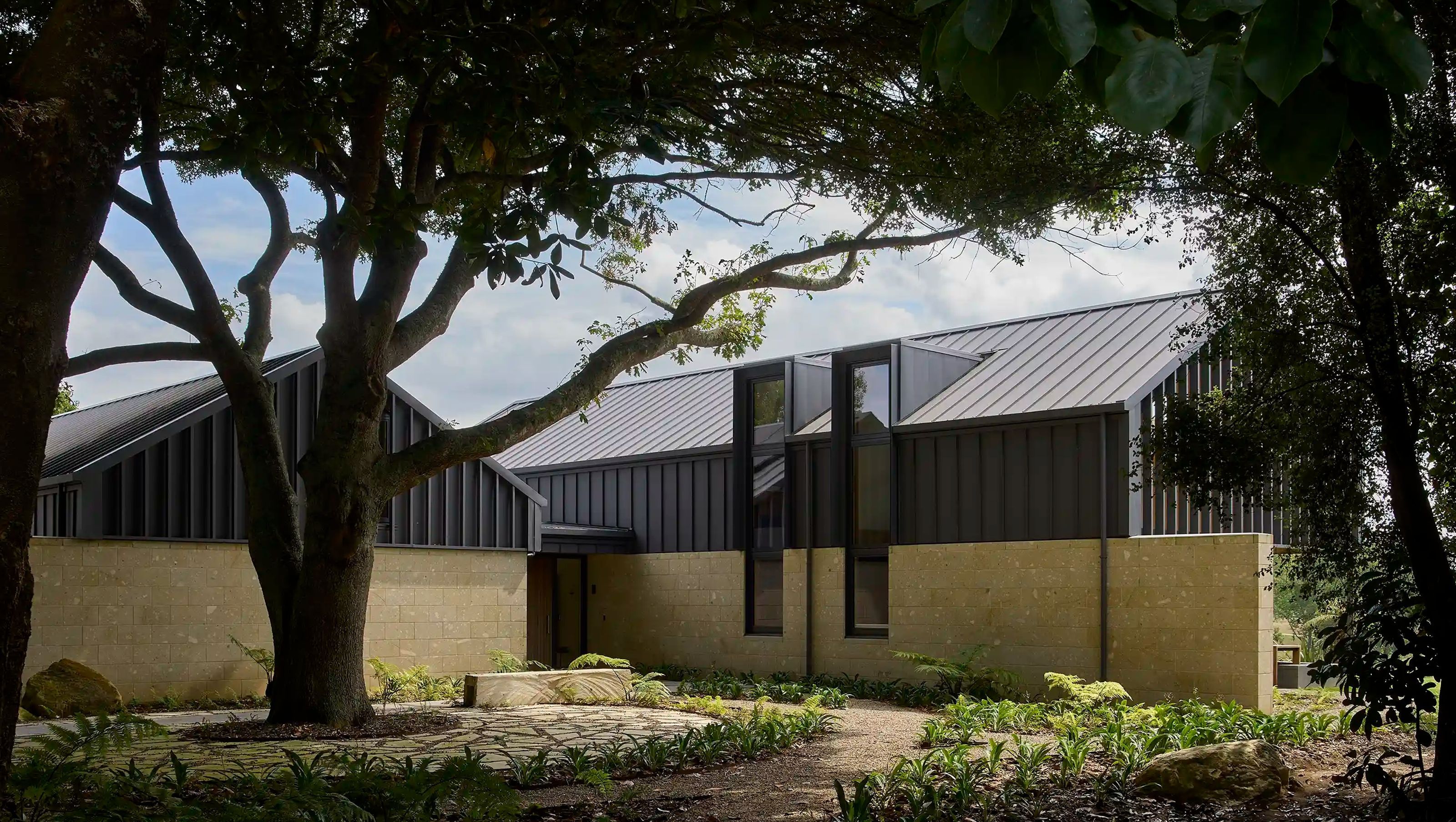

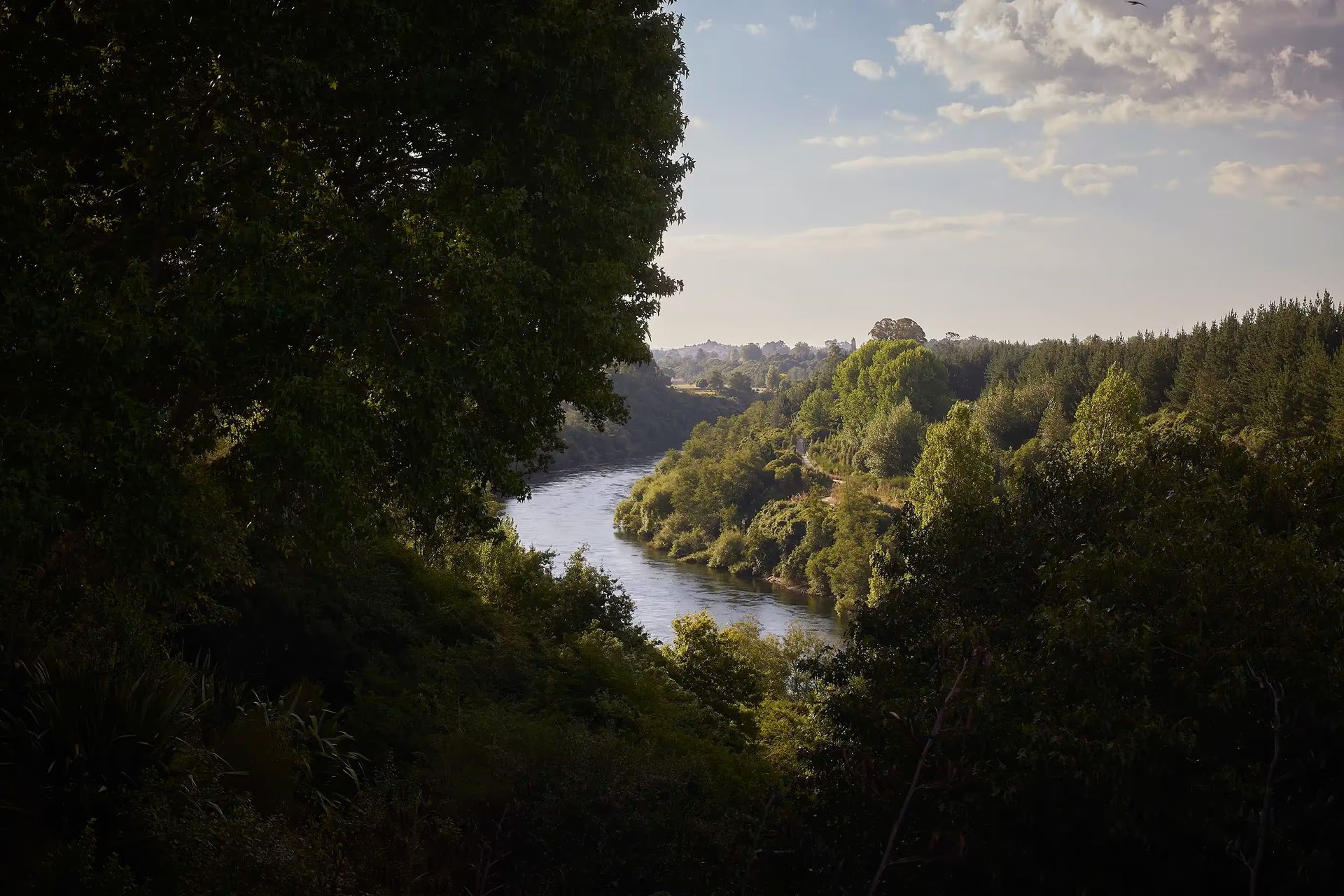
From mornings foraging in the garden to evenings overlooking the Waikato River, this thoughtfully crafted home by Edwards White Architects turns daily patterns into architectural form.
Architecture shaped by ritual
Designing a home around a way of life sounds straightforward enough. In reality, few clients can articulate exactly what that life looks like. So when the owners of a property overlooking the Waikato River approached Edwards White Architects with a 26-page brief detailing everything from their daily routines to their long-term aspirations for the land, the architects were delighted.
It painted a picture of a couple whose lives moved fluidly between house and garden, work and leisure, indoors and out.
"The first two pages were a day in the life of who they are, how they wake up, how they do their day," says architect Daniel Smith. "It was the most detailed brief we've ever had."
That clarity would become the foundation for a home designed as much for lifestyle as for a connection with the landscape. Perched above the river north of Cambridge, the site offered spectacular river views but surprisingly little room to build, with mature trees and site constraints narrowing the available footprint to a tightly defined area.
For the architects, one of the most revealing aspects of the brief was the way the clients described their relationship with the outdoors. Their days began in the garden and regularly returned there. They worked from home, often stepping outside between meetings. They planned to expand the productive landscape around them, eventually transforming former paddocks into an extensive edible forest.
"When we first met them, it was fairly obvious that they lived this life where they were in and out of the home quite often," says Smith. "It certainly wasn't a sealed container. It was very much an open, permeable envelope."
That idea of permeability became central to the design response. The architecture would not separate occupants from the landscape but encourage a constant exchange between the two.
The site itself demanded careful consideration. Although the property is expansive, a combination of geotechnical setbacks, mature trees and the river's edge left only a small area suitable for building. At its centre stood a magnificent oak tree that quickly became the organising element of the project.
"You come to the site and at first glance it looks like a large rural site, but by the time you take off all of the constraints, you get a slim, triangular site," says architect Brian White. "A small snippet of land where you've actually got a buildable footprint."
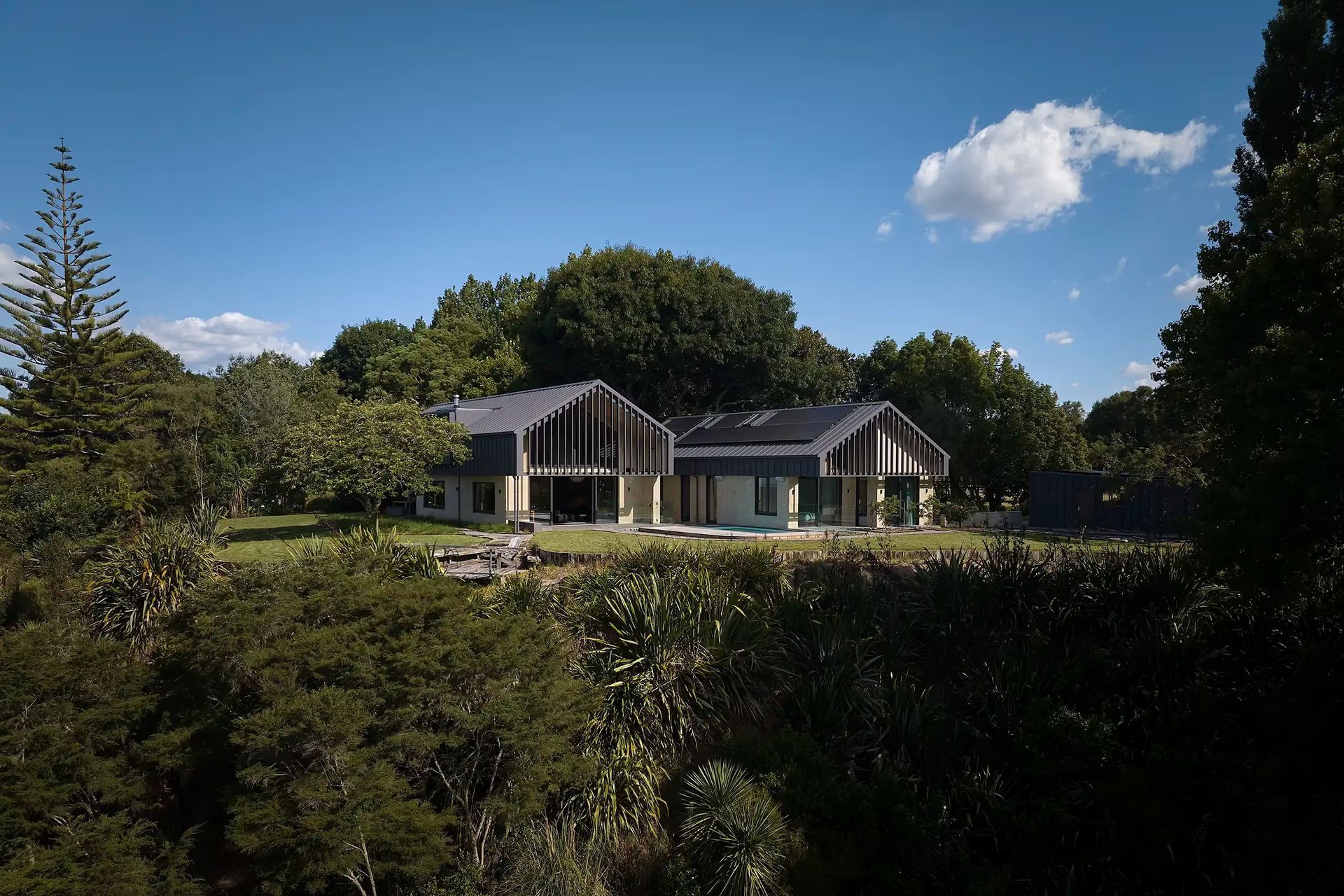
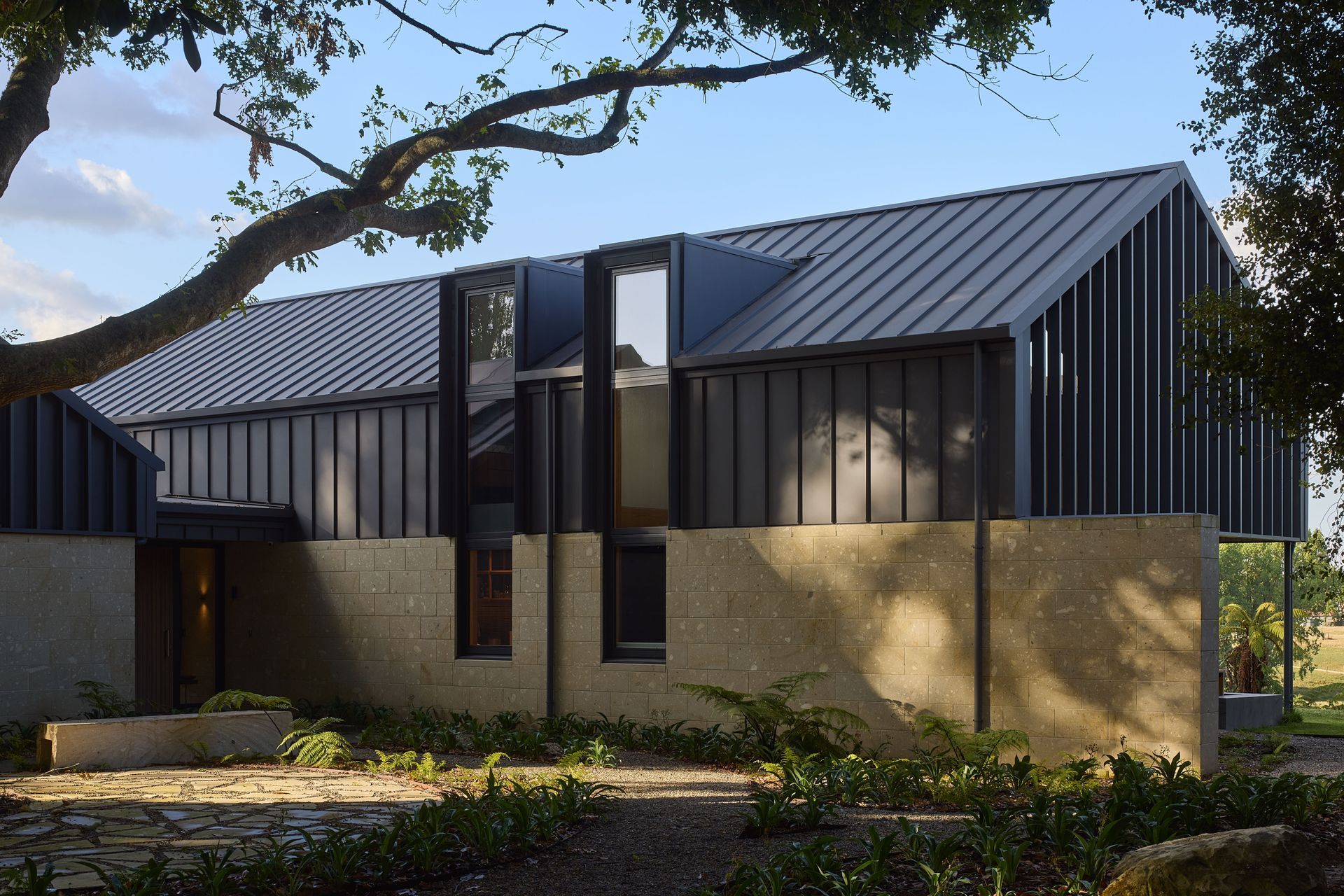
Rather than treating those constraints as limitations, the architects allowed them to shape the architecture. Two pavilion-like forms slide past one another, responding to solar orientation, views and the clients' desire for a home that felt comfortable for two people while accommodating family when needed.
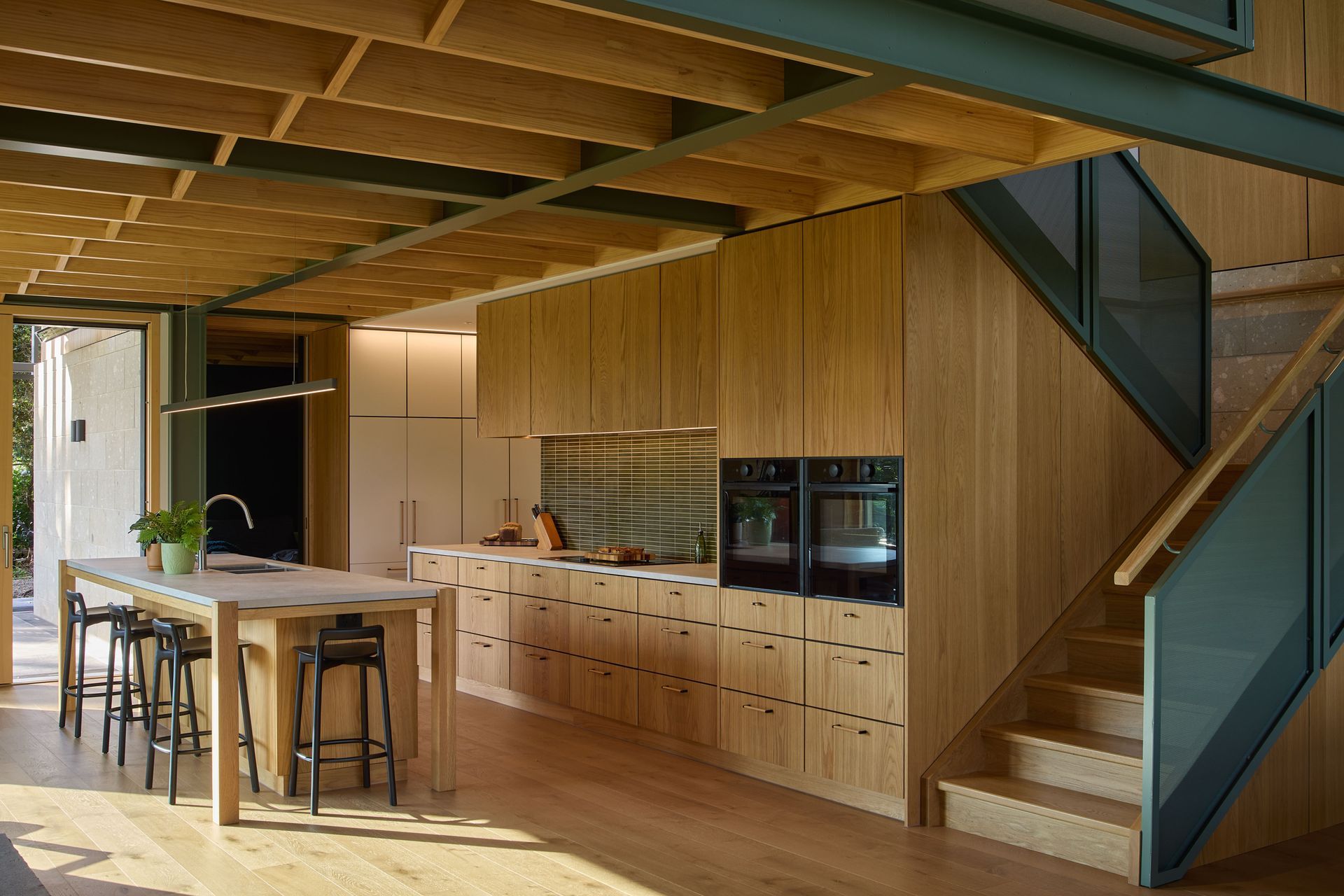
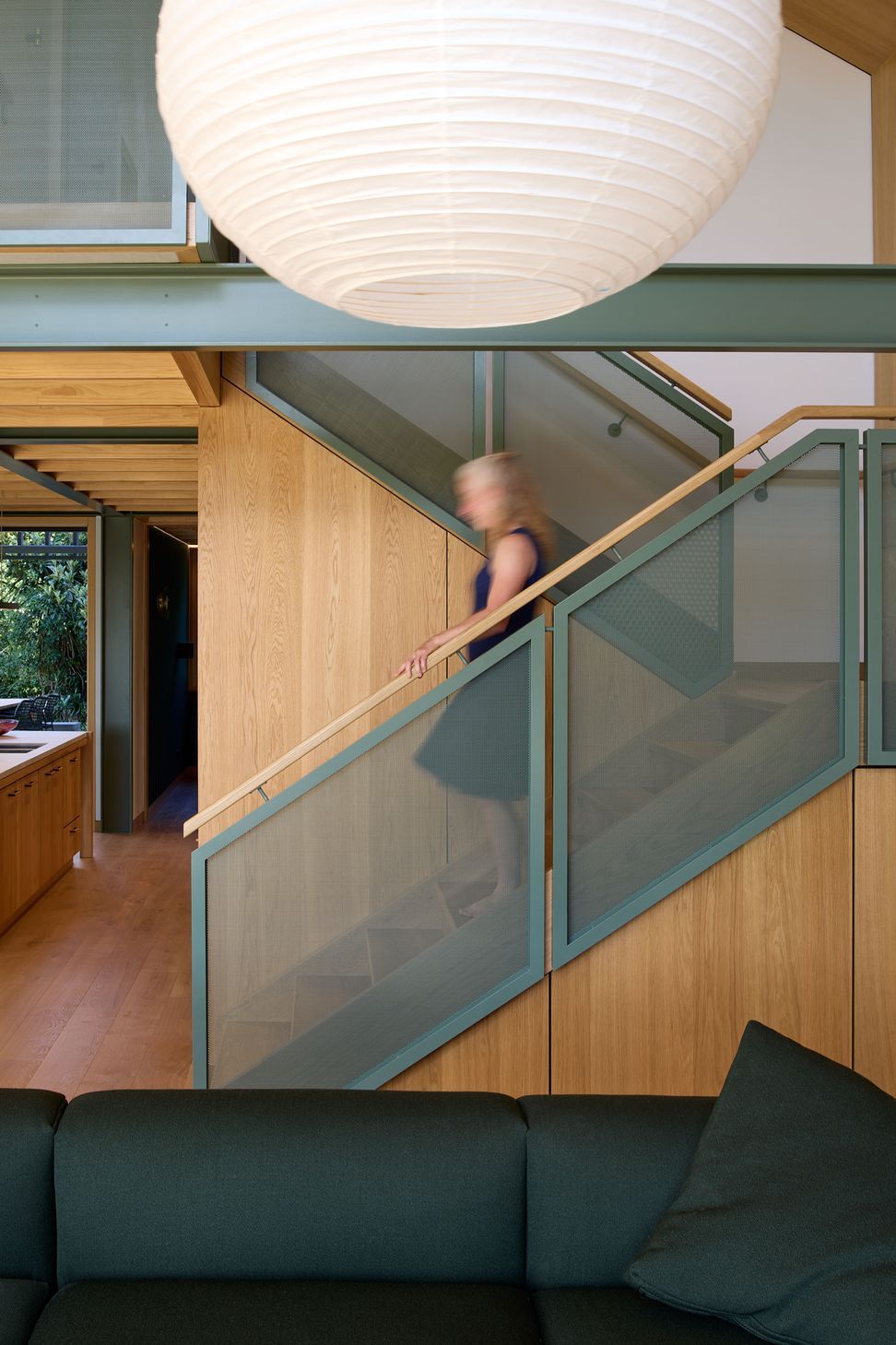
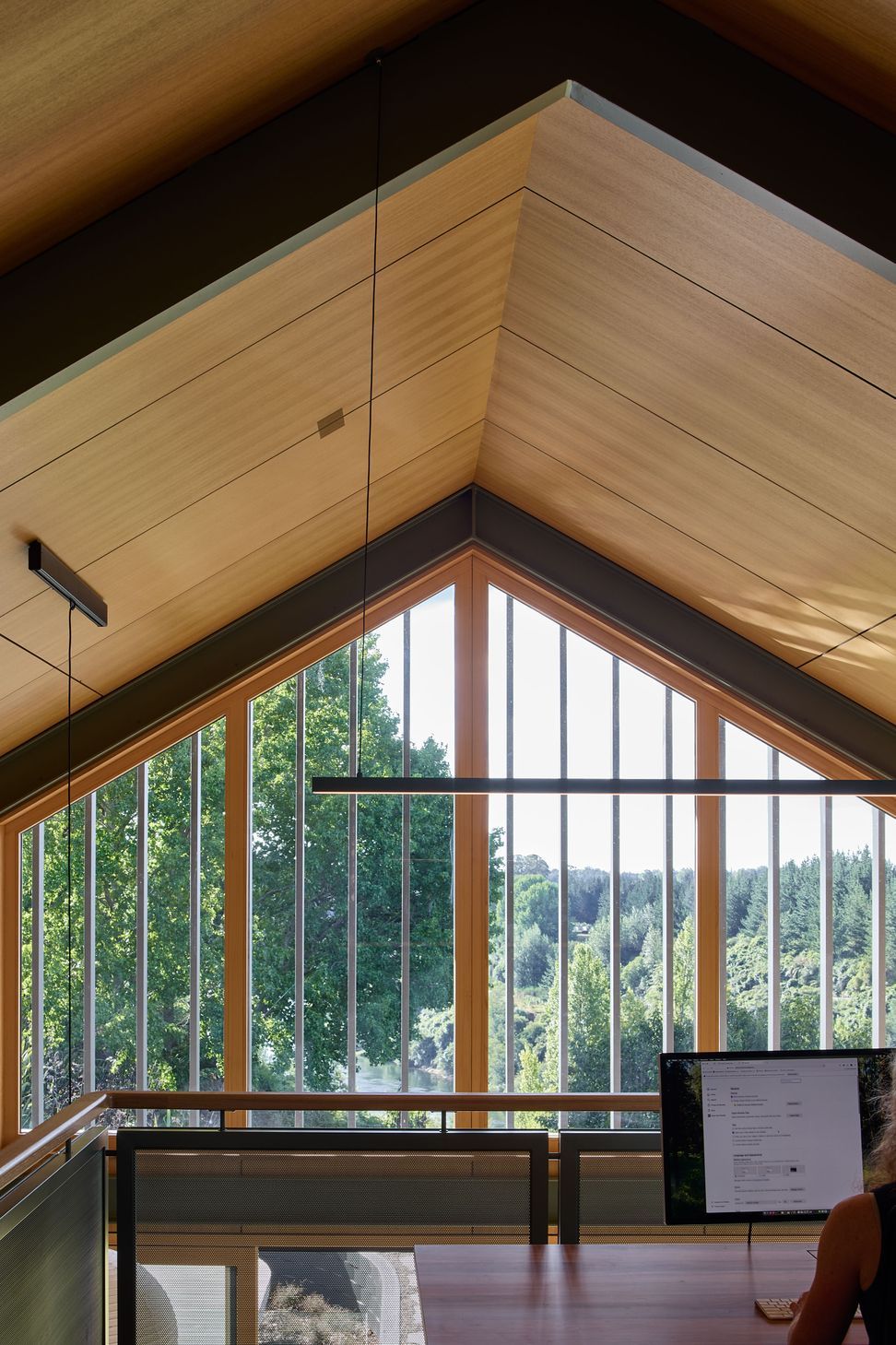
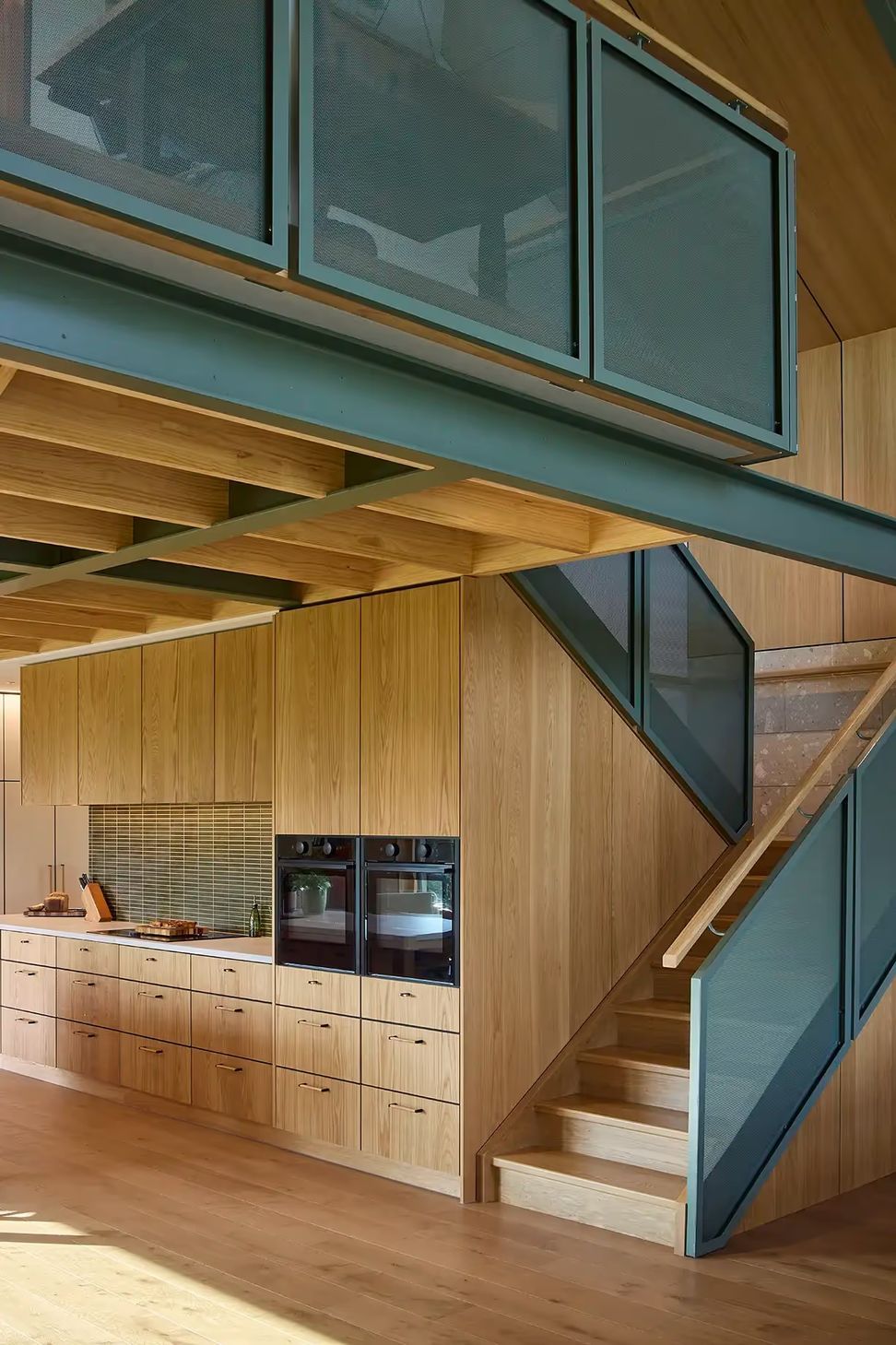
The primary pavilion contains the spaces used every day. Kitchen, living areas, bedroom and office are all located within a generous double-height volume oriented towards the river. Above, a mezzanine workspace overlooks both the living area and the landscape beyond, allowing the couple to remain connected throughout the day.
A second pavilion provides accommodation for visiting family and guests, enabling the home to expand and contract according to how it is occupied.
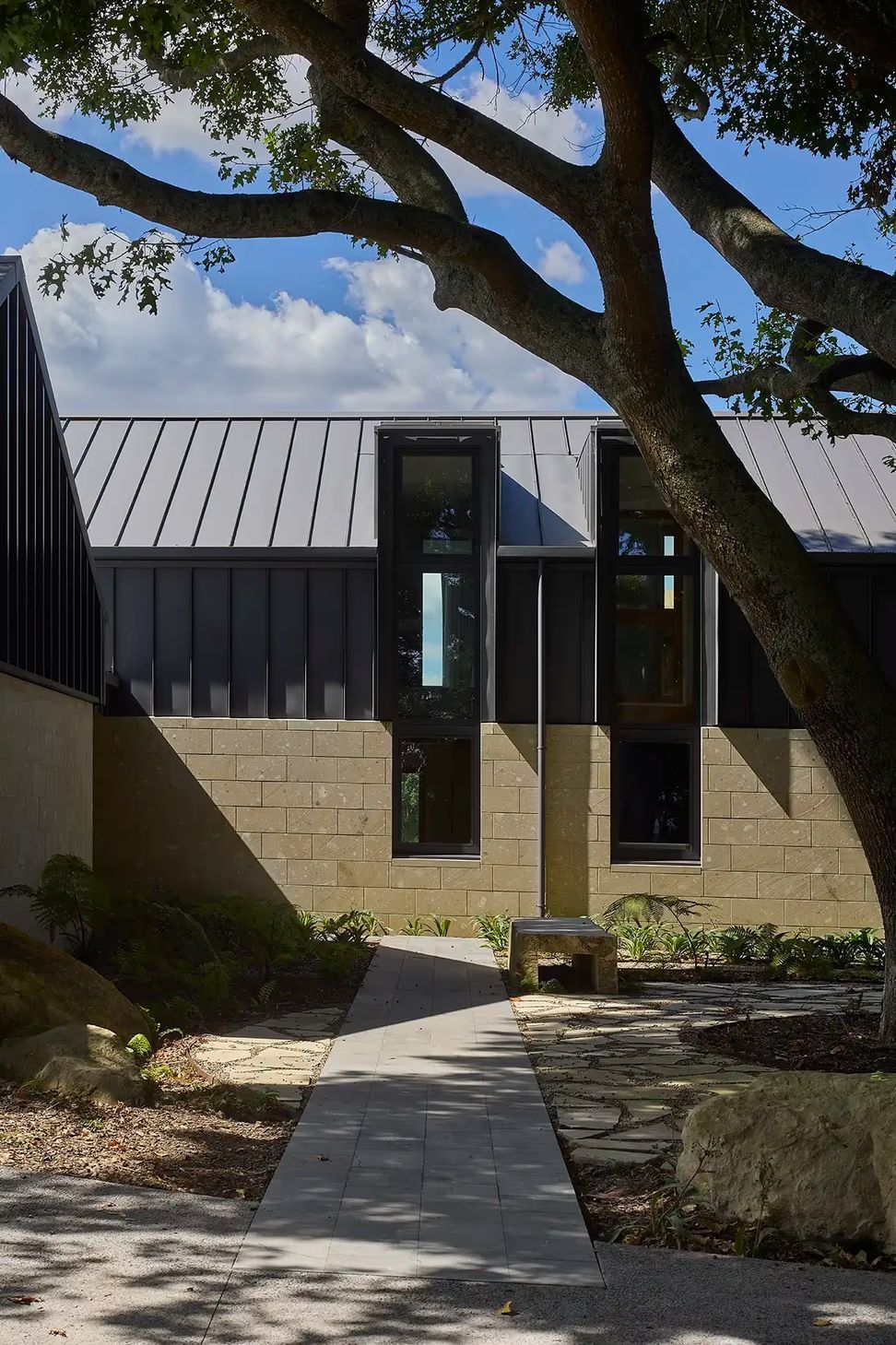
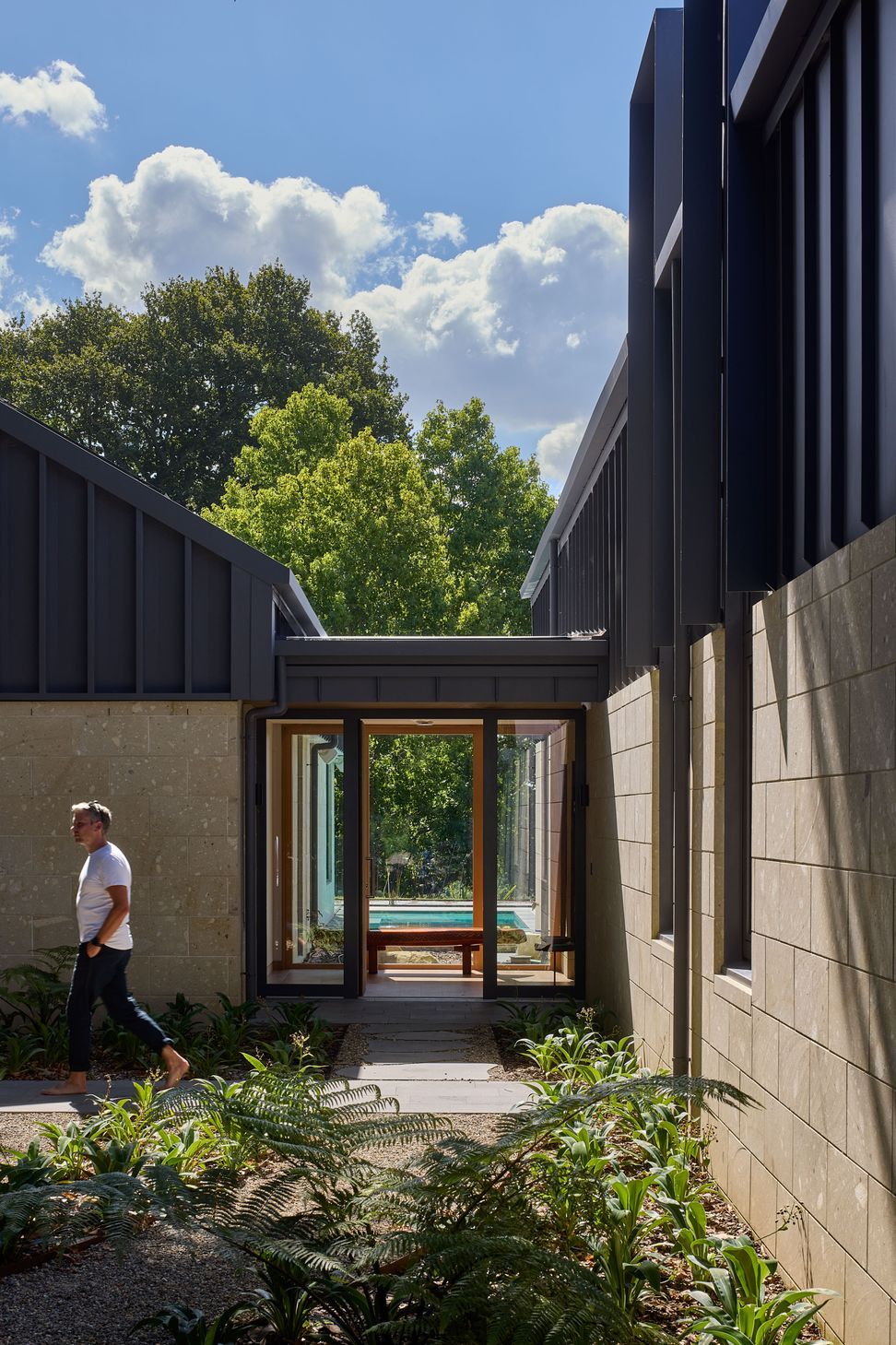
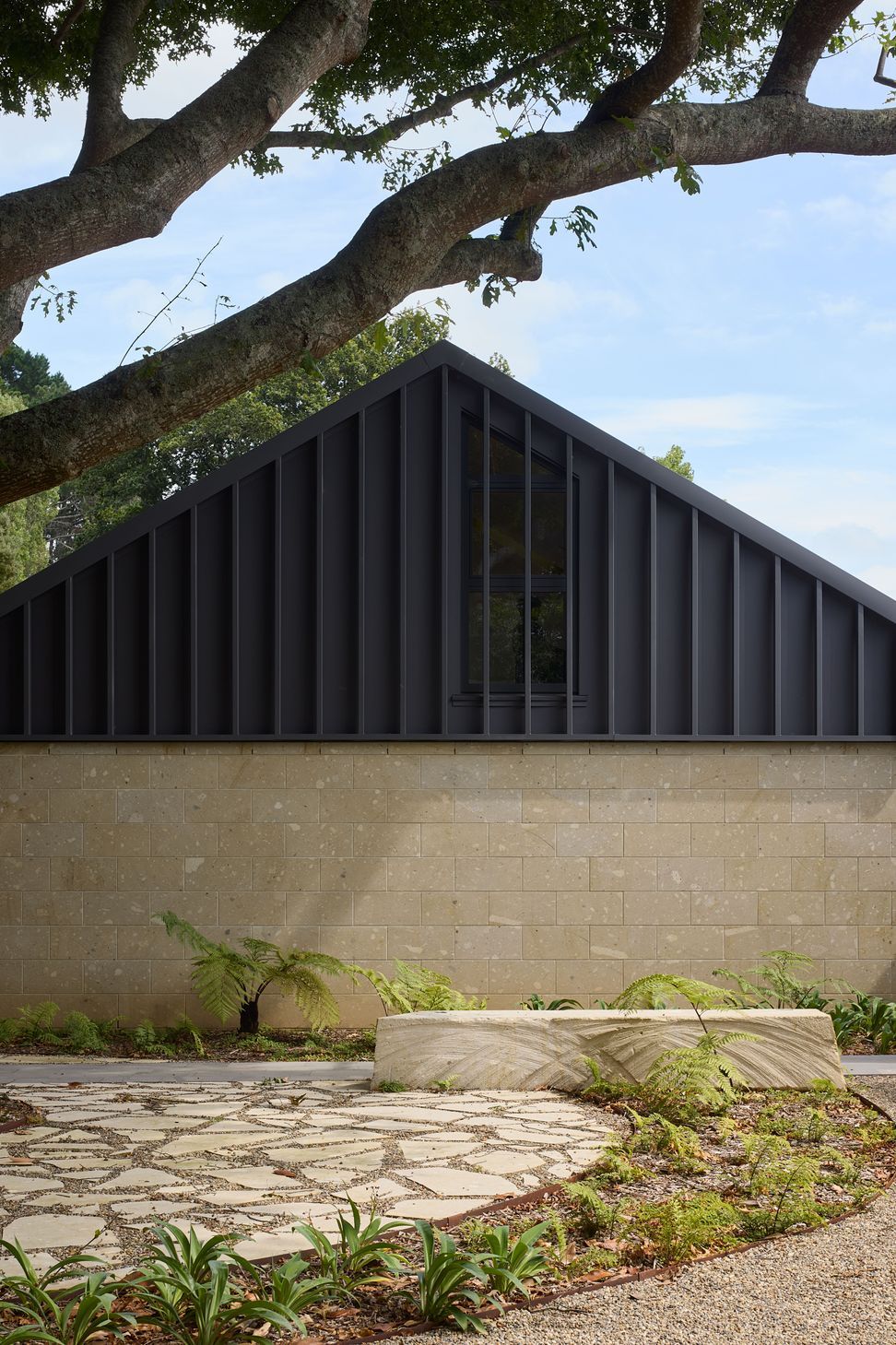
The arrival sequence is equally informed by the site. Visitors approach through a landscape carefully choreographed around the oak tree before passing between substantial Hinuera stone walls that extend beyond the footprint of the house.
"You cannot enter the home without experiencing the tree, and then you cannot open the front door without experiencing this long view to the river," says White.
The sequence deliberately compresses movement before opening dramatically towards the landscape beyond. It is an architectural gesture that heightens awareness of both the trees and the river, establishing an immediate connection.
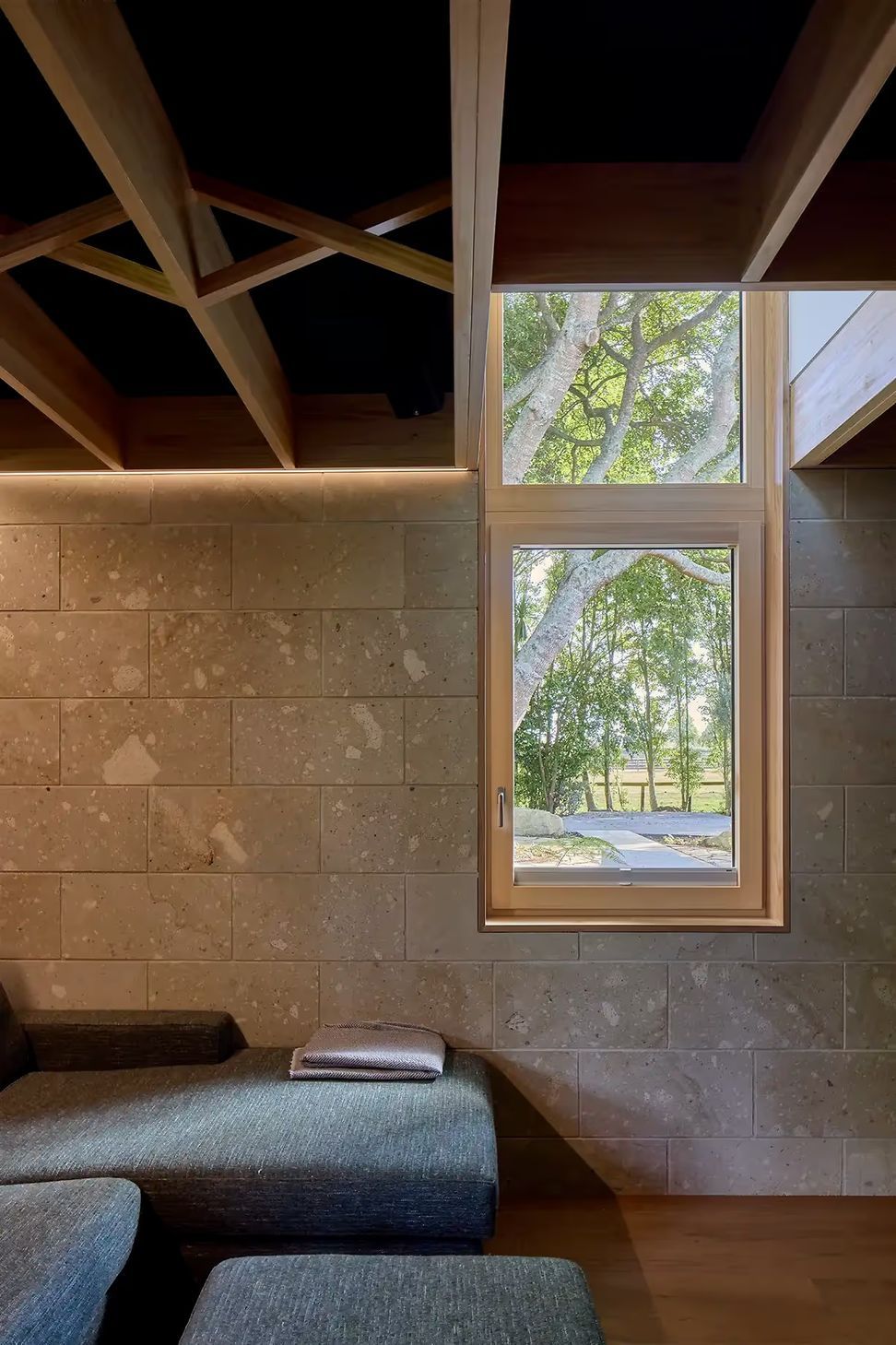
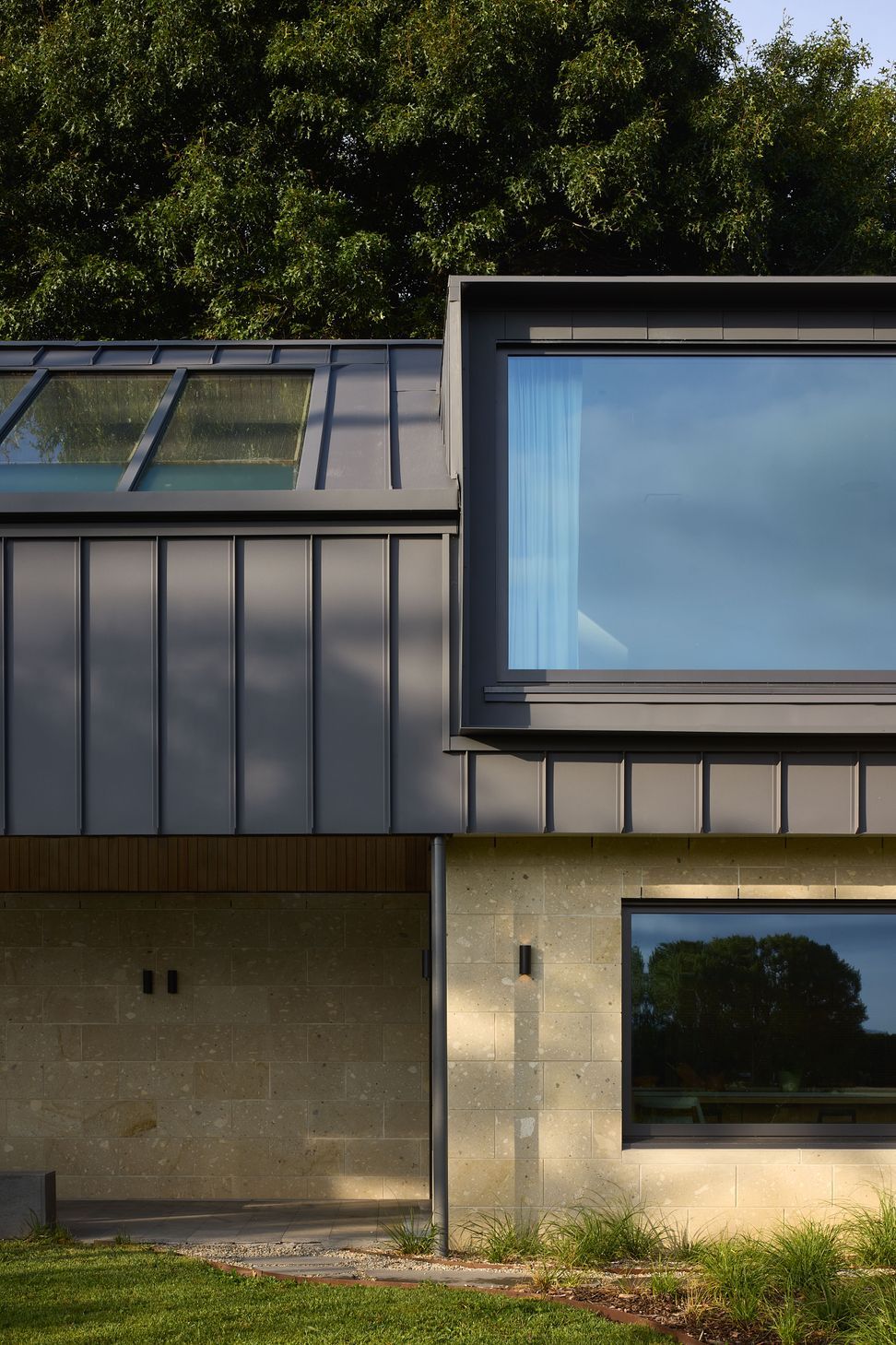
Materiality further reinforces that relationship to place. Locally sourced Hinuera stone appears throughout the project, creating continuity between exterior and interior spaces. Natural timber introduces warmth, while exposed steel detailing celebrates construction rather than concealing it.
"It was important that materials felt authentic, that you know what they are when you see them and when you touch them," says Smith.
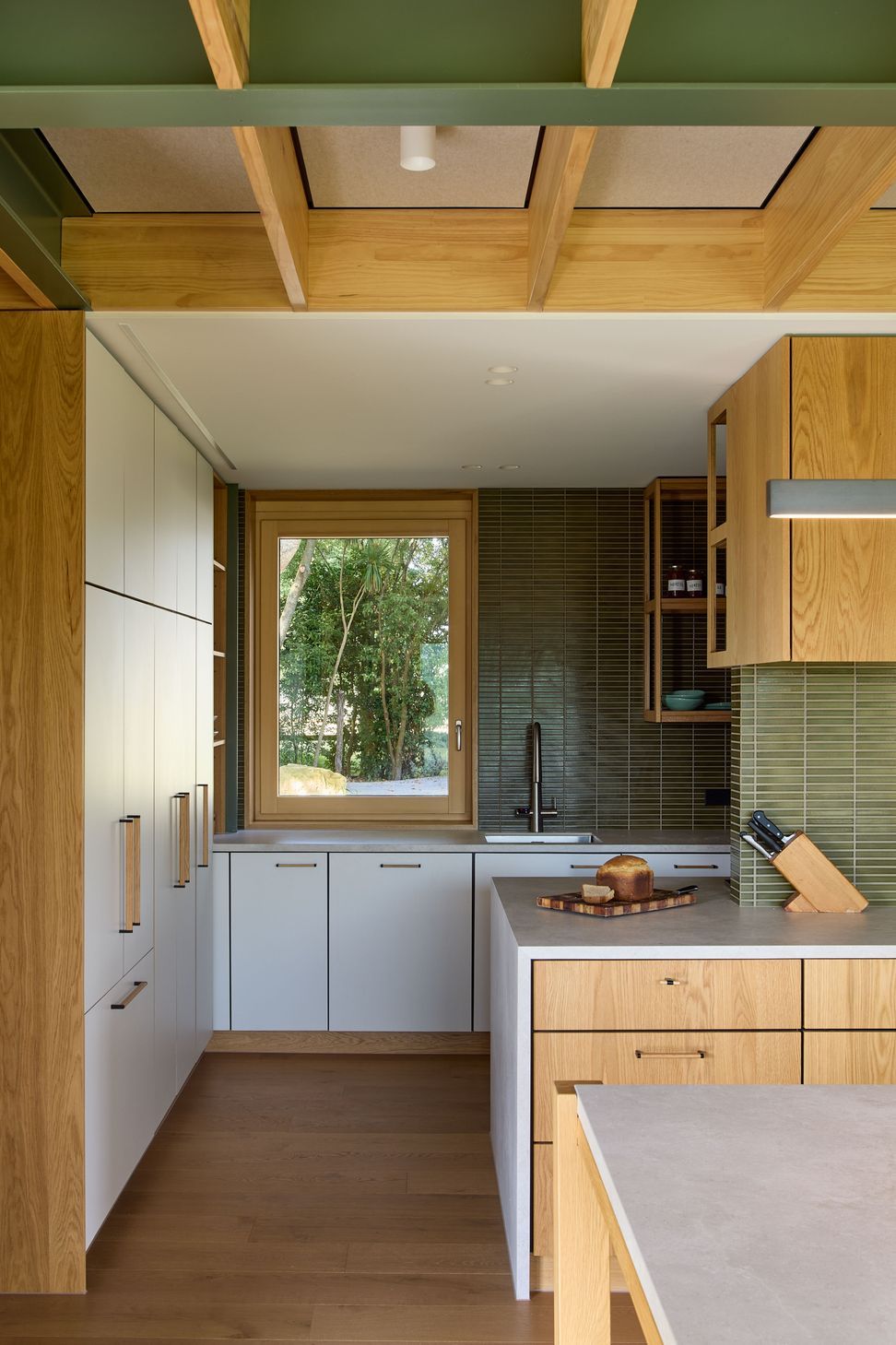
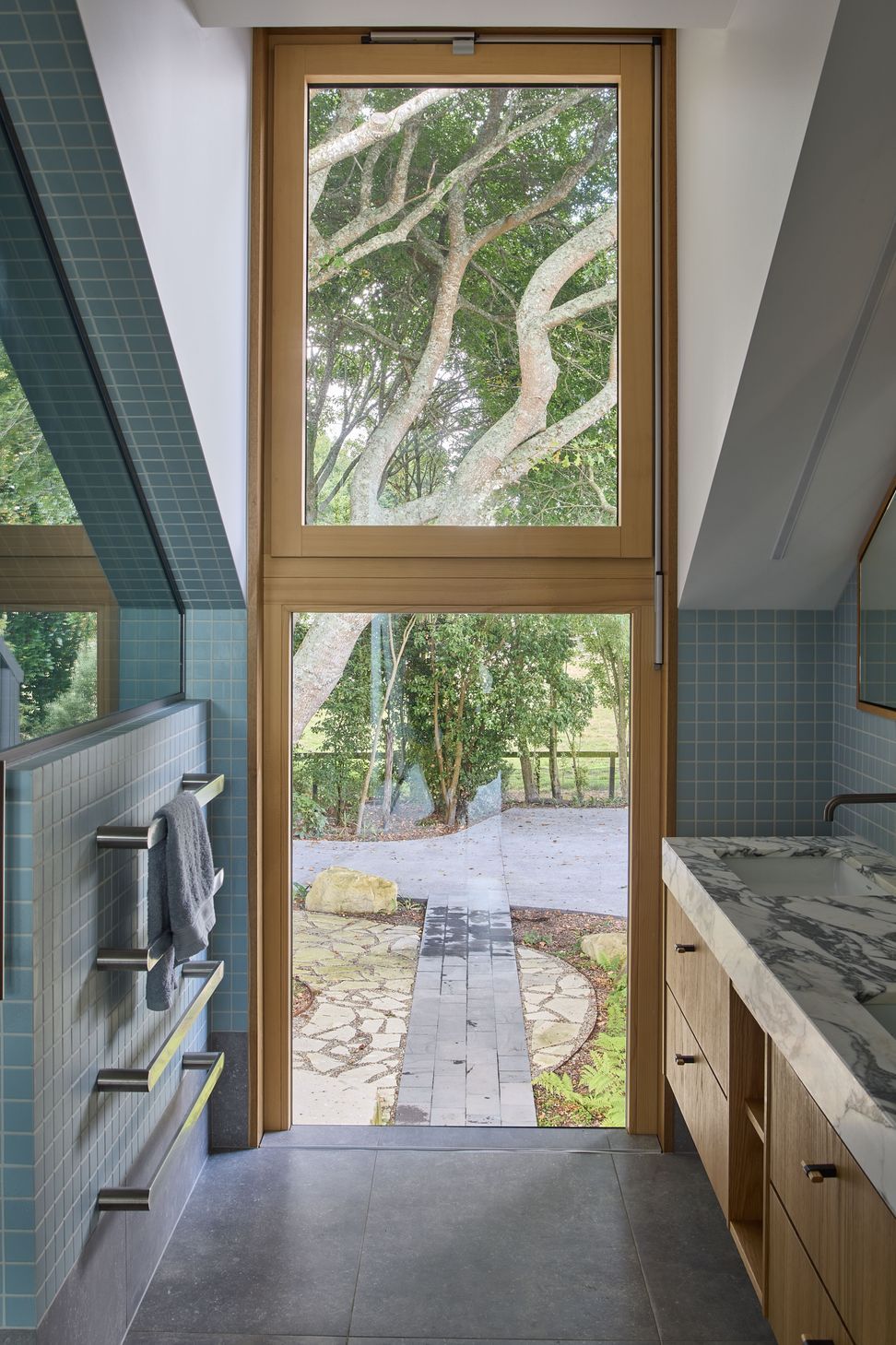
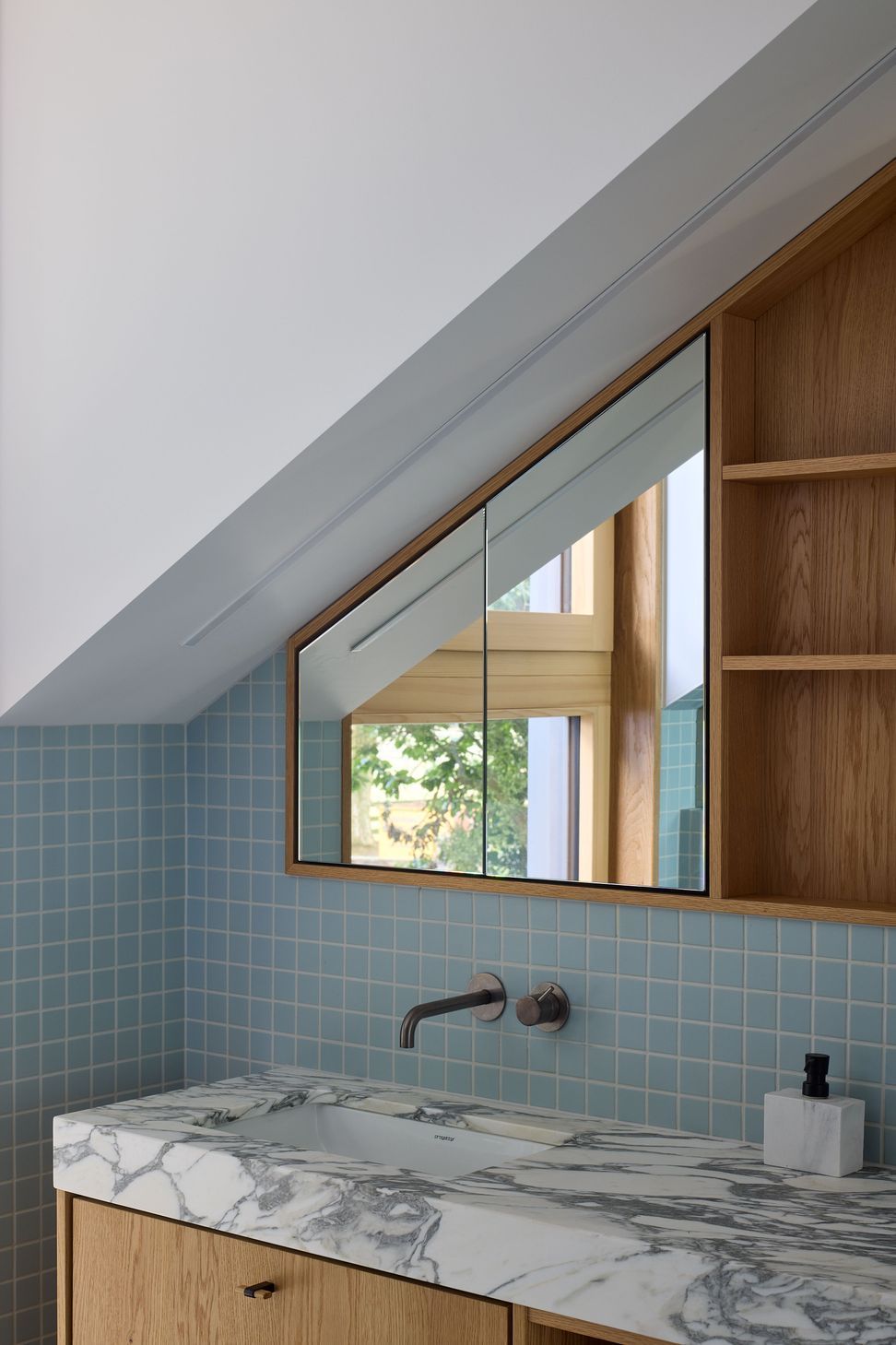
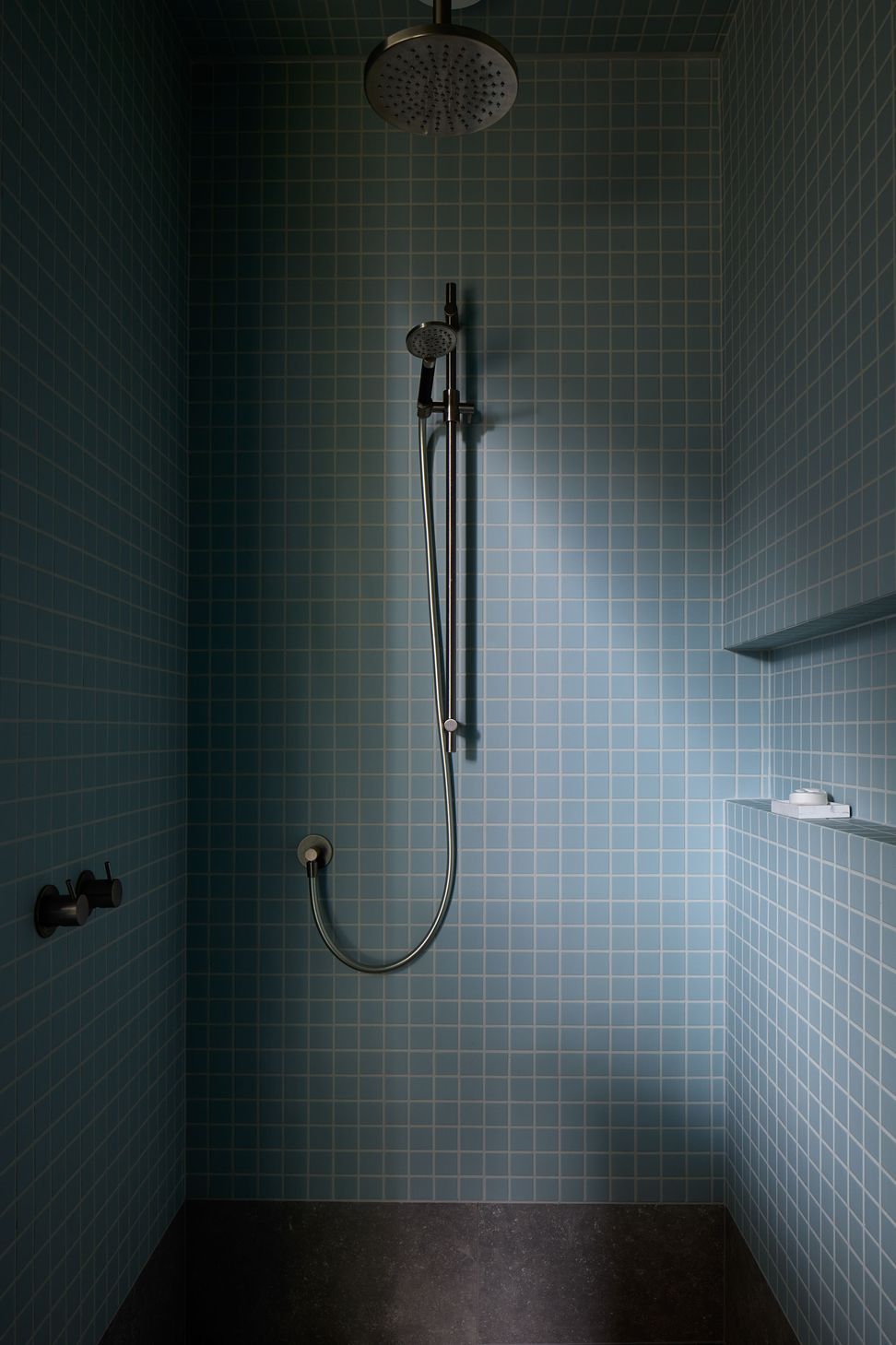
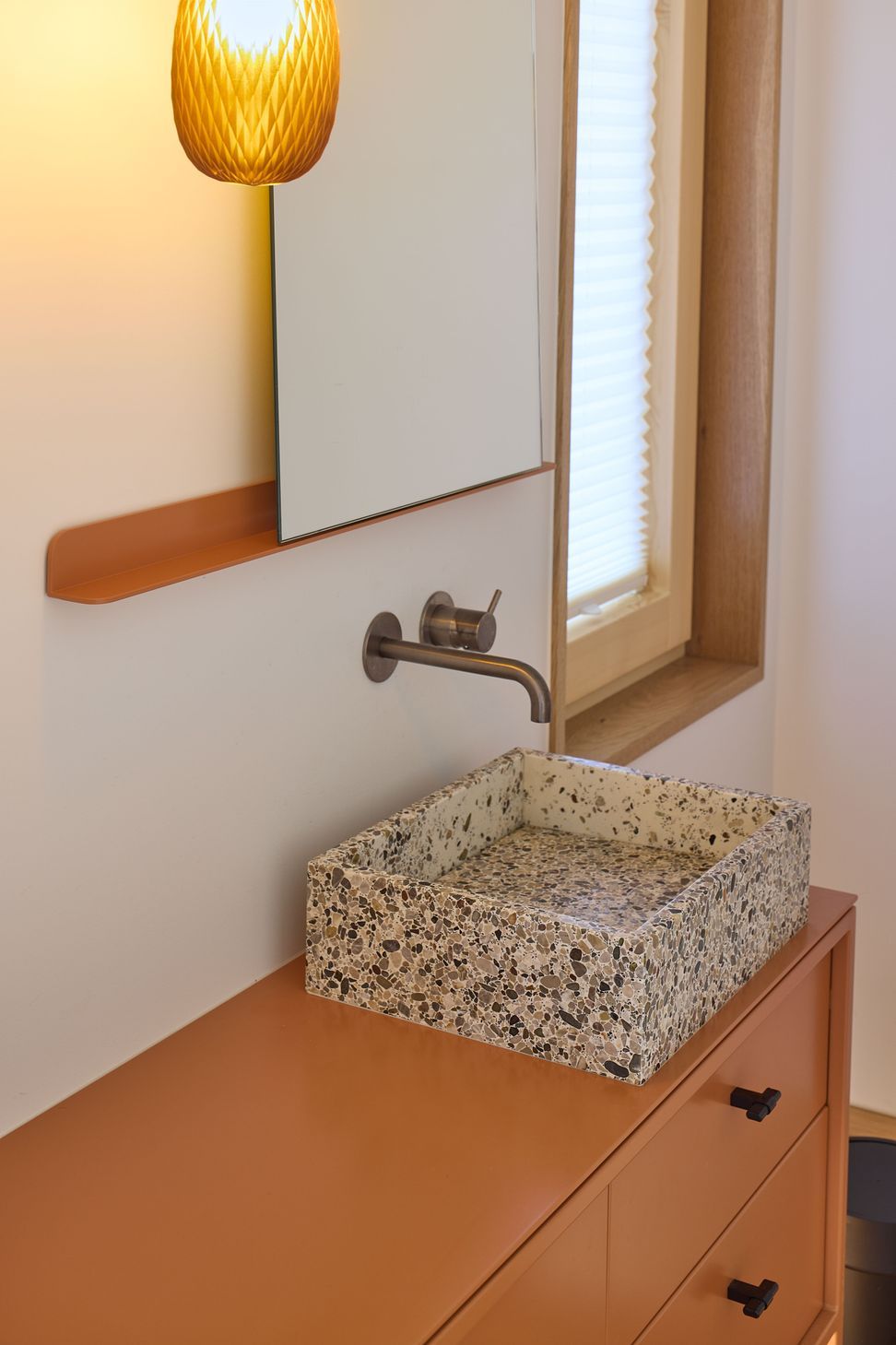
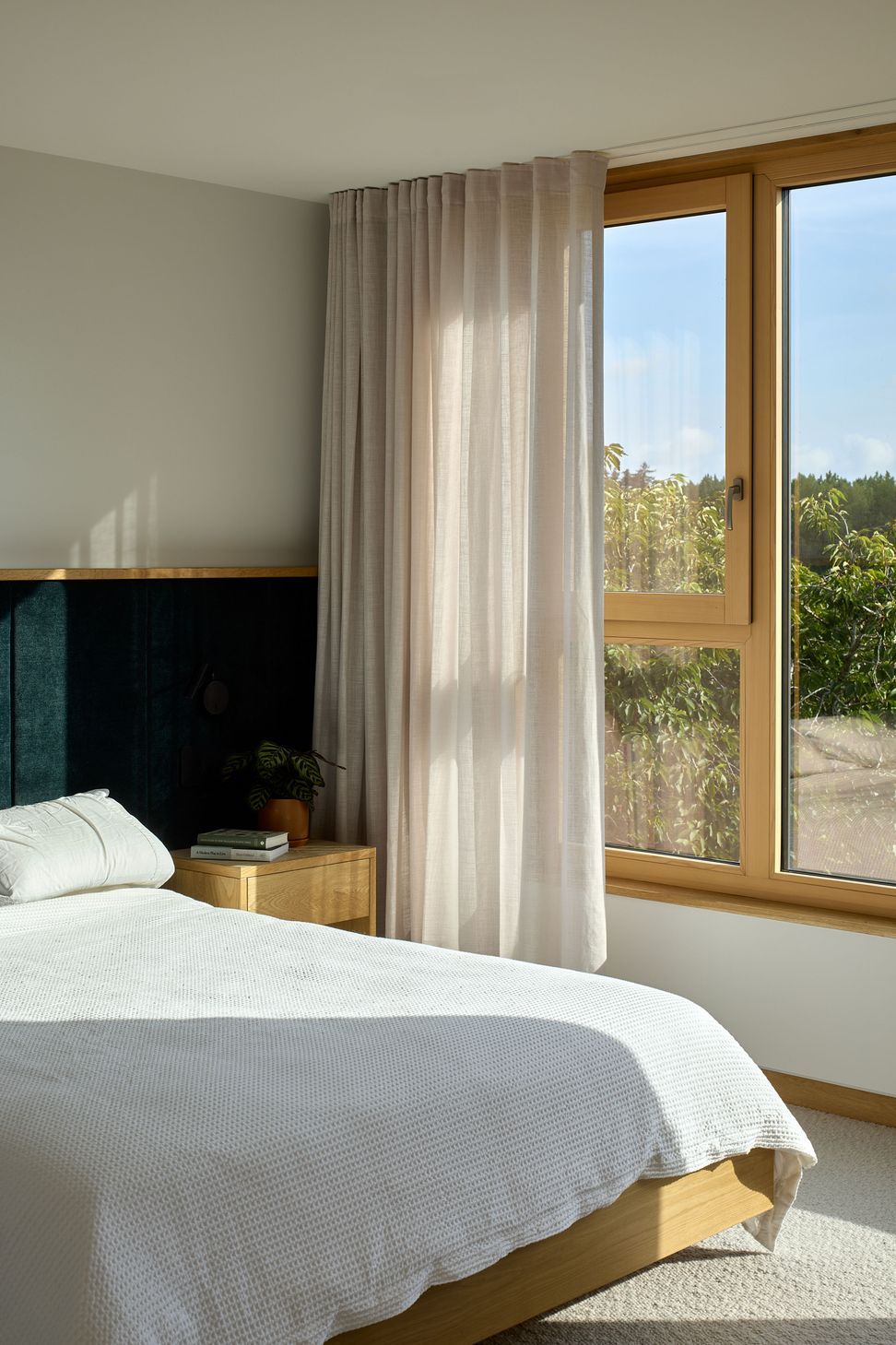
The palette balances contemporary detailing with the familiarity of a rural home. Lower ceiling heights within the kitchen create intimacy around the social heart of the house, while bedrooms are softened through wool carpets, linen finishes and warm tonal palettes. Bathrooms introduce moments of colour and playfulness, creating contrast within an otherwise restrained material language.
Performance was another important consideration. The clients were deeply invested in sustainability and high-performance design, and the project was developed to achieve Passive House-level outcomes without pursuing formal certification. Thermally broken window systems, triple glazing in selected locations, mechanical ventilation and rigorous detailing contribute to a home that performs exceptionally well throughout the year.
Importantly, performance was never pursued at the expense of experience. Large areas of glazing maintain strong visual connections to the landscape, while carefully considered openings ensure occupants remain aware of weather, light and seasonal change.
One of the architects' favourite spaces is a media room where an oversized, double-height window frames the canopy of an oak tree. Elsewhere, rooms are arranged to provide views in multiple directions, reinforcing a sense of orientation within the landscape.
The result is a home that feels deeply connected to its setting while remaining remarkably comfortable to inhabit.
For the clients, the completed project represents the culmination of years of planning, research and collaboration.
Today, the daily rituals described in that original brief unfold exactly as intended. Mornings begin in the garden, work is punctuated by time outdoors, and the house opens effortlessly to the landscape that surrounds it.
In many ways, the success of the project lies in its fulfilment of a simple ambition. The clients knew how they wanted to live. Edwards White Architects listened carefully, responded thoughtfully and transformed those aspirations into architecture.
Words: Joanna Seton
'This modern, energy-efficient home embraces its setting with grace and clarity. Established trees are carefully preserved and integrated, grounding the house in its landscape. Meticulous material selection and refined detailing elevate each space, while thoughtful planning of structure and form results in a low-energy home offering year-round comfort. Considered forms and precisely placed windows frame views and light, creating a rich interplay between architecture and nature.'
Te Kahui Whaihanga NZ Institute of Architects

Like this Project?
Hire Edwards White Architects
The products behind the project
Fifteen products specified into this build from ten suppliers, verified ArchiPro members. Tap through to specifications, suppliers and lead times.


Professionals used in
this project
The practices and trades credited on this project.









More projects from
Edwards White Architects
Other work by Edwards White Architects, across every category they build in.


More in
Single House
Everything else in Single House, from every practice on ArchiPro.


Next Project
Keep scrolling