

Project team
The Whangārei Māori Land Court, completed in 2022 for the Ministry of Justice, embodies contemporary design while honoring Māori cultural values, fostering a welcoming environment that integrates identity, community, and sustainability.
The Ministry of Justice expressed a desire to create an environment which would feel welcoming, calm and respectful of the cultural importance of the Court, while seamlessly integrating a cohesive set of design principles founded on the intrinsic Māori cultural values of Te Aranga. Ultimately, the aim was to foster a sense of connectedness and belonging for all who enter the space.
When the Ministry of Justice’s lease on their previous site was up for renewal, they didn’t just see it an opportunity to relocate to a larger building. They recognised their crucial role in the community as providers of ancestry records to tangata whenua (people of the land) and the deep interest that many visitors have in their heritage. With this in mind, the Ministry sought to create a more welcoming and inclusive environment that fosters a sense of belonging, better serving the needs of the community.
The Whangārei Māori Land Court was designed with a strong emphasis on integrating people, identity and place. Our approach was centred around the guiding principles of Mahi Toi, Ahi Kā, Tohu, and Whakapapa.
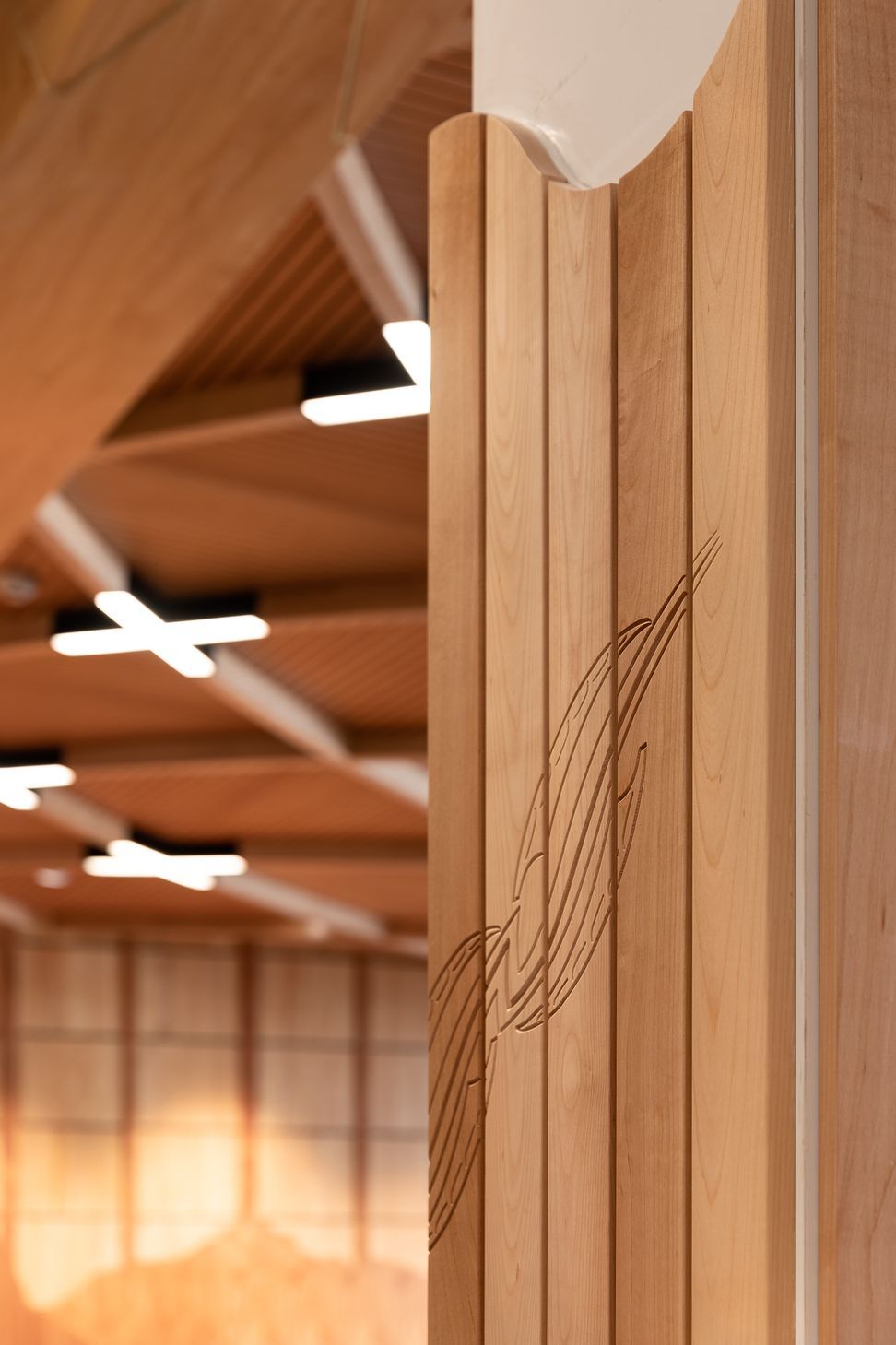
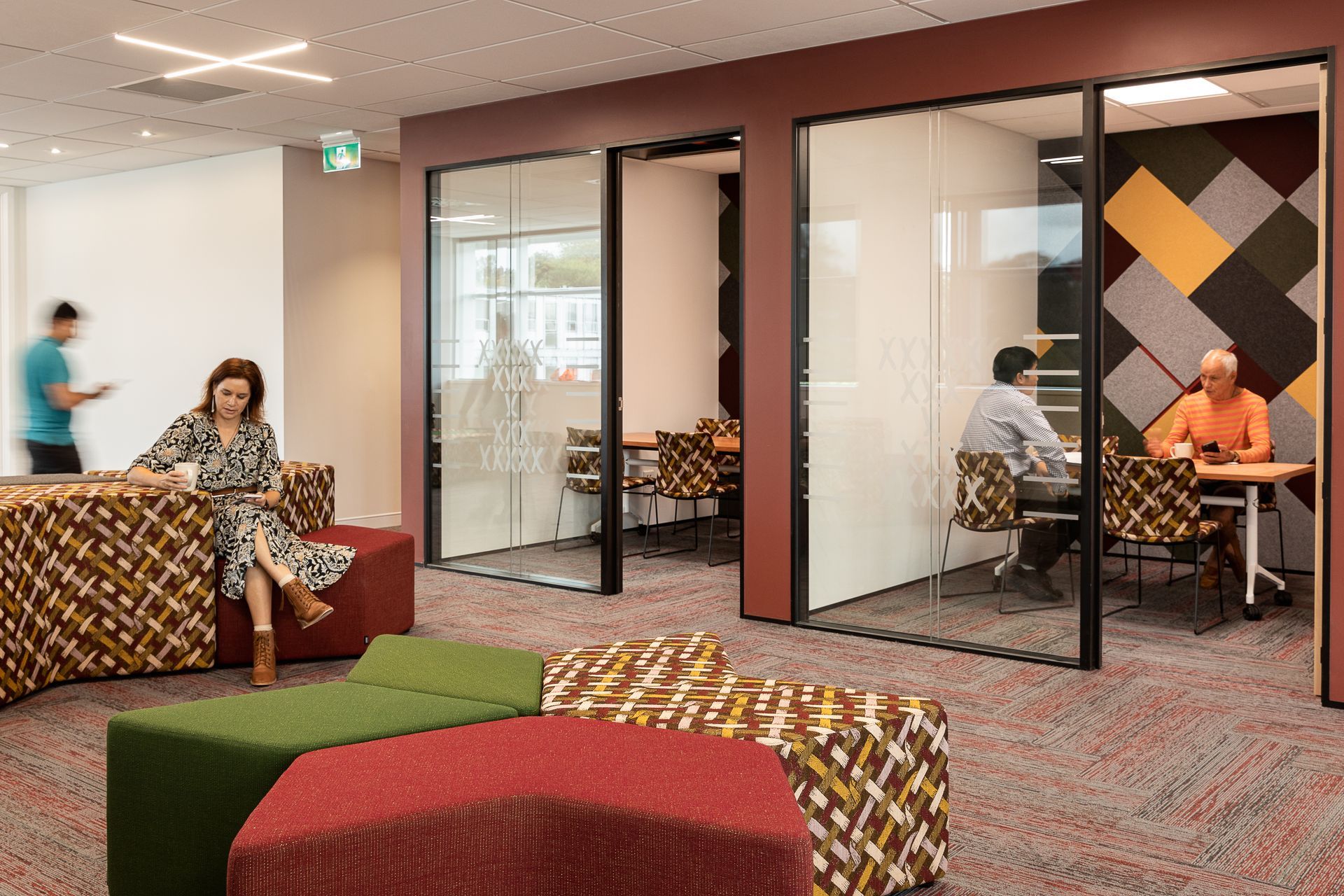
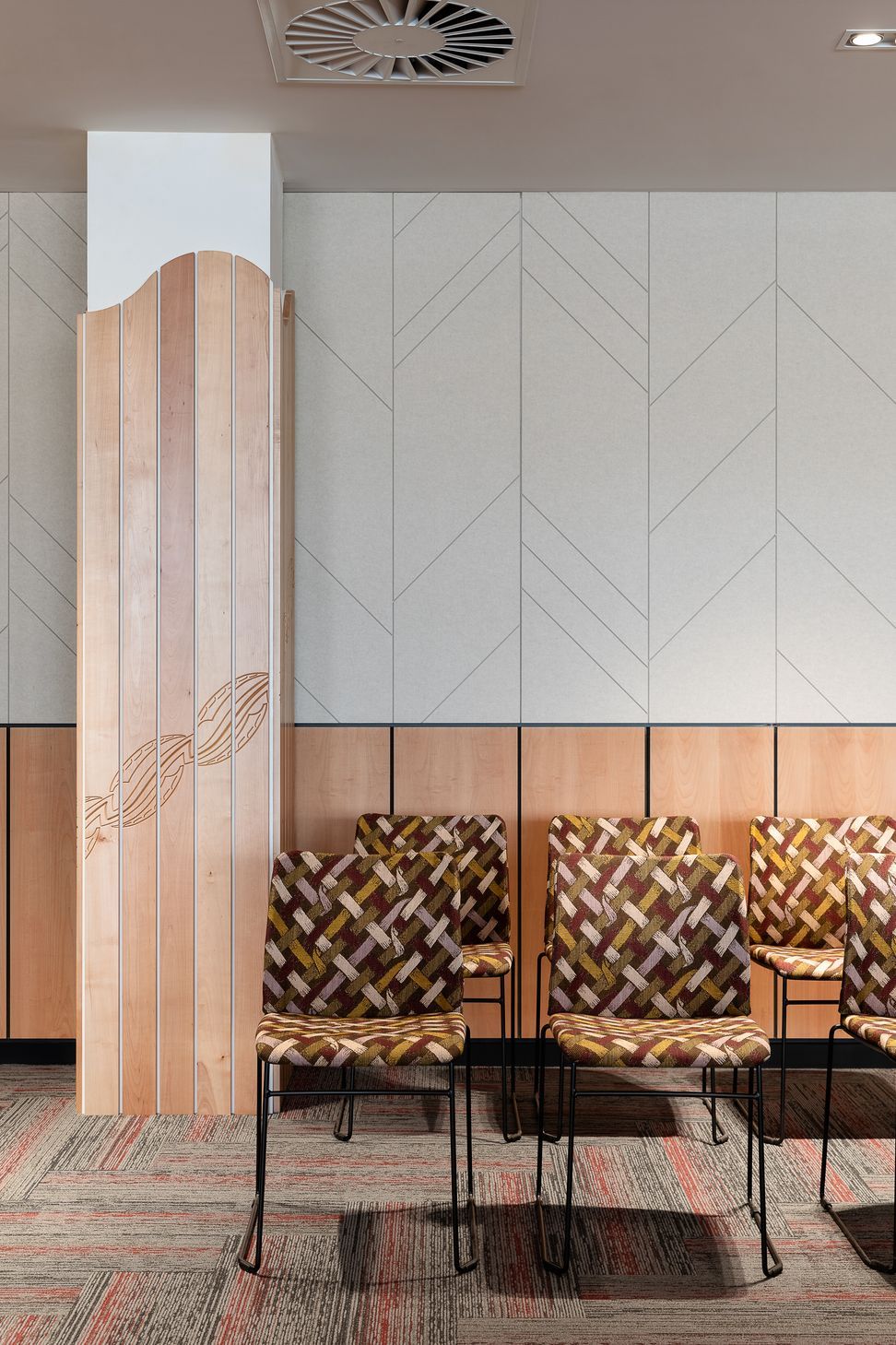
To bring this vision to life, careful consideration was given to the selection of materials and finishes, using only natively harvested and sustainable options that were deeply rooted in the local context and identity. For example, we drew inspiration from traditional items such as woven baskets (kete).
We were fortunate to collaborate with local sculptor, carver and design educator, Carin Wilson, who provided valuable insights on the incorporation of Te Aranga principles into the design phase. Carin also created many of the custom-made elements that brought the concept to life.
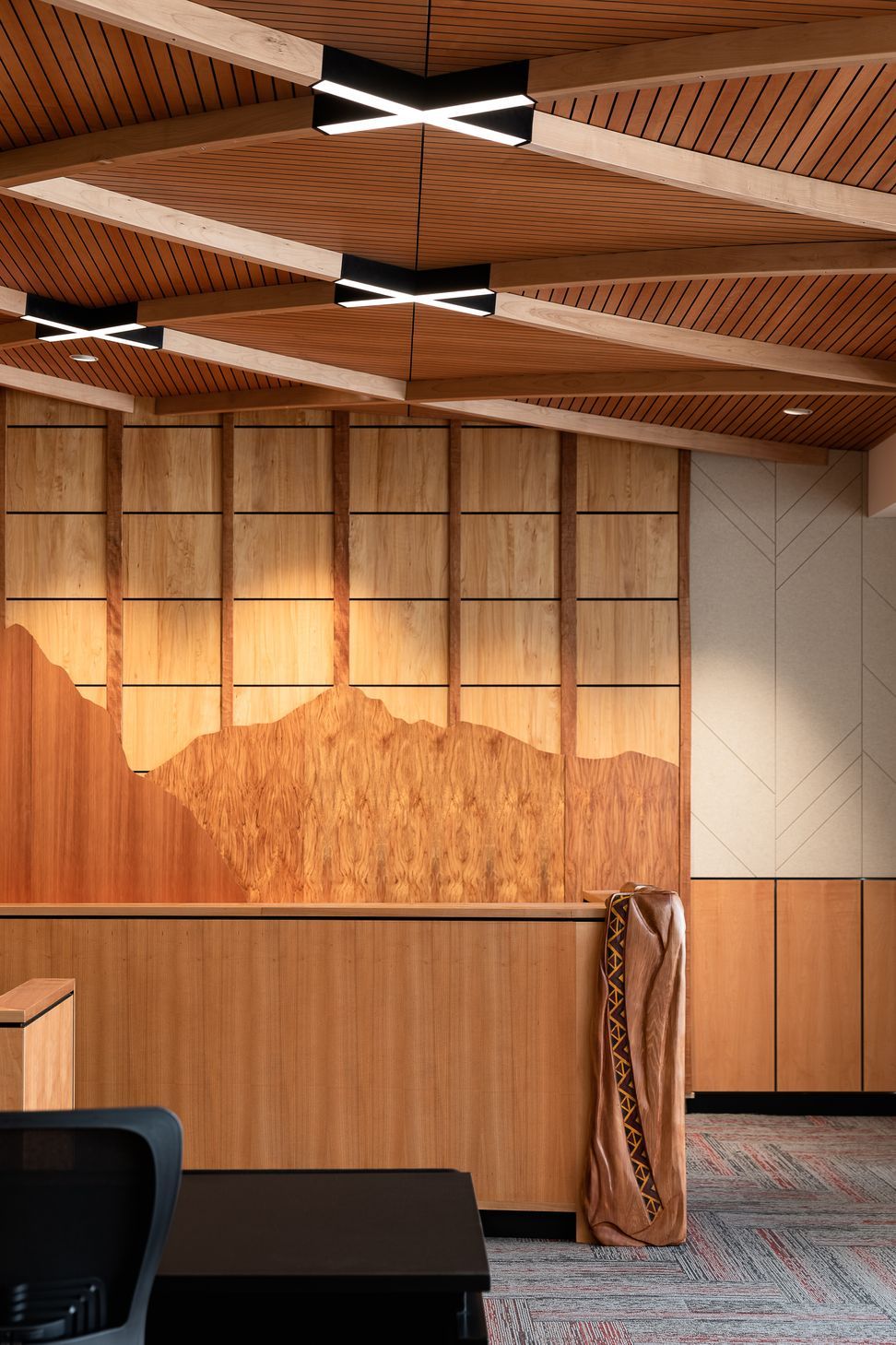
We honoured the Te Aranga principle of Tohu through a feature designed around the three local mountains (Maunga) that form a vital part of the community’s history. This design includes carefully laminated local Rimu, Matai, and Totara timber veneers, which represent each tribe's affiliations and are prominently displayed behind the judges' bench.
The result is a space that celebrates Māori culture while embracing contemporary design principles. It is a testament to the importance of cultural identity in modern architecture and is an example of what can be achieved when tradition and innovation come together.
- Completed
- 2022
- Building style
- Contemporary
- Client
- Ministry of Justice

Awards
Public Institutional, Repurposed Spaces and Toitanga awards
Best Awards
Auckland Architecture Award
Te Kāhui Whaihanga NZ Institute of Architects
Like this Project?
Hire GHD Design
Professionals used in
this project
The practices and trades credited on this project.

More projects from
GHD Design
Other work by GHD Design, across every category they build in.


More in
Interiors
Everything else in Interiors, from every practice on ArchiPro.


Next Project
Keep scrolling