Architect, Building Designer or Draftsperson: Who Do You Actually Need?

Written by

RUBI Architects

18 August 2026

 • 

4 min read

banner
The three roles sound interchangeable but they are not — in training, accountability, scope and outcome. RUBI Architects explains the differences, and how to choose for your project.

Architect, building designer, draftsperson — the titles get used loosely, and a lot of people assume they are three words for the same job. They are not. They differ in training, in what they are legally allowed to call themselves, in the scope of what they do, and in who carries responsibility when something goes wrong. Choosing the right one is one of the first and most consequential decisions of any building project.

This is a plain-English guide to the differences, and to matching the right professional to the kind of home you are trying to build.

What the three titles actually mean

‘Architect’ is a legally protected title. To call yourself one in Victoria you must hold an accredited degree, complete supervised experience, pass a registration exam and register with the Architects Registration Board of Victoria — and stay registered, insured and up to date. A ‘building designer’ is also a legitimate, registered practitioner, but the training and scope differ, and the title is regulated separately. A ‘draftsperson’ typically prepares drawings, often under someone else’s direction, and is not a protected or independently registered design role.

None of this makes one universally better than another — but it does mean they are not interchangeable, and the differences matter most as a project gets more complex.

It is really a question of complexity and risk

For a simple, conventional project on an easy site, a good building designer or draftsperson may be exactly right and more economical. The value of a registered architect climbs steeply with complexity: constrained or sloping sites, planning overlays, bushfire, heritage, tight budgets, developments, or a design that has to resolve many competing demands into one coherent whole.

The more that can go wrong — in planning, in cost, in buildability — the more an architect’s training in resolving those risks tends to pay for itself.

Accountability is part of what you are buying

A registered architect is bound by a code of conduct, carries professional indemnity insurance, and is accountable to a registration board. That accountability is not a formality; it is a large part of what you are paying for. It means someone is professionally responsible for the design decisions, the documentation and the coordination of your project from beginning to end.

On a significant investment — and a bespoke home is exactly that — knowing where responsibility sits is worth a great deal.

Design is not decoration — it is how the whole thing resolves

The biggest misconception is that ‘design’ is the pretty part and everything else is technical. In reality, good design is what makes a home work: how it sits on the site, how light and air move through it, how the budget is spent, how it will actually be built. A skilled architect holds all of those at once, which is why the result feels effortless rather than compromised.

That is the real difference on a demanding project — not decoration, but the resolution of everything into a home that is beautiful, buildable and yours.

How to choose — and where RUBI fits

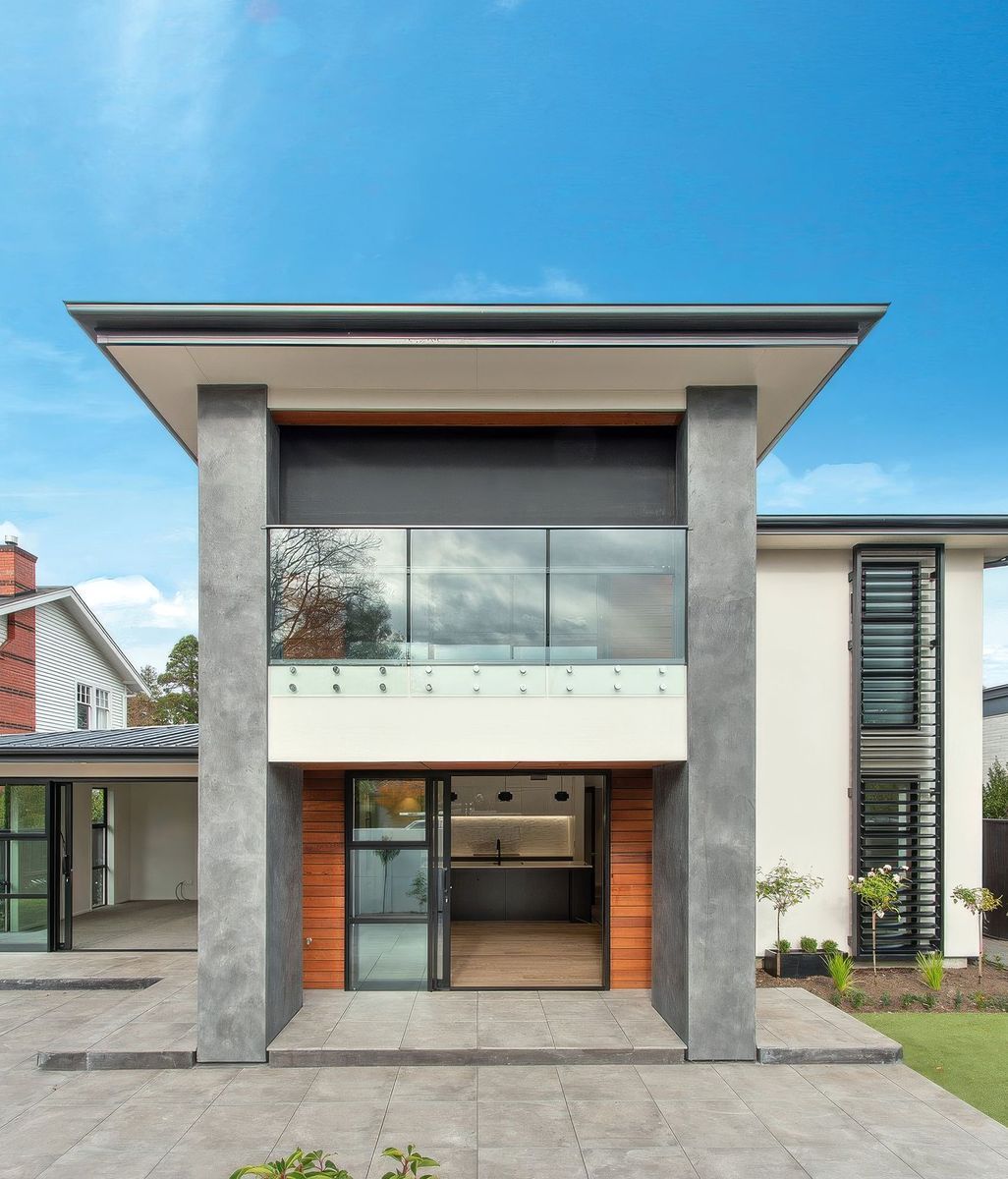
Be honest about your project. A straightforward extension on a flat, unencumbered block may not need an architect. A bespoke home on a coastal or constrained site, a knock-down-rebuild you intend to keep for decades, or a development where design quality drives the return — these are exactly where an architect earns their fee.


RUBI Architects is a registered, architect-led studio working across Geelong, the Bellarine, the Surf Coast and the Great Ocean Road. If you are weighing up who to engage, you are welcome to talk it through with us — see our work at rubiarchitects.com.au. We will tell you honestly whether your project genuinely needs an architect, or whether it does not.