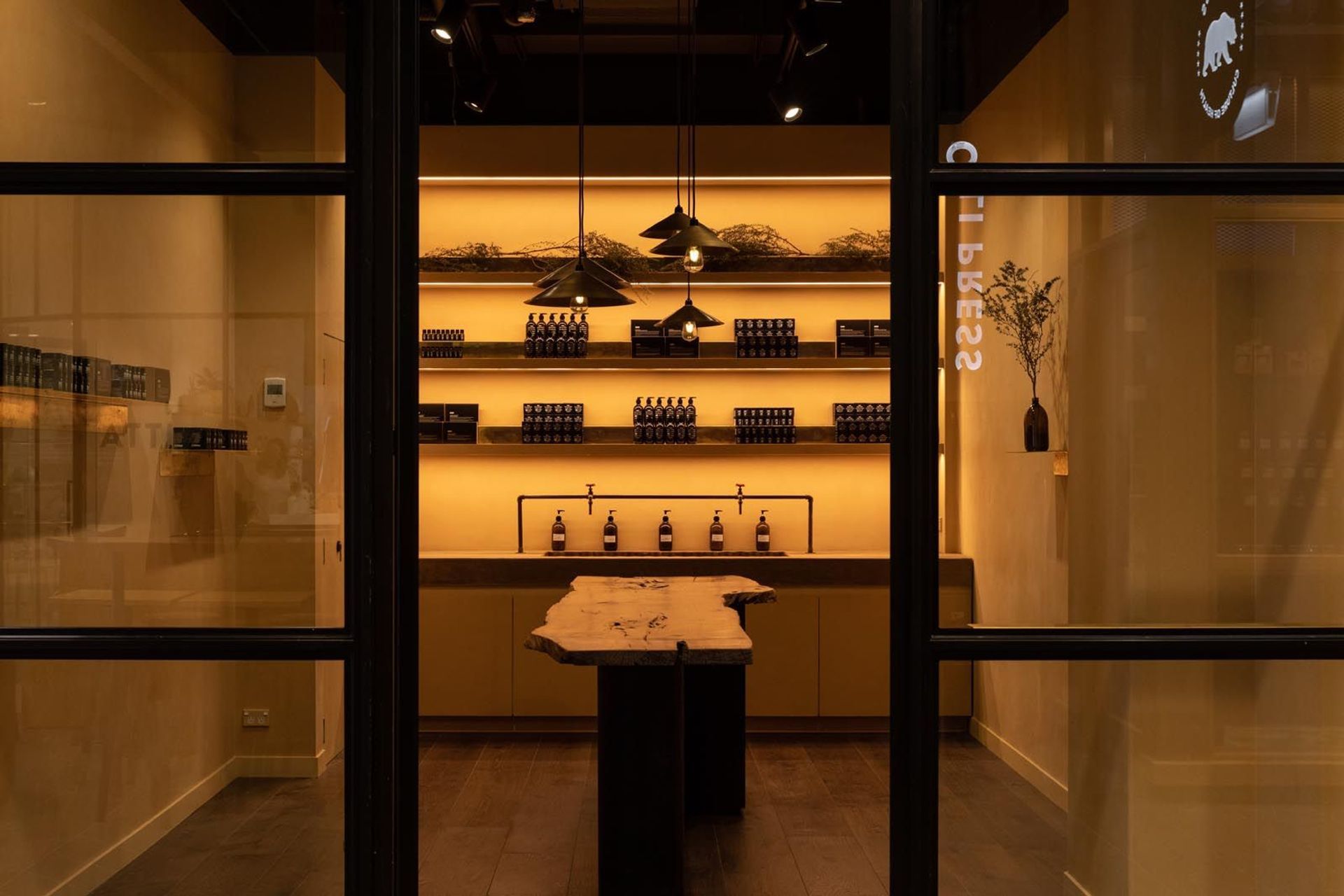
For many years, architecture and design showrooms have followed a predictable format. Floors were broken into a patchwork of finishes, walls were crowded with samples, and the emphasis sat firmly on showcasing all available options in a chaotic display.
When Wonder first partnered with Forté, the ambition was to rethink that model entirely and ask how a showroom could function as a home of inspiration rather than simply a point of sale.
That thinking was first realised in Forté’s Auckland Experience Centre, a project that would not only go on to reshape the brand, but the showroom archetype itself.
“They knew that they wanted to create a highly inspirational space where architects could bring their homeowners or their clientele through, touching the product in a residential environment not too different from their dream home,” says Buster Caldwell, Director at Wonder Group. “It was a leap away from the classic sales approach toward something considered and immersive.”
Instead of overwhelming visitors with options, the Auckland showroom was deliberately restrained. Flooring was presented in singular moments rather than as a collage of competing products, allowing materiality and detail to take precedence. That approach proved transformative. The space became a destination for the design community, hosting events, talks and activations, while Forté itself experienced rapid growth and undertook a comprehensive rebrand that repositioned the company alongside their premium product offering.
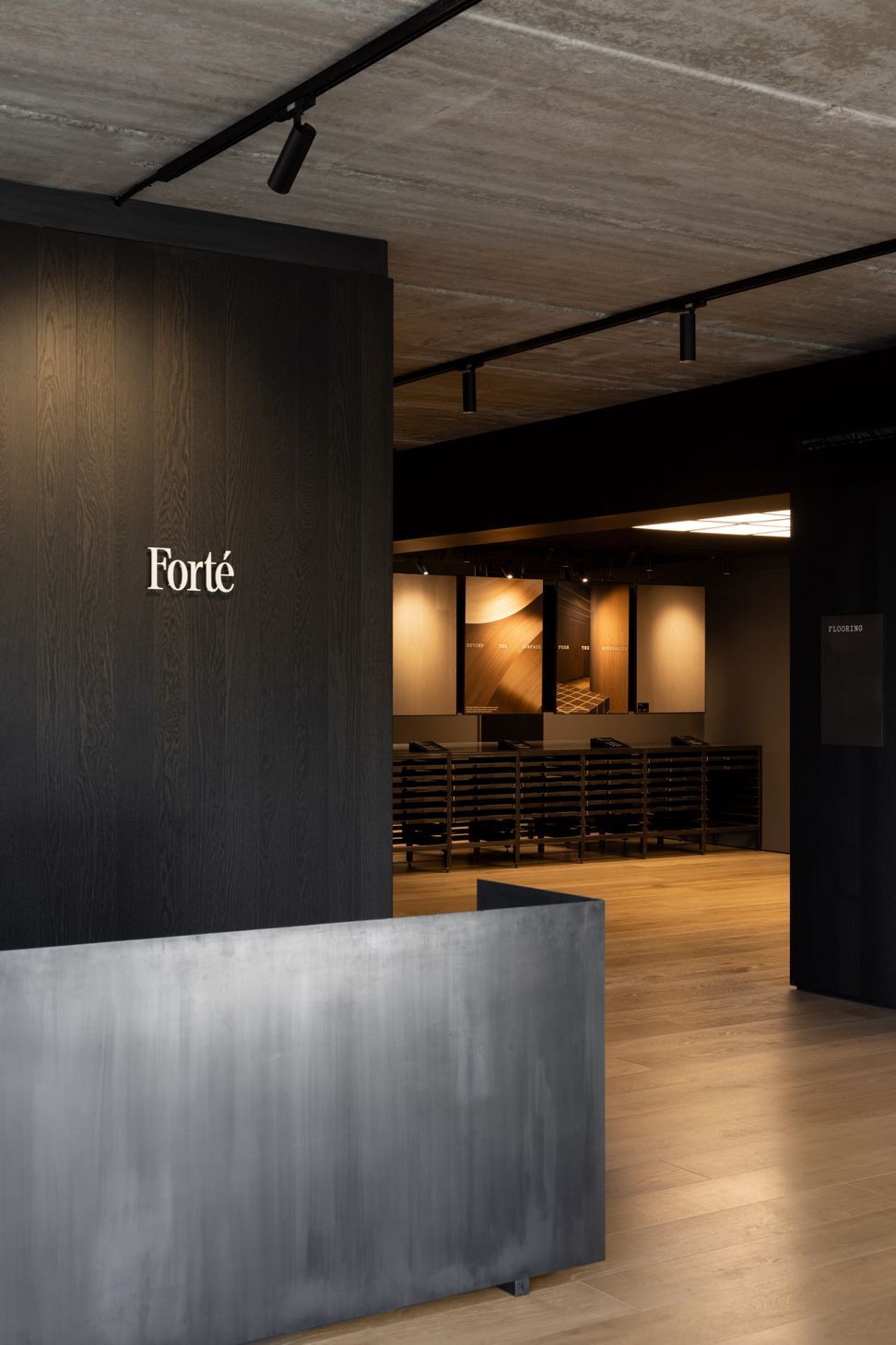
When Forté later secured a site for a new Experience Centre in Christchurch, the brief was to build on this foundation while responding to a different set of conditions. The building, previously home to a textile retailer, was stripped back to its bones—a concrete shell with cascading glass overlooking the CBD.
“From the very beginning, we agreed that one of the most important moves was turning the building inward,” explains Caldwell. “It needed to feel as if an oasis—tranquil and protected, some distance away from the inherited glass box.”
While smaller than its Auckland counterpart, the Christchurch showroom was never conceived as secondary. The project responds to the city’s own body of architectural and interior work, shaped by a distinct set of conditions and references.
“We approached Christchurch with a different eye,” Buster says. “The space is quietly confident and at ease—considered, but unassuming. Rather than relying on flashy gestures, the showroom feels open and familiar, allowing people to enter and engage on their own terms.”
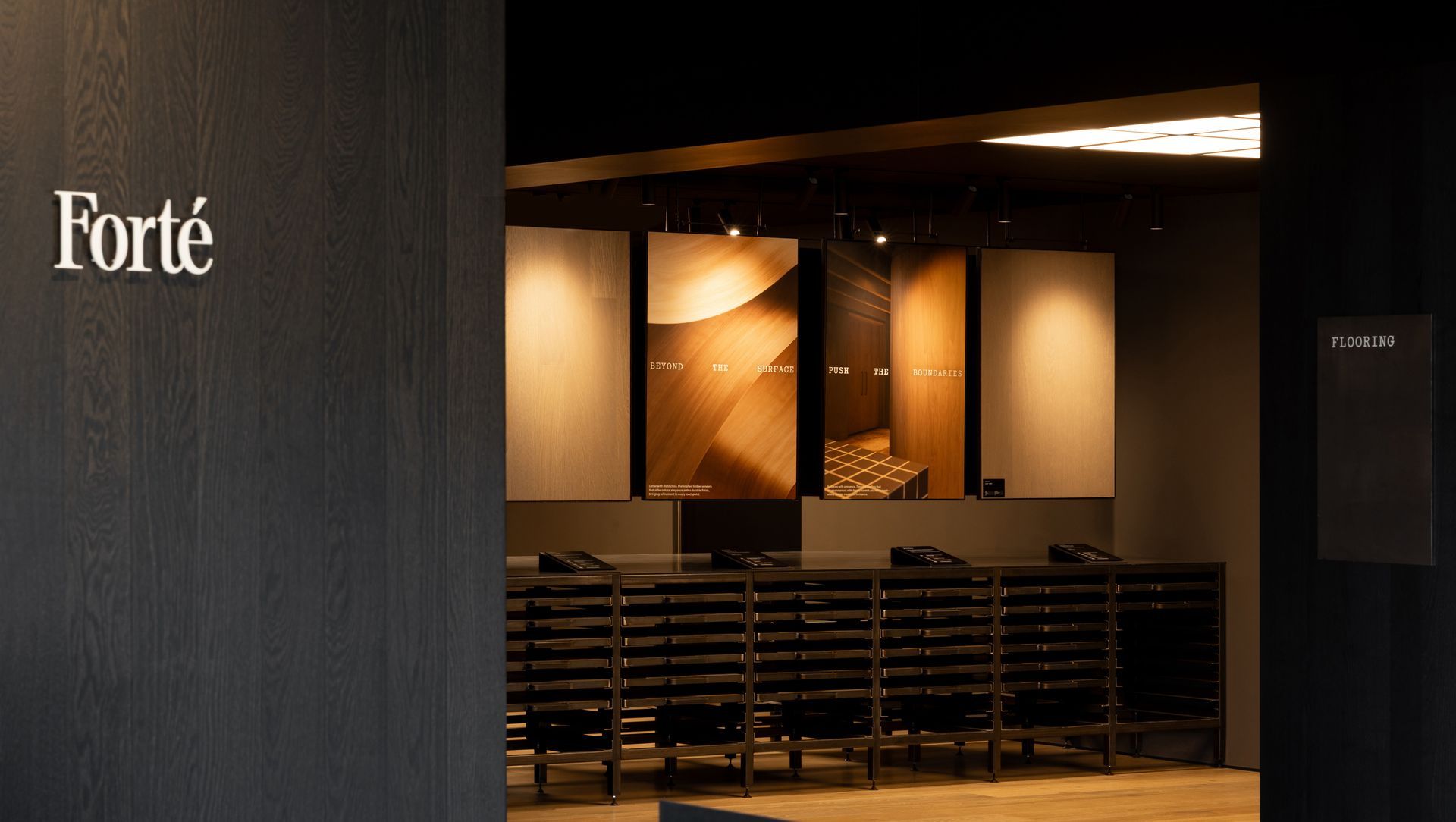
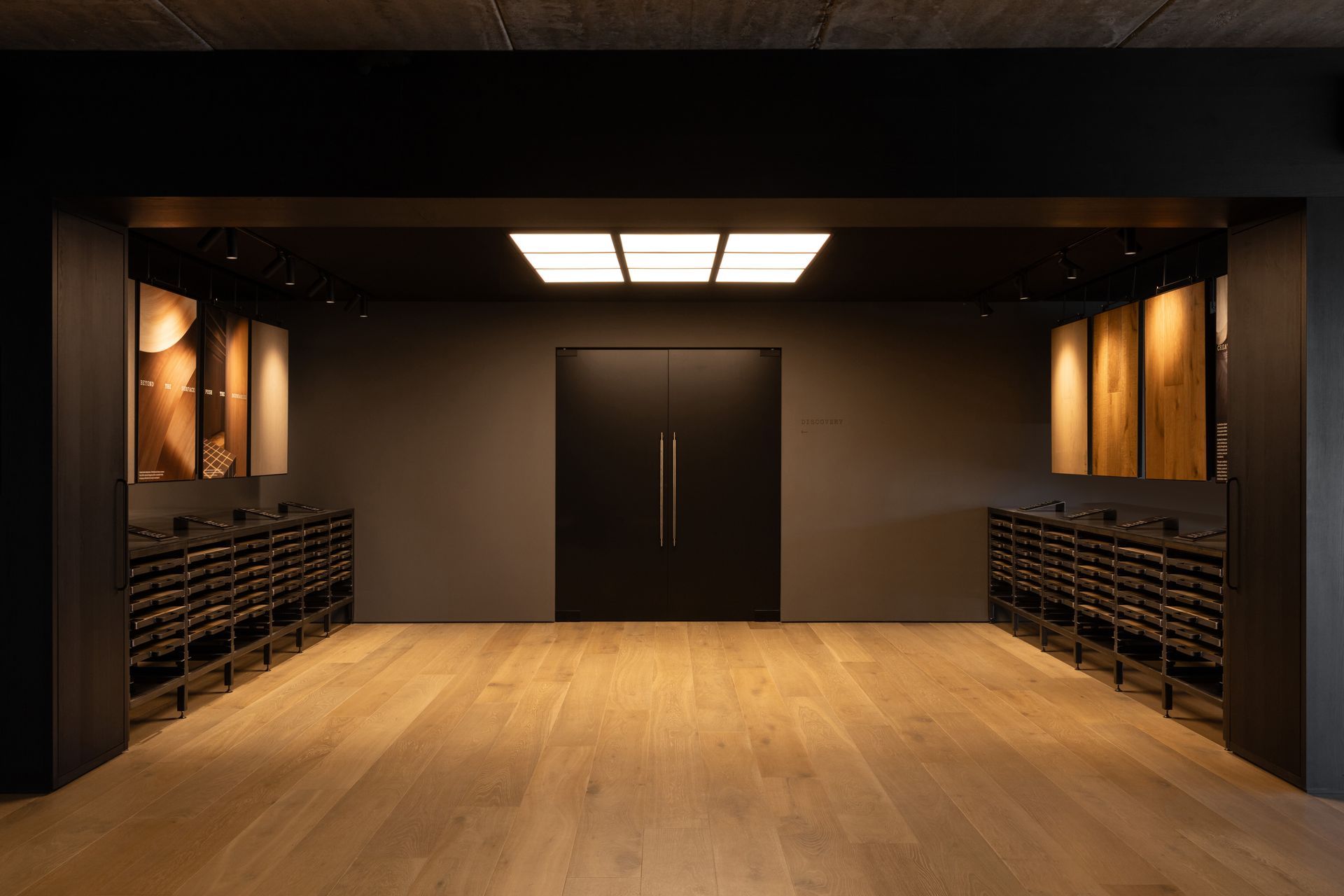
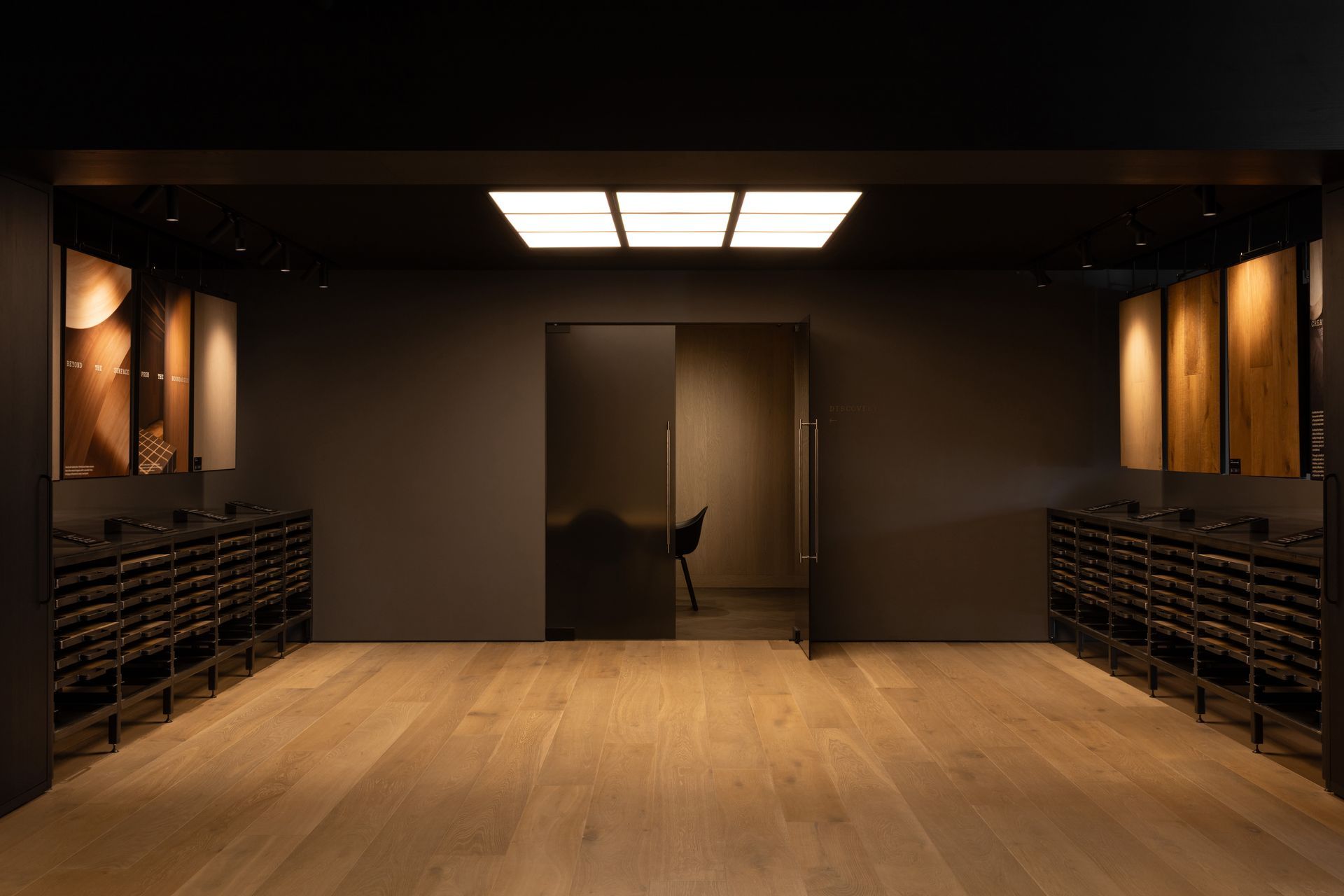
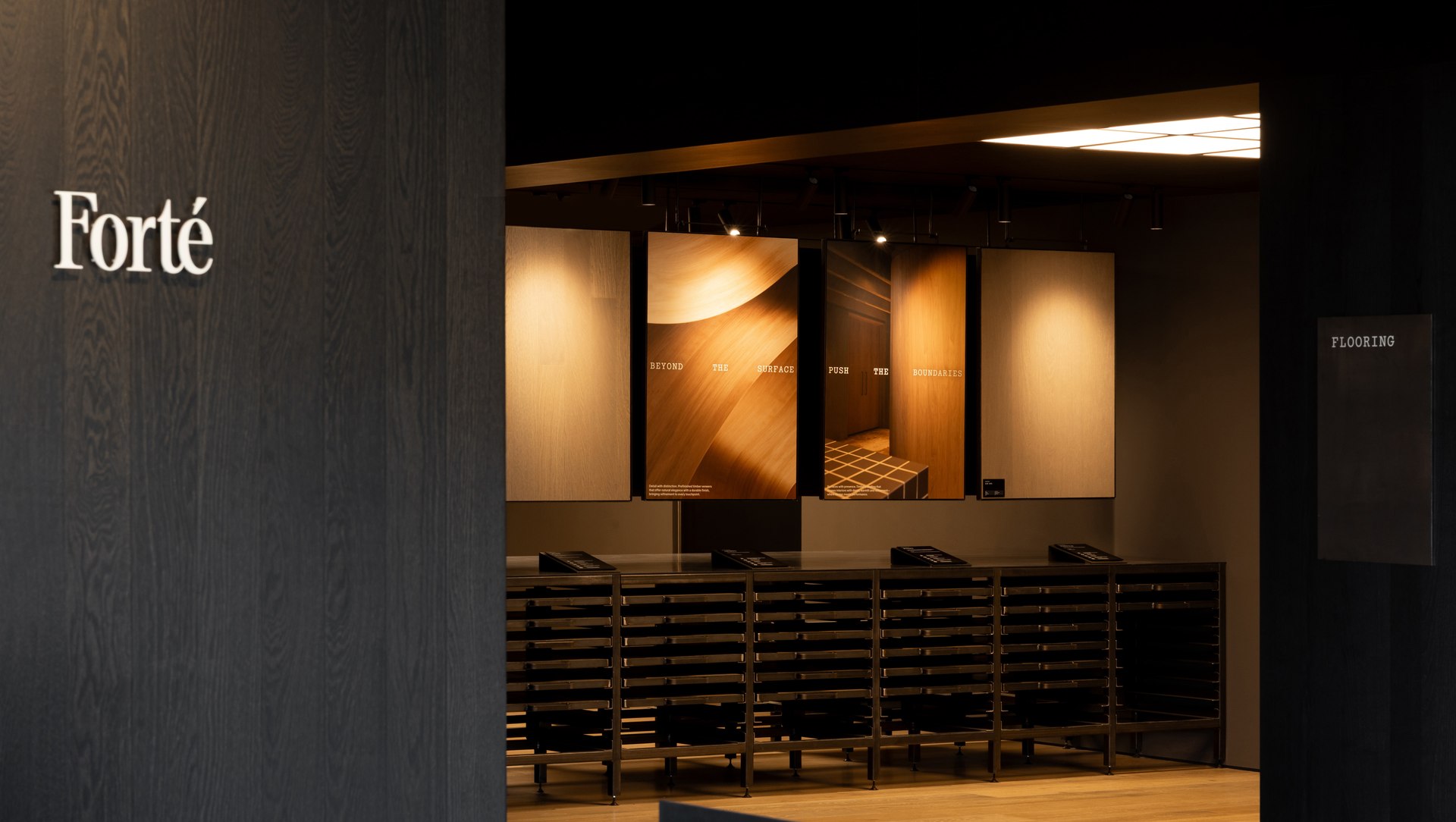
The structure of the building provided a clear starting point. A line of structural columns running through the centre of the plan divides the space into three distinct bays, each dedicated to a specific product category. Customers can be guided directly to what they are seeking, or move more slowly through a shared library of finishes near the entrance.
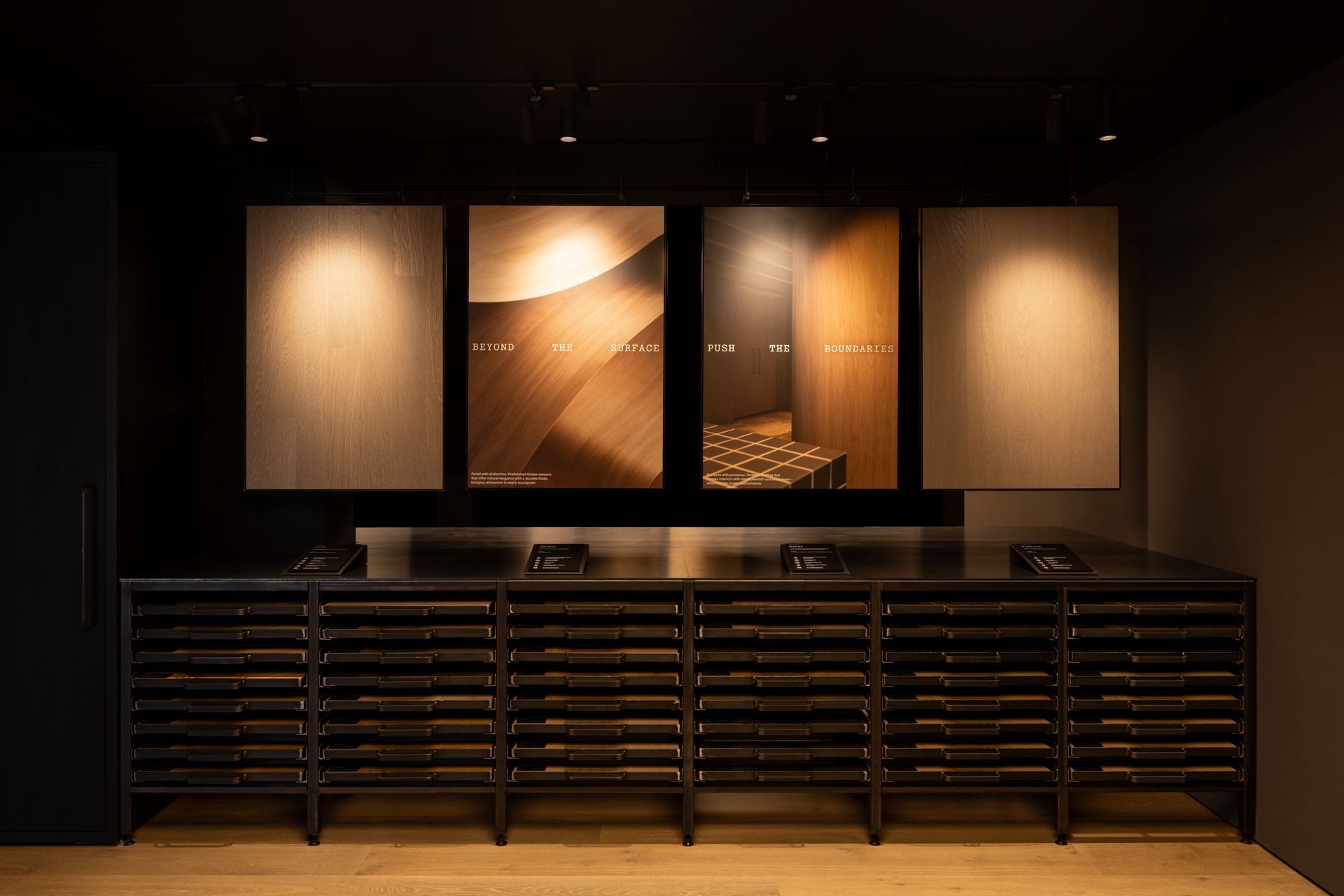
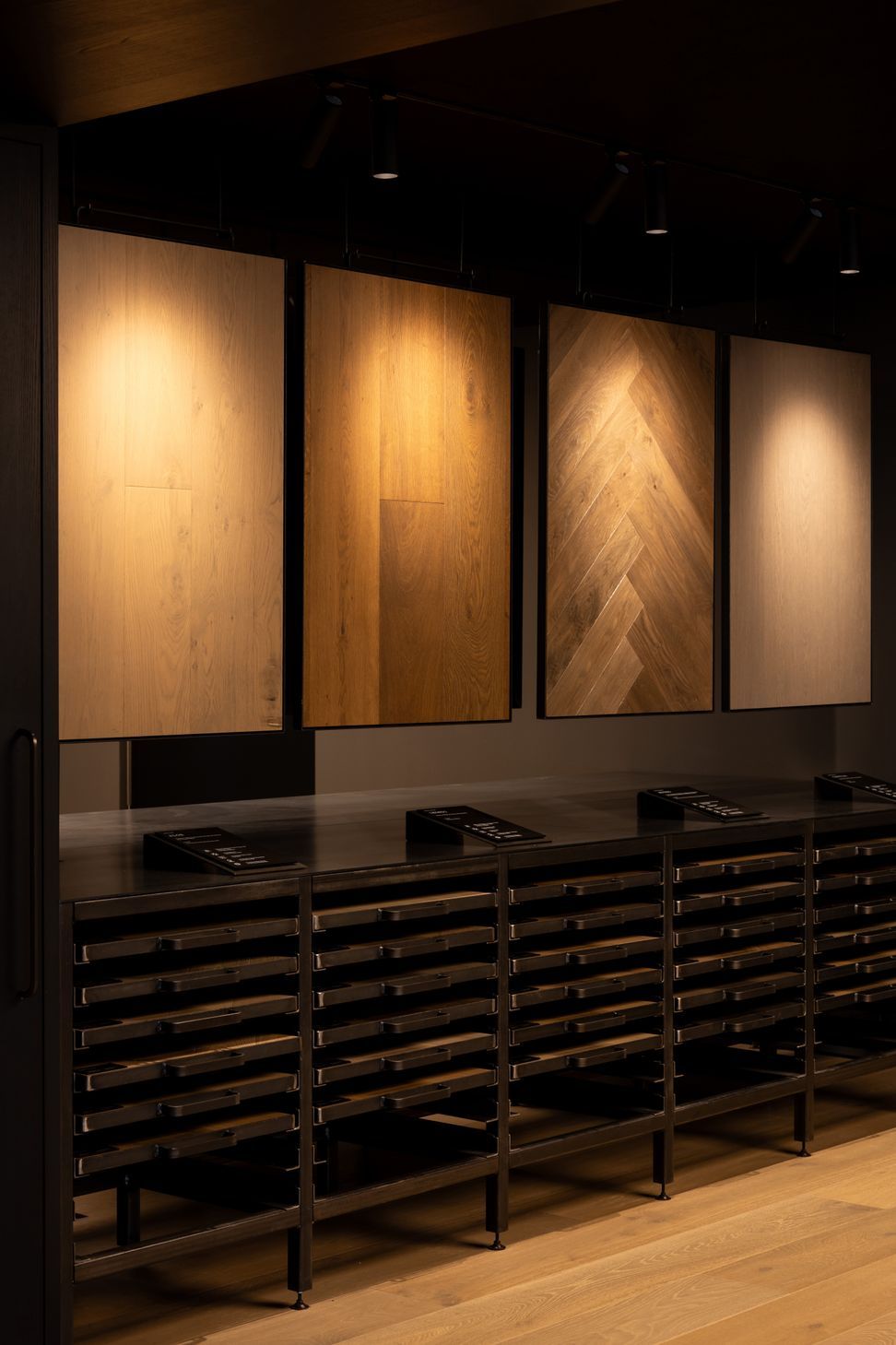
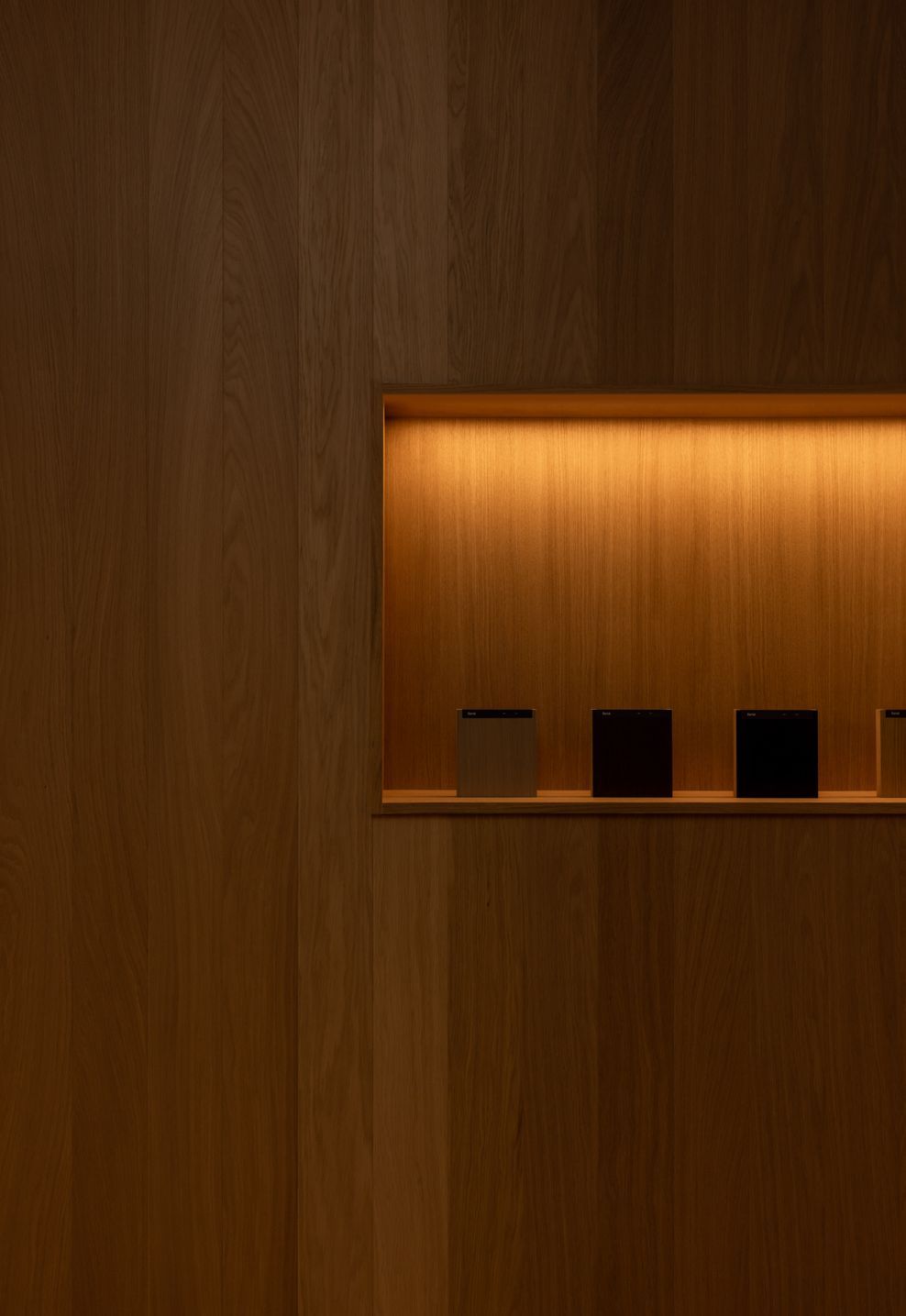
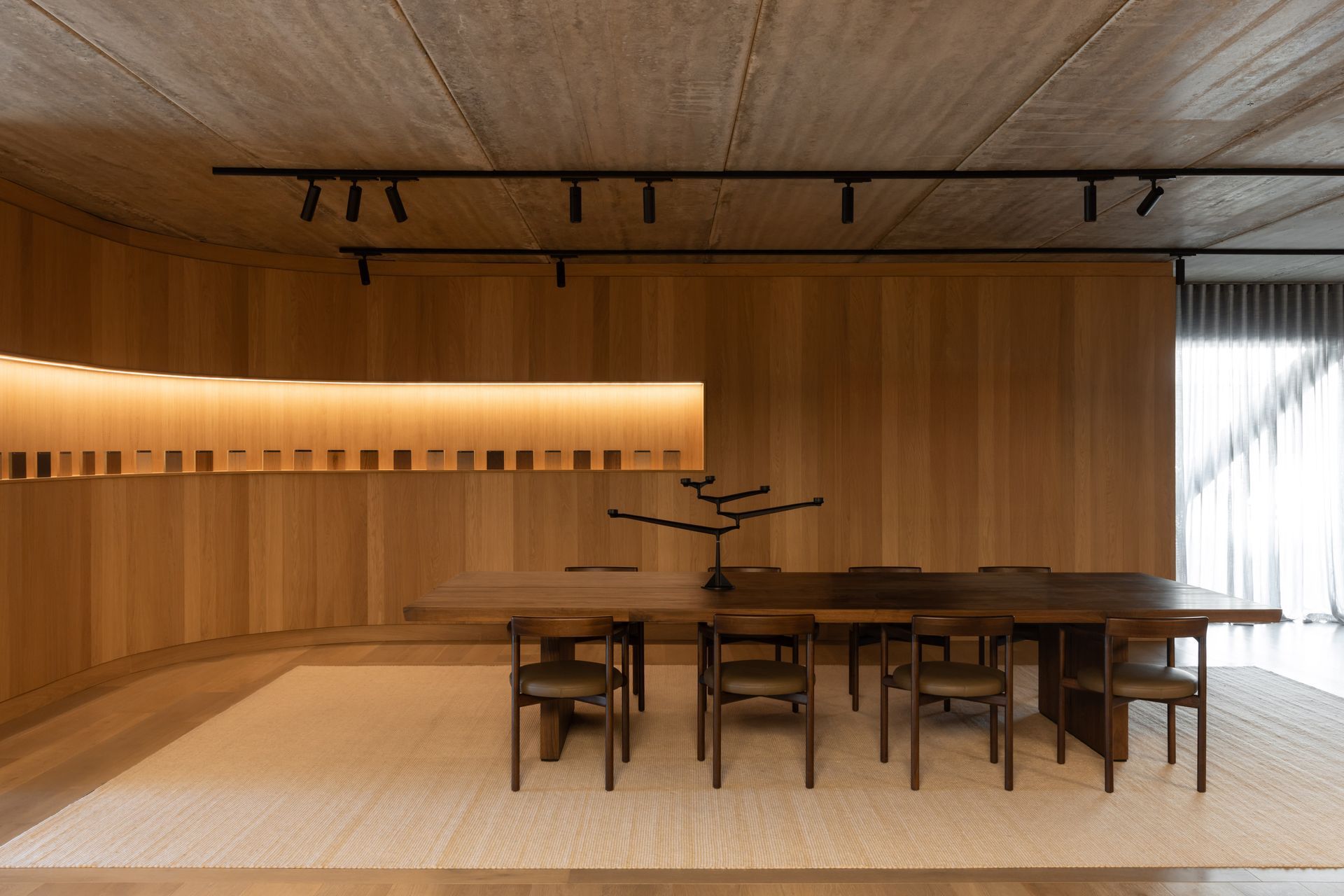
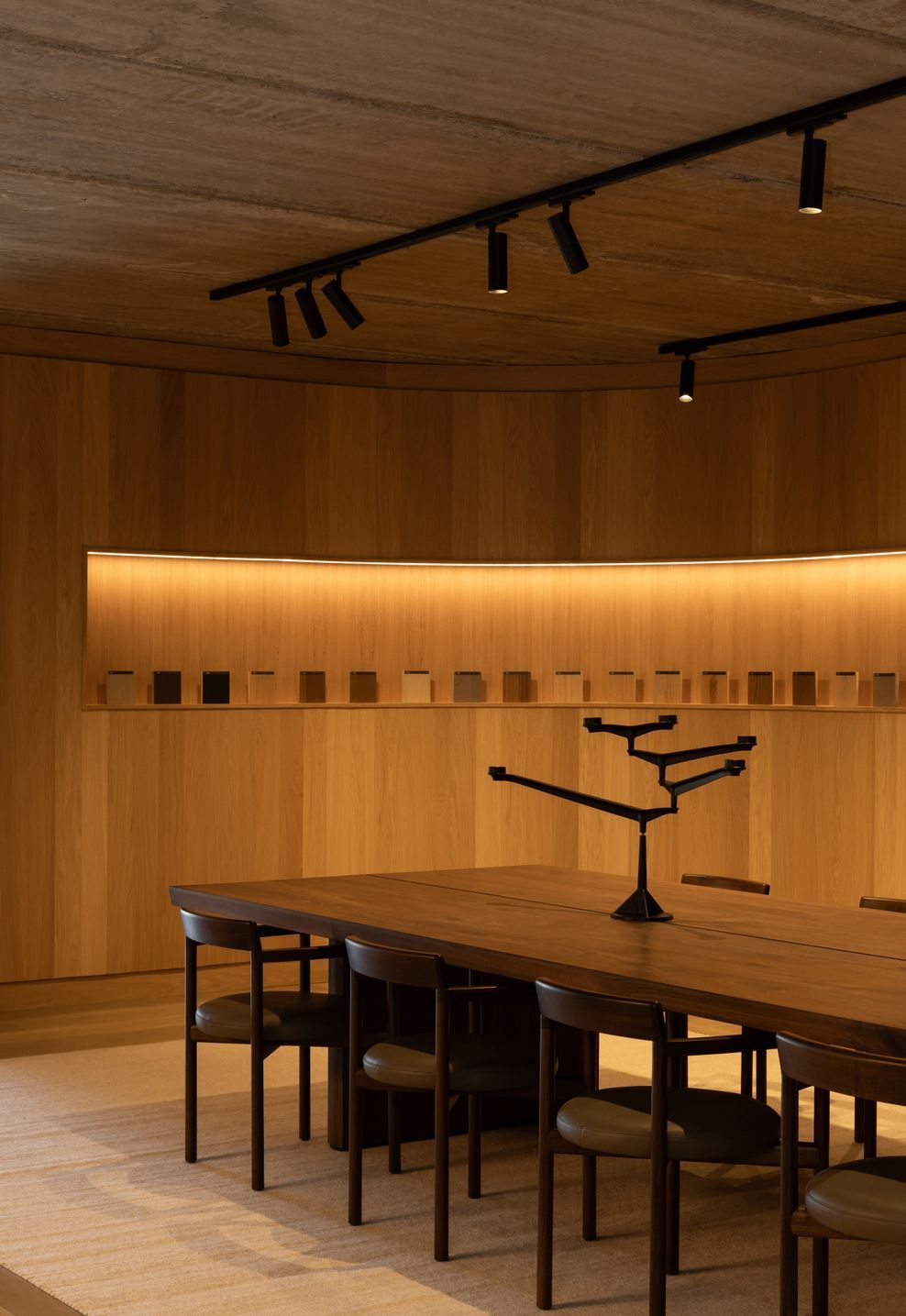
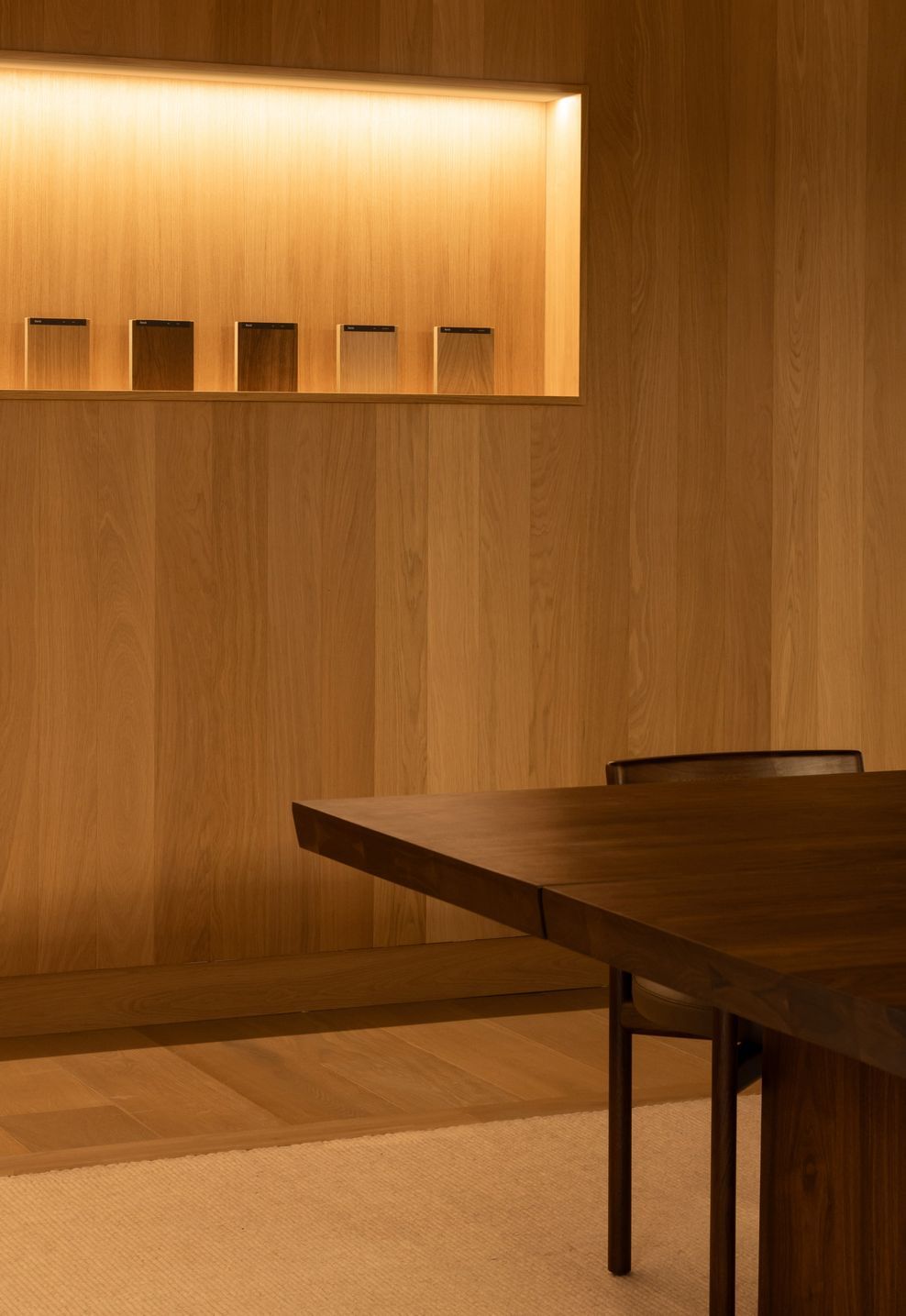
That introductory space features a wall of small-format samples presenting the full breadth of Forté’s range in one place: flooring, cladding and panels, stone and textile.
“That wall is a really important starting point,” says Caldwell. “You can see everything in one space, build small palettes, and expand your thinking before dialing into larger formats.”
From there, the journey progresses through external linings, then into the flooring zone where visitors tend to spend the most time, before finishing with wall linings and veneers that complement the foundational selections.
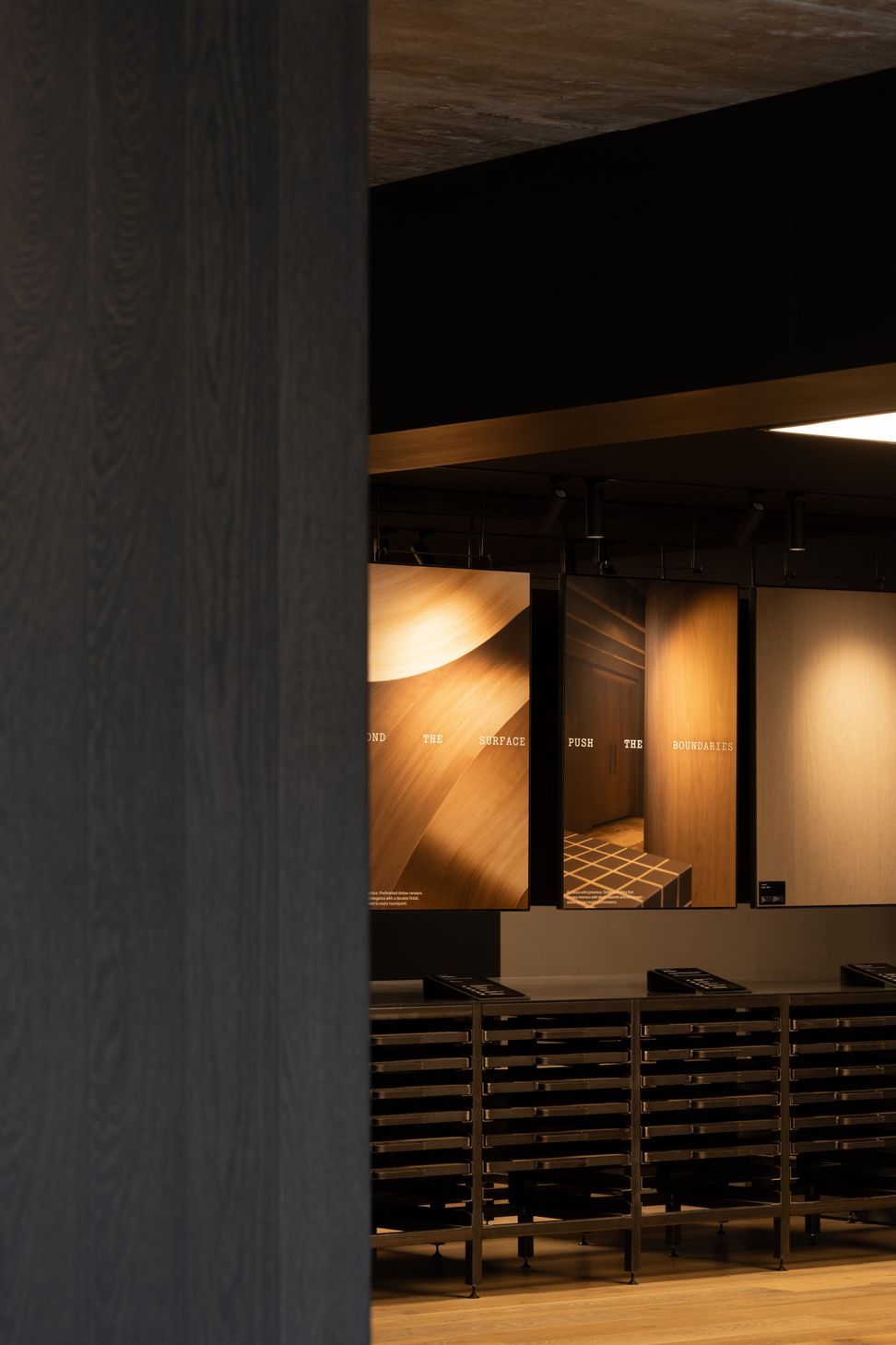
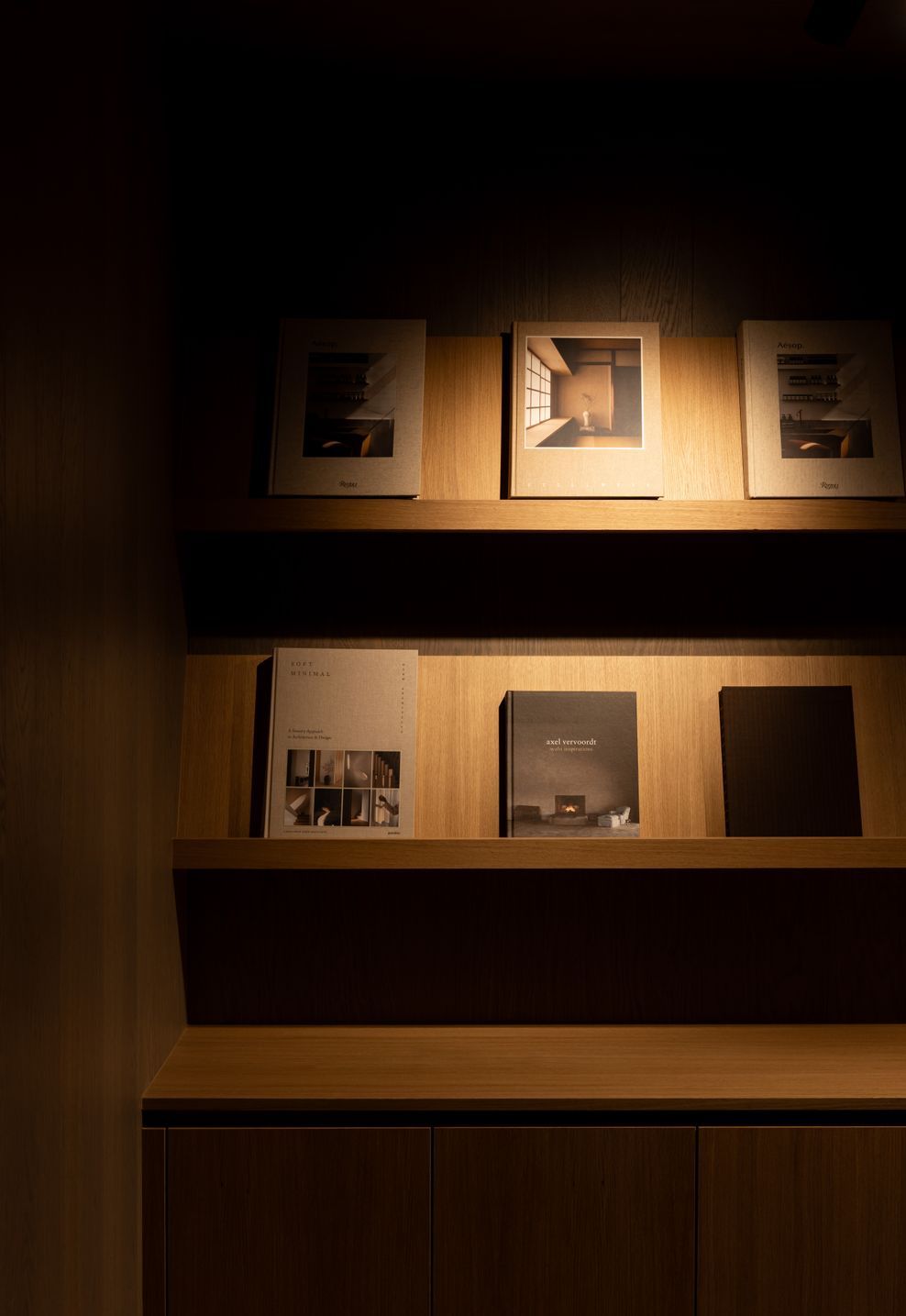
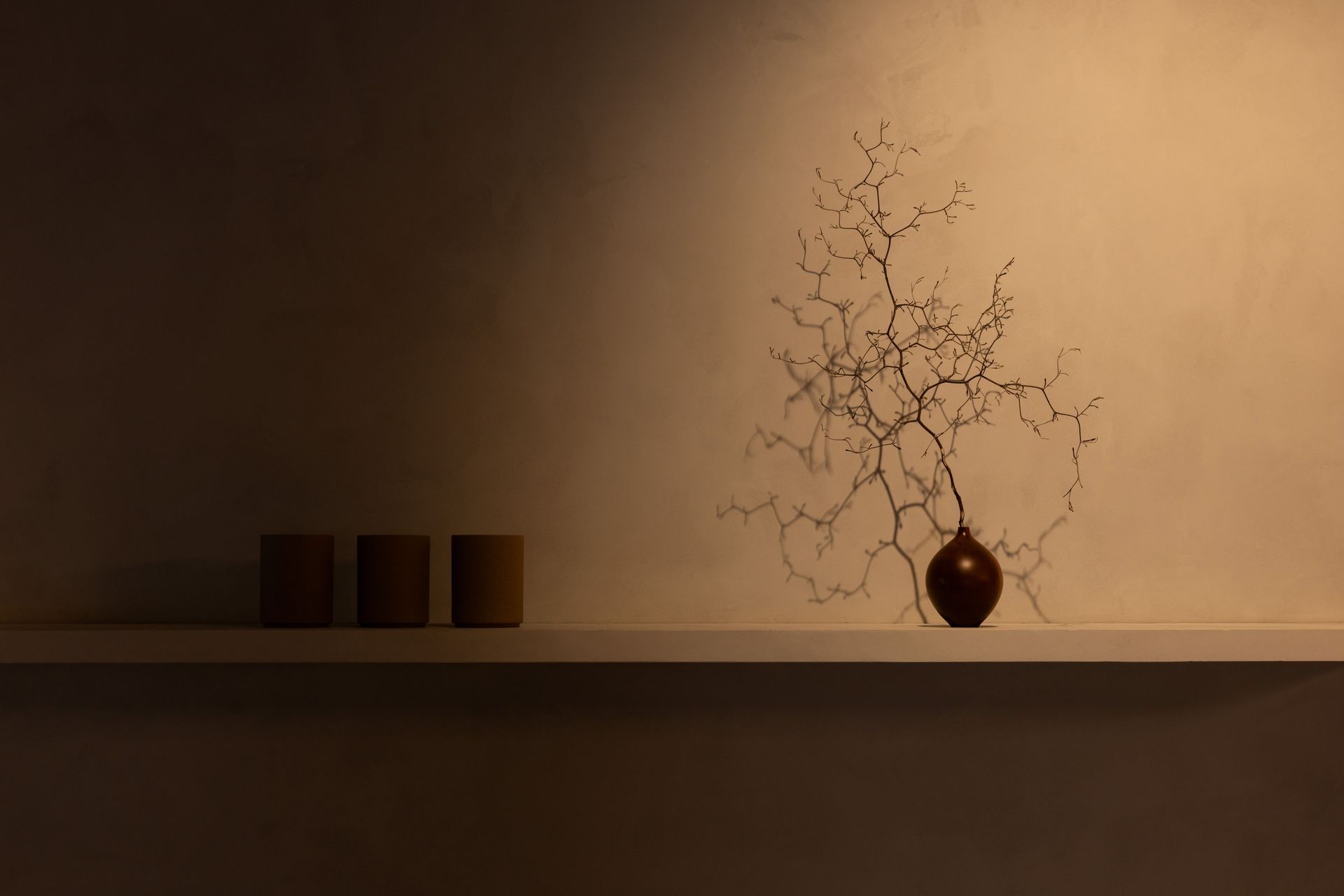
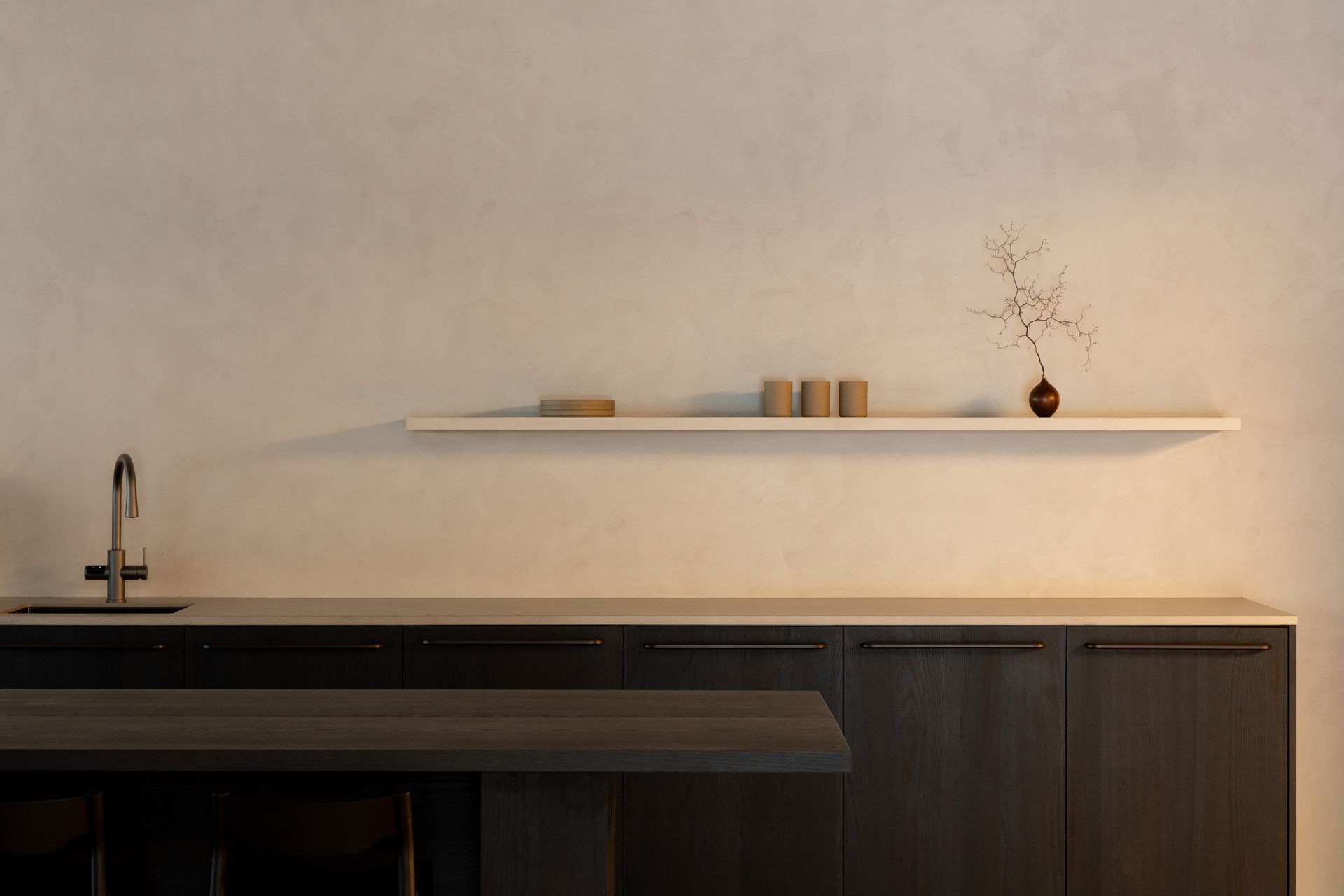
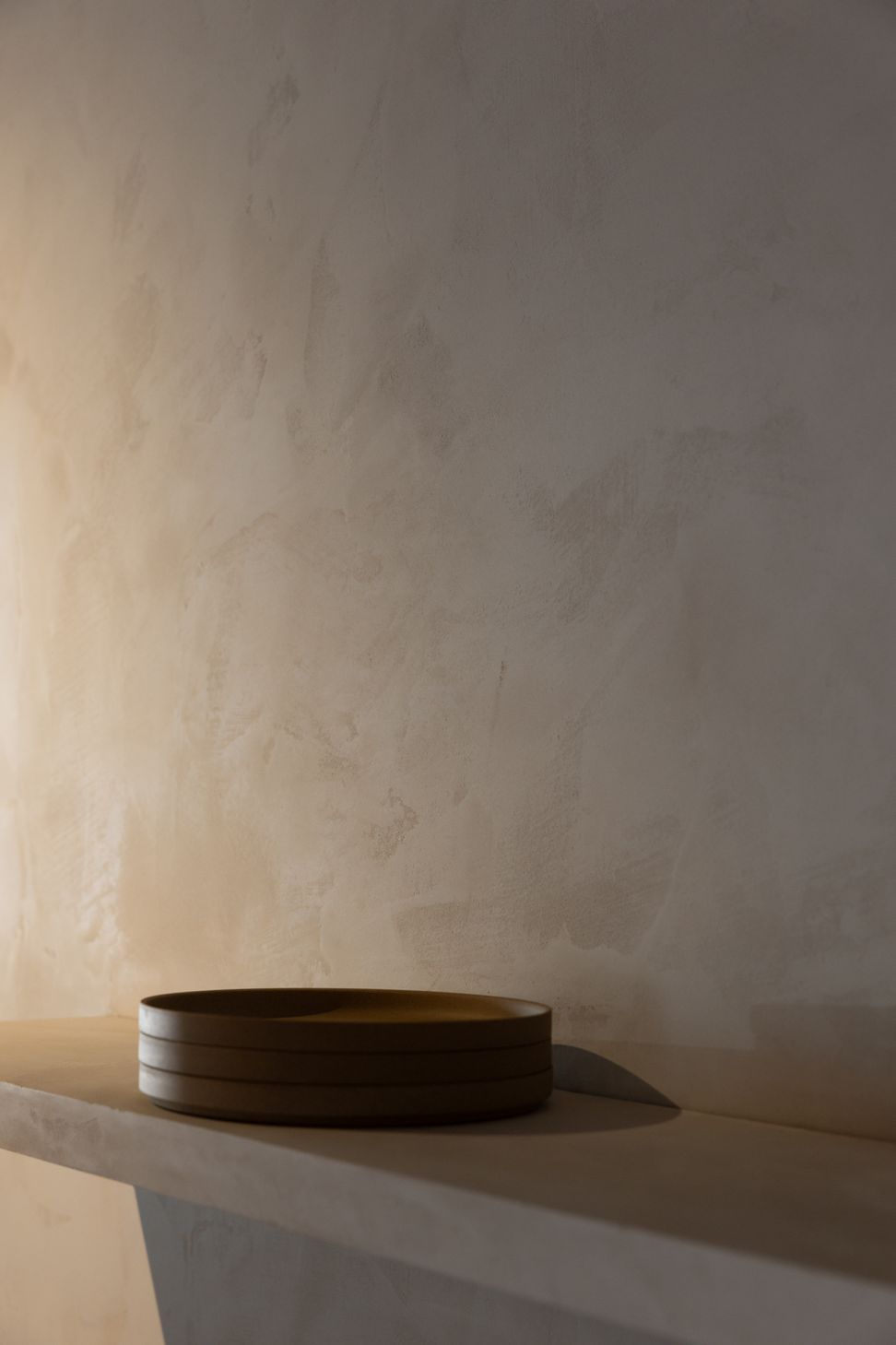
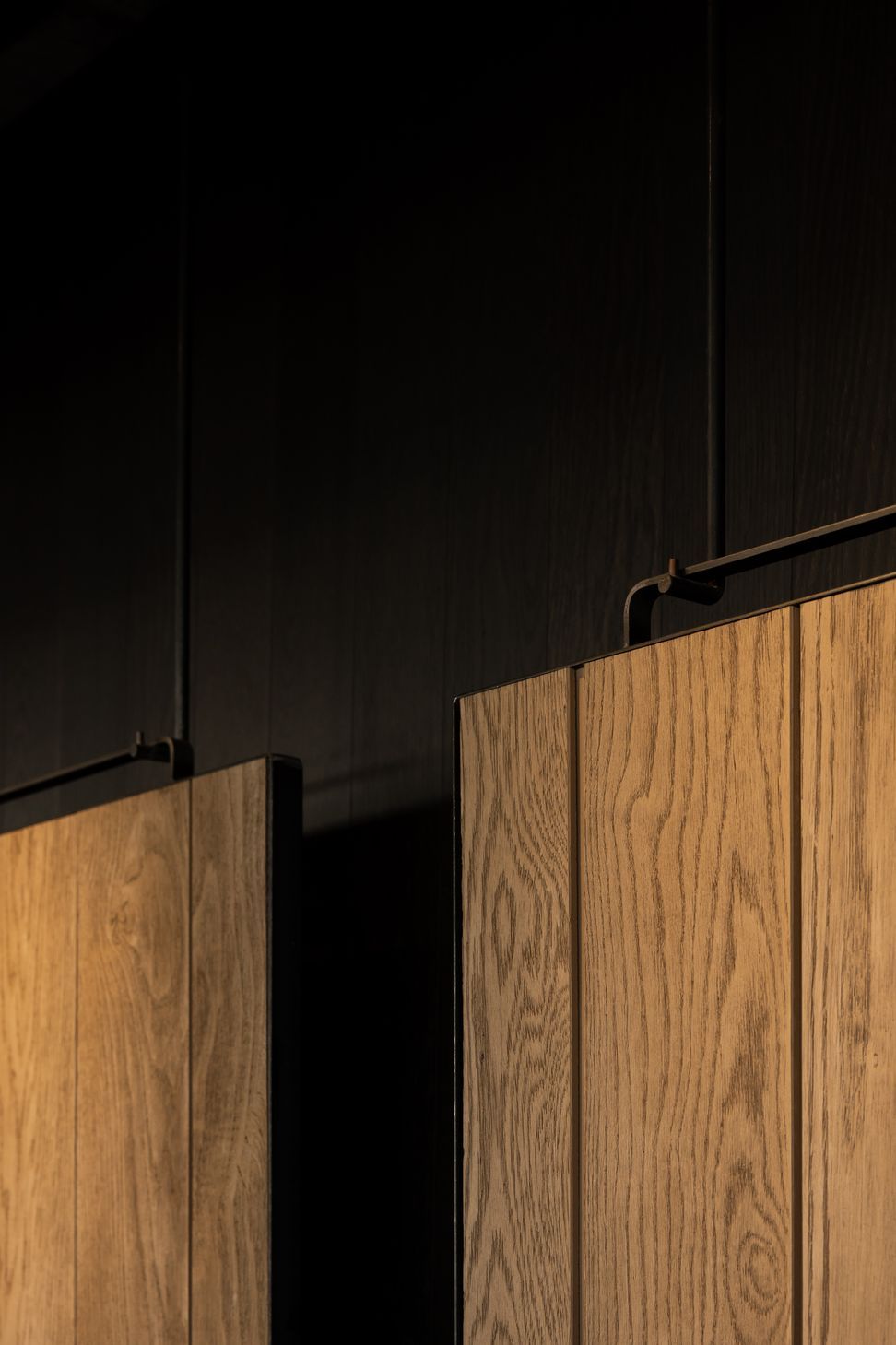
Restraint continues to define the material language throughout the showroom. Timber is used selectively, with finishes drawn almost entirely from Forté’s own collections. Concrete and mild steel form a quiet supporting backdrop, allowing each board and sample to be viewed clearly and experienced under changing light conditions. The only tone present is the warmth of wood, allowing each board and sample to be viewed clearly and experienced under changing light conditions as visitors move through the space.
“It is very easy for these spaces to become visually noisy,” Caldwell reflects. “The restraint means when you do look at a finish, it really comes into focus.”
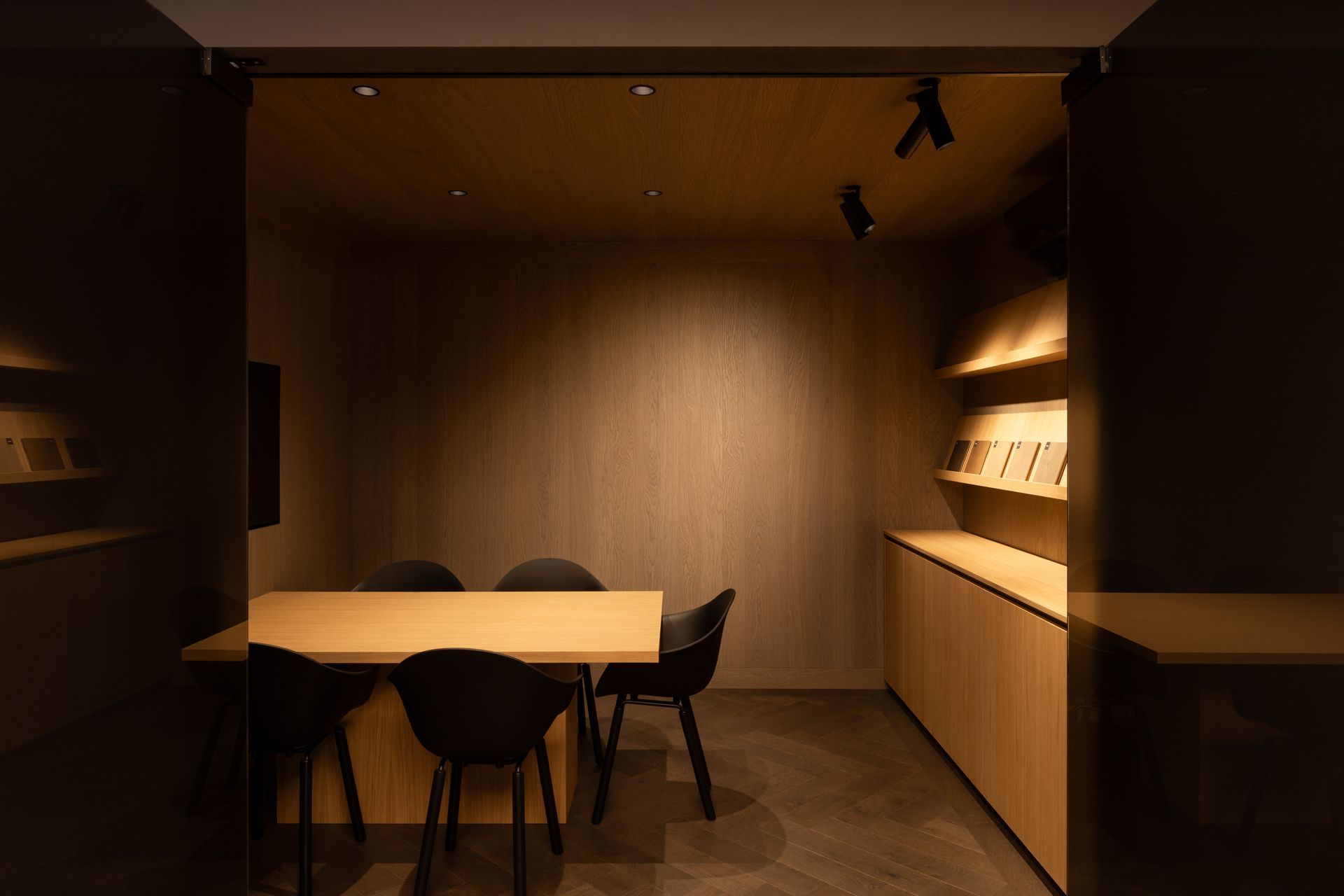
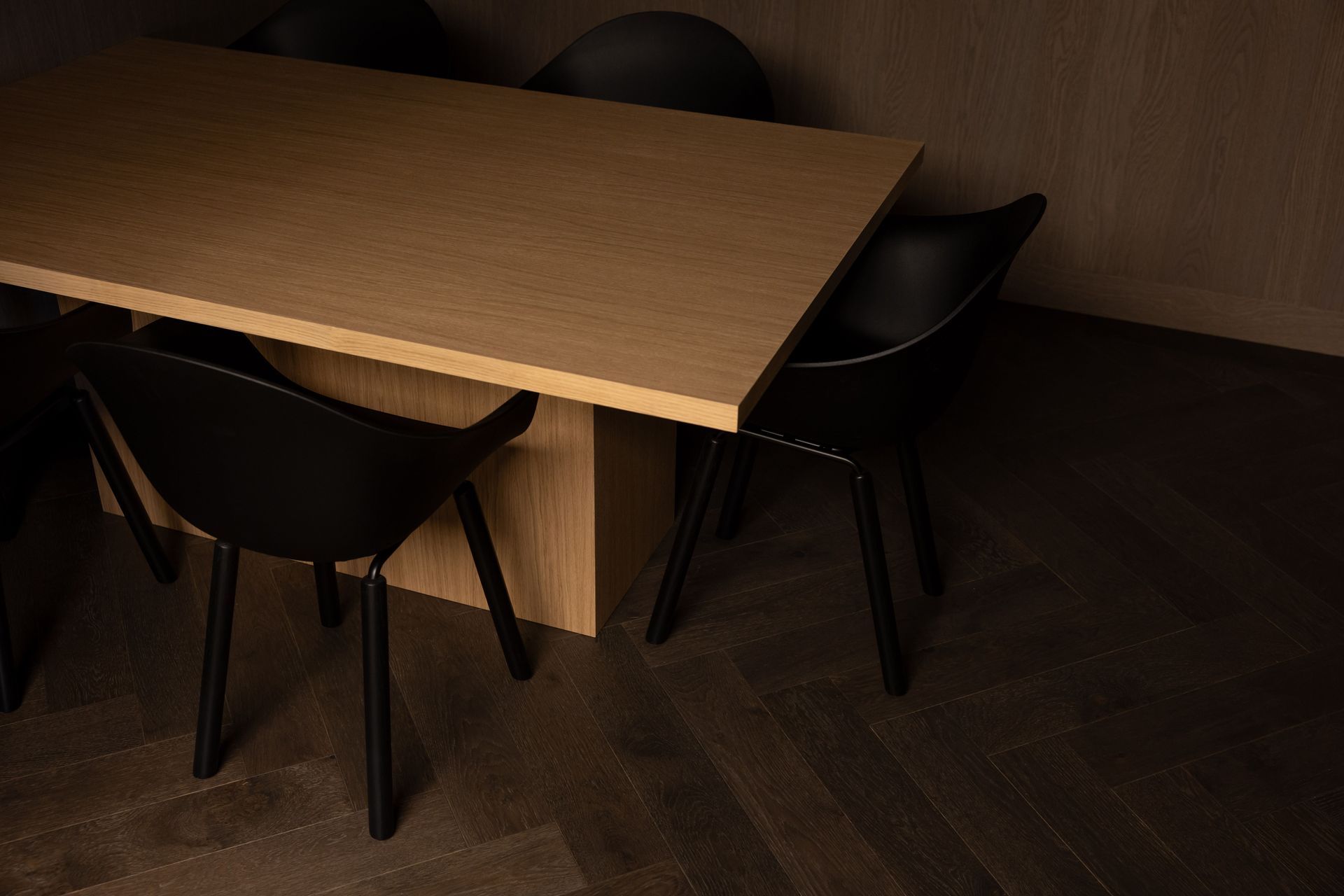
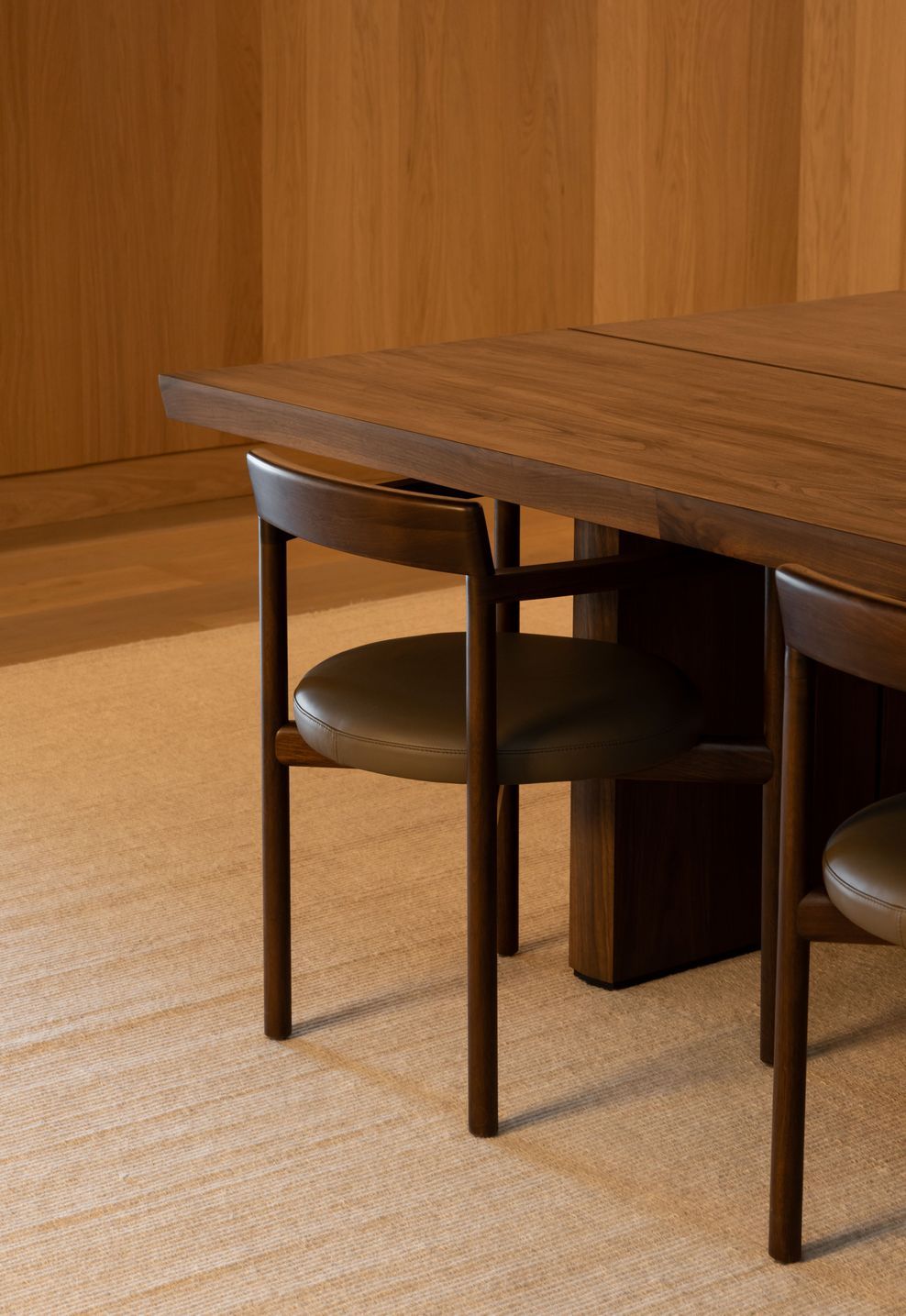
Meeting rooms and staff offices sit discreetly behind each bay, tucked inward for intimate consultations. Storage is concealed, allowing samples to be collected gradually during a visit and then reviewed together at the central table, where selections are refined and discussed.
Although the project experienced a pause during the pandemic, a period that coincided with Forté’s broader brand realignment, the Christchurch Experience Centre ultimately emerged as a refined model for future growth.
“It was important that this was not just a one-off,” says Caldwell. “The showroom needed to be a template that could be carried into other regions, and potentially into offshore, with the same level of restraint and confidence.”
Since opening, the response has been overwhelmingly positive. Homeowners and architects travel from afar to make their selections, and the space has become the venue for design-driven education and collaboration. These communal activities are anchored by a five-metre communal table hand-crafted by friends of the Forté family.
“Turning up to work in a beautiful environment gives the team a new confidence,” Caldwell says. “They have completely taken ownership of the interior and the experience, and from the moment you arrive, you feel very well hosted and catered for by them.”
Words: Jo Seton