From the top: How the roof can contribute to a higher-performance building

featuring Viking Roofspec

Viking Roofspec logo
  • 263.2K profile views
  • 69 saves

A roof’s thermal rating, green infrastructure and material content can all impact a building’s performance and level of sustainability, as can the way an existing roof is renewed or replaced.

Visit Website

Featured Professionals

Written by

  • Cassie McKenzie

When a building reaches a certain age, replacing the roof seems inevitable. Materials are removed and sent to waste, with this process often repeated every couple of decades. Sometimes, though, the existing roof is still structurally sound. 

“Just because a roof is a couple of decades old, there’s this thought process that it needs to be ripped off and replaced,” says Brendon Sutton, Sales and Marketing Manager for Viking Roofspec.

Rather than assuming an ageing roof needs to be stripped back and replaced, there are instances where Viking Roofspec can preserve an existing structure by installing new roofing membranes over the top. This ‘roof revival’ approach avoids filling the local landfill with construction waste and means less disruption to the building’s occupants.

Brendon Sutton.

“Inspection of the condition of the existing roof is critical, so there are a lot of conditions around it, but if a roof is structurally sound, it means that we’re not having to relocate people. We're not having to shrink wrap the building,” says Brendon. “Take for example a hospital where there are patients. There are operating theatres. You can’t just relocate people. Supermarkets are another example. You can’t just relocate all of the stock and shelves. We can do an overlay, and people can just get on with their lives.”

Beyond reducing the amount of construction and demolition waste sent to New Zealand’s landfills, there is also the opportunity to choose materials and systems that influence how the building performs for the next decades. A roof can influence thermal performance, accommodate renewable energy and become a planted space that is otherwise underutilised. More than selecting the right colour and profile for the design, they impact the building as a whole. 

Each Viking Roofspec system offers a different solution, and understanding how each contributes to a more sustainable, higher-performance building is an important part of specifying. 

Understanding warm roofs

The purpose of warm roofs is often misunderstood. 

“There’s a perception that warm roofs are purely about keeping a building warm, and that they might get too hot in the summer,” says Brendon.

In reality, the insulated roofing system helps moderate all temperatures. 

“A warm roof is an insulated roof, which means that it keeps the building warm in the winter but cool in the summer.”

For existing buildings, Viking Roofspec can provide a dew point analysis to calculate the thickness of rigid insulation required above the existing structure to keep the dew point outside the building. 

It’s an example of why Brendon says warm roofs need to be considered as a complete system, rather than “cobbled together” from unrelated materials. Each layer has a role to play, and the performance of one can influence the others.

The same whole-of-system thinking becomes important when renewable energy is introduced.

For membrane roofs, the addition of solar panels can present an obvious challenge: how do you securely mount the panels without compromising the waterproof layer beneath them?

“Understandably, a lot of architects are nervous about putting solar panels on membrane roofs.”

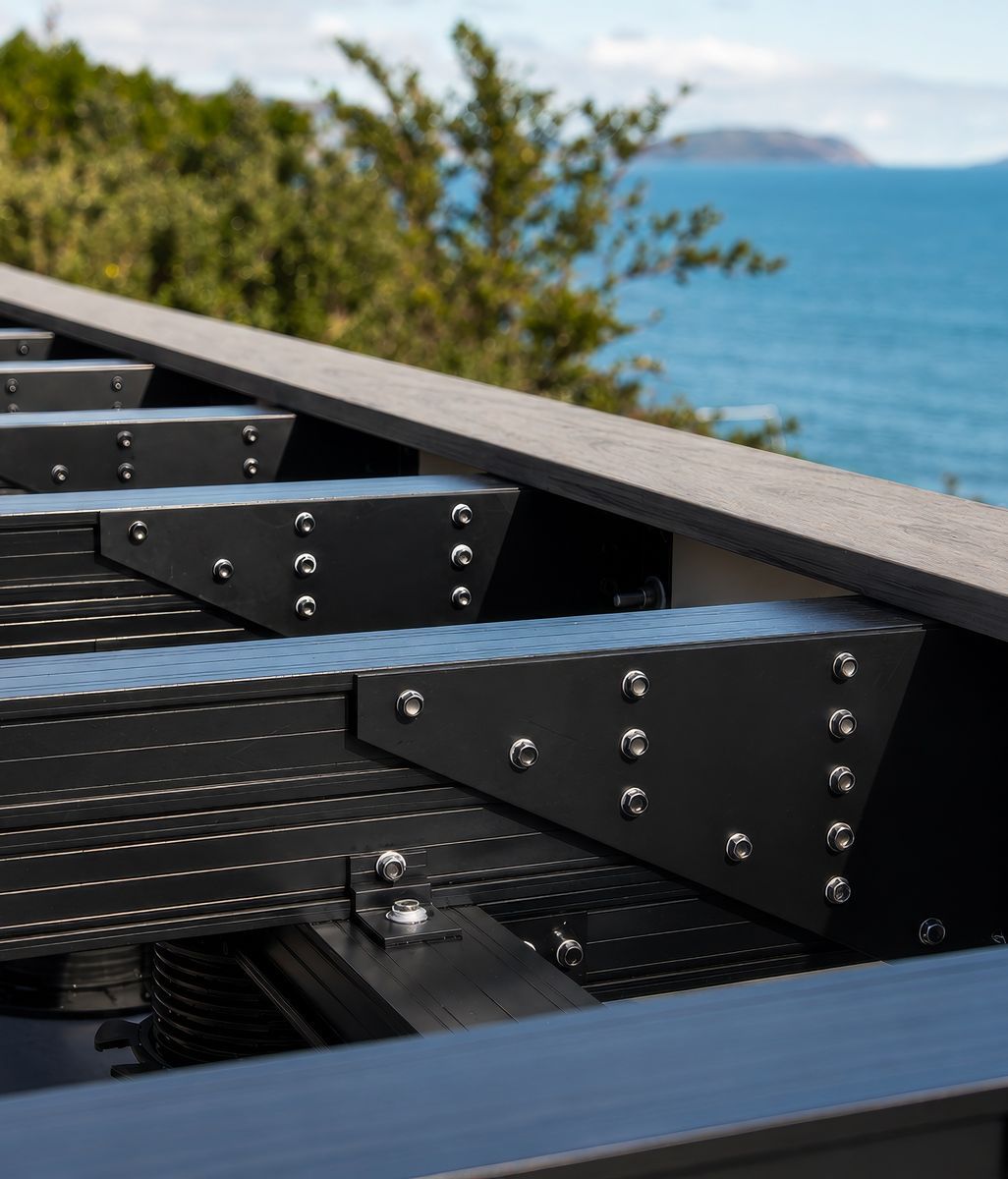
Viking Roofspec offers two proprietary mounting systems designed specifically for this. An EJOT mount bar is a thermoplastic weldable mounting system that avoids penetrating the membrane, while Viking RoofTrak incorporates heat-weldable flanges around the penetration to maintain watertightness. Both can be incorporated into new builds or retrofitted to existing roofs.

It means solar can be considered as part of the roofing system itself, rather than an addition that risks compromising its performance later.

A warm roof is an insulated roof, which means that it keeps the building warm in the winter but cool in the summer.

Viking Roofspec

Using underutilised roof space

Whether building new or renewing an existing roof, Viking Roofspec’s technology makes it possible to install rooftop gardens that can manage rainwater, act as a natural thermal and acoustic insulator and increase an area’s biodiversity. 

An engineer must verify if the existing roof can withstand the weight of a roof garden.

Below the surface is the Viking Roof Garden, a multi-layered system that performs on multiple levels. 

“It’s quite an involved and technical multi-layered system,” says Brendon. “It’s important that you stick to the complete system, which involves not just the membrane, but root barrier, a drainage board for controlling stormwater, and there are also specific soil compositions and plant selections that must be considered to ensure proper functionality.”

Replacing with the future in mind

When an existing roof can’t be retained, Viking Roofspec’s Ecostar roof tiles mimic the appearance of natural slate while being made from recycled rubber and plastic, renewing materials such as old radiator hoses and car bumpers. 

Entirely recyclable at the end of their life, the system is also lightweight (half the weight of Welsh slate), UV, mildew and salt resistant, and a responsible choice in areas with seismic activity.

“If you’re in an area of New Zealand where you can get a series of seismic tremors, slate tiles can be very dangerous, seeing they’re individual projectiles, whereas EcoStar tiles are secured to a timber sarking substrate which braces the whole building,” says Brendon. “There are also a lot of period buildings where the slate is well past its use-by date. It’s cracking. It’s letting water in.” 

With over 45 colour and profile combinations, these roofs can be replaced with EcoStar, achieving the same look while improving the performance and sustainability of the building.

Whether renewing or replacing, a roof should do more than simply cover a building. It protects from the elements, contributes to the thermal and overall building performance and can accommodate renewable energy and green infrastructure. The way it’s designed, specified and installed can also determine how much material is discarded now, and in decades to come. 

For Viking Roofspec, this means looking beyond the need to always replace a roof in its entirety, and designing systems that contribute to a building in more ways than one. 

Explore the full range of roofing solutions from Viking Roofspec on ArchiPro and see how other architects and builders have specified the products on projects across New Zealand. 

Credits