
How to choose the right tiles for pools, patios and outdoor entertaining areas

featuring Global Tile

Global Tile logo
  • 609.0K profile views
  • 154 saves

From slip resistance and poolside comfort to coping details and colour choices, getting outdoor tiling right takes more than finding a tile you love.

Visit Website

Featured Professionals

Written by
  • ArchiPro Editorial Team

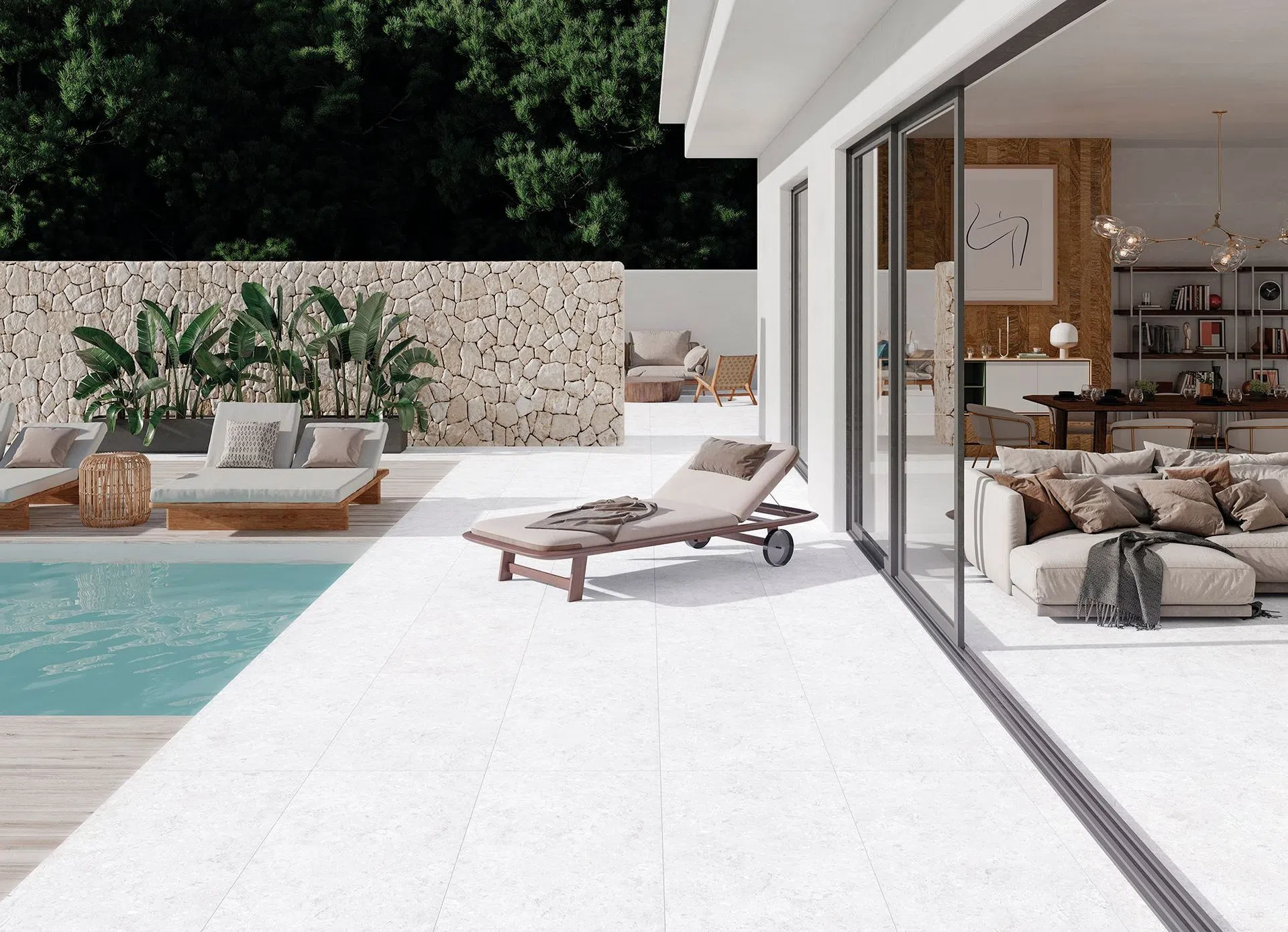
There is something particularly appealing about an outdoor space where everything feels connected. The living room flows onto a generous terrace, the terrace meets a swimming pool, and the whole area feels like a natural extension of the home. Tiles play a big part in achieving that look, but choosing them involves considerably more than settling on a colour or finish.

Outdoor surfaces face a different set of challenges to those inside. They need to withstand changing temperatures, sun exposure, moisture and, in the case of swimming pools, chemicals and prolonged immersion. They also need to be comfortable and safe underfoot, and relatively straightforward to maintain.

Here, Jared Caldwell, Managing Director at Global Tile, shares seven things to consider when specifying tiles for outdoor living areas and swimming pools.

1. Start with the environment, not the aesthetics

A covered patio, an exposed entertaining area, and a swimming pool surround all have different performance requirements. Before looking at colours and formats, consider how each surface will be used and the conditions it will face.

"For exterior applications, the tile must be a true porcelain, which is strictly defined by a water absorption rate of <0.5% or less under the European Standard (EN 14411)," says Caldwell.

Slip resistance is another important consideration. Ask suppliers for the relevant test data rather than assuming a matte finish will provide sufficient grip. The R-value, which is the European Ramp Test method, offers a useful indication of slip resistance. R10 can be a starting point for patios and R11 for pool surrounds, although the appropriate specification will depend on the particular application.

Caldwell recommends getting hands-on with samples, too. "Ask for the exact tile and finish so you can feel the different surface finishes, with wet barefoot performance considered around pools."

Some manufacturers now offer IN OUT or Soft & Safe finishes, designed to provide a consistent appearance between interior and exterior spaces while offering additional grip when wet.

Conjuring images of Mediterranean and Balinese resorts that will bring a tropical vibe to your swimming pool, Penta Vanguard from Global Tile offers a specially designed format for swimming pools, spas, baths and wet areas.

2. Choose a material and format suited to the job

Exterior-rated porcelain is a practical choice for patios and pool surrounds, with options ranging from 9mm to 20mm in thickness. The right format will depend on the substrate, installation method and drainage requirements.

For pool waterlines, glass mosaics and pool-approved porcelain are popular choices. Mosaics are particularly useful for accommodating curves, steps and detailed shapes.

However, not all decorative mosaics are suitable for submerged applications. Caldwell says it’s important to check the backing on the mosaic sheet before specifying them.

"Backings on the mosaics must be a qualified mounting system and not a fibre mesh backing with water-soluble adhesive that stops the tile adhesive bonding properly," he explains.

Always check that the manufacturer explicitly approves the product for swimming pool use. Global Tile distributes Spanish manufacturer Onix Mosaico's glass mosaics in New Zealand, which have options designed for pool applications.

3. Think about the pool waterline and the colour it creates

Pool tiles have an interesting relationship with their surroundings. The colour of the finished water is influenced by the tile, pool depth, surrounding landscape and, perhaps most surprisingly, the sky above.

A lighter tile generally produces clearer-looking water, while darker finishes can create a deeper, more dramatic effect. But there are exceptions. 

"Don't be fooled, as some dark colours like our Onix Penta Bali Stone will also produce clear water," he says.

There are practical considerations, too. Water hardness and pool chemicals can contribute to limescale deposits, which tend to be more noticeable against darker surfaces. Lighter mosaics can disguise these deposits more readily.

Look for glass or porcelain mosaics with documented pool approval and check samples both wet and dry. If possible, view them underwater before committing or view the Onix Mosaico Water Colour Chart as a guide. Specialised decorative or metallic finishes should only be used where the manufacturer confirms they are suitable for submerged applications.

Grout deserves attention at this stage, too. Epoxy options such as LATICRETE SPECTRALOCK Pro Premium Epoxy Grout and LATICRETE SP-100 Epoxy Grout provide stain-resistant, non-absorbent joints, helping with long-term maintenance.

Providing the user with the opportunity to create a seamless indoor-outdoor flow, Aquitaine from Global Tile is a porcelain tile inspired by the simplicity and naturalness of stones used in French architecture.
The Onix water colour chart.

4. Resolve the coping detail early

Pool coping is both a functional and visual detail, and one that is best resolved during the design stage rather than left until installation.

A mitred drop-face edge with an arris can create a crisp, contemporary finish, while bullnose profiles remain an option for those who prefer a softer, rounded edge. The coping should coordinate with the surrounding paving in terms of thickness, finish and colour.

Comfort is just as important as appearance. Check the finished edge for sharpness and texture, particularly where people will sit, lean or move around the pool barefoot.

"You don't want a surface that is too rough like sandpaper," says Caldwell.

Consider drainage and falls at the same time. Water should move away efficiently rather than collecting around the pool edge. Colour is another practical factor: all tiles heat up in direct sunlight, but lighter shades generally cool more quickly than darker ones.

5. Create continuity between indoors and out

For a cohesive indoor-outdoor scheme, look for collections that offer complementary finishes, colours and formats for different applications.

A 9mm tile might work across an interior floor and adjoining terrace, while a thicker 20mm option can be specified for raised decking systems. Using a shared palette allows the spaces to feel connected without compromising the performance requirements of each surface.

Coordinate the pool coping, waterline mosaics and surrounding paving, and consider choosing grout that blends with the tile rather than creating an unintended grid of contrasting joints.

Planning is particularly important around door thresholds, finished floor levels and drainage channels. These details need to be considered early to avoid awkward transitions once construction is underway.

Cross Cut from Global Tile takes its name and inspiration from a technique used in Italian stone quarries, by making cuts perpendicular to the stone’s sedimentation direction.

6. Don't underestimate the installation system

Even the best tile can underperform if the materials beneath it are not up to the job. Temperature fluctuations cause tiled surfaces to expand and contract, making correctly positioned movement joints essential.

"Movement joints must be installed at all changes of plane and where different surfaces abut each other," explains Caldwell. “Too often we hear of architects not wanting to install movement joints because aesthetically due to the placement they may not be pleasing on the eye, but they  must specify and detail movement joints as per the NZ Building Code. 

Waterproofing is equally important. Tiles and grout should never be relied upon as the waterproofing system itself. An approved membrane and compatible adhesive, grout and sealant products are essential.

Caldwell recommends specifying a complete installation system from one manufacturer, such as LATICRETE, which offers system warranties of 10, 15 and 25 years when the relevant products and installation requirements are followed.

Pool chemistry also needs ongoing attention. Poorly balanced water can damage grout, adhesives and waterproofing materials, as well as contributing to mineral deposits that bond to the finished surface. Allow the installation to cure fully before filling the pool. LATICRETE's guidance specifies a minimum curing period of 21 to 28 days at 21°C.

7. Invest in good products and good workmanship

Outdoor tiling is a long-term investment, so it pays to look beyond the initial appearance. Ask how many different faces or patterns a tile has, particularly when choosing a stone-look porcelain. Collections such as Global Tile's Tuffeau range offer varied patterns that help avoid the repetitive appearance sometimes associated with manufactured surfaces.

Caldwell encourages architects and designers to think about the installation specification as carefully as the tile selection itself.

"For Architects it is critical that they specify and detail an installation system from one manufacturer like LATICRETE, that is backed by a suitable warranty for the proposed application."

For homeowners, his advice is to choose something they will be happy living with for years, and to invest in quality products and workmanship. He also recommends bringing the tile supplier, pool builder, designer and installer together early in the process to ensure everyone understands the design and technical requirements.

Finally, don't overlook the installer. As Caldwell puts it, "Tiling is an art form, and good installers will always try and make it work."

The combination of considered product selection, sound technical detailing and skilled installation is what ultimately makes an outdoor space look good and perform well for years to come.

Are you dreaming of creating your own tiled outdoor or pool space? Explore Global Tile and their stunning projects on ArchiPro, connect with trusted professionals and discover the latest building products that can make your dream a reality. 

Credits