

Project team
Product Suppliers
New Zealand’s highest Green Star-rated building for the University of Auckland
World-leading, low carbon design
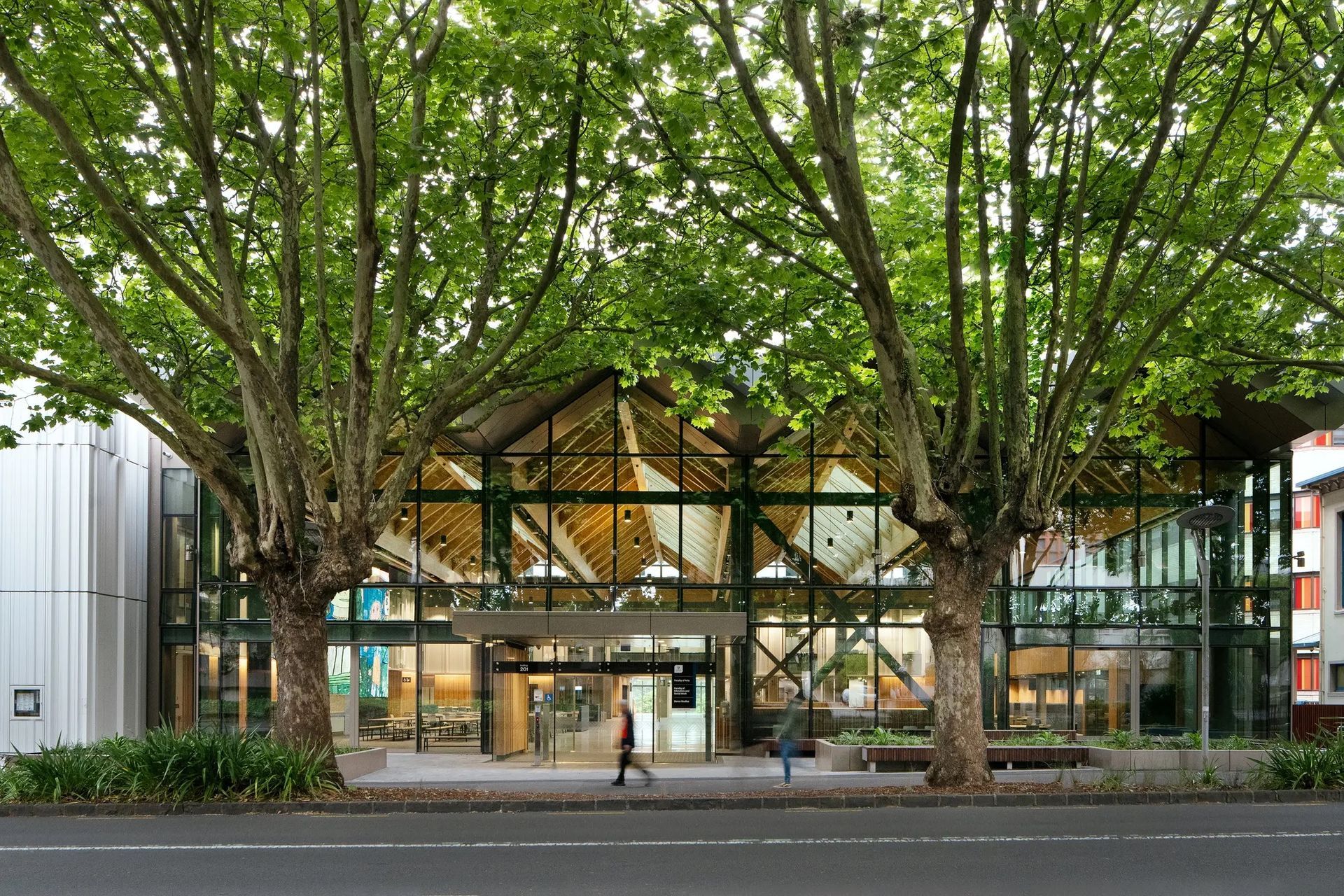
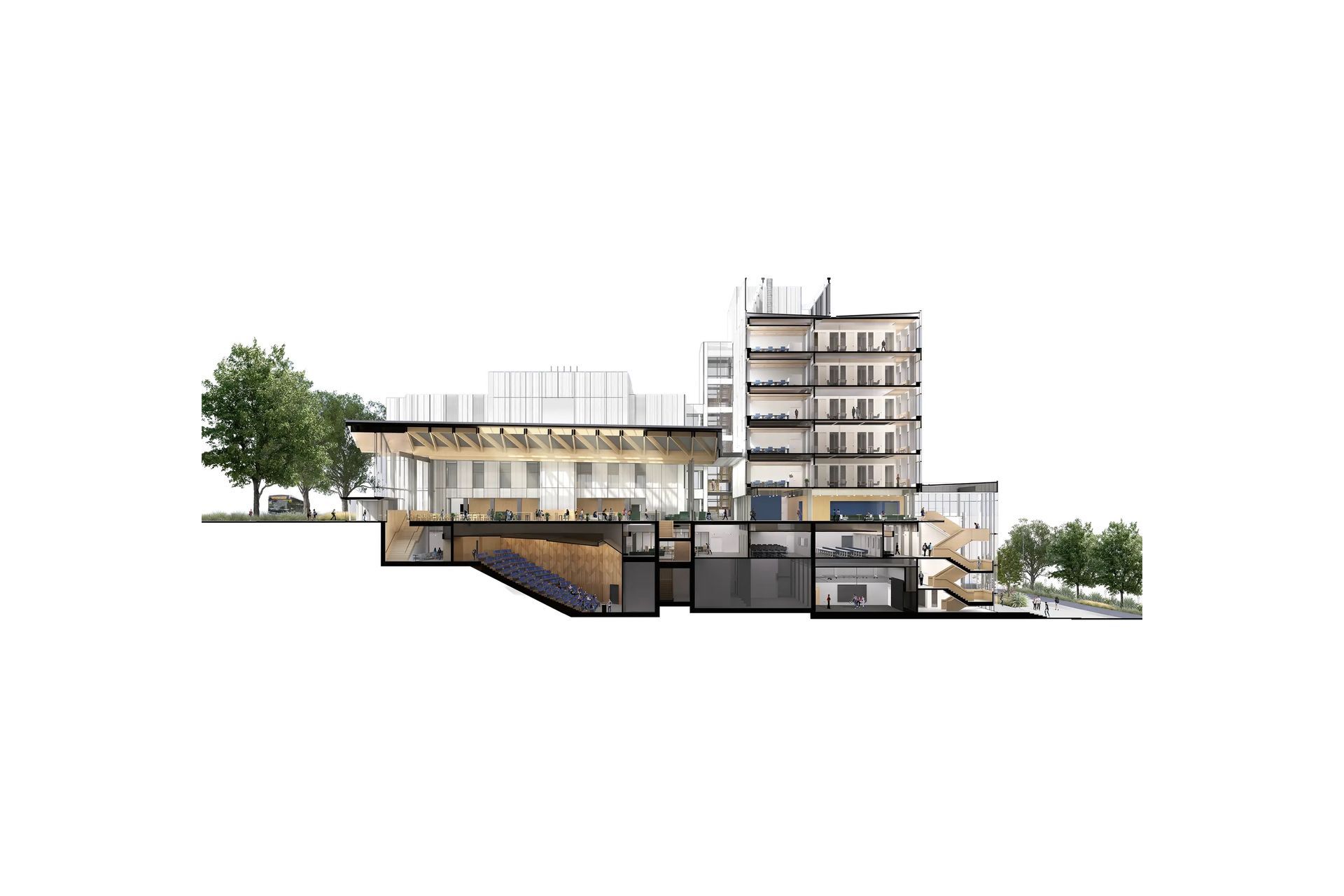
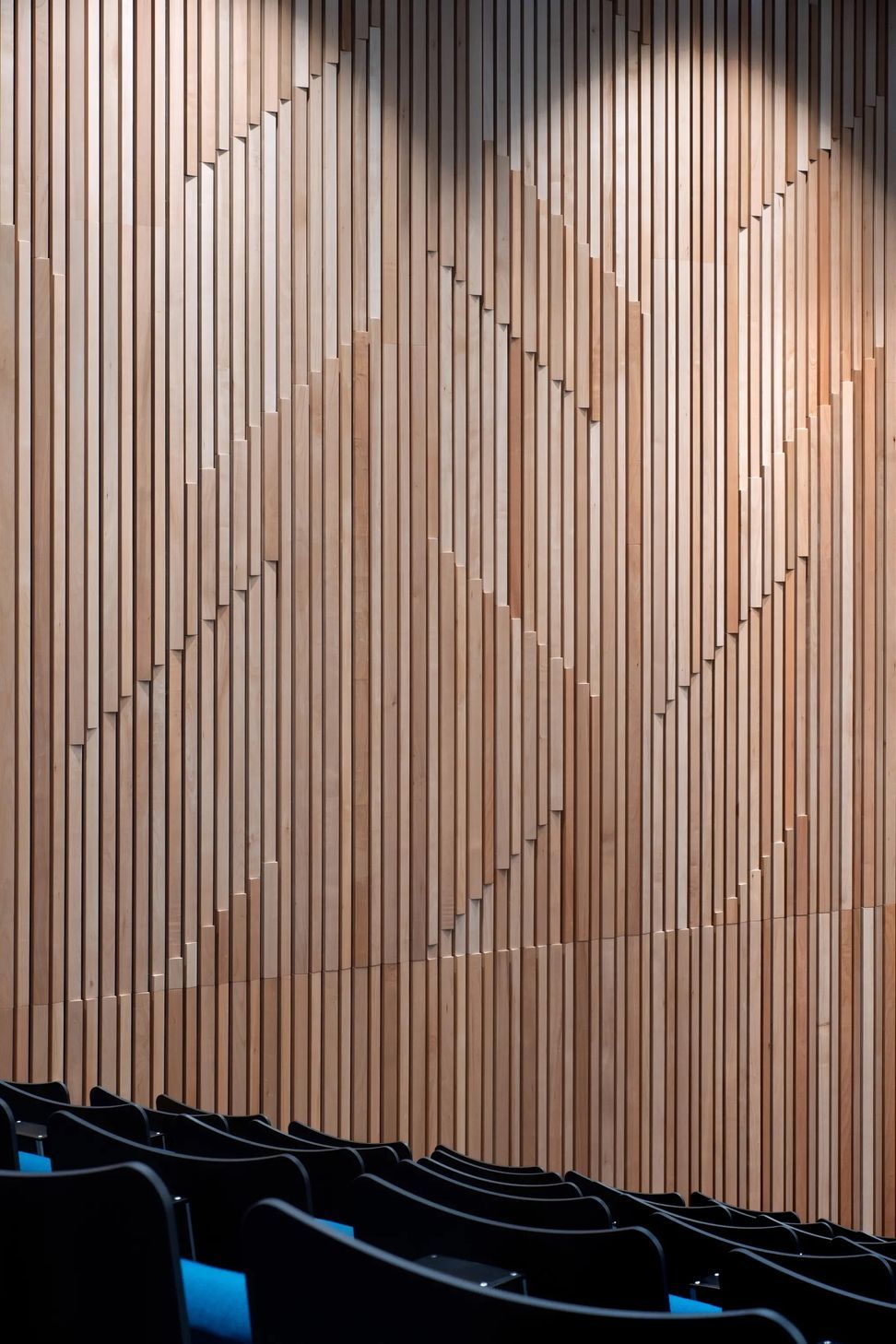
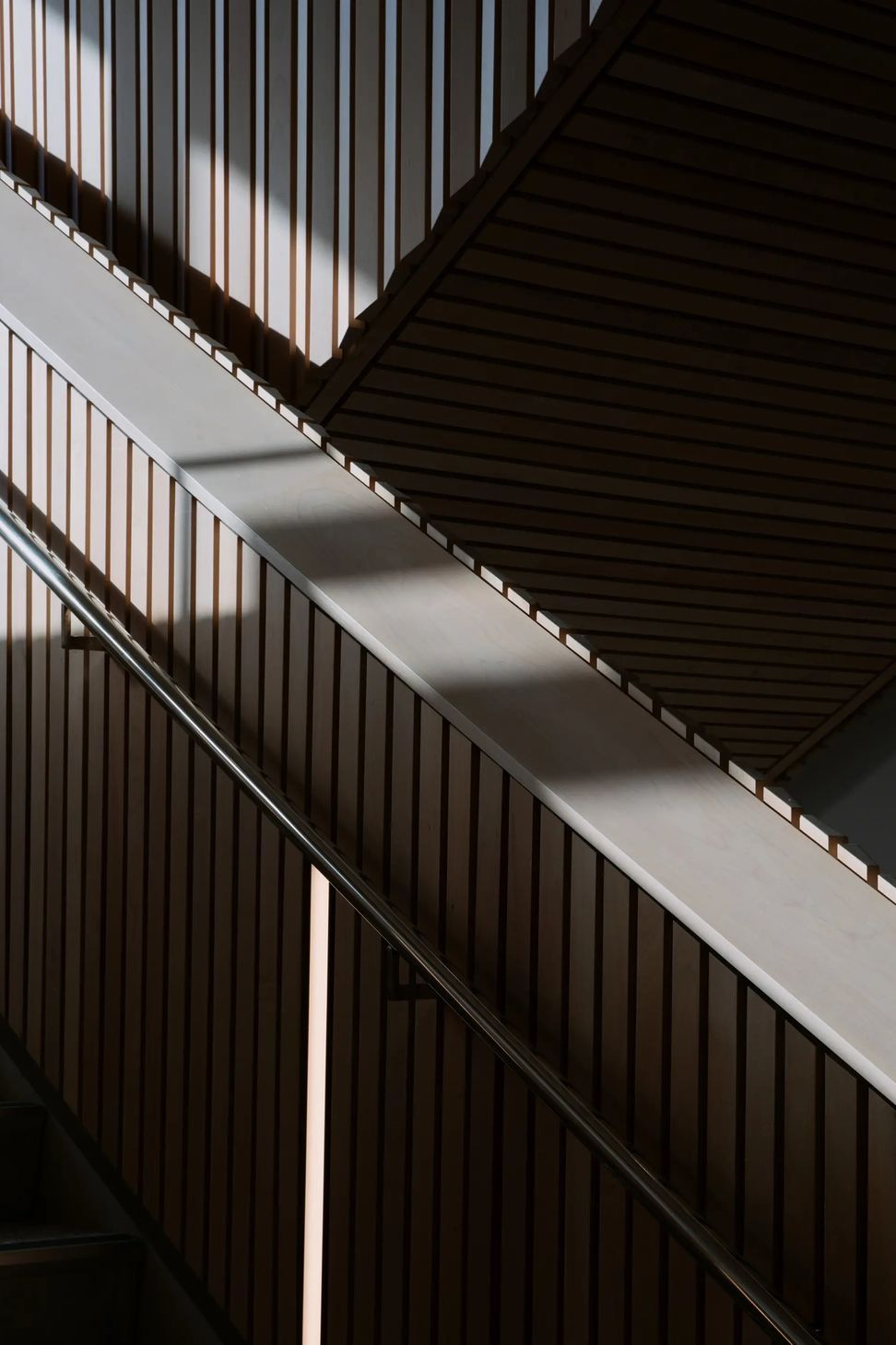
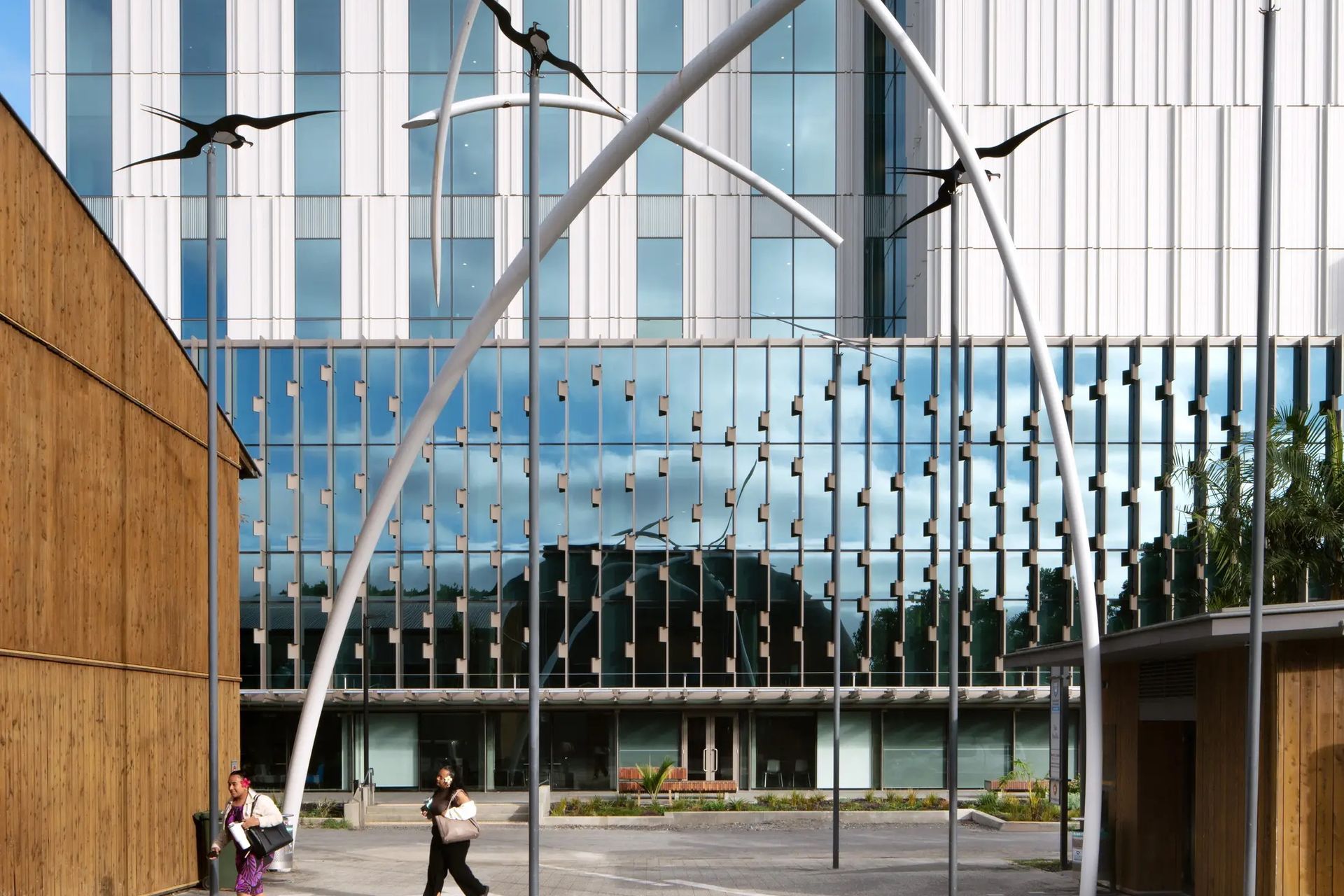
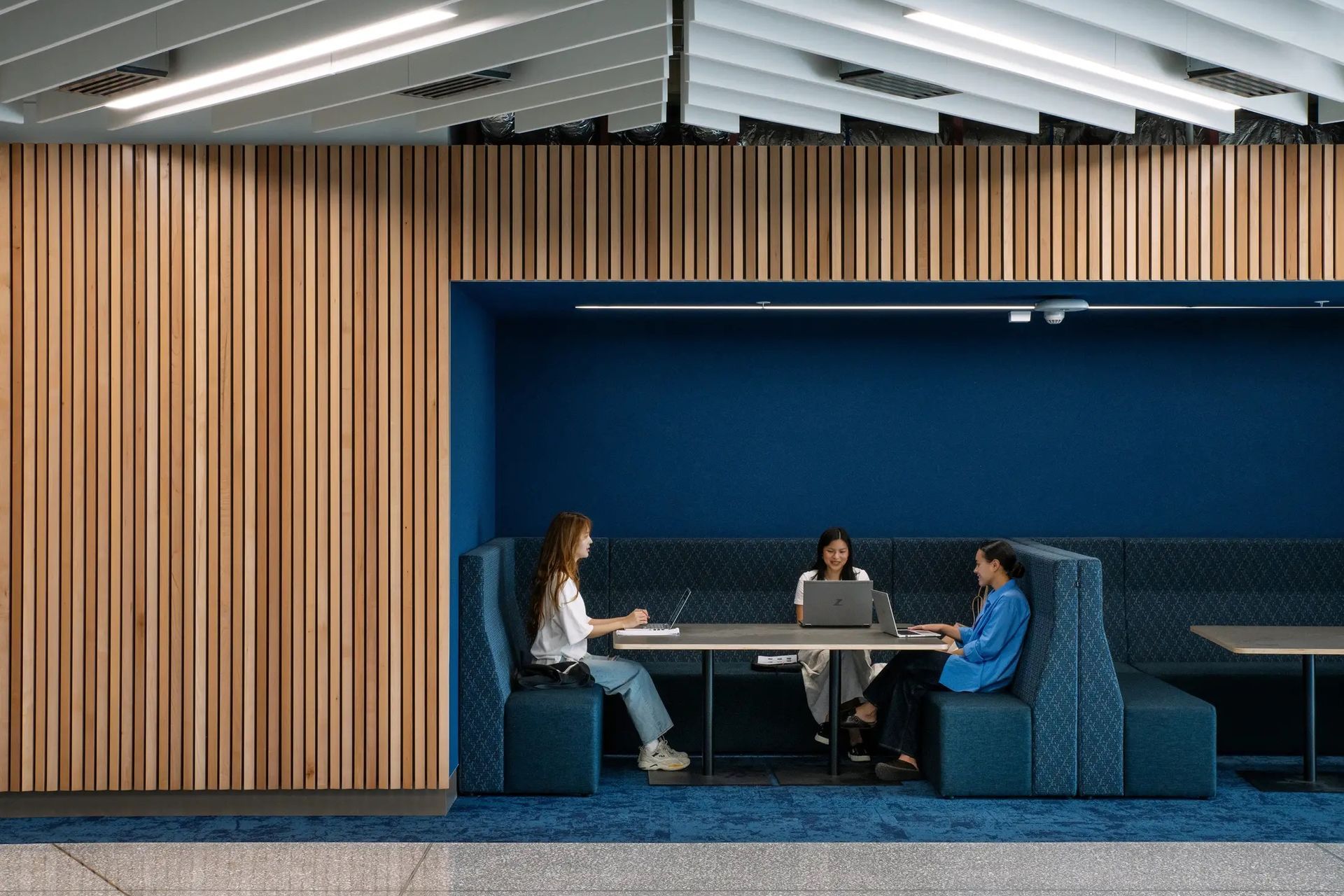
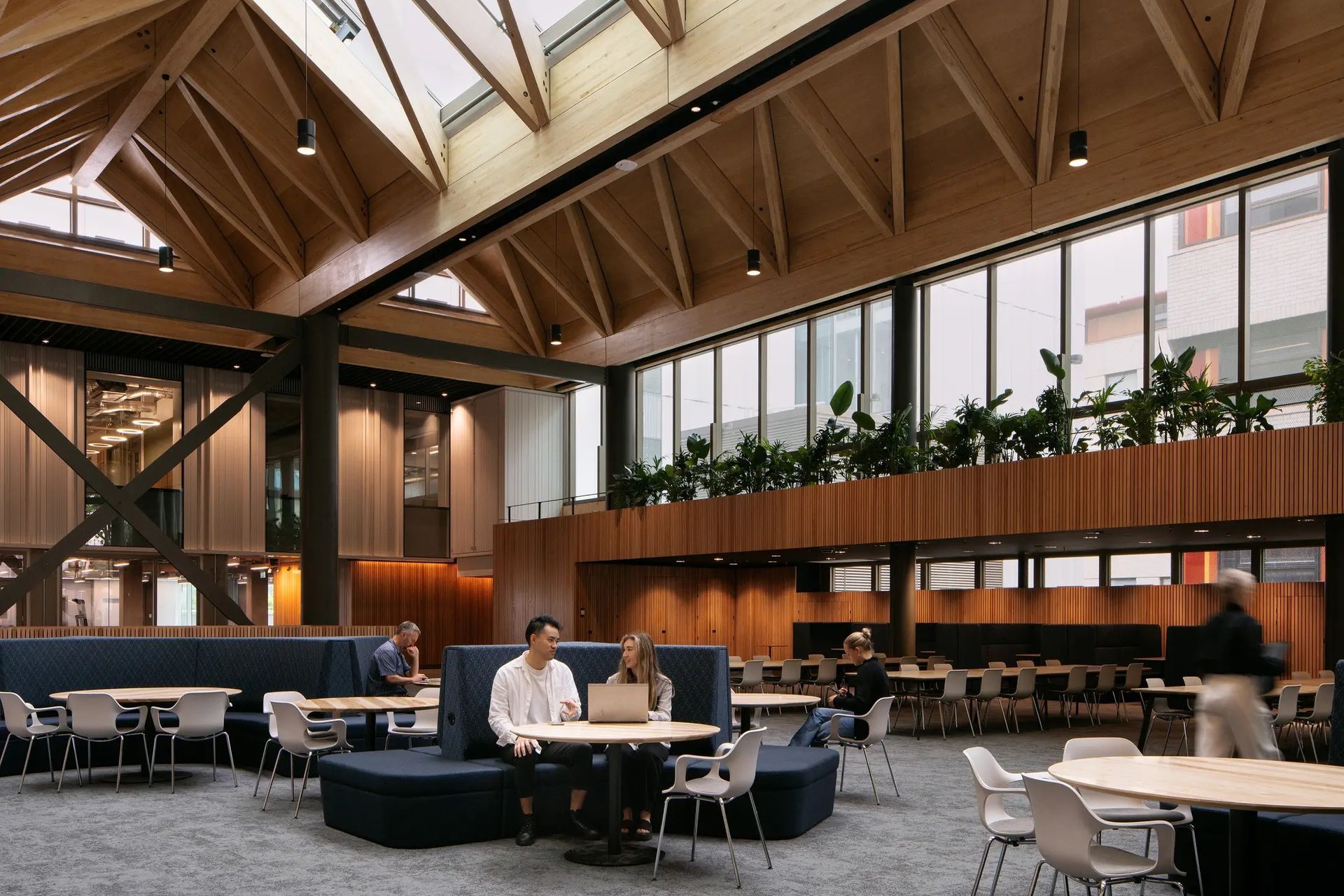
The refurbished B201 Building for the University of Auckland is one of Aotearoa New Zealand’s most sustainable developments and a world-leading exemplar of low carbon design. The project has transformed a 50-year-old building that had reached end-of-life and was slated for demolition, into a state-of-the-art academic environment, ready for another 50 years of use. The design provides a new gateway into the City Campus, with a spectacular timber-roofed atrium opening onto Symonds Street.
Adaptive reuse and low carbon design strategies have resulted in B201 emitting half the embodied carbon and requiring only a third the average energy of an equivalent new building. This performance led to the project receiving 6 Green Stars for Design and earning the most points awarded (93 out of 100) to any building from the New Zealand Green Building Council to date, categorising it as ‘world leading’. At 250kgCO2e/m2, the project meets the ambitious LETI (Low Energy Transformation Initiative) 2030 design target of 300kgCO2/m2 for upfront carbon emissions and achieves less than one third of LETI’s estimated new build average. Lifecycle carbon data will continue to be measured, with the anticipation that B201 will meet Jasmax’s lifecycle embodied carbon target once as-built results are internationally verified.
Repurposing the existing structure reduced the length of construction by one year, accruing cost savings of 25% when compared to replacement. Providing a state-of-the-art home for the faculties of Education and Social Work, Arts, and Creative Arts and Industries, B201 provides a pathway to generating substantial cost savings whilst meeting world-leading sustainability goals.
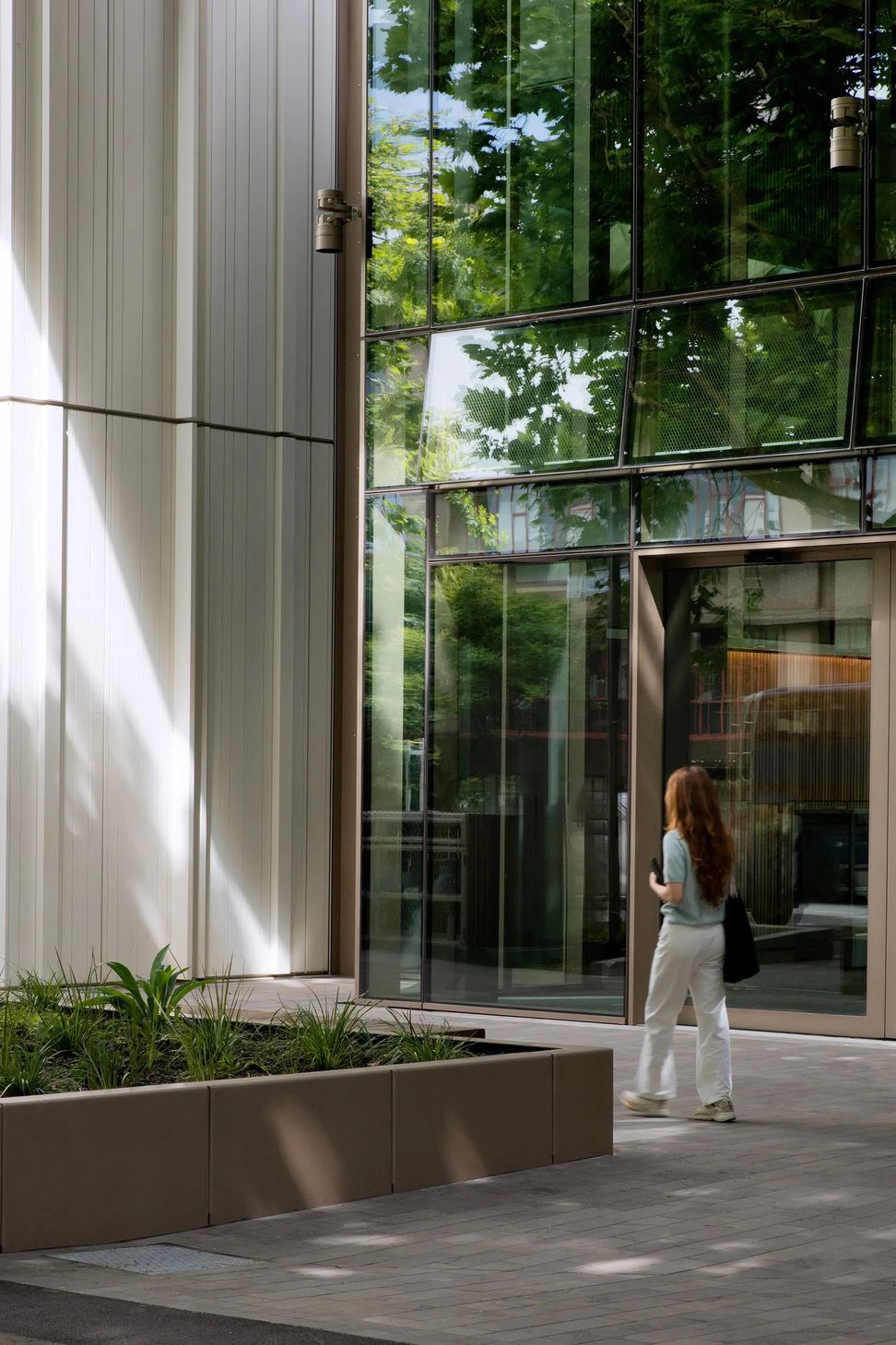
Key strategic decisions to reduce carbon included replacement of the original heavyweight concrete cladding with lightweight, high-performing curtain walling largely made from recycled aluminium. This significantly reduced the load on the existing structure and extended its functional life for a further 50 years. The thermally efficient cladding also minimises heat gain through optimal glazing-to-wall ratios, high-performance glass and industry-leading passive house air-tightness design principles, enabling an ‘ultra-low energy’ mechanical ventilation system.
Celebrating the site’s rich history
Consultation on the design was undertaken with Ngāti Whātua Ōrākei, whose hapū representatives shared narratives of the site’s setting above the historic Waipapa village and Te Tōangaroa foreshore – a significant waka landing, where sustenance, knowledge and culture were exchanged. The design expresses this kōrero, acknowledging the site’s rich legacy, while celebrating the University’s bicultural values.
The act of binding, as demonstrated through the weaving of tukutuku panels, signifies the exchange and release of kōrero, of knowledge and of energy – this idea conceptually underpins the project. Traditional tukutuku designs incorporating ara moana and pātiki (flounder) patterns are expressed throughout the design. The bold lines of the ara moana pattern symbolise the many pathways our ancestors travelled in settling new lands. This zigzag is replicated in the distinctive hybrid glulam timber roof form which encloses the double-height atrium, creating a civic and welcoming presence on Symonds Street, as well as the podium screen facing Wynyard Street. The pātiki pattern, representing generosity and welcome, is also visible in the timber members arranged in a diamond formation to create the new atrium roof.
- Completed
- 2023
- Client
- University of Auckland
"This project highlights how we can avoid bowling our existing spaces and instead adapt and reuse them, massively slashing our carbon emissions while creating a space fit for the future. To meet our climate change goals and create a zero-carbon future, we need more of the leadership and partnership demonstrated here by the likes of the University of Auckland, Jasmax and Beca. This is a truly world-leading, innovative building."
— Simon Neale, Chief Property Officer at University of Auckland
Awards
Education Award
NZIA National Awards
Education Award
NZIA Local Awards
Sustainable Building Property Award - Best in Category
PCNZ Awards - Sustainable Building Property Award
Education Property Award - Excellence
PCNZ Awards
Heritage and Adaptive Reuses Property Award - Excellence
PCNZ Awards
Supreme Award
Auckland Property People Awards
Best Team Award
Auckland Property People Awards
Repositioning Award of Excellence
CTBUH Awards
Like this Project?
Hire Jasmax
The products behind the project
Two products specified into this build from one supplier, a verified ArchiPro member. Tap through to specifications, suppliers and lead times.


Professionals used in
this project
The practices and trades credited on this project.



More projects from
Jasmax
Other work by Jasmax, across every category they build in.


More in
Schools
Everything else in Schools, from every practice on ArchiPro.


Next Project
Keep scrolling