An encampment above the bay
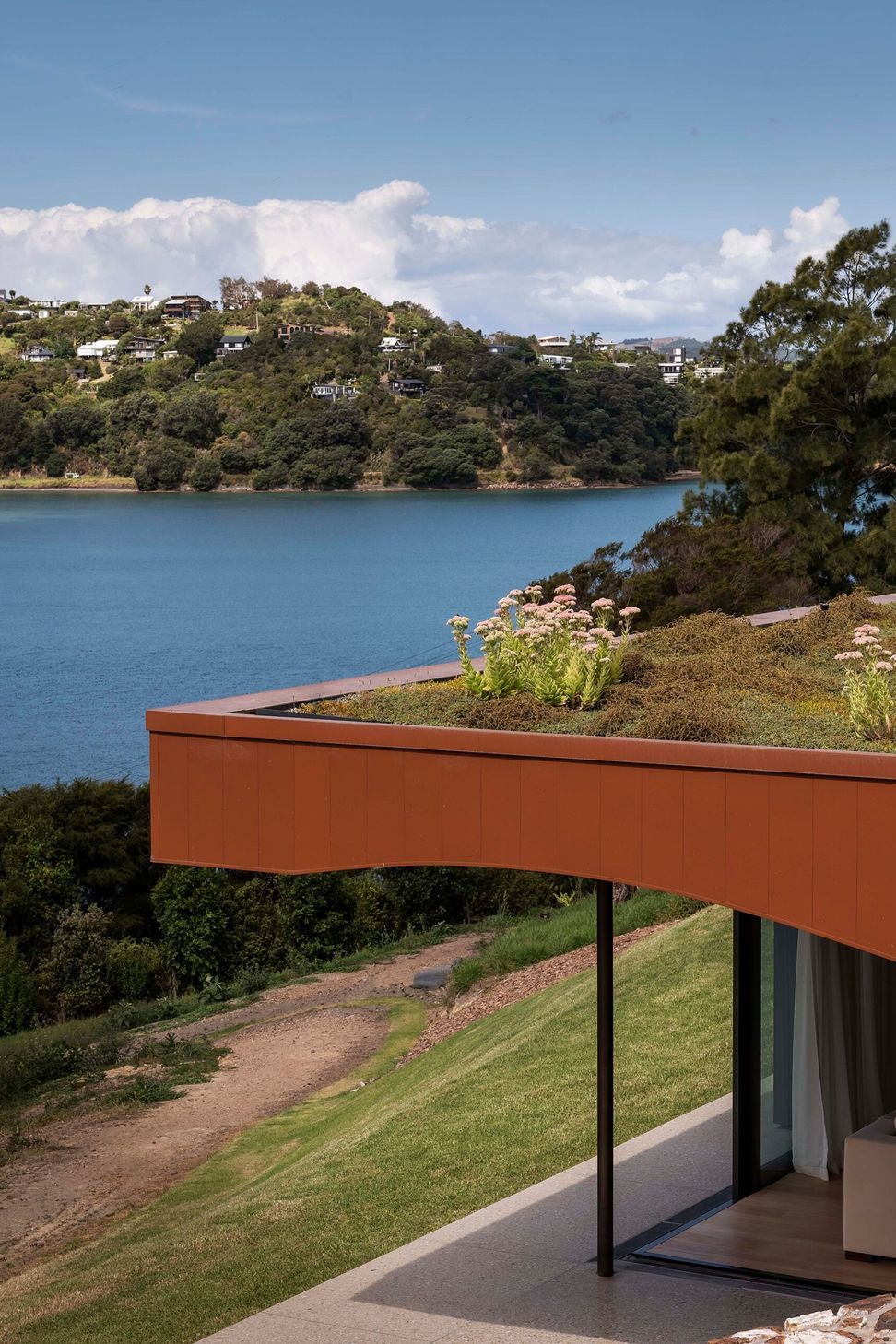
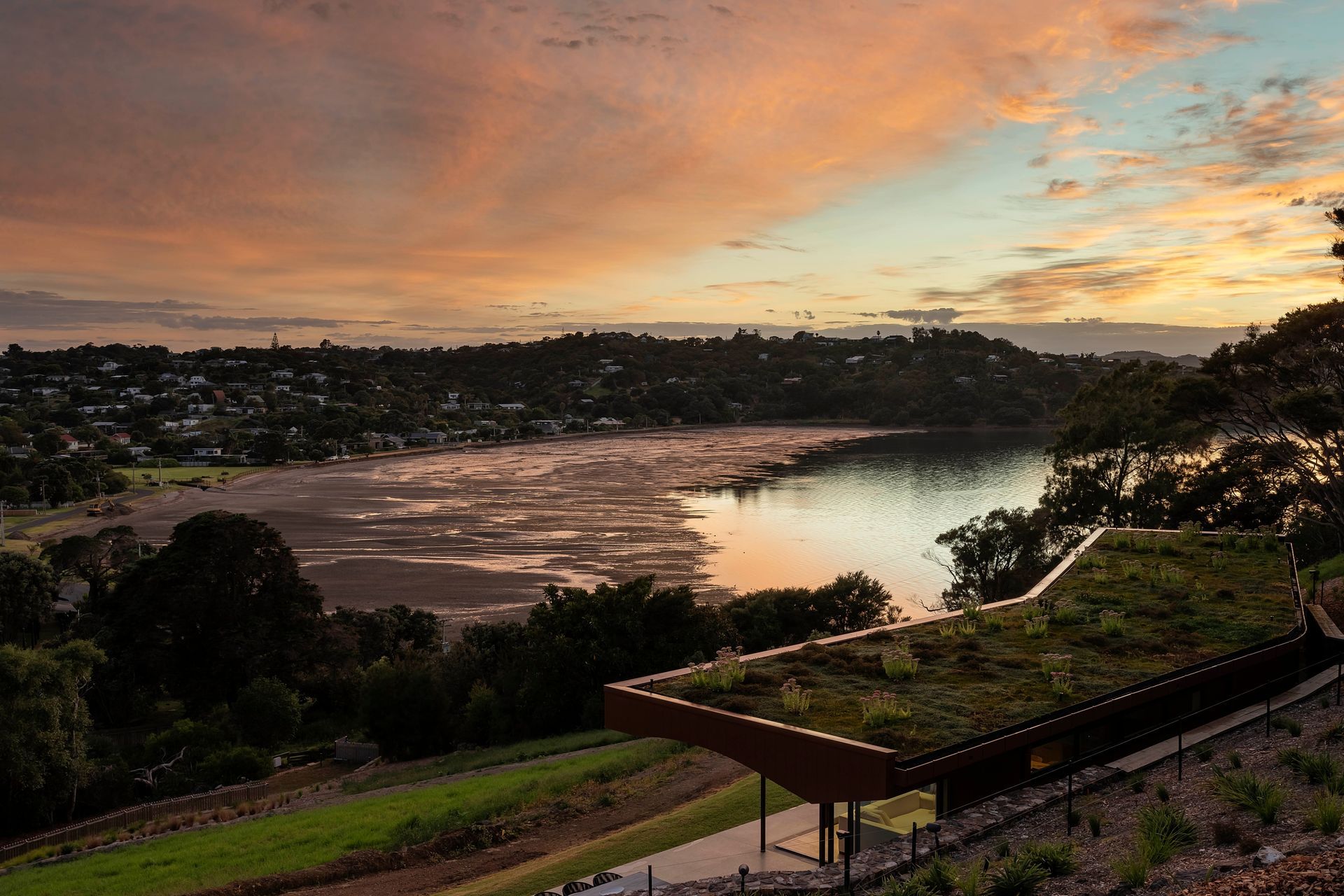
On a spot high above Waiheke Island’s southern coastline, a steep north-facing paddock overlooks Oneroa, with expansive views stretching across the valley ridges and sea. Though located on the island’s south side, the position captures sun and views in equal measure.
“It’s a unique site,” says architect Bossley Architects director Pete Bossley. “You look right across the island and out towards Great Barrier—it’s a surprisingly sheltered sun trap.”
For the clients, a London-based couple with strong ties to Waiheke, the brief was not for a singular house imposed onto the land, but something capable of growing over time. They wanted a home that could be built in stages and occupied gradually as their family’s relationship with the site evolved.
The response from Bossley Architects was to avoid concentrating the programme into one large structure. Instead, the practice proposed what Bossley describes as an “encampment” of buildings distributed across the hillside.
“We like to take a large brief and divide it into smaller elements,” he explains. “so we can occupy the site with a number of buildings, rather than just putting one large building in the middle of the land.”
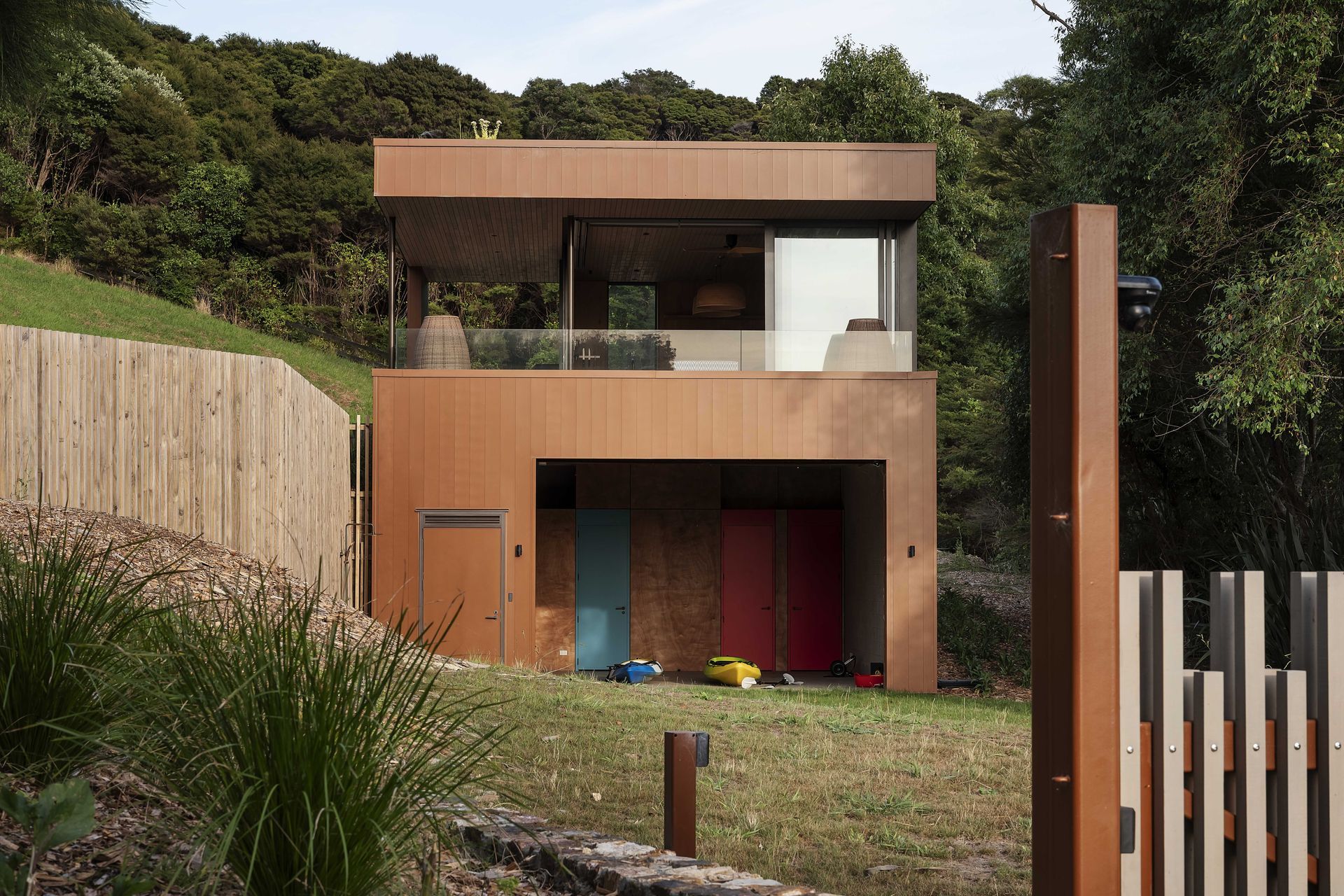
The first stage includes what will eventually become a two-bedroom sleepout, alongside a boatshed and flexible rumpus space positioned lower on the site near the beach access. A future main house will complete the composition, creating what Bossley describes as a “triumvirate” of buildings connected through landscape and pathways rather than enclosed corridors or formal thresholds.
The strategy gives equal importance to the spaces between the architecture.
“You look across the landscape and see another building, without always looking out into the distance,” Bossley says. “This means the landscaped space between the buildings is really important.”
That relationship to the land is immediately apparent in the way the architecture was approached. Arriving from the ferry, visitors travel through Waiheke’s vineyards and ridgelines before descending into the sloping site from above. From the road, the architecture reveals itself subtly.
“One of the key design factors was treating the roof plane, which can be seen from the road above,” says Bossley Architects’ Finn Scott. “As you approach the site, you encounter a green roof with grasses and flowers that change with the seasons.”
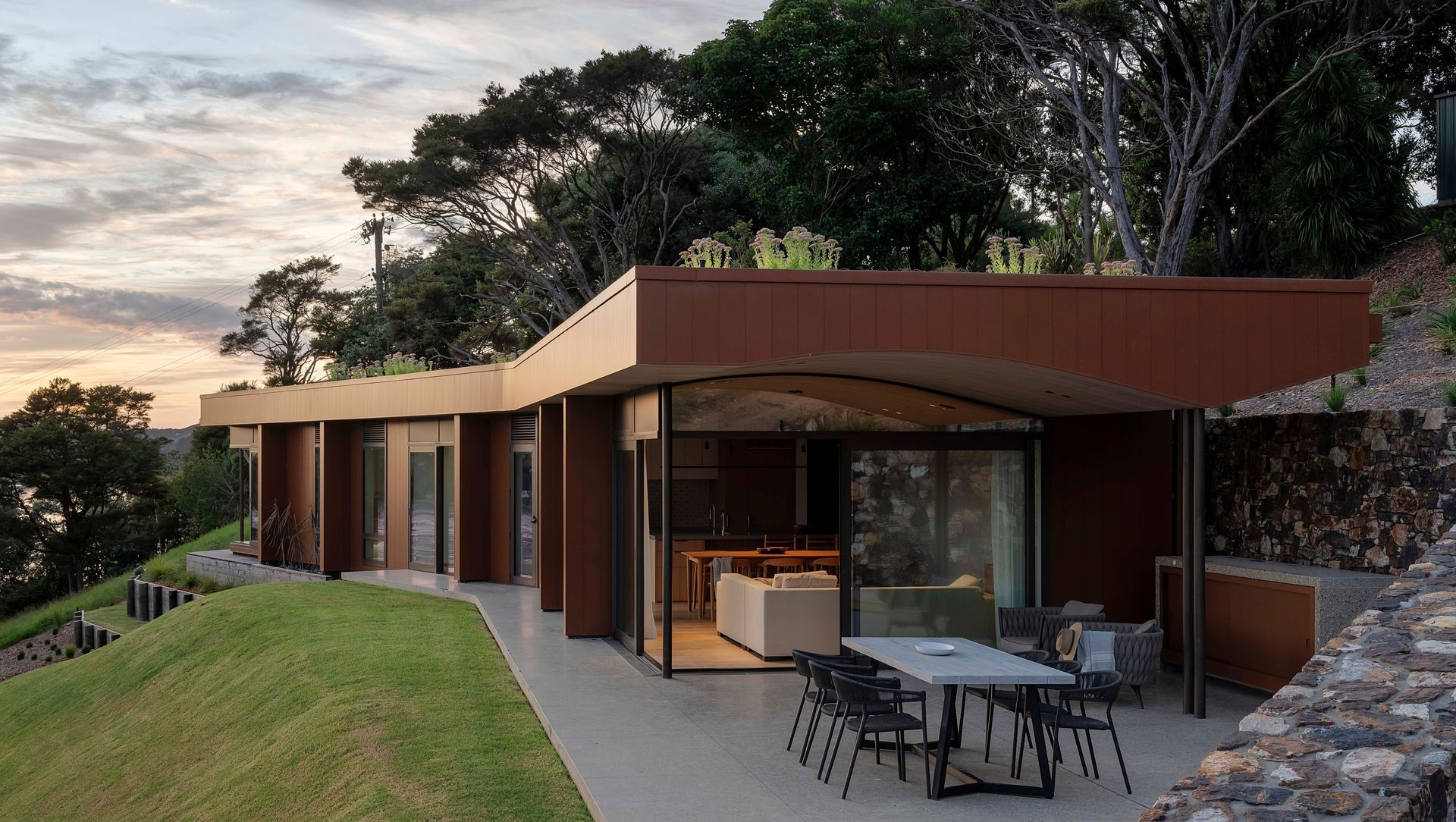
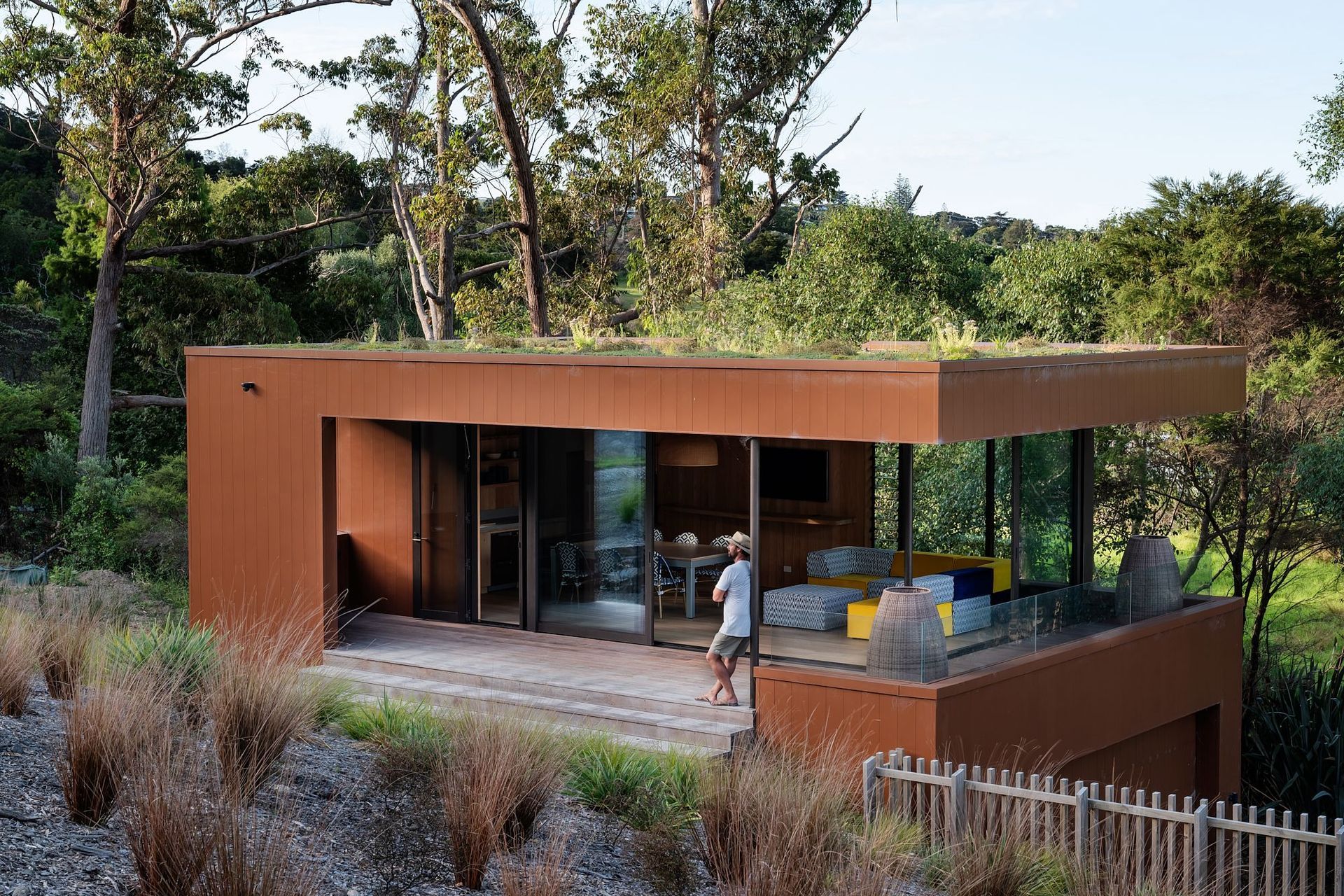
Rather than presenting as a conventional roof, the planted surface folds into the hillside, concealing much of the building beneath it. Bossley describes it as “an inverted roof in a way, with a kick-up like a Nike tick”.
The effect is deliberately restrained. The long linear form follows the contour of the land so closely that the roofline sits almost at ground level from the southern side.
From the parking area, visitors move along landscaped pathways edged by sweeping stone walls before arriving at the two-bedroom sleeput itself. The experience is intentionally informal.
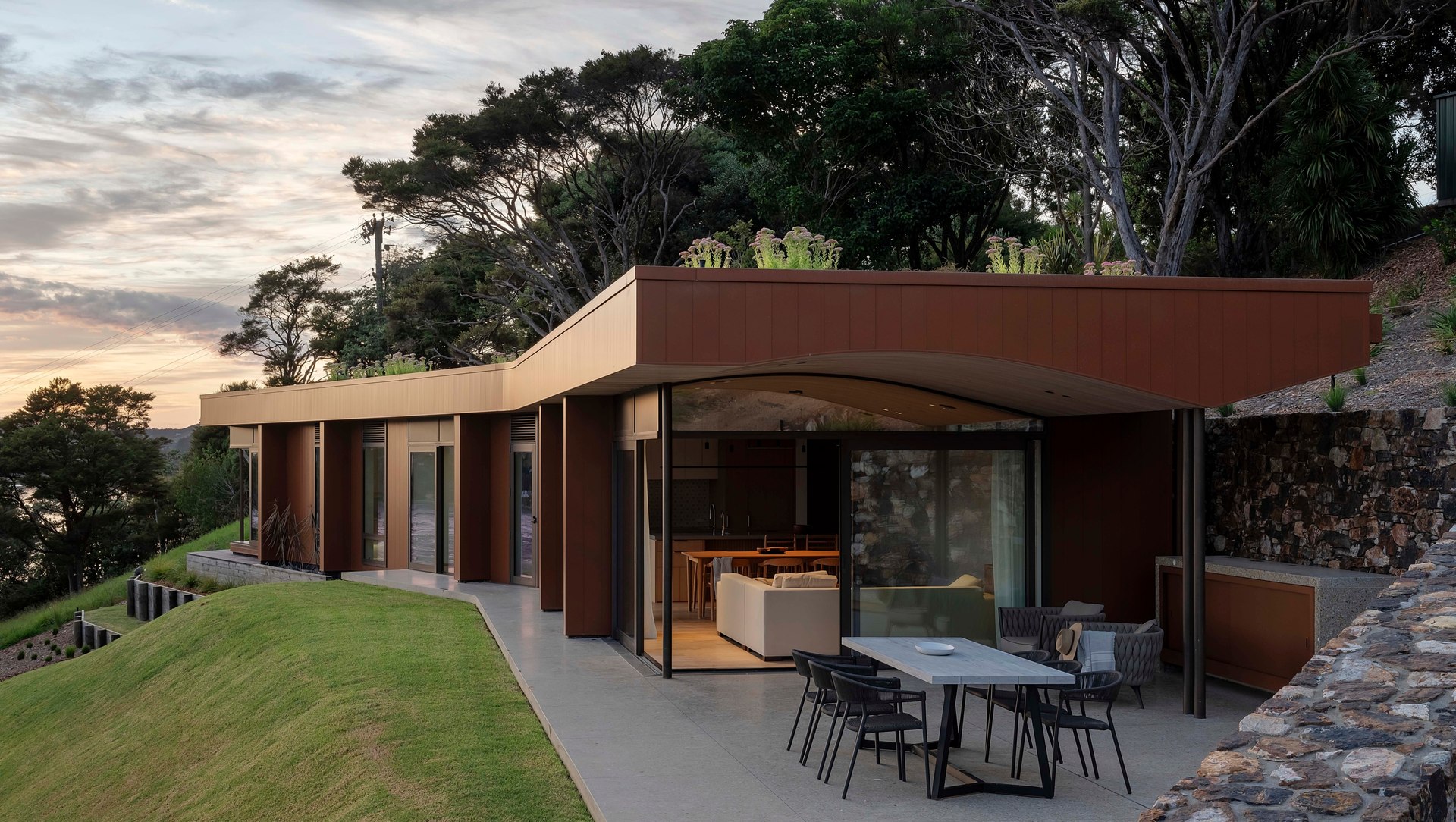
“The sleepout is accessed through sliding doors that lead inside from the terrace,” Scott explains. “It’s a pretty casual, bach-like arrival.”
The second approach offers an entirely different reading of the project. Coming up from the beach, pedestrians pass first by the boatshed and rumpus space before climbing gradually towards the sleepout above. Along this route, the buildings emerge incrementally from the landscape rather than announcing themselves all at once. A public walking track looping through the site extends this layered experience further, offering glimpses of the architecture as it disappears into the hillside.
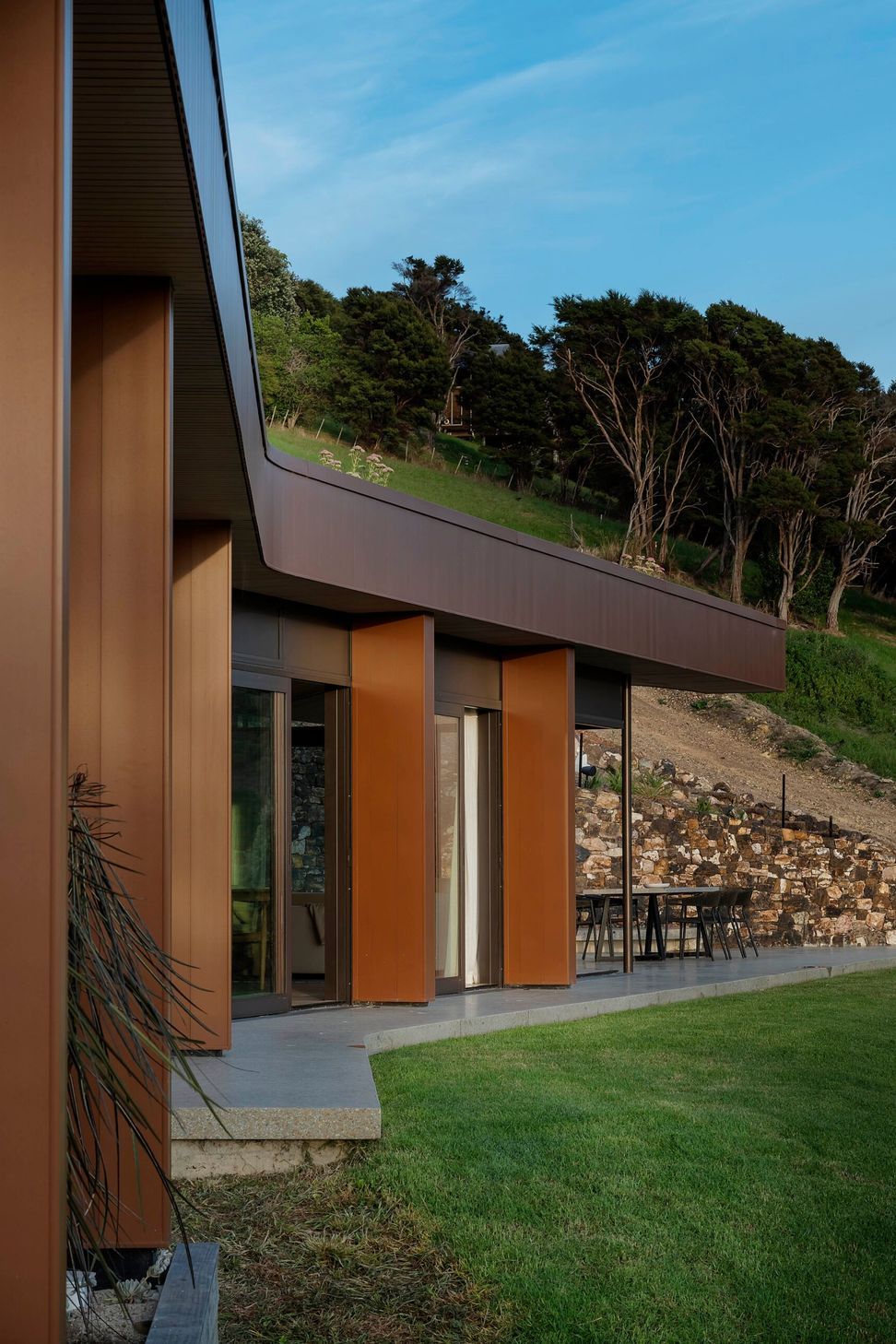
The exterior material palette reinforces this sense of informality and connection to place. The sleepout is clad in extruded aluminium weatherboards finished in a muted corten tone that picks up the colours of the surrounding rock walls and dry Waiheke grasses. Large projecting fins across the northern façade create deep shadow lines while subtly framing portions of the view.
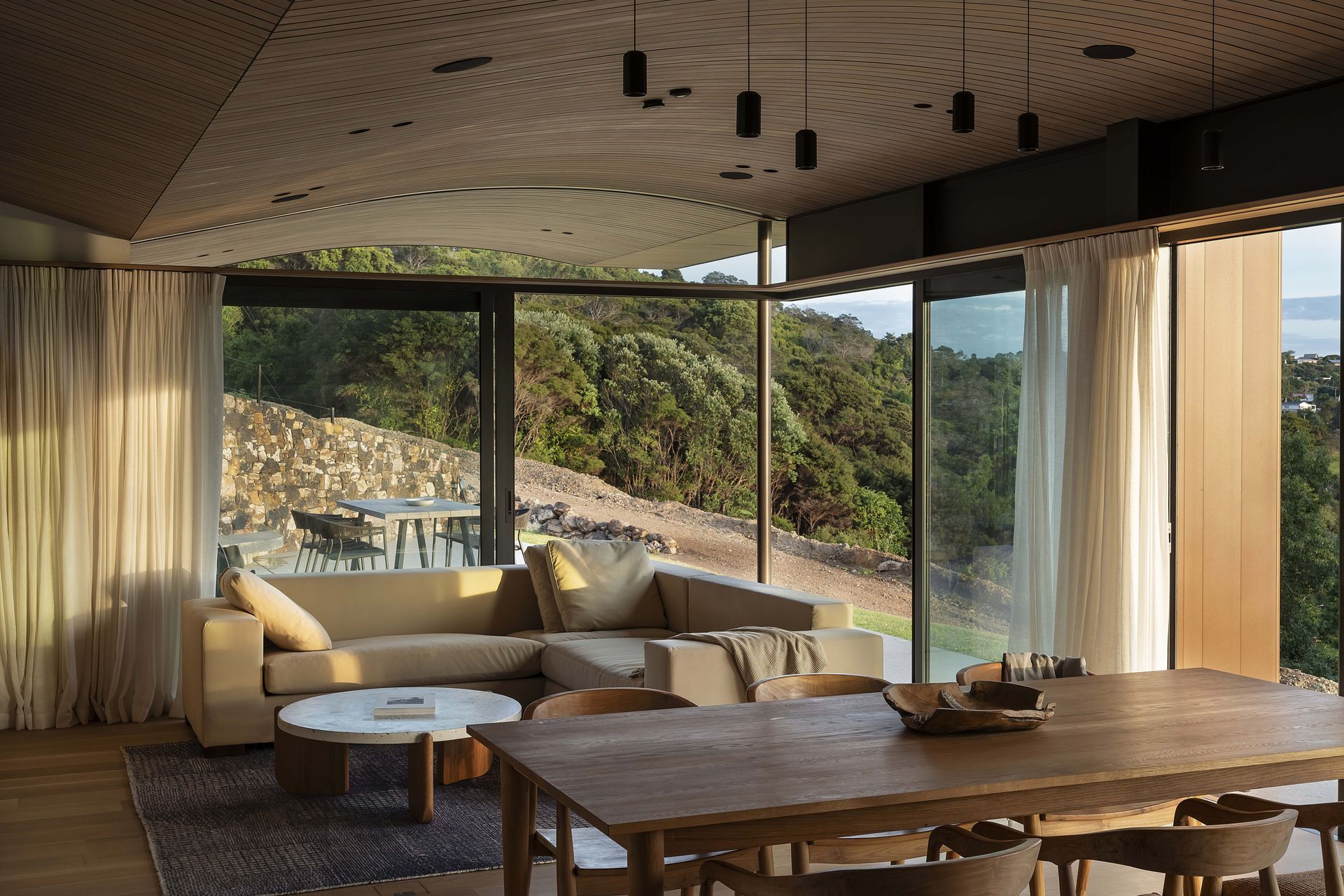
“Rather than being a simple glass pavilion, the fins identify the subdivision of rooms inside,” Bossley says. “When inside, they mean that you’re not getting the whole wide view from one room, but slices of the view broken up.”
The terrace continues this material dialogue. Finished in a mermaid terrazzo concrete in the traditional style of artisan Luigi Giacon, the surface incorporates shell aggregate and textures that tie directly back to the coastal landscape surrounding it.
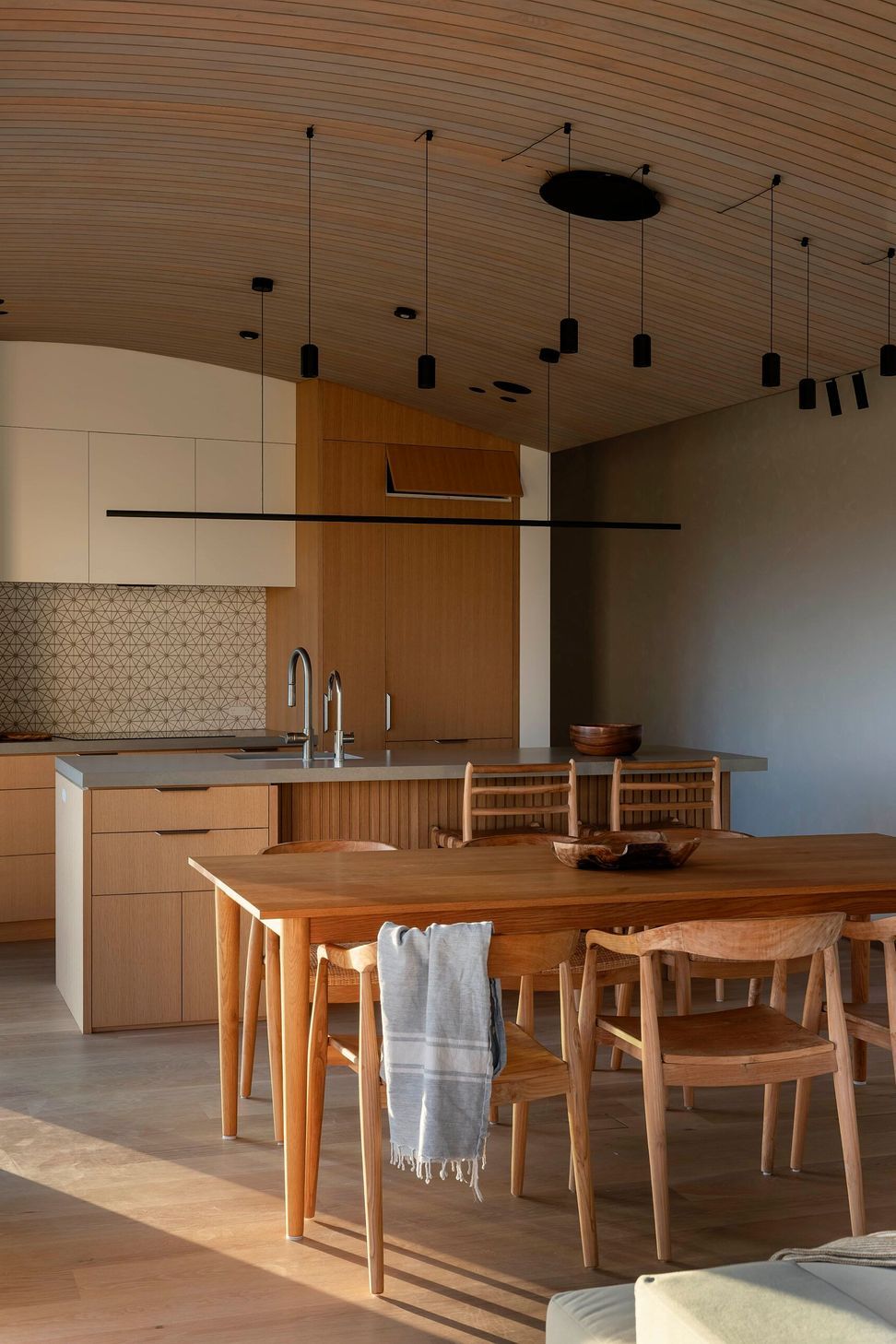
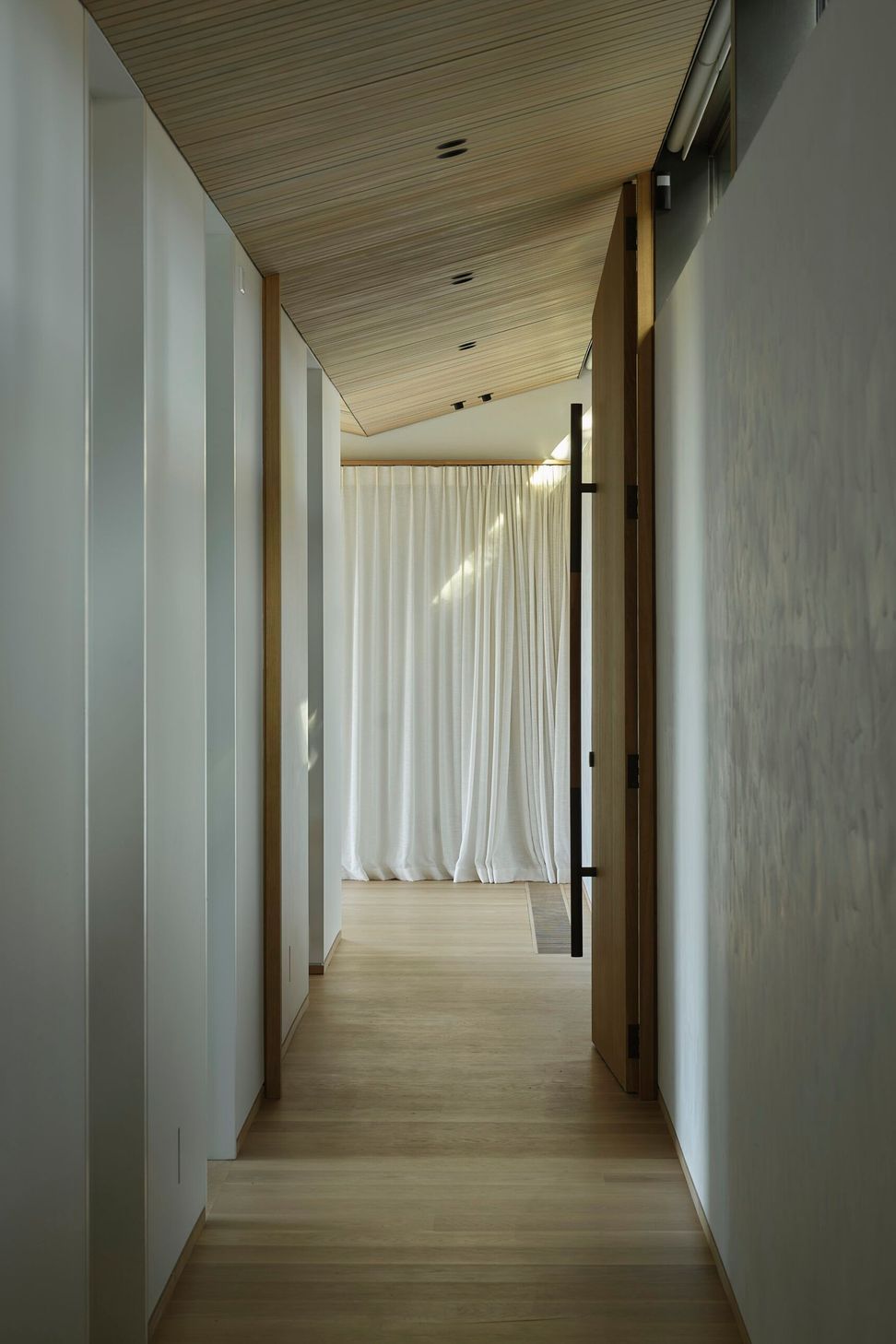
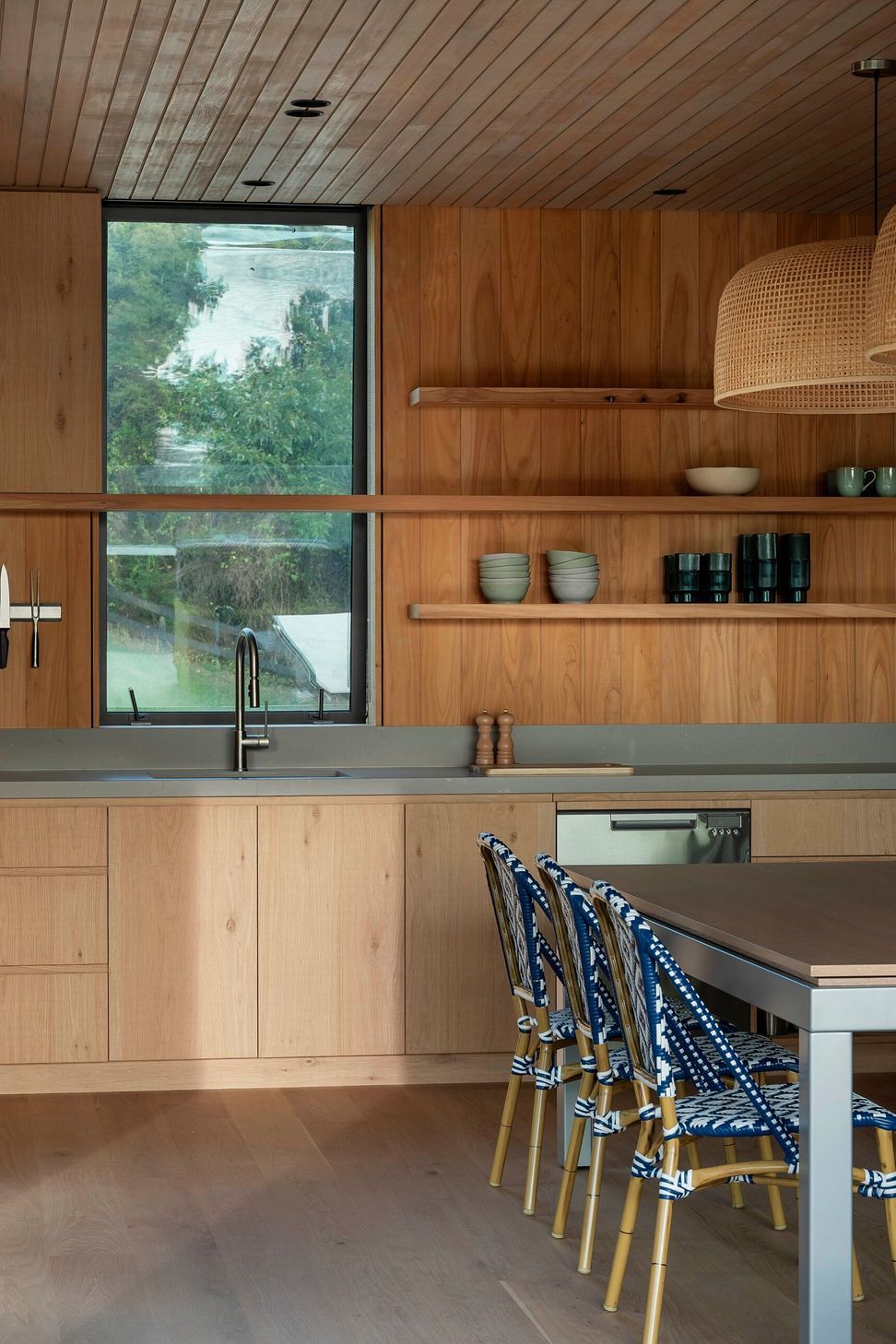
Inside, the material palette shifts towards warmth and softness. Oak flooring and custom oak cabinetry ground the living spaces, while a curved rendered wall finished in Ambitec plaster guides movement through the interior towards the main bedroom.
“It picks up on the light beautifully,” Scott says. “The shadows move softly across it throughout the day.”
Above, a vaulted ceiling lined in yellow cedar battens runs continuously through the hallway, bedrooms and living spaces, bringing warmth and acoustic softness to the interiors.
For Bossley, however, the defining interior material is neither timber nor plaster.
“We often say the most important internal material is natural light,” he says. “We think a lot about how the light is going to enter the building and animate the materials. If the light is good, the materials can be quite gentle.”
That restraint feels central to the project as a whole. Nothing here appears imposed or overly resolved. Instead, the architecture feels embedded within the undulations of the land and the informality of Waiheke life.
Perhaps most importantly, the staged approach has allowed the clients to inhabit the site before final decisions are locked in.
“The nice thing about building in stages is it gives the clients a chance to start occupying the land and interrogate their original ideas,” Bossley says. “They can see whether those ideas suit the way they actually live.”
Even in its incomplete state, the site already carries the feeling of a place long established. A loose collection of buildings, pathways and terraces shaped as much by movement and landscape as architecture itself. And when the final stage is eventually completed, Bossley believes the transformation will feel profound.
“From what was once just a bare paddock,” he says, “it’s going to be a really exciting transformation.”
Words: Joanna Seton