

A thoughtfully designed family home on a historic farm, featuring sustainable materials and a unique connection to the landscape of Mt Taranaki.
Totara Hill sustained a three-year, design-then-build process involving the entire family, and is a house that is built of family stories. Grounding the site and design conditions are generational memories, robust family process, a wonderful design; and now a collaborative build journey.
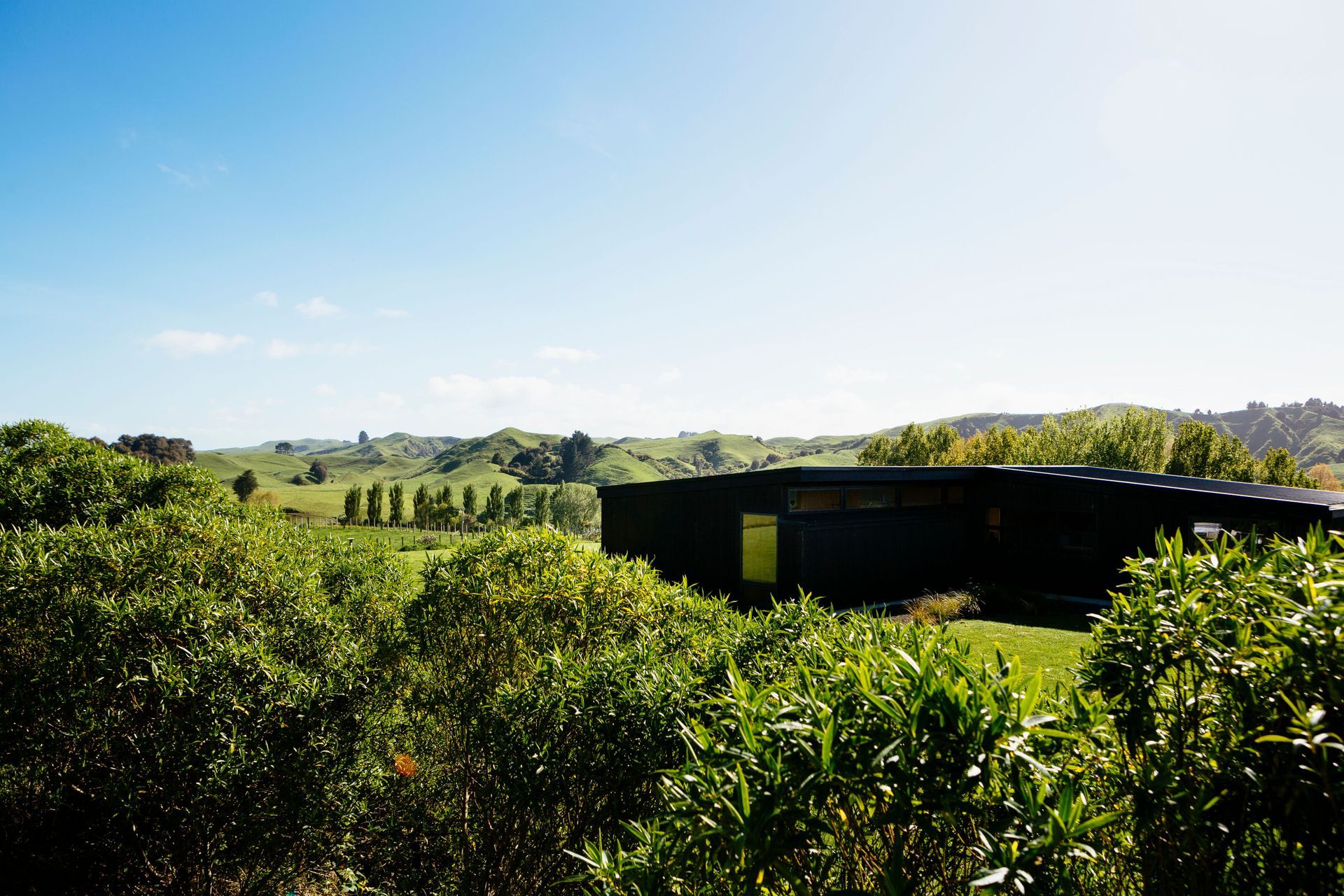
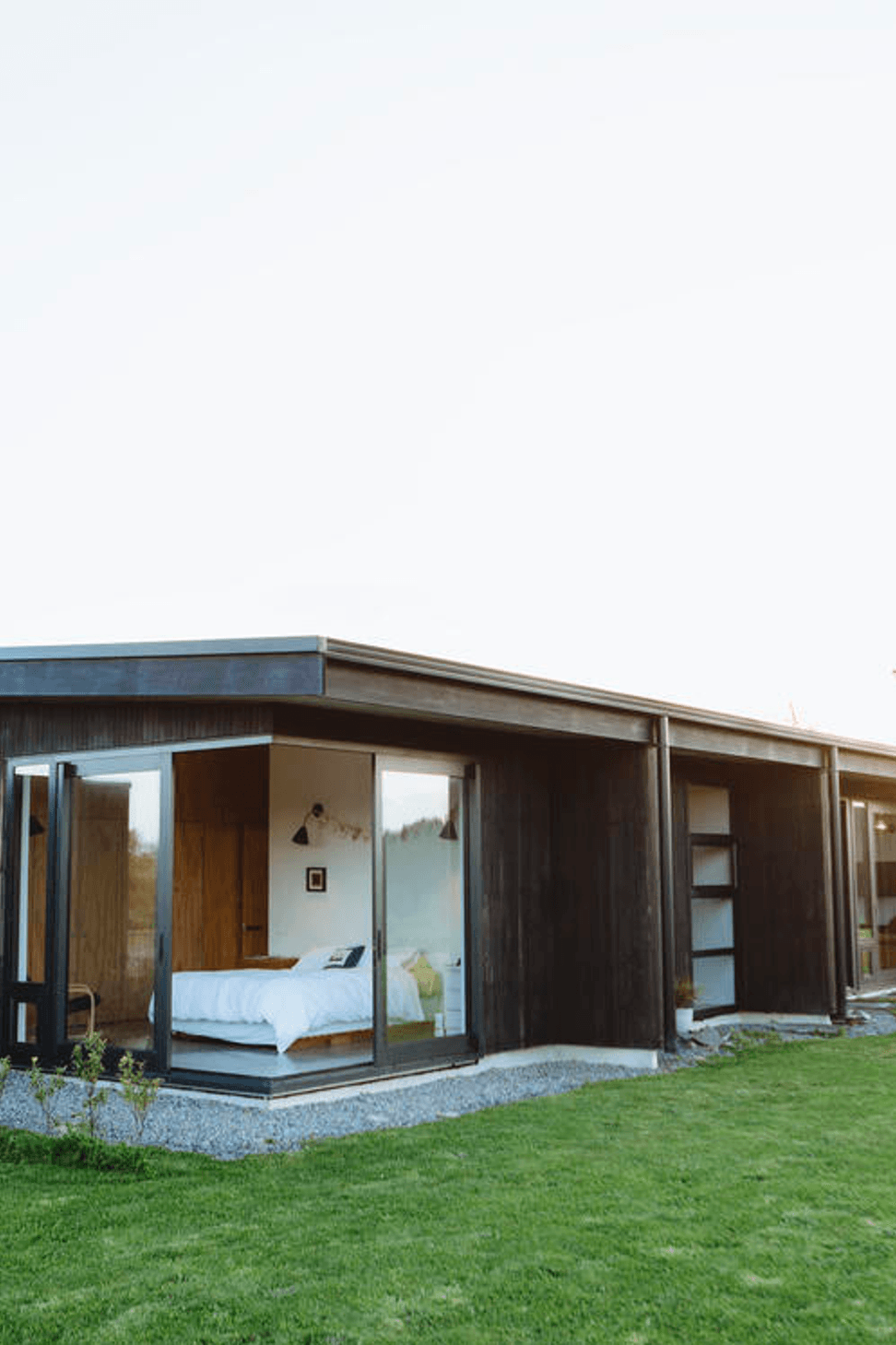
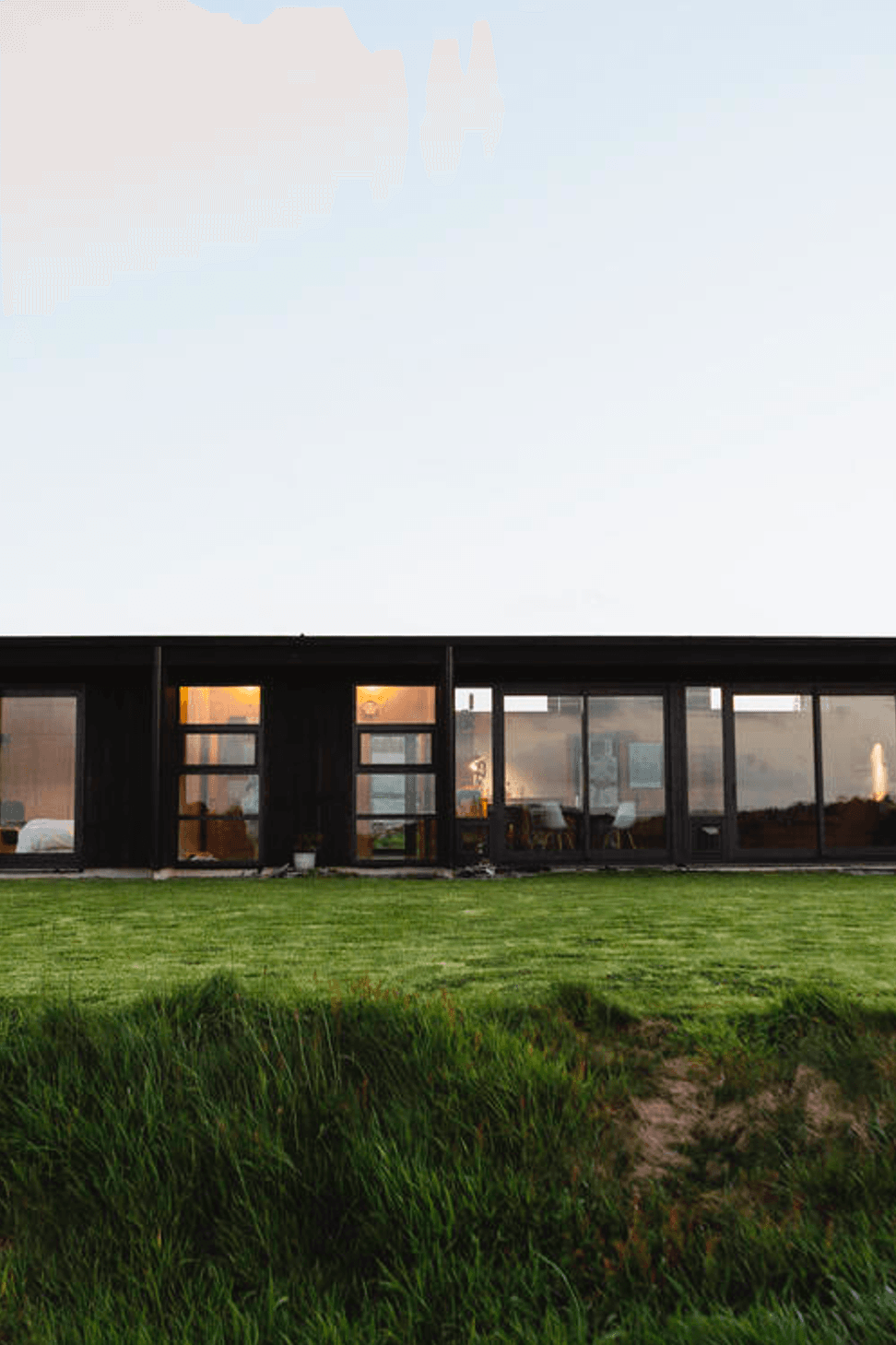
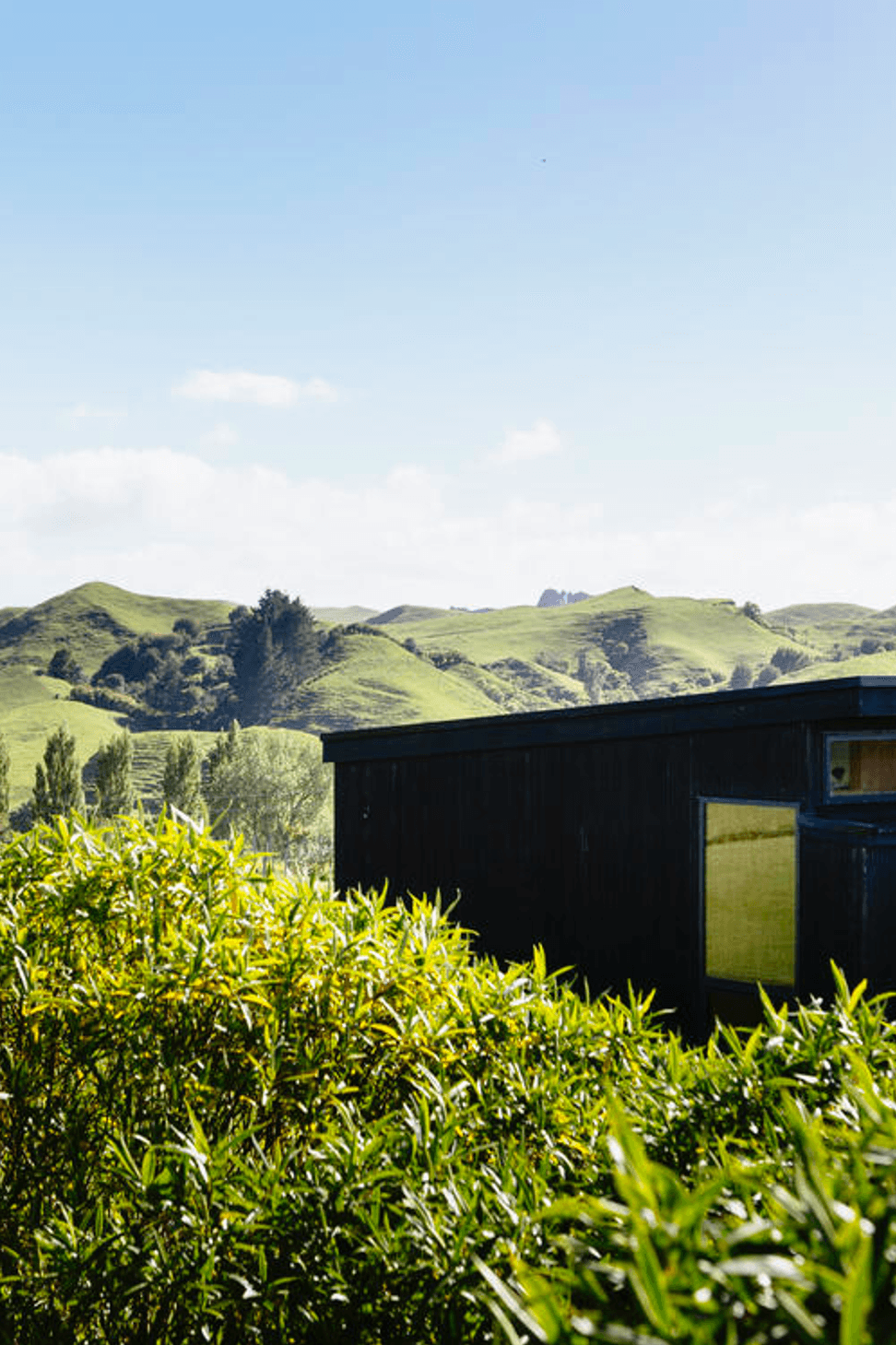
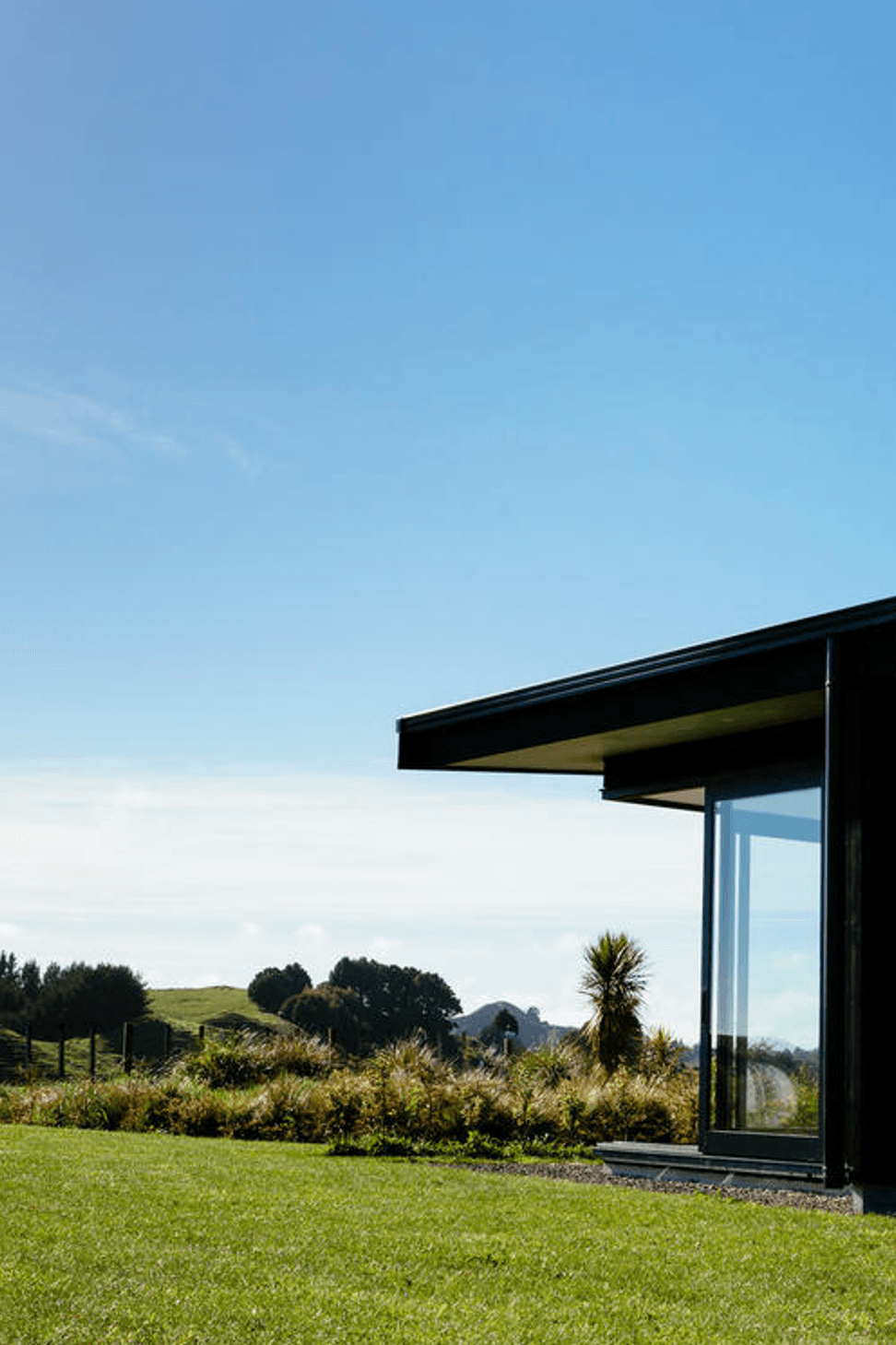
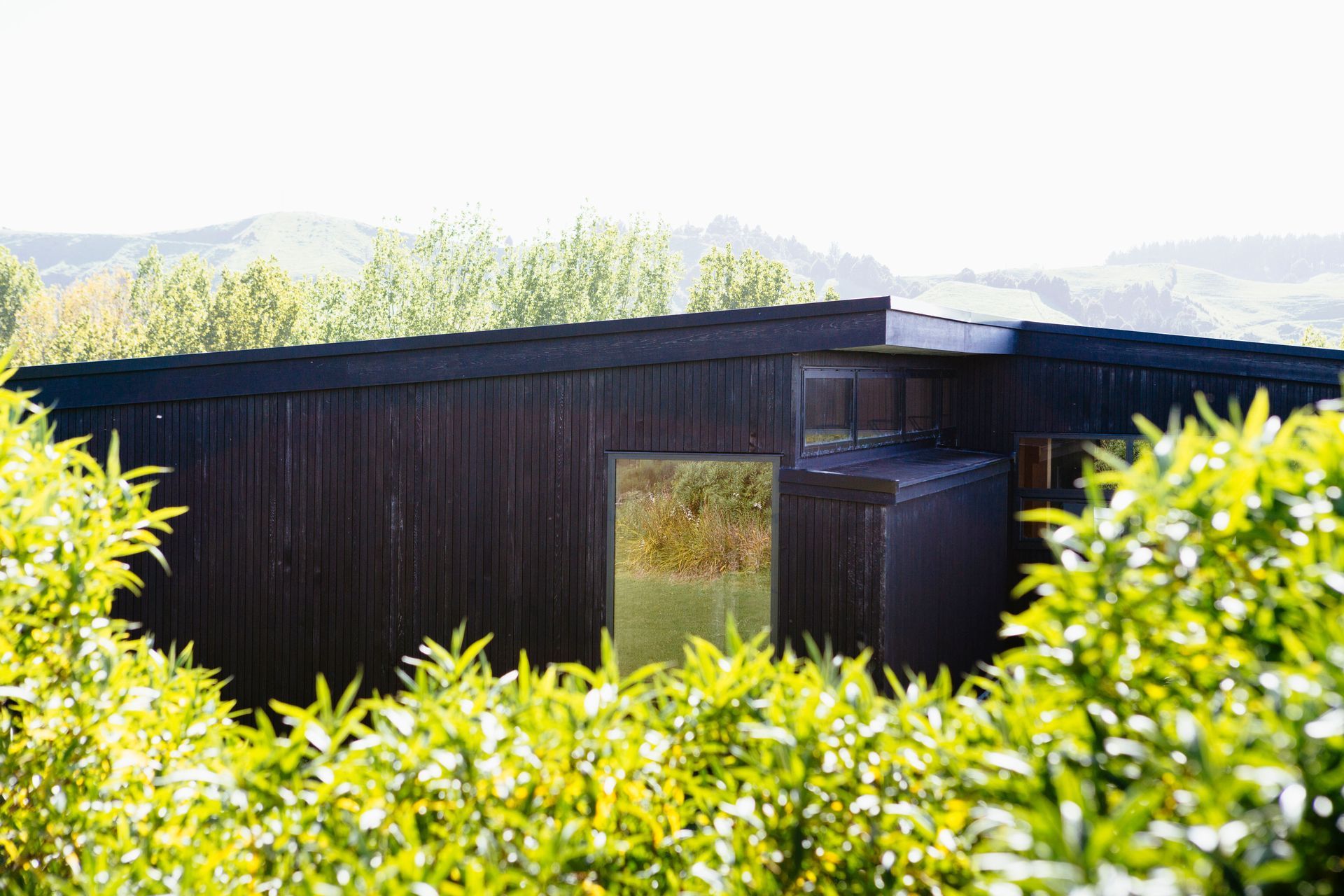
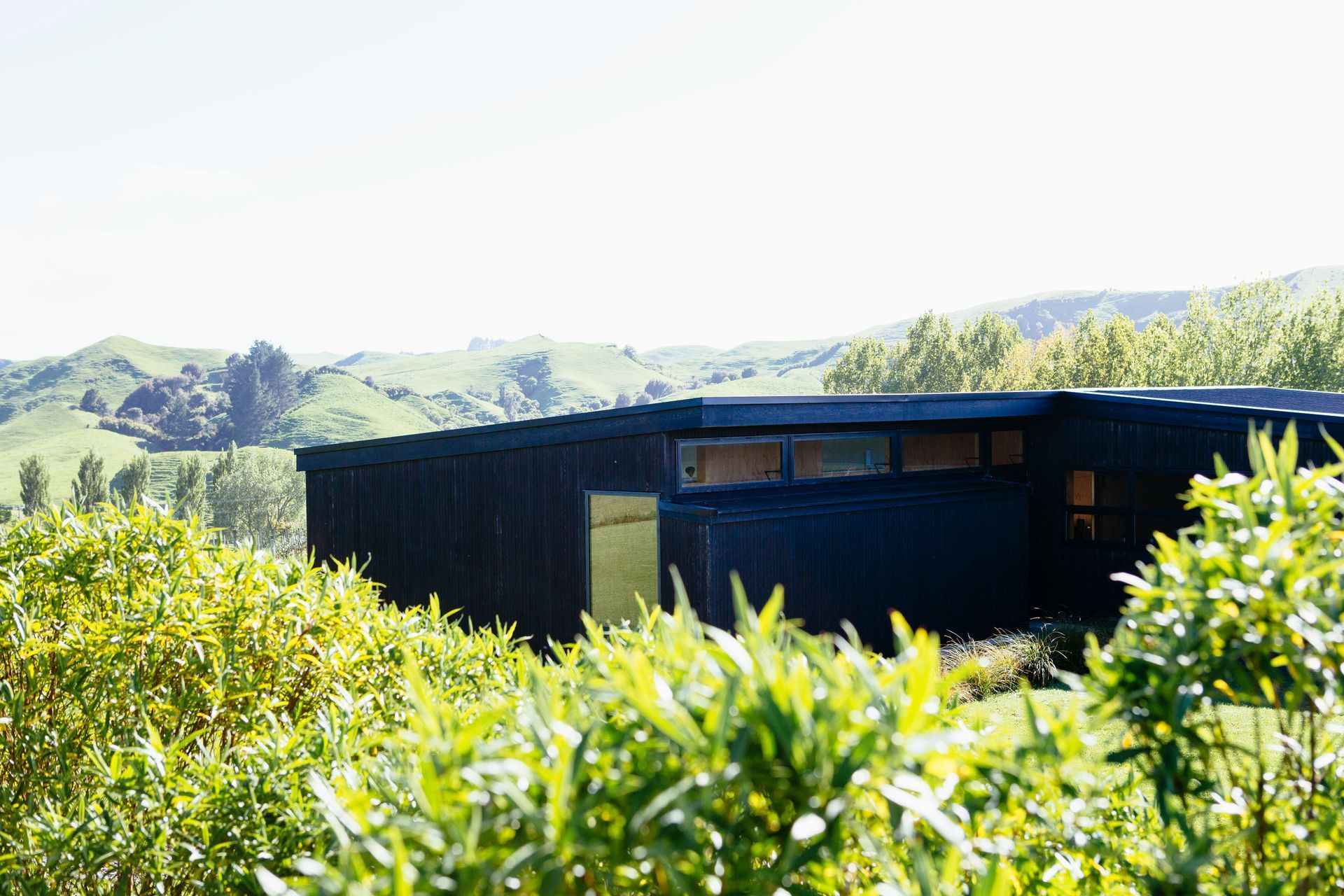
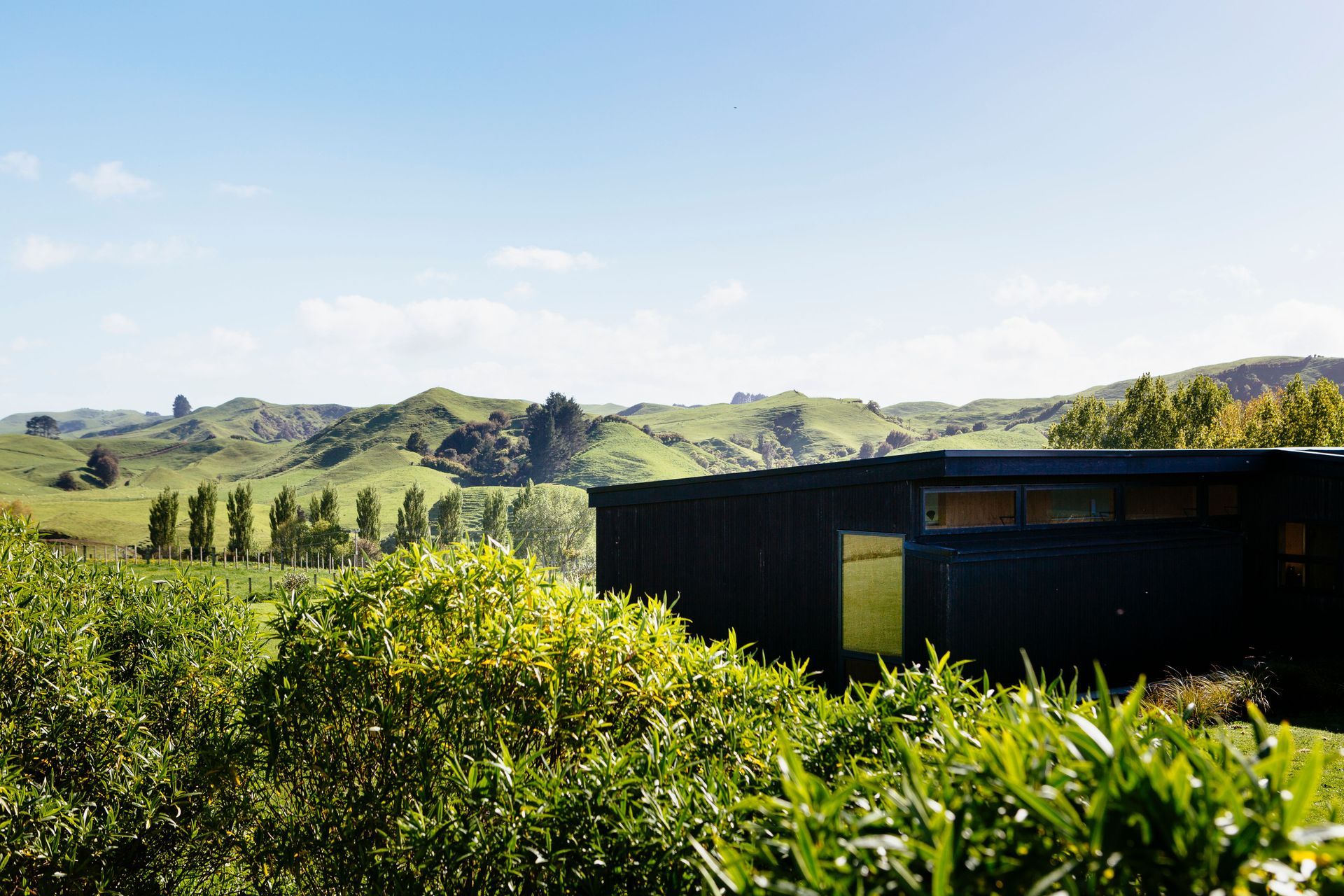
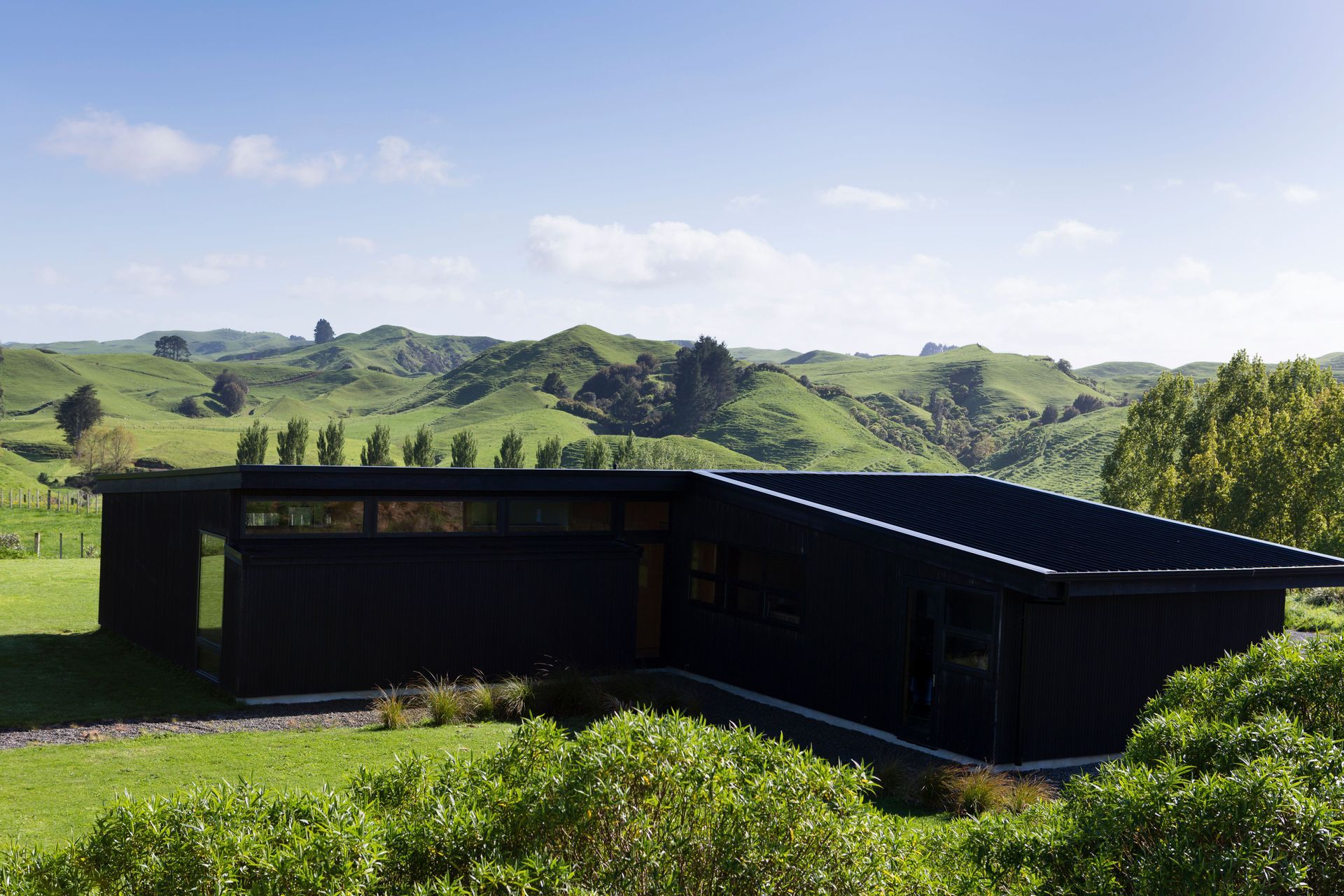
The single-level house is built on the location of an old shed on a family farm – Totara Mahunga – at the eastern edge of the ring plains of Mt Taranaki. Perched on a hill, surveying the farm valleys below, its design is not only about the approach and the view, but also the physical impact the building form has on the landscape. In response, a key decision was to have a low-slung building that has allowed for long overhanging eaves and a gentle roof pitch, not soaring; more like a drape, providing protection – the reverse of the traditional farmhouse form.
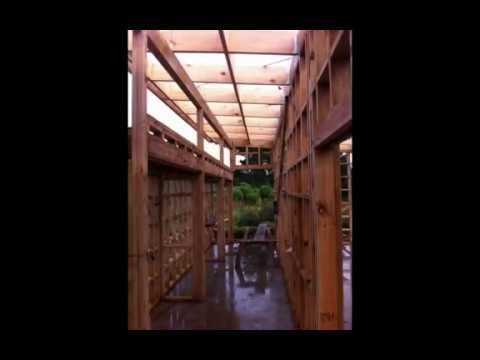
Built in two stages, the forms are joined by a spine that acts in a number of ways; as a connecting corridor, a gallery, a light funnel, and a mechanism for natural ventilation and cooling of spaces. It also organises storage and signals the entry point to the public spaces (living, dining, kitchen) and creates a spatial divide to the home’s private areas – bedrooms, bathrooms.
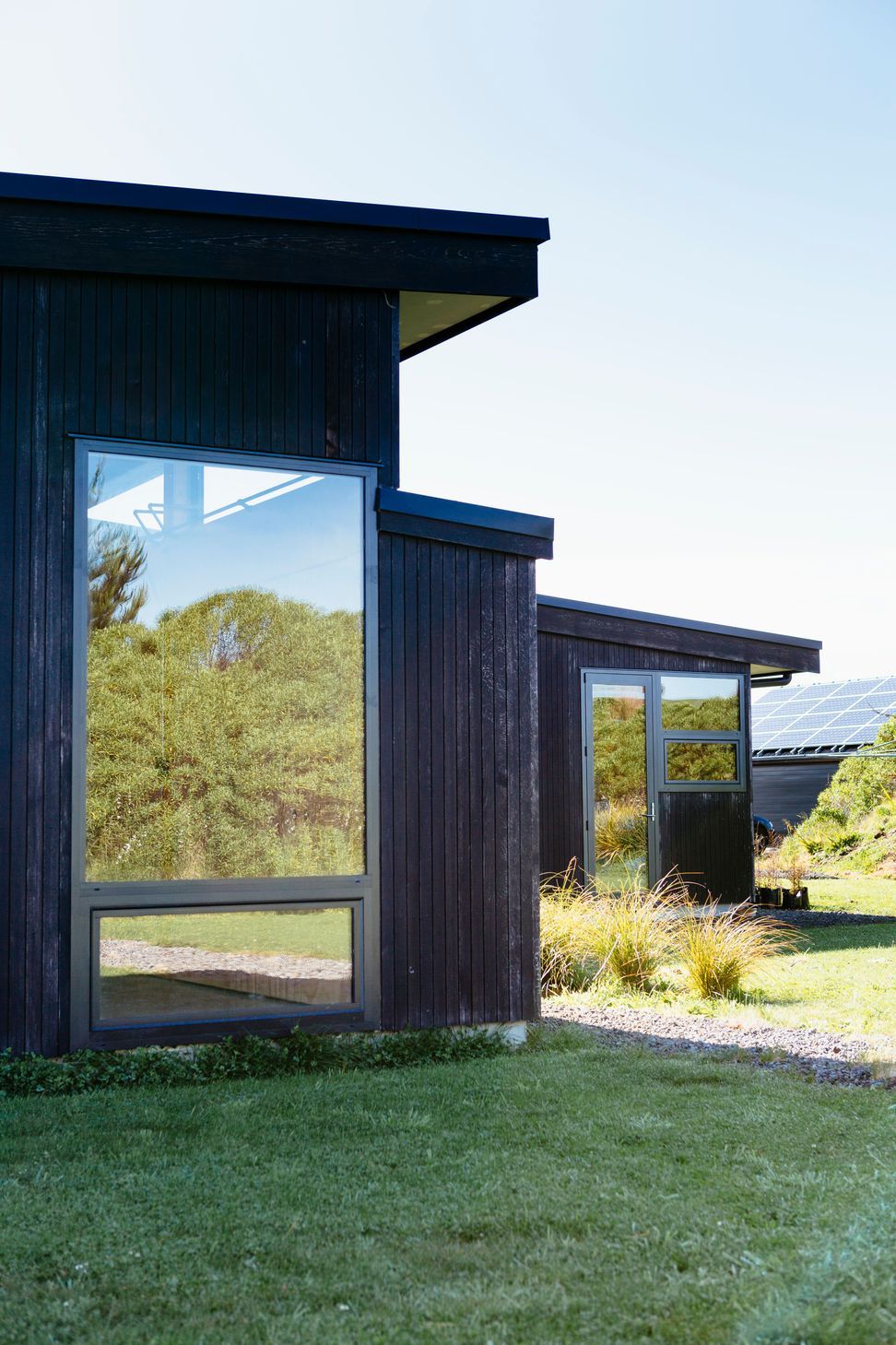
The black-stained, dressed-faced cedar cladding is a reference to the Kiwi Bach of the ‘60s and ‘70s. Its form is a reference to the small Group Architects Houses of Auckland – and in turn, the ideology of the Case Study Houses of Los Angeles – that plays on the idea of the normality of suburban homebuilding, and negative and positive spaces that define the public and private areas of the house. Here though, there are no neighbours or suburbia, just a soft and plentiful green landscape.
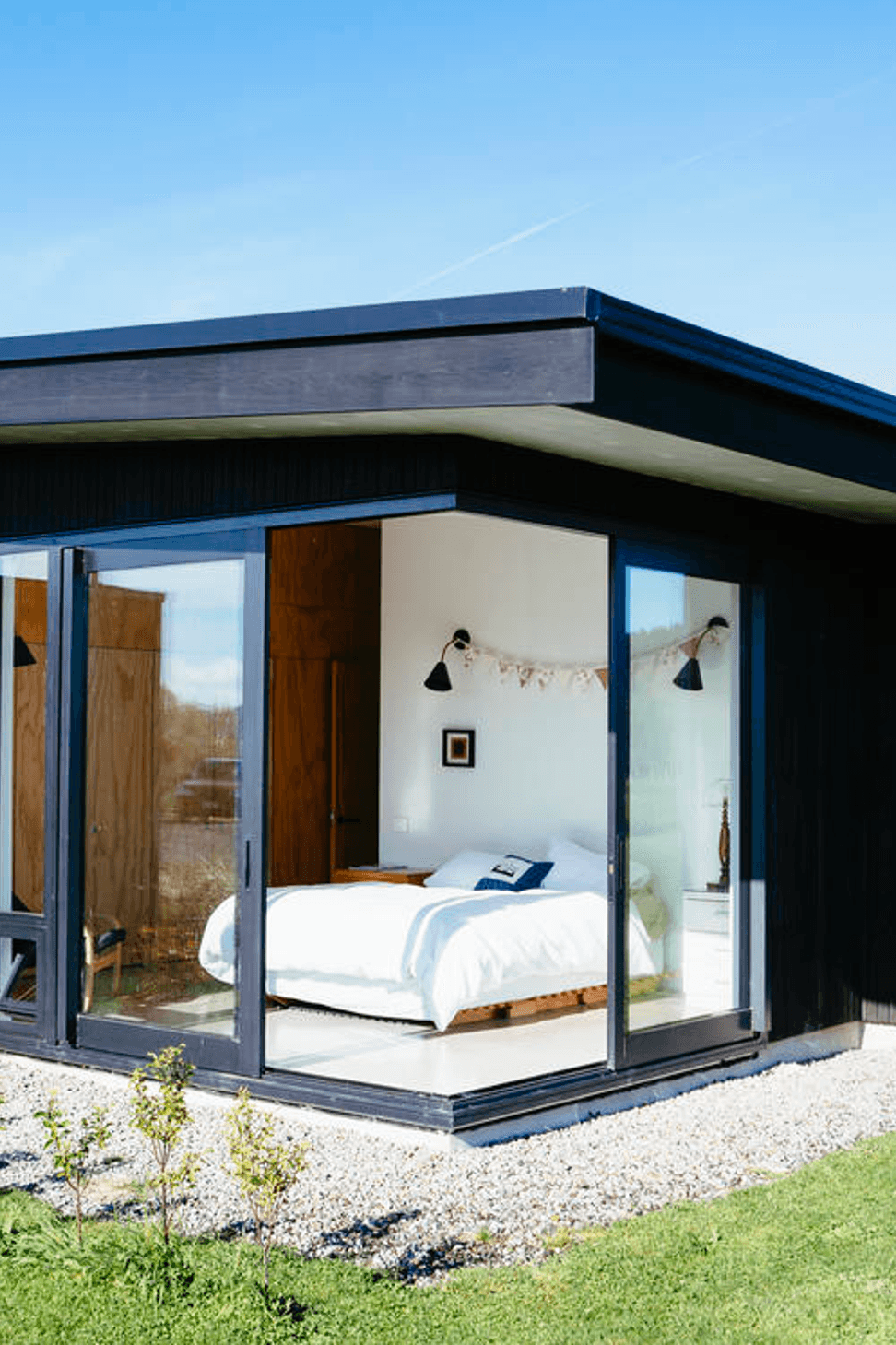
The internal linings are of durable and sustainable radiata pine plywood. An exposed concrete floor provides for solar massing, and the high and low-level windows provide for passive ventilation, lots of natural lighting, and the integration of sustainable design principles.
FACTS
- Historic family farm and site location for house.
- Rural residential house – new dwelling.
- Environmentally sensitive design initiatives
Photographer: Joanna Wickham
Like this Project?
Hire 106 Architects
Professional Reviews
Professionals used in
this project
The practices and trades credited on this project.

More projects from
106 Architects
Other work by 106 Architects, across every category they build in.


More in
Single House
Everything else in Single House, from every practice on ArchiPro.


Next Project
Keep scrolling