A cleverly compact retreat designed for lakeside living
The sleepy lakeside settlement of Whareroa at the southwestern edge of Lake Taupō hums quietly through winter before springing to life in summer. Small baches fill with families hauling fishing rods, chilly bins and beach gear between lake and house, barbecues crackle into the evening and boats come and go from the shoreline from dawn to dusk. It’s this familiar rhythm of Kiwi holiday life that offered Bossley Architects an opportunity to create a retreat that responds as much to the energetic pace of a family with four young boys as it does to the tranquillity of its setting.
Tucked at the head of a valley and embraced by native bush, the site itself is extraordinary. Sloping gently upward from the road, it sits moments from the lake yet feels entirely immersed in the forest.
The project also carries a personal history. Years earlier, architect Finn Scott had worked with the client on an entirely different endeavour, transforming a pair of state houses into a family home. During that collaboration, the client mentioned one day wanting Bossley Architects to design a lakeside retreat for them. Years later, that promise came to fruition.
Designed as a sanctuary for a hardworking and busy family, the bach functions as a base for fishing trips, boating adventures and weekends spent slowing down together.
“Early on, the client talked a lot about trout fishing and those old timber-lined baches you find around the lake,” says Scott. “There was a real sense of nostalgia in those conversations, and hopefully we’ve captured some of that feeling in the project.”
Originally, the scheme was envisioned as a small encampment of buildings rather than a singular structure. What now exists as the completed home was initially intended to become only the guest wing or sleepout, with a larger main house planned alongside it. Between the two buildings would sit an outdoor communal zone anchored by a fireplace and cooking area.
But once completed, something unexpected happened: the family realised they didn’t need anything more.
“What we’ve ended up creating is enough,” Scott says. “It’s a nice size and scale and it does everything it needs to do. The larger house has been parked because this feels pretty good as it is. ”
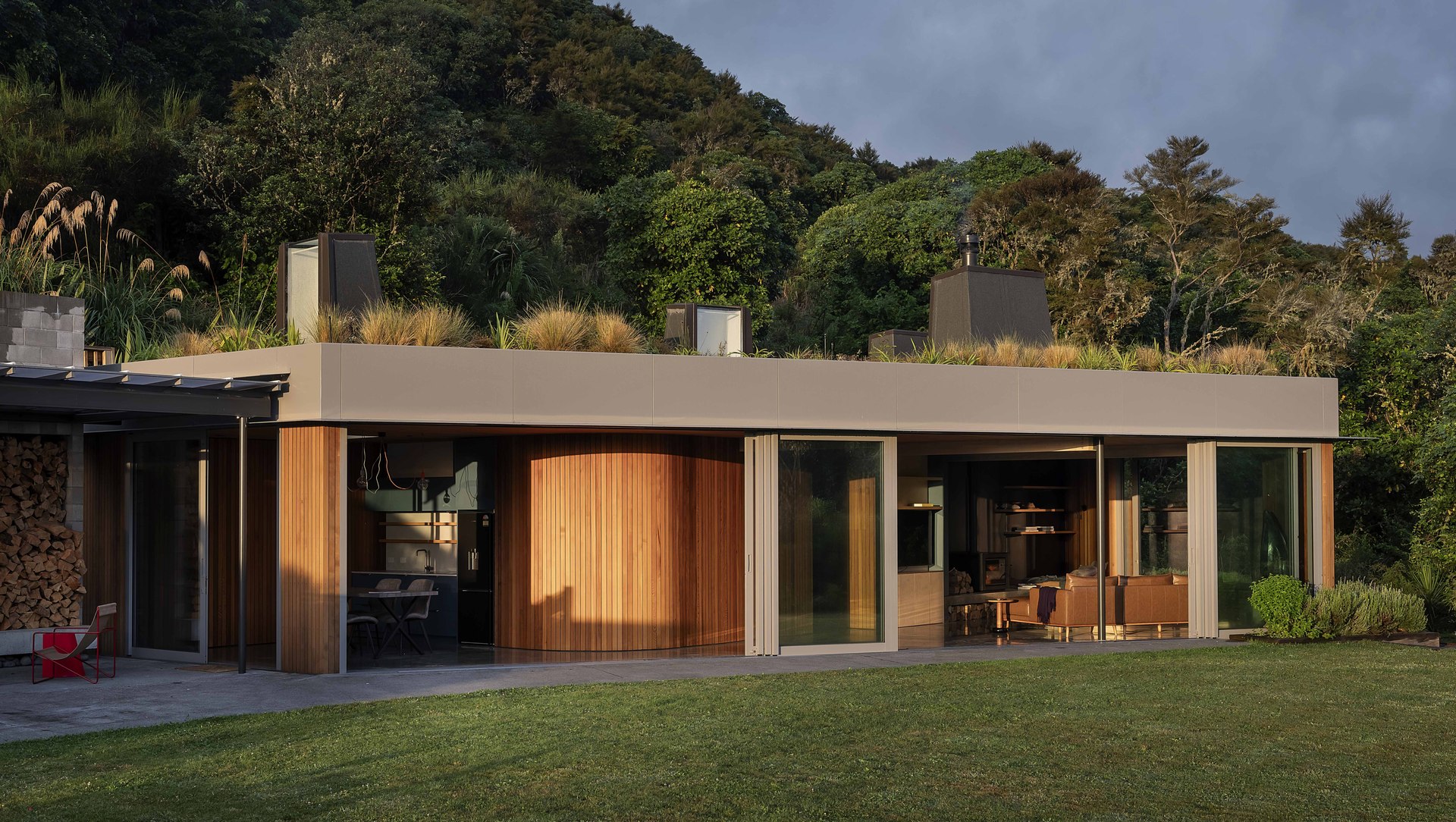
At just 152 square metres, the home achieves an impressive amount within a compact footprint. Three bedrooms, including a large bunk room designed to accommodate extended family and friends, branch away from the central living space in a triangular plan that cleverly disguises the building’s depth. The geometry emerged from the site’s angles, orientation and relationship to the north-facing aspect.
“The triangular form really grew out of the site,” Scott explains. “It picks up on the angles and orientation of the land, opening to the north while tucking itself back into the hillside. The plan grows out from the kitchen, dining and living spaces, then the bedrooms branch away toward the back, which helps disguise the depth of the building.”
The result is a building that feels both protective and open. While there are glimpses east toward the lake, the home primarily turns itself toward the surrounding bush, creating a sheltered atmosphere.
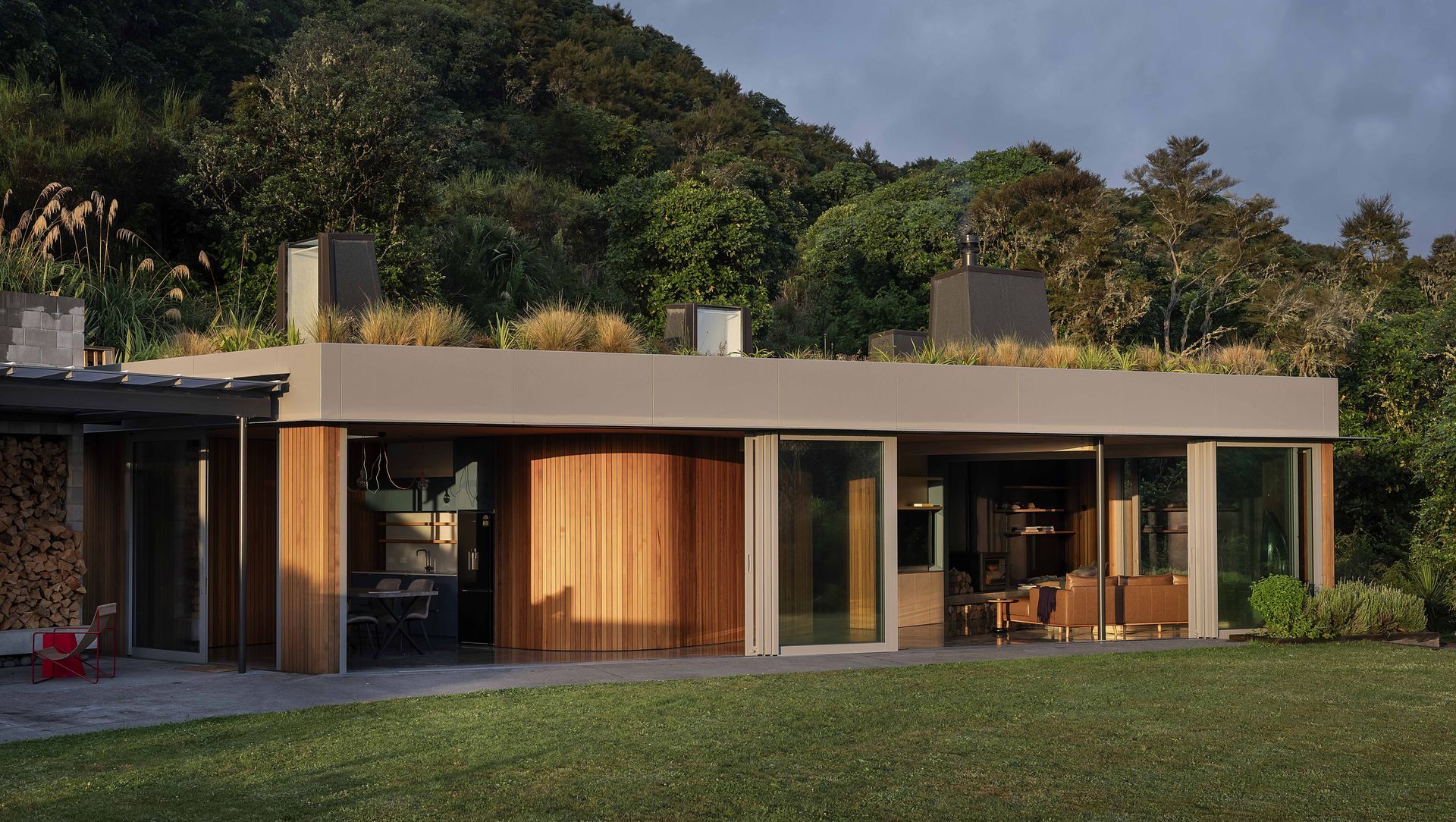
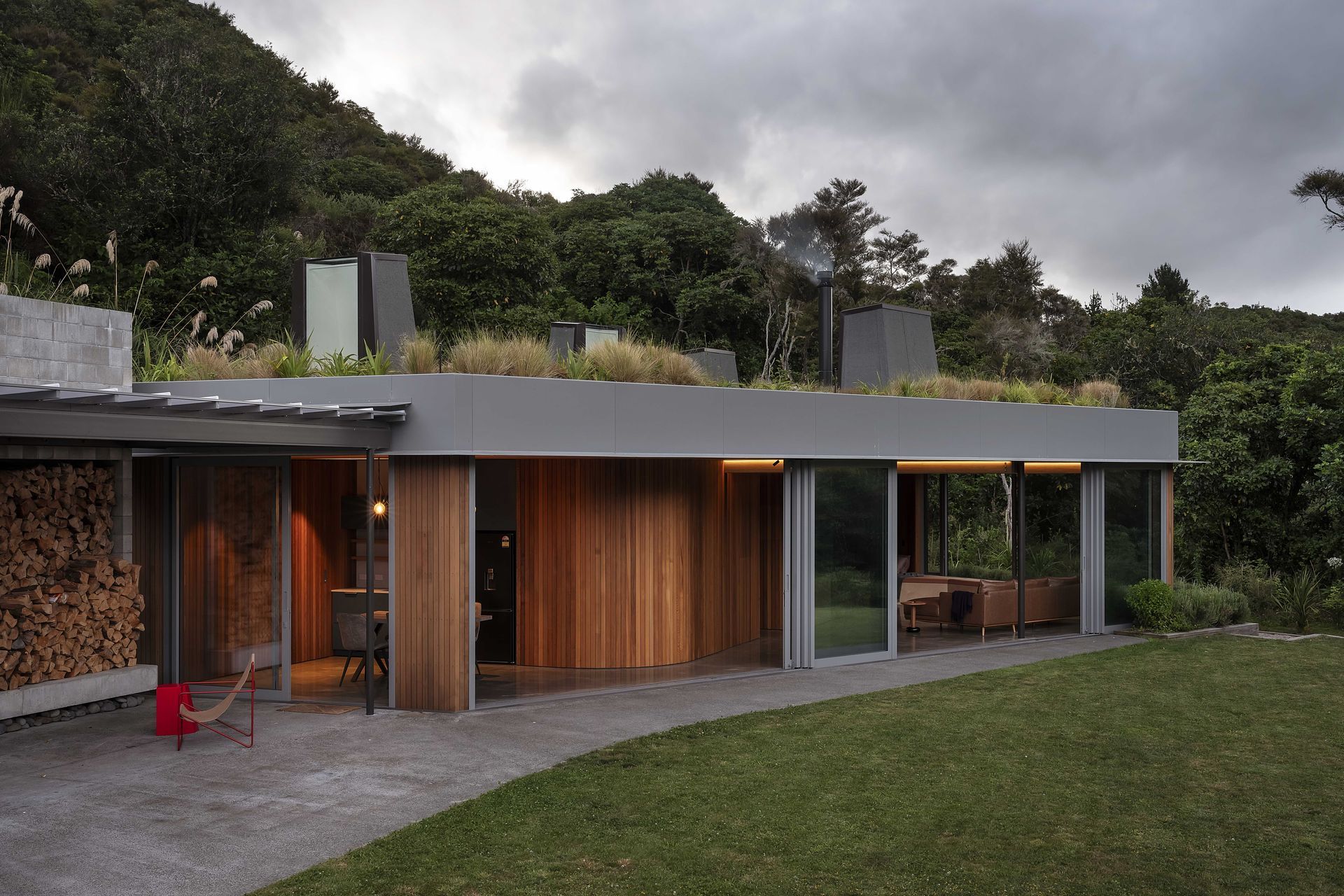
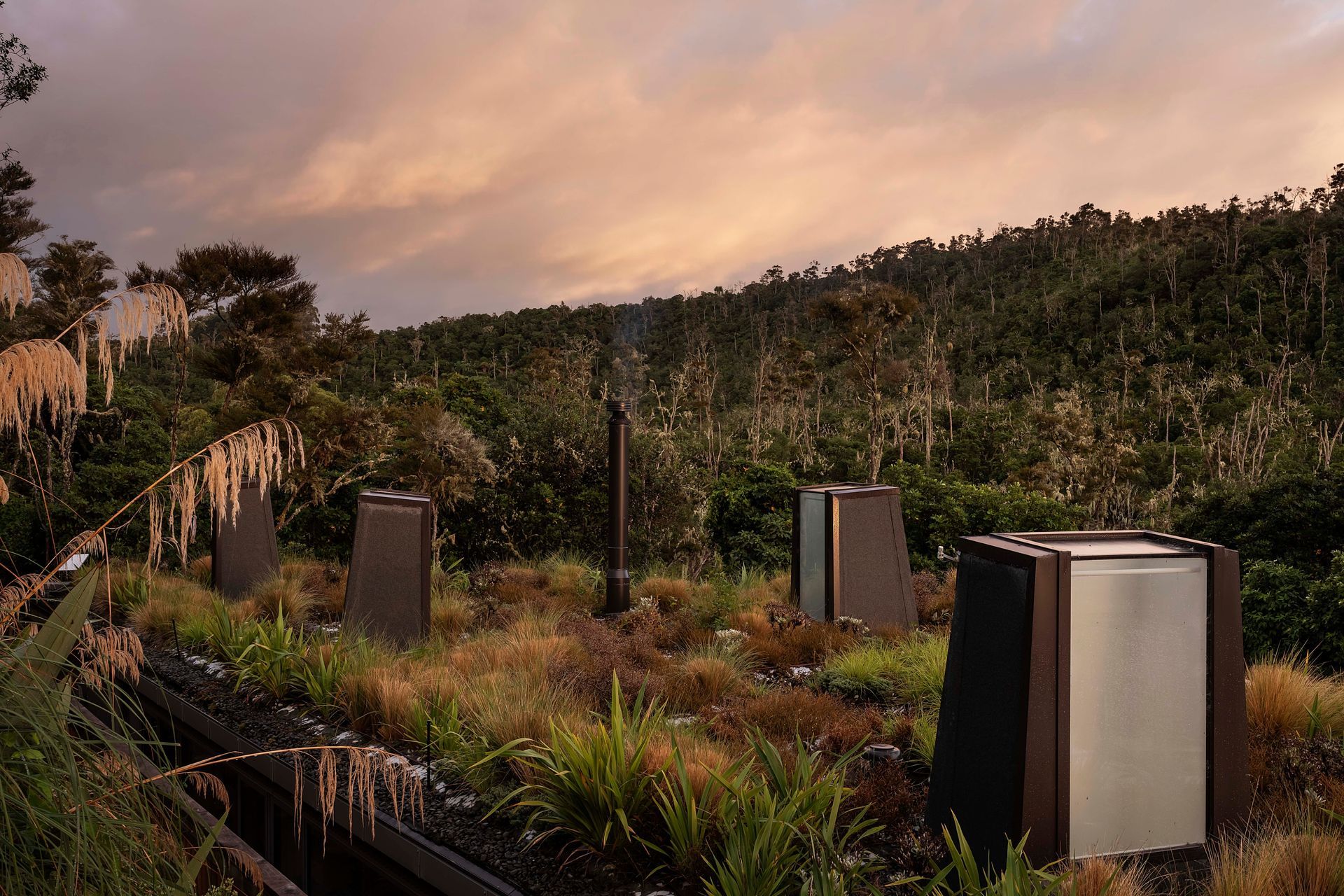
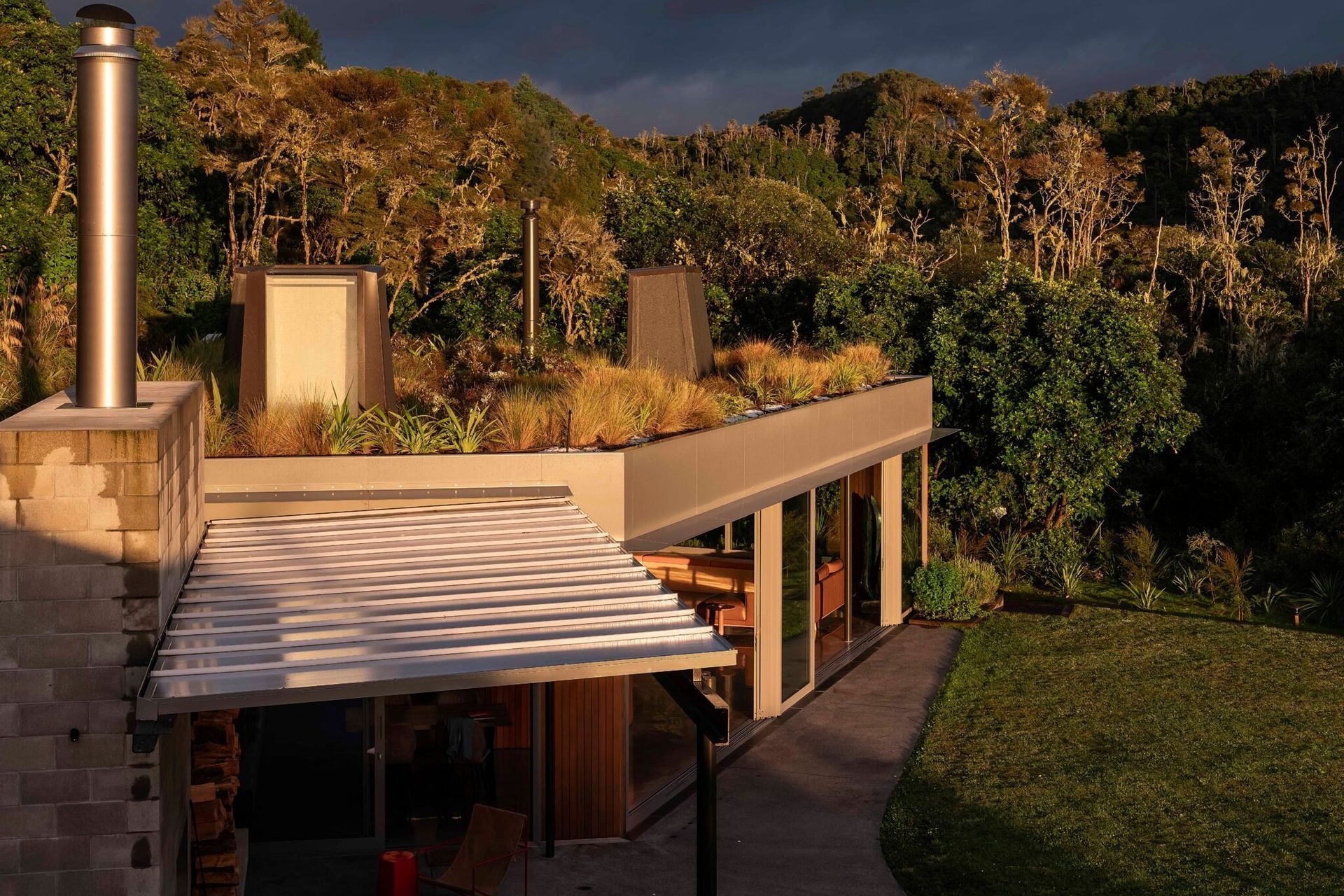
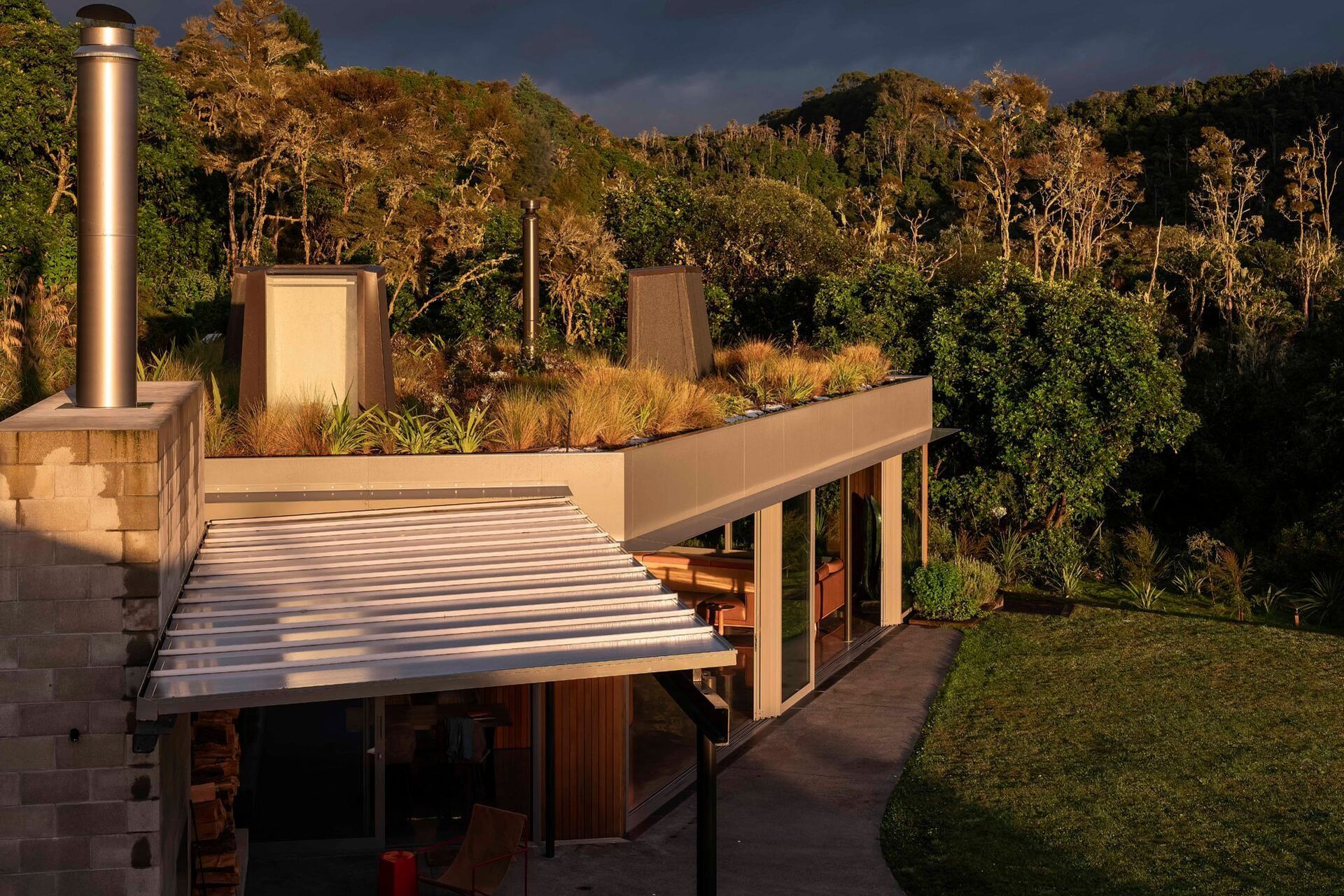
Its exterior materiality reinforces this relationship with the landscape. Timber cladding softens the strong geometry of the form, while a living roof allows the architecture to visually recede into the hillside. Given the public walking track that traverses the bush behind the site, the roof became what Scott describes as the “fifth elevation”, an important visual surface frequently viewed by passersby above.
The planted roof shifts subtly with the seasons, bringing movement and softness to the building and the grey band framing it creates a sympathetic lineal gesture.
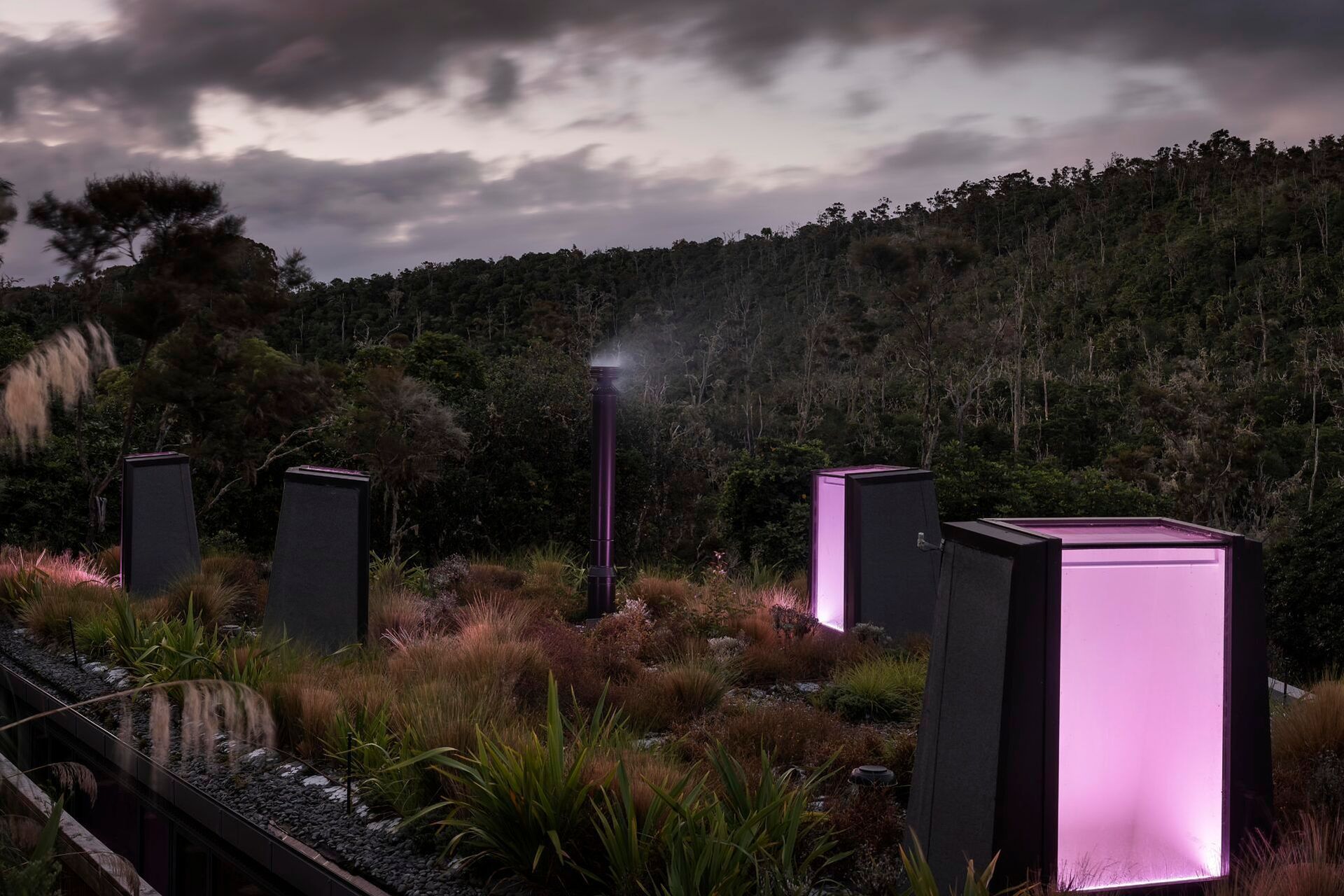
Piercing through that roofline are a series of sculptural “light stalks”, glazed roof forms that draw daylight deep into the interior. Oriented in different directions to capture changing qualities of light throughout the day, they also animate the building after dark.
“At night, they throw light across the roof and glow up into the bush in quite a special way,” says Scott.
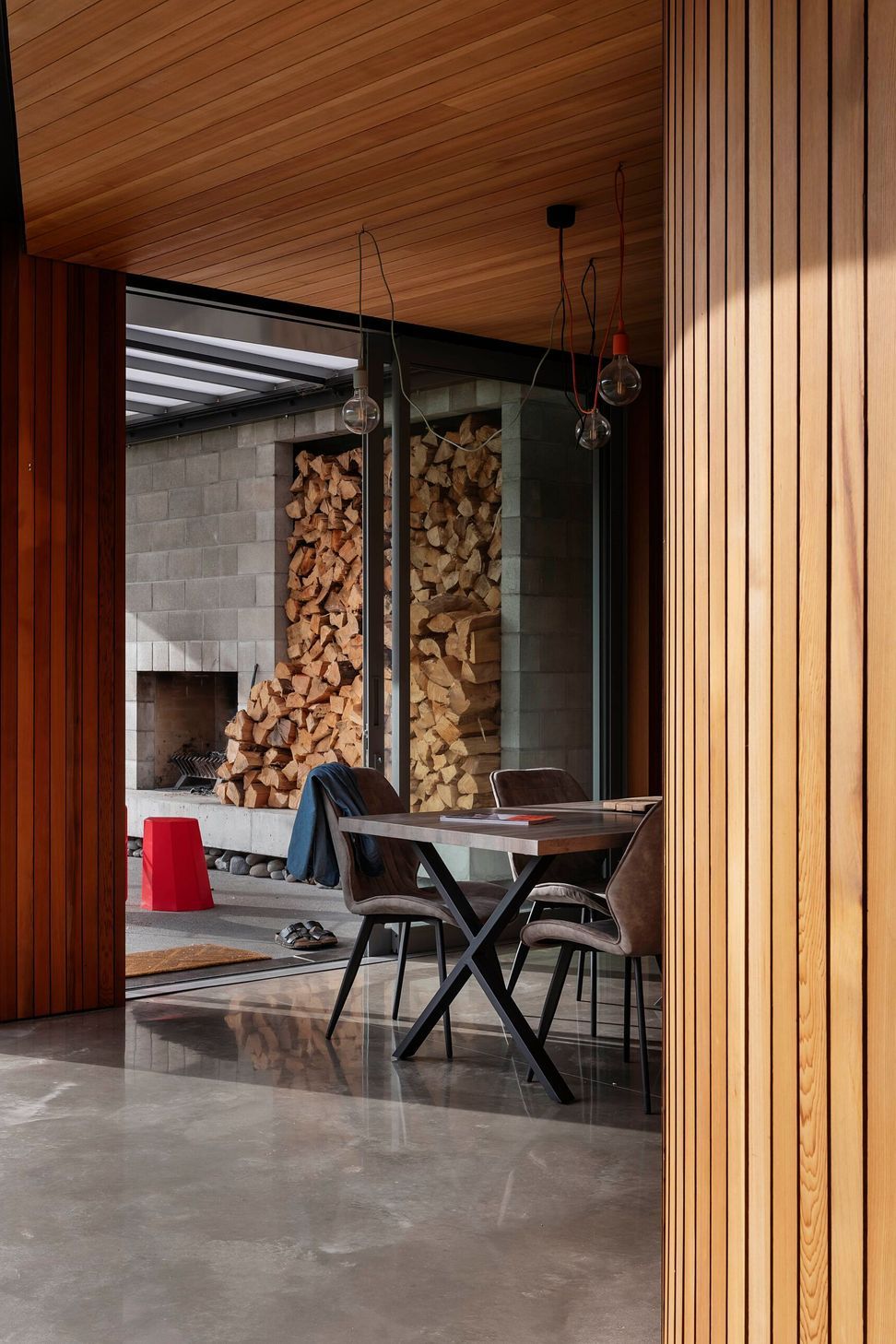
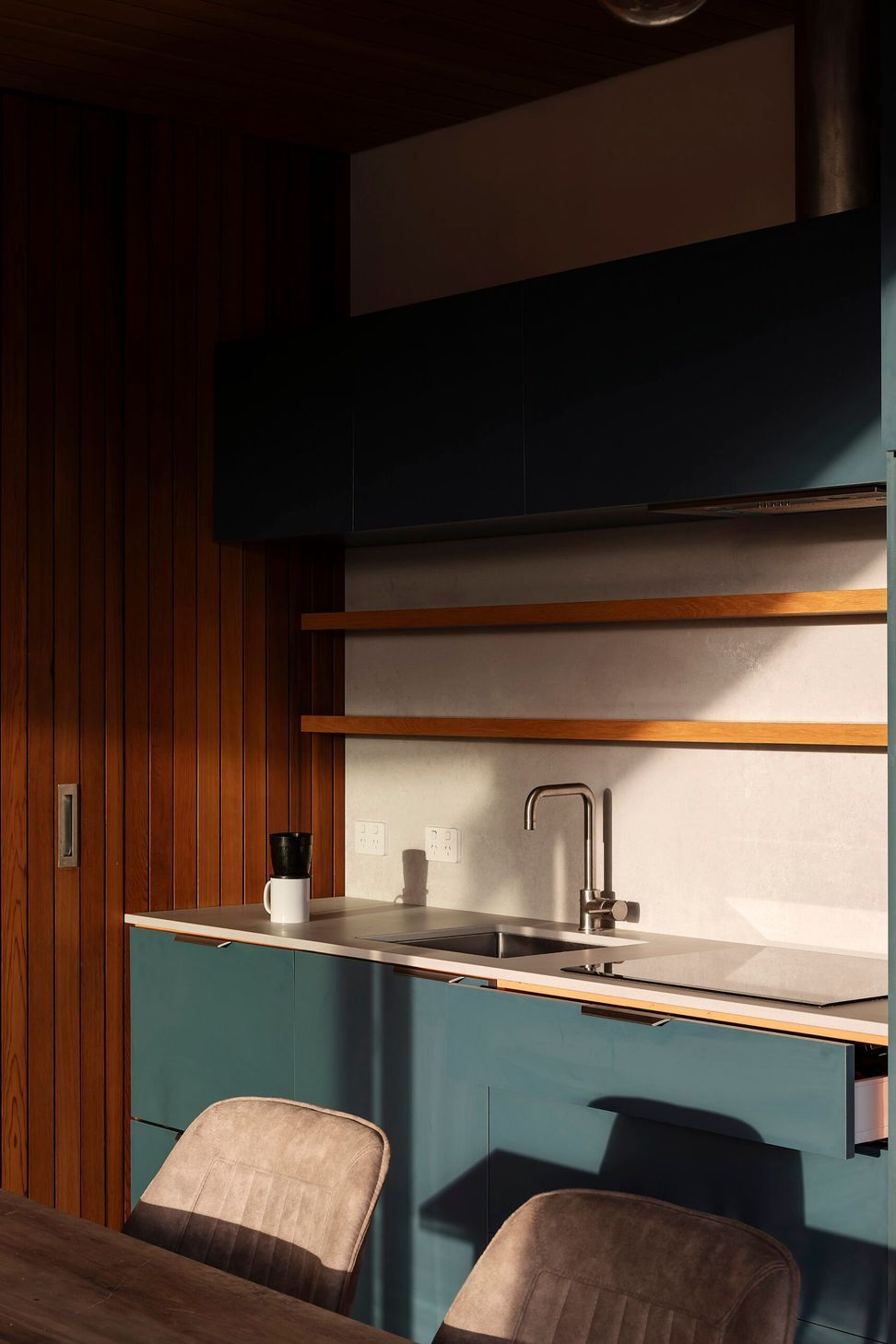
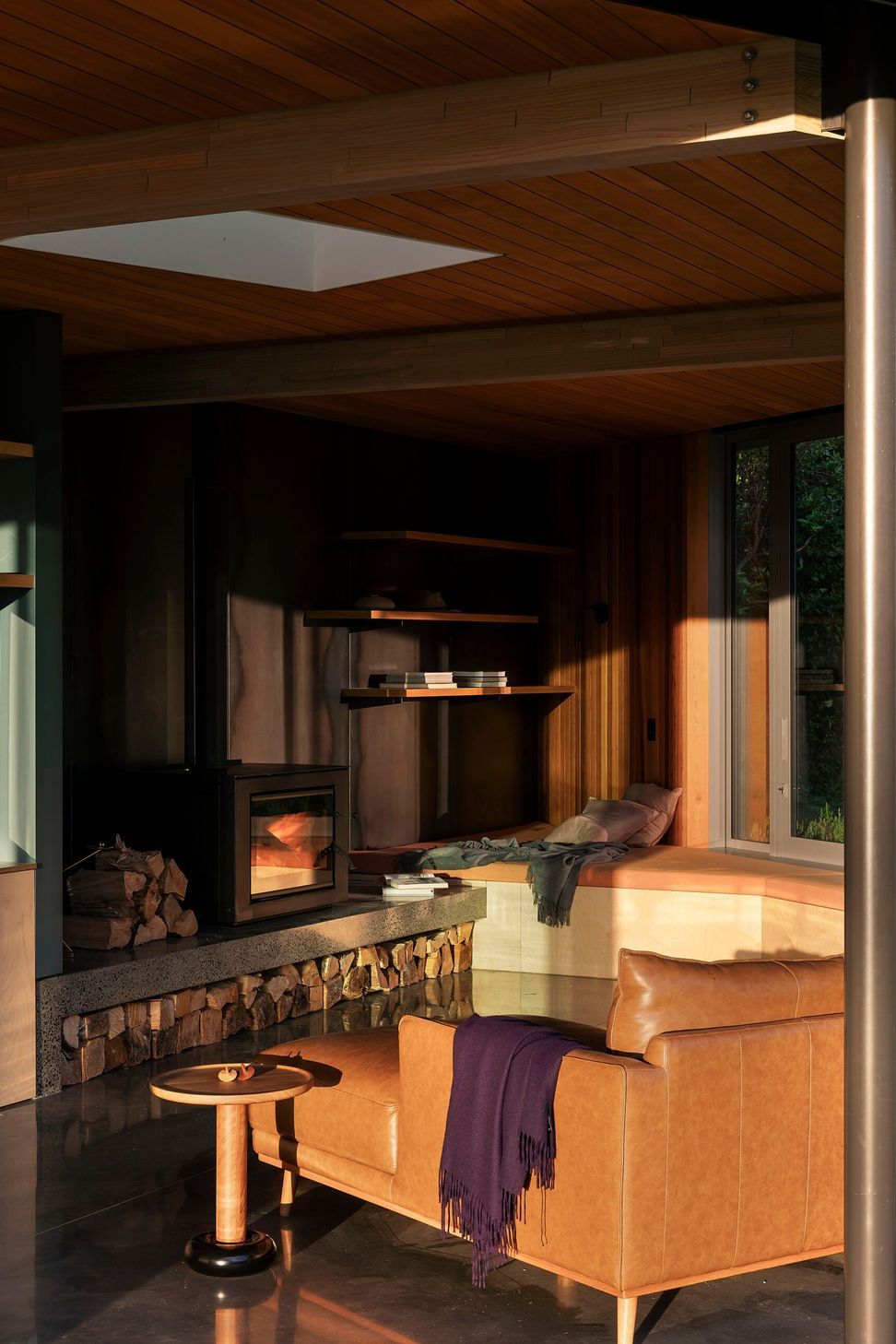
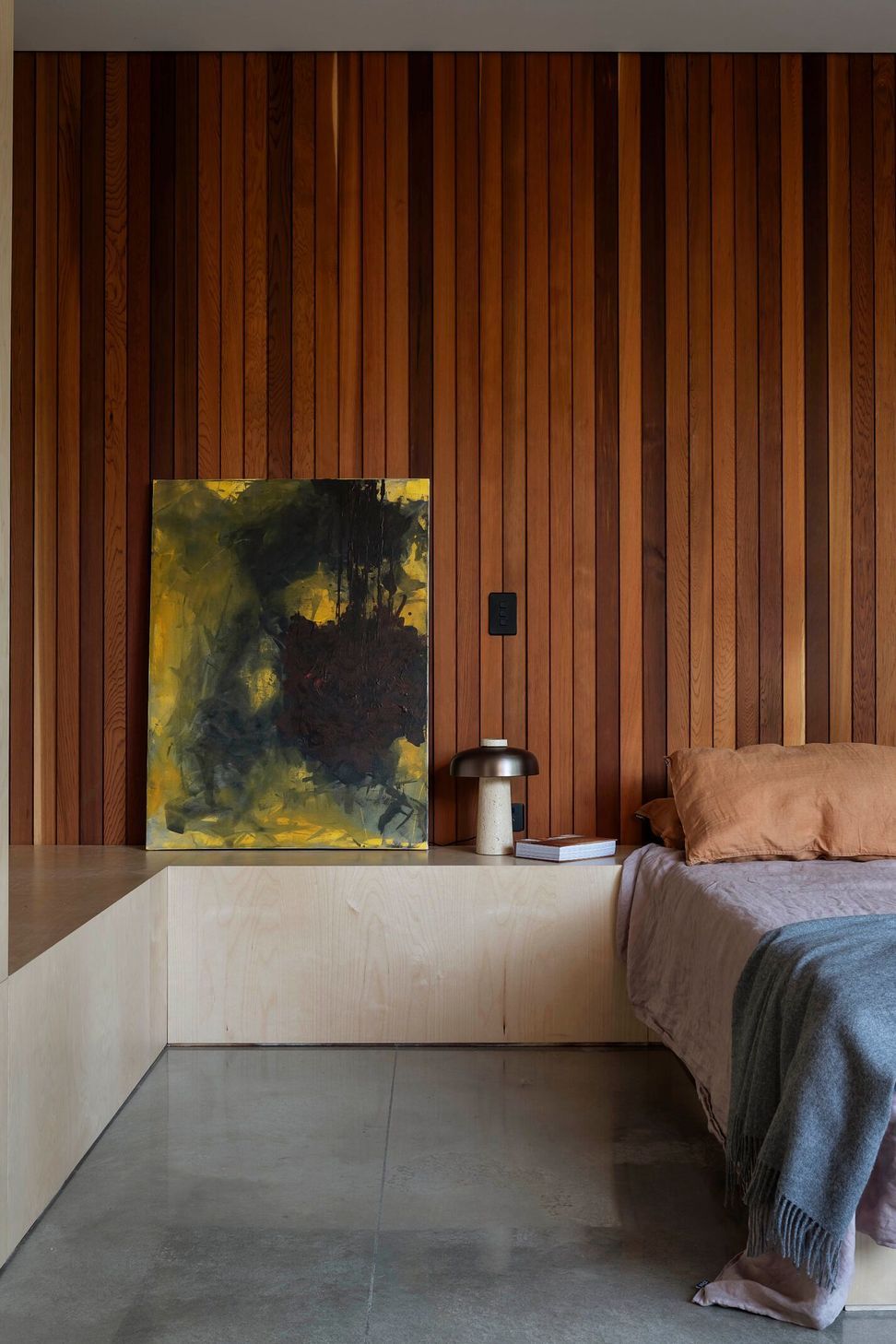
Inside, the material palette continues the sense of warmth and refuge. Timber linings wrap around softly curving walls, creating a cocooning effect against polished concrete floors and pale ash ceilings.
“We wanted the house to feel warm both in atmosphere and appearance,” says Scott. “The timber creates this really warm palette, especially on those grey winter days with the fire going.”
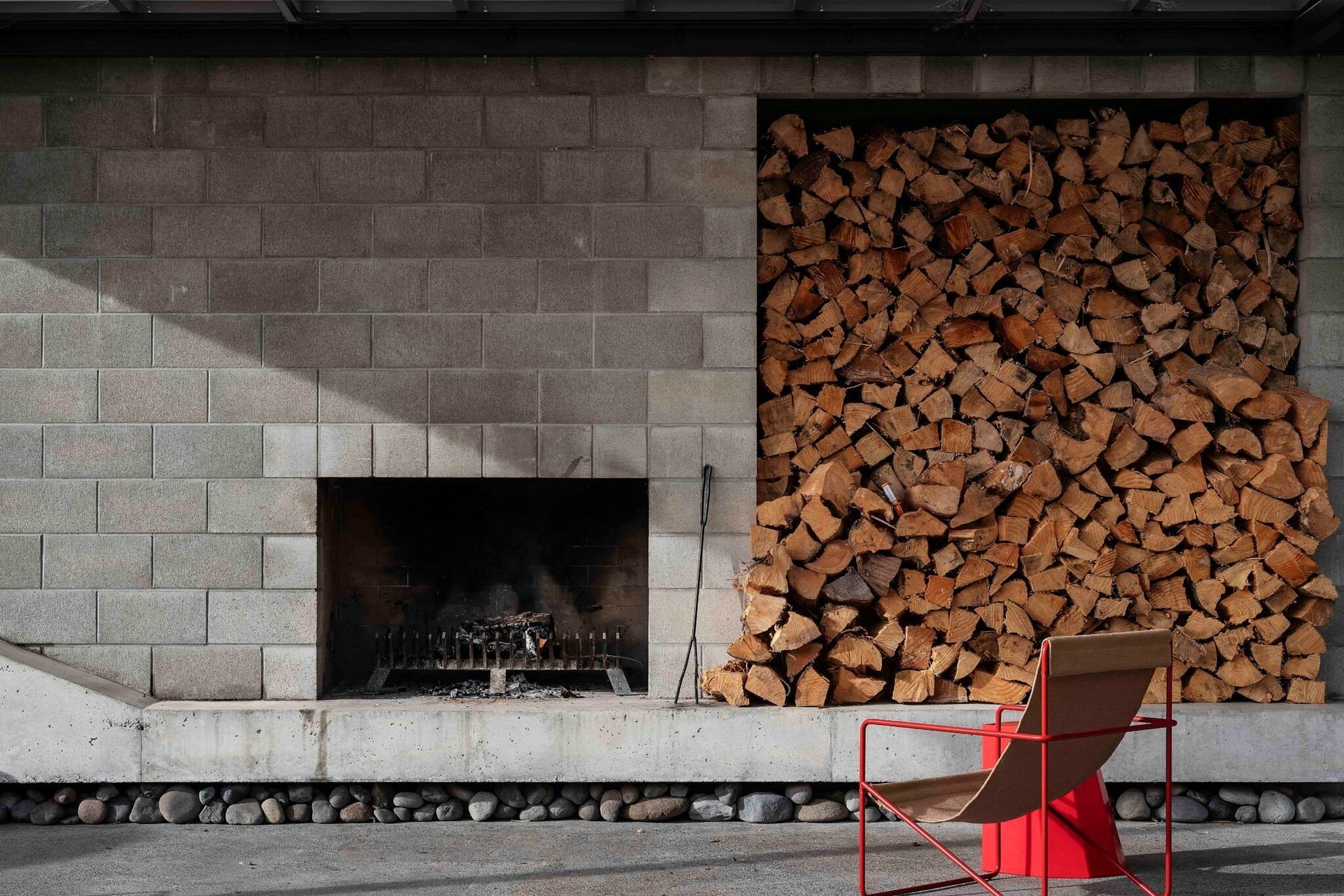
That practicality has become one of the project’s greatest successes. The family uses the house constantly, often spending entire weekends there. Much of that time centres around the covered outdoor area and fireplace, where meals are cooked and evenings stretch long into the night.
Importantly, the home has proven resilient enough to absorb the joyful wear and tear that comes with lakeside living.
“It takes the knocks inside with the timber,” Scott says. “It’s not too precious.”
For Scott, however, perhaps the most rewarding aspect of the project lies in how naturally it has settled into the community and landscape around it. Locals walking the bush track frequently stop to admire the home, leaning over the fence to compliment its roofline, materiality and careful placement within the site.
“Every time I talk to the client, he tells me stories about people walking past and leaning over the fence to compliment the house and the roof and the way it sits in the site,” says Scott. “That’s always really nice to hear. It’s only small, but for its budget and size, I think it packs quite a punch.”
Words: Joanna Seton