

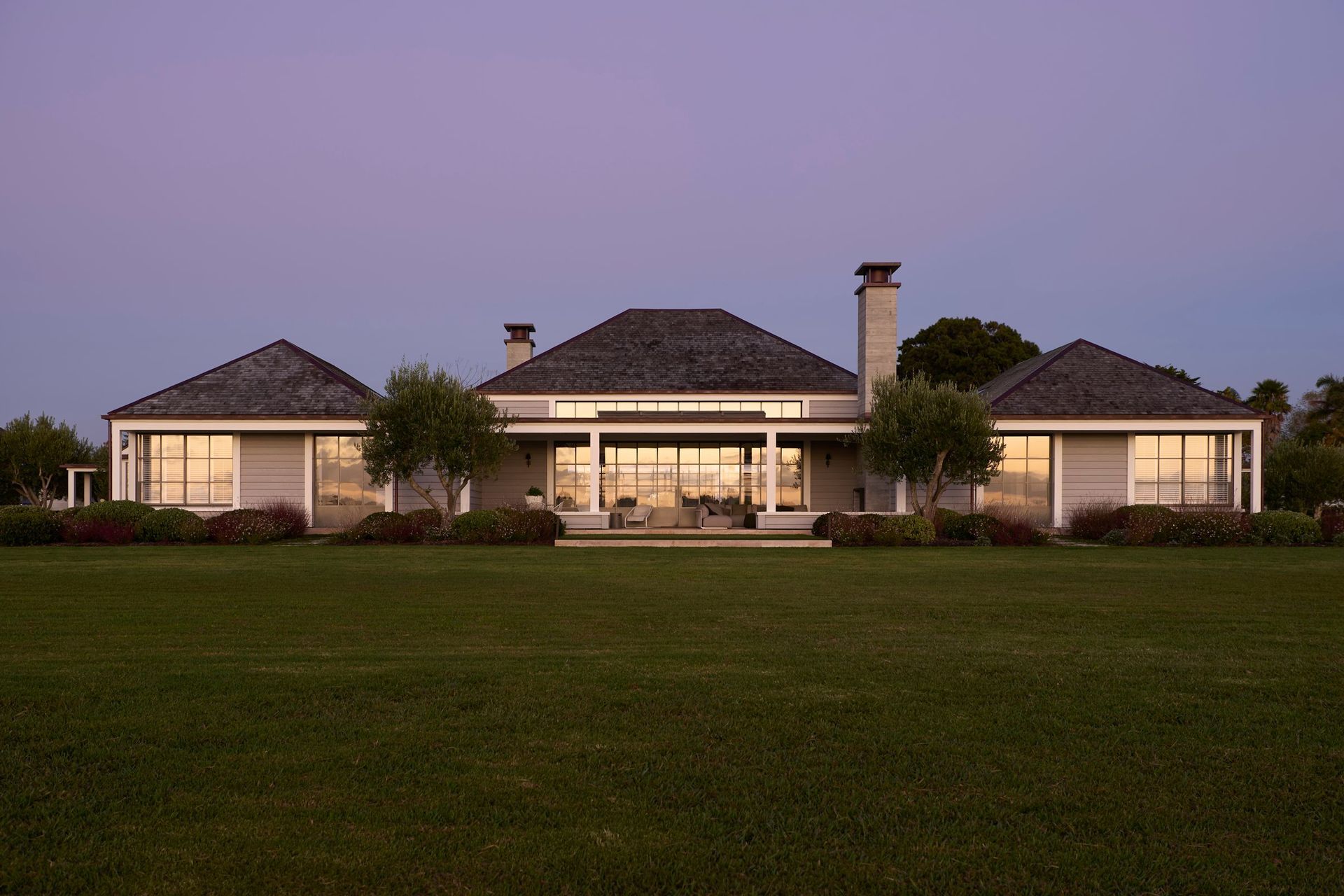
Responding to a low-lying coastal site, this rural family retreat by Christian Anderson Architects unfolds as a collection of subtly detailed buildings arranged around a sheltered courtyard.
Balancing contemporary & timeless in a rural coastal setting
The journey north from the city to Omaha is a slow recalibration. Urban edges dissolve into arterial roads, then narrow again, giving way to open paddocks and long, low horizons framed by hills, where the land flattens and the sky widens as the coast comes into view.
The setting calls for an architecture of restraint, one that closely reflects its surroundings and responds with measured composure.
It was within this coastal-rural context that Christian Anderson Architects was tasked with creating a rural retreat that sits comfortably in its environment, while visually connecting with its setting.
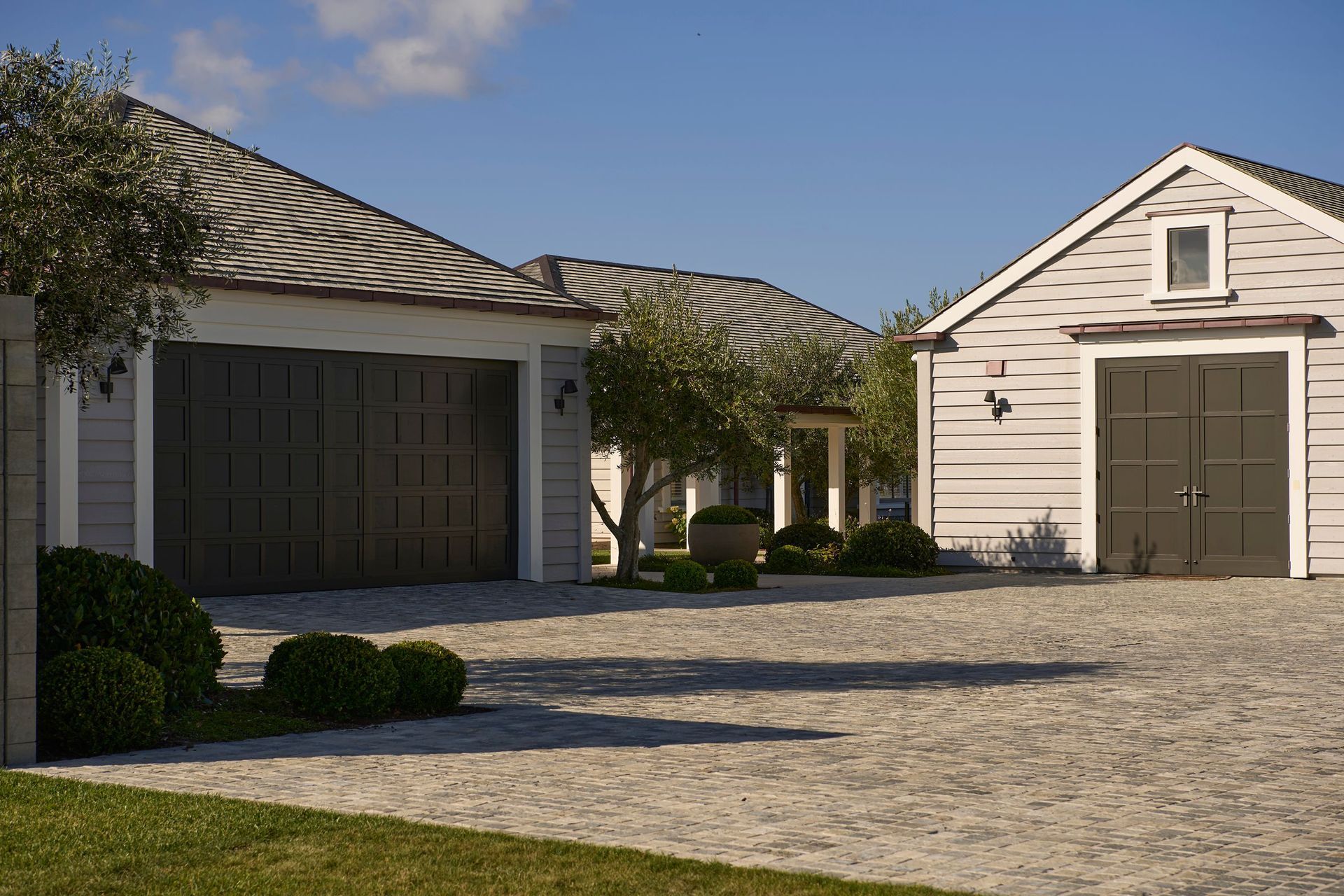
“The site was originally a large section of farmland, quite low lying adjacent to an estuary, set back from the main coastal margin facing east, with a cloaking expanse of headlands and low hills beyond,” shares Christian. “As a response, we looked at a series of subtly detailed buildings, arranged around a principal homestead building.”
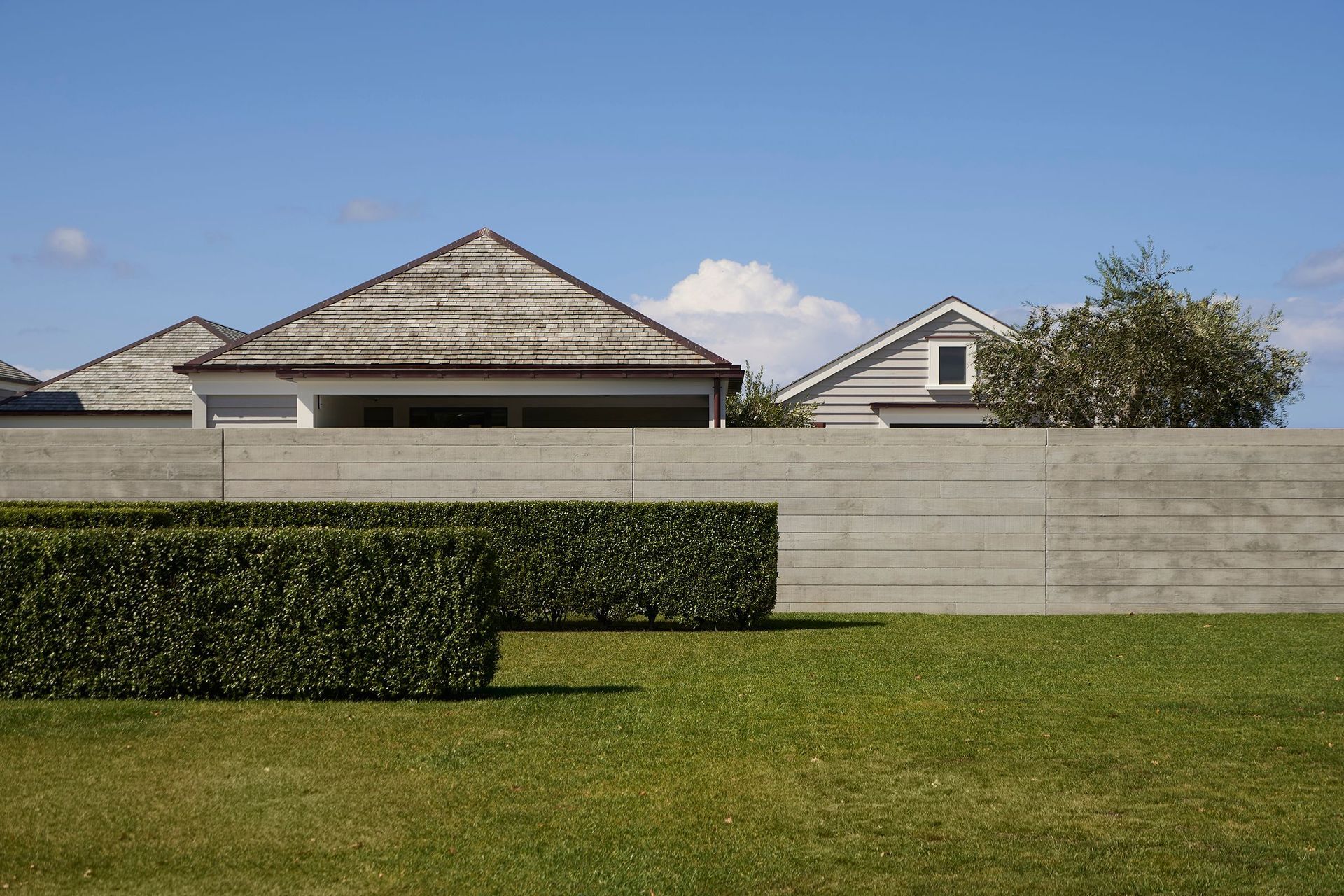
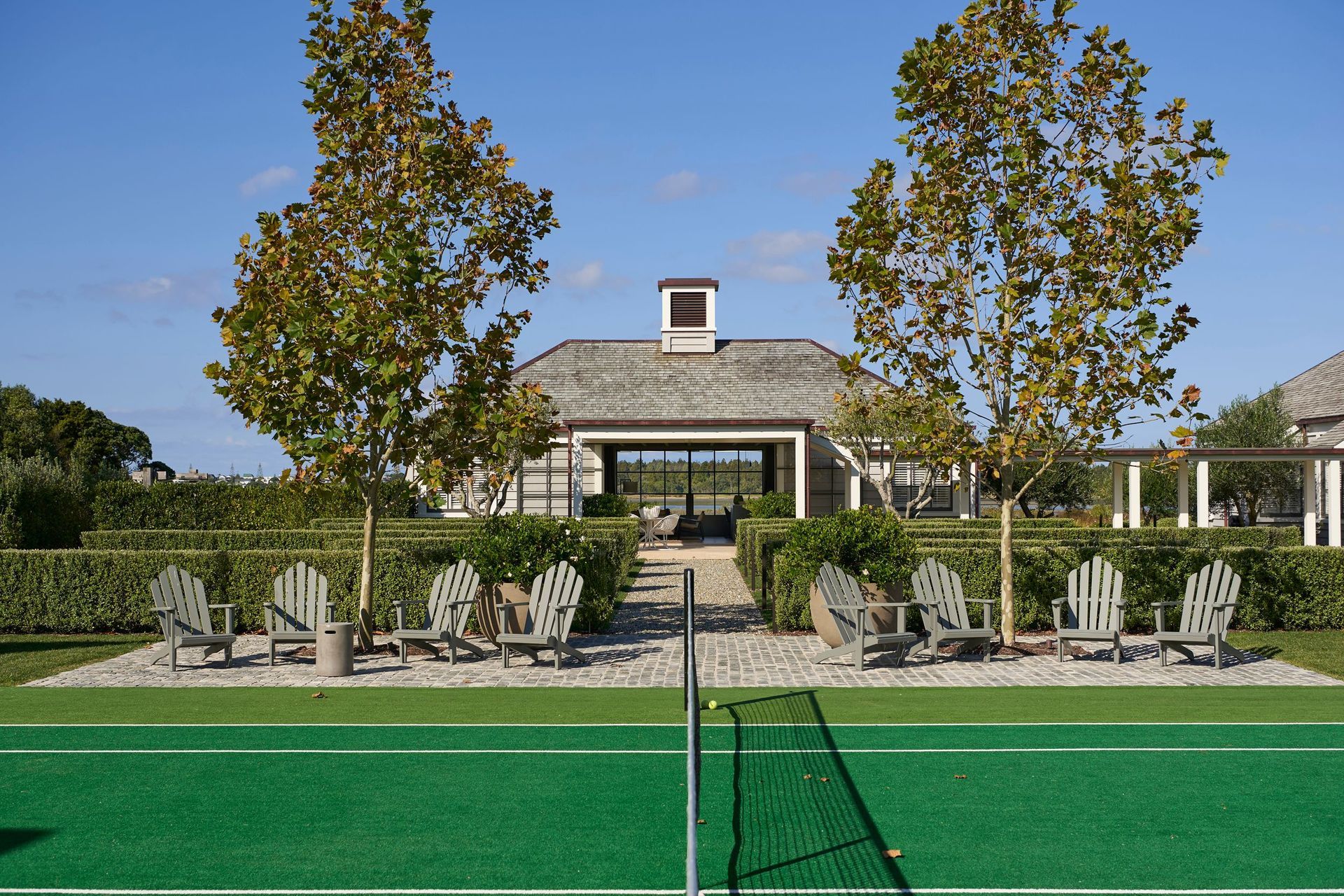
But rather than emphasising the homestead as the primary building, the organising theme for the project became the space between the buildings. A protective courtyard was conceived as the starting point, activating the surrounding architecture while establishing a sense of environmental control in an exposed landscape. From here, a clear hierarchy unfolds: a principal homestead supported by a constellation of secondary buildings, each with a defined role yet collectively forming a coherent whole.
“In a way, it’s not unlike a historic response with buildings that are added over time to support a rural use,” shares Christian. “The spaces that are created between those buildings can become almost as interesting as the buildings themselves.”
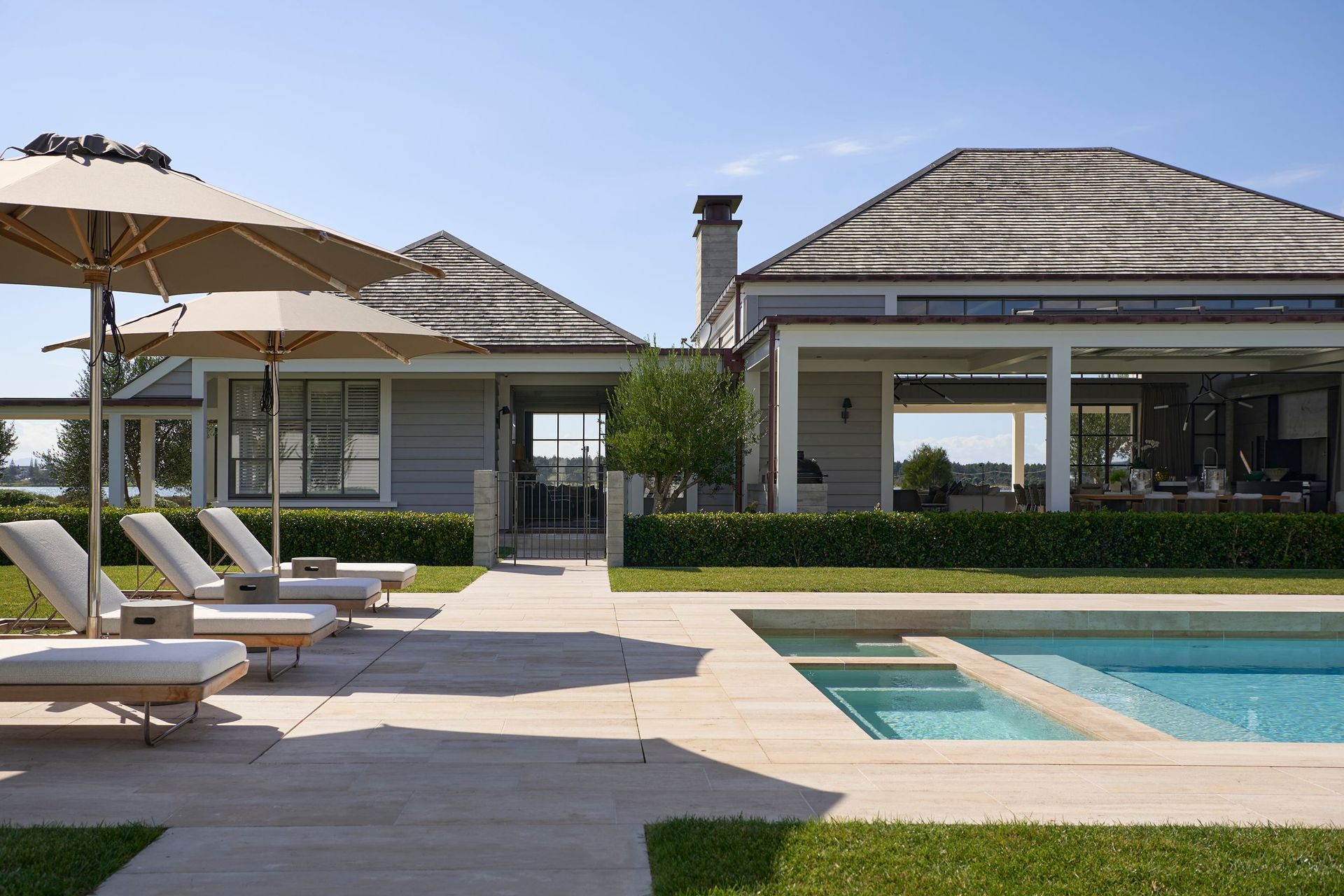
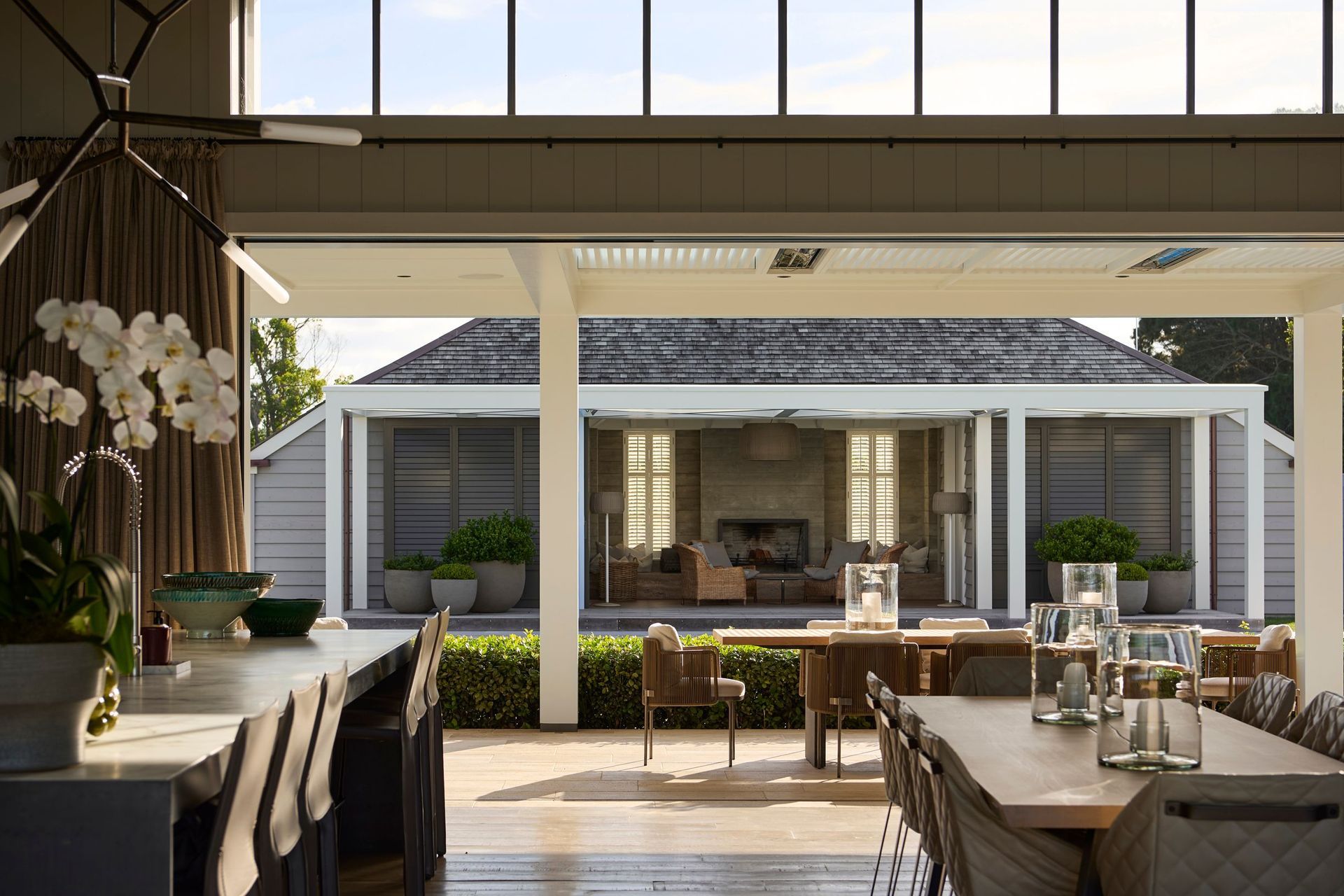
The courtyard and external linking spaces mediate between privacy and openness, offering refuge from coastal winds while framing shifting outlooks to the estuary and distant hills.
This approach allows the architecture to sit lightly within the landscape, resisting monumentality in favour of a more human-scaled, incremental presence.
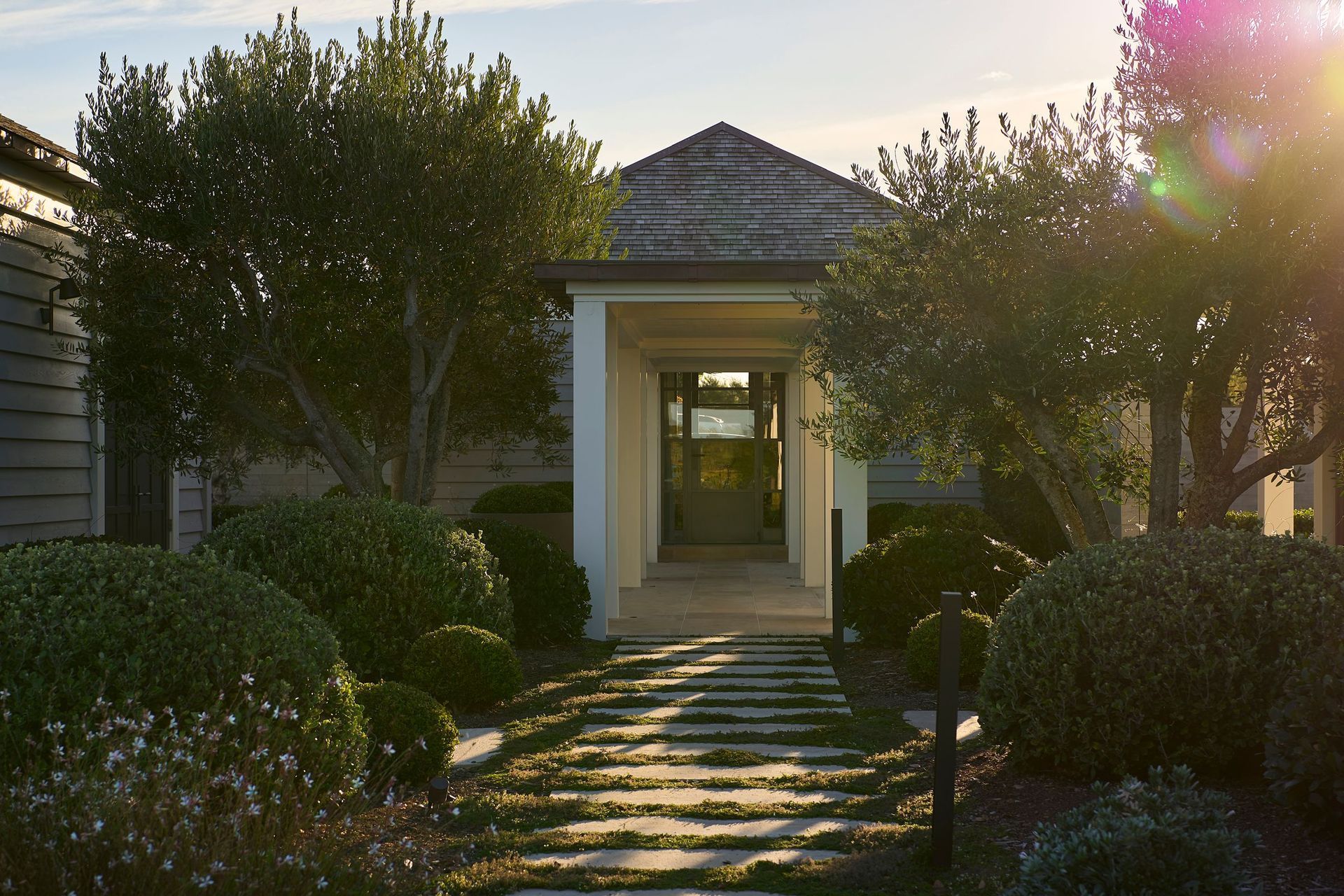
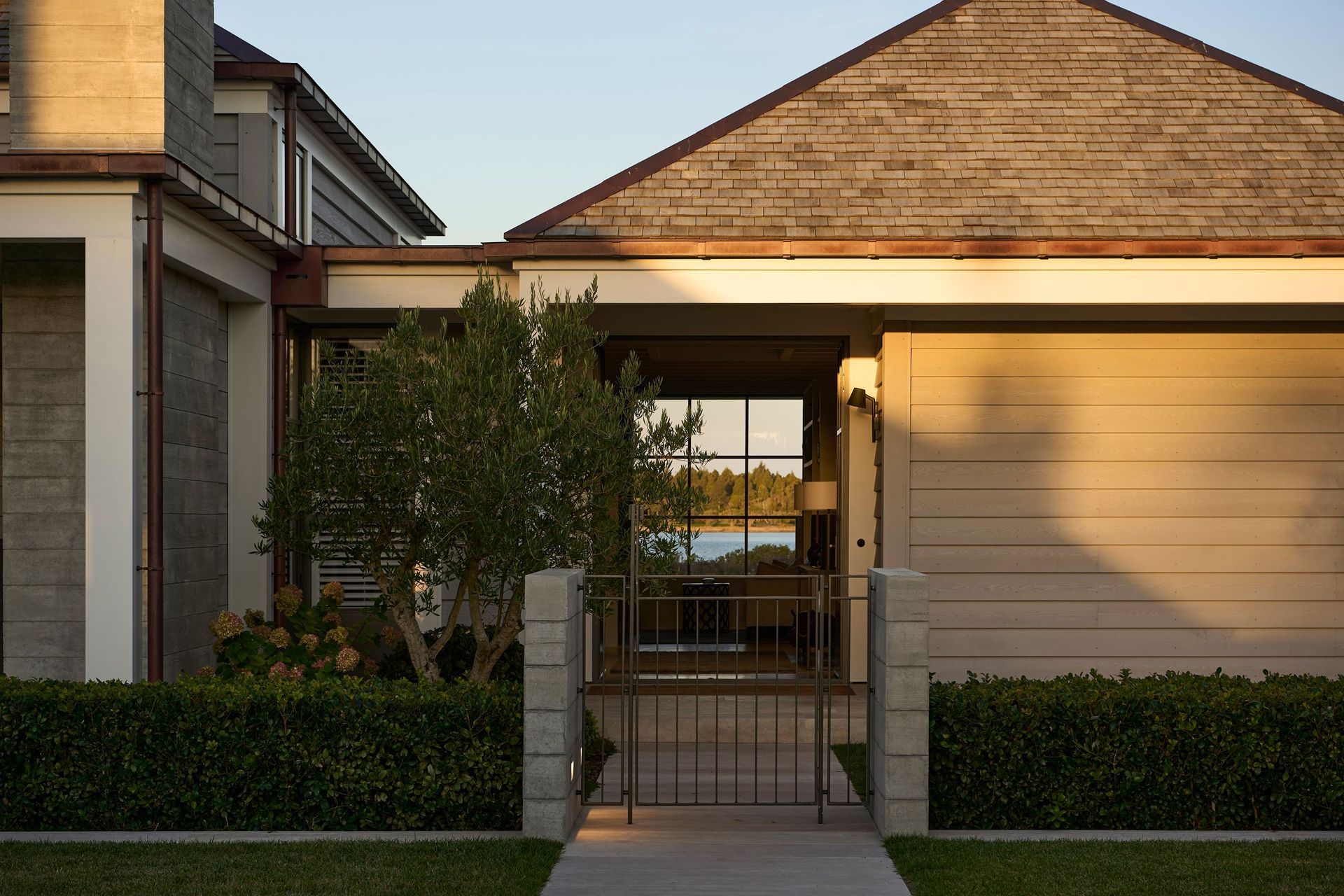
Arrival is deliberately choreographed. From a secondary road, the property opens gradually through a sequence of landscapes, reinforcing the sense of retreat from urban life. Entry is via a long avenue of regenerating trees, passing stable buildings before reaching the main homestead. There is no immediate reveal; instead, the house is encountered obliquely, partially enclosed, with movement through one or two thresholds required before entering the primary living spaces.
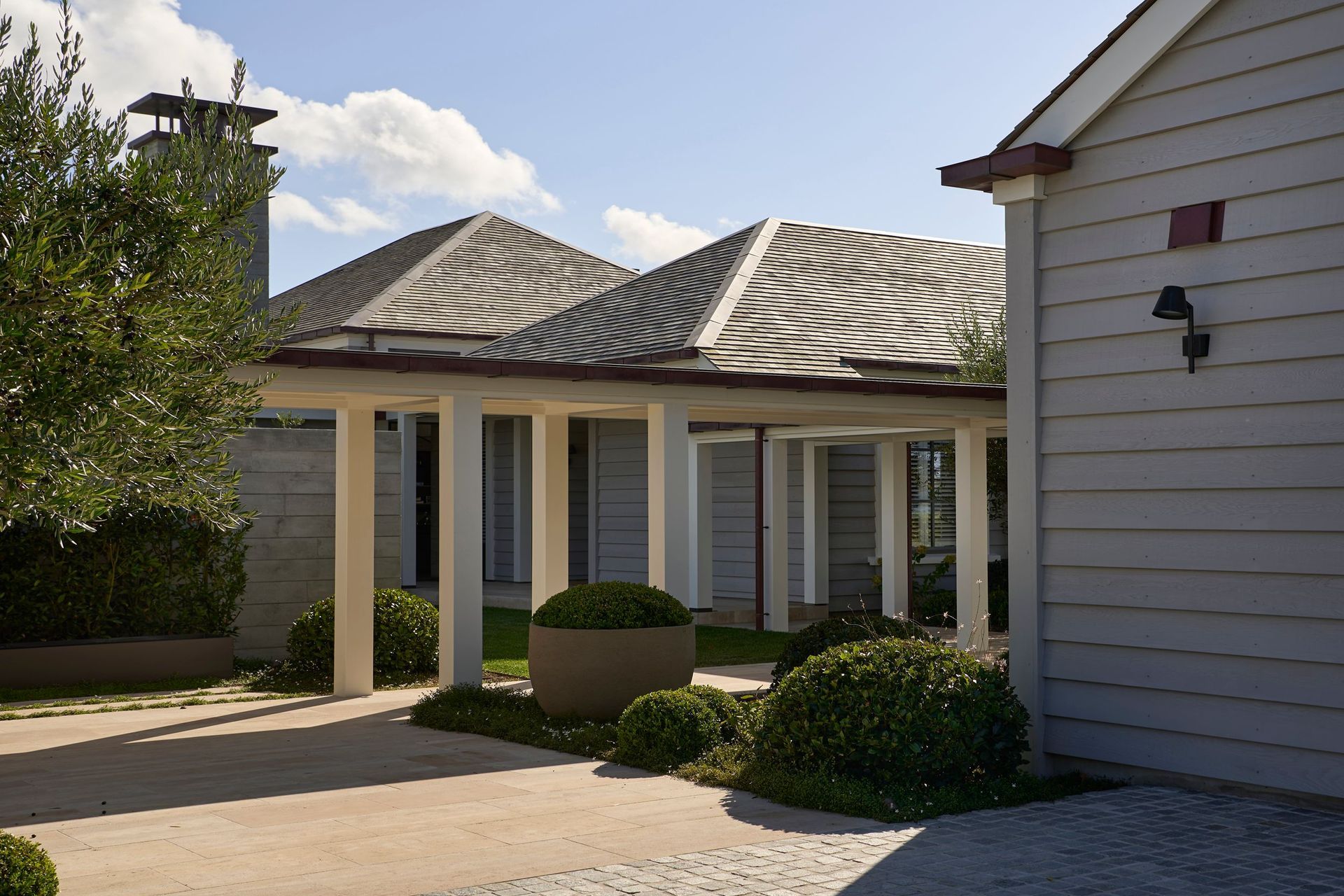
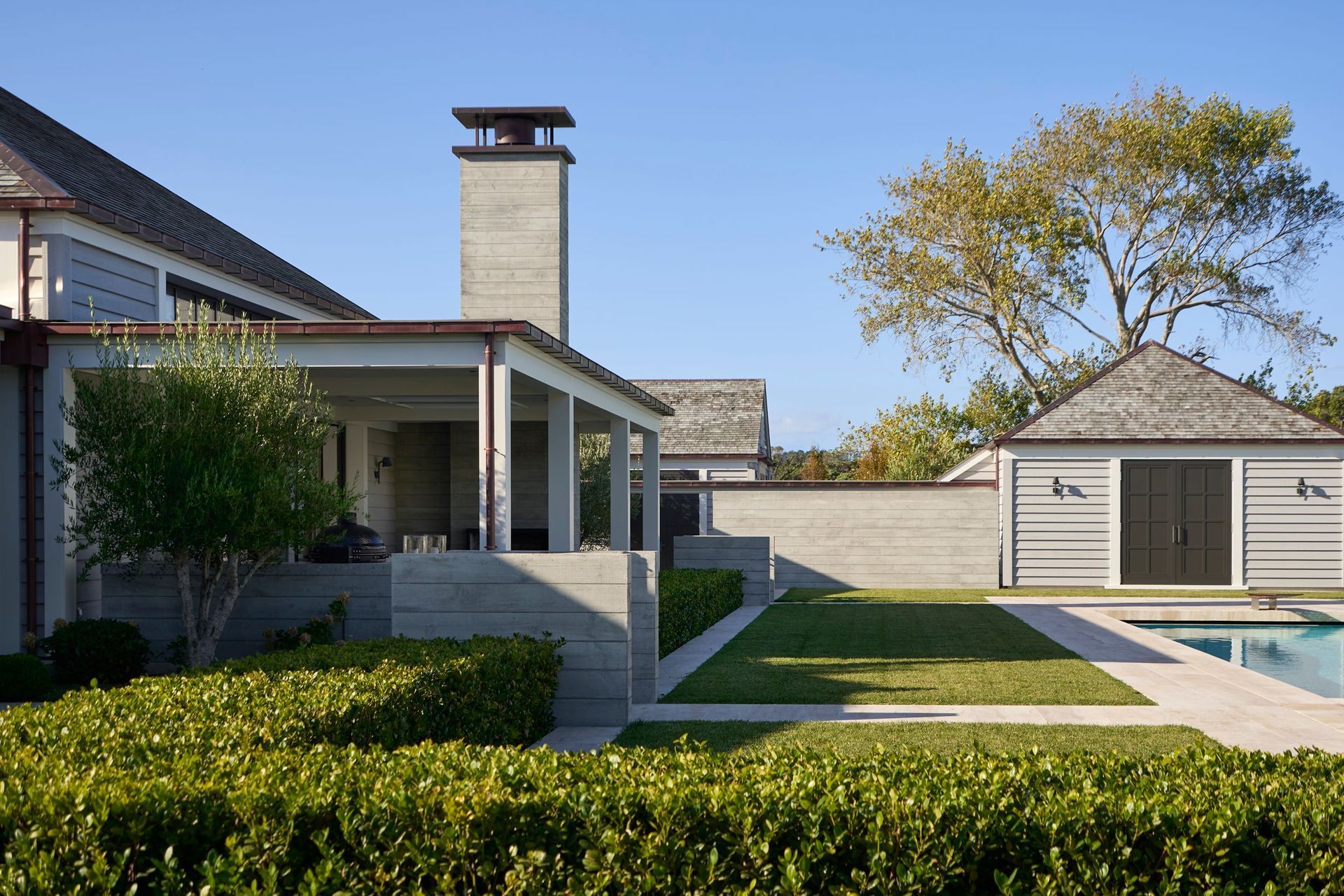
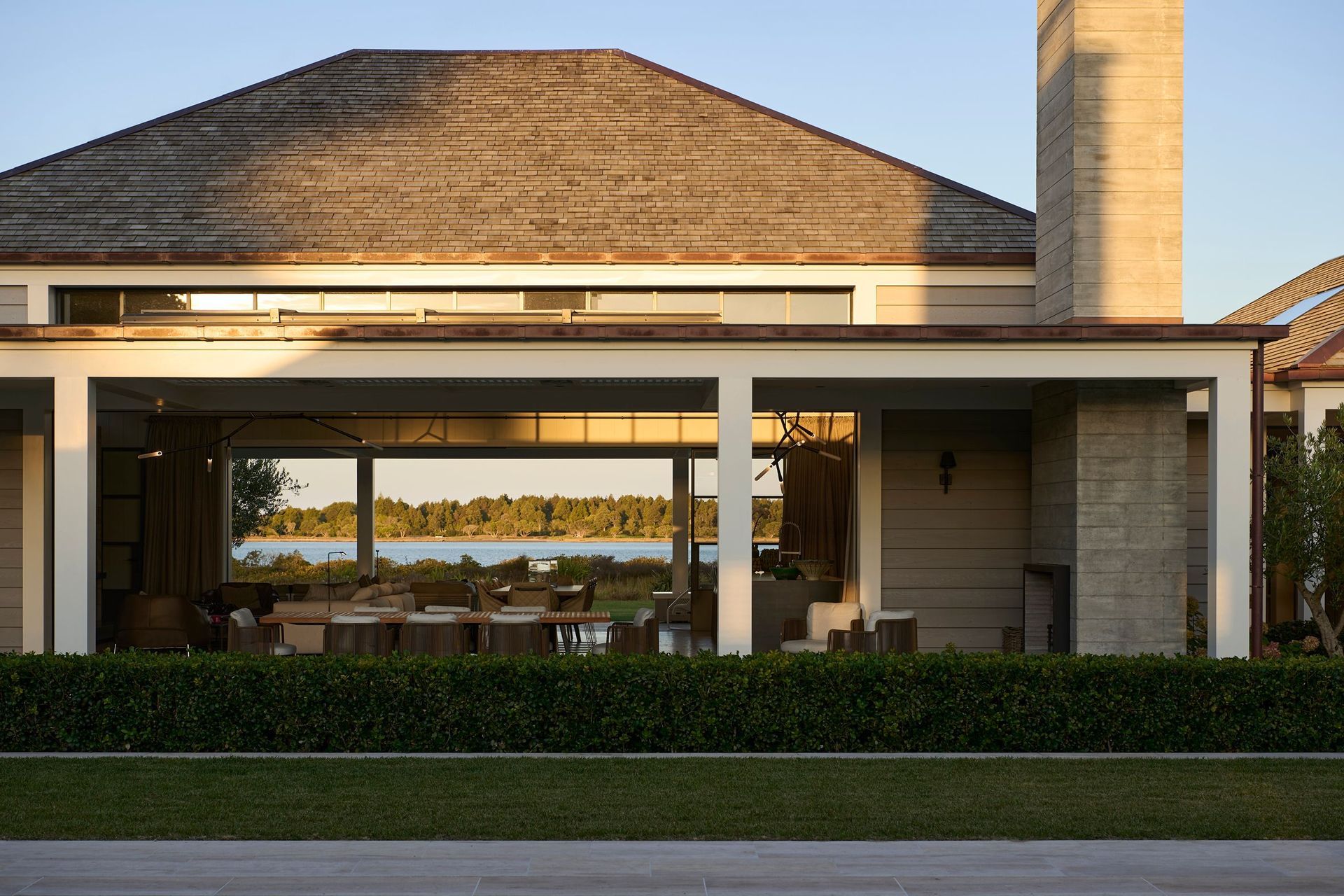
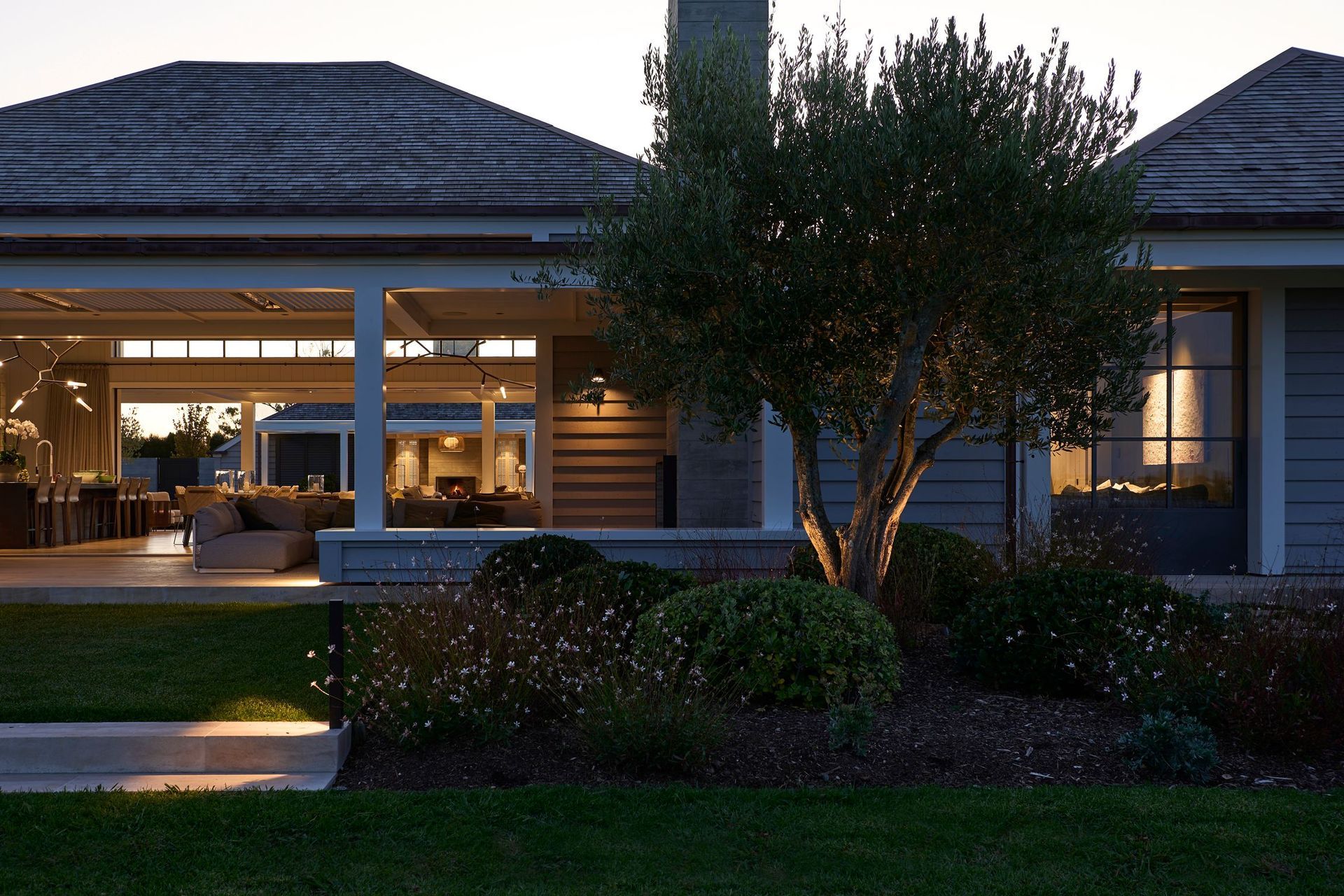
Externally, the material palette draws from vernacular traditions, refined through a contemporary lens. Single-level in form, the buildings are clad in a combination of painted and stained timber weatherboards intended to soften and weather over time. Soft shingle roofs and copper rainwater detailing reinforce the sense of longevity, their surfaces intended to patinate naturally in response to coastal conditions.
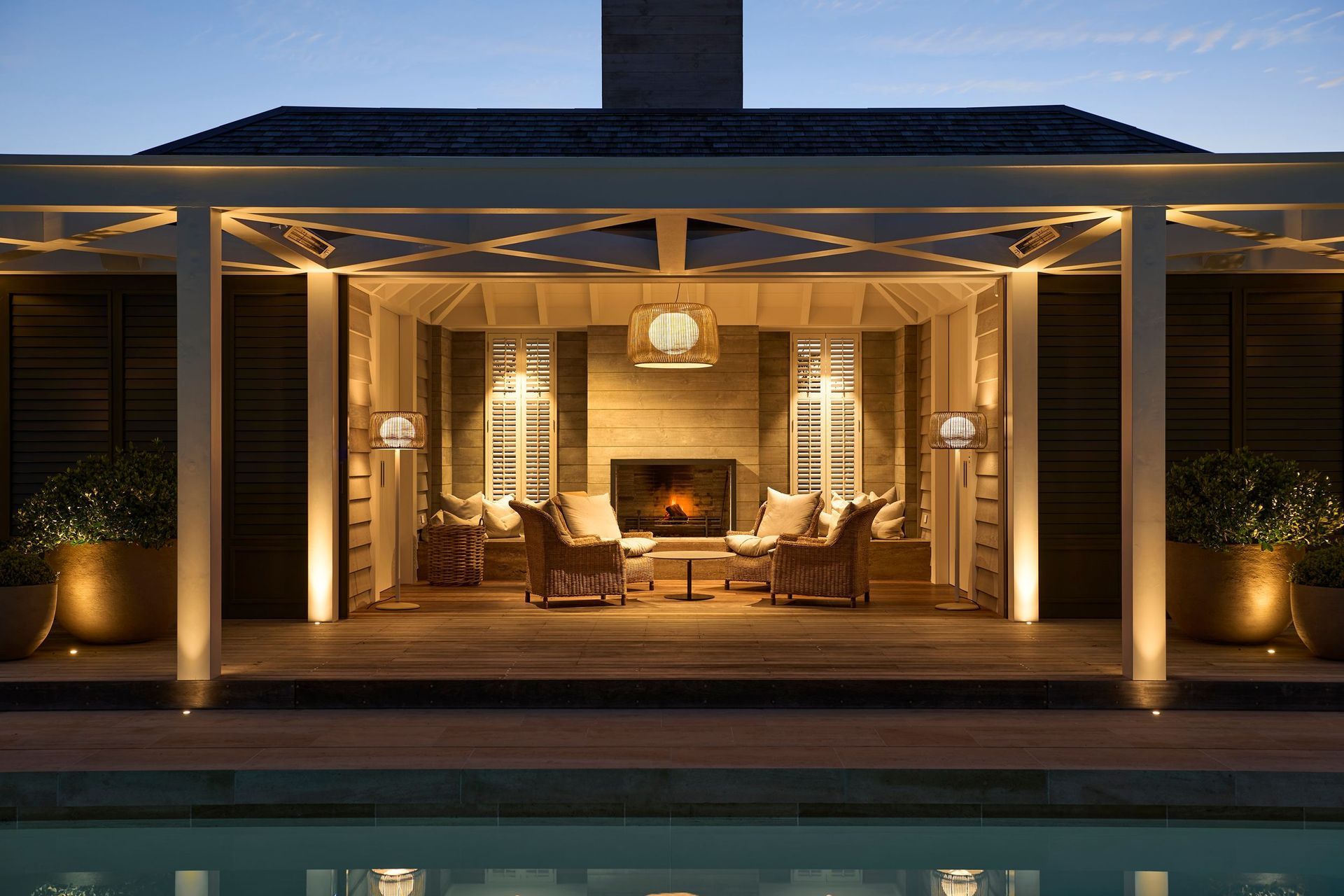
“These elements are offset by mass shuttered concrete walls, which provide moments of solidity and vertical definition, particularly within the courtyard and landscape enclosures,” shares Christian.
Crisp white-painted structural elements articulate verandas and covered walkways, linking the buildings and creating a continuous threshold between inside and out.
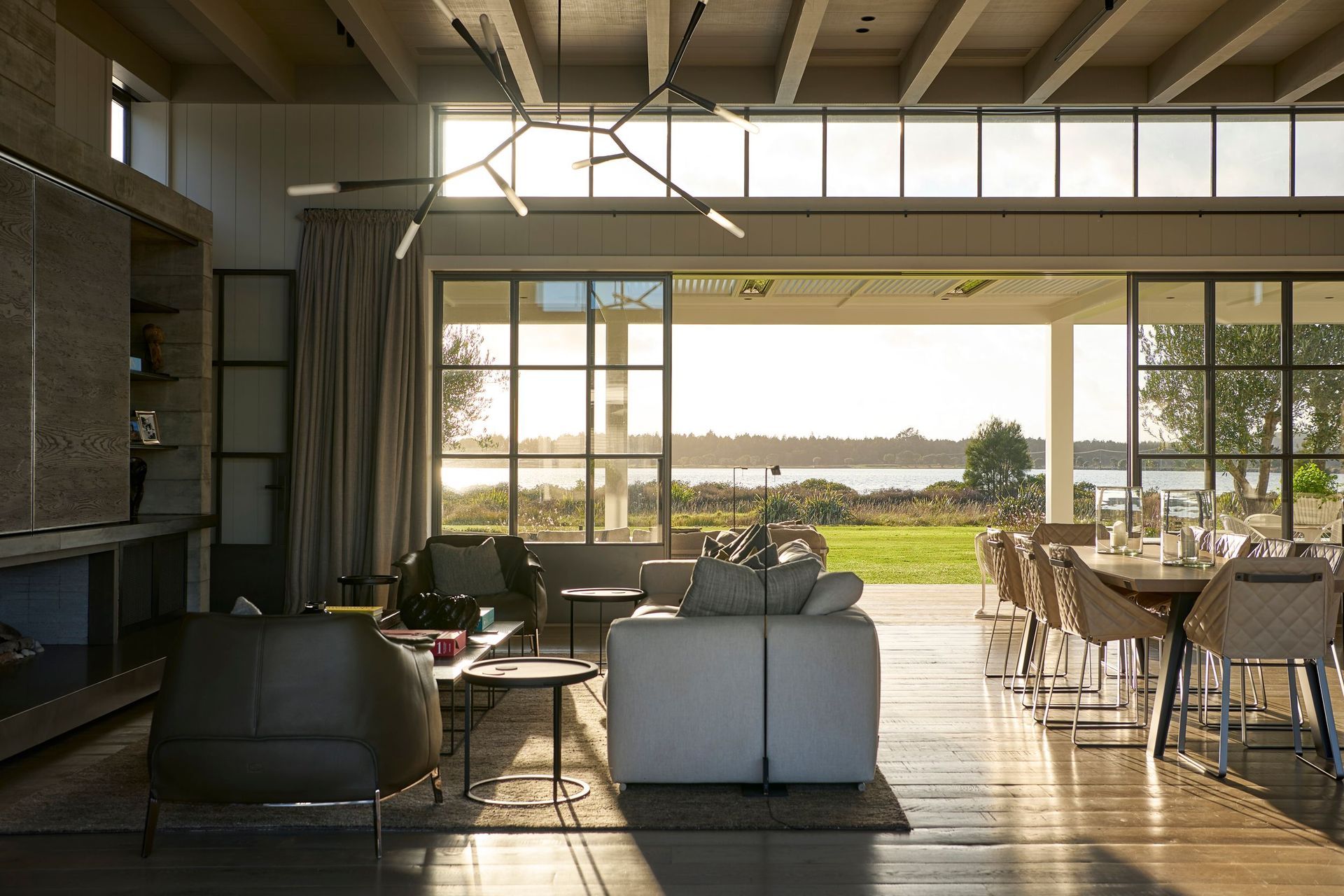
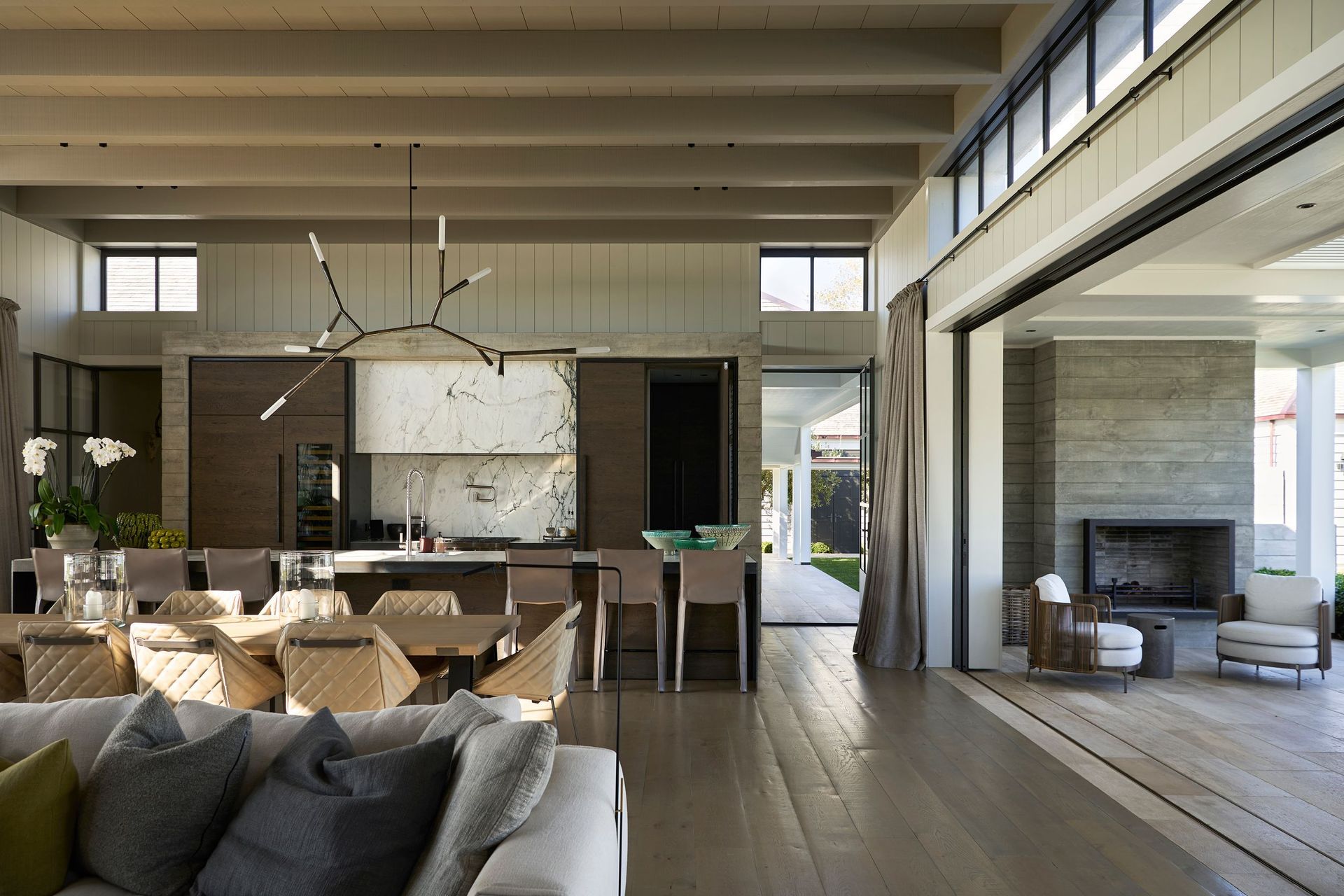
Internally, the layout is calm and architecturally legible, centred around a generous living space that anchors the home. This room opens eastward toward the estuary and extends west into the courtyard, reinforcing the project’s spatial logic of connection and permeability. Secondary rooms circulate around this core, with clear sightlines maintained throughout.
“There are well-articulated viewplanes from the courtyard through to the east and back through to the west,” says Christian, “so you’re always aware of the views and logical sight lines to the outside and the immediate landscape.”
The interior materiality continues the design language established outside. Hardwood timber floors, painted and textured timber linings, board form concrete mass elements and logically articulated ceiling finishes create a palette that is tactile yet restrained. The materials are not overly dressed; instead, they are intended to age gracefully, lending the spaces a sense of endurance and ease.
“It’s classic, but it's quite contemporary in how some of the elements are refined. There's not too much floss to the detailing. It was intended to be contemporary, but also enduring, and layered in true elements that have worked for generations.”
Despite a substantial programme (including guest accommodation, wellness spaces, storage and utility buildings), the project’s success lies in its intimacy.
“The buildings really resonate delightfully around the courtyard and the scale we were able to work with is not excessive,” says Christian. “It's intimate and human and that assists with being able to relax in what is a very special setting.”
A coastal rural homestead ensemble in a crisp classic vein. Program broken into discrete forms by function arranged around a walled sheltered landscaped courtyard. Apertures provide view and orientation through the buildings to the ever changing estuary, and the surrounding geography.

Project team
Christian Anderson

LH Construction

Jen Pack
Suzanne Turley
Mike Wilson
Member
Like this Project?
Hire Christian Anderson Architects
The products behind the project
Fifteen products specified into this build from eight suppliers, verified ArchiPro members. Tap through to specifications, suppliers and lead times.


Professionals used in
this project
The practices and trades credited on this project.









More projects from
Christian Anderson Architects
Other work by Christian Anderson Architects, across every category they build in.


More in
Single House
Everything else in Single House, from every practice on ArchiPro.


Next Project
Keep scrolling