People often choose table lamps last. Once the bed, sofa or desk is in place, you add a lamp to provide light where you need it. Yet unlike recessed lighting or a concealed LED, it remains visible throughout the day.
Compared with larger design decisions, a table lamp is also relatively accessible. It can be introduced without reworking a room, moved between surfaces and changed as tastes or needs evolve. That flexibility makes it a practical place to be more adventurous with form.
A table lamp can give an empty sideboard a focal point, introduce a new material beside a bed or bring height and character to a quiet corner. When the form has been considered as carefully as the light, the lamp continues to contribute even when it is switched off.
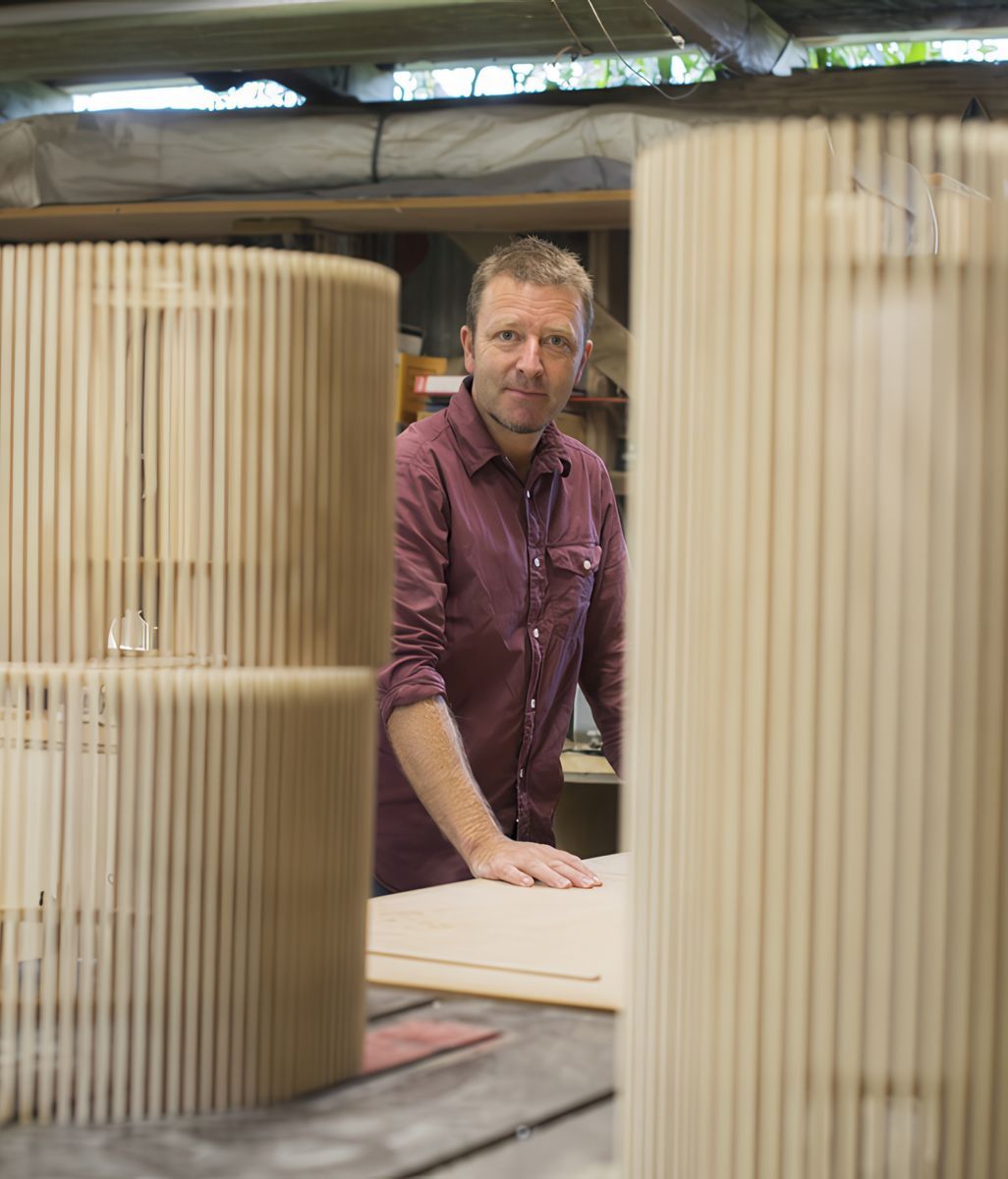
TheNest Table Lamp from Social Light begins with material. Designed and handcrafted by Robert Gordon, its rounded ceramic body is made using recycled clay and finished with a reactive glaze. Natural variations in the surface give the lamp the tactile presence of a handmade object rather than something produced to look perfectly uniform.
There is no conventional separation between a decorative base and a shade. Instead, the light appears to sit within the ceramic form, casting a soft glow above and below it when illuminated. During the day, its broad silhouette and textured surface allow it to hold its place among books, artwork and other objects without needing to be switched on.
Ceramic takes on a more vibrant personality in the Dancer Collection from Cult Design. Created by Coco Flip in collaboration with Melbourne ceramicist Belinda Wiltshire, the collection draws on geometry, pattern and movement. Each piece is wheel-thrown and hand-finished, with black iron oxide stripes creating contrast against the warm brown clay.
Within the collection, the table lamps feel closely connected to pottery and sculpture. Their striped surfaces emphasise their rounded forms, giving the eye something to follow around the object. The pattern introduces character without relying on a complicated silhouette, showing how surface and shape can work together to make a small light feel more animated.
Where the Nest and Dancer lamps use solid ceramic forms, ECC’s Flar Table Lamp makes the light source part of what is seen. Designed by Patrick Norguet for Lodes, Flar takes inspiration from traditional storm lanterns, which enclosed a flame within a protective glass tube.
Here, that familiar idea is expanded into a billowing blown-glass shade supported by a steel base that opens like a flower. The tinted glass gives the lamp colour and volume during the day, while the visible filament creates an effect closer to a contemporary candle after dark. Its generous scale also allows it to occupy the space beside a sofa or on a low console with the presence normally expected from a floor lamp.
A distinctive table lamp doesn’t always need an expressive outline or bold pattern. The Beran Table Lamp from LightCo takes a more restrained approach, bringing together brass and translucent alabaster in a study of proportion and balance.
The interest comes from the relationship between those materials. Brass gives the lamp structure and definition, while the alabaster introduces natural variation and a softer visual weight. Switched off, the stone has its own colour and veining. Once illuminated, its translucency becomes part of the atmosphere, allowing the character of the material to change with the light.
The Ambience Table Lamp from Good Form offers another kind of recognisable form. Designed by Svend Aage Holm-Sørensen in 1954, its wide, asymmetric metal shade sits above a slender stand and compact base. The arrangement feels playful, but each part still has a clear function.
Its silhouette demonstrates that a lamp does not need to be oversized to become a feature. The angle and proportion of the shade are enough to distinguish it on a desk, side table or console. Available in subdued colours, it can either introduce a contained point of colour or sit more quietly within an existing palette.
These five lamps don’t share a single style. Some are tactile and grounded, while others are transparent, patterned or precisely balanced. What connects them is the attention given to the object before the light is turned on.
That can be a useful way to approach table lighting. Alongside brightness and placement, it’s worth considering what the lamp brings to the room during daylight: the material it introduces, the outline it creates and how it relates to the furniture around it.
Whether it is intended for a bedside, desk, side table or console, explore table lamps and the wider range of lighting on ArchiPro. Discover the brands and suppliers behind lights that bring both atmosphere and character to a room.