

At Pukehina, a beloved family bach is replaced with a new holiday home that holds fast to memory, craftsmanship and the rituals of beach life.
Designing for memory: Replacing the family bach
There is a particular kind of weight that comes with removing a family bach. It’s not just timber and lino that gets dismantled, but the evidence of summers past: new babies asleep in borrowed rooms, grandparents in deck chairs, parents who once carried everything in from the car and are now no longer with us. At Pukehina, the original bach sat lightly on a finger of sand between ocean and estuary, modest, weathered and deeply loved. The question for Herriot Melhuish O’Neill Architects (HMOA) was not simply how to replace it, but whether it was possible to carry its memories forward. Can a new house retain that haphazard, imperfect bach quality that forces us to adapt and make do or does newness inevitably overwrite history?
Initially, the clients hoped to avoid that question altogether. The brief was to alter and extend the existing bach, to somehow stretch it to accommodate a growing, multi-generational family.
“There were lots and lots of different schemes,” recalls HMOA’s Duval O’Neill, who worked with Tauranga architect Jenny Duck on the project. “Many of them necessitated keeping the original bach then doing a little adjoining tower-like structure.”
But the more the team tested options, the clearer it became that the architectural moves required to make the old structure work would ultimately erase what the family loved about it.
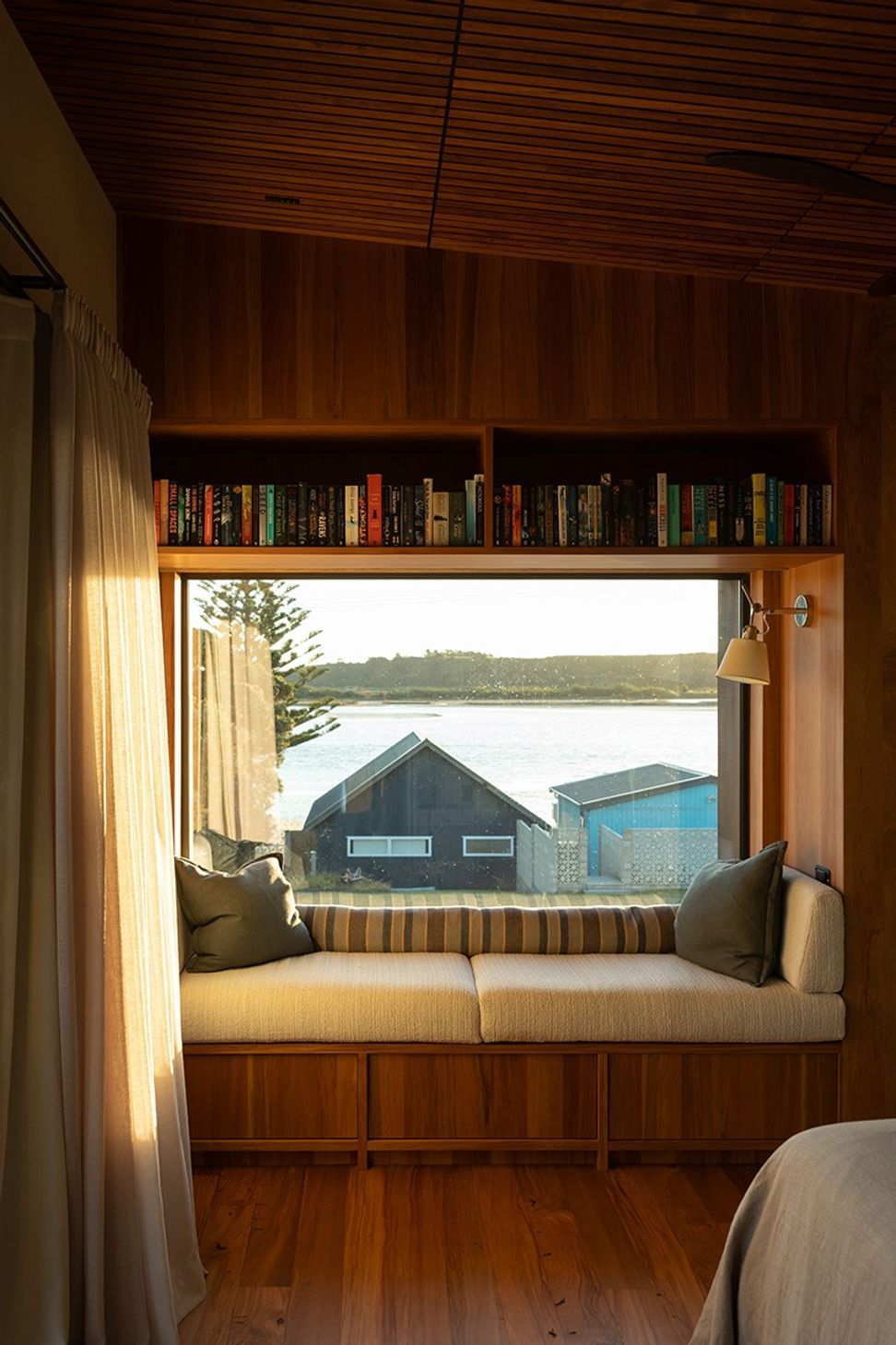
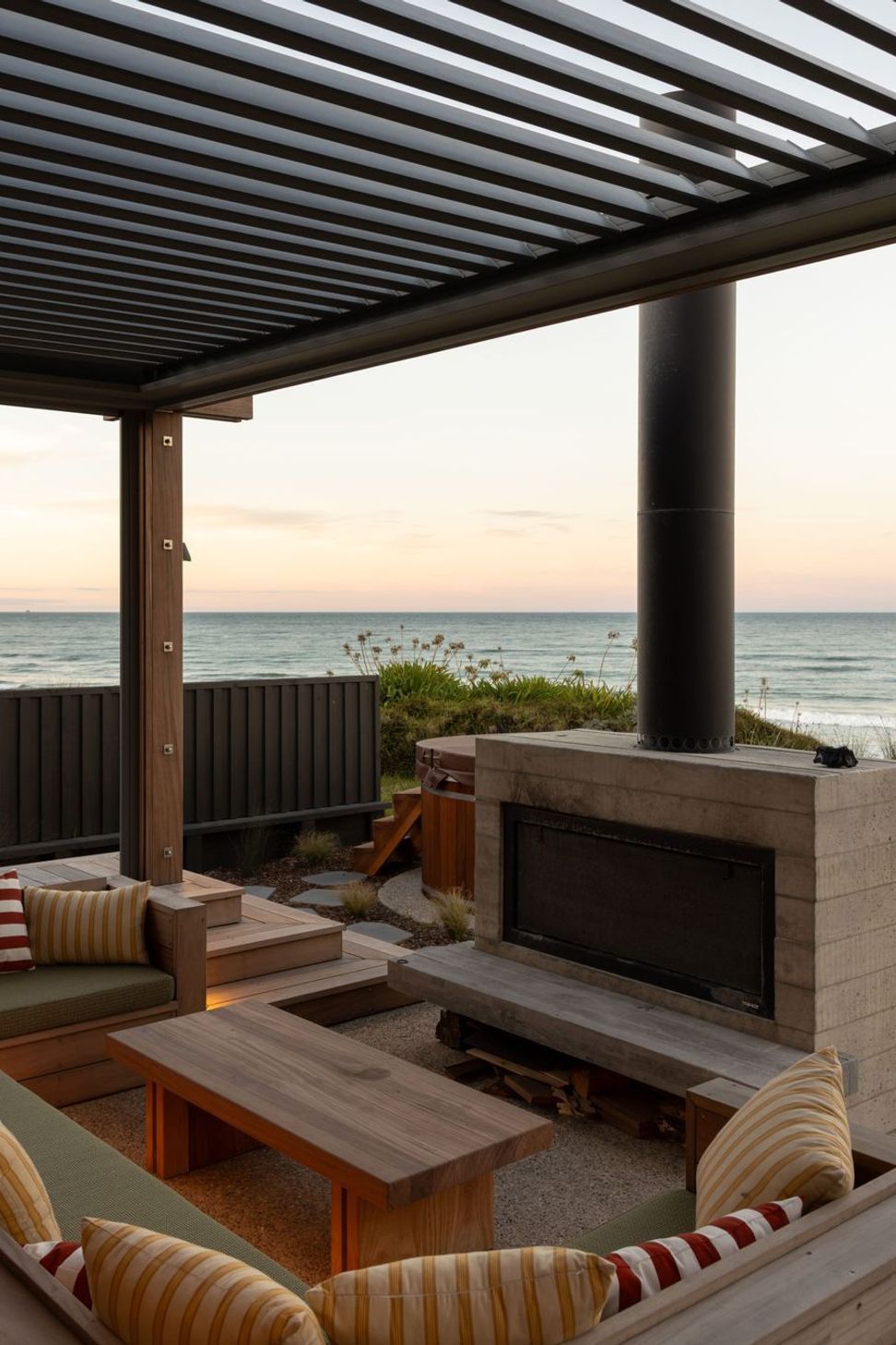
What remained non-negotiable was the memory embedded in the site, and the desire to live in a way that still felt informal, outdoors-focused and collective. Additional sleeping spaces, a master suite, generous living areas and extensive sheltered outdoor zones were all essential, as was the ability to engage with two very different views: the raw openness of the ocean on one side, and the calmer estuary on the other.
Rather than replicating the old bach literally, HMOA focused on its spirit. The new house is composed as a collection of simple forms, scaled to feel familiar rather than imposing. The original garage for the boat with its upstairs guest accommodation remains in place, while the main house is singular in scale, with additional parking created underneath, and an upstairs master suite. This sense of restraint and intimacy is reinforced through an exceptional level of craft and detail, a contemporary echo of the careful, tactile materiality that characterised the original building.
“It’s highly detailed, but it doesn’t feel over the top,” shares O’Neill. “It's got a familiarity to it as if it's been there for a long time.”
Pukehina is an uncompromising environment, exposed to wind, salt and sun. The architectural response is both pragmatic and expressive. A concrete block base anchors the building into the sandhill, while a lightweight timber-framed structure above satisfies council requirements for future removability in the event of sea-level rise.
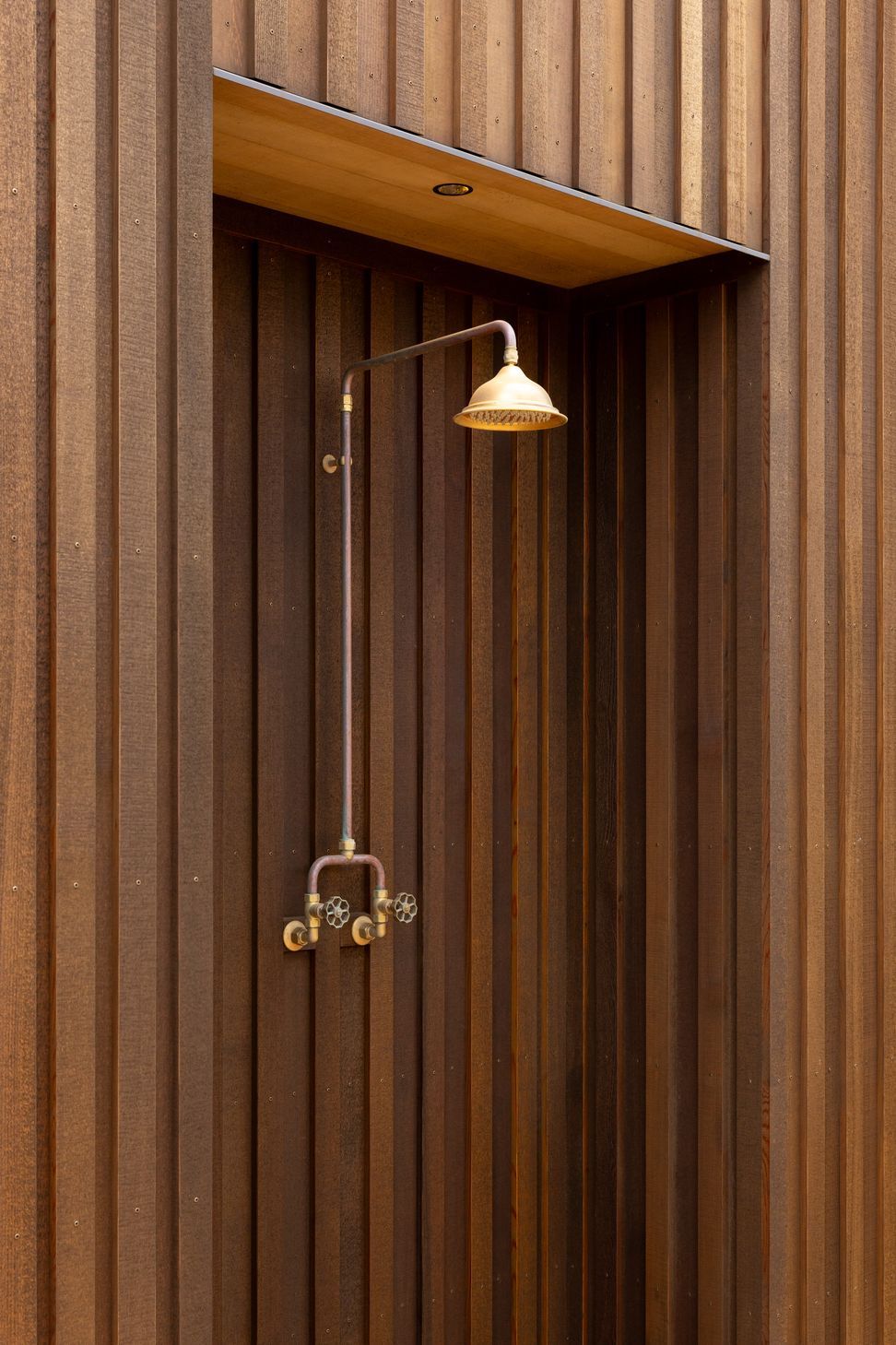
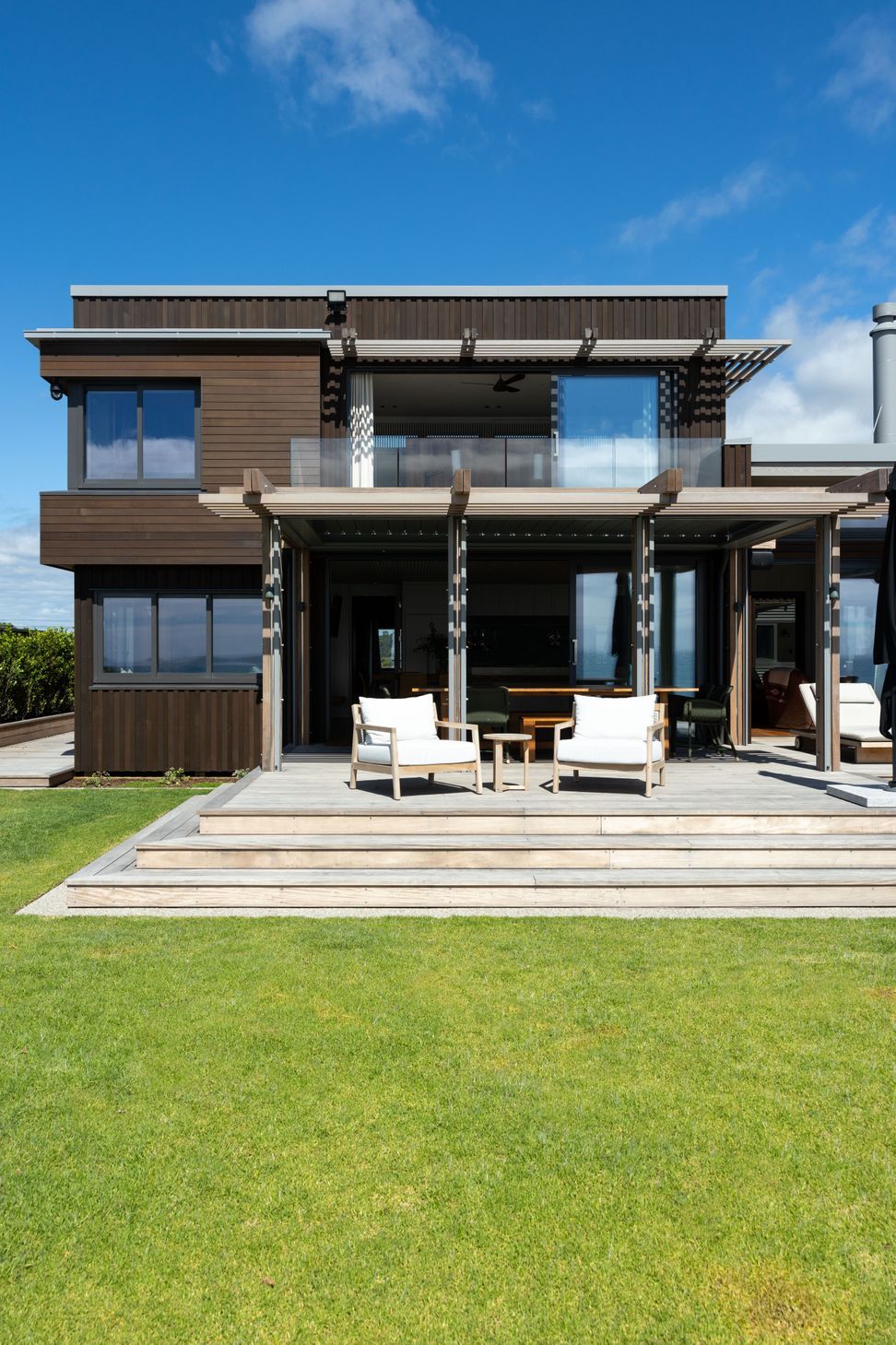
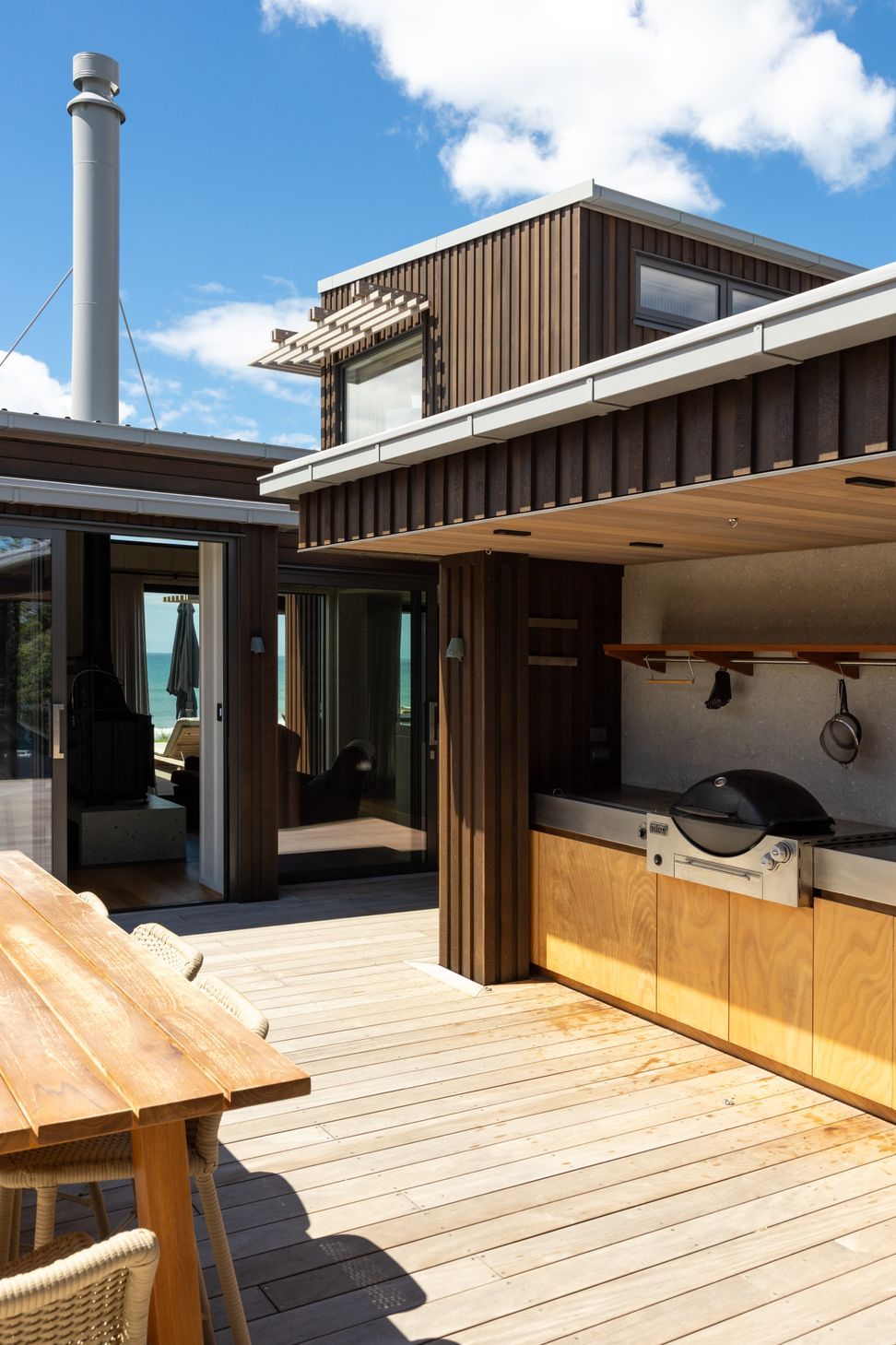
Clad primarily in Western Red Cedar, the exterior is heavily articulated rather than flat. Multiple profiles and deep recesses create shadow, depth and protection, with generous overhangs wherever possible.
“Cedar is traditionally a lightweight material, but the idea was to create something a lot more modelled using a number of profiles to articulate that facade,” shares O’Neill. “Because it is exposed to the elements, we were also acutely aware that wherever we could create an overhang to a window, it was going to be a good idea.”
The result is a façade that will weather gracefully, gaining character rather than losing it.
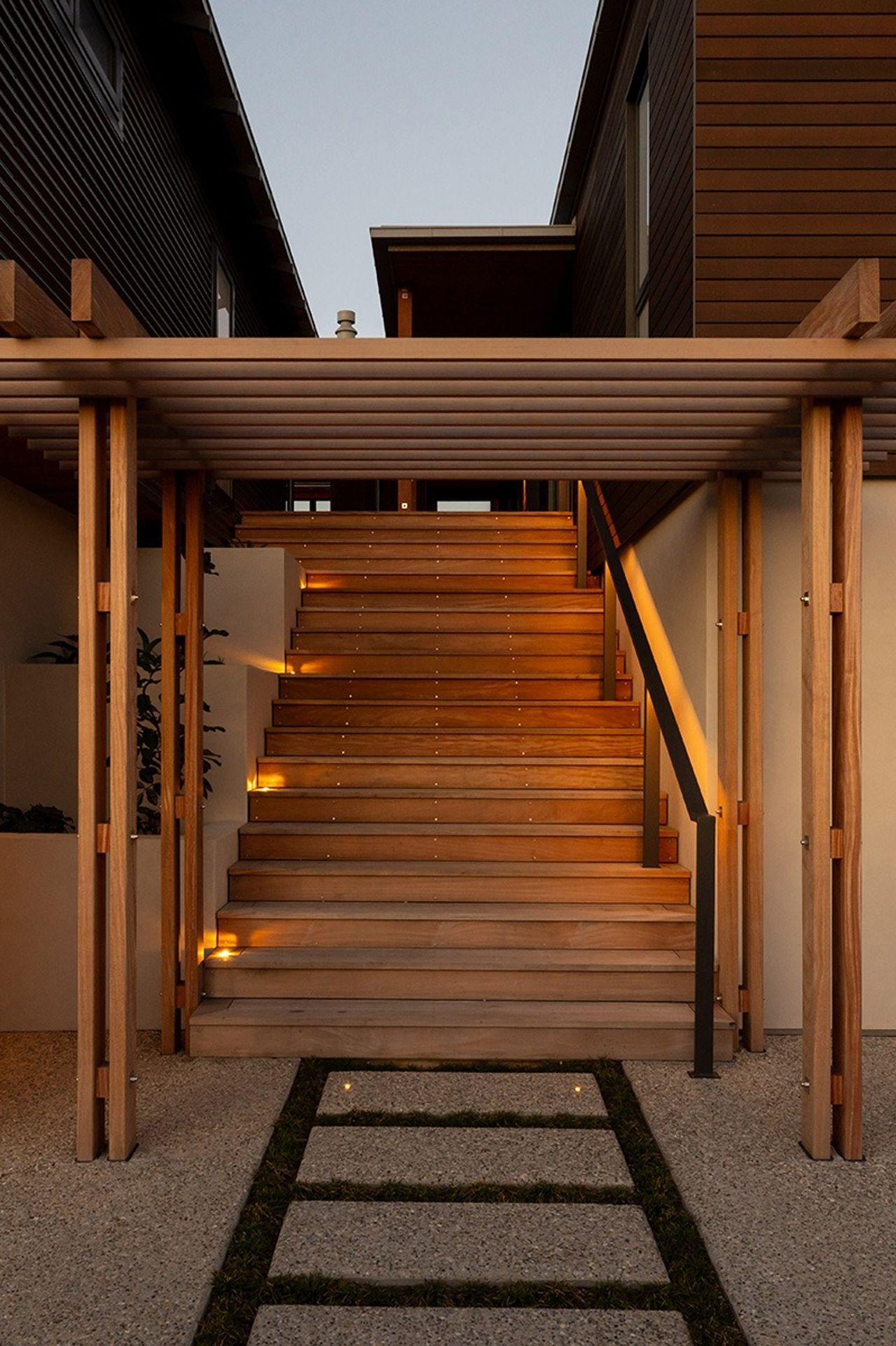
This attention to materiality and form is evident in the arrival sequence, which, true to its bach roots, is informal and unfolds gradually.
“There’s no actual entry vestibule,” O’Neill explains. “When you arrive at the forecourt, you can't really see anything and once you ascend the stairs, you can either break out into the courtyard to your left or you can directly proceed into the main living space where your eye is taken straight out to the ocean view beyond.”
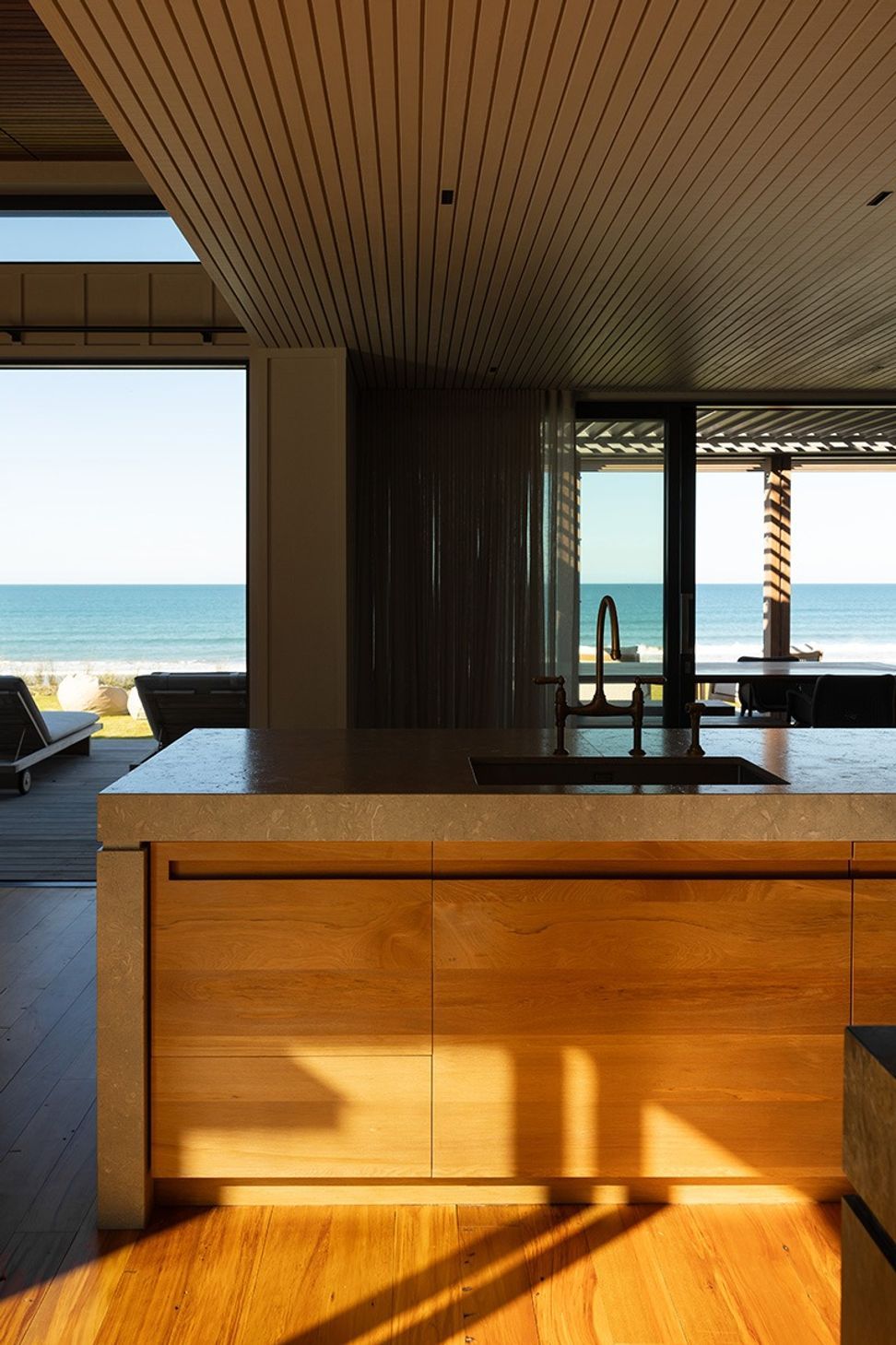
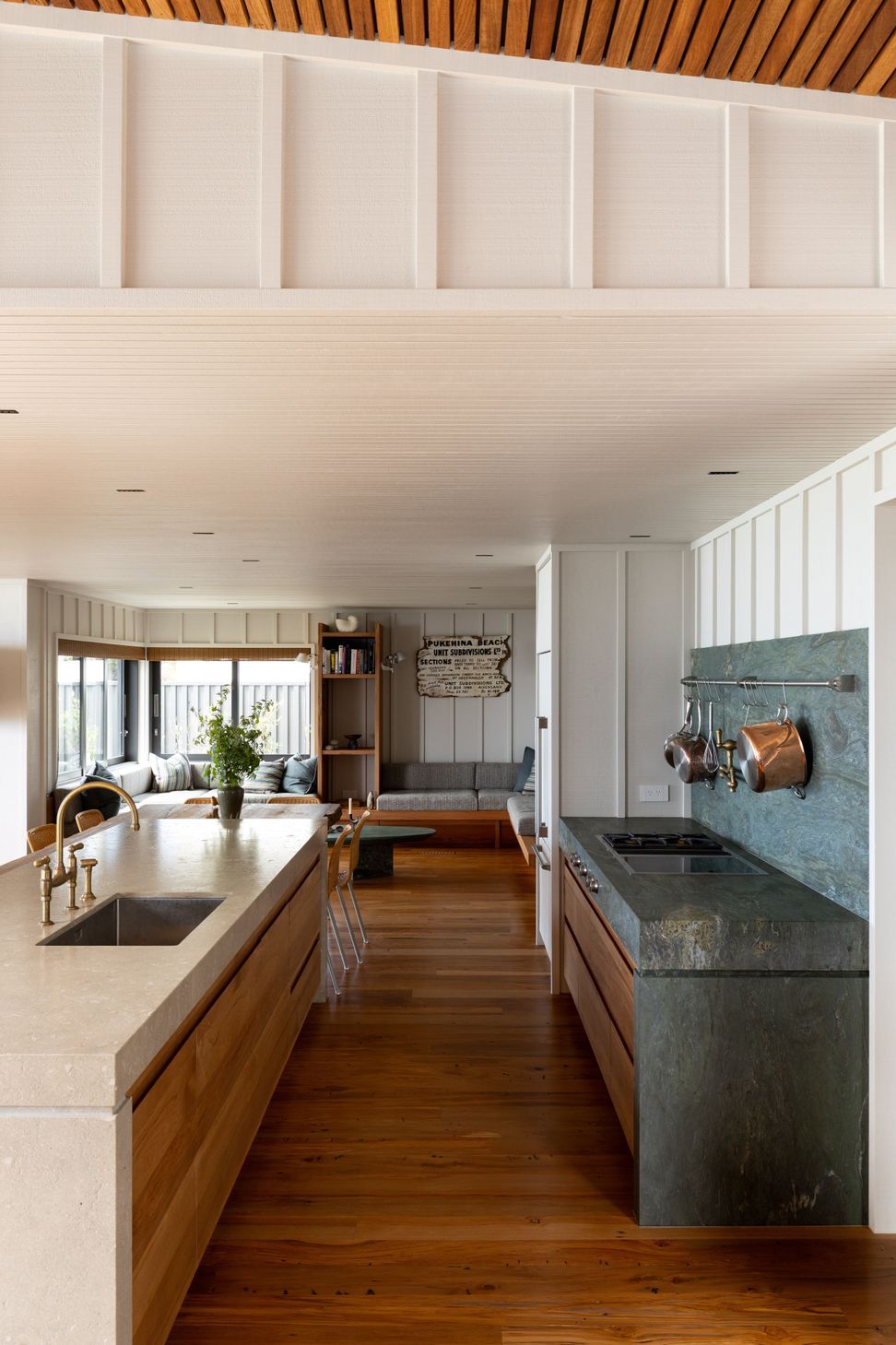
The interior layout is straightforward and generous, prioritising ease and connection with outdoor living spaces over hierarchy. Two living rooms sit either side of a central kitchen, and a connecting corridor leads past bedrooms and bathrooms, designed to accommodate extended family with minimal fuss. An outdoor shower and surfboard zone sit naturally adjacent to this route, reinforcing the beach-first way the house is used.
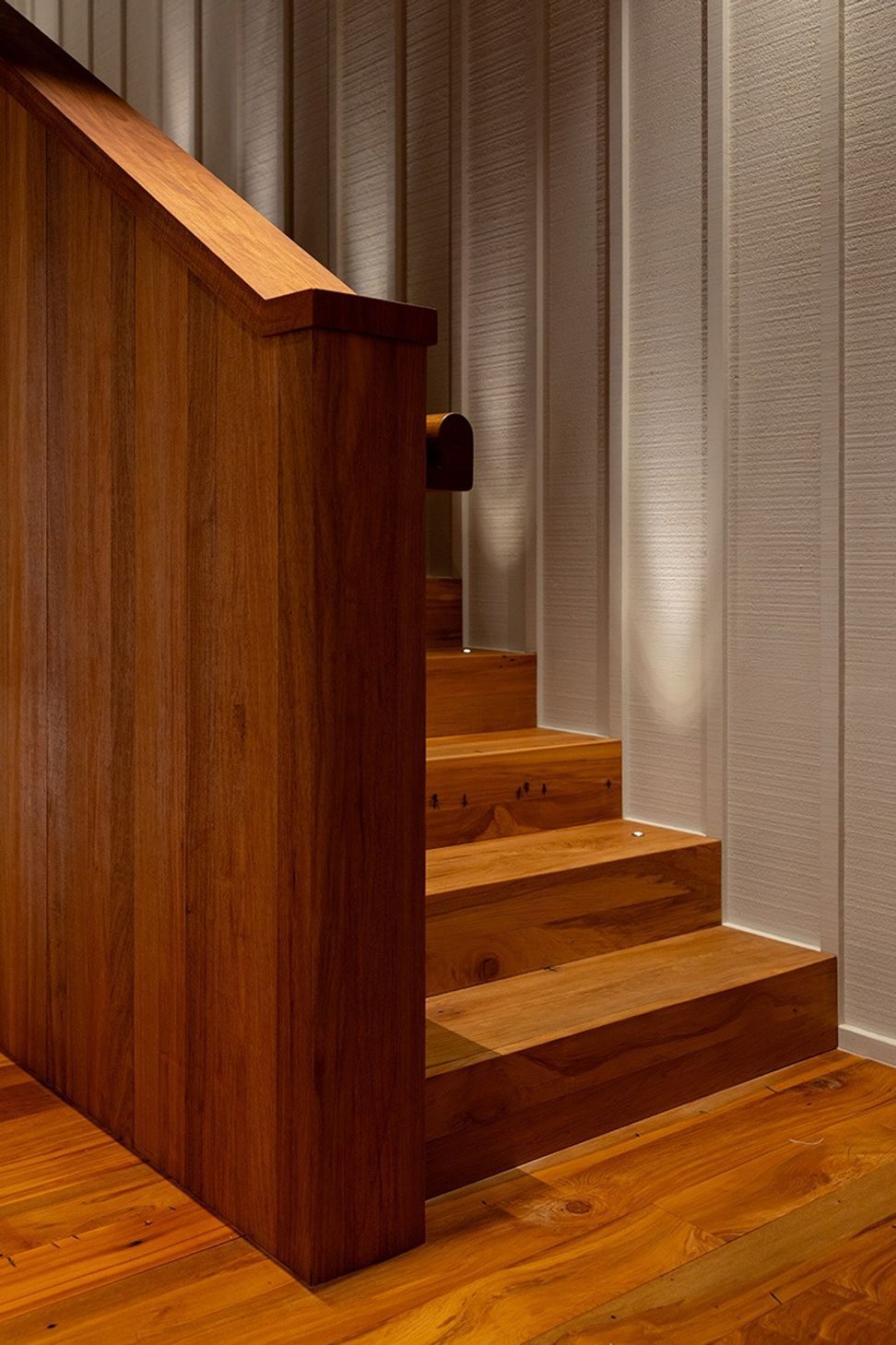
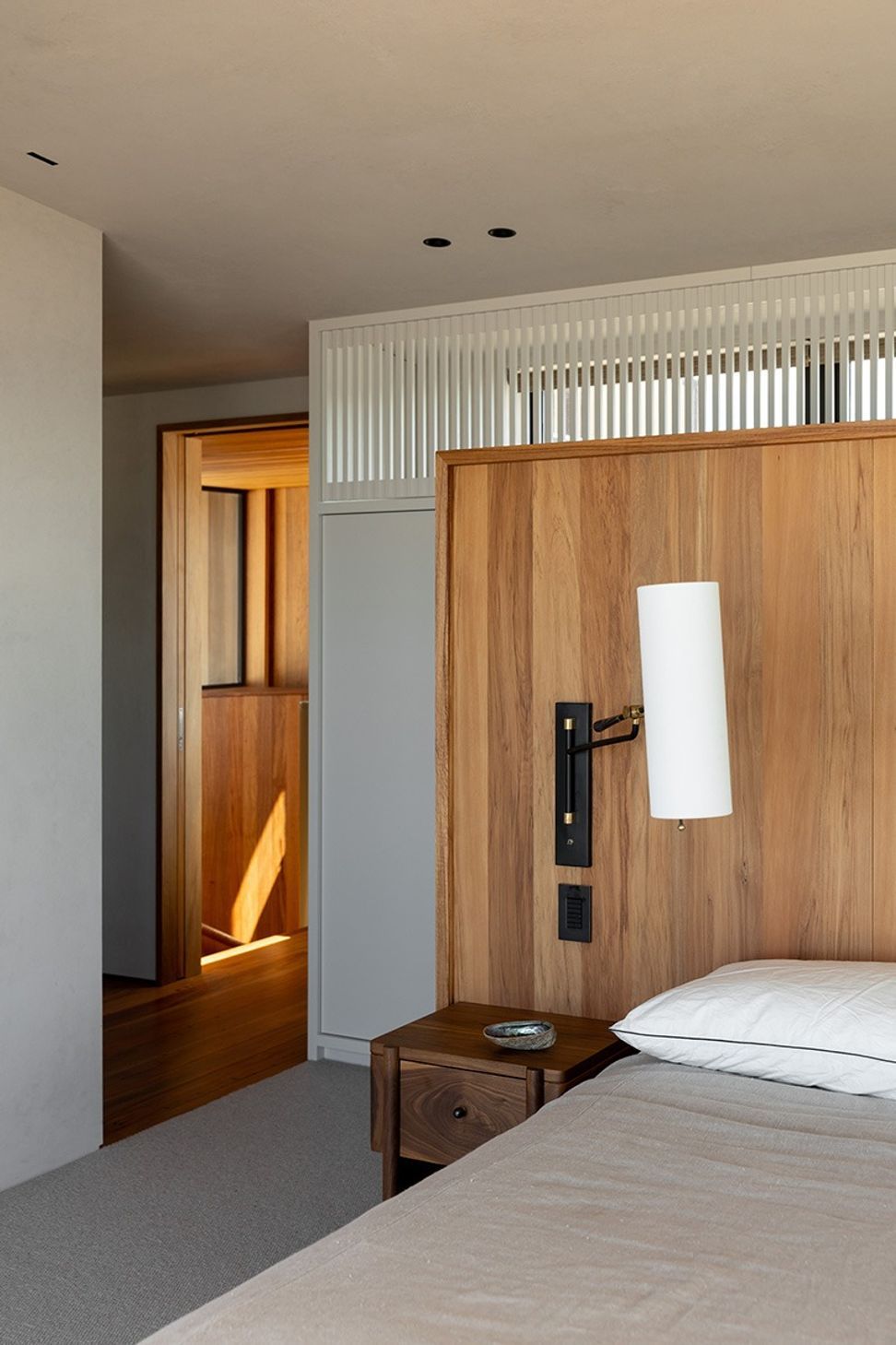
Above, a compact tower accessed by a spiral stair contains the main bedroom suite, offering a quiet retreat and privacy without separation.
“There's a real focus on the ability to have lots of people,” says O’Neill, “but also if the homeowners were to just go there by themselves for the weekend, it doesn't feel too expansive—it always just feels like a bach.”
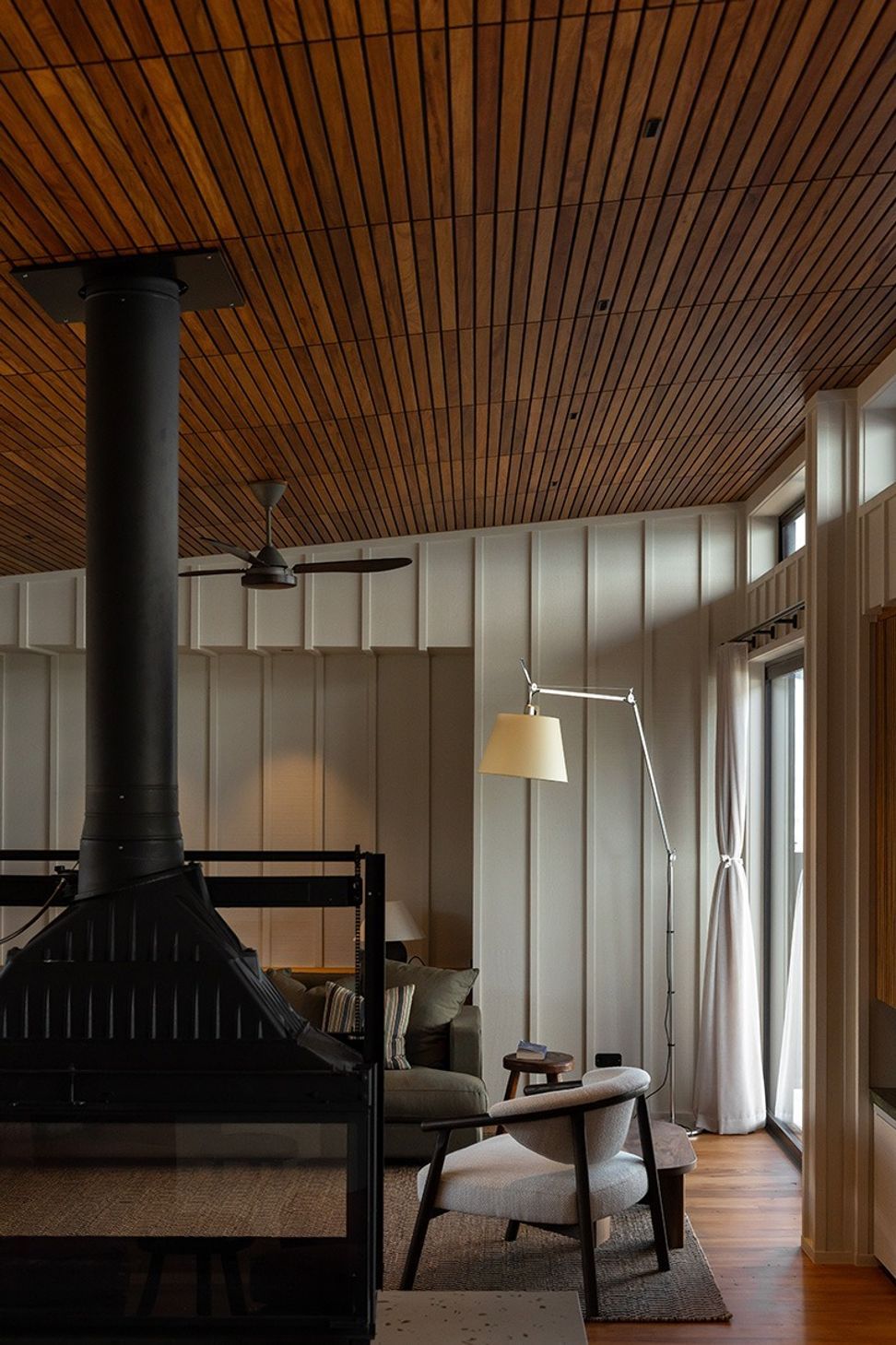
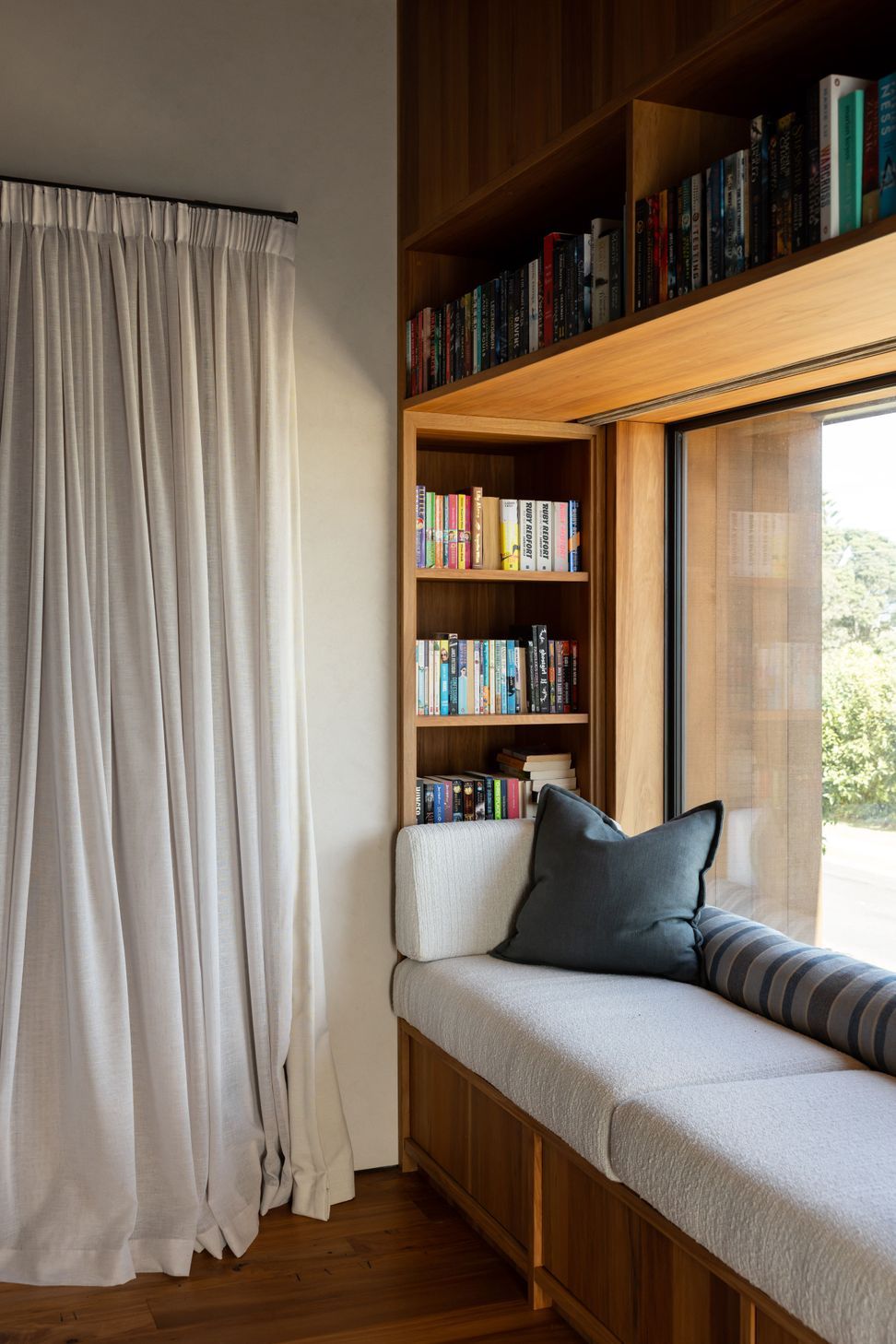
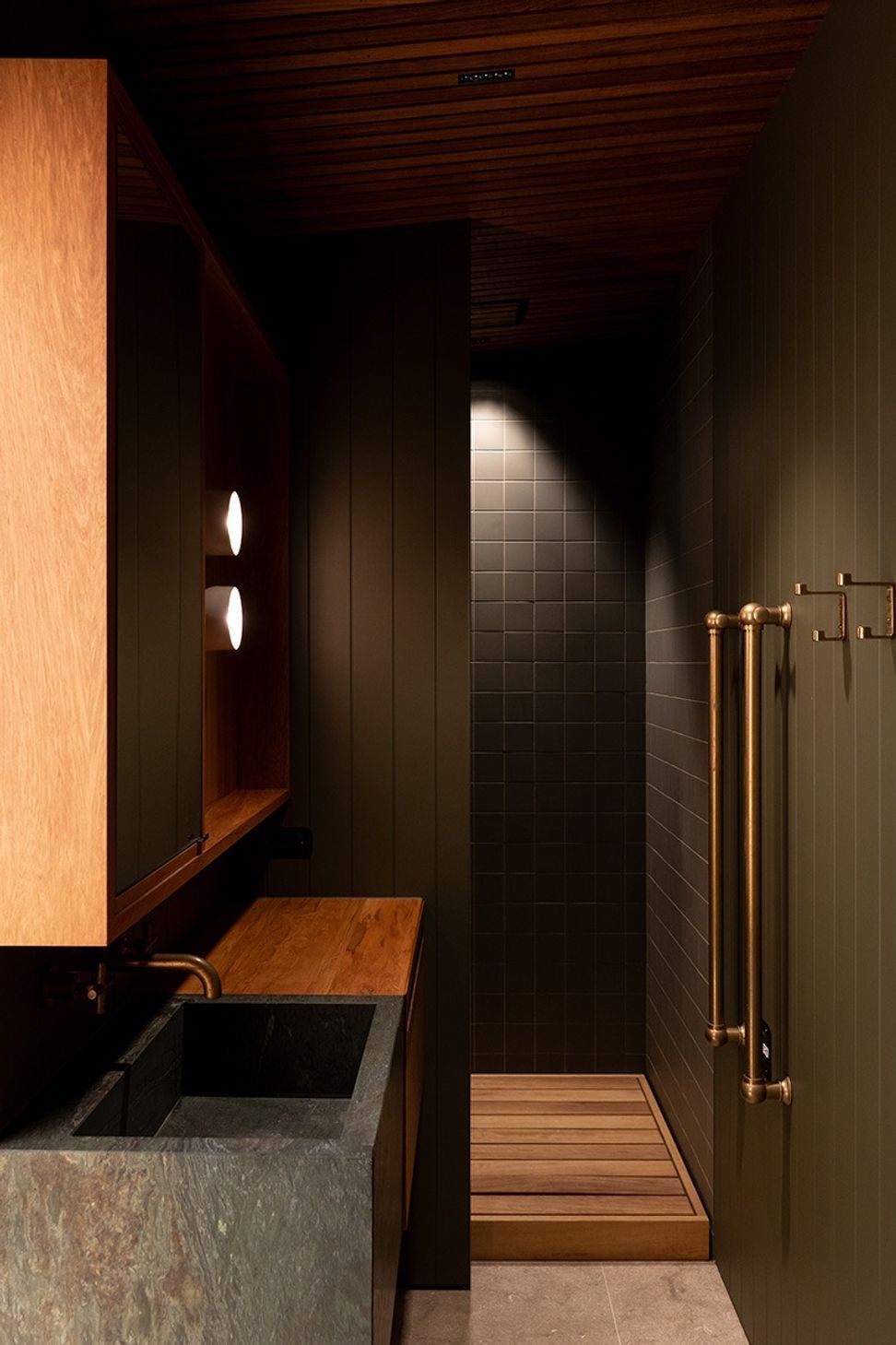
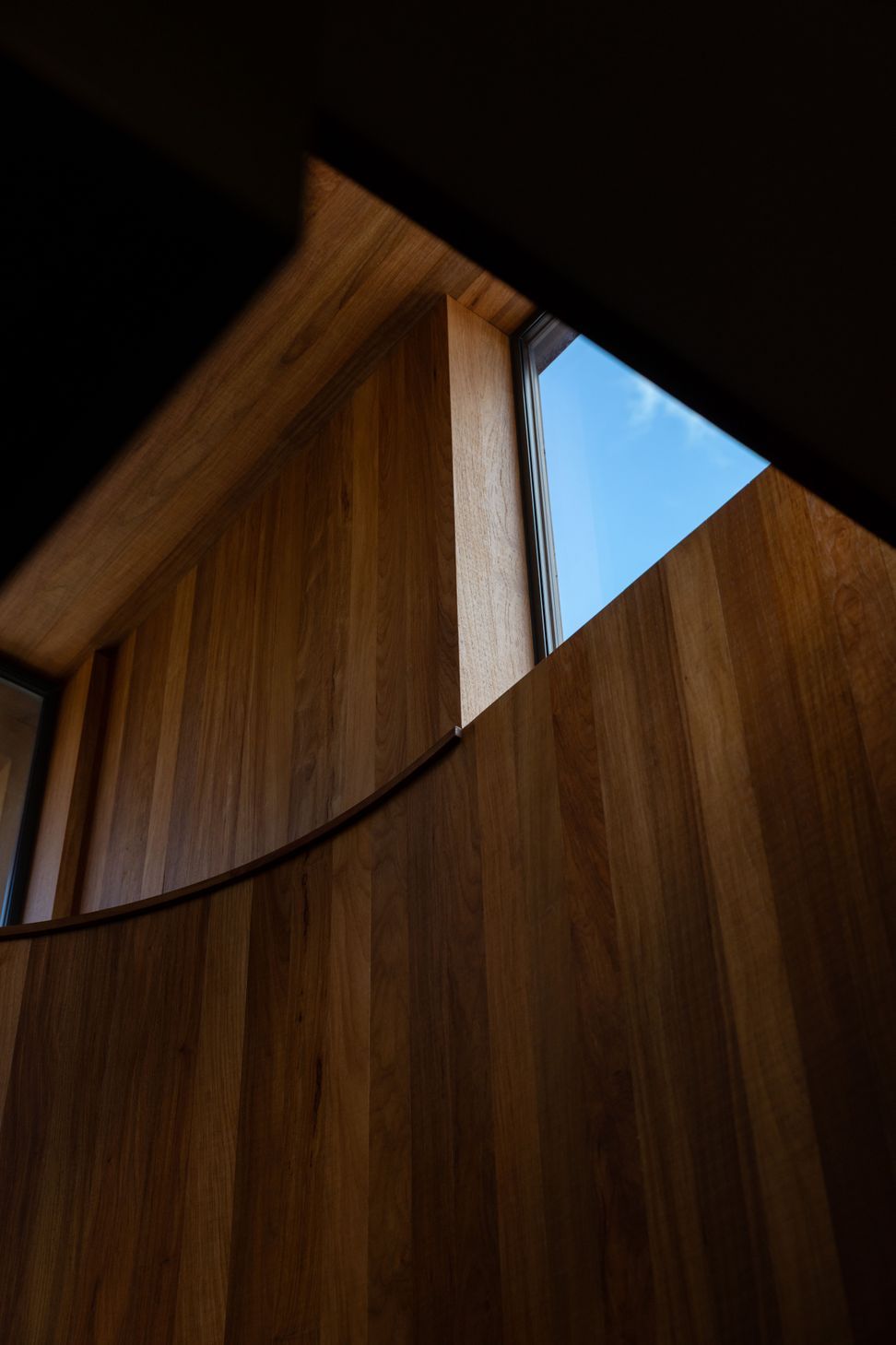
In the interiors, the level of craft deepens. Timber ceilings, board-and-batten walls, brass detailing and recycled materials lend the interiors an immediate sense of nostalgia.
“It’s certainly got this instant historical feel to it,” O’Neill reflects. He credits this to interior designer Annique Heesen from Gezellig Interiors, who ensured that every material and junction reinforced the same narrative of warmth, durability and continuity that defines the exterior of the home.
For O’Neill, the success of the house lies in its craftsmanship, the clients’ deep involvement in the choices made throughout the process, and the seamless collaboration between architect, builders Thorne Group, and interior designer. He says the decision to remove the old bach wasn’t taken at all lightly, and the house that now stands in its place is far more than a replacement.
“I think it’s reinforced what was a very heavy decision to remove the existing house, but it feels like they've created a real legacy for the site that's truly anchored in the memory of the old bach.”
Words: Joanna Seton
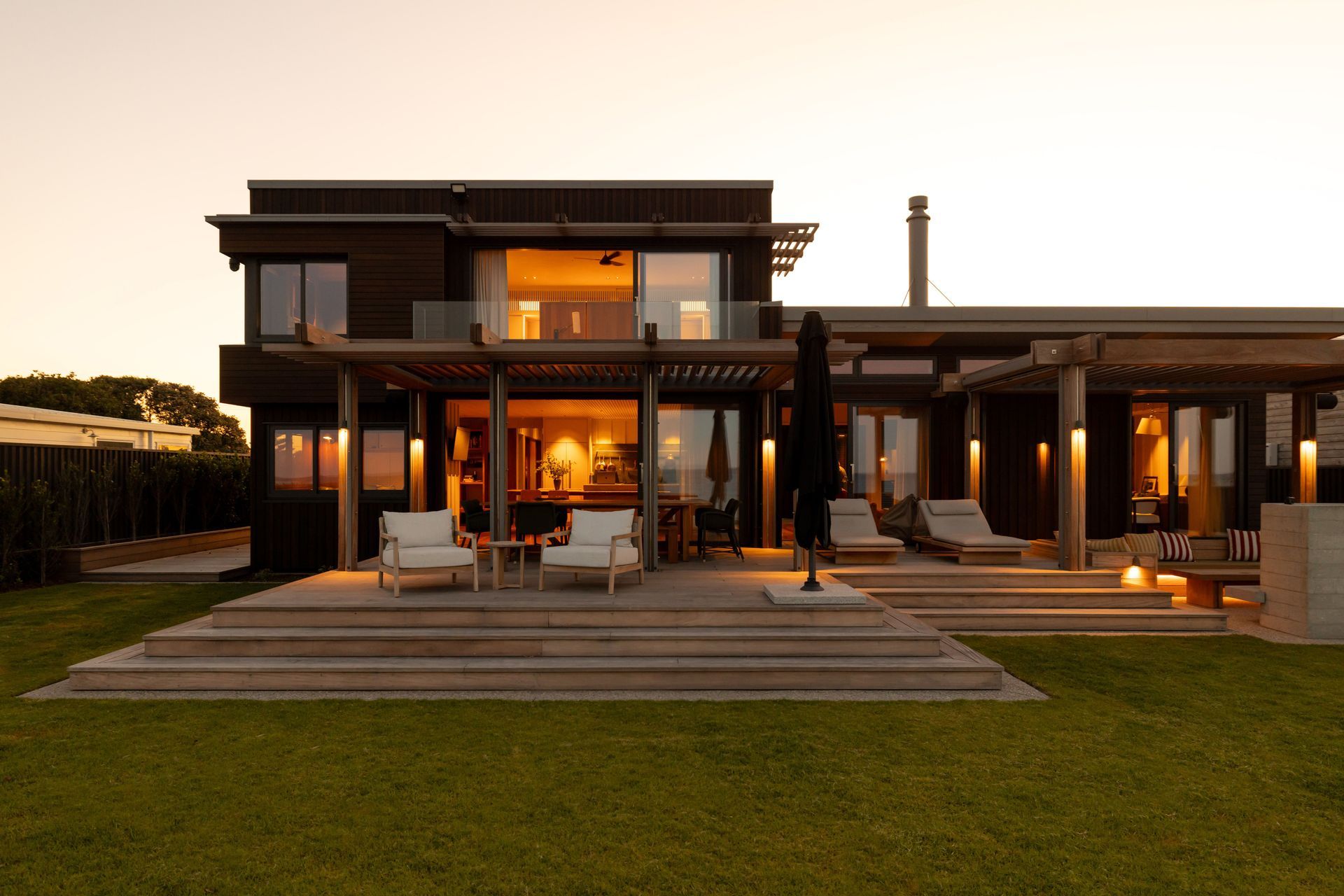
Embracing its stunning seaside location, the project features linked pavilions that create a seamless flow between indoor and outdoor spaces, offering protected outdoor living areas perfect for relaxing and entertaining amidst the beach environment. The design responds thoughtfully to the scale of the site, ensuring the new house complements its surroundings while providing views of the surf and estuary.
An existing garage and studio are reimagined as part of the overall composition but remain distinct from the new buildings, reinforcing the sense of scale on the site and accommodating the wider family, visitors and beach equipment.
A natural palette of oiled cedar in vertical and horizontal profiles anchors the pavilions to the site with timber brise-soleils blurring the transition from inside to out.
The upstairs main bedroom provides a sanctuary from the bustle of activities below and a view of the next surf break.
- Completed
- 2024
- Building style
- Contemporary
Like this Project?
Hire Herriot Melhuish O'Neill Architects Ltd
The products behind the project
Seven products specified into this build from six suppliers, verified ArchiPro members. Tap through to specifications, suppliers and lead times.


Professionals used in
this project
The practices and trades credited on this project.








More projects from
Herriot Melhuish O'Neill Architects Ltd
Other work by Herriot Melhuish O'Neill Architects Ltd, across every category they build in.


More in
Beach House
Everything else in Beach House, from every practice on ArchiPro.


Next Project
Keep scrolling