

Julian Guthrie Architects reinvents a classic Pauanui bach for the 21st century, keeping its concrete skeleton while upgrading its materiality
Working with a 1970s concrete skeleton
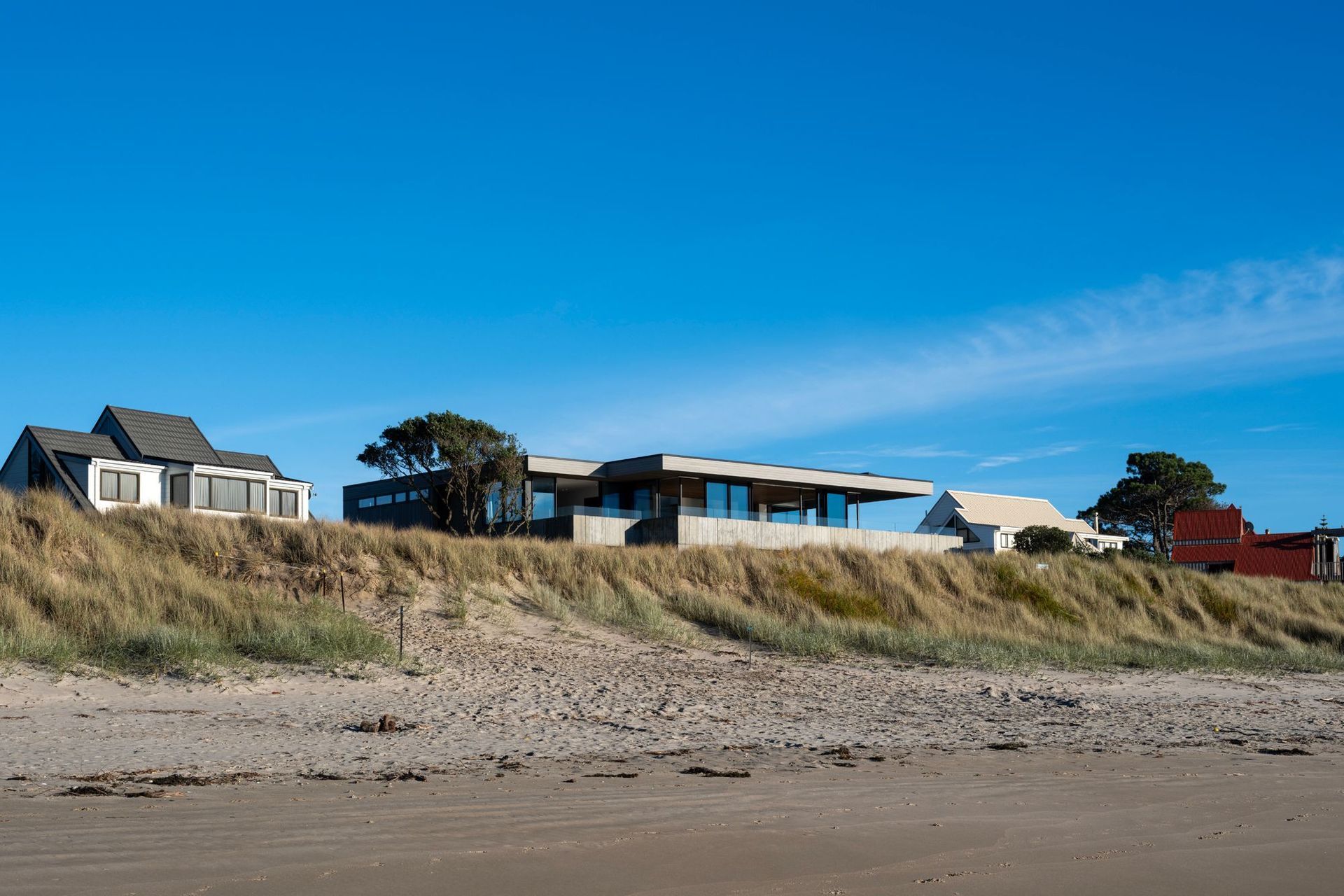
On Pauanui’s wide, dune-edged beachfront, one of the township’s earliest houses has been transformed. Built in the 1970s as a holiday retreat, complete with the improbable luxury of an indoor swimming pool, the home has now been reimagined by Julian Guthrie Architects for a couple whose family had outgrown their small bach nearby. With adult children, partners and grandchildren now part of the summer migration, the owners sought a generous, durable holiday house that could welcome everyone at once.
Yet from the outset, the intention wasn’t to start again but to salvage what could be saved.
“The brief was to keep what we could, which meant we had to analyse the remains of the concrete building to see if it was suitable to reuse,” shares architect Julian Guthrie. “We were able to keep the structure and the upper-floor flooring system and the supporting concrete posts and beams.”
This existing concrete skeleton gave the architects both the discipline and the freedom to re-form the home. The bones remained, but everything around them was reconceived, starting with a dramatic spatial move that would restructure how the house is experienced.
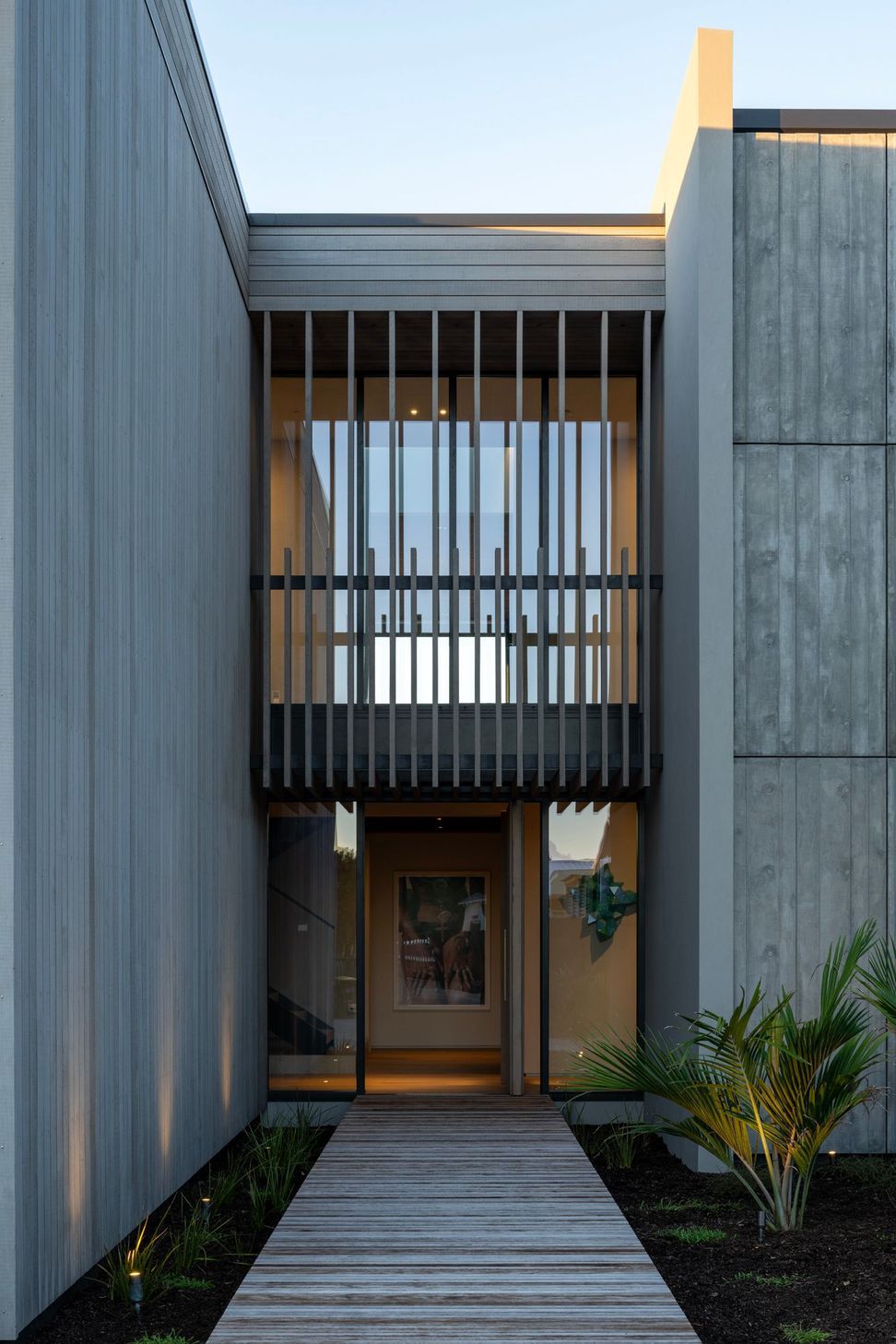
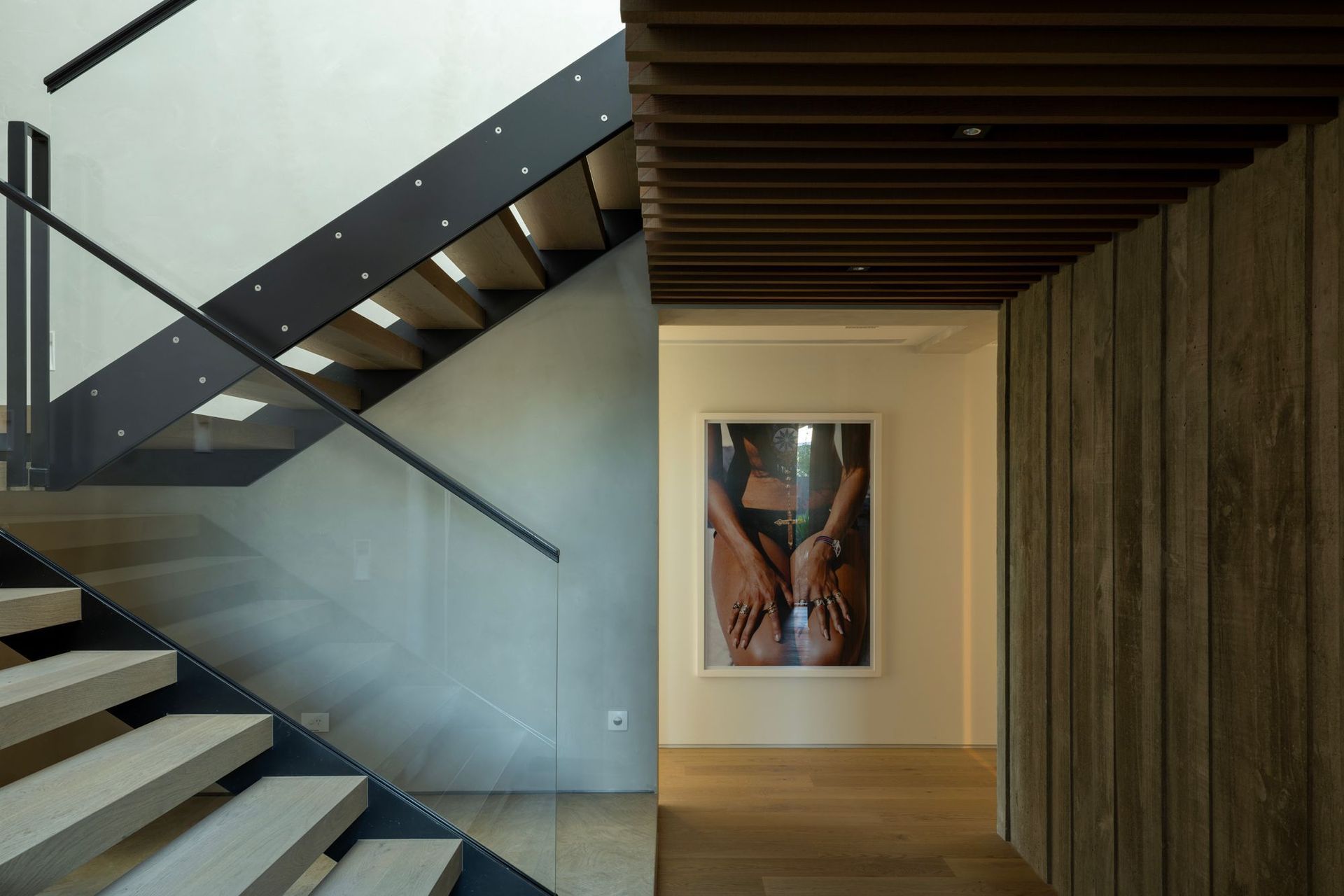
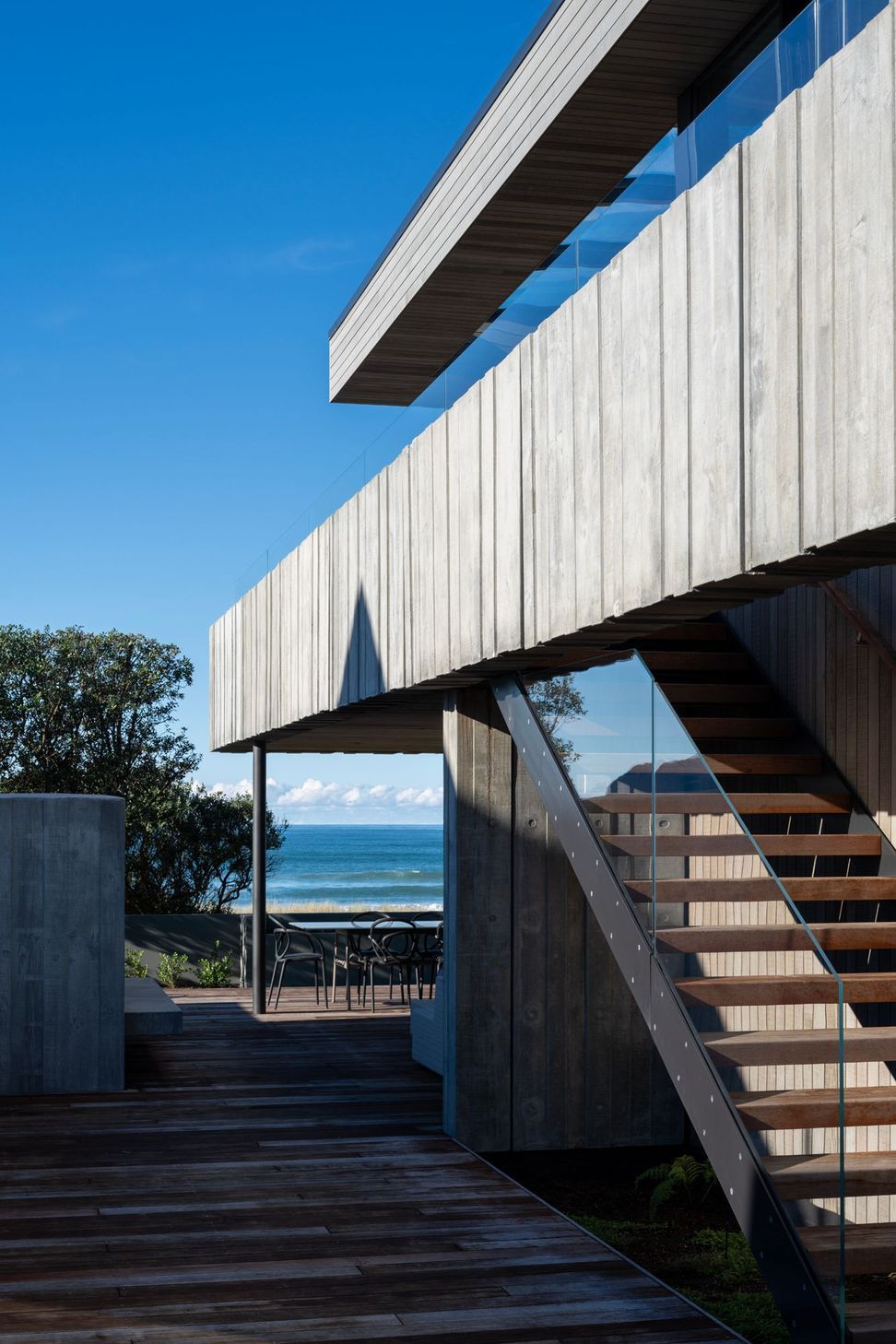
This defining gesture was the insertion of a large, light-filled stairwell cut directly through the middle of the original plan. The team opened a vertical void from ground to roof and crowned it with a generous skylight, turning what had been the darkest part of the house into its luminous heart.
“We were able to bring a lot of natural light right through into the darkest space of the floorplan, which naturally draws visitors upward, leading them into the central living space upstairs,” shares Julian
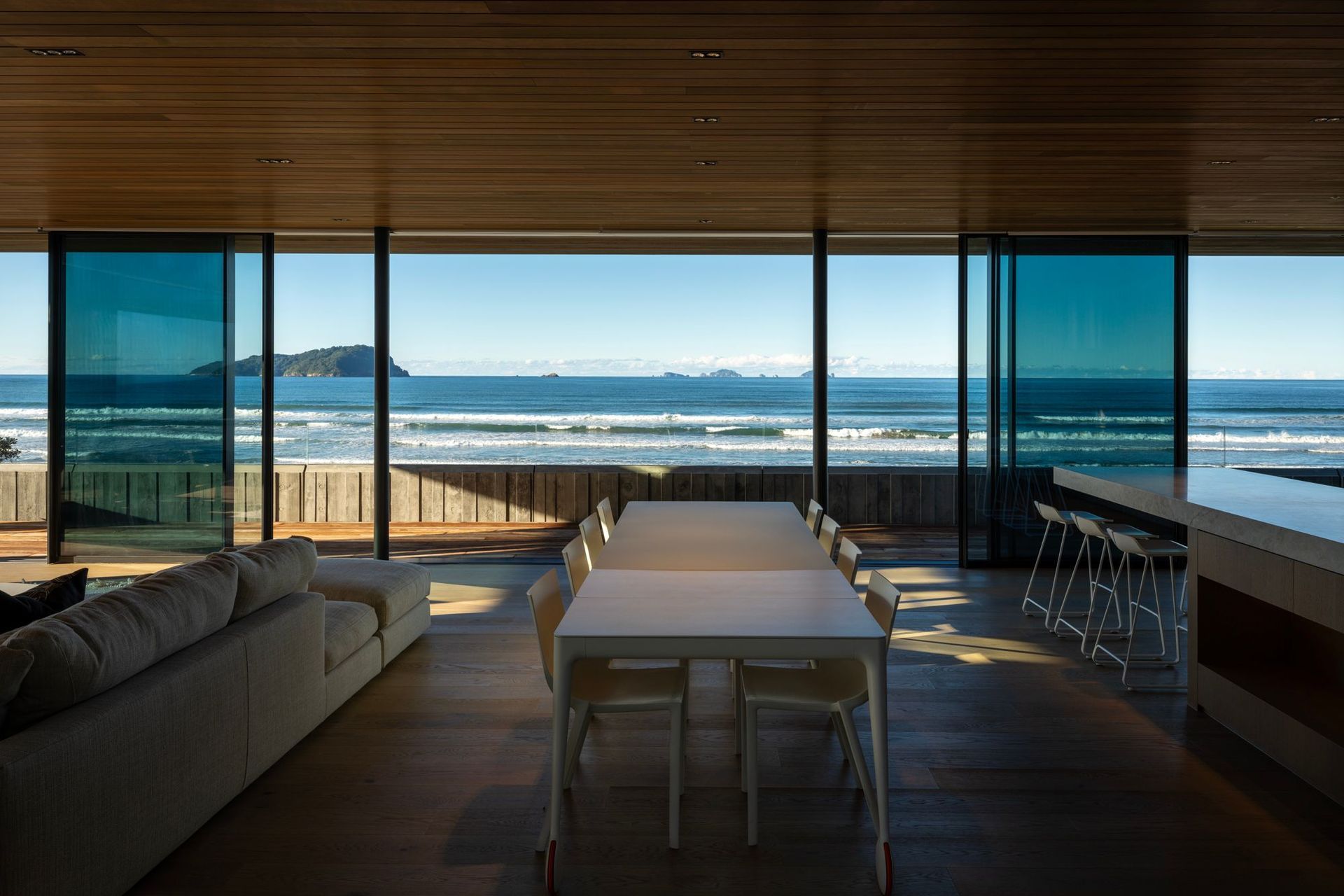
From there, the sweeping panoramic outlook across the reserve to the ocean appears almost theatrically, a stunning moment of arrival designed into the upper level.
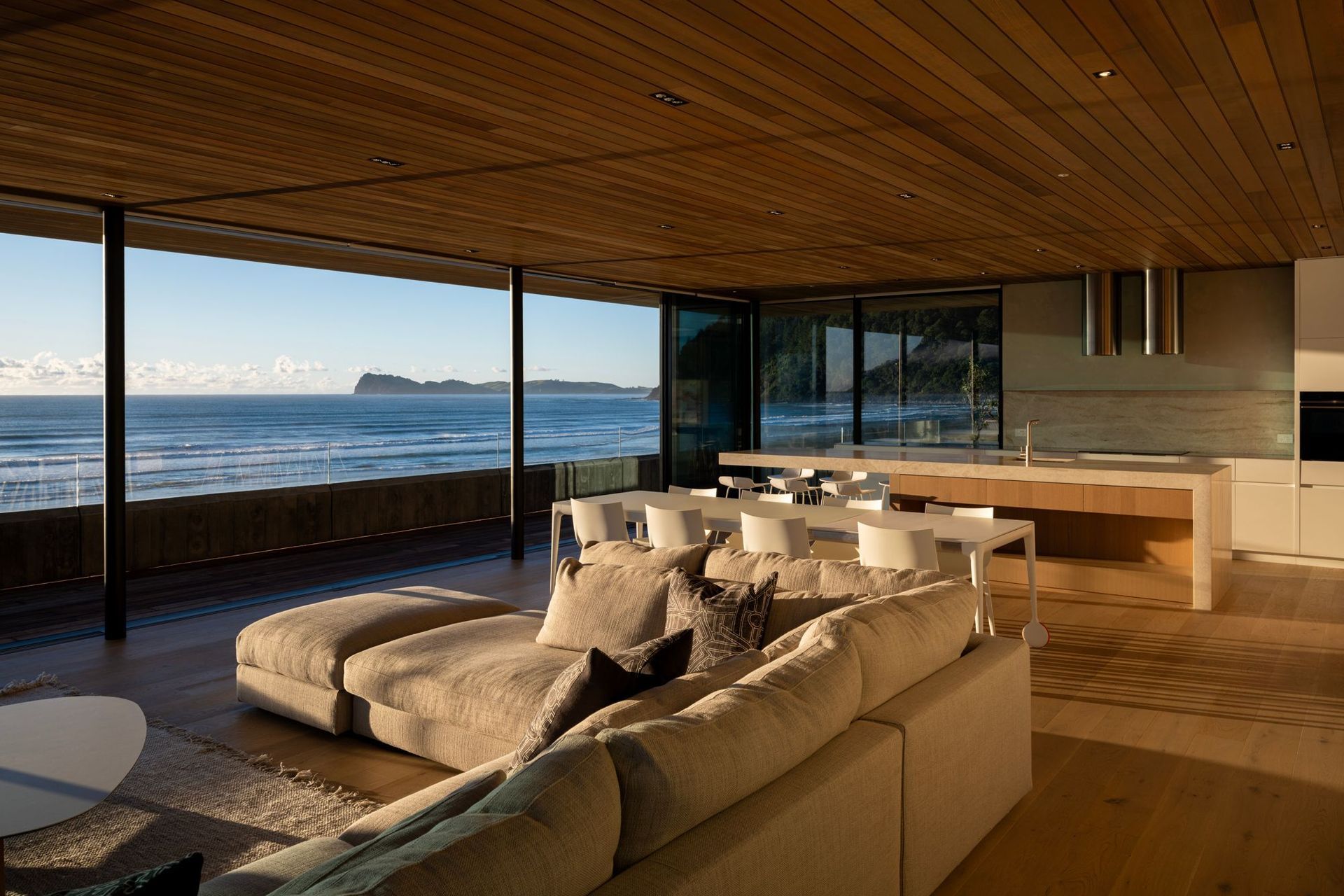
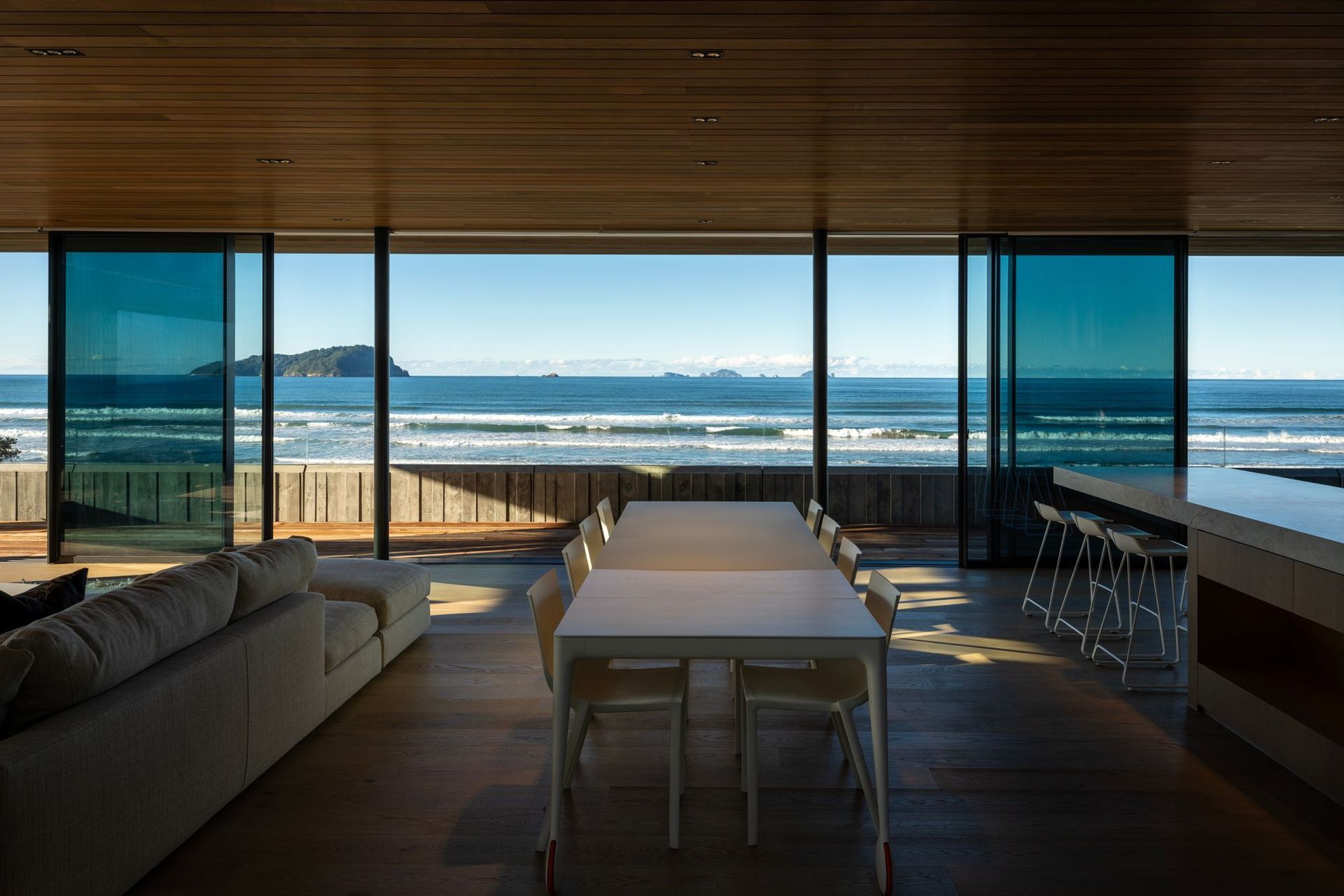
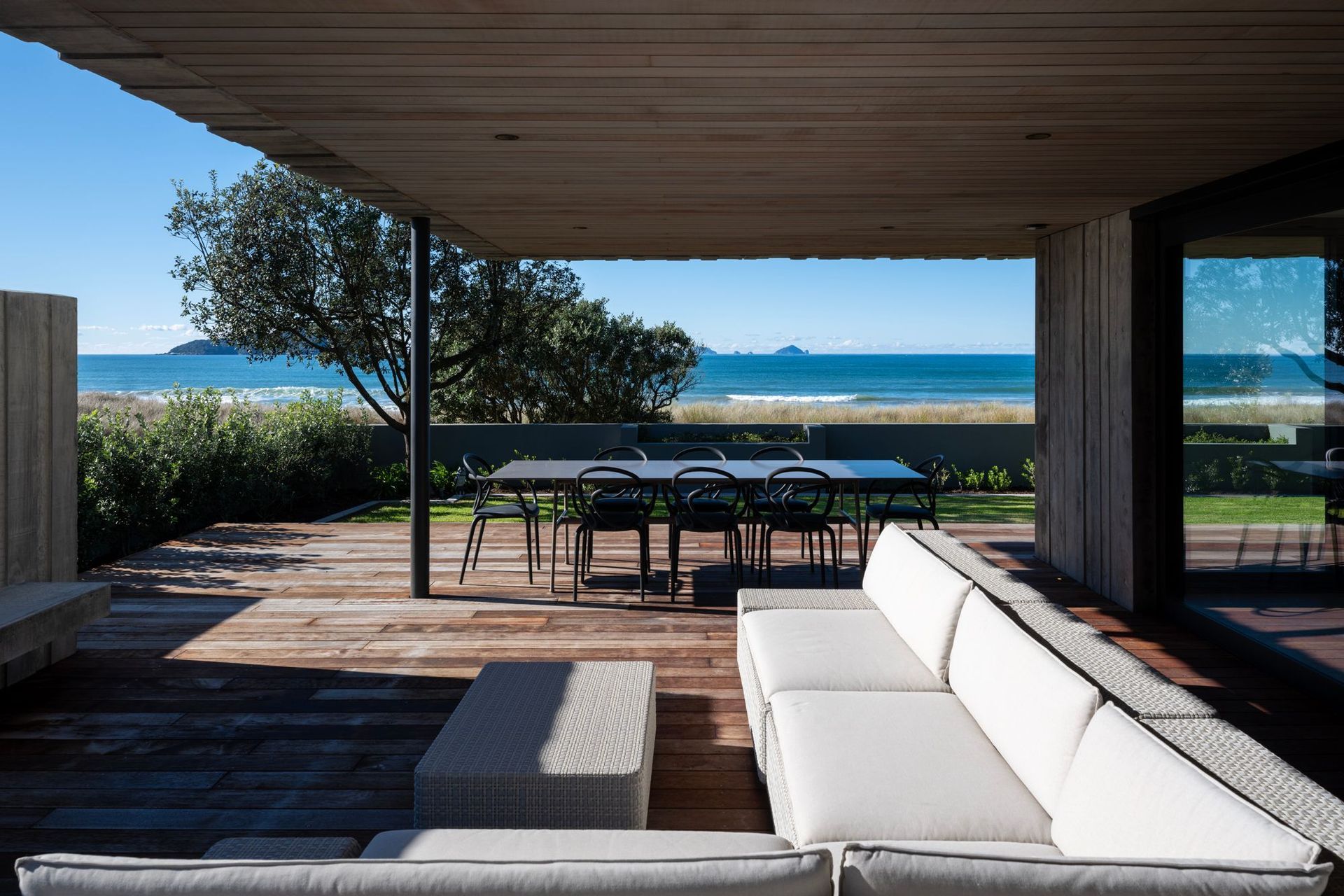
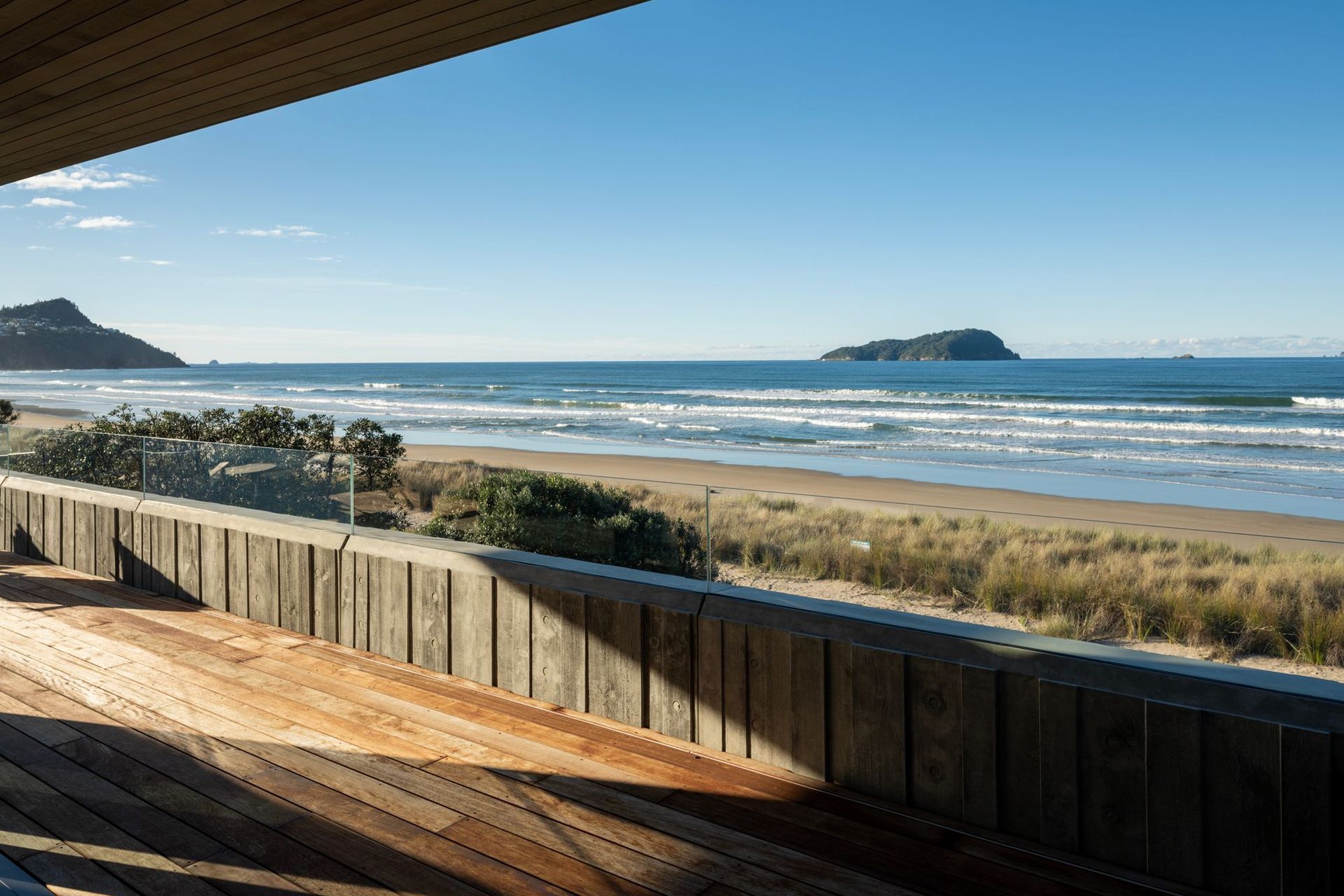
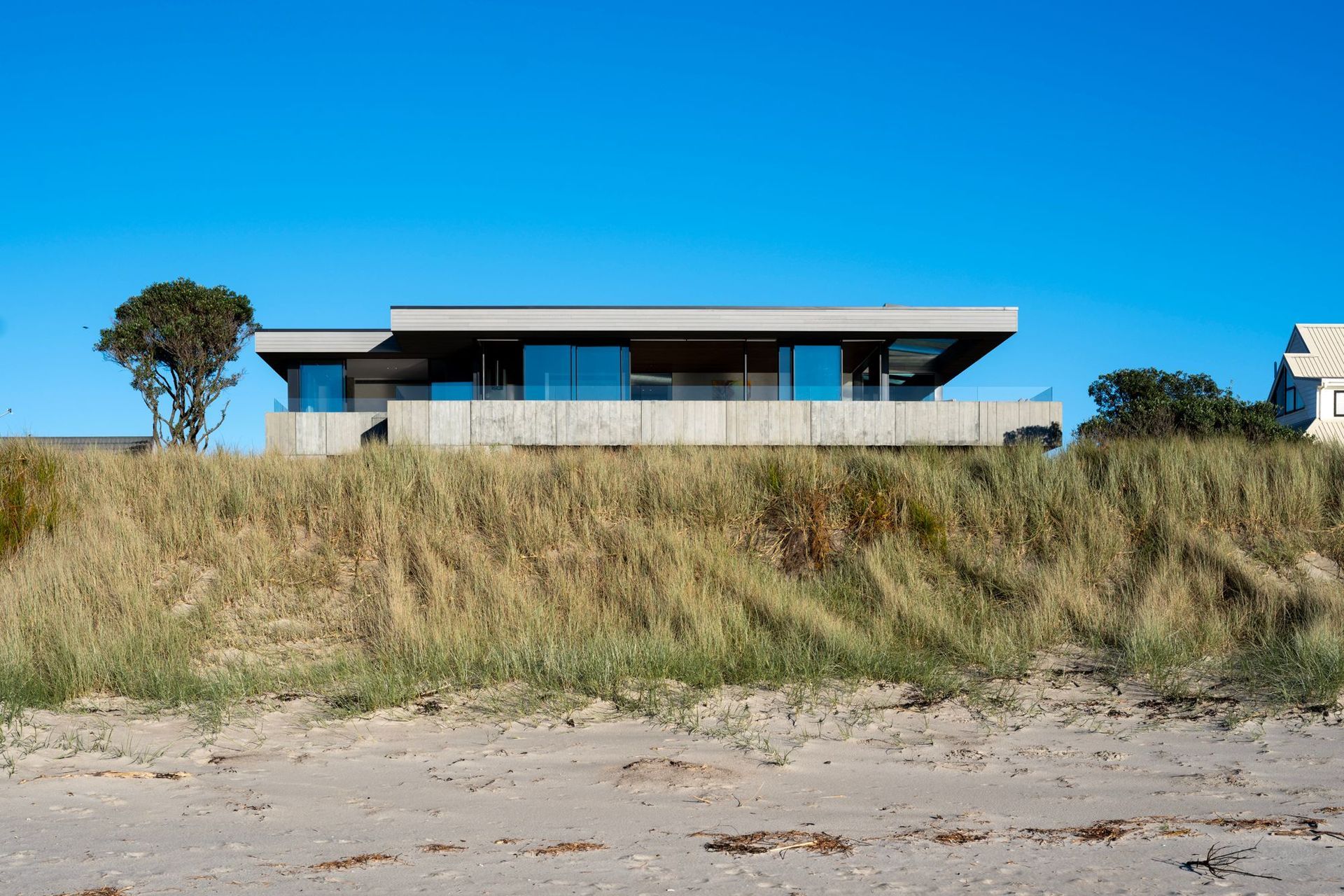
This floor, which was the home’s original living space and ocean vantage point, was completely reorganised within the retained concrete floor plate. The main living area and primary bedroom now sit along the beachfront edge, wrapped in floor-to-ceiling glazing that frames the full breadth of the view and tracks the sun throughout the day.
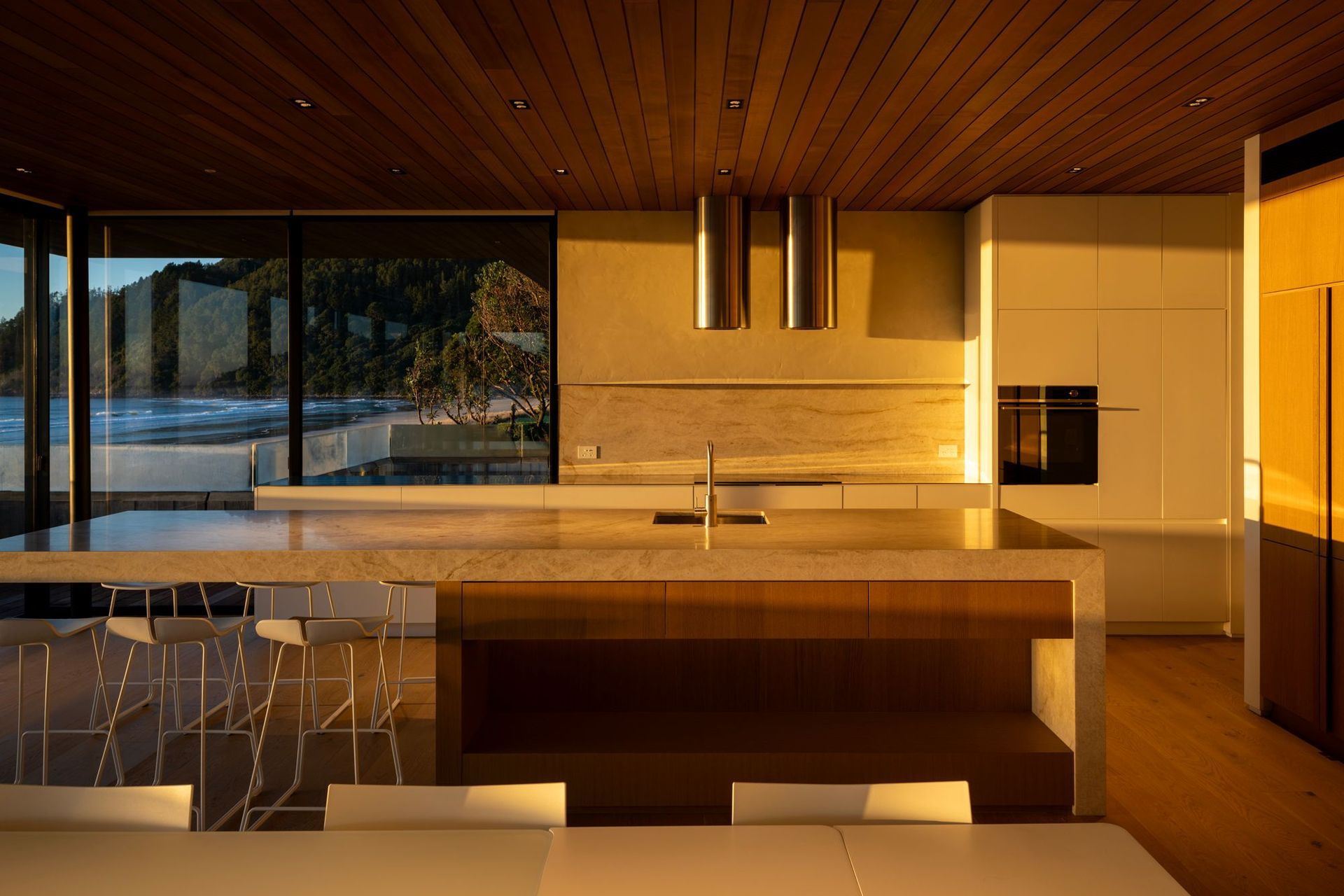
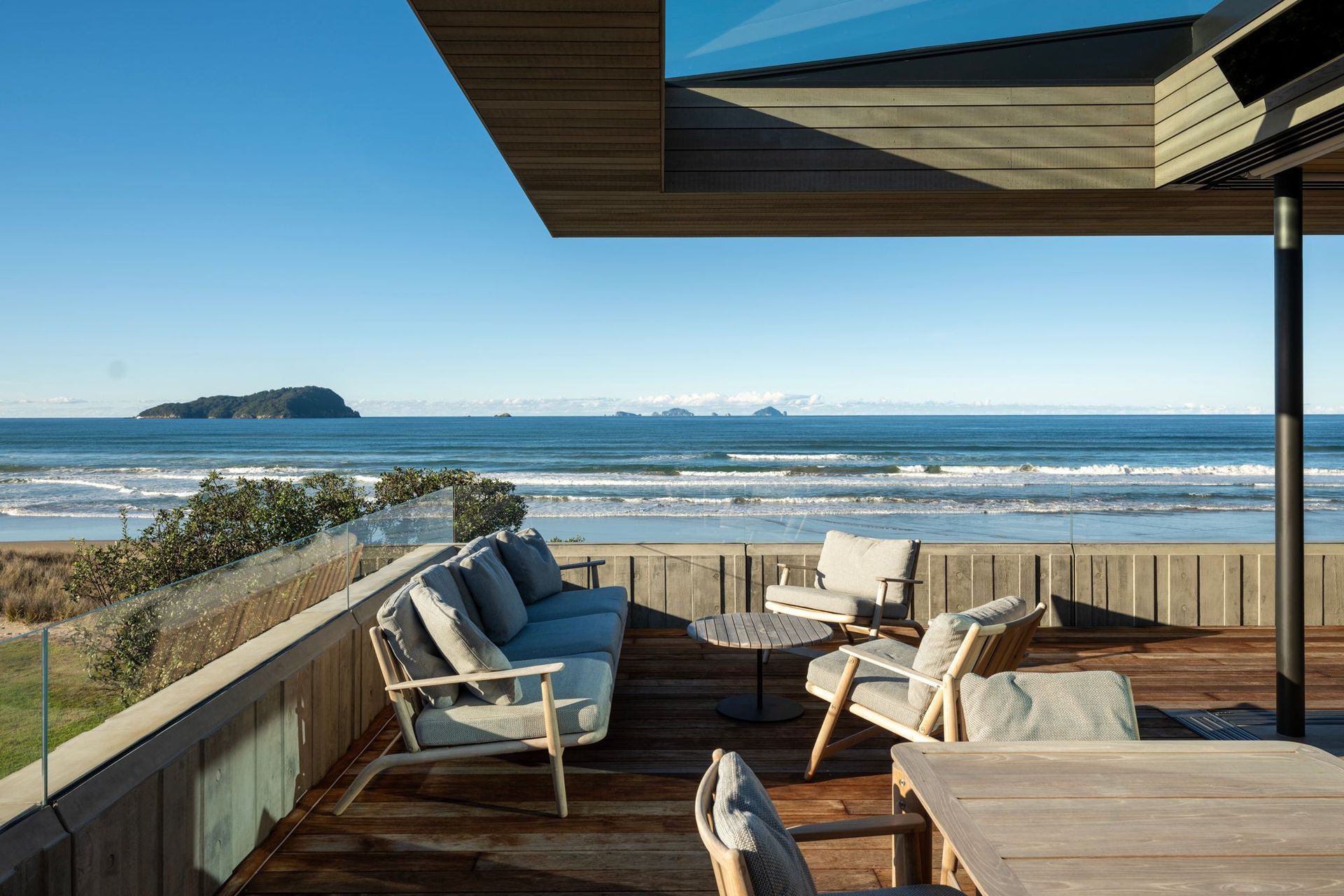
A series of interlinked outdoor spaces, including an east-facing breakfast terrace and a deep, sheltered western balcony, create a wraparound living environment. Flush thresholds blur inside and out, a defining quality of the practice’s work. This seamless flow is further enhanced by the floating timber roof, its cedar-lined ceiling continuing uninterrupted over the wide eaves, strengthening the sense of a single, continuous plane.
Downstairs, the lower-level structure was retained, allowing the architects to reorganise the plan into a series of large bedrooms, each opening directly to the outdoors. A secondary living and games room, complete with kitchenette, gives extended family members autonomy, supporting multi-generational holidays.
Much of the project’s complexity lay in stitching new precision into the older building fabric.
“The new building is very open and minimal and everything has to be perfectly level and square, whereas the old beams and slabs were imperfect so nothing quite aligned, which is what you’d expect.”
Alongside this challenge, the building’s performance needed upgrading. A new insulated membrane roof brought the building up to contemporary standards, replacing the original low-pitched sheet metal roof that had long struggled in coastal conditions.
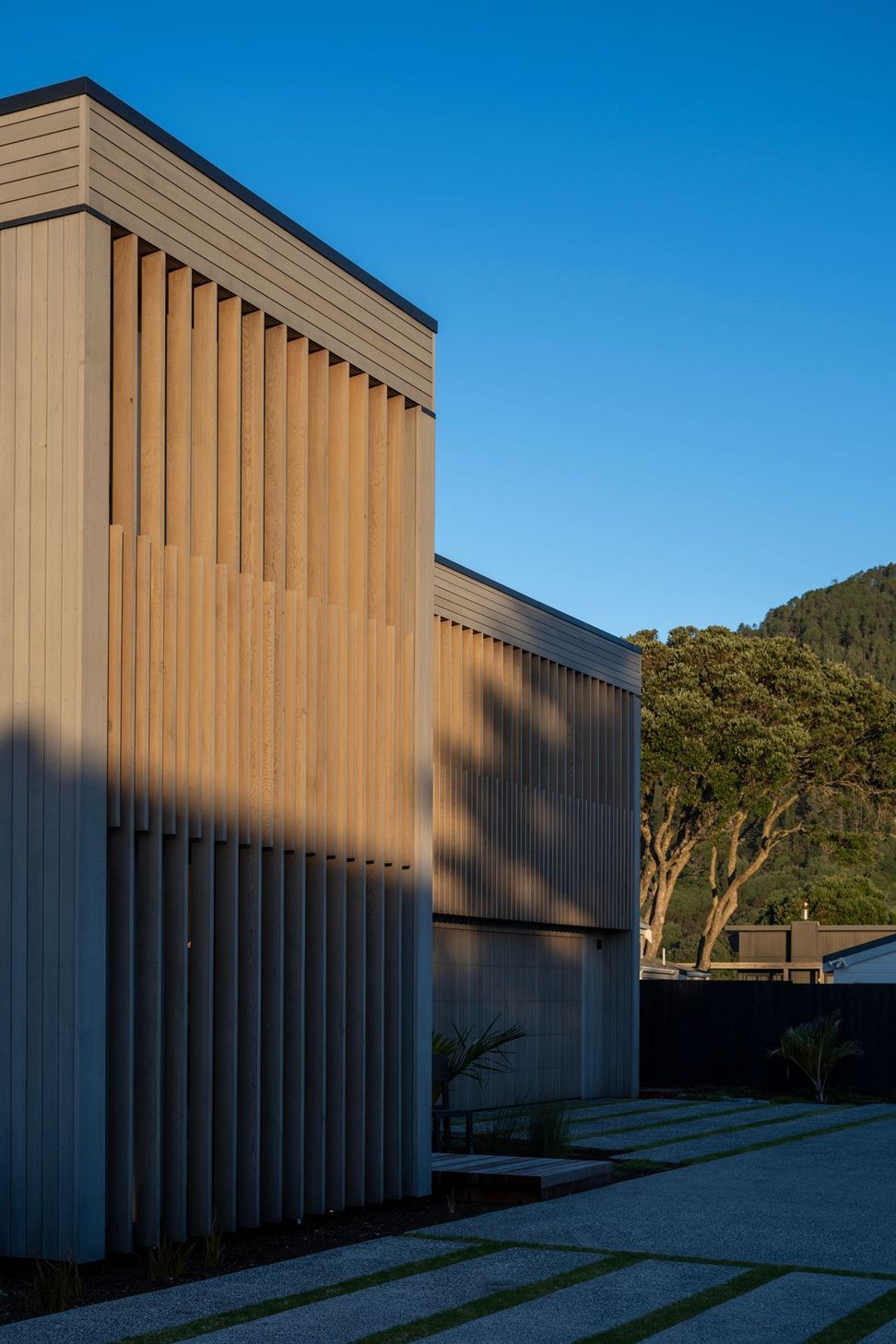
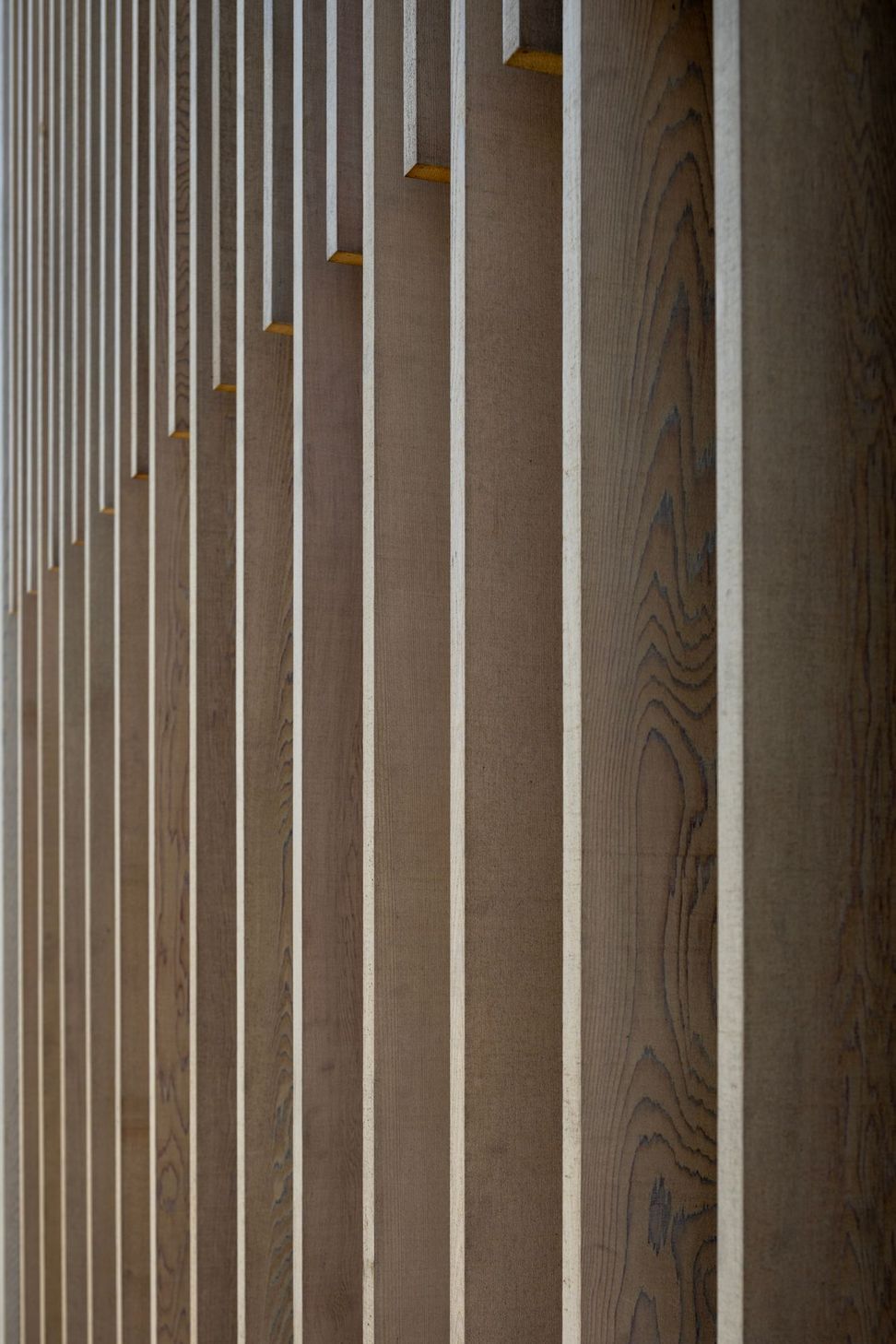
The exterior cladding was also completely revamped and is now defined by two primary materials: glass fibre reinforced concrete (GRC) panels with a vertical timber texture on the seaward side, paired with extensive cedar elsewhere. The concrete panels offer durability in the salt-laden environment, while the cedar softens the building and introduces visual warmth.
Inside, these materials continue seamlessly. Cedar ceilings wrap into the living spaces, and GRC elements reappear as textured interior surfaces. Designed for a true beach lifestyle, the palette is unprecious, capable of weathering sandy feet, wet towels and the joyful chaos of extended family holidays.
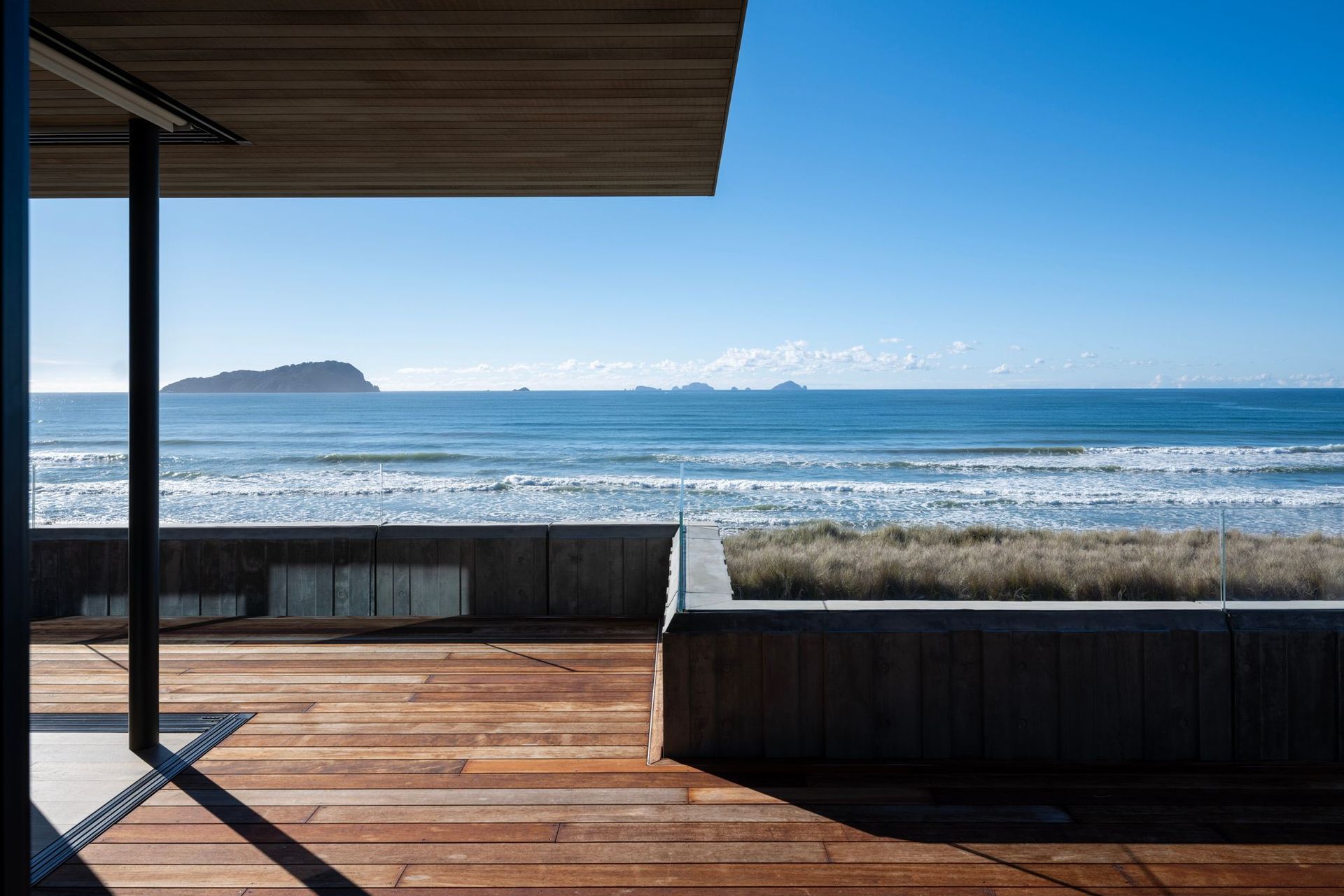
The robust materiality continues on the upper deck, where low concrete balustrade panels create long, linear horizon lines that echo the sweep of the bay. It’s one of Julian’s favourite moments in the building:
“This gesture reinforces the home’s relationship with sea and sky, accentuating that horizon line,” he says.
For Guthrie, the project reflects the practice’s ongoing philosophy: an emphasis on clarity of structure, robust materials, and the dissolving of boundaries between interior and exterior. The result is a home that feels timeless, grounded by its 1970s origins yet wholly renewed for the rhythms of contemporary family life on the Coromandel.
Words: Joanna Seton
Photography by: Simon Devitt
- Completed
- 2024
- Building style
- Contemporary
Like this Project?
Hire Julian Guthrie Architecture
Professional Reviews
The products behind the project
Seven products specified into this build from seven suppliers, verified ArchiPro members. Tap through to specifications, suppliers and lead times.


Professionals used in
this project
The practices and trades credited on this project.









More projects from
Julian Guthrie Architecture
Other work by Julian Guthrie Architecture, across every category they build in.


More in
Renovations
Everything else in Renovations, from every practice on ArchiPro.


Next Project
Keep scrolling