

Project team
- Studio Pacific Architecture
- Simon Devitt & Jason Mann
Product Suppliers
Inspired by the story of Ruhia Pōrutu’s protective cloak, Te Puna connects New Zealand’s National Library and Archives into a new heritage campus.
Te Puna links two heritage institutions through a ‘cloak of connection’
On the shoreline of Pipitea Pā, stories of protection and kindness have long shaped the land now occupied by the National Library and the Archives Building. One of those stories belongs to Ruhia Pōrutu, a woman of high rank whose finely woven kaitaka cloak became the centre of a dramatic encounter in the early 1840s. When a young European immigrant unknowingly broke a tapu restriction by sheltering in a house under construction, he faced swift punishment. Before the chief could strike, Ruhia threw her cloak over the boy, an act that, in Māori custom, signalled protection and spared his life.
Nearly two centuries later, that gesture has found new architectural expression. The Te Puna Enabling Structure, designed by Studio Pacific Architecture in collaboration with Tihei, sits within the parliamentary precinct in Wellington, linking the National Library of New Zealand with Archives New Zealand to form what the Department of Internal Affairs describes as a ‘heritage campus’. For the design team, Ruhia’s cloak became the metaphor and framework for the link’s architectural expression.
Marc Woodbury, senior principal and architect at Studio Pacific Architecture, says this narrative provided a powerful conceptual starting point.
“Picking up that story, we draped Ruhia’s cloak over this new structure, as a sign of protection and care over our national taonga.”
Te Puna Enabling Structure functions as the connective tissue between two significant civic buildings: the newer archives facility designed by Warren & Mahoney and the earlier National Library. Previously separate institutions are now physically and operationally linked, enabling them to function as a single research destination.
“The idea is that if a member of the public wants to view a document, you come to the National Library and its reading rooms and the documents or taonga will be brought to you either from the National Library or the National Archives.”
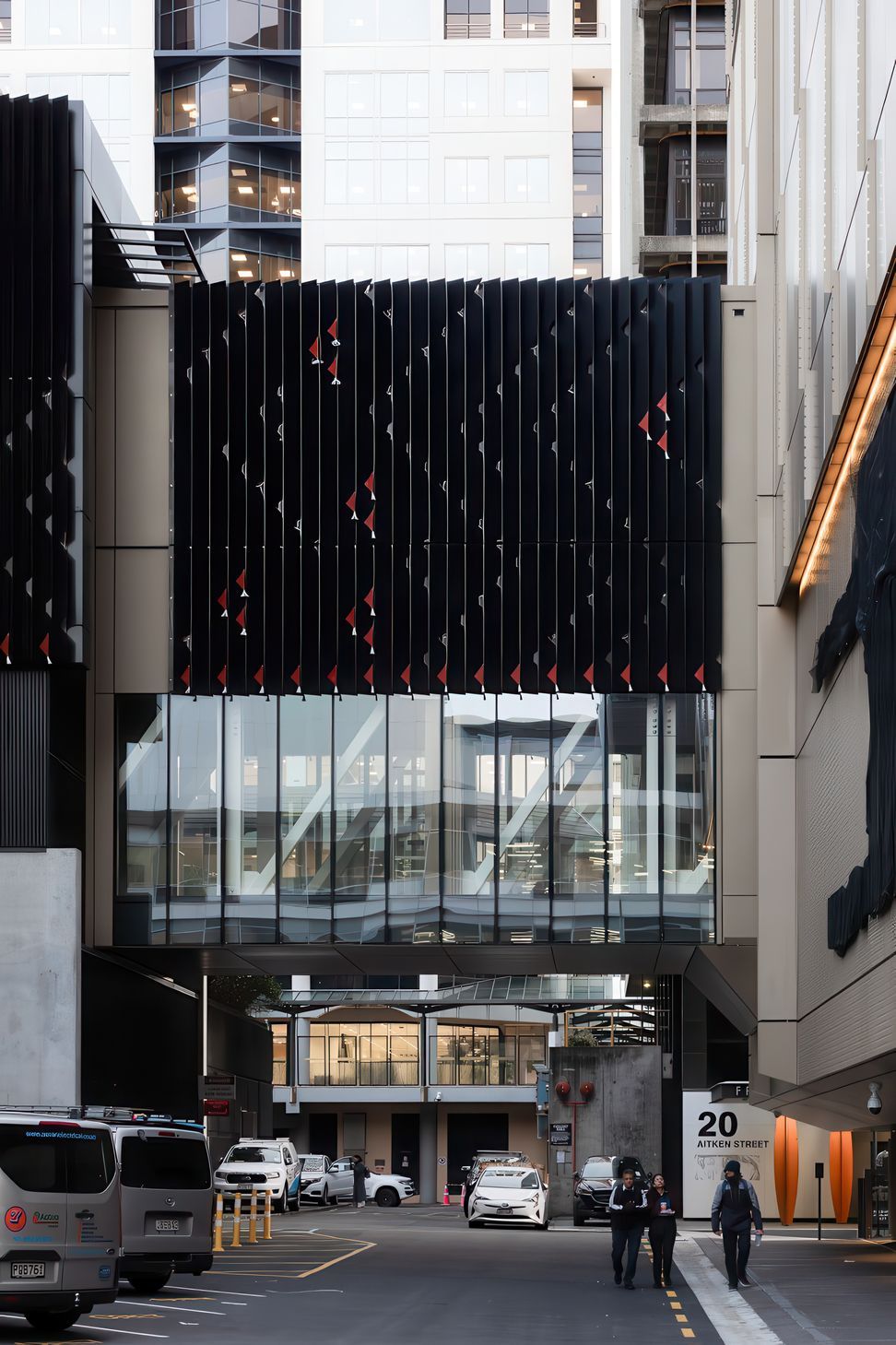
The link itself is modest in scale but complex in purpose. Across two levels, it provides both public and operational circulation. Visitors encounter the connection at the lower floor level as they move through the National Library, while an upper level allows staff to transfer collection material discreetly between the two buildings.
Overlaying that functional brief was a cultural co-design process undertaken with Rangi Kipa and the Tihei team, who had also worked on the archives building. Rather than appearing as a symbolic afterthought, the cultural narrative was embedded from the beginning through a series of collaborative workshops and conversations.
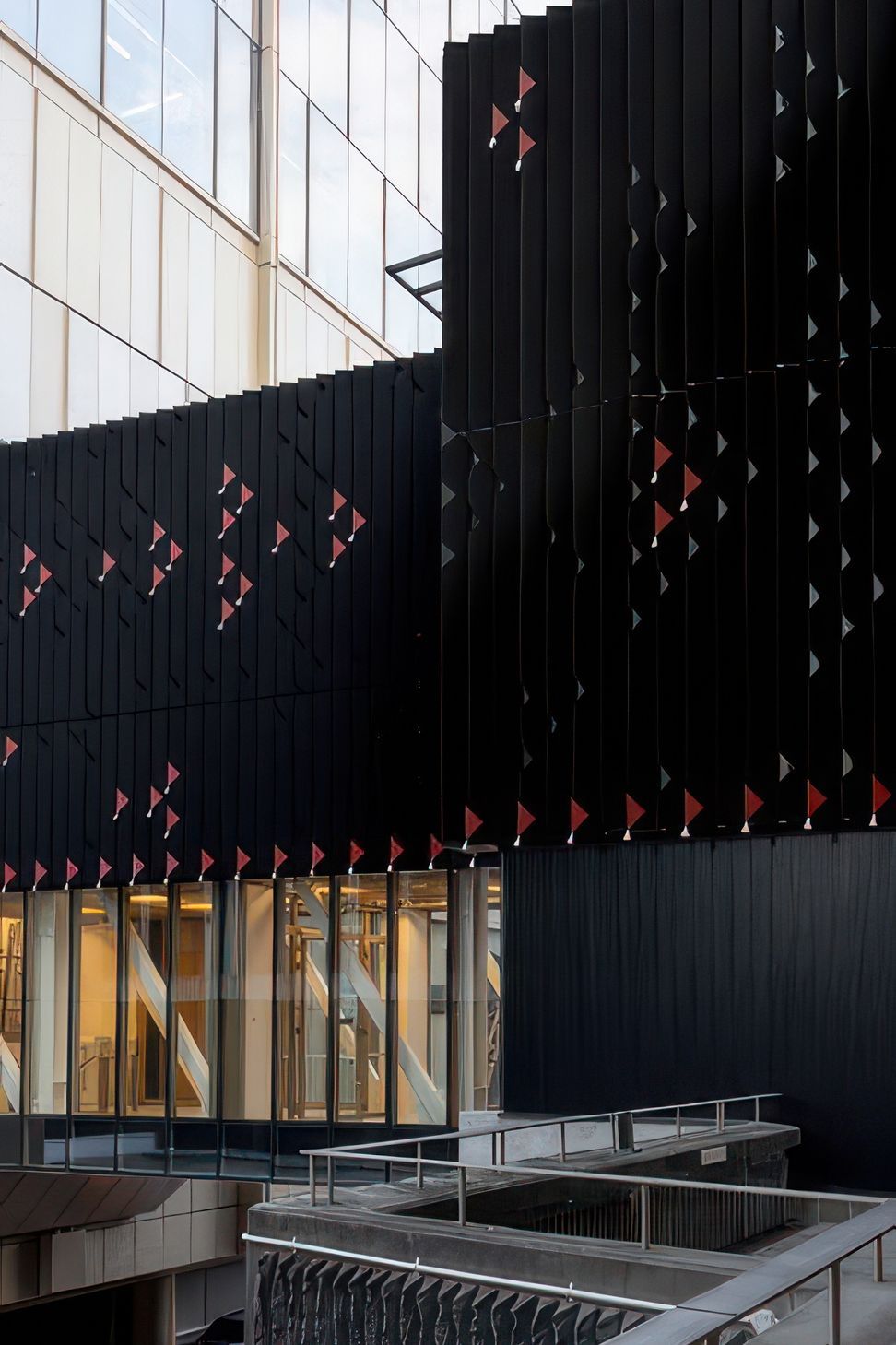
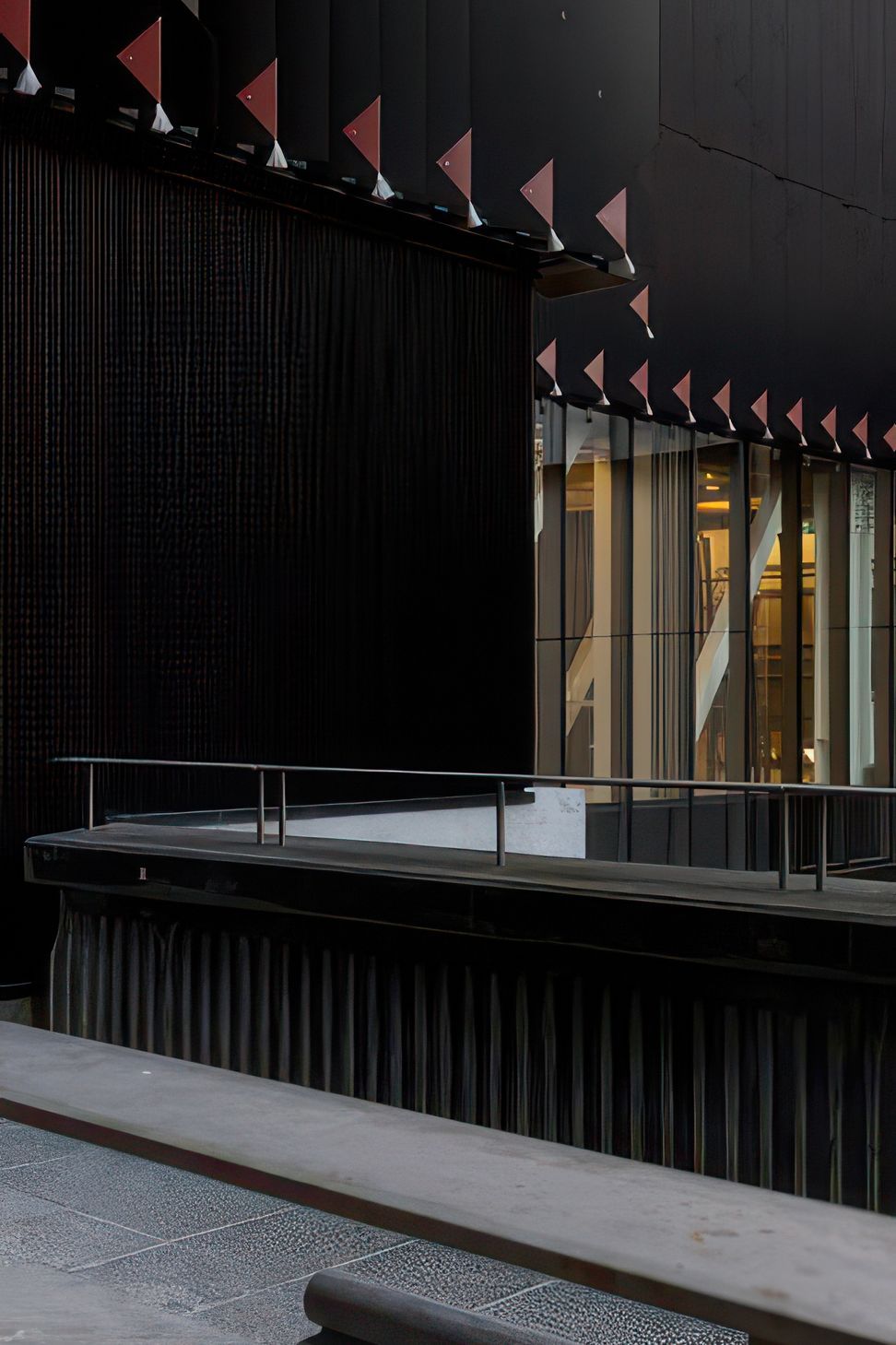
Through that process, the story of Ruhia’s cloak was developed in the façade. Its woven border, the tāniko, inspired a layered exterior of fins, darts and tassel-like elements that wrap the structure. Black and red powder-coated aluminium components create the graphic patterning, while white nylon rope forms the hukahuka, referencing the cloak’s delicate fringe.
Material choices were deliberately pragmatic. The aluminium elements could be fabricated, folded and installed efficiently, while the rope introduces texture and movement. The result is expressive without being ornamental and serves as a contemporary architectural translation of traditional weaving.
Inside, however, the materiality is pared back. Where visitors first encounter the Enabling Structure inside the National Library sits He Tohu, the document room housing Te Tiriti o Waitangi, also designed by Studio Pacific in 2017. Its carefully crafted timber interior carries immense cultural weight, and the new structure was intentionally designed to defer to that presence.
The Enabling Structure therefore becomes a neutral transition. Subdued materials, gentle lighting and exposed laminated timber structure create what Woodbury describes as a kind of architectural palate cleanser between two different buildings.
The choice of a laminated timber structure was also driven by environmental considerations. Structural systems typically account for a significant portion of a building’s carbon footprint, and the team invested considerable effort exploring whether mass timber could work for the project.
At the same time, the project had to solve an unusual engineering challenge. The archives building is base-isolated and capable of substantial movement during an earthquake, while the National Library is comparatively rigid. The connecting structure therefore needed to accommodate dramatic shifts without compromising the building envelope.
“The Enabling Structure was designed to accommodate up to 1.8 metres of movement in any direction where it meets the National Library structure,” shares Woodbury. “Achieving this required intricate detailing, from hinged panels to movement joints that allow the structure to flex while maintaining insulation and air seals.”
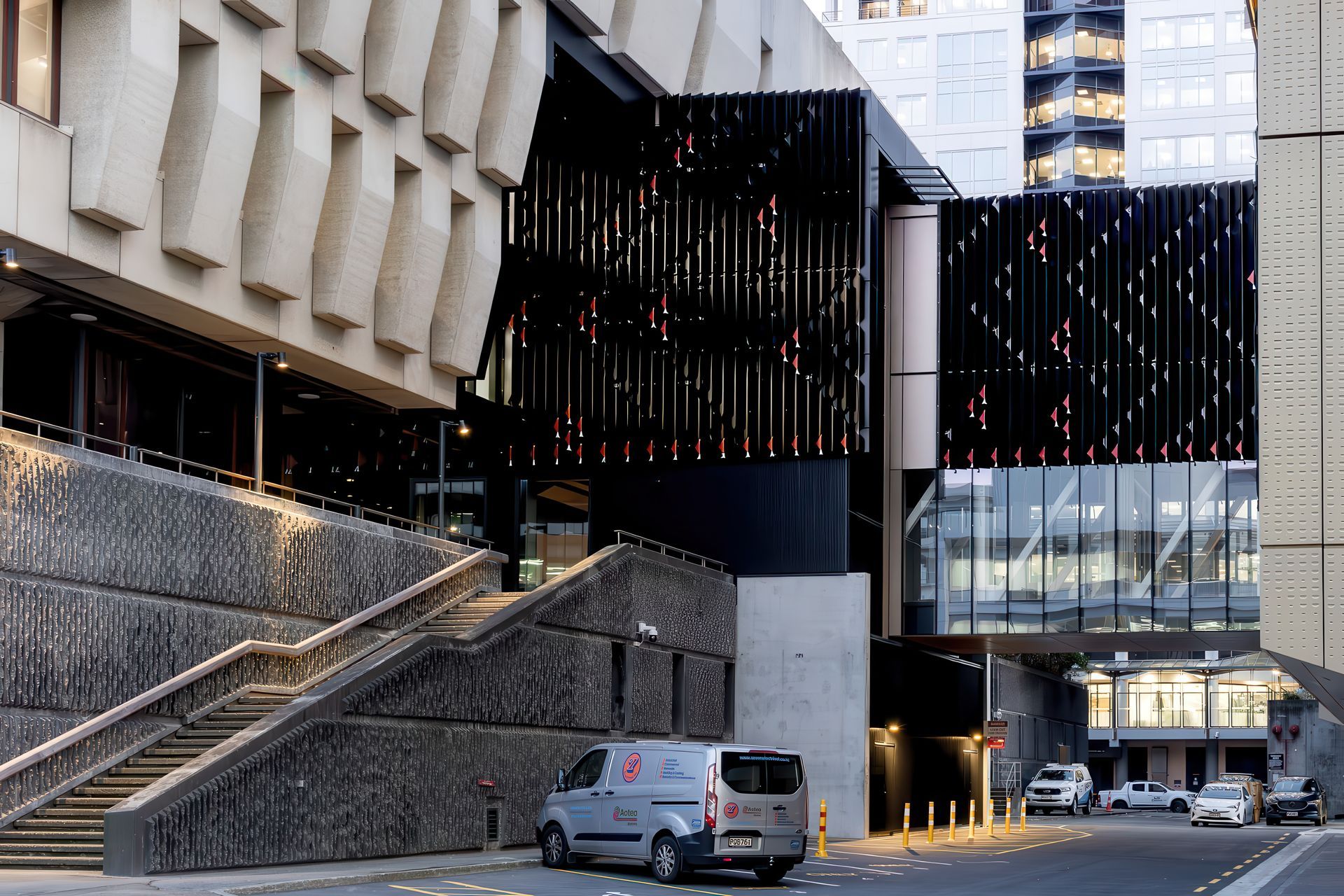
Equally important was the way the addition engages with the National Library’s brutalist 1980s architecture. The existing building is assertive, defined by precast concrete panels and a recessed entry marked by a glass cube. Rather than compete, the design echoes this logic.
“It’s a very strong building, architecturally, and we asked ourselves how do we respond to it?”
The solution involved cutting into the existing precast façade to create space for a new cuboid volume, mirroring the library’s original architectural move. At ground level, the glazed facade of the new structure reflects the transparency of the library’s base before the cloak-like form settles above.
“The design respects the existing architecture by mirroring the plinth and glazed ground floor of the National Library before the enabling structure, while not being apologetic about the intervention,” shares Woodbury.
Despite the cultural narrative and technical complexity, Te Puna Enabling Structure isn’t particularly conspicuous. But in many ways, that response reflects the intention of the project. The cloak that once protected a life at Pipitea now finds expression in architecture that quietly safeguards the country’s collective treasure.
- Completed
- 2025
- Building style
- Modern
Like this Project?
Hire Studio Pacific Architecture
The products behind the project
Six products specified into this build from two suppliers, verified ArchiPro members. Tap through to specifications, suppliers and lead times.


Professionals used in
this project
The practices and trades credited on this project.





More projects from
Studio Pacific Architecture
Other work by Studio Pacific Architecture, across every category they build in.


More in
Mixed-use Spaces
Everything else in Mixed-use Spaces, from every practice on ArchiPro.


Next Project
Keep scrolling