Five hardware details that bring character into the home
Written by
06 August 2026
•
5 min read

We touch door knobs, pull handles, levers and cabinet handles every day, yet these details are often designed to disappear into the doors and joinery around them. Because their role is primarily functional, the safest choices tend to be simple forms and familiar finishes that attract little attention.
But some pieces are intended to be noticed. A substantial front-door knob can strengthen an entrance. A hand-worked pull can add texture to an otherwise plain door. Timber can make an internal lever feel warmer, while colour can turn a cabinet handle into part of the room’s palette.
This edit presents five examples that show how architectural hardware can contribute to the overall design rather than remain in the background.
Giving the entrance more presence

The front door is one place where hardware can comfortably take on a larger role. Its scale, finish and position all contribute to the first impression of a home.
The Sarlat Centre Door Knob by Iver uses a substantial circular form and classic detailing to create a clear focal point at the entrance. Its brushed brass finish adds warmth and gives the piece enough visual presence to hold its own against a large door.
The knob doesn’t simply add a place to grip the door. It becomes part of the entrance composition, much like the door colour, surrounding material or exterior lighting.
It demonstrates how door knobs can establish character before anyone enters the home.
Making texture part of the experience
Hardware is not only seen. Its surface is also experienced by hand, making texture an important part of how a piece feels in daily use.
The Joseph Giles Hammered Half Moon Pull Handle from In Residence brings this tactile quality to the forefront. Made from solid brass, each handle is finished using tooling applied by hand, creating subtle variations across the hammered surface.
The half-moon shape gives the handle a strong silhouette, while the changing surface catches light differently across each mark. Together, the form and finish allow the pull to introduce craftsmanship and material depth to a timber or glass door.
Among more conventional pull handles, it shows how texture can give a familiar fitting a more individual character.

Bringing something unexpected to an internal door

Internal door hardware is generally restrained, particularly when the intention is for the door to blend into the wall. The Kooky Streaker Door Lever by Bankston takes a different approach.
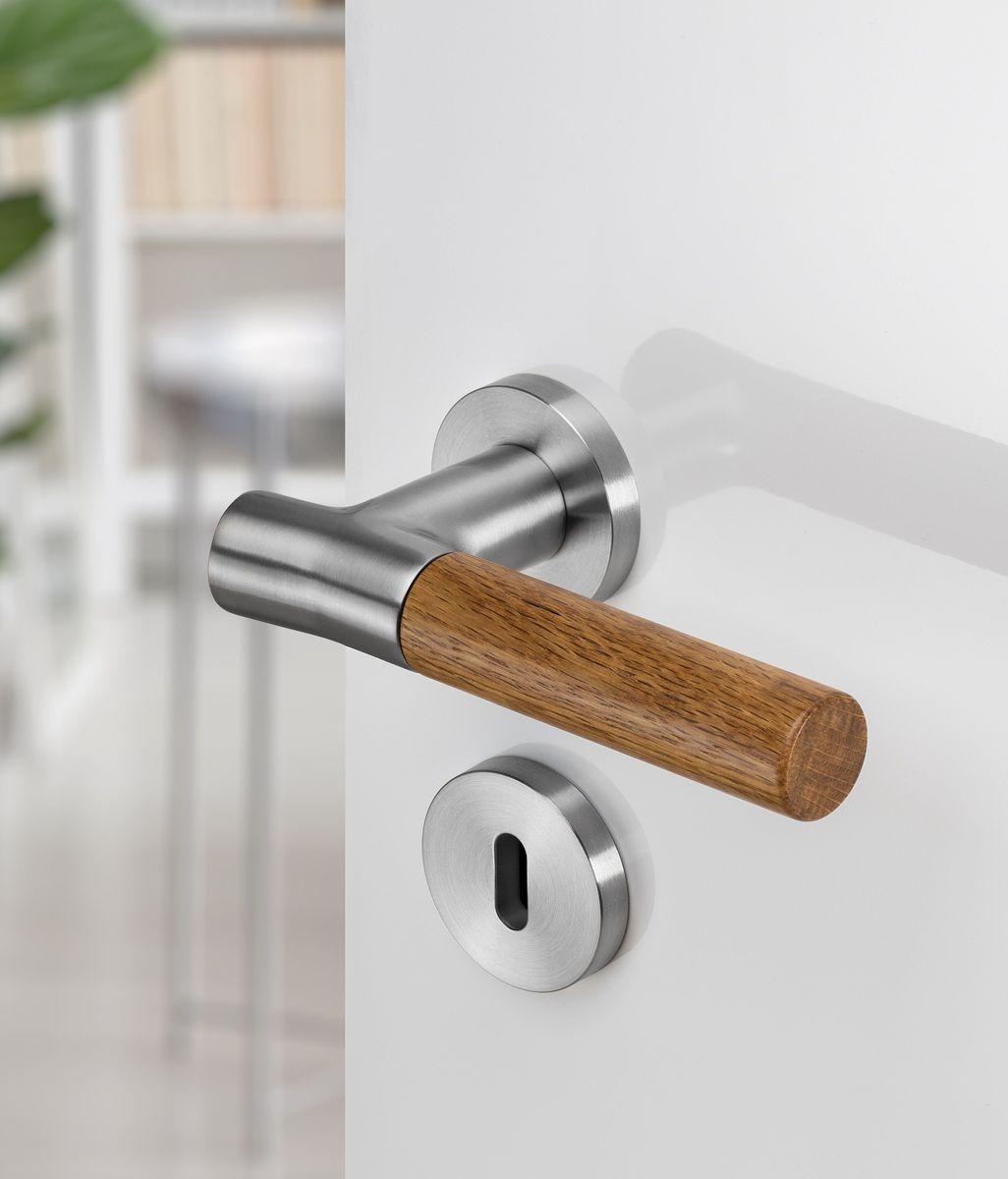
Designed by YSG, the lever has an elongated timber form positioned at an off-centre angle. Contrasting bands emphasise its length, while the natural timber gives it a warmer presence than a conventional metal handle.
Its scale and tilted position make the lever immediately noticeable. What would usually be a small functional fitting becomes a distinct part of the door and the transition between rooms.
It offers a more expressive alternative within the wider range of lever handles, bringing personality through material and proportion rather than applied decoration.
Finding character in quieter details
Hardware does not need to be large or colourful to contribute to an interior. Sometimes its influence comes from repetition, proportion and the way it relates to the surrounding materials.
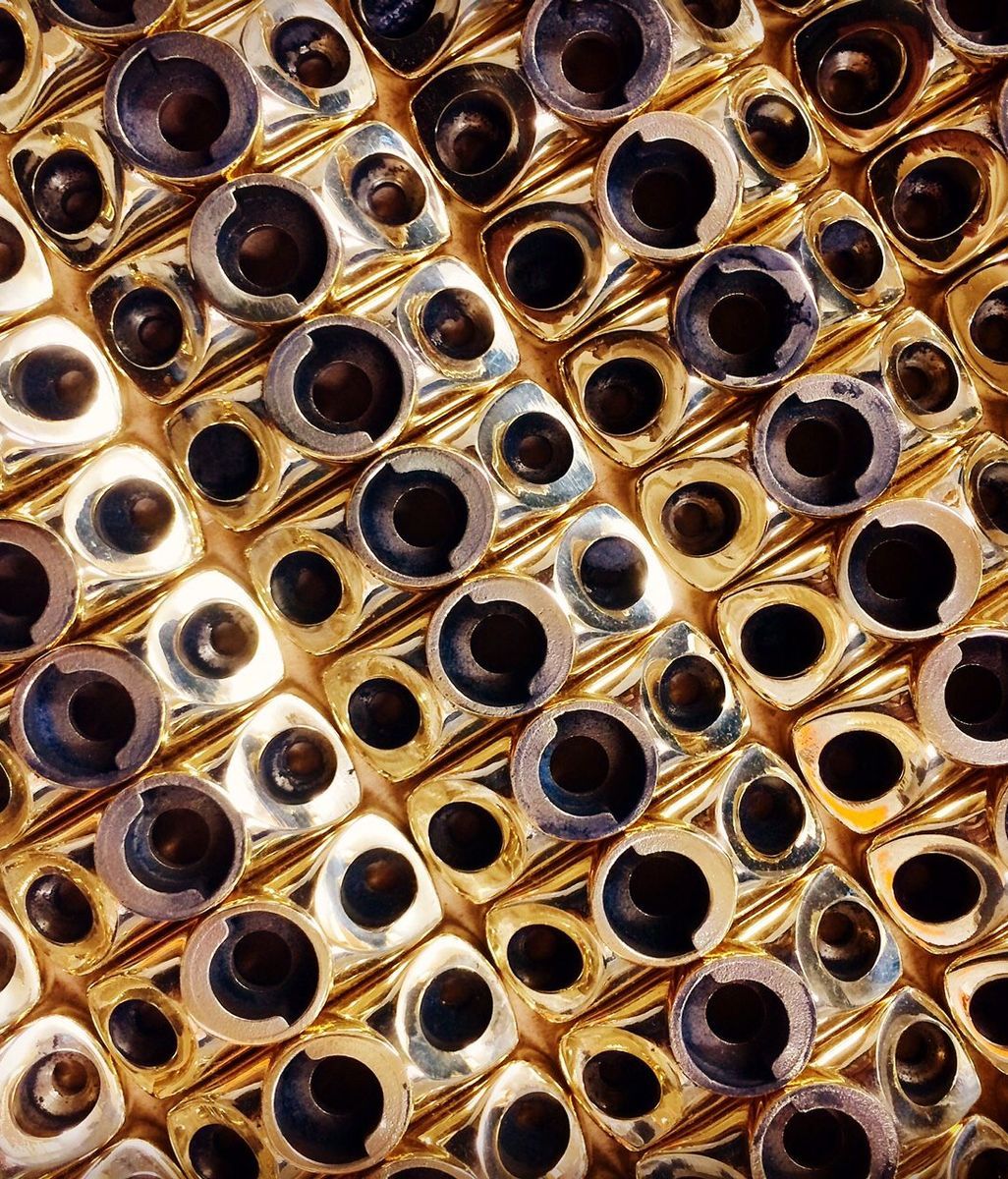
The HB500 Stair Rail Bracket by Halliday + Baillie is a quieter inclusion in the edit. Positioned beneath the handrail, its compact form provides support while remaining visible along the length of the stair.
Available in a range of electroplated and powder-coated finishes, the bracket can relate to nearby door hardware, lighting or architectural metalwork. Repeated at regular intervals, it becomes part of the staircase’s visual rhythm.
This is a more understated expression of character, but no less considered. It shows how stair rail brackets can support the wider material direction of a space rather than being treated as a purely technical necessity.

Using hardware to introduce colour

Cabinet handles are repeated across drawers and doors, giving even a small amount of colour the potential to influence an entire wall of joinery.
Designed by Kaschkasch for VIEFE and available from Katalog, the Milano Cabinet Handle uses a simple tubular form that can be installed vertically or horizontally.
Its available finishes include restrained matt black, white and moss grey, alongside forest green, volcano red and midnight blue. The simplicity of the handle allows these stronger colours to feel practical and easy to repeat.
Instead of blending into the cabinetry, a coloured version can become part of the palette. It provides an example of how cabinet handles can introduce personality without changing the cabinetry itself.
Allowing hardware to be seen
Together, these pieces make a simple case for paying more attention to hardware. A front-door knob can set the tone before anyone steps inside. A pull handle can bring texture, a timber lever can add warmth, and a coloured cabinet handle can introduce an unexpected note.
These may be small decisions, but they are encountered every day. Giving them the same thought as the larger elements of a room can make a home feel more personal and complete.
Whether planning a new home or reconsidering its finishing details, explore window and door hardware, stair rail brackets and cabinet handles and knobs on ArchiPro to compare products, materials and suppliers for every touchpoint.