When stormwater management becomes part of the design
Written by
31 August 2026
•
4 min read

Every heavy downpour is a reminder of the importance of stormwater management. As rainfall puts increasing pressure on urban drainage systems, the surfaces specified for outdoor spaces have an increasingly important role to play in how water moves through our built environment.
“Often, the problem isn’t necessarily the water from your own property flooding your site. It can be water from neighbouring properties flowing towards you and accumulating,” explains Dev Singh.
It needs to be considered for all projects from residential to larger commercial developments. But stormwater management shouldn’t mean compromising the design itself.
“We saw a gap in the New Zealand market. Many permeable paving products provide stormwater benefits but offer limited colour choices, textures and architectural appeal. We wanted to develop a locally manufactured system that delivers both environmental performance and premium design outcomes.”
Rather than approaching permeable paving as a technical product that needs to be incorporated into a design regardless, Jagas Paving and Precast set out to develop a system that could sit comfortably within a design without impeding it.
The result is Hydrostone: a permeable paver intended to give designers the performance they need without limiting what they can create on the surface.
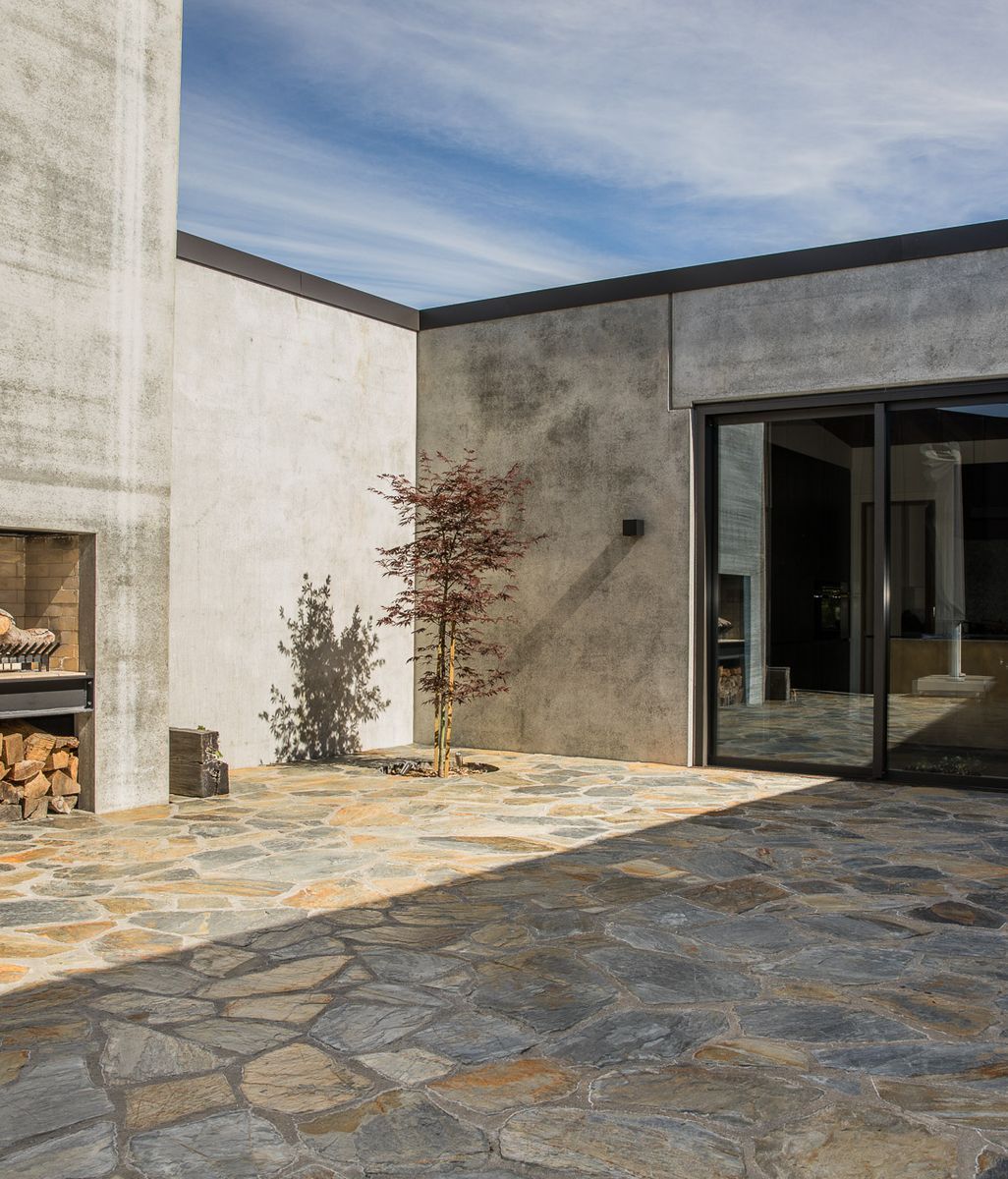
“The biggest advantage of Hydrostone is that it doesn't look like a normal stormwater device,” says Dev. “It looks like a premium paving product.”
The aesthetic has been equally considered alongside its performance from the outset.


The surface that becomes a system
Produced at Jagas’ East Tamaki manufacturing facility, the permeable pavers use aggregates sourced from local quarries. Jagas had previously imported permeable paving, but found that freight costs, environmental impact and extended lead times made a locally manufactured alternative worth pursuing.
“Manufacturing locally gives us much better control over consistency, product development and quality,” says Dev. Local manufacturing also reduces reliance on overseas freight and supports shorter, more predictable lead times compared with imported alternatives.
By controlling the full process, customised solutions can also be explored so the paving can truly respond to the architecture and landscape around it.
“We do not want to restrict designers to standard shapes or a limited colour palette. Our goal is to give architects and landscape designers greater flexibility, including the opportunity to explore project-specific shapes, colours and finishes.”
Hydrostone is made in two layers, with the top layer incorporating the colour selected by the client or designer. All aggregates are certified and checked before production, with moisture levels monitored before each batch is mixed according to a defined recipe.
The pavers are then formed using advanced equipment before undergoing overnight curing, packing and further curing. Quality control is integrated throughout the process, with dimensions checked digitally and each batch supported by production records and photographic records, creating a traceable production history.
Once the process is complete, a full pavement system has been created to work alongside the layers below.

Alongside its stormwater-management function, Hydrostone is designed to provide the durability expected of premium concrete paving for residential and commercial applications.
“Hydrostone is designed to help reduce surface ponding by directing stormwater into the pavement structure below, where the bedding and open-graded base layers provide both drainage and temporary water storage,” explains Dev.
The way the system is configured depends on the conditions of the individual site. Soil characteristics, for example, can determine how effectively water can infiltrate. On sites with less permeable ground, such as those with significant clay, additional drainage infrastructure may be required to connect the system to the wider stormwater network.
For this reason, Jagas sees early collaboration as an important part of specifying Hydrostone. Every site is different. The Hydrostone pavement build-up should be configured to suit the project’s stormwater requirements, ground conditions and engineering design.
“We encourage project teams to involve us early when designing with Hydrostone, whether it is a small residential project or a large commercial development. We can provide specifications, discuss site and soil conditions, and work with the project engineers to support an appropriately designed pavement system,” says Dev.
“We see permeable paving as much more than a stormwater solution. It is about creating a good, beautiful, durable outdoor space that helps address modern environmental challenges, while still giving architects and designers the freedom to create outstanding spaces.”
Hydrostone demonstrates that stormwater infrastructure does not need to be treated as a design compromise. By combining permeability, durability and architectural appeal, it allows water-sensitive design to become an integrated part of the landscape.
Hydrostone continues to evolve through Jagas’ research and development programme. A premium Hydrostone range is currently being developed and is planned for release before Christmas, with an expanded colour palette, enhanced visual finishes and improved water-retention performance.
On ArchiPro, explore Hydrostone and see how it’s being used in outdoor projects by architects and landscape designers.